
城市更新

Search documents
江苏服务业发展势头稳健向好 《汽车行业价格行为合规指南》发布 美国家庭债务逾期率升高
Sou Hu Cai Jing· 2026-02-13 02:22
Market Overview - On February 12, the stock market experienced fluctuations, with the index rising throughout the day. The computing power leasing concept surged, AI application stocks showed volatility, and liquid cooling server stocks strengthened. The semiconductor sector gained momentum in the afternoon, while the chemical sector retreated. The film and cinema sector continued to adjust, and the retail sector saw widespread declines, particularly in the liquor sector. Overall, more than 3,200 stocks declined, with the Shanghai Composite Index rising by 0.05%, the Shenzhen Component Index increasing by 0.86%, and the ChiNext Index up by 1.32% [3]. Automotive Industry - On February 12, the State Administration for Market Regulation released the "Guidelines for Compliance with Pricing Behavior in the Automotive Industry," aimed at further regulating pricing behaviors in the automotive sector to promote healthy and orderly market development [4]. Service Industry in Jiangsu - On February 12, preliminary calculations from the Jiangsu Provincial Bureau of Statistics indicated that by 2025, the added value of the service industry in the province is expected to reach 76,943.7 billion yuan, representing a year-on-year growth of 5.8%. This sector is projected to account for 54% of the regional GDP, an increase of 0.9 percentage points from the previous year [5]. Travel and Transportation - During the Spring Festival holiday, the Jiangsu Entry-Exit Border Inspection Station projected that the province would see approximately 106,000 inbound and outbound travelers, with over 730 transport vehicles (aircraft and ships) involved, indicating a lively two-way flow of travelers [5]. Education Sector - On February 12, the Ministry of Education issued opinions on deepening reforms in key elements of vocational education, proposing to explore the establishment of a rapid response channel for the addition of new majors, focusing on emerging and future industries, particularly in low-altitude economy, artificial intelligence, high-end equipment, urban renewal, and areas with urgent public needs [6]. Renewable Energy - Data from the National Energy Administration indicated that by 2025, the total installed capacity of new wind and solar power generation in the country is expected to exceed 430 million kilowatts, with wind power accounting for 120 million kilowatts and solar power for 318 million kilowatts, reflecting a year-on-year growth of 22.0%, setting a new historical high [6]. Corporate Developments - Meta recently announced plans to break ground on a new 1 billion watt data center in Lebanon, Indiana, which will create over 4,000 construction jobs and 300 operational positions [6]. - Television Broadcasts Limited, a company listed on the Hong Kong Stock Exchange, forecasted a profit of 50 million Hong Kong dollars for 2025, marking its first profit since 2018, following a loss of 491 million Hong Kong dollars in 2024 [6].


房地产板块最新观点:板块上涨空间能否进一步打开?-20260213
CMS· 2026-02-13 02:05
Investment Rating - The report maintains a "Recommended" rating for the real estate sector, indicating a positive outlook for the industry based on expected performance relative to the market benchmark [5]. Core Insights - Recent valuation recovery in real estate stocks reflects a combination of oversold conditions relative to the CSI 300 index, changes in fundamental expectations, and policy anticipations [1][3]. - The upward potential for real estate stock prices requires further support from either fundamental performance or policy implementation, with key drivers including better-than-expected transaction volumes and significant policy announcements [12][14]. - The market is currently divided between investors with optimistic views on fundamentals and those speculating on policy changes, which may lead to conflicting strategies [10]. Summary by Sections Recent Valuation Recovery - The recent increase in real estate stock prices is attributed to a recovery from oversold conditions and shifts in market sentiment regarding fundamentals and policies [1]. - Data from January 1 to February 5 shows a year-on-year decline in new home transactions by 6% and an increase in second-hand home transactions by 31%, although adjusted lunar year comparisons indicate a more significant decline [3]. Conditions for Further Price Increases - The gap between the real estate index and the CSI 300 has narrowed significantly, suggesting that without further catalysts, the potential for excess returns in the real estate sector may diminish [12]. - Future price increases will depend on exceeding expectations in fundamental performance, such as increased transaction volumes and favorable policy developments [14]. Policy Directions and Drivers - Key areas of policy focus include changes in inventory levels, loan continuation methods post "Financial 16," and the outcomes of specific corporate financing events [15]. - Potential policy measures may involve lowering mortgage rates and implementing inventory reduction strategies to stabilize housing prices [16][18]. Market Dynamics and Stock Selection - The current market trend favors companies with higher sales growth and land acquisition rates, indicating a preference for "winning" companies based on market momentum [22]. - If supportive policies are enacted, the focus may shift from "winning" companies to those with attractive valuations, while also considering companies with strong operational momentum [24]. - Specific companies to watch include those with stable performance and high dividend yields, as well as those benefiting from improvements in the housing market [25].
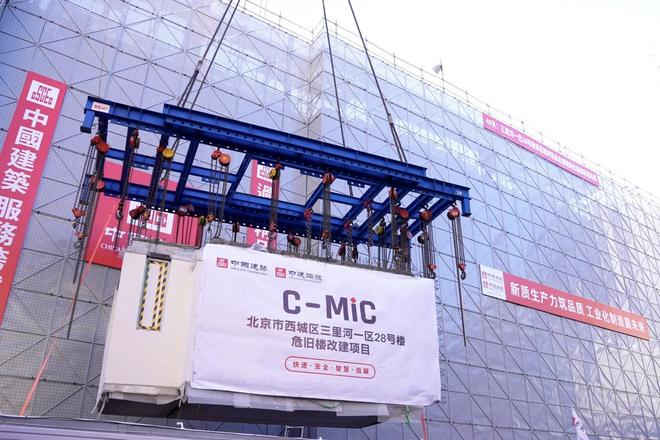
像造汽车一样造房子,危旧住宅46天原地变新房
Di Yi Cai Jing Zi Xun· 2026-02-13 01:53
Core Insights - The article discusses the innovative approach to the renovation of a nearly 50-year-old residential building in Beijing, emphasizing the use of smart construction technology to achieve rapid and high-quality results [1][5]. Group 1: Project Overview - The renovation project of Building 28 in Xicheng District, Beijing, is the first pilot project for dangerous building reconstruction, utilizing a "from demolition to reconstruction" method to transform living conditions [2][6]. - The building, constructed in 1978, faced significant structural issues, including wall cracks and outdated infrastructure, prompting strong resident demand for renovation [2][3]. - The project commenced on September 5, 2025, and completed the main structure in just 46 days, allowing residents to move back into their new homes within six months [2][5]. Group 2: Innovative Construction Techniques - The project employed the "smart construction-MiC technology," which integrates industrialized building methods to enhance speed, efficiency, and sustainability [5][6]. - This technology allows for 90% of construction processes to be completed in a factory setting, significantly reducing on-site waste and carbon emissions [5][6]. - Each module of the building is assigned a unique digital identity code, facilitating future maintenance and management [5]. Group 3: Financial and Regulatory Innovations - A multi-party cost-sharing model was introduced, where residents, the government, and property units share the financial burden, making the project more affordable for residents [3][6]. - The project streamlined the approval process, achieving a 90% reduction in the time required for necessary permits and documentation [3][6]. - The initiative aligns with national policies promoting urban renewal and the transformation of old housing, indicating a shift towards more efficient urban development strategies [7][8]. Group 4: Broader Implications for Urban Development - The project serves as a model for similar urban renewal efforts across major Chinese cities, highlighting the potential for replicable solutions in high-density urban areas [6][8]. - Experts predict that the "from demolition to reconstruction" model will become a mainstream approach for old housing renovations, potentially accounting for 30%-40% of total renovation projects by 2030 [8].

2026年建筑施工行业展望:供需结构深度调整,信用分化趋势显现
大公信用· 2026-02-13 00:45
Investment Rating - The report indicates that the construction industry is in a phase of adjustment and transformation, with a focus on high-quality and specialized development in 2026 [1]. Core Insights - The construction industry in China is experiencing a structural adjustment, with a shift from traditional real estate development to diverse fields such as "new infrastructure," urban renewal, and green intelligent buildings [1][10]. - The supply side is characterized by a mismatch, with high-end capacity being insufficient and low-end capacity being excessive, leading to a need for deep adjustments in the industry [11][25]. - The demand structure is evolving, with a focus on projects aligned with national strategies and an emphasis on quality and sustainability [10][25]. Supply Capacity Analysis - In 2025, the total output value of the construction industry decreased from 32,650.11 billion to 30,381.83 billion yuan, marking a negative growth phase [2]. - The new contract value signed in the construction industry was 31,532.749 billion yuan, a year-on-year decrease of 6.57% [2]. - The supply side shows a concentration of capacity among leading enterprises, with the top eight state-owned enterprises accounting for nearly 50% of new contracts [5]. Demand Matching Capability Analysis - Infrastructure investment saw a cumulative year-on-year decline of 1.48% in 2025, marking the first negative growth since 2022 [6]. - Real estate development investment was 8,278.8 billion yuan, down 17.2% year-on-year, indicating a continued downward trend in the market [8]. - The demand structure is shifting towards new infrastructure projects, urban renewal, and green low-carbon buildings, driven by national strategies [10]. Industry Credit Rating Analysis - In 2025, the bond issuance scale in the construction industry increased by 12.25% year-on-year, with a significant concentration in state-owned enterprises [19]. - The new bond issuance totaled 698.254 billion yuan, with AAA-rated bonds accounting for 87.69% of the total [21]. - The industry experienced few defaults, with only three bonds defaulting or being extended in 2025 [22]. Industry Innovation Capability Analysis - The construction industry is seeing a systematic deepening of technological innovation, with applications of BIM and AI in design and construction processes [18]. - Policies are focused on enhancing infrastructure functionality and safety, with significant funding directed towards key projects [16][17]. - The industry is transitioning towards a more integrated and digitalized approach, emphasizing green and intelligent construction methods [18].
职业教育将积极 增新、裁撤过剩、升级改造现有专业
Xin Lang Cai Jing· 2026-02-12 17:28
Core Viewpoint - The Ministry of Education has issued guidelines to reform key elements of vocational education, focusing on dynamic adjustment of professional settings and enhancing the alignment with industry needs [1] Group 1: Professional Adjustment - Vocational education will dynamically adjust professional settings, increasing new programs while eliminating excess and upgrading existing ones [1] - New programs will be established in emerging and future industries, including low-altitude economy, artificial intelligence, high-end equipment, urban renewal, and areas with critical labor shortages [1] - Programs with weak teaching conditions, low quality, and poor employment rates will be promptly removed to avoid a "large but scattered" and "weak but comprehensive" professional layout [1] Group 2: Curriculum and Teaching Enhancement - The reform requires the development of a course list for new and upgraded programs, along with the creation of capability maps [1] - A mechanism for diverse textbook development will be established, focusing on the creation of urgently needed educational materials [1] - There will be targeted improvements in teacher capabilities and the establishment of a dual-flow mechanism for teachers and industry talent [1] Group 3: Long-term Goals - By 2027, a standardized system for vocational education in terms of programs, courses, textbooks, teachers, and practical training will be established [1] - By 2035, a vocational education practice model with Chinese characteristics will be developed, leading to significant changes in the operational structure of vocational schools [1]
2026年地产新局
Jing Ji Guan Cha Wang· 2026-02-12 13:04
Core Viewpoint - The real estate sector has undergone significant adjustments over the past three years due to multiple pressures, including demand contraction and tightened financing, with a clear signal for stabilization in 2026 [2][3]. Policy Incentives - In 2025, various policies aimed at stabilizing the real estate market were implemented, focusing on structural tools rather than comprehensive easing [4]. - The supply side aims to digest existing stock and reduce inefficient increments, while the demand side utilizes financial tools to lower housing costs [5]. Regulatory Measures - The 2026 regulatory focus includes controlling increments, reducing inventory, and optimizing supply, with specific plans for land supply in major cities like Beijing and Shanghai [6]. - The central economic work conference emphasized the importance of stabilizing the real estate market through targeted measures [5][6]. Market Expectations - Expectations for 2026 include adjustments to purchase restrictions in first-tier cities and the expansion of policies for converting stock land and properties into affordable housing [7]. - The market anticipates a focus on improving supply quality and reducing inefficient offerings [8]. Urban Renewal - Urban renewal is transitioning from a supplementary policy to a leading approach, driven by urbanization, demographic changes, and land constraints [9]. - By 2030, significant progress in urban renewal is expected, enhancing living conditions and public services [9]. Competitive Landscape - Companies with strong operational capabilities will have a competitive advantage in urban renewal projects, which require higher coordination and funding capabilities [11]. - The shift towards urban renewal is changing the business and profit models in real estate, emphasizing long-term operational returns [11]. Commercial Real Estate - The strategic value of public REITs is increasing, with a shift from infrastructure to commercial real estate assets [12]. - The approval process for commercial real estate REITs is more streamlined, encouraging participation from quality asset holders [14]. Operational Logic - The significance of REITs lies in reshaping operational logic, emphasizing clear ownership and predictable cash flows [14]. - The market for REITs is attracting long-term funds, enhancing market stability while raising the bar for operational capabilities [14][15].

连续三年,每年补助5000万元!大庆被确定为省级城市更新试点地区
Xin Lang Cai Jing· 2026-02-12 12:12
日前,记者从省城市更新工作专班组织召开的省级城市更新试点启动部署暨工作培训会议获悉,黑龙江 省将全面启动省级城市更新试点工作。 会议动员试点地区以"开局就是决战、起步就是冲刺"的奋斗姿态,聚焦高质量推进省级城市更新试点建 设核心任务,着力探索城市更新新模式、新路径,形成一批可复制、可推广的经验做法,引领带动全省 城市更新工作向纵深发展,确保城市更新试点工作高标准开局、高质量推进、高质效落地。 省城市更新工作专班强调,启动实施省级城市更新试点工作,是再对标、再深化、再落实黑龙江省城市 更新工作的战略举措,是打造黑龙江省城市更新先行区、试验区、样板区的有益探索。 试点地区要围绕内涵式发展、规划编制、筹资路径、运营机制、治理体系等方面重点内容和120余项体 检指标体系开展各项工作。各试点地区要积极探索可复制、可推广的城市更新可持续发展龙江模式。以 城市更新试点破局开路,重塑城市发展思维,转变城市发展方式,推动城市由规模扩张向内涵式发展转 型。围绕城市更新重点内容和黑龙江省体检指标体系,推动试点工作有序推进,做到规划先行、项目支 撑、资金保障、运营长效。 牡丹江市一处 经过竞争遴选,全省确定了牡丹江市、伊春市、大庆市 ...

职业教育精准对接重点产业 让人才与产业“双链”匹配
Jing Ji Guan Cha Wang· 2026-02-12 10:49
Core Viewpoint - The Ministry of Education has issued an important document titled "Opinions on Deepening the Reform of Key Elements in Vocational Education Teaching," focusing on the cultivation of high-skilled talent and the optimization of professional settings to meet industry needs [1][3]. Group 1: Key Elements of the Opinions - The document emphasizes the need for a coordinated approach to adjust and optimize professional settings, implementing a "red-yellow card" warning system [1]. - It advocates for the use of big data and artificial intelligence to accurately predict talent supply and demand in key areas, providing a scientific basis for dynamic adjustments in professional settings [1]. - The establishment of a rapid response channel for adding new majors is encouraged, particularly in emerging and future industries such as low-altitude economy, artificial intelligence, high-end equipment, urban renewal, and areas with critical talent shortages [1][2]. Group 2: Alignment with National Strategy - The new professional training directions align closely with national strategies and urgent industry needs, particularly in sectors like low-altitude economy, artificial intelligence, high-end equipment manufacturing, and urban renewal [2]. - The low-altitude economy is highlighted as a significant area for development, with a growing demand for specialized talents in drone logistics and urban air traffic [2]. - The rapid technological iteration and high integration in these fields necessitate a quick response in professional education to ensure talent skills match industry demands [2]. Group 3: Implementation Strategies - Provincial education authorities are tasked with developing specific implementation plans that integrate reform outcomes into school assessments, funding allocations, and project selection [3]. - Industry-education integration bodies are encouraged to leverage resource advantages to enhance the effectiveness and quality of educational reforms [3]. - Vocational schools are urged to prioritize the reform of key teaching elements as a central aspect of their development, with a focus on creating high-level professional groups [3]. Group 4: Importance of Vocational Education - Vocational education is identified as a crucial component in cultivating new productive forces, bridging the gap between technological innovation and skilled labor [4]. - The ability of vocational education to enhance the resilience of industrial chains is emphasized, as modern industries increasingly rely on versatile and innovative skilled talents [4]. - The document stresses the importance of aligning vocational education with industry needs, ensuring timely professional settings that meet actual demands, and fostering deep integration between education and industry [4].
企业利润修复仍面临国内供需结构失衡等多方面挑战|宏观晚6点
Xin Lang Cai Jing· 2026-02-12 10:19
Macro News - The Ministry of Education has released an opinion on deepening the reform of key elements in vocational education, emphasizing the dynamic adjustment of professional settings to focus on high-skilled talent cultivation. New fields such as low-altitude economy and artificial intelligence will be prioritized for new professional additions [1] - The National Development and Reform Commission (NDRC) has announced plans to promote the co-construction and sharing of public service resources in education and healthcare within the Beijing-Tianjin-Hebei region, as part of the "Modern Capital Metropolitan Area Spatial Coordination Plan (2023-2035)" [1] - Consumers purchasing new cars during the nine-day Spring Festival holiday can apply for subsidies under the vehicle trade-in policy [1]
中衡设计总经理变更,业绩下滑与估值偏高引关注
Jing Ji Guan Cha Wang· 2026-02-12 08:37
Group 1: Management Changes - The company held a board meeting on February 3, 2026, to approve the change of general manager. Zhang Jin resigned from the position but will continue as chairman and chief engineer, while Lu Jianglong was appointed as the new general manager [2] - The company stated that this management change will not affect daily operations [2] Group 2: Recent Company Performance - As of January 12, 2026, the company's static price-to-earnings ratio was 78.74, and the rolling price-to-earnings ratio was 99.24, both exceeding the average levels in the professional technical services industry [3] - For the first nine months of 2025, the company reported revenue of 778 million yuan, a year-on-year decline of 15.36%, and a net profit attributable to shareholders of 56.27 million yuan, down 15.85% year-on-year [3] - The controlling shareholder's concerted action party, Suzhou Industrial Park Zhongheng Hengli Industrial Investment Co., Ltd., reduced its holdings by 1.75 million shares on January 8, 2026 [3] Group 3: Business Development - The company is actively expanding into urban renewal, green building, AI, and BIPV sectors, and has won multiple design projects for high-end manufacturing bases in commercial aerospace [4] - However, for the first nine months of 2025, revenue from commercial aerospace-related projects accounted for only 0.39% of total revenue, and the associated company, Zhihang Technology, is still in a loss-making state, which does not significantly impact operational earnings [4] - The revenue scale from these new business areas is relatively small, and attention should be paid to the subsequent order fulfillment [4]
