央行购金

Search documents
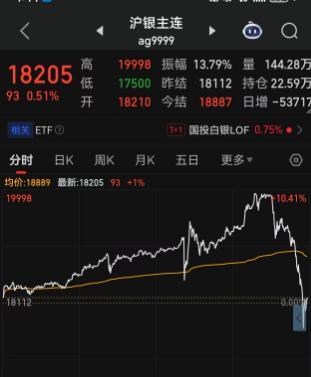
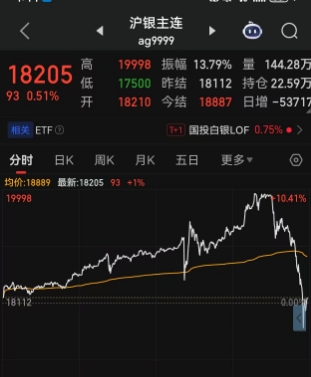
从2万元/千克位置狂泄直下,日内一度回调2500元/千克,沪银上演过山车,为何午后突然跳水?
Jin Rong Jie· 2025-12-29 09:31
Core Viewpoint - The silver market experienced extreme volatility, with prices initially surging to nearly 20,000 yuan per kilogram before plummeting by 2,500 yuan to a low of 17,500 yuan, closing at 18,205 yuan [1] Group 1: Silver Market Dynamics - Silver futures on the Shanghai market saw a dramatic rise of over 10%, reaching a peak of 19,998 yuan per kilogram before a sharp decline [1] - The afternoon trading session witnessed silver prices breaking through key support levels of 19,000 and 18,000 yuan, ultimately closing at 18,205 yuan [1] - The international silver price fluctuated significantly, initially exceeding 83 USD per ounce before dropping to around 75 USD, indicating high volatility in the market [6] Group 2: Other Precious Metals - Platinum and palladium also faced significant declines, with platinum dropping 10% to 634.35 yuan per kilogram and palladium falling 10% to 494.1 yuan per kilogram [3] - The price of palladium experienced a daily drop of 12%, falling below 1,700 USD per ounce [6] Group 3: Market Influences - Market analysts attribute the sudden drop in silver prices to profit-taking and geopolitical developments, particularly discussions between Trump and Zelensky regarding a potential peace agreement in Ukraine [8] - Despite geopolitical easing, the supply-demand relationship for silver remains tight, with a projected demand of 1.24 billion ounces against a supply of only 1.01 billion ounces, leading to a structural deficit [9] Group 4: Inventory and Future Outlook - Silver inventories have significantly decreased, with COMEX silver stocks down 70% since 2020 and London vaults down 40%, raising concerns about available supply [10] - Analysts suggest that the recent trading activity in precious metals may lead to increased volatility, especially with the upcoming New Year holiday and potential profit-taking by long positions [10] - Long-term trends such as geopolitical risks and central bank gold purchases are expected to support gold prices, with projections indicating a potential rise to 5,000 USD per ounce by 2026 [10]

从2万元/千克位置狂泻直下,日内一度回调2500元/千克,沪银上演过山车,为何午后突然跳水?
Jin Rong Jie· 2025-12-29 09:16
从19998元/千克位置狂泻直下,日内一度回调2500元/千克,沪银上演过山车行情! | 肥主连 | | | | | | | | --- | --- | --- | --- | --- | --- | --- | | pd99999 | | | | | | | | 538.00 | 494.1 | | 振幅 | 8.00% | It | 67638 | | 494.10 | | | 昨结 | 549.00 | 持仓 | 25772 | | रो रूह | -54.90 -10.00 | 502.20 | | 514.30 | 日揭 | -1541 | | 异动解读:广期所再度出手给市场降温。广 ... ● | 140 MBC | | | | | | | 周K 月K 五日 | 关时 日K | | | | 重多4 | | | 均价:514.35 最新:494.10 -54.90 -10.00% | | | | | | | | | 603.90 | | | | | +10.00% | | | 549.00 ------ | | | | | | | | 494.10 00.00 | | | | | -10.00% ...
黄金白银,史诗级暴涨,最新解读来了
3 6 Ke· 2025-12-28 23:57
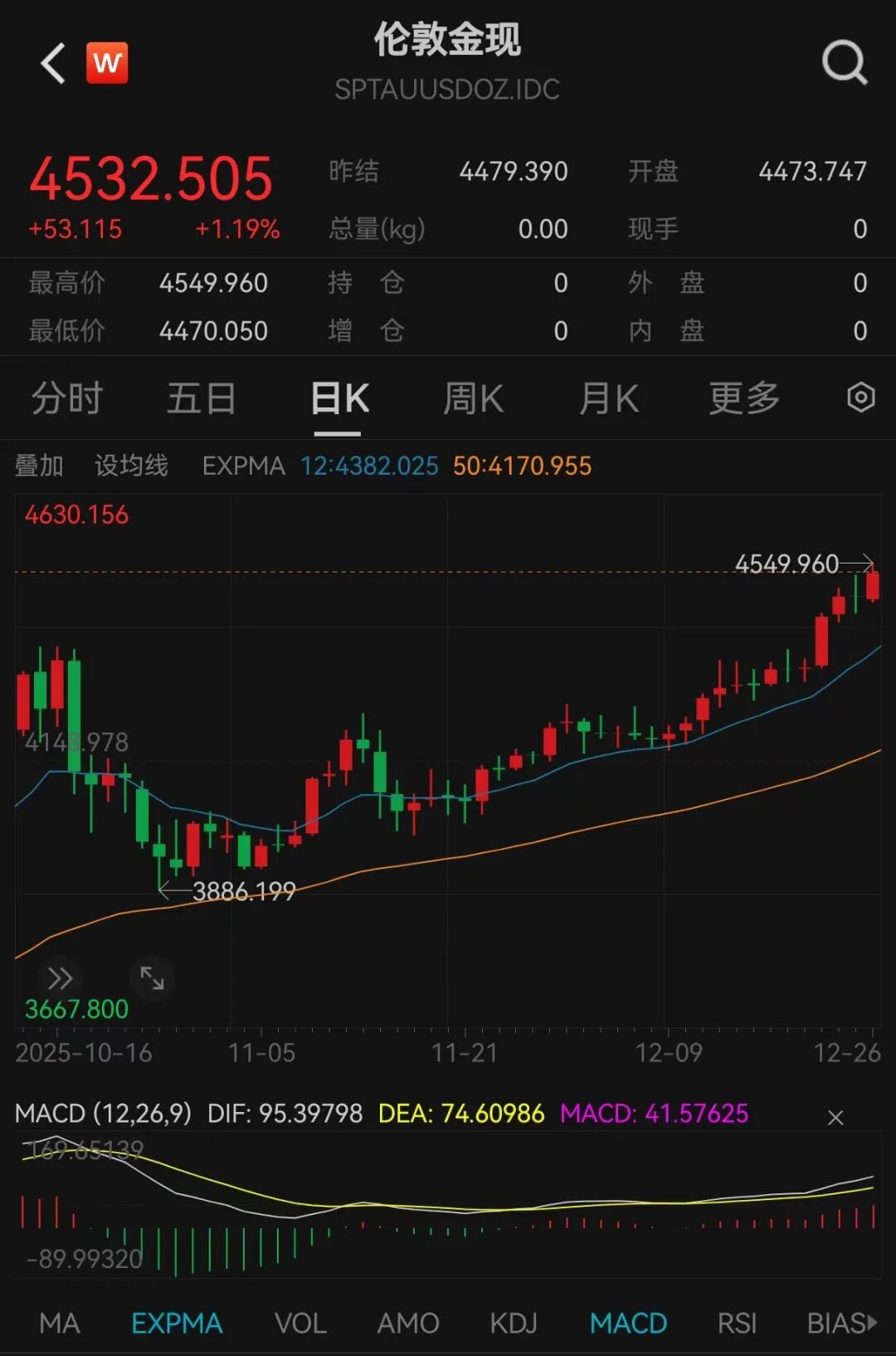
近期,国际金银市场迎来"史诗级狂欢"。 | OC (00 0 0 | | --- | 在本轮金银牛市行情中,主要驱动因素有哪些?短期因素与长期逻辑如何共振?经历整年上涨行情后,后市空间如何?普通投资者如何合理配置贵金属资 产? 为此,中国基金报记者采访了: 博时黄金ETF基金经理 王祥 截至12月24日,伦敦现货黄金价格首次突破4500美元/盎司关口,最高触及4531美元;现货白银价格更是强势冲高至75.5美元/盎司,年内涨幅分别超70% 和近150%,大幅跑赢全球多数资产类别。其中,2025年的伦敦金价累计涨幅已创下1990年以来的最佳年度表现。 汇添富黄金及贵金属基金经理 过蓓蓓 中信保诚中证800有色指数基金经理 黄稚 受访基金经理认为,本轮贵金属行情是"短期催化"与"长期逻辑"共振的结果。黄金价格持续攀升并刷新历史纪录,核心推手为美联储降息周期的持续推 进,以及全球避险情绪的升温;白银的行情则来自"贵金属属性"与"工业属性+战略储备"的叙事得到市场认可。 不过,这些基金经理普遍认为,本轮行情虽然有基本面支撑,但短期快速上涨后,市场波动可能加剧,需要警惕回调风险。中长期来看,黄金仍受到美元 信用弱化、央 ...
贵金属上演“狂飙”大戏 “牛市”行情能否跨年?
Bei Jing Shang Bao· 2025-12-28 20:56
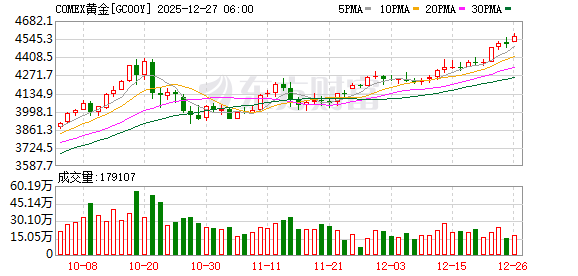
COMEX黄金[GCOOY] 2025-12-27 06:00 5PMA = 10PMA = 20PMA = 30PMA = 4682.1 4545.3 4408.5 4271.7 4134.9 3998.1 3861.3 3724.5 3587.7 60.19万 成交里:179107 45.14万 30.10万 15.05万 0 10-08 2025:狂飙的"牛市" 12年前,中国大妈"血战"华尔街大鳄,在全国各地黄金卖场掀起了一场"疯狂扫货"的热潮,成为全球金 融市场上一段令人津津乐道的传奇。如今,随着2025年贵金属市场迎来"牛市"上涨行情,跑步入局的不 仅仅是中国大妈,中青年投资者也将黄金视为投资理财的心头好。 回溯2025年全年贵金属市场的走势,年初之时,市场整体处于调整蓄势阶段,现货黄金在2600—3000美 元/盎司区间震荡,白银则徘徊于28—32美元/盎司,铂金价格也维持在900—970美元/盎司。这段时期 内,只有黄金凭借2024年超27%的涨幅与人们对黄金的惯有钟爱,在消费和投资市场维持较高的关注 度。3月中旬伦敦金现突破3000美元/盎司关键关口,以一季度上涨19.01%的成绩领跑贵金属 ...
洞察2025|贵金属上演“狂飙”大戏,“牛市”行情能否跨年?
Sou Hu Cai Jing· 2025-12-28 12:52
2025年,全球贵金属市场迎来一场史无前例的"牛市"狂欢,黄金年内涨幅突破70%,白银飙升超170%,铂金、钯金亦纷纷刷新历史高点。 火热行情迅速传导至国内消费终端,主流黄金品牌足金饰品价格突破每克1400元,线下门店购金热潮涌动,黄金回收区也迎来交易高峰。 回溯本轮"牛市"成因,多重核心因素形成共振:多国中央银行持续增持黄金;地缘政治风险推升市场避险情绪;美元信用动摇,进一步提升黄金等贵金属的 相对吸引力;叠加矿产端供给短缺与工业需求增长形成的供需结构性失衡,共同构筑了"牛市"的底座。 展望2026年,结构性分化或将取代普涨行情,需警惕的是,当前贵金属价格已处历史高位,而美联储货币政策预期摇摆、地缘冲突缓解等潜在因素,仍可能 引发市场大幅波动,理性研判、严控仓位成为投资者穿越市场周期的关键。 消费与投资市场纷纷共襄这场贵金属行情盛宴,国内主流黄金品牌纷纷上调零售报价,周大福、周生生等知名品牌足金饰品价格首次站上每克1400元上方, 部分门店柜台前人头攒动,将黄金消费推向年度高峰。与此同时,黄金、白银回收区也异常繁忙,市场活跃度高涨。 谈及2025年贵金属市场表现,中信证券首席经济学家明明在接受北京商报记者采 ...
贵金属行情按下“加速键” 黄金白银缘何走强?
Sou Hu Cai Jing· 2025-12-28 09:17
展望下阶段,中信证券报告认为,2026年金价有望继续受益于美联储降息带来的流动性宽松氛围,全球 黄金ETF流入将作为黄金的重要买盘。潜在的地缘政治风险和贸易冲突引发的避险情绪将继续支撑金 价,去美元化、央行购金等长期趋势构成金价上涨的坚实基础,预计2026年金价将再创新高,但考虑到 2025年金价涨幅显著,且上述因素已部分在金价中兑现,预计2026年金价涨幅或收窄至10%-15%,全年 价格或冲击5000美元/盎司。 南开大学金融学教授田利辉28日对记者表示,当下普通投资者应"回归本质,保持敬畏"。首先,必须从 根本上区分自身是作为"配置者"还是"交易者"。对于配置者,黄金是家庭金融资产的"压舱石"之一,其 意义在于风险对冲而非博取收益,建议采用定投方式平滑成本,并严格控制整体仓位比例。对于交易 者,则必须清醒认识到,当前价格已极度超前反映预期,市场脆弱性上升,应恪守止损纪律,尤其白银 波动性是黄金的数倍,非专业投资者不宜深涉。其次,建议所有投资者审视自身的投资组合,金银的仓 位不应挤压对成长性资产的长期布局。 央广网北京12月28日消息(记者 宓迪)国际金银价格近期成为市场焦点。Wind数据显示,截至记者发 ...
黄金白银,史诗级暴涨!最新解读来了
Xin Lang Cai Jing· 2025-12-28 06:13
炒股就看金麒麟分析师研报,权威,专业,及时,全面,助您挖掘潜力主题机会! 【导读】基金经理解读金银市场投资机会 中国基金报记者 方丽 孙晓辉 近期,国际金银市场迎来"史诗级狂欢"。 截至12月24日,伦敦现货黄金价格首次突破4500美元/盎司关口,最高触及4531美元;现货白银价格更 是强势冲高至75.5美元/盎司,年内涨幅分别超70%和近150%,大幅跑赢全球多数资产类别。其中, 2025年的伦敦金价累计涨幅已创下1990年以来的最佳年度表现。 在本轮金银牛市行情中,主要驱动因素有哪些?短期因素与长期逻辑如何共振?经历整年上涨行情后, 后市空间如何?普通投资者如何合理配置贵金属资产? 为此,中国基金报记者采访了: 博时黄金ETF基金经理 王祥 汇添富黄金及贵金属基金经理 过蓓蓓 中信保诚中证800有色指数基金经理 黄稚 前海开源黄金ETF基金经理 梁溥森 受访基金经理认为,本轮贵金属行情是"短期催化"与"长期逻辑"共振的结果。黄金价格持续攀升并刷新 历史纪录,核心推手为美联储降息周期的持续推进,以及全球避险情绪的升温;白银的行情则来自"贵 金属属性"与"工业属性+战略储备"的叙事得到市场认可。 不过,这些基 ...

中信建投:央行购金的已知和未知
Xin Lang Cai Jing· 2025-12-27 14:37
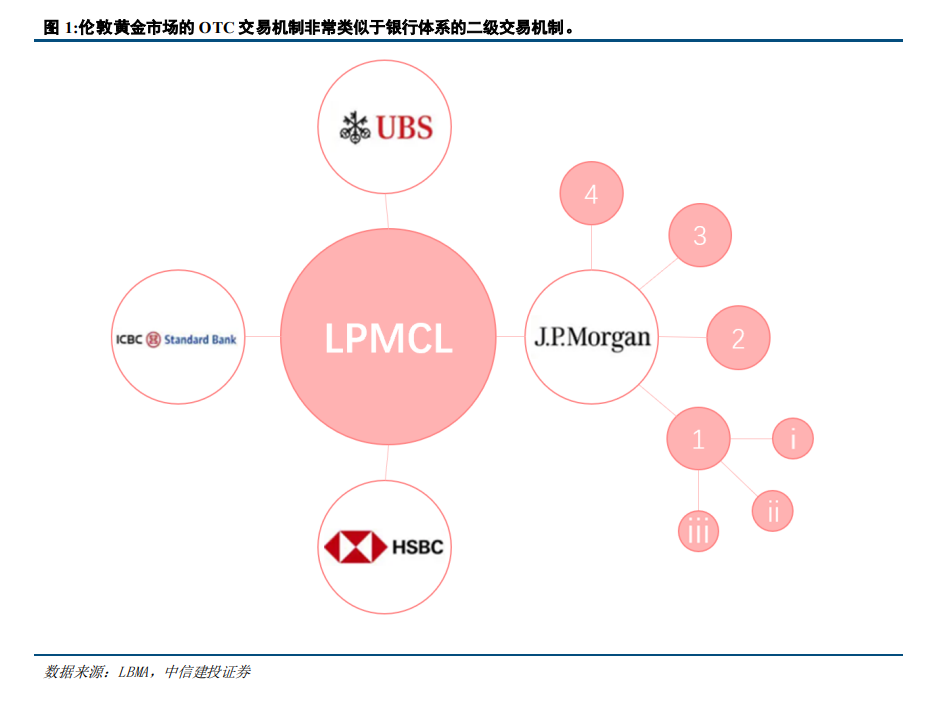
Core Viewpoint - The year 2025 is pivotal for gold, with significant price increases and central bank gold reserves reaching 36,000 tons, valued over $4 trillion, surpassing euro reserves and approaching dollar levels [1][3]. Group 1: Central Bank Gold Purchases - Central banks have become significant players in the gold market, with their purchasing behavior reflecting strategic needs amid global political instability [2][3]. - The World Gold Council's data does not fully capture the extent of central bank gold purchases, indicating a need for more comprehensive research [2][3]. - Central banks primarily acquire gold through four channels: OTC market purchases, local production, transactions with the IMF, and potentially through gold ETFs [7][10][44]. Group 2: Gold Storage and Management - Global gold storage is managed through a diverse system involving central banks, commercial banks, and specialized custodians [12][46]. - Two main operational models for gold storage exist: internal (self-managed by central banks) and external (outsourced to third-party custodians) [47][48]. - The three major pillars of global central bank gold custody are the New York Federal Reserve, the Bank of England, and the Bank for International Settlements (BIS) [52][58]. Group 3: Storage Strategies and Motivations - Central banks employ three primary storage strategies: domestic storage emphasizing sovereignty and security, a mixed domestic and foreign storage approach, and non-disclosure of storage locations [61][62][66]. - Countries like China and the U.S. predominantly store their gold domestically, while others, such as Germany and Belgium, utilize a mixed approach due to historical and logistical reasons [63][65]. - Many nations opt for secrecy regarding their gold storage details to mitigate geopolitical risks and maintain market stability [66].


央行如何购买和存储黄金?
Hua Er Jie Jian Wen· 2025-12-27 08:52
Core Insights - Global central bank gold reserves are approaching levels seen during the Bretton Woods era, with current reserves at 36,000 tons and a market value exceeding $4 trillion [1] - Gold now accounts for 20% of global foreign exchange reserves, surpassing the euro's 16% and becoming the second-largest reserve asset after the dollar [1] Group 1: Central Bank Gold Purchasing Mechanisms - Central banks primarily increase gold holdings through two methods: OTC market transactions and purchasing domestically produced gold [2] - The OTC market, particularly in London, is the most common method for central banks to acquire gold, often involving ownership transfers without physical movement of gold [3] - Some resource-rich countries, like the Philippines and Uzbekistan, prefer local direct purchases from small-scale producers, which are less visible and do not affect foreign exchange reserves [5] Group 2: Gold Storage Strategies - The global gold storage system is supported by three main pillars: the New York Federal Reserve, the Bank of England, and the Bank for International Settlements (BIS) [9] - The New York Federal Reserve holds the largest gold vault globally, while the Bank of England serves as a key center for gold pricing and transactions [10] - The BIS, known as the "central bank of central banks," provides essential custody and settlement services for gold transactions [10] Group 3: Strategic Shifts in Gold Storage - Central banks are exhibiting strategic differentiation in gold storage, with some opting for domestic storage to enhance sovereignty [11] - The trend of "gold repatriation" is notable, with countries like Germany and India moving significant amounts of gold back to domestic storage [12] - This shift has led to a "black box" effect in market data, as some central banks may delay or choose not to disclose gold purchases, resulting in discrepancies in reported data [13]
黄金跌价了,金条降价,25年12月24日国内黄金、足金、金条最新价
Sou Hu Cai Jing· 2025-12-26 13:15
Group 1 - The core viewpoint of the article highlights the significant increase in domestic gold prices, with the price per gram generally surpassing 1400 RMB, alongside a rise in platinum and palladium prices, prompting domestic exchanges to implement risk control measures. Analysts attribute this to factors such as easing inflation, expectations of interest rate cuts, geopolitical risks, and central bank gold purchases, with Goldman Sachs predicting gold prices could reach 4900 USD by 2026 [1] Group 2 - Recent retail gold prices in domestic stores have shown a notable decline, particularly in cities like Haikou and Shenzhen, where the price difference for the same gold purity can reach approximately 17 RMB per gram, leading to a potential price gap of over 500 RMB for a 30-gram gold ornament [1] - The lower gold prices in Shenzhen are primarily due to its proximity to a major gold distribution center, resulting in abundant supply and competition, which helps to lower retail prices. In contrast, Haikou relies on external sourcing, leading to higher logistics costs and a greater markup due to strong tourism demand [1] Group 3 - There is a significant disparity in processing fees across different regions, which can greatly affect the overall cost of purchasing gold. For instance, processing fees for hard gold in Shenzhen may be around 100 RMB per gram, while fees in Hainan could be considerably higher, impacting the investment efficiency for consumers [3] Group 4 - The current market has seen increased transparency in pricing across various channels, yet substantial regional price differences and brand premiums remain. Consumers are advised to consider cross-city purchases carefully, as travel expenses may offset any potential savings from price differences [5] - There are objective pricing differences among brands, with similar gold ornaments showing significant price variations across different brands and sales channels. Consumers are encouraged to clarify their needs, focusing on standard gold bars or low-premium channels for investment, while for jewelry purchases, they should compare gold prices, processing fees, weight, and buyback policies to avoid hidden costs [6]