
提质增效

Search documents
2025年中央经济工作会议解读:宏观政策基调延续稳中求进中做好提质增效
Datong Securities· 2025-12-12 12:04
核心观点: 证券研究报告|事件点评 2025 年 12 月 12 日 宏观政策基调延续 稳中求进中做好提质增效 ——2025 年中央经济工作会议解读 事件简述: 2025 年 12 月 11 日,中央经济工作会议在召开,会议总结了 2025 年的 经济工作,分析了当前经济形势,部署了 2026 年经济工作。继 12 月 8 日中央政治局会议分析研究 2026 年经济工作,提出明年八大重点任务 后,中央经济工作会议在此基础上进一步细化重点任务的政策安排和目 标,并在财政货币政策、政策关键着力点等方面提出具体部署。 具体内容 请仔细阅读报告最后的重要法律申明 第 1 页 共 6 页 大同证券研究中心 分析师:景剑文 执业证书编号: S0770523090001 邮箱: jingjw@dtsbc.com.cn 地址:山西太原长治路 请仔细阅读报告最后的重要法律申明 第 2 页 共 6 页 111 号山西世贸中心 A 座 F12、F13 网址: http://www.dtsbc.co m.cn "稳中求进"总基调不变,挖掘经济潜能做好经济提质增效。本次 会议主要根据中央政治局会议研究内容进行细化,相关任务目标具 有连 ...
【招银研究|政策】开局之年,提质增效——2025年中央经济工作会议学习体会
招商银行研究· 2025-12-12 11:17
Core Viewpoint - The Central Economic Work Conference held on December 10-11, 2025, outlines the economic work for 2026, emphasizing a balanced approach to domestic economic work and international trade, with a focus on expanding domestic demand and optimizing supply to achieve effective qualitative improvement and reasonable quantitative growth [1] Group 1: Work Tone - The conference adopts a pragmatic and positive tone, affirming that the main economic goals for 2025 will be met, with an expected GDP growth rate of 5% [2] - It acknowledges persistent challenges in economic development, including external environmental changes, domestic supply-demand imbalances, and risks in key areas [3] Group 2: Macroeconomic Policy - The macroeconomic policy will maintain strength and enhance effectiveness, with a focus on both existing and new policies [5] - Fiscal policy will be more proactive, with a projected fiscal deficit rate of 4% for 2026, corresponding to a deficit scale of 5.85 trillion, an increase of 190 billion from 2025 [7] - Monetary policy will remain moderately loose, prioritizing economic stability over inflation, with expectations for a 50 basis point reduction in reserve requirement ratios [9] Group 3: Key Work Areas - The conference identifies eight key work areas, with "expanding domestic demand" as the top priority, focusing on increasing residents' income and optimizing supply [10] - Innovation-driven policies will see significant changes, including the establishment of a comprehensive education and technology talent development plan [12] - Emphasis on green transformation and addressing risks in key areas, particularly in real estate and local government debt [14][15]

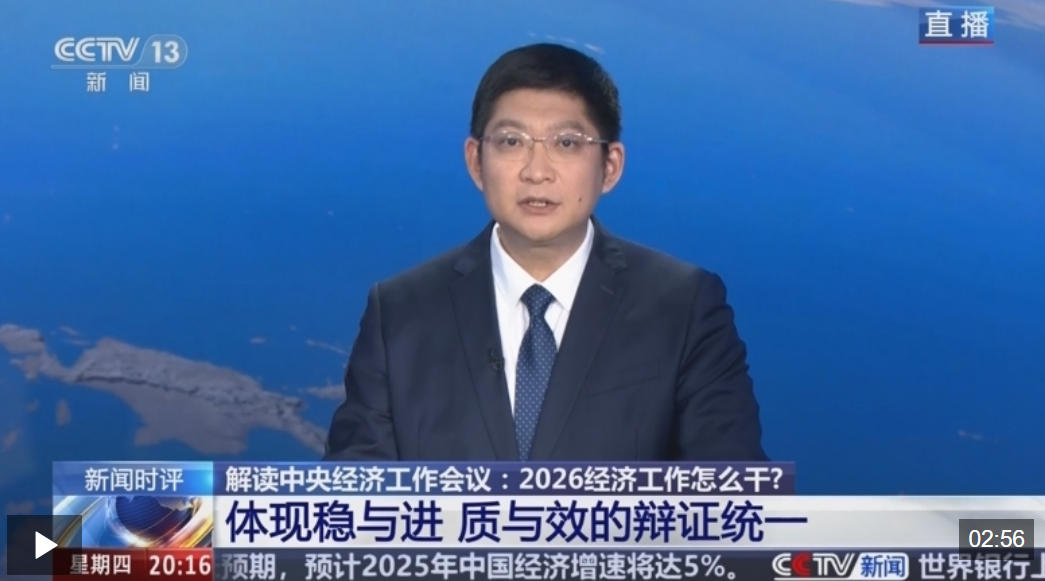
视频丨2026经济工作怎么干?“八个坚持”释放哪些信号?专家解读
Yang Shi Xin Wen Ke Hu Duan· 2025-12-12 10:34
Group 1 - The core policy direction of "seeking progress while maintaining stability, improving quality and efficiency" reflects a dialectical unity between stability and progress, as well as quality and efficiency [2][4] - The relationship between stability and progress indicates that China's economic growth remains among the top in the world, emphasizing the need for both qualitative improvement and reasonable quantitative growth [4] - The relationship between quality and efficiency highlights the importance of developing new productive forces and achieving successful industrial transformation and green low-carbon transitions [6] Group 2 - The "Eight Persistences" signal the key tasks for 2026, emphasizing a systematic perspective in economic work, which requires viewing various development tasks from a holistic standpoint [8][10] - The focus on a clear goal orientation in the proposed tasks aims to align short-term objectives with the medium- and long-term plans of the 14th Five-Year Plan [10] - The commitment to prioritizing people's livelihoods reflects a strong emphasis on addressing issues that directly impact the public, ensuring that investments in both physical and human capital are closely integrated [12][14]
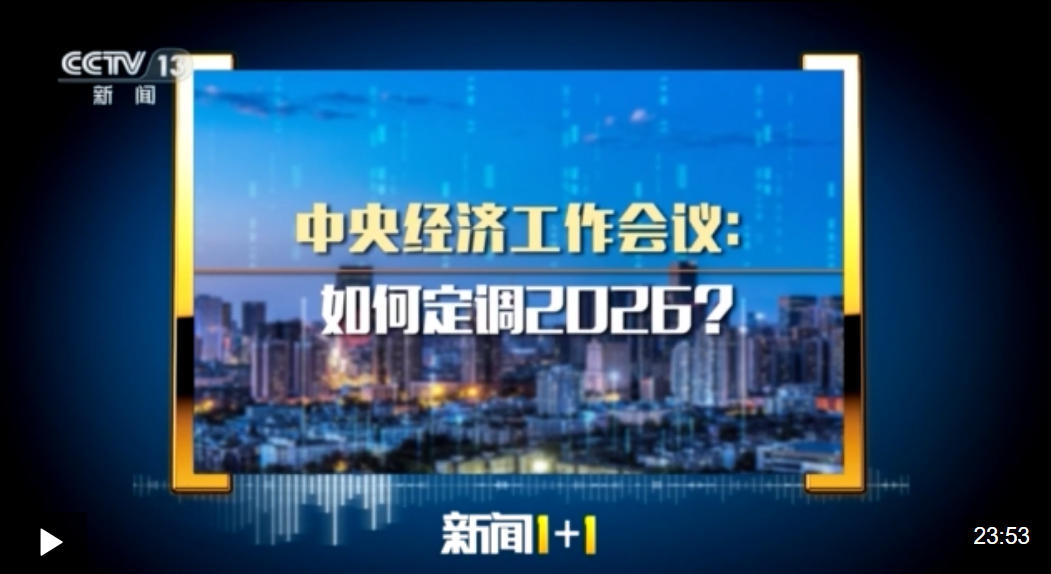
新闻1+1丨如何定调2026?明年经济工作有这些重点任务
Yang Shi Xin Wen Ke Hu Duan· 2025-12-12 10:22
Group 1 - The core viewpoint of the Central Economic Work Conference emphasizes the need for a balanced approach to economic growth, focusing on both quality and reasonable growth rates for the upcoming year [2][9] - The conference outlines eight specific tasks, with a primary focus on strengthening domestic demand and building a robust domestic market [2] - New proposals include the integration of policy support and reform innovation, highlighting that reliance solely on policy support is insufficient [2][3] Group 2 - The concept of "quality" is defined at three levels: micro (product and service quality), meso (industrial value chain), and macro (total factor productivity) [3][4][5] - "Efficiency" is described in terms of profit for enterprises, fiscal revenue for local governments, and income growth for residents [7][8] - The emphasis on improving both "quality" and "efficiency" is identified as a key focus for economic work in the coming year [9] Group 3 - The conference stresses the importance of leveraging both existing and new policies to enhance their effectiveness, particularly in fiscal policy where local special bonds reached 4.4 trillion yuan [10] - In monetary policy, a moderately loose approach is advocated, with a significant existing credit scale of approximately 270 trillion yuan that can be utilized effectively [11] Group 4 - To boost consumption, a comprehensive plan is necessary, with the fundamental element being income growth, as consumption is a function of income [12] - Increasing income involves direct measures, such as raising labor compensation, and indirect measures, like expanding public services in areas such as healthcare and education [13] - The conference highlights the importance of combining investments in physical assets and human capital to indirectly enhance residents' income [13]
一文梳理丨中央经济工作会议提了哪些关键词
Sou Hu Cai Jing· 2025-12-12 08:38
Core Viewpoint - The Central Economic Work Conference outlined eight key tasks for economic work in 2026, emphasizing the importance of domestic demand and innovation-driven growth [1][4]. Policy Orientation - The policy tone for next year is characterized by "seeking progress while maintaining stability" and "improving quality and efficiency," indicating a focus on the effectiveness of policies [3]. - The conference reiterated the need for a more proactive macroeconomic policy, enhancing the forward-looking, targeted, and coordinated nature of policies to expand domestic demand and optimize supply [3][4]. Domestic Demand Focus - "Maintaining domestic demand as the primary task" is highlighted as crucial for economic stability and security, with an emphasis on transforming market potential into real growth [4][5]. - The conference plans to implement a "rural and urban residents' income increase plan" to boost consumption capacity and willingness [6]. Investment and Consumption - The conference aims to stabilize investment by increasing the scale of central budget investments and optimizing the use of local government special bonds [6][7]. - Fiscal support for consumption is expected to rise from 300 billion to 500 billion, with a focus on service consumption and policies to encourage spending [6]. Innovation-Driven Growth - The emphasis on "innovation-driven growth" aims to strengthen the role of technology in shaping new development advantages, with plans to enhance support for tech enterprises [8][9]. - The conference outlines a strategy for developing key industries, including traditional sectors transitioning to high-end, intelligent, and green models, and emerging sectors like renewable energy and aerospace [9]. Market Regulation and Competition - The conference stresses the need for reform to enhance high-quality development, including the establishment of a national unified market construction regulation to eliminate unfair competition [10]. - The focus on creating a win-win environment for platform enterprises and workers indicates a shift towards quality improvement in the platform economy [10]. Real Estate Market Stability - The conference emphasizes stabilizing the real estate market through targeted policies, including increasing loan quotas for real estate projects and encouraging the purchase of existing homes for affordable housing [11][12]. - The deepening of housing provident fund system reforms is expected to provide significant policy space for supporting the real estate market [12].

图解:释放了哪些重要信号?券商首席解读中央经济工作会议
Zhong Guo Jing Ji Wang· 2025-12-12 08:25
Group 1 - The Central Economic Work Conference emphasized the need for a stable and effective policy environment, focusing on innovation, reform deepening, and risk prevention [4] - The conference highlighted the implementation of a moderately loose monetary policy and introduced the flexible and efficient use of various policy tools such as reserve requirement ratio (RRR) cuts and interest rate reductions [5] - The meeting's focus on "quality improvement and efficiency enhancement" indicates a shift towards policies that prioritize effectiveness over timing, aiming for high-quality economic growth through coordinated fiscal and monetary policies [6][7] Group 2 - The conference reiterated a proactive macroeconomic policy stance, continuing with an active fiscal policy and moderately loose monetary policy to support economic recovery and improve the fundamentals of listed companies [8] - For 2026, the focus will shift towards quality improvement, structural adjustments, and technological self-reliance, with expectations for a "technology growth" style in the A-share market [8] - The meeting indicated that the policy intensity will remain stable, with new measures aimed at destocking in the real estate market and promoting reasonable price recovery [9][10] Group 3 - Fiscal funding is expected to shift towards a balanced approach between investment and consumption, with increased emphasis on household welfare and social security measures [11] - The monetary policy is projected to maintain a moderately loose stance, with potential interest rate cuts and RRR reductions anticipated, while focusing on directing financial resources towards technology innovation and green development [12] - The conference also confirmed the need to reform the housing provident fund system to support housing needs, particularly for new citizens and young people in urban areas [14]

新财观 | 坚持内需主导,宏观政策更加积极有为
Xin Hua Cai Jing· 2025-12-12 07:44
Group 1 - The central economic work conference emphasizes the implementation of more proactive macro policies to enhance domestic demand and optimize supply, aiming for qualitative and quantitative economic growth in 2026 [1][2] - The focus on domestic demand is reinforced, with a goal to build a strong domestic market, addressing the current issue of insufficient effective demand, as consumer spending in 2023 accounted for only 39.57% of GDP, significantly lower than global and regional averages [2] - The conference highlights the importance of innovation-driven growth, aiming to cultivate new economic drivers, with a focus on sectors like artificial intelligence and semiconductor technology to enhance productivity and address structural challenges [3] Group 2 - The macroeconomic policy is set to be more proactive, with a focus on quality and efficiency, indicating confidence in the resilience of the domestic economy and a reduced need for extraordinary stimulus measures [4] - Fiscal policy is expected to maintain a certain degree of expansion, with a projected fiscal deficit rate between 3.5% and 4% for 2026, emphasizing the integration of existing and new policies to enhance economic governance [5] - A moderately loose monetary policy is anticipated, with expectations for interest rate cuts and reserve requirement ratio reductions to support economic stability and reasonable price recovery [6] Group 3 - The real estate sector is shifting from being an economic engine to a cornerstone of people's livelihoods, with policies aimed at promoting quality housing and new development models [7] - The capital market is expected to maintain a stable upward trend, supported by ongoing reforms in investment and financing, contributing to wealth preservation and economic transformation [8]
德邦证券程强:“十五五”开局之年产业仍是重点,扩内需、科技创新、“双碳”值得关注
Zheng Quan Shi Bao Wang· 2025-12-12 07:09
程强表示,"十五五"开局之年产业仍是重点,扩内需、科技创新、"双碳"值得关注。政策部署更注重短 期政策力度和长期制度改革结合,会议提出"坚持政策支持和改革创新并举,必须做到既'放得活'又'管 得好'"和"坚持创新驱动,加紧培育壮大新动能"。程强认为,产业发展被提升到了一个前所未有的高 度,未来几年的工作重心将放在产业领先和安全建设方面;探索构建产业发展导向的宏观政策体系,在 推动科技创新、加快培育新动能、促进经济结构优化升级上取得实质性、突破性进展,将成为未来工作 的重要方向之一。 人民财讯12月12日电,12月12日,德邦证券首席经济学家程强表示,今年中央经济工作会议政策的总基 调更加突出"提质增效",2026年经济增速目标将调整至更务实、更符合提质增效和高质量发展要求的水 平。 ...
中央经济工作会议点评:债务周期“出清阶段”,政策组合延续
China Post Securities· 2025-12-12 06:28
1. Report Industry Investment Rating No relevant content provided. 2. Core Viewpoints of the Report - The debt cycle in 2026 will still be in the clearing stage, with the combination of fiscal and monetary double - easing policies continuing. The policy emphasizes "improving quality and efficiency", and the direction of risk resolution in key areas is clearer. The policy aims to maintain a reasonable economic growth rate and improve the quality of economic development, promoting the economy to move forward steadily on the high - quality development track [28]. 3. Summaries According to Relevant Catalogs 3.1 Situation and Tasks: Pressure Eases Marginally, and the Overall Plan Balances Domestic and International Aspects - The Central Economic Work Conference held on December 10 - 11, 2025, set the tone of "seeking progress while maintaining stability and improving quality and efficiency". The meeting's view on the current economic situation has improved marginally, and it is expected that the GDP growth rate in 2026 will be around 5%. The policy may focus more on quality and efficiency, and the necessity of front - loaded policy implementation may decrease [3][12][13]. - The policy goals emphasize achieving greater breakthroughs in the "effective improvement of quality", with strengthening the domestic large - scale cycle as the top priority. The meeting also shows more attention to expanding domestic demand and is more cautious about external risks [19]. 3.2 Macroeconomic Regulation: Policies Improve Quality and Efficiency, and Flexible Interest Rate Cuts are Expected - The policy tone is newly established as "seeking progress while maintaining stability and improving quality and efficiency". It emphasizes the coordinated efforts of stock and incremental policies and better control of the rhythm of counter - cyclical and cross - cyclical adjustments. A new mechanism for managing expectations is proposed [21]. - Fiscal policy remains more proactive. The deficit rate in 2026 is expected to be about 4%, and the general deficit rate is about 9.8%, with a net debt - raising financing scale of 14.42 trillion yuan. Tax incentives and fiscal subsidies will be more strictly regulated [21]. - Monetary policy continues to be moderately loose. It is proposed to use tools such as reserve requirement ratio cuts and interest rate cuts "flexibly and efficiently", and "reasonable price recovery" is included in the policy tone. Monetary policy will continue to provide targeted support to key areas [21]. 3.3 Development Plan: Emphasize Domestic Demand - Led Growth and Rectify Involutionary Competition - In terms of domestic demand, a "rural and urban residents' income increase plan" is proposed for the first time, and unreasonable restrictions in the consumption field will be cleared. On the investment side, the focus shifts to the central government, with an increase in central budgetary investment to stop the decline [23]. - Industrial policies focus on scientific and technological innovation, with strengthened institutional supply and improved innovation chains. "Innovative science and technology financial services" are proposed for the first time [23]. - In terms of reform, rectifying "involutionary competition" is included in the reform tasks. The direction of fiscal and tax system reform is clearer, and the "reduction in quantity and improvement in quality" of small and medium - sized financial institutions is required [23]. 3.4 Risk Prevention: Real Estate Inventory Reduction and Orderly Debt Resolution - In 2026, risk prevention focuses on real estate and local government debts. The real estate policy will continue to emphasize "inventory reduction" with the principle of "implementing policies according to cities", and the acquisition of existing commercial housing for affordable housing is encouraged again [27]. - Regarding local debts, it is emphasized that no new implicit debts should be added illegally. The central government publicly names the operational debt risks of local financing platforms for the first time, and debt risks will be resolved in an orderly manner through market - based means [27].
中央经济工作会议释三大信号 明确“稳增长”工作主线
Zhong Guo Xin Wen Wang· 2025-12-12 06:05
Group 1 - The core message of the Central Economic Work Conference is to establish "stabilizing growth" as the main line of work for 2026, focusing on high-quality development through efficiency and effectiveness [1] - The shift from "stabilizing growth through progress" to "improving quality and efficiency" indicates a change in macroeconomic policy focus from maintaining total volume and growth rate to optimizing structure and enhancing effectiveness [1] - The emphasis on reducing ineffective supply and enhancing total factor productivity aims to lay a solid foundation for high-quality development in the upcoming "14th Five-Year Plan" [1] Group 2 - The conference advocates for a "dual easing" approach, continuing to implement a proactive fiscal policy and a moderately loose monetary policy to ensure ample liquidity [2] - The key to effective monetary policy is not just in the points of interest rate cuts but in maintaining liquidity and innovating the system, including direct liquidity injections to non-bank financial institutions [2] - Policy coordination is crucial, combining fiscal expansion with monetary easing to enhance policy transmission efficiency [2] Group 3 - The meeting highlights the importance of policy integration, moving from fragmented execution to systematic collaboration, aiming for a synergistic effect where combined policies yield greater results [3] - The focus will be on "activating stock and optimizing increment," indicating a shift towards efficient mechanisms rather than simple tool stacking [3] - The overall economic policy direction will emphasize consistency and effectiveness across various macroeconomic policies, including fiscal, monetary, employment, and environmental policies, to improve macroeconomic governance [3]