
杠铃策略

Search documents
【快讯】广发基金王予柯:当前长久期利率债仍然是杠铃策略的较好配置品种
Zhong Jin Zai Xian· 2025-08-14 06:58
Core Insights - The essence of stock investment returns is derived from the intrinsic return rate of assets, which is based on fundamental and valuation analysis [1] - The current investment strategy emphasizes a barbell approach, focusing on low-volatility dividend stocks for defense and key sectors like internet and non-ferrous metals for offense [1] - The necessity for short-term monetary policy adjustments appears to be decreasing, but the fundamental win rate for bond assets remains [1] Investment Strategy - The investment manager does not base returns on predictions of market, competitors, or policy changes, but acknowledges their impact on short-term asset prices [1] - A diverse underlying asset selection is crucial, incorporating different style factors such as growth and value [1] - The current portfolio is underweight in low-volatility dividend and quality dividend sectors, with a focus on business model certainty and valuation cost-effectiveness [1] Asset Allocation - The defensive side of the portfolio continues to favor low-volatility dividend stocks as a solid defensive asset [1] - On the offensive side, there is a focus on leading companies in the internet sector, non-ferrous metals, and a small number of cyclical industries, with future opportunities tied to industry supply-demand fundamentals and improving industry conditions [1] - Long-duration bonds remain a good allocation choice under the barbell strategy, although the overall yield potential has significantly narrowed compared to last year, necessitating careful consideration of risk-reward ratios [1]
银河基金蒋宇翔:情绪与资金共推A股破浪前行
Guo Ji Jin Rong Bao· 2025-08-13 13:12
Group 1 - The A-share market has shown resilience, with the Shanghai Composite Index rising 8.59% and the CSI Communication Equipment Index increasing by 28.84% from January 1 to August 6, 2025 [1] - The recent surge in the A-share market is attributed to high market sentiment and continuous capital inflow, as noted by the assistant director of the research department at Galaxy Fund, Jiang Yuxiang [1][2] - As of August 13, the Shanghai Composite Index reached 3680 points, the highest since December 2021, indicating a positive market trend [2] Group 2 - The "national team" and other institutional investors have played a crucial role in stabilizing the market by increasing their holdings in ETFs, providing liquidity during market fluctuations [2] - There is significant potential for retail investors to contribute to the A-share market, with household deposits reaching 151 trillion yuan by the end of 2024, an increase of 14.3 trillion yuan from the previous year [2] - The margin trading balance in the A-share market surpassed 2 trillion yuan, indicating a growing investor confidence and willingness to engage in the market [2] Group 3 - The "barbell strategy" has gained popularity among investors, balancing low-risk and high-risk assets to manage returns and risks effectively [3] - The non-ferrous metals and banking sectors have performed well in the first half of the year, with the CSI Non-ferrous Metals Index rising by 28.77% and the CSI Banking Index increasing by 13.42% [3] - New consumption trends targeting Generation Z, such as emotional needs in areas like trendy toys and pet economy, are creating new growth opportunities [3]
3600点之后:聊聊当下权益投资的锚点、策略与心态
天天基金网· 2025-08-13 10:51
Core Viewpoint - The article discusses the current state of the A-share market, highlighting its resilience and cyclical nature, as well as the psychological and technical significance of the 3600-point level in the context of market trends and investor sentiment [2][5][12]. Market Performance - The equity mixed fund index has gained over 16% this year, marking the first time since 2021 that returns have exceeded this level, although it remains below the historical peak of 20% from February 2021 [4]. - The current position of the Shanghai Composite Index is close to significant historical highs, with only a small distance from the October peak of 3674 points and the ten-year peak of 3731 points [5]. Valuation Insights - The current overall valuation of A-shares is at a historically moderate to high level, with the PE ratios of the Shanghai Composite Index, CSI 300, and Wind All A reaching 92.9%, 72.9%, and 84.3% of their respective five-year percentiles [6]. - As of August 8, the Shanghai Composite Index's PE ratio stands at 15.69 times, significantly lower than that of major US indices, indicating a relative valuation advantage for A-shares [6][8]. Capital Flow and Market Sentiment - The financing balance in the A-share market has increased for three consecutive months, surpassing the 2 trillion yuan mark, a level not seen since the last bull market a decade ago [10]. - The current leverage level in the market is less than half of the peak seen during the 2015 bull market, suggesting that there is still room for capital inflow without overheating [11]. Investment Strategies - Investors are advised to adopt a more nuanced approach to portfolio management, focusing on matching industry exposure with personal risk tolerance and aligning investment styles with market trends [18]. - A "barbell strategy" is recommended, balancing offensive assets for growth with defensive assets to mitigate risks, with an emphasis on dividend strategies and bond funds as stabilizers [19]. Sector Opportunities - The article suggests focusing on structural rotation opportunities, particularly in sectors like banking and small-cap stocks, which have shown leadership in the current market rally [20]. - Upcoming mid-year earnings reports are expected to be pivotal, with sectors like non-ferrous metals and aerospace ETFs likely to perform well based on fundamental support [21]. Long-term Perspective - The article emphasizes the importance of patience and a long-term view in investing, as the market is expected to experience fluctuations rather than a straight upward trajectory [23]. - It highlights the need for investors to focus on understanding market dynamics, their own limitations, and the value of time in investment, rather than being swayed by short-term market noise [26][27].


上证180ETF指数基金(530280)自带杠铃策略,涨超0.7%
Xin Lang Cai Jing· 2025-08-13 02:13
Group 1 - The core viewpoint indicates that with the market stabilizing around 3600, a slow bull trend in the stock market is evident, and both dividend and technology assets are expected to yield excess returns in the long term, with a barbell strategy gaining attention [1] - The Shanghai 180 Index employs a barbell strategy consisting of 90% dividend and 10% technology assets, making it a good choice for equity market allocation, benefiting from both stable dividends and the growth of technology [1] - As of August 13, 2025, the Shanghai 180 Index has increased by 0.42%, with notable gains in constituent stocks such as Luoyang Molybdenum (up 3.55%) and Zijin Mining (up 3.40%) [1] Group 2 - The Shanghai 180 ETF closely tracks the Shanghai 180 Index, which selects 180 securities with large market capitalization and good liquidity from the Shanghai stock market, reflecting the overall performance of core listed companies [2] - As of July 31, 2025, the top ten weighted stocks in the Shanghai 180 Index account for 25.4% of the index, including major companies like Kweichow Moutai and China Ping An [2] - The Shanghai 180 ETF has various connection funds available for investment, enhancing accessibility for investors [2]
3600点之后:聊聊当下权益投资的锚点、策略与心态
Sou Hu Cai Jing· 2025-08-12 01:36
Group 1 - The market has remained above the 3600-point mark for 10 trading days since July 29, indicating a strong upward momentum [1][2] - The A-share market has shown resilience and cyclical behavior, moving from the explosive growth in 2022 to steady gains in recent months [3] - The mixed equity fund index has gained over 16% this year, marking the first time since 2021 that it has surpassed this threshold, although it remains below the historical high of 20% [5] Group 2 - The current position of the Shanghai Composite Index at 3600 points carries significant psychological and technical implications, being close to last year's high of 3674 points and the ten-year peak of 3731 points [6] - The overall valuation of A-shares is at a historically moderate to high level, with the index's PE ratio at 15.69 times and PB ratio at 1.42 times, which is lower than major US indices [9][11] Group 3 - The recent increase in market capitalization and the return of the financing balance to 2 trillion yuan indicates a growing market interest, reminiscent of the last bull market a decade ago [14] - The current leverage level in the market is still below half of the peak seen in 2015, suggesting that there is room for further capital inflow without overheating [16] Group 4 - Investors are showing varied responses at this market juncture, with some considering profit-taking while others are waiting for breakeven [17][18] - Investment strategies should focus on matching industry exposure with personal risk tolerance and aligning investment styles with market trends [20][21] Group 5 - The market is expected to experience fluctuations, and a long-term investment perspective is essential as the capital market's importance grows [27][29] - Investors should focus on understanding market dynamics and their own limitations, emphasizing the value of time in investment [30]
中银量化大类资产跟踪:杠铃策略占优,融资余额持续创新高
Bank of China Securities· 2025-08-11 03:05
Group 1: Stock Market Overview - The A-share market, Hong Kong stocks, and US stocks all experienced an increase this week, with the A-share index (CSI 300) rising by 1.2% over the past week, 2.2% over the past month, and 4.3% year-to-date [20][21][22] - The performance of various indices includes the CSI 500 rising by 1.8% weekly and the ChiNext index increasing by 0.5% [21][22] Group 2: A-share Style and Crowding Degree - Growth style continues to show low crowding and excess returns, with a weekly excess of -0.9% and a year-to-date excess of 3.0% [26][27] - Small-cap stocks outperformed large-cap stocks with a weekly excess of 0.7% and a year-to-date excess of 7.3% [26][27] - Micro-cap stocks showed a significant outperformance against fund-heavy stocks, with a year-to-date excess return of 46.1% [26][27] Group 3: A-share Valuation and Equity-Debt Ratio - The current PE_TTM of the A-share market is at a historically high percentile of 82%, indicating a marginal upward trend [64] - The CSI 300's valuation is at a high percentile of 69%, while the CSI 500 is at 62%, and the ChiNext is at a low percentile of 17% [64][71] - Sectors with extremely low valuations include consumption (10%) and real estate (11%), while sectors with extremely high valuations include pharmaceuticals (86%) and electronics (81%) [71]

上证180ETF指数基金(530280)自带杠铃策略盘中上涨
Xin Lang Cai Jing· 2025-08-11 02:13
Group 1 - The core viewpoint indicates that with the market stabilizing around 3600, a slow bull trend in the stock market is evident, and both dividend and technology assets are expected to yield excess returns in the long term, with a barbell strategy gaining attention [1] - The Shanghai 180 Index employs a barbell strategy consisting of 90% dividend and 10% technology assets, making it a good choice for equity market allocation, benefiting from both stable dividends and some elasticity from technology [1] - As of August 11, 2025, the Shanghai 180 Index has seen a slight increase of 0.04%, with notable gains in constituent stocks such as Tebian Electric Apparatus (up 2.65%) and Shanxi Fenjiu (up 2.05%) [1] Group 2 - The Shanghai 180 ETF closely tracks the Shanghai 180 Index, which selects 180 securities from the Shanghai market based on market capitalization and liquidity, reflecting the overall performance of core listed companies [2] - As of July 31, 2025, the top ten weighted stocks in the Shanghai 180 Index account for 25.4% of the index, including major companies like Kweichow Moutai and China Ping An [2] - The MACD golden cross signal has formed, indicating a positive trend for these stocks [2]
策略周报:AI应用预期差:商业化落地有望加速-20250811
Bank of China Securities· 2025-08-11 00:13
Group 1 - The report highlights a strong market performance supported by ample liquidity and positive policy signals, with the financing balance of the two markets approaching 2 trillion yuan [12] - The release of GPT-5 is expected to accelerate the commercialization of AI applications, despite some market skepticism regarding its revolutionary impact [29][30] - The eSIM mobile phone market is anticipated to grow significantly, with projections indicating around 1 billion eSIM smartphones globally by the end of 2025 and 1.441 billion in China by 2030 [12][28] Group 2 - The AI application sector is entering a phase of accelerated commercialization, with significant increases in token consumption indicating growing demand [30][31] - Specific AI application areas such as AI programming, AI advertising, and AI healthcare are showing promising revenue growth, with companies like GitHub Copilot and Anthropic reporting substantial user and revenue increases [33][34] - The report identifies ten potential application scenarios for humanoid robots, emphasizing their role in industrial operations, emergency response, and elder care, which are expected to drive market growth [27][28]
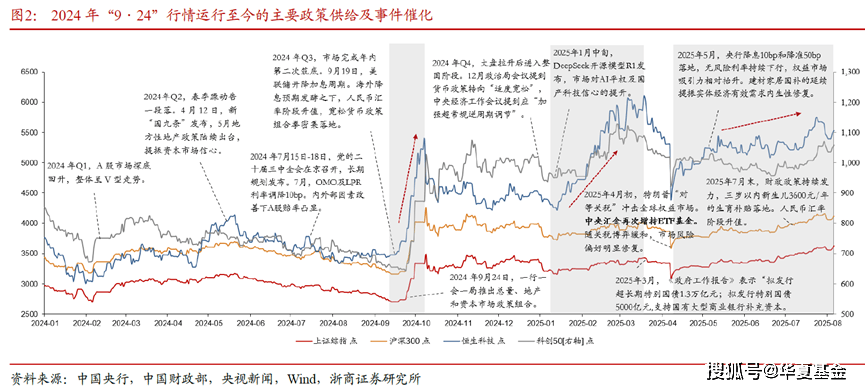
主动量化周报:8月边际谨慎:强个股,弱指数-20250810
ZHESHANG SECURITIES· 2025-08-10 11:43
Quantitative Models and Construction 1. Model Name: Fundamental Quantitative Model - **Model Construction Idea**: This model tracks the fundamental performance of industries, focusing on the transition from expectation-driven to data-driven analysis, particularly for cyclical sectors like coal and chemicals[3][13] - **Model Construction Process**: The model evaluates industry fundamentals by analyzing indicators such as industry prosperity and earnings expectations. It identifies sectors with improving fundamentals and aligns them with market sentiment shifts[3][13] - **Model Evaluation**: The model effectively captures the transition from speculative to fundamental-driven market dynamics, aligning with the observed recovery in cyclical sectors like coal and chemicals[3][13] 2. Model Name: Sentiment Quantitative Model - **Model Construction Idea**: This model measures market sentiment, particularly focusing on retail investor activity and trading dynamics in the TMT sector[3][13] - **Model Construction Process**: The model tracks metrics such as average daily turnover and retail investor participation. It identifies sectors with high trading activity and sentiment, such as TMT, which has seen sustained upward momentum since June[3][13] - **Model Evaluation**: The model successfully identifies sectors with strong trading sentiment, highlighting the TMT sector's resilience and potential for continued upward movement[3][13] 3. Model Name: Crowding Indicator Model - **Model Construction Idea**: This model assesses the crowding level in specific sectors, such as innovative drugs, to predict potential risks of pullbacks[3][13] - **Model Construction Process**: The model calculates crowding indicators based on historical data, comparing current levels to a 5-year range. For example, the crowding indicator for the innovative drug sector is at 94.93%, suggesting a high likelihood of a pullback in the next three weeks[3][13] - **Model Evaluation**: The model provides a robust framework for identifying overbought conditions, offering valuable insights for risk management in crowded sectors[3][13] --- Model Backtesting Results 1. Fundamental Quantitative Model - **Indicator: Industry Prosperity**: Coal and chemical sectors show improving fundamentals, aligning with the model's predictions for upward revisions in August[3][13] 2. Sentiment Quantitative Model - **Indicator: Average Daily Turnover**: The average daily turnover for the entire A-share market remains at approximately 1.75 trillion yuan, a historically high level, supporting the model's sentiment analysis[3][13] 3. Crowding Indicator Model - **Indicator: Crowding Level**: The crowding indicator for the innovative drug sector is at 94.93%, indicating a high risk of pullback within three weeks[3][13] --- Quantitative Factors and Construction 1. Factor Name: EP Value Factor - **Factor Construction Idea**: This factor identifies assets with high earnings-to-price ratios, which are expected to deliver superior returns[25][26] - **Factor Construction Process**: The factor is calculated as the ratio of earnings per share (EPS) to the stock price. It is used to rank assets based on their relative valuation attractiveness[25][26] - **Factor Evaluation**: The factor demonstrates strong performance, with high EP value assets delivering significant excess returns during the week[25][26] 2. Factor Name: Momentum Factor - **Factor Construction Idea**: This factor captures short-term price momentum, identifying stocks with strong recent performance[25][26] - **Factor Construction Process**: The factor is calculated based on the relative price performance of stocks over a defined short-term period. Stocks with the highest momentum scores are expected to outperform[25][26] - **Factor Evaluation**: The factor shows notable outperformance during the week, highlighting its effectiveness in capturing short-term trading opportunities[25][26] 3. Factor Name: Nonlinear Size Factor - **Factor Construction Idea**: This factor examines the nonlinear relationship between market capitalization and stock returns[25][26] - **Factor Construction Process**: The factor is derived by fitting a nonlinear regression model to the relationship between market capitalization and historical returns. It identifies deviations from the expected size-return relationship[25][26] - **Factor Evaluation**: The factor experienced a slight pullback during the week, indicating a temporary shift in market preferences away from size-based strategies[25][26] --- Factor Backtesting Results 1. EP Value Factor - **Weekly Return**: +0.2%[25][26] 2. Momentum Factor - **Weekly Return**: +0.3%[25][26] 3. Nonlinear Size Factor - **Weekly Return**: -0.3%[25][26]
“不扎堆”也能赢 基金经理练就多元配置硬实力
Zhong Guo Zheng Quan Bao· 2025-08-08 07:16
Core Viewpoint - The performance of public funds in the first half of the year has shown a significant focus on thematic investments, particularly in the innovative pharmaceutical sector, leading to high returns but also high volatility, which may deter ordinary investors from participating [1][2]. Group 1: Fund Performance - Many actively managed equity funds that ranked highly in performance during the first half of the year primarily focused on thematic investments such as innovative drugs, the Beijing Stock Exchange, and robotics [2]. - Fund managers like Gao Nan achieved over 25% returns by diversifying investments across high-growth sectors like innovative drugs and semiconductors, while also including more stable sectors [2]. - Value-oriented fund manager Lan Xiaokang reported returns of 17.44% and 16.20% for his funds, focusing on high-dividend stocks and cyclical commodities [3]. - The cyclical fund managed by Ye Yong achieved a return of 26.62%, emphasizing investments in precious metals and oil [3]. - Quantitative fund managers Yao Jiahong and Ma Fang reported a return of 20.02%, with a diversified portfolio across various industries [4]. Group 2: Investment Strategies - The China Securities Regulatory Commission's new action plan aims to bind fund manager compensation to fund performance, potentially leading to a shift towards more conservative investment strategies [5][6]. - Fund managers are expected to focus more on absolute valuation metrics, cash flow, and shareholder returns, reducing short-term trading motivations [5][6]. - Looking ahead, fund managers anticipate opportunities for fundamental resonance as the economy continues to recover, with a focus on high ROE and high-dividend assets [6][7]. - The "barbell strategy" is favored, combining stable assets with growth-oriented investments, particularly in sectors like technology and military [6][7].