线上线下融合

Search documents
2025年酒水代理加盟新趋势:共享酒庄为何成为热门?
Sou Hu Cai Jing· 2025-10-10 07:48
Core Insights - The traditional liquor distribution model is being disrupted, with a shift towards a digital and shared economy approach exemplified by Guangdong Wanjium City, which introduces the "shared winery" concept [1][3][15] Group 1: Market Transformation - The liquor market is evolving from a multi-tier distribution model to a more streamlined approach, reducing the number of intermediaries and costs significantly [3][6] - Wanjium City has compressed the traditional 6-7 tier distribution chain to just 2 tiers, cutting procurement costs by approximately 70% [3][6] Group 2: Shared Winery Concept - The "shared winery" model allows entrepreneurs to start with minimal investment, as low as a few thousand yuan, compared to traditional models requiring hundreds of thousands [6][12] - Over 2,600 chain wineries have emerged since the launch of the shared winery concept in 2023, indicating rapid growth and adoption [3][12] Group 3: Digital Ecosystem - A digital ecosystem has been established, integrating AI algorithms, blockchain traceability, and AR tasting experiences, enhancing operational efficiency and consumer engagement [5][9] - The platform's smart cloud warehouse monitors global inventory 24/7, while AI predicts sales based on various factors, ensuring a responsive supply chain [5][9] Group 4: New Business Models - The integration of online and offline channels is becoming a mainstream trend in the liquor B2B platform, with Wanjium City effectively linking social media marketing to in-store experiences [9][10] - The rise of social media-driven communities has created a new sales channel, enhancing brand awareness and customer loyalty through events and live streaming [10][12] Group 5: Future Trends - The growth of instant retail channels is driving demand for small-packaged, ready-to-drink products, which aligns with the offerings of shared wineries [14] - Future developments may include deeper integration of AI in product customization and immersive experiences through VR technology, enhancing consumer engagement [14][15]


2025东南亚美妆市场机遇白皮书
Sou Hu Cai Jing· 2025-10-03 14:46
Core Insights - The Southeast Asian beauty market is emerging as a "blue ocean" for Chinese brands, driven by a population of 670 million and over 40% e-commerce penetration, as domestic markets face saturation [1][24] - The market is expected to grow from $22 billion in 2024 to between $31 billion and $36 billion by 2030, with Indonesia, Vietnam, and Thailand contributing nearly 70% of the market share [1][2] Market Size and Growth - The Southeast Asian beauty industry is in a rapid expansion phase, with Indonesia holding the largest market share at 35.7%, followed by Vietnam and Thailand [1][2] - Indonesia is recognized as the largest halal beauty center globally, while Vietnam is becoming a hub for live commerce, and Thailand dominates the efficacy skincare segment [1][2] Online and Offline Channels - The online beauty market in Southeast Asia reached approximately 141.79 billion yuan in the past 11 months, with Shopee capturing 63.9% of the market share [2][3] - TikTok is emerging as a unique platform where content drives sales, with brands achieving significant conversion rates through creative marketing strategies [2][3] Localization Strategies - Successful market entry requires a deep understanding of local cultures, preferences, and needs, moving beyond a one-size-fits-all approach [4][5] - Brands like Fan Beauty Diary and Veenona have successfully established themselves in local markets by leveraging trusted retail channels and adapting products to meet local demands [3][4] Future Outlook - The integration of online and offline strategies is essential for sustained growth, with brands encouraged to test markets through platforms like TikTok and Shopee before scaling [4][5] - Long-term success will depend on creating culturally resonant content and building emotional connections with consumers, rather than relying solely on traffic acquisition [4][5]
提振消费进行时 | 广西县域“好物大集”揭幕为假日消费造势
Guang Xi Ri Bao· 2025-10-02 02:42
Core Insights - The "New Big Market New Services New Consumption" national county commercial consumption season event in Guangxi aims to boost local consumption through various collaborative efforts [1][2] - The event features over 100 enterprises showcasing diverse products and services, providing a platform for consumer engagement during the National Day and Mid-Autumn Festival [2] Group 1: Event Overview - The event is co-hosted by the Guangxi Commerce Department and Yulin Municipal Government, and is part of a series of activities aimed at enhancing consumption in the region [1] - It will run for five days and includes over 50 promotional activities across 14 cities in Guangxi from September to November [1][2] Group 2: Consumer Engagement - The event features unique local products, such as the Luchuan iron pot and Yulin beef noodle soup, which attract consumer interest through live demonstrations [1] - An "AI + home decoration" experience area allows visitors to preview home design solutions using VR technology, enhancing consumer convenience [1] Group 3: Promotional Strategies - Various promotional strategies are employed, including gift packages, discounts, cash prizes, and dining lottery draws to stimulate consumer spending [2] - The initiative aims to create diverse consumption scenarios by integrating themes like automotive, home appliances, and local delicacies [2]
2025广州国际购物节启幕
Zheng Quan Shi Bao Wang· 2025-09-29 13:33
Core Viewpoint - The "2025 Guangzhou International Shopping Festival" has officially launched, aiming to enhance consumer experience through a blend of online and offline activities, running until December 31 [1] Group 1 - The event covers all 11 districts of Guangzhou, engaging over 10,000 merchants [1] - More than 3,000 activities will be organized throughout the festival [1]
合百集团:公司高度重视酒水采销工作
Zheng Quan Ri Bao· 2025-09-29 08:09
Core Insights - The company has established a dedicated liquor division to enhance its supply chain and retail model, integrating online, offline, and group purchasing strategies [2] - For the period from January to August 2025, the company achieved liquor sales of 326 million yuan, reflecting a year-on-year growth of 16.7% [2] - The company is focusing on key sales periods such as the Spring Festival and Dragon Boat Festival, with notable brand performance including a 25.5% increase for Jian Nan Chun and a 13.9% increase for Ying Jia [2] - The company is expanding its consumer base and product offerings by introducing regional representative brands and traditional Chinese liquor, resulting in a 37.4% increase in sales of simplified packaging liquor [2] - The launch of the company's first private label beer, "He Jia Chun," has been positioned as a high-cost performance option for family gatherings, achieving sales of over 1 million yuan since its introduction in May [2]

坚持产品不隔夜上市,钱大妈生鲜经营秘诀究竟是什么?
Sou Hu Cai Jing· 2025-09-28 17:44
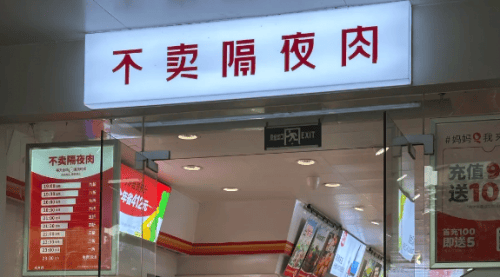
Core Insights - The article highlights the importance of fresh food procurement in daily life and how consumer demands for freshness, price, and shopping experience are increasing. It emphasizes the success of Qian Dama in the fresh food sector due to its commitment to not selling overnight meat [1][3]. Group 1: Business Model and Strategy - Since its establishment in 2012, Qian Dama has actively promoted the "daily fresh" model, addressing consumer concerns about the freshness of products by ensuring no overnight meat is sold. This approach has significantly enhanced consumer trust in the brand [3]. - Qian Dama implements a unique tiered discount system starting at 7 PM, offering a 10% discount that decreases every half hour until 11:30 PM, supported by an intelligent ordering system that helps franchise partners understand community consumption habits [3][4]. - The company adopts a "T+2" ordering model, allowing franchise partners to order products two days in advance, which helps manage inventory effectively and ensures product availability during peak times [3]. Group 2: Supply Chain and Quality Assurance - Qian Dama has established national centralized procurement bases and long-term partnerships with numerous agricultural suppliers to ensure high-quality and safe ingredients through direct sourcing and collaborative base construction [4]. - The company has set up 20 standardized rapid testing laboratories in its operational areas, collaborating with third-party authorities for comprehensive agricultural residue testing, ensuring consumer confidence in product safety [4]. Group 3: Customer Experience and Innovation - Qian Dama strategically locates its stores within a 10-minute walking distance for community residents, significantly reducing shopping time and meeting immediate consumer needs [6]. - The shopping environment in Qian Dama stores is clean and organized, providing an excellent shopping experience compared to traditional markets. The company also embraces the internet by utilizing a mini-program for online orders, allowing customers to purchase fresh products conveniently [6]. - Through its commitment to fresh quality, efficient operations, community-focused layout, and innovative online-offline integration, Qian Dama is driving transformation and upgrades in the fresh food industry [6].
盐城亭湖政务服务双驱动:“线上+线下”齐发力,绘就政务新图景
Yang Zi Wan Bao Wang· 2025-09-28 06:43
Core Viewpoint - The government services in Tinghu District, Yancheng City, are enhancing efficiency and user experience through a "dual-drive" model that integrates online and offline services, aiming for "zero distance, zero running, and zero cost" in administrative processes [1]. Group 1: One-Stop Service for Business Establishment - The "Ting Hao Ban" initiative allows businesses to complete all registration procedures at a single window in under one hour, including free provision of company seals and tax UKeys [2]. - The administrative approval bureau has streamlined processes by integrating multiple departments, enabling a "one-window acceptance, parallel processing, and one-time completion" service model [2]. - In the first half of 2025, the initiative saved over one million yuan in startup costs for local businesses through free services [2]. Group 2: Digital Empowerment for "Zero Running" - The "Ting Hao Ban" online service platform allows users to handle high-frequency tasks like social security and business registration without needing to visit physical locations [3]. - Users can submit applications and upload materials online, with results delivered via free mail, achieving a "business without leaving home" experience [3]. - For complex matters requiring in-person assistance, a "helping agent" area is available, providing full-process support and reducing wait times [3]. Group 3: Zero-Distance Service - The administrative approval bureau has implemented a "zero distance" service model, offering tailored assistance for vulnerable groups, including elderly and disabled individuals [4]. - Regular outreach activities are conducted to gather community needs and provide solutions, extending services beyond traditional government offices [4]. Group 4: 24-Hour Self-Service Area - The "24-hour self-service area" in the Tinghu District provides around-the-clock access to various administrative services, allowing users to complete tasks at their convenience [5]. - Self-service machines for printing business licenses and handling medical insurance inquiries significantly reduce waiting times for users [5]. - The initiative aims to enhance service flexibility and user-friendliness, contributing to the overall efficiency of government services [6].
美团:入驻美团闪购的小米门店已超1万家
Xin Lang Cai Jing· 2025-09-25 08:26
Group 1 - Meituan Flash Purchase reported that the number of Xiaomi stores joining the platform has exceeded 10,000 [1] - Xiaomi has collaborated with Meituan Flash Purchase to explore new business models such as 24-hour stores and lightning warehouses this year [1] - During the 618 shopping festival, sales of Xiaomi Home on Meituan Flash Purchase doubled year-on-year [1] Group 2 - Xiaomi started launching new products through Meituan Flash Purchase since last year [1] - The Xiaomi 17 series will also be available for sale on Meituan Flash Purchase simultaneously [1]

马航超市:一场关于生存与重生的深度对话
Sou Hu Cai Jing· 2025-09-25 03:31
Group 1 - The retail industry is shifting from a "large and comprehensive" model to a "refined and beautiful" differentiation strategy, focusing on specific customer segments and unique brand positioning [1] - Many department stores are introducing niche designer brands, high-end beauty products, and experiential consumption formats to attract consumers seeking quality and individuality [1] - Technology is empowering the transformation of department stores, with online-offline integration becoming standard, and most stores establishing online platforms for seamless shopping experiences [1][3] Group 2 - The traditional department store faces challenges from the rise of e-commerce, which has redefined consumer decision-making processes and led to a significant shift in foot traffic [3] - Data indicates that online retail sales in China now account for over 30% of total retail sales, with growth rates consistently outpacing offline sales [3] - The project leader of a supermarket is leveraging the internet for transformation, utilizing mini-programs for online shopping and social media for targeted marketing [5]
单年百亿GMV背后,看天猫优品自营店铺如何下活全域零售一盘棋?
Sou Hu Cai Jing· 2025-09-23 08:19
Core Insights - The home appliance industry is currently facing significant challenges such as stagnant growth, intensified homogenization competition, and evolving consumer demands, while also experiencing opportunities from policy changes like the "trade-in for new" subsidy program in 2024 [1][17] - Tmall Youpin's online self-operated flagship store achieved a remarkable GMV of over 10 billion in its first year, showcasing a successful business model that aligns with market demands and policy directions [1][17] Group 1: Industry Challenges and Opportunities - The home appliance sector is grappling with issues of resource allocation inequality and insufficient exposure for small brands, particularly in the context of the new subsidy policies [3] - The "trade-in for new" policy aims to stimulate market activity and support industry growth, but smaller enterprises face challenges in accessing these opportunities due to high entry barriers [3][12] Group 2: Tmall Youpin's Strategic Development - Tmall Youpin has established a comprehensive infrastructure to facilitate participation in the subsidy program, benefiting both major and small brands [3][5] - Over 400 categories, 500 brands, and 60,000 products have been made available through Tmall Youpin's online self-operated flagship store, significantly enhancing consumer opportunities [5] Group 3: Supply Chain and Consumer Engagement - Tmall Youpin is optimizing its supply structure by expanding its product matrix to include a wide range of categories, thus meeting the evolving consumer preference for one-stop shopping [6][10] - The store has successfully integrated online and offline channels, enhancing customer experience and driving sales through initiatives like the "Youpin Evening 8 PM" live streaming event [7][12] Group 4: Future Outlook and Ecosystem Development - The company is focused on building an integrated retail ecosystem that connects resources, traffic, and services seamlessly, catering to diverse consumer needs [10][16] - Tmall Youpin's growth reflects broader trends in the home appliance and home goods market, indicating a shift towards a more consumer-centric approach in retail [17]