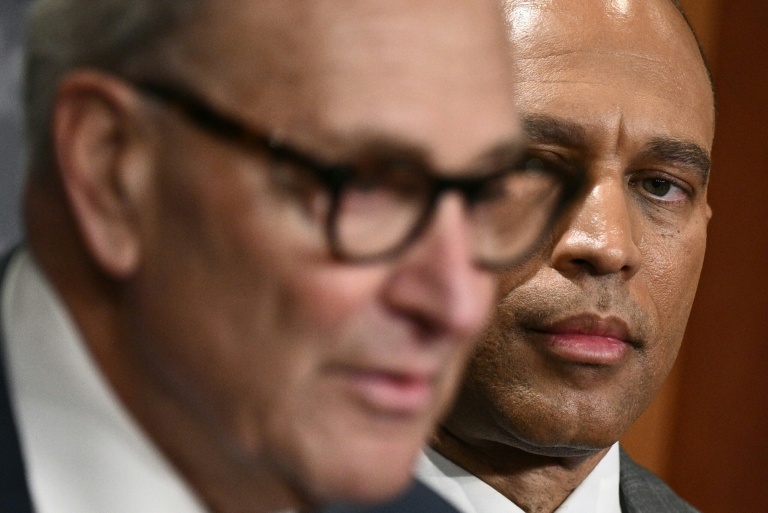
经济衰退

Search documents
DLS MARKETS:摩根大通CEO警告2026年美国仍有可能出现经济衰退
Sou Hu Cai Jing· 2025-10-09 06:40
Core Viewpoint - JPMorgan Chase CEO Jamie Dimon warns that despite a positive GDP growth of 3.8% in Q2, economic risks are not fully mitigated, and a recession in the U.S. could still occur by 2026 [1][3] Group 1: Economic Indicators - The latest GDP data shows a year-on-year growth of 3.8%, indicating a short-term positive trend [1] - The "Sam's Rule" indicator is at 0.13%, supported by stable unemployment rates, leading some to believe that recession risks are low [3] Group 2: Dimon's Perspective - Dimon emphasizes a strategy of not betting on a single economic outcome and advocates for rigorous stress testing within the bank [3] - He acknowledges positive economic factors, such as deregulation and stimulus measures from the "Big and Beautiful Act," which could positively impact the economy but may negatively affect inflation [3] Group 3: Government Shutdown Concerns - The U.S. government is facing a funding impasse, leading to potential short-term pay issues for federal workers and increased unemployment risks upon their return [3] - Market expectations are pessimistic regarding the duration of the shutdown, with 52% of traders predicting it will exceed 20 days, potentially breaking the previous record of 35 days [3] - The shutdown coincides with the Federal Reserve's upcoming interest rate decision meeting, which could lead to policy misjudgments due to the lack of complete economic data [3] Group 4: Dimon's Critique of Government Shutdown - Dimon expresses strong disapproval of government shutdowns, stating they are fundamentally a bad idea regardless of political affiliation [4] - He reflects on a previous shutdown lasting 35 days, questioning its real impact on the economy or markets [4]


“四连跌”,德国工业订单持续低迷
Huan Qiu Shi Bao· 2025-10-08 23:07
Core Viewpoint - The persistent decline in German industrial orders dampens hopes for economic recovery, with August showing a 0.8% month-on-month decrease, marking the fourth consecutive month of decline [1] Group 1: Industrial Orders - In August, new industrial orders in Germany fell by 0.8% month-on-month, continuing a downward trend for four months [1] - Domestic demand increased by 4.7% month-on-month, but overseas orders dropped for the third consecutive month, decreasing by 4.1% [1] - Orders from the Eurozone decreased by 2.9%, while orders from outside the Eurozone fell by 5.0% [1] - The automotive sector saw a significant decline in new orders, with a month-on-month drop of 6.4% [1] - The computer, electronics, and optical products manufacturing sector experienced an 11.5% decrease in new orders, while the pharmaceutical industry saw a 13.5% decline [1] Group 2: Economic Outlook - The German Federal Ministry for Economic Affairs and Energy indicated that the recovery in domestic industrial demand suggests a potential stabilization, but weak overseas demand continues to hinder recovery [1] - Experts express concern over the decline in overseas orders, especially after a slight recovery earlier in the year [2] - The chief economist of Deutsche Bank predicts significant improvement in the economy will not occur until next year [1] - The economic outlook remains bleak, with expectations for economic growth in 2025 and 2026 being cautious, as indicated by various economists [2][3] Group 3: Government Response and Challenges - There are calls for the German government to implement substantial fiscal measures, with plans for significant investment in infrastructure [2] - The lack of effective economic stimulus measures after two years of recession is highlighted as a critical issue [2] - High energy costs and stagnant innovation investments are noted as factors undermining the competitiveness of German industrial products [2]
日股,开盘飙升!
Zheng Quan Shi Bao· 2025-10-06 01:59
Group 1 - The Nikkei 225 index and the Tokyo Stock Exchange index reached historical highs, with the Nikkei 225 rising by 1,899.56 points, a 4.15% increase, reaching 47,669.06 points for the first time above 47,000 points [1] - The new president of the ruling Liberal Democratic Party (LDP), Sanae Takaichi, is expected to become the new Prime Minister of Japan following her election victory [2] - Takaichi aims to restore public trust in the LDP and plans to address economic issues such as high prices, as well as international security concerns [3] Group 2 - Japan's manufacturing sector is facing challenges, with the September Purchasing Managers' Index (PMI) at 48.4, indicating continued contraction in manufacturing activity [4] - The second quarter of this year saw a decline in regular profits for Japanese manufacturing companies by 11.5% year-on-year, marking two consecutive quarters of decline due to factors like U.S. tariff policies [4] - The food price inflation is significant, with 3,024 food items expected to increase in price in October, following a previous increase of 4,225 items in April [3]
Shutdown Fears: Should You Buy Stocks or Wait?
Yahoo Finance· 2025-10-04 10:00
Core Viewpoint - The ongoing federal government shutdown is creating uncertainty in the stock market, leading to potential volatility, but there are strong long-term investment opportunities available [1][3]. Group 1: Reasons to Invest - The long-term potential of the market remains lucrative despite short-term volatility risks due to the government shutdown [3]. - Historically, investors who remained in the market during downturns have achieved the highest returns, indicating that patience can be rewarding [4]. - An extreme hypothetical scenario suggests that even if the current shutdown leads to a recession similar to the 2007-2009 financial crisis, the S&P 500 has historically rebounded significantly, with total returns of 343% since December 2007 [5][7]. Group 2: Reasons to Exercise Caution - The uncertainty surrounding the duration of the government shutdown and its potential economic impact may warrant caution for some investors [1][6]. - The immediate aftermath of a recession can be challenging, as portfolios may decline in value without clear recovery timelines [7].
黄金价格创下 45 年来最高,预示着什么?
Sou Hu Cai Jing· 2025-10-03 05:10
Core Viewpoint - The recent surge in gold prices, reaching new highs, raises concerns about potential hyperinflation and reflects the fragility of the global economic system [2][4]. Group 1: Gold Price Surge - In September 2025, spot gold prices exceeded $3,674, and in October, they soared to $3,896, breaking a 45-year record adjusted for inflation [2]. - The current gold bull market has lasted for three years and shows no signs of abating [2]. Group 2: Historical Context - The 1970s saw a similar scenario where gold prices rose from $35 to $850 due to monetary collapse, high inflation, and economic recession [4]. - The U.S. is currently facing significant fiscal pressure, with $1 trillion allocated for debt repayment out of an annual income of approximately $50 trillion [4]. Group 3: Factors Driving Gold Demand - In 2024, global central bank gold purchases are expected to exceed 1,000 tons, increasing gold's share in official reserves to 20%, surpassing the euro as the second-largest reserve asset [4]. - The decline in U.S. dollar credibility and attractiveness of U.S. assets, along with geopolitical risks and concerns over de-globalization, have driven demand for gold as a safe-haven asset [4]. Group 4: Economic Warnings - Bridgewater founder Ray Dalio warns that the current global situation resembles pivotal moments in the 1930s and 1970s, with debt imbalances and currency devaluation potentially leading to crises [4]. - The trajectory of gold prices is reminiscent of the stagflation period in the 1970s, indicating heightened risks in the financial landscape [4].

报告显示美国消费者信心指数创4月以来最低水平
Sou Hu Cai Jing· 2025-10-01 01:43
Group 1 - The core point of the article is that the U.S. Consumer Confidence Index dropped to 94.2 in September, marking a decline of 3.6 points from August and reaching its lowest level since April [1] - The index measuring consumers' assessment of current business and employment conditions fell by 7 points to 125.4, while the expectations index, reflecting short-term income prospects and the business and employment environment, decreased to 73.4, significantly below the recession threshold of 80 [1] - The proportion of respondents who believe job opportunities are "plentiful" decreased to 26.9%, down over 3 percentage points from August, while those who find it "hard to get a job" remained at 19.1% [1] Group 2 - There is a notable increase in pessimism regarding financial conditions, with the perception of current financial status experiencing the largest monthly decline since July 2022 [1] - The senior economist at the research institution stated that consumer sentiment regarding business conditions is less optimistic than in recent months, and perceptions of current employment conditions have declined for the ninth consecutive month, reaching a multi-year low [1] - Analysts suggest that the stability of the labor market is a crucial consideration for Federal Reserve officials as they contemplate future interest rate movements, with expectations that the Fed will lower the benchmark interest rate by 0.5 percentage points by the end of the year [1]
随着消费者信心的急剧下降,泰经济衰退势头进一步加剧
Shang Wu Bu Wang Zhan· 2025-09-30 17:00
Economic Performance - Thailand's economy remains weak as of August, with private consumption slowing down and agricultural income decreasing by 10.8% year-on-year [1] - The consumer confidence index dropped from 51.7 to 50.1, indicating concerns over high living costs and geopolitical tensions [1] - Private investment in the capital goods sector saw a year-on-year increase of 23.6%, while new commercial vehicle registrations fell by 10.5% [1] Export and Tourism - August exports reached $27.7 billion, a 5.8% increase year-on-year, marking the 14th consecutive month of growth [1] - The number of foreign tourists visiting Thailand decreased by 12.8% year-on-year, while domestic tourism increased by 6.4% with 22.4 million Thai citizens traveling domestically [1] Industrial and Inflation Indicators - The industrial sentiment index slightly declined from 86.6 to 86.4 due to border conflicts and uncertainties related to U.S. tariff policies [1] - The purchasing managers' index rose to 52.7, reflecting an increase in new orders [1] Economic Stability - Overall economic stability remains good, with an inflation rate of -0.79% and a core inflation rate of 0.81% in August [2] - Public debt as a percentage of GDP stood at 64.5% as of July, compliant with fiscal discipline requirements [2] - International reserves reached $267.4 billion by the end of August, indicating strong external stability [2]
美国消费者信心指数创4月以来最低水平
Sou Hu Cai Jing· 2025-09-30 16:01
Core Insights - The Consumer Confidence Index in the U.S. dropped to 94.2 in September, a decrease of 3.6 points from August, marking the lowest level since April [1] - The assessment index for current business and employment conditions fell by 7 points to 125.4, while the consumer expectations index dropped to 73.4, significantly below the recession threshold of 80 [1] - The percentage of respondents who believe job opportunities are "plentiful" decreased to 26.9%, down over 3 percentage points from August, while those who find it "hard to get a job" remained at 19.1% [1] - There is an increasing pessimism regarding financial conditions, with the largest monthly decline in perceptions of current financial status since July 2022 [1] - The report indicates a declining sentiment towards business conditions and employment, with the current employment perception hitting a multi-year low for the ninth consecutive month [1] Economic Implications - The stability of the labor market is a crucial consideration for Federal Reserve officials as they contemplate future interest rate movements [1] - Market expectations suggest that the Federal Reserve may lower the benchmark interest rate by 0.5 percentage points before the end of the year [1]
快讯!美联储“放鸽”失败!
Sou Hu Cai Jing· 2025-09-30 03:55
Core Viewpoint - The Federal Reserve has raised interest rates from near zero to a high of 5% since March 2022, yet inflation remains above the target of 2% [2][4]. Group 1: Federal Reserve's Stance - The Federal Reserve prefers to slow economic growth rather than allow prices to rise [3]. - The Fed's commitment to ensuring inflation returns to 2% indicates that monetary policy will not be relaxed for a long time [4]. - Despite a current inflation rate around 3%, it is still significantly above the Fed's target, suggesting that the rate hike cycle is not over [4]. Group 2: Economic Implications - High interest rates historically create challenges for the economy, and current inflation is largely influenced by external factors such as global oil prices and supply chain issues, rather than domestic overproduction [4]. - There is skepticism regarding the effectiveness of rate hikes in addressing inflation driven by external factors, with concerns that this approach may lead to economic recession and increased unemployment [4].
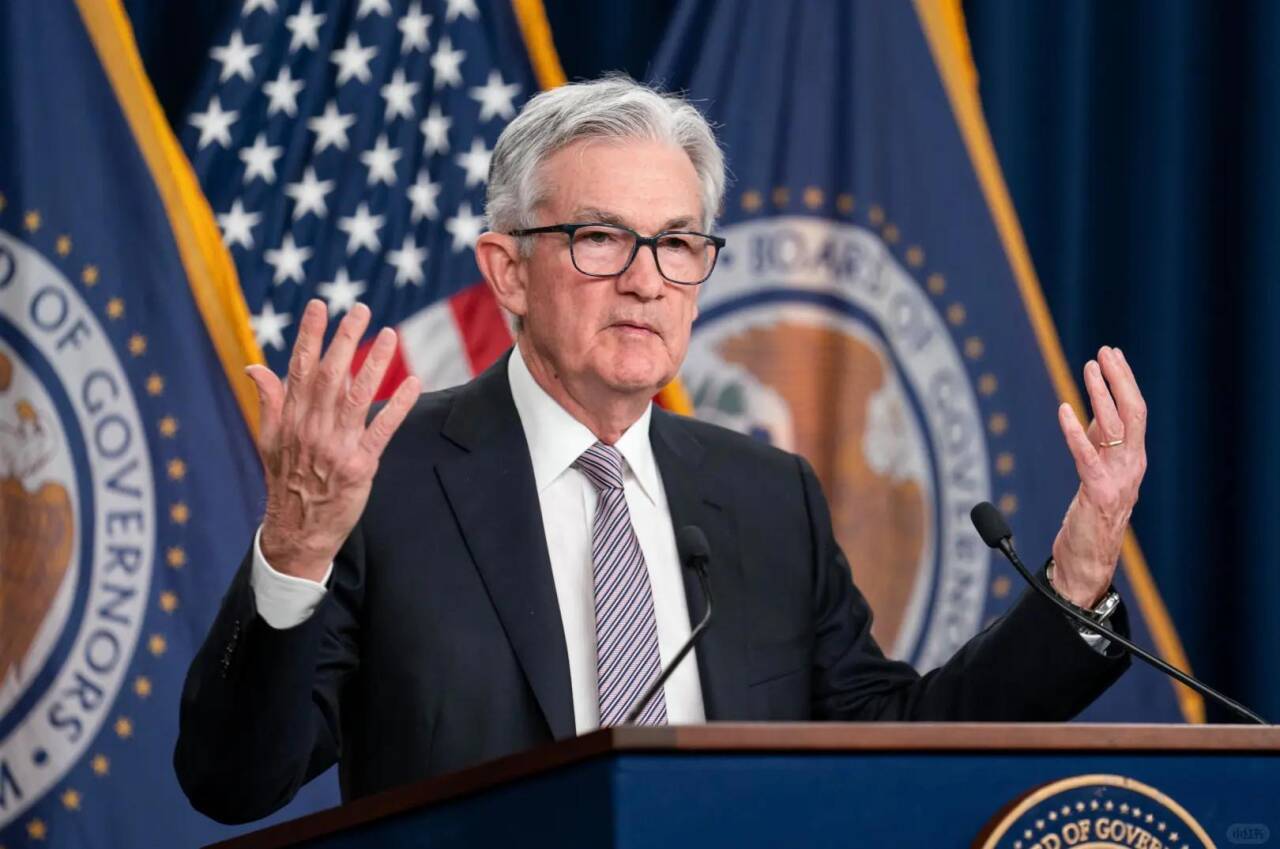
Stocks Rise, Gold Hits Record As Rate Cuts And Shutdown Loom
International Business Times· 2025-09-30 02:48
Market Overview - Equities experienced a rally for a second consecutive day, while gold reached a record high due to growing optimism regarding Federal Reserve interest rate cuts [1] - The expectation is that the Fed will lower borrowing costs twice more this year, following a recent cut for the first time since December [1] Economic Indicators - Upcoming labor market readings, including job openings, private hiring, and non-farm payrolls, are anticipated to show a slowdown, providing the Fed with justification to ease monetary policy [2] - Concerns exist that a potential US government shutdown could delay the release of these key economic figures [2] Political Landscape - Congressional leaders met with President Trump to negotiate funding, but significant differences remain, indicating a possible government shutdown [3] - The political divide is deepening, with accusations exchanged between parties regarding funding demands and the implications for the American public [3] Market Reactions to Shutdown - Historically, government shutdowns have minimal impact on markets, typically lasting around eight days, but there are concerns that this time could be different due to deep political divisions [4] - A prolonged shutdown could lead to serious consequences for stocks, as evidenced by the 14% drop in the S&P 500 during the 35-day shutdown from 2018-2019 [5] Gold Market Dynamics - Gold prices surged to nearly $3,852, with speculation that it could soon reach $4,000, reflecting a nearly 50% increase since the beginning of the year [6] - Gold is increasingly viewed as a key asset amid political and policy uncertainties, rather than just a hedge against inflation [7] Company News - Zijin Mining Group's international spin-off, Zijin Gold International, saw its stock price soar by 66% on its Hong Kong debut, raising over $3 billion in its IPO [8] - The surge in gold companies' stock prices is attributed to increased demand for gold amid market volatility [8] Market Performance - Asian markets showed mixed results, with Hong Kong and Shanghai indices rising, while Tokyo's Nikkei 225 experienced a slight decline [9] - Oil prices fell due to concerns over a potential glut, as OPEC+ discussions about increasing output in November continue [8]