绿色经济

Search documents
山东节水产品认证逾400项,节水产业重点企业遴选148家
Qi Lu Wan Bao· 2025-12-16 09:28
Core Viewpoint - The Shandong Provincial Government is promoting a comprehensive approach to water resource conservation and utilization through the implementation of policies aimed at developing the water-saving industry as a key component of green economy and new productive forces [3][4]. Group 1: Policy and Institutional Framework - The Shandong Provincial Water Resources Department, in collaboration with various stakeholders, has established a policy framework to support the development of the water-saving industry, including the issuance of the "Implementation Opinions on Accelerating the Development of the Water-Saving Industry" [3][4]. - A joint document was released by eight departments, including the Provincial Water Resources Department and the Provincial Development and Reform Commission, outlining the development direction and pathways for the water-saving industry in Shandong [3][4]. Group 2: Technical Standards and Certification - The province has developed a technical standards system, with 28 effective provincial water use quota standards covering 78 major industry categories and 498 water use categories or products [4]. - As of November 2025, 123 enterprises have received a total of 417 water-saving product certification certificates, enhancing brand influence and market competitiveness [4]. Group 3: Industry Development and Innovation - The province is fostering key enterprises in the water-saving industry, having selected 148 key enterprises over the past two years, and is establishing specialized industrial parks for water-saving equipment manufacturing and membrane technology research [4][5]. - A technology innovation system is being established, with collaboration among research institutions, universities, and leading enterprises to create technology innovation centers in the water-saving sector [5]. Group 4: Market and Financial Support - Various local associations and industry alliances have been formed to promote water-saving projects and facilitate communication between government, banks, and enterprises [4]. - The province has implemented over 120 contract water-saving management projects and is exploring comprehensive contract water-saving management in some cities, alongside establishing a market-based pricing mechanism for unconventional water [4][5]. Group 5: Future Development Strategy - The Shandong Provincial Water Resources Department aims to leverage the water-saving industry as a crucial driver for new productive forces and support the real economy, with plans to conduct comprehensive statistical surveys and enhance policy and financial support [5]. - The future layout of the water-saving industry is envisioned as a "2+2+N" model, with dual cores in Jinan and Qingdao, and supporting clusters in various regions [5].

中国领跑全球绿色经济扩张,现存生态环保相关企业超234万家
Huan Qiu Wang· 2025-12-16 08:41
Core Insights - The green economy has developed into a multi-trillion dollar market, projected to exceed $5 trillion in 2024 and $7 trillion by 2030, with significant market potential in emission reduction and resilience adaptation [1] Group 1: Global Green Economy - The global green economy is expected to continue its rapid growth, with a market size surpassing $5 trillion in 2024 and over $7 trillion by 2030 [1] - The sectors focused on emission reduction and resilience adaptation are highlighted as having considerable market potential [1] Group 2: China's Role - China is identified as a major driving force behind the expansion of the global green economy, leading in investment and innovation [1] - The country has seen significant growth in clean energy investments, positioning itself as a leader in the "electric economy" [1] - China is the largest market for electric vehicles globally, showcasing its advancements in power generation and consumption [1] Group 3: Industry Growth - As of now, there are over 2.34 million ecological and environmental protection-related enterprises in China [1] - Approximately 251,000 new related enterprises were registered in 2025, indicating a trend of annual growth in the registration of ecological and environmental protection companies over the past decade [1] - The peak registration of such enterprises occurred in 2023, with over 401,000, followed by a slight decline to 372,000 in 2024 [1]

听,高质量发展新脉动|产业升级筑牢实体经济根基
Xin Hua She· 2025-12-15 06:47
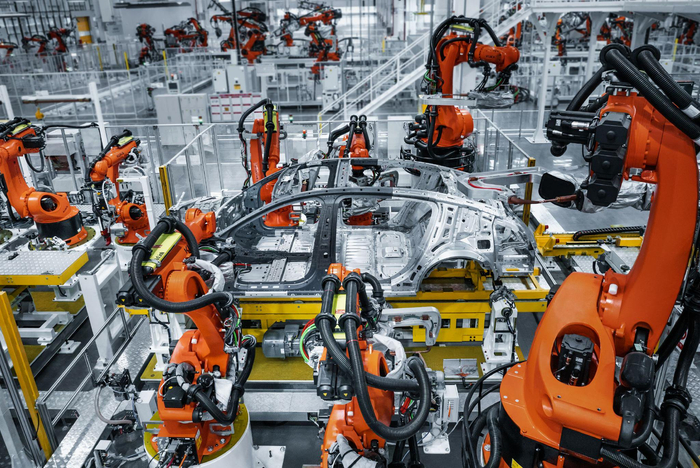
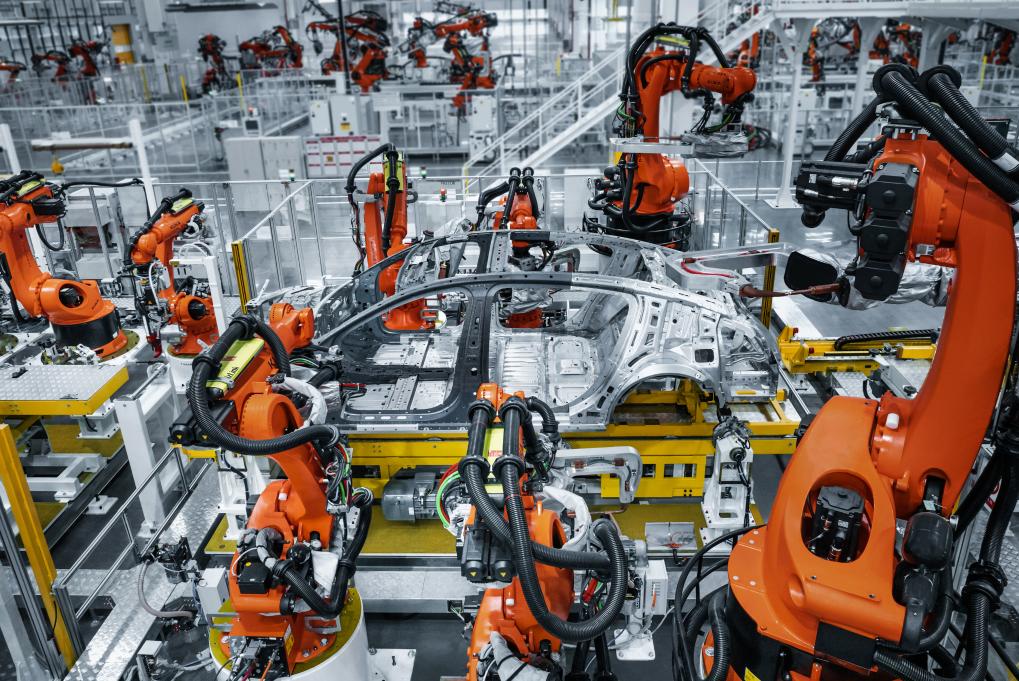
Group 1 - The Central Economic Work Conference held from December 10 to 11 in Beijing summarized the economic work of 2025, analyzed the current economic situation, and deployed the economic work for 2026, aiming for a good start to the "14th Five-Year Plan" [2] - The Anhui province's new energy vehicle industry has nearly 200 companies, including three vehicle manufacturers, with an expected annual output value exceeding 200 billion yuan after reaching full production [5] - The industrial investment and technological transformation investment in Anhui have grown by an average of 17.8% and 21.2% respectively since the "14th Five-Year Plan" began [5] Group 2 - The Jianghuai Automobile Group and Huawei have collaborated to create the Zun Jie Super Factory, which features high-precision welding and over 15,000 quality control points in its assembly lines [4] - The factory's automation allows for the installation of all four doors in just 102 seconds, showcasing the integration of AI algorithms for 100% traceability in the manufacturing process [4] - The integration of digital and physical economies is a key feature of China's modern industrial system, with significant advancements in smart manufacturing and digital transformation [10][20] Group 3 - The Shandong Ruihang Technology Co., Ltd. has an automated production line capable of producing 8.1 million hot-formed components annually, with an automation rate exceeding 80% [10][13] - The company is currently fulfilling an order for the Foton Daimler A6 project, with a monthly output of 5,000 to 6,000 units, generating an annual output value of 100 million yuan [10] - The integration of advanced manufacturing technologies has led to a 10% reduction in defect rates compared to industry peers, and energy utilization has improved by 13% [10][13] Group 4 - The CITIC Dicastal Co., Ltd. has developed a lightweight robotic skeletal component that improves manufacturing efficiency by over 50% and reduces costs by 60% compared to traditional forging techniques [15][16] - The company has transitioned from automotive lightweight components to developing lightweight structures for humanoid robots, demonstrating its adaptability to emerging industries [16] - In the first half of the year, nearly 410,000 technology contracts were registered nationwide, with a transaction value exceeding 3 trillion yuan, reflecting a 14.2% year-on-year growth [18]

听,高质量发展新脉动丨产业升级筑牢实体经济根基
Xin Hua Wang· 2025-12-15 06:34
Group 1: Economic Development and Strategy - The Central Economic Work Conference held from December 10 to 11 in Beijing summarized the economic work for 2025, analyzed the current economic situation, and deployed work for 2026, aiming for a good start to the "14th Five-Year Plan" [1] - The focus remains on the real economy, promoting deep integration of technological and industrial innovation, and building a modern industrial system to lay a solid foundation for high-quality development in the future [1] Group 2: Automotive Industry Innovations - The Jianghuai Automobile Group, in collaboration with Huawei, has established the Zun Jie Super Factory in Hefei, which features automated welding production lines that can install all four doors in just 102 seconds [3] - The Hefei New Energy Vehicle industry has nearly 200 companies, including three vehicle manufacturers, with an expected annual output value exceeding 200 billion yuan once fully operational [5] - The Shandong Ruihang Technology Co., Ltd. has developed an automated and digitalized automotive parts manufacturing system, with an annual output value of 100 million yuan for the Foton Daimler A6 project [10] Group 3: Technological Advancements - The integration of digital and real economies is a prominent feature of China's modern industrial system, with significant advancements in smart manufacturing and digital transformation [12][20] - The number of 5G base stations has reached 4.598 million, and over 1 billion devices are connected to key industrial internet platforms, indicating a shift from pilot projects to large-scale promotion of digital transformation in manufacturing [12] - The technology contract registration reached nearly 410,000 with a transaction value exceeding 3 trillion yuan, reflecting a 14.2% year-on-year growth [19] Group 4: Industry Resilience and Future Outlook - China's manufacturing system is the largest and most complete globally, with continuous improvements in the resilience and safety of industrial supply chains [8] - The "14th Five-Year Plan" emphasizes the construction of a modern industrial system and the consolidation of the real economy as a strategic priority [20] - Future initiatives will focus on advanced manufacturing, industrial technology upgrades, and the promotion of new growth drivers to ensure stable and healthy industrial development [20]
世界经济论坛发布全球绿色经济报告
Xin Lang Cai Jing· 2025-12-15 01:49
Core Insights - The report by the World Economic Forum highlights that the green economy has reached a multi-trillion dollar market size and is expected to continue its rapid growth, becoming a key driver of global economic expansion [1][6]. Market Size and Growth - The global green economy is projected to exceed $5 trillion in market size by 2024 and is expected to grow to over $7 trillion by 2030, making it one of the most dynamic growth sectors, second only to the technology industry [2][7]. - The emissions reduction sector, which includes renewable energy, energy infrastructure, storage, electric vehicles, and carbon capture technologies, has a market size of $4.6 trillion [2][7]. - The adaptation and resilience sector, which encompasses water management, climate-resilient infrastructure, and agricultural technologies, is estimated at $1.1 trillion but is considered significantly underestimated [2][7]. Investment and Opportunities - The report emphasizes the importance of green revenue flowing into businesses and markets, suggesting that this metric better reflects market size and opportunities from the perspectives of companies and investors [3][8]. - As technology costs decline and industrial policies accelerate capital allocation, the green economy is becoming industrialized and scalable, presenting significant opportunities for both businesses and governments [3][8]. China's Role in Green Economy - China is identified as a major driver of global green economy expansion, leading in investment, innovation, and deployment across nearly all key dimensions [4][9]. - China's clean energy investment is projected to rise from $372 billion in 2019 to $659 billion in 2024, with a compound annual growth rate of 12%, significantly outpacing Europe [4][9]. - The country has seen a fourfold increase in solar power capacity and a doubling of wind power capacity since 2020, contributing over 60% of the global new installations in these sectors [4][9]. - By 2025, China's carbon emissions are expected to decline for the first time while economic activity continues to grow, reflecting the impact of two decades of strategic industrial policies [4][9].
中央经济工作会议首提“新的认识”
Mei Ri Jing Ji Xin Wen· 2025-12-14 12:58
在具体行文中也有不少变化。例如:货币政策方面,从去年的"发挥好货币政策工具总量和结构双重功 能",调整为"把促进经济稳定增长、物价合理回升作为货币政策的重要考量";在消费能力方面,从去 年的"推动中低收入群体增收减负",转变为明确提出要"制定实施城乡居民增收计划";教育领域,新增 强调"增加普通高中学位供给";房地产领域,在控增量、去库存基础上,强调"优供给,鼓励收购存量 商品房重点用于保障性住房等";服务业方面,强调"制定服务业扩能提质行动方案"。 新的认识"新"在哪里? 与以往强调规律性认识不同,本次会议提出,"通过实践,我们对做好新形势下经济工作又有了新的认 识和体会"。 会议提及的认识"新"在哪里?对明年开展经济工作将有什么指导意义?会议强调必须充分挖掘经济潜 能,我国在哪些领域存在经济潜能? 中国建投投资研究院主任、研究员张志前在接受每经记者书面采访时表示,面对复杂的外部环境和内部 困难,在推动我国经济继续稳步发展的过程中,对这些规律有了新的认识和更加深切的体会,同时也发 现和提炼出了新的规律性东西。比如投资于物和投资于人要紧密结合,这是对投资理念、方向、重点的 提升和优化,对于实现经济质的提升和量 ...
高颜值高质量 “美丽北京”要内外兼修
Bei Jing Wan Bao· 2025-12-13 07:18
Group 1 - The core viewpoint emphasizes the need for Beijing to enhance its ecological environment and achieve breakthroughs in key areas such as energy and industry during the "14th Five-Year Plan" period, aiming for a high-quality, livable city experience for residents and visitors [1] - The construction of a garden city in Beijing is set as a development goal, continuing the evolution of a national forest city and park city, which aims to enhance the harmony between people and nature [2] - The principles of "greening, coloring, and three-dimensionality" are highlighted for creating a large garden in Beijing, focusing on improving forest quality, enriching plant diversity, and promoting vertical greening in urban areas [3] Group 2 - Despite significant improvements in air quality, the collaborative governance of pollution reduction and carbon emission remains a challenging task for Beijing, necessitating further efforts in cross-regional cooperation and structural adjustments in various sectors [4] - The energy structure transformation is crucial, with recommendations to utilize waste heat sources for heating instead of relying heavily on natural gas, which can lead to resource waste [5] - Beijing aims to establish itself as an international benchmark for green economy, leveraging its advanced digital governance, innovative green finance, and strong technical support to drive the development of green technologies and industries [6] Group 3 - Enhancing public awareness of green practices is essential for building a low-carbon, livable environment, with suggestions for integrating green concepts into education and community life [7] - The "Intelligent Human Resources and Social Security" initiative has gathered numerous innovative ideas and suggestions for improving employment and social security systems, contributing to the high-quality development of the capital's human resources sector [8]

中马打造共建“一带一路”区域“样板间” 新兴领域合作方兴未艾
2 1 Shi Ji Jing Ji Bao Dao· 2025-12-13 01:01
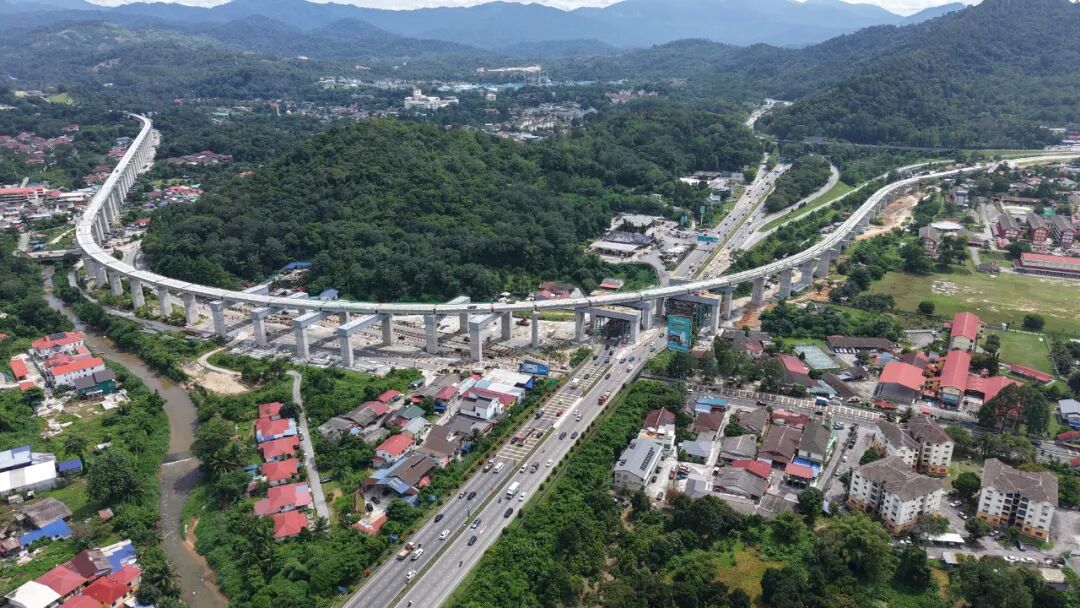
编者按: 东盟是中国周边外交优先方向和高质量共建"一带一路"重点地区。随着中国—东盟自贸区3.0版升级议 定书签署,双方产业链与供应链正加速融合,为区域发展注入新动能。2025年11月,《21世纪经济报 道》记者深入马来西亚、泰国等东南亚国家,围绕新能源汽车、智能家电、数字基建、人工智能等重点 领域,实地走访工业园区、企业及相关机构,近距离观察产业动态、记录中资出海足迹、感知两地人文 交汇,讲述中国与东盟共赢故事。 马来西亚总理安瓦尔在展望中马合作时就重点提到技术领域,称马来西亚对数字技术、人工智能和半导 体领域抱有极大兴趣,还需要提升劳动力水平。"我们希望中国能给予马来西亚年轻人更多的机会,接 触中国的技术和培训。" 中马务实合作硕果累累 自2013年中国提出共建"一带一路"倡议以来,马来西亚是最早响应该倡议的国家之一,成为共建"一带 一路"早期收获最丰硕的国家之一,突出表现在基础设施建设不断升级、中马双边贸易规模持续扩大 等。 今年11月下旬,21世纪经济报道记者前往马来西亚,实地调研两国共建"一带一路"倡议下的成果。记者 在现场看到,一方面,中马有系统地推进共建"一带一路"的旗舰项目马来西亚东海岸铁路等 ...
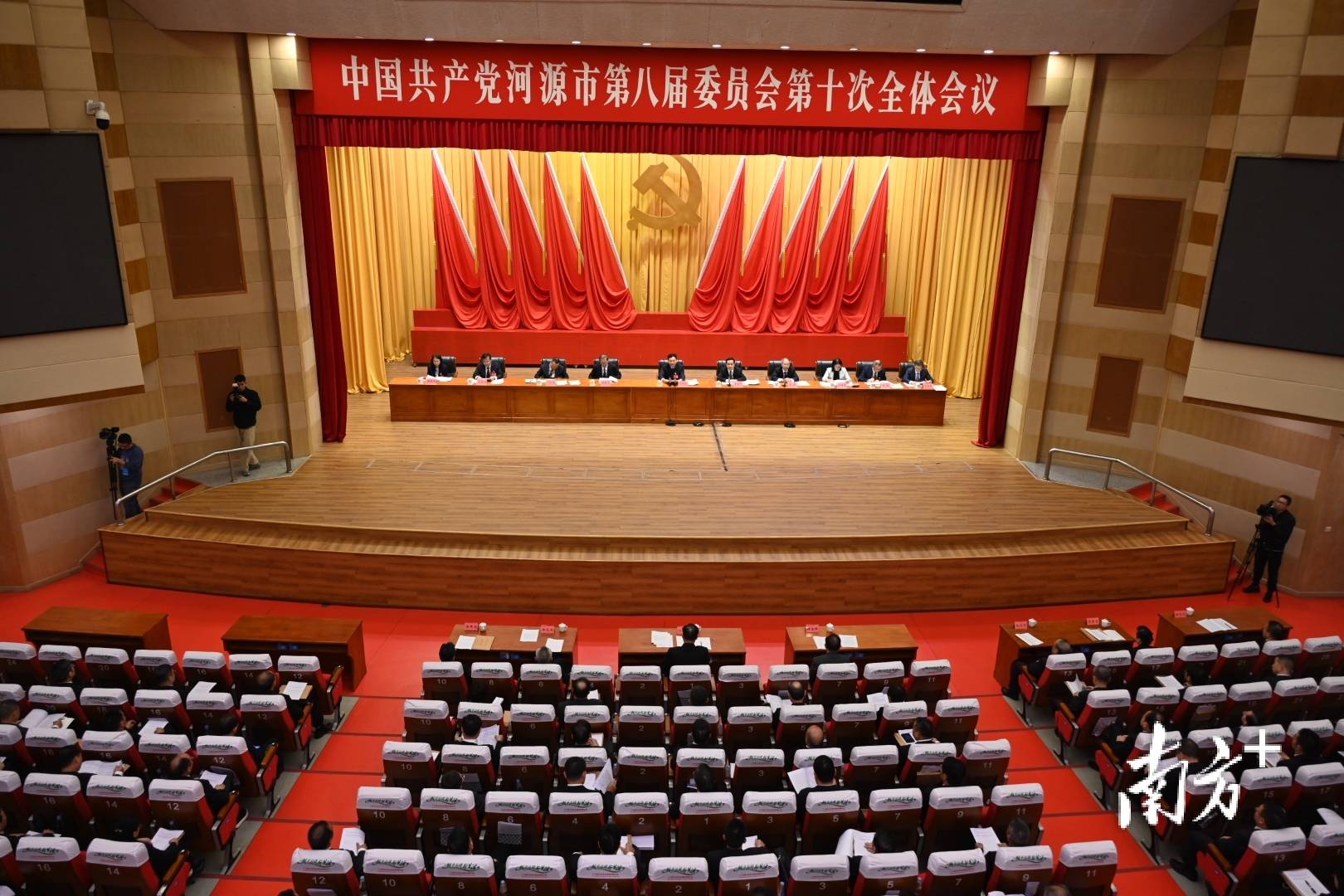
人文经济等多种经济形态屡被提及,有何内涵?丨聚焦河源市委全会
Sou Hu Cai Jing· 2025-12-12 17:48
Core Points - The meeting of the Eighth Committee of the Communist Party of China in Heyuan City highlighted the focus on various emerging economic forms, including low-altitude economy, intelligent economy, and others, as part of the "14th Five-Year Plan" [1][4][18] Group 1: Low-altitude Economy - The low-altitude economy is defined as a comprehensive economic form that integrates the research, production, sales, and related infrastructure of civil aviation aircraft operating in low-altitude airspace [4] - Heyuan is actively developing low-altitude economy through practical initiatives, such as establishing a spaceport in Wanlv Lake and creating a low-altitude tourism base [6] - The low-altitude economy aims to address efficiency bottlenecks in logistics, agriculture, and emergency services, facilitating the transition to high-end, intelligent, and new-quality industries [6] Group 2: First-release Economy - The first-release economy refers to economic activities related to the launch of new products, business models, and services by enterprises [7] - Heyuan is fostering the first-release economy by developing a sports and toy industry cluster, attracting over 20 toy manufacturing companies, and achieving a toy manufacturing output value of 5.29 billion yuan, a 40.4% year-on-year increase [8][12] Group 3: Intelligent Economy - The report emphasizes the construction of an innovation framework called "one core, two belts, and three zones" to promote the development of the intelligent economy [13] - The integration of artificial intelligence across various sectors is expected to create new industries and business models, with significant advancements in agricultural productivity through automation [13] Group 4: Green Economy - The report calls for the vigorous development of the green economy, focusing on the integration of digitalization, intelligence, and sustainability [16] - Heyuan's green economy initiatives include the establishment of zero-carbon parks and green factories, leveraging its strong ecological advantages to support high-quality development [16] Group 5: Fly Economy and Fly-Sea Economy - The report discusses the enhancement of "fly economy" and "fly-sea economy" development models to promote resource sharing and collaborative growth between different regions [17] - The establishment of the Heyuan Longchuan (Baoan) Technology Innovation Center exemplifies the practical application of these economic models, with a projected output value of 290 million yuan in 2024 [17] Group 6: Bay Area, River Basin, and Urban Circle Economy - The report highlights the importance of actively participating in the Bay Area, river basin, and urban circle economies to achieve broader resource sharing and market integration [18] - Heyuan's geographical proximity to the Guangdong-Hong Kong-Macao Greater Bay Area positions it favorably for industrial collaboration and innovation [18] Group 7: Cultural and Sports Economy - The report emphasizes the development of the cultural economy, focusing on enhancing the spiritual life of the people and promoting creative rural economies [22] - The sports economy is also highlighted, with initiatives to host various sports events to enhance the region's reputation as a destination for outdoor activities [22]
中马打造共建“一带一路”区域“样板间”,新兴领域合作方兴未艾
2 1 Shi Ji Jing Ji Bao Dao· 2025-12-12 12:19
Core Insights - The article highlights the strong bilateral relationship between China and Malaysia, particularly in the context of the Belt and Road Initiative (BRI), which has led to significant infrastructure development and trade growth since its inception in 2013 [2][3]. Group 1: Infrastructure Development - The East Coast Rail Link (ECRL) is a flagship project under the BRI, designed to enhance connectivity between the eastern and western coasts of Malaysia, with a total length of over 600 kilometers [10][11]. - The ECRL project has reached a significant milestone with the completion of the first phase of civil engineering works, marking a crucial step in its development [10]. - The project is expected to reduce travel time between the east and west coasts from 4-8 hours to under 4 hours, significantly improving logistics and economic opportunities in the region [10][11]. Group 2: Trade Relations - China has been Malaysia's largest trading partner for 16 consecutive years, with bilateral trade projected to reach $212.03 billion in 2024, marking a nearly thousand-fold increase since diplomatic relations were established [5]. - The trade structure between the two countries is complementary, with Malaysia exporting palm oil and durians to China while importing integrated circuits and computer parts [5]. Group 3: Investment Opportunities - As of June 2024, there are 531 manufacturing projects in Malaysia involving Chinese investment, amounting to 79.7 billion Malaysian Ringgit (approximately 130.3 billion RMB), creating over 88,822 jobs [6]. - Notable investments include a lithium-ion battery manufacturing plant by CosMX and a state-of-the-art manufacturing facility by Chery in Malaysia [6]. Group 4: Emerging Cooperation Areas - The focus of cooperation is shifting towards high-quality development, emphasizing digital and green economies, with Malaysia expressing interest in technology transfer in areas like AI and semiconductors [3][14]. - Collaboration in digital infrastructure is exemplified by ZTE's partnership with Malaysia's largest operator to modernize communication networks across key regions [15]. Group 5: Cultural and People-to-People Exchanges - The implementation of a visa-free policy has significantly increased the number of Chinese tourists to Malaysia, reaching 3.8 million in 2024, surpassing pre-pandemic levels [8][9]. - This policy enhances mutual understanding and strengthens the foundation for further bilateral relations [9]. Group 6: Future Directions - Future cooperation is expected to expand into new areas such as green economy initiatives, blue economy projects, and healthcare collaborations, including remote medical platforms and traditional medicine exchanges [15][16]. - The ongoing development of major projects like ECRL and the "Two Countries, Twin Parks" model will continue to drive economic integration and resilience against global challenges [16].