贸易多元化

Search documents
加拿大十省省长联合上书,劝总理擦亮眼睛,对华关税要不得了
Sou Hu Cai Jing· 2025-07-27 03:57
Core Viewpoint - The trade agreement between Canada and the United States remains unachieved as the deadline set by Trump approaches, prompting Canadian provinces to seek solutions and reassess trade relations, particularly with China [1][10]. Group 1: Provincial Responses - Ontario's Premier Ford suggests that if a fair agreement is not reached, Canada has the right to impose additional taxes on electricity from U.S. states as a response to unreasonable U.S. policies [1]. - Nova Scotia's Premier Tim Houston emphasizes that Canada should not be pressured by Trump's timeline and that the priority should be achieving a fair agreement, regardless of the time it takes [1]. - Saskatchewan's Premier Moe advocates for diversifying trade and improving relations with China, highlighting its significance as a major market and trade partner [2]. Group 2: Economic Impact of Current Policies - Canada previously imposed new tariffs on electric vehicles, steel, and aluminum from China, aligning with U.S. strategies, but this has backfired as 80% of battery components are imported from China [6]. - Saskatchewan's canola exports, which rely 30% on China, have suffered losses exceeding CAD 1.5 billion due to Chinese tariffs, while British Columbia's seafood industry faces a projected loss of CAD 80 million [6]. - The reliance on the U.S. market is significant, with 68% of Canadian exports directed to the U.S., making Canada vulnerable to potential U.S. tariffs of up to 35% on Canadian goods starting August 1 [8]. Group 3: Strategic Shift - The provincial leaders recognize that solely relying on trade disputes with the U.S. is insufficient and advocate for accelerating trade with China to reduce dependence on the U.S. market [9]. - The current situation places Canada in a dual trade war, facing pressures from both the U.S. and retaliatory measures from China, making it crucial to improve relations with China [9]. - The joint petition from ten provinces indicates a strategic shift in Canada's economic approach towards "diversified cooperation" to stabilize the economy and ensure citizens' livelihoods amidst escalating trade tensions [10].


联合国贸发会议认为——全球贸易总体增长但日趋失衡
Jing Ji Ri Bao· 2025-07-24 22:03
Group 1 - The report indicates that global trade continued to grow in the first half of 2025, but the growth rate has slowed due to factors such as a slowdown in global economic growth, uncertainty in trade policies, and increased geopolitical risks [1][2] - Developed countries experienced a faster trade growth rate compared to developing countries, primarily driven by strong import growth in the United States and a recovery in EU exports [1][2] - Trade imbalances are worsening, with the U.S. trade deficit expanding while trade surpluses for China and the EU have increased, highlighting ongoing tensions in trade relationships among major economies [2] Group 2 - The report notes significant differences in trade growth across industries, with the chemical and pharmaceutical sectors experiencing trade growth rates well above the global average, while trade in communication equipment has significantly declined [2] - The digital economy is facing issues of market concentration, negatively impacting competition, innovation, and consumer choice, particularly in developing countries [3] - Recommendations include promoting trade diversification, encouraging companies to enhance supply chain diversity, strengthening regional cooperation, and simplifying trade procedures to reduce costs [3]
中欧峰会前夕,美国反向给中国送“助攻”,欧盟还没谈已先输一半
Sou Hu Cai Jing· 2025-07-23 13:25
Group 1 - The European Council President Costa and the European Commission President von der Leyen are heading to Beijing to commemorate the 50th anniversary of EU-China diplomatic relations, but they face challenges due to a new US tariff announcement [1][4] - The US Treasury Secretary's comments indicate a separation of trade and energy discussions, putting pressure on the EU to navigate both fronts simultaneously [4][7] - The sudden imposition of a 30% permanent minimum tariff by the Trump administration has forced the EU to adjust its planned countermeasures, reducing the second round of tariffs from €950 billion to €720 billion [1][4] Group 2 - The 30% tariff is expected to significantly impact the European economy, with Germany experiencing a 7.7% drop in exports to the US in May, the lowest in three years, and Italy's agricultural sector warning of a €2.3 billion loss [4][6] - The internal divisions within the EU are becoming apparent, with different member states advocating for varying responses to the US tariffs, highlighting the challenges of a unified approach [4][7] - The EU's attempts to diversify trade, such as the recent free trade agreement with Indonesia, are seen as insufficient to counter the pressures from the US tariffs [6][7] Group 3 - The EU's economic ties with China are showing positive trends, with a 65% increase in exports of Chinese electric vehicles to Europe and over €8 billion in investments from European companies in Chinese photovoltaic projects [6] - The potential economic impact of a full-blown tariff war between the US and EU could lead to a 0.6% decline in US GDP and a more severe 4% contraction in the German economy [6] - The upcoming EU-China summit is expected to focus on maintaining "strategic autonomy," but the EU's delayed countermeasures against US tariffs indicate a lack of effective policy [6][7]
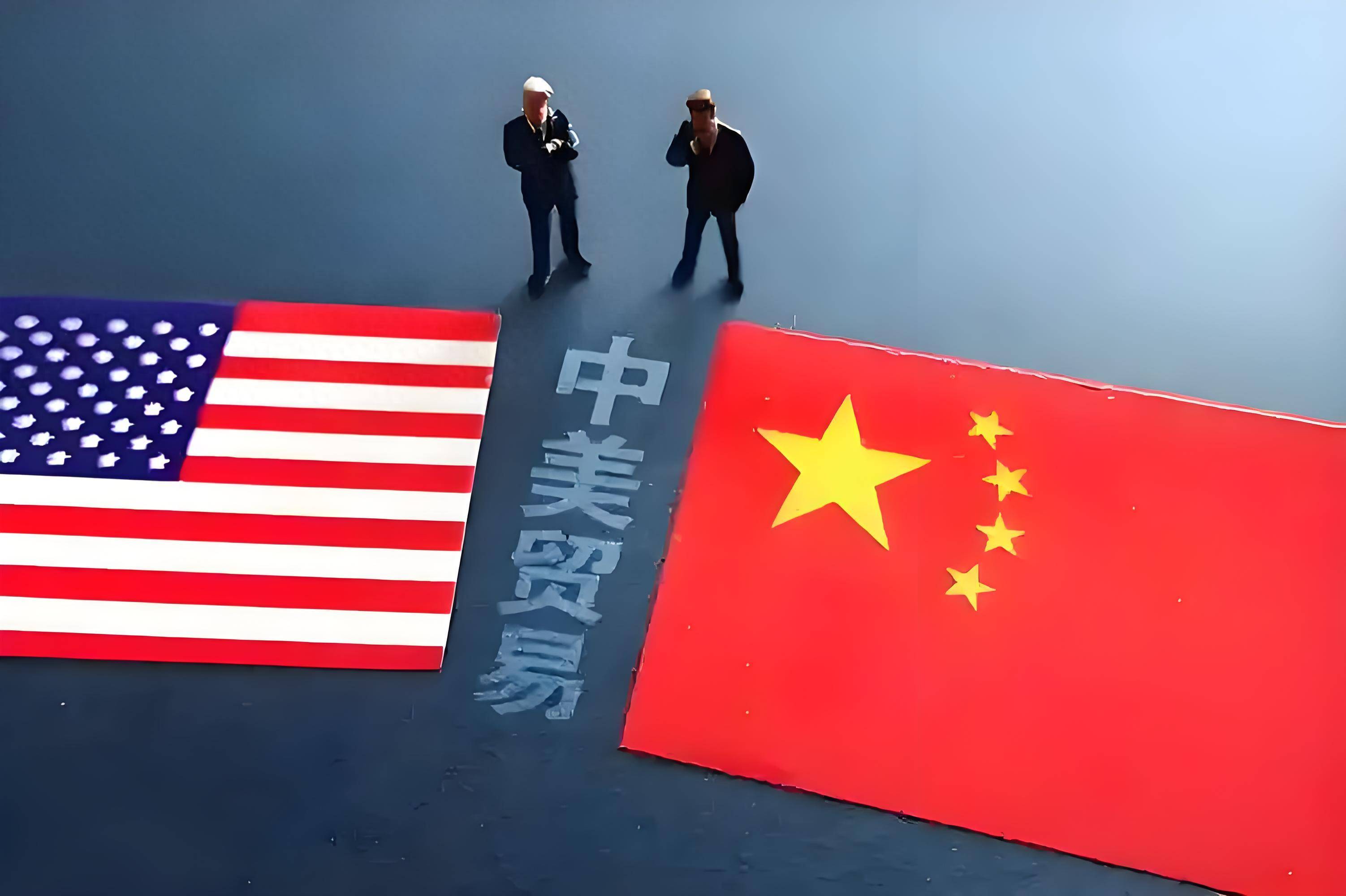
中美贸易额下降20.8%,美国大豆堆积如山,中国开始进口巴西大豆
Sou Hu Cai Jing· 2025-07-21 09:25
Group 1 - The core viewpoint indicates that the U.S. has limited leverage in trade negotiations with China, primarily relying on high-end chips, while China has found alternatives for most products previously imported from the U.S., particularly in agricultural products [1] - In the first half of 2025, Sino-U.S. trade showed a significant decline, with total trade value dropping to 2.08 trillion yuan, a year-on-year decrease of 9.3%, including a 9.9% drop in exports from China to the U.S. and a 7.7% drop in imports from the U.S. [1] - The second quarter saw a sharp decline in bilateral trade, with a drop of 20.8% due to the U.S.'s "reciprocal tariff" policy, heavily impacting agricultural trade [1] Group 2 - In June 2025, there were signs of recovery in Sino-U.S. trade, with import and export values rising from less than 300 billion yuan in May to over 350 billion yuan, indicating a narrowing year-on-year decline [1] - China's imports of soybeans from Brazil reached 10.62 million tons in June 2025, a year-on-year increase of 9.2%, accounting for 86.6% of total soybean imports for that month, while imports from the U.S. were only 1.58 million tons, despite a 21% increase [4] - The U.S. Department of Agriculture reported a 37% decline in soybean exports to China compared to 2018, while Brazil's exports to China increased by 21% during the same period [4] Group 3 - The price advantage of Brazilian soybeans, which are $200 cheaper per ton than U.S. soybeans, is reshaping the global food trade landscape, while U.S. farmers face a survival crisis [6] - A quarter of U.S. farmers are on the brink of bankruptcy due to unsold soybeans, prompting the U.S. Department of Agriculture to initiate an emergency inventory program [5] - The trade war initiated by the Trump administration led to a significant shift in China's sourcing strategies, with a rapid pivot towards Brazilian soybeans and a decrease in rare earth exports from the U.S. [8]
变局中挖增量 新局中育商机:中国外贸逆势增长2.9%,乘风破浪底气足
Yang Shi Wang· 2025-07-19 03:10
Core Viewpoint - The World Trade Organization predicts a 0.2% decline in global merchandise trade volume this year, while China's foreign trade shows resilience with a 2.9% year-on-year growth in the first half of the year, reaching a record high for the same period [1] Group 1: Trade Performance - In the first half of the year, China's goods trade import and export reached 21.79 trillion yuan, marking a historical high for the same period [1] - The container throughput at Ningbo-Zhoushan Port exceeded 21.048 million TEUs, a year-on-year increase of 9.8%, also setting a historical record for the same period [7] Group 2: Market Dynamics - The North American shipping route experienced a significant increase in freight rates due to a "space shortage" following the Geneva trade talks, which later stabilized as shipping companies increased capacity [3] - The U.S. "reciprocal tariffs" led to a 20.8% year-on-year decline in China-U.S. trade in the second quarter, but trade volume rebounded in June, with import and export values rising from less than 300 billion yuan in May to over 350 billion yuan [5] Group 3: Market Diversification - China's exports to traditional markets like the EU, Japan, and the UK maintained growth, while exports to emerging markets such as ASEAN, Central Asia, and Africa saw double-digit growth [7] - In the first half of the year, trade with countries involved in the Belt and Road Initiative reached 11.29 trillion yuan, a year-on-year increase of 4.7%, accounting for 51.8% of China's overall foreign trade [11] Group 4: Adaptation and Innovation - Foreign trade companies are adapting by developing new products tailored to domestic market needs, as seen in the case of a water pump business shifting focus to domestic markets [9] - The continuous expansion of high-level opening-up policies and a solid industrial foundation are aiding companies in exploring new markets [13]

30%关税迎来倒计时 特朗普贸易政策或重创欧洲出口引擎
智通财经网· 2025-07-15 07:33
Group 1 - The potential implementation of a 30% tariff on European goods by the U.S. could significantly disrupt the transatlantic trade system and force Europe to reconsider its export-oriented economic model [1] - European officials are optimistic about reaching an agreement to maintain the $1.7 trillion bilateral trade relationship before the August 1 deadline, despite the uncertainty surrounding Trump's stance on the EU [1][2] - The European Commission's trade chief warned that a 30% tariff would effectively act as a trade ban, jeopardizing the established trade relations [1] Group 2 - Barclays economists estimate that an average 35% tariff on EU goods, combined with a 10% countermeasure from Brussels, could shrink Eurozone output by 0.7 percentage points [2] - The potential economic impact could lead the European Central Bank to lower its deposit rate further, possibly down to 1% by March 2026, as inflation may remain below the 2% target for an extended period [3] - The German Economic Institute estimates that tariffs of 20%-50% could result in over €200 billion in losses for Germany's economy by 2028, affecting the government's economic policy efforts [3] Group 3 - The long-term implications of tariffs raise concerns about how Europe will compensate for economic activity losses to sustain tax revenue and employment, which are crucial for various ambitions, including pension and military reforms [3][4] - Despite efforts to diversify trade partnerships, the EU faces challenges in establishing new markets, as highlighted by the prolonged negotiations for the EU-Mercosur trade agreement [3][5] - Observers suggest that the confrontation with Trump may provide an opportunity for the EU to push through long-delayed single market reforms and reduce reliance on exports, which account for a significant portion of its output [4]
21社论丨中国外贸量稳质升,韧性凸显
21世纪经济报道· 2025-07-14 23:56
Core Viewpoint - China's export growth remains resilient, supported by strong performance in emerging markets and stable trade relations with developed economies, despite challenges in labor-intensive product exports and fluctuating commodity prices [1][3][5]. Group 1: Export Performance - In June 2025, China's exports grew by 5.8% year-on-year, with a cumulative growth of 5.9% for the first half of the year [1]. - Key markets contributing to export resilience include Europe, ASEAN, and Africa, with exports to the EU growing by 7.6% year-on-year [1][3]. - Emerging markets, particularly ASEAN, saw double-digit growth in exports, with Vietnam and Thailand experiencing over 20% year-on-year increases [1][3]. Group 2: Import Dynamics - Imports in June 2025 recorded a slight year-on-year increase of 1.1%, while the cumulative import decline for the first half was 3.9% [1]. - The decline in imports is attributed to falling commodity prices and weak domestic manufacturing sentiment, with major commodities like soybeans and iron ore seeing price drops [2]. Group 3: Trade Structure and Diversification - The share of emerging markets in China's exports is increasing, with the U.S. share dropping to around 12%, while ASEAN and Latin America account for 17.8% and 7.8% respectively [3][4]. - China's trade diversification is further supported by initiatives like the Belt and Road Initiative and RCEP, enhancing trade relations with new partners [4]. Group 4: Export Product Composition - High-value products such as semiconductors, transportation equipment, and machinery are driving export growth, while labor-intensive products face pressure due to U.S. tariff policies [2][5]. - The export structure is shifting towards high-end manufacturing, with significant growth in integrated circuits (24.2% year-on-year) and machinery [2][4]. Group 5: Future Outlook - The combination of stable demand from emerging markets and strong bilateral trade relations with the EU is expected to bolster China's export resilience amid global trade uncertainties [5]. - The ongoing transformation of China's manufacturing sector towards high-end, intelligent, and green production is anticipated to enhance international competitiveness in exports [5].

中国外贸量稳质升,韧性凸显
2 1 Shi Ji Jing Ji Bao Dao· 2025-07-14 22:32
Group 1 - China's exports in June recorded a year-on-year growth of 5.8%, with a cumulative growth of 5.9% in the first half of the year, supported by "rush exports" and "rush transshipments" from foreign trade enterprises [1] - Imports in June showed a slight year-on-year increase of 1.1%, while the cumulative import for the first half of the year decreased by 3.9%, primarily due to falling prices of bulk commodities and weak domestic manufacturing [1] - Key markets for China's exports include Europe, ASEAN, and Africa, with exports to the EU growing at a rate of 7.6% year-on-year in June [1][3] Group 2 - The export performance of sectors such as automobiles, semiconductor supply chains, transportation equipment, and machinery remains strong, while labor-intensive products face pressure [2] - Shipbuilding exports have shown high growth, achieving a 23.6% increase in June 2025, despite a high base in 2024 [2] - The import of bulk commodities has been a major drag, with most major imports, except for copper ore, experiencing a year-on-year price decline [2] Group 3 - The diversification of China's trade patterns is advancing, with emerging markets increasingly contributing to China's export share, while the share of exports to the US has decreased to around 12% [3] - ASEAN has become China's largest trading partner, with its share of exports rising to 17.8%, reflecting strengthened economic ties [3] - China's position in the EU import structure has remained stable, with its share around 21% since 2022, indicating stable bilateral trade relations [3] Group 4 - The structure of China's export goods is optimizing, with increasing competitiveness in high-end manufacturing products, which is expected to enhance export resilience [4] - The export share of high-end manufacturing goods, such as transportation equipment, is on the rise, while the share of textiles and miscellaneous products is declining [4] - Factors such as steady demand from emerging markets and stable trade relations with the EU are crucial for supporting China's export resilience amid global trade uncertainties [4]
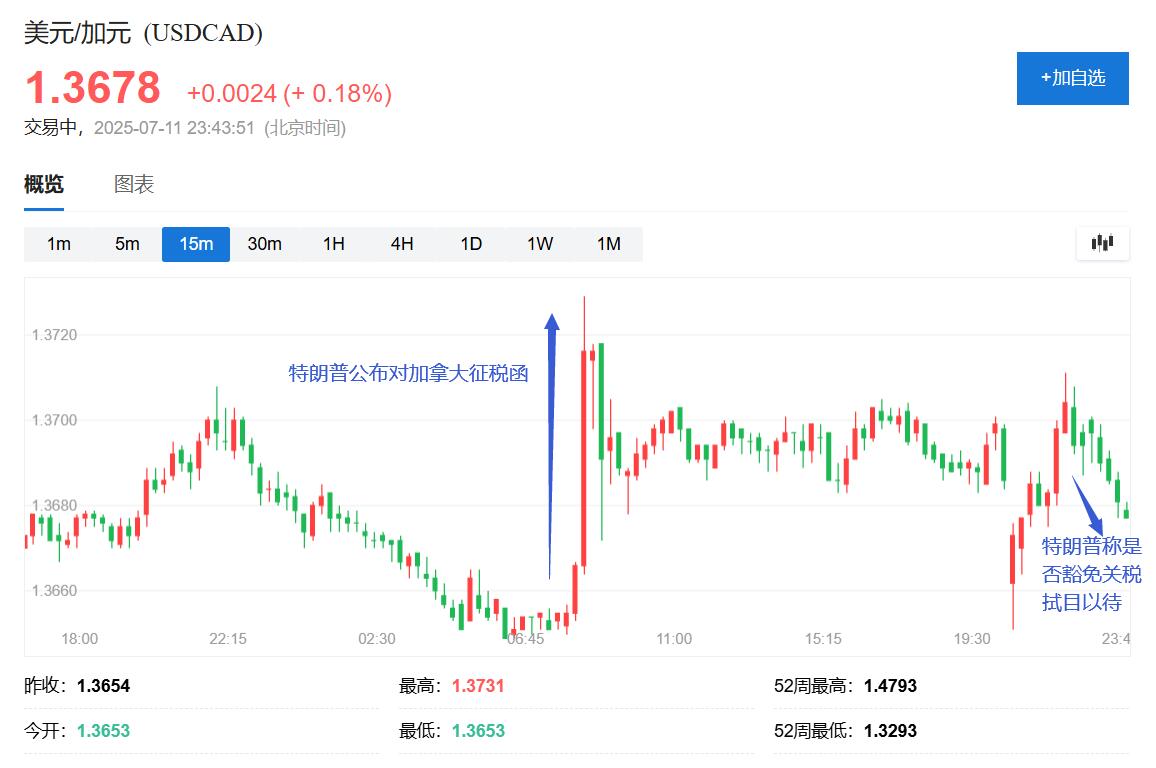
特朗普回应加拿大有无关税豁免:“拭目以待”,加元收窄跌幅
Hua Er Jie Jian Wen· 2025-07-11 17:31
Core Viewpoint - The U.S. President Trump has announced a 35% tariff on Canadian imports starting August 1, citing issues related to the fentanyl crisis and trade deficits as primary reasons for this decision [5][9]. Group 1: Tariff Announcement - Trump stated that the tariff will be imposed on Canadian goods due to Canada's alleged failure to stop the flow of fentanyl into the U.S. and its high tariffs on U.S. products [5][9]. - The announcement has led to fluctuations in the Canadian dollar, with the USD/CAD exchange rate experiencing significant movements following Trump's comments [2][5]. Group 2: Canadian Response - Canadian Prime Minister Trudeau has emphasized the importance of protecting national interests and has extended trade negotiations with the U.S. until August 1, the date when the tariffs are set to take effect [8][10]. - Canada is also focusing on strengthening trade relationships with other partners in response to the U.S. tariffs [10]. Group 3: Negotiation Dynamics - Trump's letter to Canada included a "carrot and stick" approach, suggesting that if Canada cooperates on the fentanyl issue or manufactures products in the U.S., the tariffs could be adjusted [6][7]. - The Canadian government has expressed a commitment to maintaining its position in negotiations while also pursuing trade diversification strategies [10].
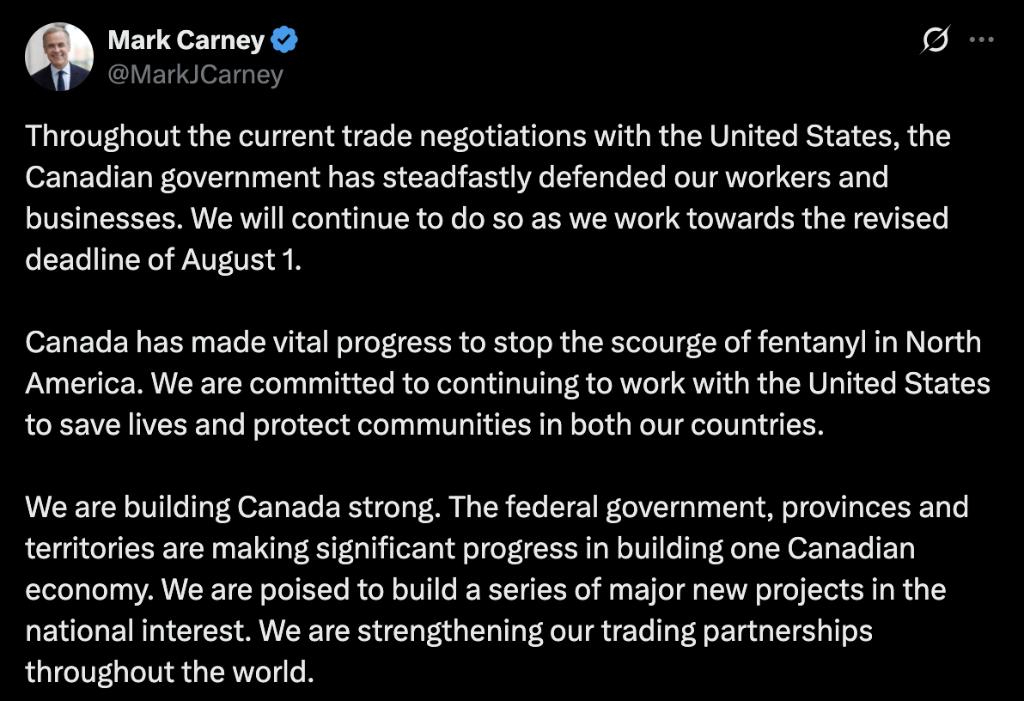
面对美国征收35%关税威胁 加拿大总理的回应来了
Xin Hua Wang· 2025-07-11 07:35
Group 1 - Canadian Prime Minister Carney responded to President Trump's announcement of a 35% tariff on Canadian goods, stating that Canada will firmly protect its workers and industries while extending trade negotiations with the U.S. until August 1 [1][3] - The Canadian government aims to reach a constructive and mutually beneficial agreement with the U.S. while maximizing national interests, although specific progress in negotiations was not disclosed [3] - Trump indicated that if Canada raises tariffs on U.S. goods, the U.S. will reciprocate with additional tariffs on top of the 35% [3][7] Group 2 - Trump’s letter included a warning that goods rerouted through third countries to avoid tariffs would also be subject to taxation, while also offering incentives for Canadian companies to manufacture in the U.S. to avoid tariffs [7] - The U.S. President criticized Canada for not adequately addressing the fentanyl crisis and suggested that cooperation on this issue could lead to adjustments in tariff policies [7] - Canada is actively pursuing free trade agreements with Southeast Asian countries to diversify trade and mitigate the impact of U.S. tariffs [8] Group 3 - Trump mentioned that countries that have not received a letter regarding tariffs could face a 20% or 15% tariff, indicating a broader strategy of imposing tariffs on multiple economies [9] - The U.S. tariff measures are part of a fluctuating policy that has created uncertainty for investors and trade partners, with changes occurring rapidly [9]