人工智能(AI)

Search documents
突发!硅谷4.8万亿巨头评级遭下调,负债是净资产的500%;做AI花钱如流水,投行:可能在明年耗尽现金
Mei Ri Jing Ji Xin Wen· 2025-11-12 14:23
Core Viewpoint - Barclays Bank has downgraded Oracle's debt rating to "Underweight," warning that the company may exhaust its cash reserves by November 2026 [1][5]. Financial Health of Oracle - Oracle's cash reserves, currently around $11 billion, could be depleted by November 2026, leading to refinancing needs [7]. - The company's debt-to-equity ratio is at 500%, significantly higher than competitors like Amazon (50%) and Microsoft (30%) [7]. - Oracle's capital liability ratio stands at 86.33%, again exceeding that of Amazon (49.22%) and Microsoft (42.94%) [8]. - The total interest-bearing debt has doubled over the past decade to $111.6 billion, with over $100 billion in off-balance-sheet lease commitments [8]. Industry Trends - The issuance of debt related to U.S. data centers has surged to $25.4 billion in 2025, a 112% increase from 2024, and a staggering 1854% increase since 2022 [3][11]. - Major tech companies, including Meta, Oracle, and Alphabet, have entered the credit market at unprecedented levels, raising a total of $75 billion in bonds and loans in just September and October 2025 [3][11]. - Barclays estimates that the total bond issuance by large cloud service providers could reach $160 billion in 2025 [11]. Risks in AI Infrastructure Investment - The rapid expansion of AI-driven capital investments raises concerns about whether it is building a digital foundation or creating a debt bubble [3]. - The financial structure for data center financing is becoming more complex, increasing potential financial risks [13]. - The reliance on speculative building without long-term tenant agreements poses cash flow risks, especially if AI demand slows [13]. Market Sentiment - Oracle's credit default swap (CDS) prices have surged, reflecting heightened investor concerns about potential default risks [2][14]. - Analysts draw parallels between the current AI data center investment climate and the telecom crisis of 2000, highlighting the risks of over-leveraging and optimistic demand forecasts [16].

Wall: There's been macro news that's really supportive of European stocks
Youtube· 2025-11-12 13:22
What's driving these gains. >> Well, there's a little bit of micro and a little bit of macro at the risk of sounding like a song. I mean, the macro is some of it's global and I do think the fact that actually we are nearing a resolution for the US shutdown has had a positive impact on markets across the globe.Plus, you've had things like the resolution on kind of Swiss tariffs this week, you know, in the last week, which has also added some tailwinds to the European markets. You've also got expectation of l ...

Alphabet:持续兑现业绩,值得继续投入
美股研究社· 2025-11-12 12:59
Core Viewpoint - Google's third-quarter performance exceeded market expectations, showcasing strong revenue and net profit growth, driven by AI advancements and a resilient search business [3][4][5]. Financial Performance Overview - Revenue reached $102.35 billion, a year-over-year increase of 15.95%, surpassing analyst expectations by $2.21 billion [3]. - Net profit per diluted share (EPS) was $2.87, up 35% year-over-year, exceeding expectations by $0.61 [3]. - Operating profit margin decreased by 180 basis points to 30.5%, primarily due to a 22% increase in R&D expenses and a doubling of general and administrative expenses due to a $3.5 billion EU fine [3]. - Free cash flow grew by 39% year-over-year, totaling $73.55 billion over the past 12 months [3]. AI-Driven Growth in Search Business - The search business achieved its highest revenue growth in over three years, with double-digit growth maintained [4][5]. - AI features, such as AI Overviews and AI Mode, significantly contributed to this growth, particularly among younger users [5]. - Weekly usage of AI Mode doubled compared to the second quarter, with daily active users reaching 75 million [5]. Google Cloud Performance - Google Cloud revenue grew by 33.5% year-over-year and 11.3% quarter-over-quarter, with four out of the last five quarters exceeding 30% growth [6]. - Operating profit margin for Google Cloud improved by 660 basis points to 23.7% [6]. - The backlog for Google Cloud reached $155 billion, reflecting an 82% year-over-year and 46% quarter-over-quarter increase [6]. Capital Expenditure Insights - Concerns regarding increased capital expenditures for AI infrastructure are deemed unwarranted, as the increase is not significant [7]. - Management raised the 2025 capital expenditure guidance to between $91 billion and $93 billion, which is a modest increase [7]. - Strong demand for AI tools, evidenced by significant growth in AI product revenue, supports the rationale for increased capital spending [7][10]. YouTube Business Recovery - YouTube's advertising revenue showed strong recovery, achieving its highest growth rate since Q1 of the previous year, with revenue surpassing $10 billion for only the second time in 18 quarters [8]. - AI tools like Demand Gen have enhanced advertising efficiency, increasing conversion value by 40% for targeted advertisers [9]. Future AI Integration and Growth Potential - Future AI plans, including the integration of Gemini into various services, are expected to drive significant growth, particularly in the autonomous vehicle sector [9][10]. - The anticipated collaboration with Apple to enhance Siri using Gemini is projected to generate $1 billion annually for Apple [9].

闪迪:NAND将进入超级周期
半导体芯闻· 2025-11-12 10:19
Group 1 - The importance of NAND products in the AI memory market is rapidly increasing, with demand for data center NAND flash expected to surpass mobile applications for the first time next year [2] - Major NAND suppliers, including Samsung and SK Hynix, have reported that customer demand will exceed production capacity, leading to a significant supply shortage [2] - The price of NAND flash products has risen sharply, with the fixed trading price of 128Gb MLC NAND flash increasing by 10.6% in September and 14.9% in October, marking the largest increase in a decade [2] Group 2 - The next-generation memory "HBF" is being developed to combine the advantages of high bandwidth memory (HBM) with NAND characteristics, aiming for mass production in 2027 [3]
华为2024年专利收入达6.3亿美元
日经中文网· 2025-11-12 10:04
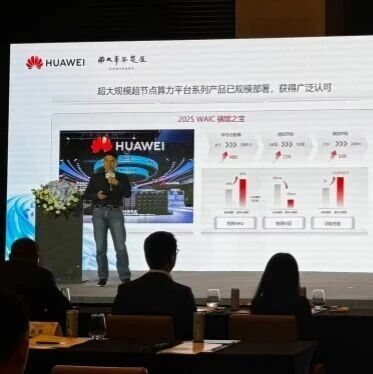
Core Viewpoint - Huawei has maintained its position as a leading innovator in the field of patents, with a strong focus on artificial intelligence and technology development, reflecting its commitment to open innovation and intellectual property protection [2][4][5]. Group 1: Patent Achievements - Since 2014, Huawei has ranked first globally in annual patent applications, except for 2016, with a total of approximately 150,000 international patents [5]. - In 2024, Huawei applied for 6,600 patents under the Patent Cooperation Treaty (PCT), showing a slight increase from the previous year [4][5]. Group 2: Financial Performance - In 2024, Huawei's patent licensing revenue is projected to reach $630 million, representing a year-on-year growth of about 10% [2]. - The company's research and development expenditure for 2024 is approximately $28.5 billion, which is a 9% increase year-on-year and accounts for about 21% of its sales revenue, up from around 10% in previous years [5]. Group 3: Technological Innovations - Huawei has introduced high-performance AI server clusters utilizing self-developed AI semiconductors and the Harmony operating system, which is integrated into its self-developed smartphones [5]. - The company emphasizes the importance of open innovation as a driving force for social development and technological advancement, while also respecting the intellectual property rights of others [4].
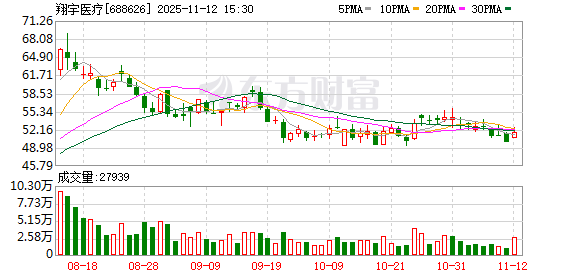
翔宇医疗:目前,公司产品中,有相当一部分康复设备链接了脑机接口技术
Mei Ri Jing Ji Xin Wen· 2025-11-12 09:58
Core Viewpoint - The company reported a slight increase in total revenue by 6.00% year-on-year, but net profit significantly decreased by 42.89% year-on-year, primarily due to increased R&D expenses of 126 million yuan, which rose by 20.15% year-on-year [2]. Group 1: Financial Performance - Total revenue increased by 6.00% year-on-year [2]. - Net profit decreased by 42.89% year-on-year [2]. - R&D expenses amounted to 126 million yuan, reflecting a year-on-year increase of 20.15% [2]. Group 2: R&D Focus - The company emphasizes research and development as a key driver for product innovation and upgrades [2]. - The strategic R&D direction focuses on applications in rehabilitation medicine, including brain-machine interfaces, exoskeleton robots, and artificial intelligence (AI) [2]. - The establishment of the Rehabilitation Robot Laboratory and Sun-BCI Lab for brain science indicates a commitment to advancing brain-machine interface technology [2]. - A significant portion of R&D investment is directed towards areas directly or indirectly related to brain-machine interface technology [2].

首款人形机器人,摔了个“狗啃泥”
具身智能之心· 2025-11-12 09:30
Core Viewpoint - The article discusses the unveiling of Russia's first domestically produced humanoid robot named "Aidol," highlighting its advanced features and the challenges faced during its presentation [2]. Group 1: Product Features - "Aidol" is built primarily with Russian-made components and represents an advanced example of humanoid robotics [2]. - The robot is capable of dialogue, emotion recognition, and can operate offline, with all voice processing conducted independently on the device [2]. Group 2: Event Highlights - During the launch event, a humorous incident occurred where the robot lost balance and fell, which was followed by a small black cloth being placed over it, marking an amusing end to the presentation [3]. Group 3: Industry Comparison - The article notes that domestic manufacturers in other regions are significantly ahead in the field of humanoid robotics, progressing from motion control to more human-like features, thus approaching the definition of embodied intelligence [6].

Q3利润飙升17%!富士康搭乘AI东风再度交出亮眼业绩
智通财经网· 2025-11-12 08:12
Core Insights - Foxconn, the world's largest electronics contract manufacturer, reported a 17% year-on-year profit increase in Q3, driven by sustained demand for AI servers, exceeding market expectations [1] - The company achieved a net profit of NT$57.67 billion (approximately $1.89 billion) for the July-September period, surpassing the anticipated NT$50.4 billion, with revenues reaching NT$2.06 trillion, an 11% year-on-year growth [1] - Foxconn is diversifying beyond its traditional role as the largest iPhone assembler for Apple, focusing on AI and other business areas, and has become a key partner for Nvidia in AI server production [1][2] Financial Performance - In Q3, Foxconn's revenue growth aligns with market expectations, while the company anticipates significant year-on-year revenue growth in Q4, particularly in AI server sales [1][2] - Monthly sales in October increased by 11.3%, with projections indicating a 15% year-on-year sales growth for the three months ending in December [1][2] Strategic Partnerships and Market Position - Foxconn's close collaboration with Nvidia has contributed to a stock price increase of over 30% this year, as leading tech companies compete to procure Nvidia hardware for data center enhancements [2] - The company is leveraging its dominant position in contract manufacturing to secure current and future orders, adopting a "follow the cash flow" strategy that prioritizes high-growth server manufacturing over some consumer electronics orders [3] Challenges and Future Outlook - Despite potential profit margin pressures from component price fluctuations, currency changes, and logistics challenges, Foxconn is expected to maintain strong performance in Q4 [3] - The company is also expanding into the electric vehicle sector, viewing it as a key growth engine, although this transition has faced hurdles, including the sale of a previously acquired EV factory [4] - Foxconn is collaborating with Nvidia, Stellantis, and Uber to develop L4 autonomous vehicles, indicating a strategic move into the autonomous driving space [4]
每日 1.13 亿桶:国际能源署预测全球油气需求将持续增长至2050年
Sou Hu Cai Jing· 2025-11-12 07:41
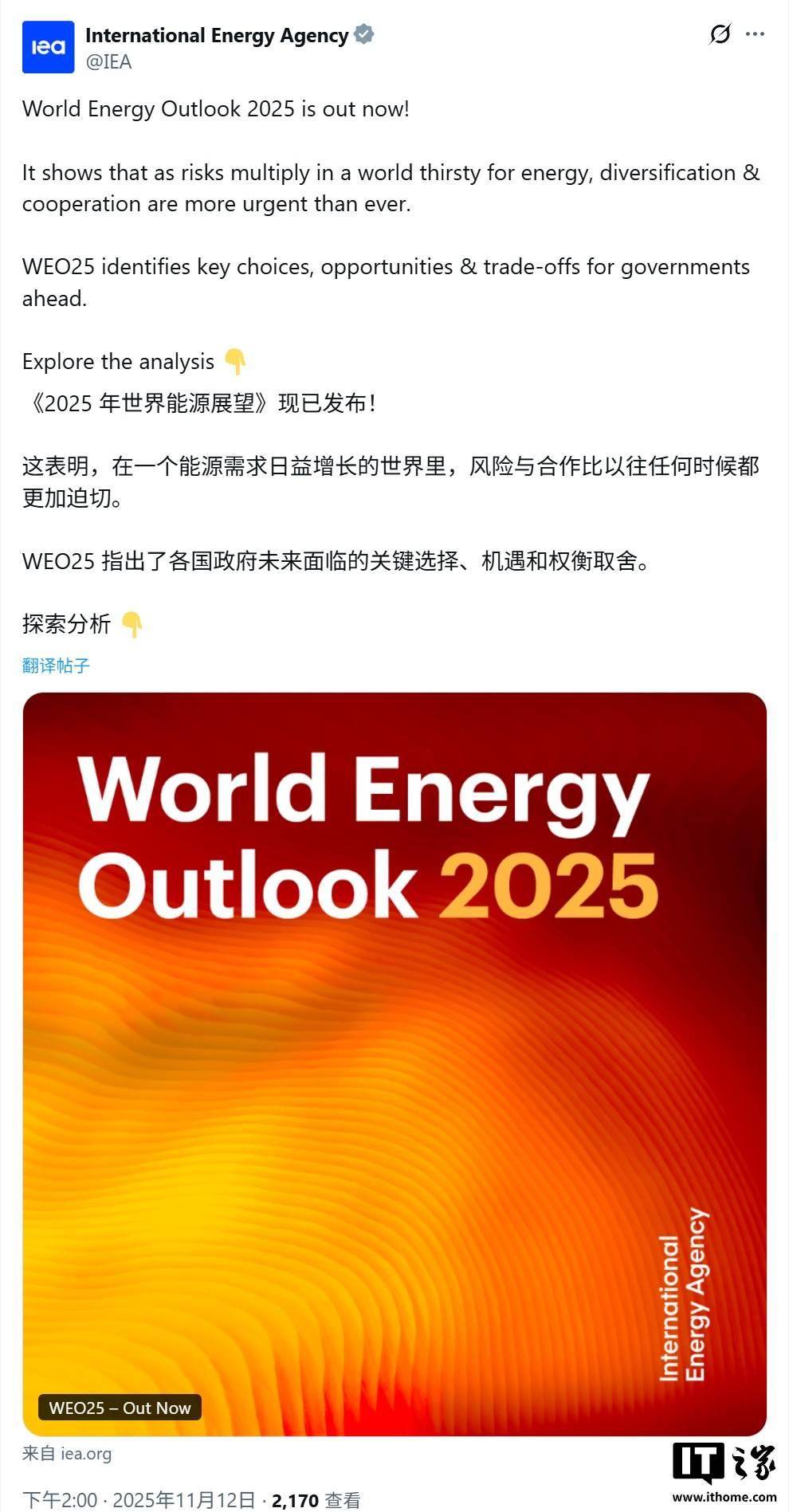
Core Insights - The International Energy Agency's World Energy Outlook 2025 emphasizes the urgent need for diversification and cooperation in the face of rising energy risks and demand [1][2][5] Energy Demand and Supply - Global oil and gas demand is projected to continue growing until 2050, diverging from previous expectations of a rapid transition to clean energy, indicating potential challenges in meeting climate goals [5] - Under the Current Policies Scenario, global oil demand is expected to reach 113 million barrels per day by mid-century, a 13% increase from 2024 levels [5] - Overall energy demand is anticipated to rise by 90 exajoules by 2035, a 15% increase from current levels [5] Liquefied Natural Gas (LNG) Market - The report highlights explosive growth in the LNG market, with a surge in final investment decisions for new LNG projects in 2025 [6][11] - Approximately 300 billion cubic meters of new annual LNG export capacity is expected to come online by 2030, increasing global supply by 50% [6][11] Electricity Demand and Transition - The report indicates that the world has entered the "Age of Electricity," with electricity demand growth accelerating across various scenarios [19][25] - Electricity is now the key energy source for sectors accounting for over 40% of the global economy [19] Climate and Emissions - The report warns that global warming is likely to exceed 1.5°C by 2030 across all scenarios, with emissions rising in the Current Policies Scenario and plateauing in the Stated Policies Scenario [35][36] - Only the updated net zero scenario is projected to bring temperatures back below 1.5°C in the long term [36] Renewable Energy Growth - Renewables are expected to grow faster than any other major energy source, led by solar PV, with nuclear capacity also set to increase by at least one-third by 2035 [39][40] - Natural gas is projected to play an increasingly significant role in power generation [39]
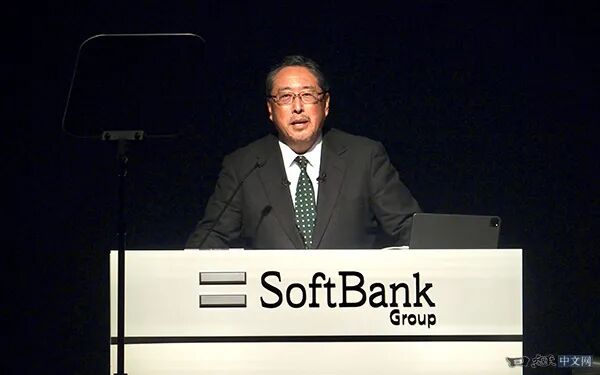
软银集团4~9月净利润创同期历史新高
3 6 Ke· 2025-11-12 04:48
Core Insights - SoftBank Group's net profit for the period from April to September increased to 2.924 trillion yen, a 2.9 times rise compared to the same period last year, marking a historical high for this timeframe [2][3] - The Vision Fund's investment returns significantly increased, driven by the rising stock prices of Coupang and Didi Chuxing, as well as the valuation increase of OpenAI [2][3] Financial Performance - The Vision Fund's investment returns reached 3.5361 trillion yen, a substantial increase from 610.3 billion yen in the previous year [3] - SoftBank's net asset value (NAV) reached a record high of 36.2 trillion yen as of November 10, with a market capitalization of 32.4 trillion yen, reflecting a discount rate of approximately 10% relative to NAV [3][5] Investment Activities - The financial report included a 2.1567 trillion yen investment gain from SoftBank's investment in OpenAI, with a total investment of 10.8 billion USD as of September 30, and a fair value of 26.5 billion USD based on market prices [2] - SoftBank reported an investment profit of 354.4 billion yen from NVIDIA stocks and announced the sale of all its NVIDIA shares for 5.83 billion USD [2] Corporate Actions - SoftBank plans to increase its investment in the Vision Fund by 22.5 billion USD in December, raising its stake to approximately 11% [2] - The company announced a stock split of 1 share into 4 shares effective January 1, 2026, with a dividend of 5.5 yen per share for the fiscal year ending March 2026 [5]