数字化转型

Search documents
14类案例可申报 工信部集中组织开展典型案例征集工作
Zheng Quan Shi Bao Wang· 2025-11-23 05:52
Core Viewpoint - The Ministry of Industry and Information Technology (MIIT) has initiated a collection of typical case studies across 14 categories to promote innovation and development in various sectors [1] Group 1: Categories of Case Studies - The case studies include examples from national autonomous innovation demonstration zones [1] - Artificial intelligence is highlighted as a key area for case study collection [1] - Quality improvement and brand building in industrial and information technology sectors are also included [1] - The Internet of Things (IoT) is recognized for its role in empowering industry development [1] - High-quality development practices in manufacturing are part of the case study focus [1] - Green and low-carbon industrial practices are emphasized [1] - Applications of safety emergency equipment are to be documented [1] - Digital transformation initiatives are included in the case study collection [1] - Advanced computing applications that enhance new productivity are recognized [1] - Integration of information technology and industrialization is a key area [1] - New information infrastructure examples are to be collected [1] - Excellence in information and communication services is also a focus [1] - Collaborative case studies on industrial internet "chain network synergy" are included [1] - Applications of network and data security technology services are part of the initiative [1]
国子软件业绩说明会:前三季度净利增长超27% 全年增长可期
Zhong Zheng Wang· 2025-11-23 01:37
Core Viewpoint - Guozi Software has demonstrated steady growth in its performance, with a solid foundation for annual growth due to sufficient orders and favorable industry policies [1][2]. Financial Performance - From 2022 to 2024, Guozi Software's revenue increased from 200 million to 268 million, maintaining a double-digit compound annual growth rate [1]. - Net profit rose from 51.85 million to 61.45 million, indicating a steady improvement in profitability [1]. - In the first three quarters of 2025, the company achieved revenue of 171 million, a year-on-year increase of 18.31%, and net profit of 33.70 million, up 27.46%, with net profit growth outpacing revenue growth [1]. Industry Outlook - The management holds an optimistic view on the industry, noting that China's software and information technology service sector is in a high-growth phase without significant cyclical characteristics [2]. - Continuous government policies are promoting digitalization in administrative and educational sectors, providing a favorable environment for industry growth [2]. - Guozi Software serves a wide range of clients across various administrative levels and sectors, which supports stable revenue growth [2]. Business Strategy - The company is expanding its industrial business through the acquisition of specifications intelligence, enhancing its growth potential [2]. - Guozi Software emphasizes compliance with regulations and transparent information disclosure, ensuring long-term strategic decision-making [2]. Investor Relations - The company encourages investor engagement through various communication channels to ensure transparency and participation [3]. - Future plans include consolidating core business advantages while seizing opportunities in digital transformation, focusing on technological innovation and market expansion [3].
2025年中国餐饮食品连锁加盟行业白皮书
艾瑞咨询· 2025-11-23 00:05
Core Insights - The Chinese catering and food chain franchise industry is undergoing significant transformation, driven by macroeconomic recovery and increasing consumer spending power, leading to market expansion and digital transformation [1][4][9] Market Overview - The Chinese catering food market reached a scale of 12.6 trillion yuan, with a compound annual growth rate (CAGR) of approximately 7.2% from 2020 to 2024, driven by both catering services and retail [9] - The average annual growth rate of GDP is projected at 6.9%, while the retail sales of consumer goods are expected to grow at about 5.5%, indicating a resilient domestic demand [4] Consumer Behavior - Urban and rural residents' per capita consumption expenditure is showing a recovery trend, with urban residents growing at 6.4% and rural residents at 8.9% annually, reflecting the ongoing vitality of the lower-tier markets [6] - The demand for food and beverages remains stable, with food and alcohol expenditures showing strong resilience, providing a solid demand foundation for the catering industry [6] Industry Trends - The chain rate in the catering service sector is expected to rise from 15% in 2020 to 24% by 2025, indicating a shift towards more standardized and digitalized operations [12] - The rise of "at-home dining" is reshaping the industry, with this market segment growing at an annual rate of 18.4%, significantly outpacing overall food retail growth [10][36] Competitive Landscape - The franchise market is dominated by the catering sector, which accounts for nearly 50% of the market, but most franchise businesses are still in early expansion stages, with nearly 80% of franchise companies having fewer than 10 stores [20][22] - Major brands like Mixue Ice City and Zhengxin Chicken are rapidly expanding their networks, joining the "10,000 stores" club through franchise models [22] Investment Considerations - Franchisees are increasingly focused on competition and financial returns, with a shift from broad expansion to refined operations and careful site selection [24] - The "at-home dining" segment is favored by franchisees due to its lower investment threshold and shorter return on investment period, making it an attractive option for new investors [34][36] Digital Transformation - The industry is moving towards digitalization to support scale expansion and profitability, with brands leveraging data-driven site selection and standardized operational systems to reduce risks for franchisees [44] Franchisee Dynamics - A growing number of professional franchisees are emerging, leading to a two-way selection process between brands and franchisees, emphasizing the importance of operational support and clear profit models [47][48]


移动金融APP加速“瘦身”
Jing Ji Ri Bao· 2025-11-22 21:45
Core Insights - The banking industry is shifting its strategy regarding mobile applications, moving from a proliferation of independent apps to a more streamlined approach by consolidating functionalities into fewer platforms [1][2][3] - The closure of certain apps is primarily driven by low user engagement, redundant features, and high operational costs, prompting banks to focus on enhancing user experience through a unified platform [1][2] Group 1: App Consolidation Trends - Many banks have begun to shut down underperforming apps, with China Bank announcing the closure of its "Bountiful Life" app and Beijing Bank integrating its direct banking app into the "Jingcai Life" app [1] - The China Internet Finance Association reported that in the first half of the year, 66 new mobile financial apps were registered while 75 were deregistered, indicating a trend towards consolidation [1] Group 2: Focus on Credit Card and Direct Banking Apps - Credit card and direct banking apps are the primary targets for this consolidation, as the credit card market shows signs of stagnation, with a reported decrease of 6 million cards in the second quarter of 2025 [2] - The integration of these apps into mobile banking platforms is seen as a logical move since their functionalities are not essential compared to core banking services like account management and transfers [2] Group 3: Regulatory Influence and Future Directions - Regulatory guidance from the National Financial Supervision Administration emphasizes the need for banks to optimize or terminate apps with low user engagement and high compliance risks [2] - Experts suggest that smaller banks should leverage their local advantages to enhance their mobile banking platforms, focusing on creating a user-centric intelligent financial service environment [3] - The integration of services should not merely be a collection of features but should aim to embed financial services into high-frequency daily activities, thereby increasing customer engagement and loyalty [3]
越南文化体育与旅游部发布数字化转型战略
Shang Wu Bu Wang Zhan· 2025-11-22 14:41
(原标题:越南文化体育与旅游部发布数字化转型战略) 越通社11月21日报道,越南文化、体育与旅游部近日发布《2025-2030年数字化转型战略》,旨在 构建现代化行业基础,推动全面创新,以适应数字时代要求与国家发展需要。该战略的出台,展现了文 体旅部把握数字时代机遇、创新治理理念、提升行业核心竞争力的决心,也将为越南数字经济发展注入 新动能。数字化转型为越南文化、体育与旅游走向国际开辟新路径。通过建立政府、企业、创意社区协 同发展机制,将在激发创新活力的同时,构建透明规范的知识产权保护体系,为行业可持续发展提供坚 实保障。 该战略分两阶段实施: 第一阶段(2025-2027年):夯实基础、加速突破。此阶段将着力完善制度体系,建设技术基础设 施,完成核心数据数字化,提升干部与公众数字素养。本阶段成效将直接影响战略全局质量。 第二阶段(2028-2030年):深度融合、全面提升、创造新价值。基础夯实后,重点推进数字技术 与业务深度融合,充分释放数据要素价值,实现从"数字化"到"数字化转型"的质变,使数据成为核心资 产,流程实现智能化升级,数字服务创造显著经济社会效益。 该战略强调,数字化转型不仅是必然趋势,更是推 ...
峨眉山A:深化文旅+百业融合发展 从传统名山迈向世界级文旅标杆
Zheng Quan Shi Bao Wang· 2025-11-22 14:32
Core Insights - Emei Mountain A is transitioning from a traditional scenic area to a world-class cultural tourism benchmark through the integration of cultural tourism, infrastructure upgrades, and digital transformation [1] Group 1: Business Strategy - The company is focusing on a dual strategy of "integrated marketing + cross-industry cultural tourism" to diversify its revenue streams beyond traditional ticket sales [3] - Emei Mountain A has expanded its business portfolio to include hotel accommodations, tea products, big data operations, and cultural media, moving towards a comprehensive tourism service model [3] - The company is actively engaging in nationwide and international marketing efforts, including partnerships with tourism associations in Malaysia and promotional events in major cities [4] Group 2: Market Performance - From January to September, Emei Mountain received 5.1761 million visitors, a year-on-year increase of 5.44%, with inbound tourism numbers reaching 145,500, a growth of 30.38% [5] - The company has successfully launched various cultural and experiential products, such as the "Bodhi Tea Ceremony" and cross-industry collaborations, contributing to significant sales growth [4][5] Group 3: Infrastructure Development - Emei Mountain A is investing over several hundred million yuan in infrastructure projects, including the "Three Stations and One Road" initiative, to enhance service quality and capacity [6][7] - The completion of the 4.7-kilometer "Golden Tourism Passage" has improved traffic flow and reduced congestion during peak seasons by 70% [8] Group 4: Digital Transformation - The company has been advancing its digital transformation for over 20 years, now entering a phase of deep AI integration to enhance operational efficiency and visitor experience [9] - Emei Mountain A has developed an intelligent management system that allows real-time monitoring of visitor distribution and logistics, achieving a 20% reduction in costs and a fivefold increase in efficiency [9][10] - The introduction of AI technologies, such as multilingual translation screens and AI tour assistants, has significantly improved visitor engagement and satisfaction [10]

不是危言耸听!你现在忽略的,是未来5年的生意门票!论时代的抛弃与企业的未来
Sou Hu Cai Jing· 2025-11-22 14:16
Core Insights - The article emphasizes the critical importance of digital transformation in the current business landscape, highlighting that companies must adapt to avoid obsolescence [4][10][12] Group 1: Historical Lessons - Companies like Kodak and Nokia failed due to underestimating the power of technological change and clinging to outdated business models [1][2] - The article suggests that these historical examples serve as warnings for current businesses to embrace change rather than resist it [2] Group 2: Digital Transformation in China - China is undergoing a profound digital transformation, moving from consumer internet to industrial internet, making digital tools essential for businesses [4] - WeChat Mini Programs are identified as a cost-effective and efficient interface for businesses to engage with the digital economy [4] Group 3: Customer Engagement - The article stresses that younger customers are fully digitalized, relying on online solutions for their needs, making it crucial for businesses to provide modern digital interfaces [6] - Without a Mini Program, businesses risk losing relevance and connection with the new generation of consumers [6] Group 4: Data and Private Traffic - Data is described as a new energy source, with Mini Programs serving as natural data collection tools for businesses [8] - Private traffic is positioned as a protective moat, allowing businesses to build their own customer base without relying on external platforms [8] Group 5: Industry Trends - The article outlines a clear trend where all industries should undergo digital transformation, leading to a bifurcation between efficient, digital-savvy companies and traditional, less effective ones [10] - Examples include the integration of Mini Programs in various sectors like dining, retail, and beauty services, indicating a shift towards digitalized operations [10] Group 6: Future Imperatives - The necessity of adopting Mini Programs is framed as a future requirement for survival in the market, rather than a mere option [12] - Delaying this transition could result in significant costs and potential exclusion from the market as digital norms become established [12]

领峰新时代贵金属投资平台:多重逻辑驱动下的贵金属发展新图景
Sou Hu Cai Jing· 2025-11-22 13:46AI Processing
Core Insights - The significant rise in international gold prices exceeding 30% in 2025 and the doubling of stock prices for 29 gold concept stocks in the A-share market are attributed to multiple underlying logical resonances, indicating a clear future direction for the precious metals industry [1][3] Industry Dynamics - The core appeal of precious metals is driven by profound changes in the global macro environment and industrial landscape, with increased demand for gold as a traditional safe-haven asset due to U.S. government policy uncertainties and escalating international trade tensions [3] - Central banks globally are increasing their gold reserves, creating a dual effect of institutional and individual investments shifting from riskier assets like U.S. Treasury bonds to precious metals [3] - The supply-demand dynamics show a continuous shortage of silver supply for four consecutive years, while gold mining companies face resource constraints that limit rapid production increases, reinforcing the value support for precious metals [3] Technological Transformation - The precious metals industry is undergoing a significant transformation characterized by "technological reshaping and structural optimization," with platforms like Lingfeng New Era leading the shift from traditional trading models to comprehensive digitalization [3][6] - The application of technologies such as AI risk control, blockchain verification, and real-time market analysis enhances trading efficiency and security, while also providing value-added services that lower entry barriers for investors [3] Market Concentration - The industry is experiencing a clear trend of concentration, with leading companies like Zijin Mining, Luoyang Molybdenum, and Shandong Gold consolidating their advantages through resource integration and capacity expansion [4] - The demand for silver is expanding beyond investment to industrial applications, particularly in new energy and electronic components, which enhances the dual attributes of "precious metals + industrial metals" and opens up growth opportunities for the industry [4] Future Outlook - Despite the long-term positive outlook for the precious metals industry, potential risks such as geopolitical tensions and shifts in U.S. monetary policy could lead to short-term market volatility [4] - Factors such as global economic uncertainty, energy transition demands under "dual carbon" goals, and the conveniences brought by digitalization are expected to provide sustained growth momentum for the precious metals industry [4][6]

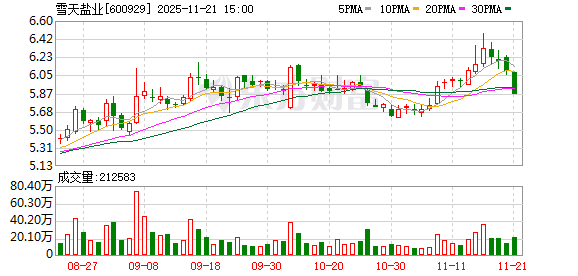
极致降本 新质成长 雪天盐业双轮驱动穿越周期
Zheng Quan Shi Bao Wang· 2025-11-22 12:45
Core Viewpoint - Xue Tian Salt Industry Group has been awarded the 8th Hunan Provincial Governor Quality Award, highlighting its commitment to quality management and its dual strategy of "extreme cost reduction" and "new quality growth" for achieving high-quality development amid industry fluctuations [2][4]. Group 1: Cost Management and Efficiency - The company has actively promoted management reforms and cost control, implementing the "Seven Regulations for Tight Living" and benchmarking against Hunan Steel Group, embedding the "extreme cost reduction" philosophy throughout its operations [2]. - From January to September this year, non-production expenses decreased by 45.07%, and nearly 500 improvement suggestions were made by grassroots employees, with a 76% implementation rate, fostering a strong culture of cost reduction and efficiency [2]. - The company achieved a cost reduction effect exceeding 360 million yuan through deepened reforms, with lean management leading to a 2.15% reduction in comprehensive energy consumption of main products and a decrease of 54,000 tons in carbon dioxide emissions [4]. Group 2: Quality Management and Digital Transformation - Xue Tian Salt Industry has established a full-chain quality traceability system and implemented precise procurement control through a centralized purchasing center, generating over 40 million yuan in benefits from coal procurement from January to November 2025 [2]. - The company is advancing digital transformation, with its smart factory achieving a 100% qualification rate for alkali products and a 2% reduction in salt production energy consumption, while its electronic anti-counterfeiting traceability system was selected as a typical case by the Ministry of Industry and Information Technology [2]. Group 3: Product Innovation and Market Strategy - The company is accelerating its strategy for high-end, differentiated, and specialized products, having established the first independent production line for zero-additive well salt in the country and launched the "Songtai 997" ecological series product with a purity of 99.7%, receiving the first "Ecological Well Salt" certification [3]. - In the past two years, the company has introduced a series of products such as ecological salt and low-sodium seaweed iodized salt, covering all family health salt usage scenarios, and has launched a brand intelligent entity using generative AI technology to reinforce its position as a "solution provider for healthy salt" [3]. - By 2024, the gross profit margin for salt products is expected to increase by 1.14%, with high-end salt sales accounting for nearly 15% in the first ten months of 2025, and brand value reaching 18.499 billion yuan [3]. Group 4: Future Growth and Innovation - The company is proactively laying out new growth drivers, constructing an integrated chain of "salt-salt chemical-new materials" at the Hengyang green low-carbon salt alkali industrial park, and collaborating with a subsidiary to establish a sodium battery research institute to tackle key technologies [3]. - A 5,000-ton intelligent production line for lithium battery cathode materials has been completed, and a future fiber research institute is being co-established with Fudan University to explore new high-value utilization paths for salt resources [3].

海澜之家赴港上市:7200家门店的男装帝国冲击港股IPO
Sou Hu Cai Jing· 2025-11-22 10:06
Group 1 - The core message highlights the successful application for a secondary listing in Hong Kong by HLA, a leading men's apparel brand known as "the men's wardrobe," which has over 7,200 global stores and holds a 5.6% market share in the Chinese men's clothing market, surpassing the combined market share of its second to fifth competitors [1][3]. - HLA has established a robust retail network over the past decade, with 5,631 stores across 31 provincial-level regions in China and 92 overseas stores, showcasing its international expansion efforts [3]. - The company's revenue has consistently remained above 20 billion yuan, with a peak of 20.754 billion yuan in 2023, and a slight adjustment to 20.162 billion yuan projected for 2024, indicating strong profitability [3]. Group 2 - The decision to list in Hong Kong is driven by the desire for broader international visibility and financing opportunities, especially in light of challenges such as digital transformation and consumer upgrades in the apparel industry [5]. - HLA is diversifying its product offerings beyond men's clothing, with the introduction of its own brand matrix, including the luxury women's brand OVV and high-end children's brand Ying's, which are expected to become new growth engines [3].