
量子计算

Search documents
景顺投资赵耀庭:美元贬值周期或开启 资产配置迎拐点
Shang Hai Zheng Quan Bao· 2025-07-06 14:57
Group 1: Global Financial Market Trends - The global financial market is undergoing significant changes, with the potential for a new depreciation cycle of the US dollar, which may decline by 5% in the second half of the year, impacting global asset allocation [1] - A weaker dollar typically opens up opportunities for non-dollar assets, particularly benefiting emerging markets by improving financing conditions and enhancing returns on local currency-denominated assets [1] - The current high valuation of the US stock market, with the S&P 500 index trading at a price-to-earnings ratio close to 22, contrasts with the historical average, highlighting the relative valuation advantage of non-US markets [1] Group 2: Emerging Market Dynamics - For emerging markets, particularly Asian stocks, to outperform developed markets, four key factors must align: moderate US economic growth, a depreciating dollar, stable oil prices below $80 per barrel, and accommodative monetary policies from emerging market central banks [2] - Increased interest from European investors in Asian markets and vice versa indicates a positive trend in capital flows between Europe and Asia, suggesting a shift towards seeking opportunities outside the US market [2] Group 3: Technology Sector Insights - Chinese technology companies are demonstrating strong innovation capabilities, as evidenced by the launch of the DeepSeek-R1 model, which is narrowing the valuation gap between US and Chinese tech stocks [3] - Despite the strong performance of US tech stocks, there are signs of cooling enthusiasm and concerns over high valuations, while Chinese tech companies are viewed as having higher investment value due to their growth potential [3] - Investment opportunities in Chinese companies are also seen in quantum computing, biotechnology, and high-end equipment manufacturing, supported by favorable policies and a complete industrial chain from R&D to commercialization [4]
B2B电商平台推荐:数商云——企业数字化转型的深度赋能者
Sou Hu Cai Jing· 2025-07-04 16:06
Core Insights - The article highlights the transition of B2B e-commerce from "information matching" to "full-link digitalization" by 2025, with the global market size exceeding $14.9 trillion, and China accounting for over 35% of this market, maintaining a compound annual growth rate of over 18% [2] - Traditional B2B platforms face three major pain points: rigid technical architecture leading to insufficient high concurrency processing, delayed response to industry customization needs, and low supply chain collaboration efficiency [2] - Shushangyun emerges as a key choice for enterprises to overcome growth bottlenecks through its "cloud-native + microservices" technology foundation, vertical industry solutions, and ecological service capabilities [2] Technical Architecture - Shushangyun employs a distributed microservices architecture, allowing for elastic scaling and high concurrency processing, supporting up to 5,000 orders per second with a stable response time of 300 milliseconds [3] - The introduction of quantum computing and digital twin technologies enhances decision-making in procurement, with a reported 300% increase in procurement efficiency and an 18.7% reduction in overall costs for certain enterprises [4] - A multi-chain blockchain architecture facilitates trust in cross-border transactions, reducing average transaction cycles from 14 days to 3 days and decreasing dispute rates by 92% [4] Core Functions - Shushangyun's SKU management capabilities enable precise operations, achieving a 99.5% inventory accuracy rate and a 0.8% out-of-stock rate for a certain automotive parts enterprise [6] - The order management system transitions from a linear model to an intelligent decision-making loop, improving order processing efficiency by 50% and customer satisfaction by 30% for a specific electronic components company [9] - The supply chain finance module integrates deeply into transaction processes, reducing financing cycles from 30 days to 7 days and financing costs by 20% for a building materials company [10] Industry Adaptability - Shushangyun addresses the complexities of industrial product transactions with a three-dimensional collaborative platform, achieving a 98.3% match rate for model queries [11] - In the agricultural sector, blockchain traceability technology has connected over 5,000 farmers with 300+ buyers, increasing transaction volume by 40% and reducing loss rates to 5% [14] - The medical industry benefits from compliance and efficiency solutions, with a 40% improvement in business compliance for a pharmaceutical company through a drug traceability module [17] Enterprise Adaptability - Shushangyun offers standardized products for small enterprises with annual transaction volumes below $5 million, enabling rapid deployment and a 60% reduction in IT investment [19][20] - For larger enterprises with transaction volumes exceeding $500 million, customized development services are available, enhancing inventory synchronization from 2 hours to 5 minutes [23] - The company has established an ecological service system integrating technology, data, and finance, with over 500 standardized interfaces for seamless integration with other systems [25] Future Outlook - Shushangyun is advancing in three strategic areas: developing immersive 3D virtual exhibition halls, integrating carbon footprint tracking into supply chain systems, and exploring quantum computing applications for supply chain optimization [28][29][30] - The company positions itself as a partner in digital transformation, providing comprehensive support from platform construction to operational optimization, enabling enterprises to seize market opportunities and achieve sustainable development [30]

Is D-Wave Quantum Stock a Buy Now?
The Motley Fool· 2025-07-03 11:20
Core Viewpoint - D-Wave Quantum, an early player in the quantum computing sector, has experienced significant stock volatility and is attempting to expand beyond its niche market with new technologies and partnerships [2][4][6]. Company Overview - D-Wave Quantum went public via a SPAC merger on August 22, 2022, starting at $10 but dropping to a low of $0.41 by May 12, 2023, due to dilution, losses, and high valuations [2]. - As of now, D-Wave's stock trades around $14, representing a substantial recovery for those who invested at its lowest point [4]. - The company specializes in quantum annealing tools that optimize business processes, aiming to compete with traditional cloud-based analytics firms [6][7]. Financial Performance - In 2024, D-Wave reported $8.8 million in revenue with a net loss of $143.9 million [9]. - Analysts project revenue to nearly triple to $24.4 million in 2025, with a reduced net loss of $72.9 million, driven by the new 4,400-qubit Advantage2 processor [10]. - Expected revenue growth includes a 56% increase to $38.1 million in 2026 and nearly doubling to $74.1 million in 2027, although the company is not expected to break even soon [12]. Product Development and Market Position - D-Wave's Advantage2 processor can solve complex problems significantly faster and more efficiently than its predecessor [10]. - The LaunchPad platform for Leap aims to attract new enterprise customers and enhance recurring subscription revenues [11]. - The company plans to integrate more quantum AI tools to appeal to the growing AI market [11]. Competitive Landscape - D-Wave faces competition from universal gate-based processors from companies like IBM, Google, Rigetti, and IonQ, which may limit its market share if it cannot keep pace [14]. - The company has increased its share count by 184% since the SPAC merger, primarily due to secondary offerings and stock-based compensation, leading to ongoing dilution [13]. Insider Activity - Recent insider selling has raised concerns, with insiders selling more than three times as many shares as they bought in the past three months, indicating potential skepticism about future growth [15]. Investment Considerations - D-Wave's current valuation appears high relative to its near-term growth prospects, making it a speculative investment in the long-term quantum computing market [16].



马来西亚首相安瓦尔发文祝贺中国丝路集团成功举办CYDES 2025中国专题论坛
Zhong Guo Chan Ye Jing Ji Xin Xi Wang· 2025-07-03 09:03
2025年7月2日上午,第三届国家网络防御与安全展览与会议(CYDES 2025)期间,由中国丝路集团及旗 下子公司丝路之舟联合承办的中国专题论坛在马来西亚布城国际会议中心圆满举行。作为本届CYDES 2025的重要组成部,分,中国专题论坛以"共建东盟网络安全韧性:中国网络安全自主实践经验"为主 题,汇聚中马两国政府代表、行业专家及网络安全企业,共同探讨区域网络安全合作新路径。 在论坛开幕之际,马来西亚首相安瓦尔发文祝贺,由国家安全委员会主任YM Raja Dato Nushirwan Zainal Abidin在会场宣读贺词。首相在贺词中表示,作为东盟轮值主席国,网络安全是马来西亚的重要 优先议程。马来西亚致力于建设一个以开放、信任和共同进步为核心的东盟网络安全共同体。中国在人 工智能、大数据、量子计算和自主网络防御等领域的领先经验,为东盟网络安全能力建设提供了宝贵借 鉴。首相希望本次论坛能够促成新的合作伙伴关系,取得务实成果,推动建设更安全、更具韧性的区域 网络未来。 中国驻马来西亚大使欧阳玉靖、马来西亚国家安全委员会主任YM Raja Dato Nushirwan Zainal Abidin、 中国丝路 ...
泡沫预警信号!美股创新高之际 一项 “非理性繁荣 “指标破警戒线
贝塔投资智库· 2025-07-03 03:50
Core Viewpoint - The "Irrational Exuberance Index" developed by Barclays has surpassed the warning threshold of 10.7%, indicating a resurgence of speculative trading in the U.S. stock market, reminiscent of past market bubbles [1][2]. Group 1: Market Indicators - The "Irrational Exuberance Index" has reached a monthly average of 10.7%, the first time it has crossed the double-digit threshold since February, with a historical average of around 7% [1]. - The index is based on derivatives market data, volatility indicators, and options market sentiment signals, and has previously peaked during the late 1990s internet bubble and the 2021 retail trading frenzy [1]. - The market is currently characterized by speculative trading, with significant increases in popular concept stocks and traditional fundamental analysis becoming less effective [2]. Group 2: Market Sentiment and Performance - Optimism in the market is driven by expectations of trade agreements between the U.S. and major partners, as well as speculation that the Trump administration may delay tariff implementation [2]. - The SPAC issuance has rebounded significantly, with the number of new SPACs in 2025 already exceeding the total for the previous two years [2]. - The ARK Innovation ETF has recorded one of its highest annual gains, with specific sectors showing extreme performance: Bitcoin-related stocks surged by 78%, quantum computing stocks rose by 69%, and meme stocks averaged a 44% increase [2]. Group 3: Risk and Recommendations - The index readings indicate overly exuberant investor sentiment, which poses a risk of increased market volatility [2]. - There is a strong correlation between the index and net borrowing positions in margin accounts, reflecting high retail participation [2]. - Despite the presence of bubble signals, timing the market remains challenging, and historical trends suggest bubbles can last longer than expected [2].
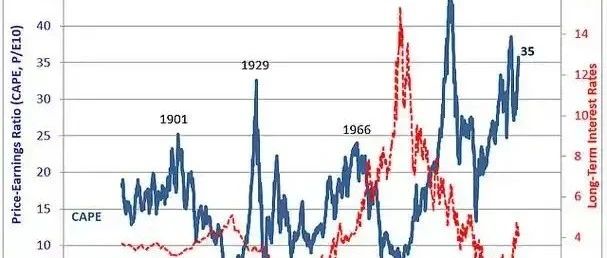
“美国占一半,中国分四成,欧洲...”
Guan Cha Zhe Wang· 2025-07-03 03:25
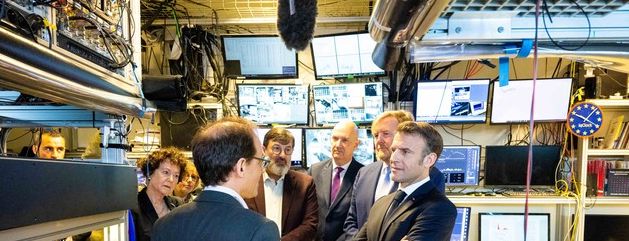
Core Viewpoint - Europe is at risk of falling behind in the quantum technology race, similar to its experience in artificial intelligence, as it struggles to convert research into market opportunities and attract significant investment compared to the US and China [1][2][4]. Investment Landscape - The EU has only attracted 5% of global private quantum technology funding, while the US and China have secured over 50% and 40% respectively [1]. - The EU has committed €11 billion to quantum technology, but there is a need for better resource integration to enhance impact [5]. Commercialization Challenges - Europe leads in scientific publications in quantum technology but ranks third in patent applications, trailing behind the US and China [1]. - Companies in Europe face difficulties in scaling due to a lack of sufficient support and venture capital [4][5]. Strategic Initiatives - The EU's strategy includes launching two major challenges between 2025 and 2027, focusing on quantum computing and quantum navigation systems [7]. - The EU plans to support innovation-oriented procurement to help companies commercialize technology, although specific implementation details are lacking [7]. Regulatory Environment - There is a debate on whether Europe will allow the quantum industry to develop freely, given the sensitivity of quantum technology related to national security [2]. - Industry leaders caution against premature regulation, referencing the EU's previous regulatory approach to artificial intelligence as a potential misstep [7].
我科学家实现超快高保真度中性原子态探测
Ke Ji Ri Bao· 2025-07-03 00:52
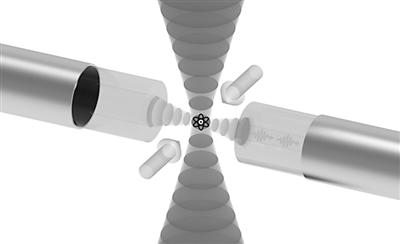
Core Insights - The research team led by Professor Guo Guangcan from the University of Science and Technology of China has made significant advancements in the field of neutral atom quantum information, achieving record-breaking speed and fidelity in atomic state readout [1][2] Group 1: Research Achievements - The team utilized a fiber microcavity coupled with neutral atoms in the Purcell region to achieve ultra-fast, high-fidelity atomic state readout, setting a new record for both speed and fidelity in publicly reported results [1] - The system demonstrated a cooperative factor of 4.7, enhancing the spontaneous emission rate of atoms by approximately 10 times, indicating its potential as a high-performance neutral atom-photon quantum interface and quantum network node [1] Group 2: Technical Innovations - By employing strong resonant driving of closed-loop transitions and a low momentum transfer excitation strategy, the team increased the detection count rate of photons to 18M/s, achieving a fidelity of 99.1% within a 200-nanosecond time window and 99.985% within a 9-microsecond window, both setting new public records [2] - The probability of losing atoms during the readout process remained below 3‰, showcasing the non-destructive detection feature compatible with quantum error correction protocols [2] Group 3: Implications for Quantum Computing - This breakthrough in ultra-fast, high-fidelity atomic state readout is crucial for reducing time and physical resource consumption in quantum computing and for enabling long-range scalable quantum networks [2]
华尔街嗅到量子投资机遇 热门“量子计算概念股”Rigetti Computing喜获“增持”
Zhi Tong Cai Jing· 2025-07-02 14:20
Core Insights - Rigetti Computing has gained significant attention in the U.S. stock market due to Cantor Fitzgerald initiating coverage with a "buy" rating and a target price of $15, indicating Wall Street's growing interest in quantum computing as a lucrative investment opportunity [1][2] - The quantum computing sector is still in its infancy but is recognized as a highly sought-after technological milestone with potential for substantial economic impact in the future [1][3] - Major tech companies like NVIDIA, Microsoft, and IBM are heavily investing in quantum computing, signaling a competitive landscape and the potential for significant advancements in commercial applications [1][4][8] Company Developments - Rigetti recently completed a $350 million stock issuance to strengthen its balance sheet [2] - NVIDIA's CEO Huang Renxun highlighted that quantum computing is approaching a critical technological turning point, with the potential to solve significant global issues in the coming years [4][5] - Cisco has announced its entry into the quantum computing field by showcasing a prototype chip for connecting quantum computers, indicating a broadening interest in the sector [6] Industry Trends - The concept of a "Transformer moment" in quantum computing is emerging, which refers to the development of controllable and commercially valuable quantum computing applications [7][8] - Recent advancements in technologies such as ion traps and quantum annealing are paving the way for practical quantum computing applications, moving from theoretical concepts to real-world implementations [7][8] - The involvement of major tech giants and government support is expected to accelerate the commercialization of quantum computing on a global scale [8]

AI产业跟踪海外:海外特斯拉Robotaxi上线,MetaAI眼镜能拍3K视频
GUOTAI HAITONG SECURITIES· 2025-07-02 07:53
Investment Rating - The report does not explicitly provide an investment rating for the industry Core Insights - The AI industry is witnessing significant advancements with major companies like Meta and Google launching new products and features, indicating a competitive landscape and innovation drive [1][4][7][21] - Notable funding activities include Delphi's $16 million Series A round led by Sequoia and Thinking Machines Lab's record $2 billion seed round, highlighting investor confidence in AI startups [5][6] - The introduction of Tesla's Robotaxi service marks a significant step in autonomous vehicle deployment, with initial operations in Austin, Texas [17] Summary by Sections 1. AI Industry Dynamics - Meta has recruited four key researchers from OpenAI, which may enhance its AI capabilities following the release of Llama 4 [4] - The competition between Meta and OpenAI has intensified, with significant financial incentives being offered for talent acquisition [4] 2. AI Application Insights - Anthropic has updated its Claude chatbot to allow users to create AI applications without programming knowledge, broadening accessibility [7] - Google has launched the open-source Gemini CLI, which offers extensive features for developers, including high usage limits [8] - The AlphaGenome tool from Google can read large DNA sequences, significantly advancing genetic research capabilities [9] 3. AI Large Model Insights - Microsoft's Mu model, with only 330 million parameters, achieves performance comparable to models with ten times the parameters, showcasing efficiency in AI model design [22] - Sakana AI's new "Reinforcement Learning Teacher" paradigm demonstrates improved training efficiency for AI models, reducing training time significantly [23] 4. Technology Frontiers - CMU has developed a compiler that optimizes large language models, reducing inference latency significantly [24] - Netflix is expanding its VR experiences with a new immersive space, indicating a growing trend in entertainment technology [25] - Microsoft has made a breakthrough in quantum computing, significantly reducing error rates in quantum bits [26]




Robotaxi正式推出,量子计算迎来最新突破,看好智驾、量子产业链长期发展
Great Wall Securities· 2025-07-02 03:35
Investment Rating - The report maintains an investment rating of "Outperform" for the industry [3]. Core Insights - The launch of Tesla's Robotaxi marks a significant step towards the commercialization of autonomous ride-hailing services, with plans to expand the fleet to thousands of vehicles within months [22][39]. - Major advancements in quantum computing have been achieved, particularly with Microsoft's introduction of the 4D topological quantum error correction code, which significantly enhances error rates and operational efficiency [40][41]. Summary by Sections Robotaxi Launch - Tesla's Robotaxi was officially launched in Austin, Texas, with an initial deployment of about 10 vehicles, limited to invited users and specific operational areas [22][24]. - The Robotaxi utilizes the next-generation Full Self-Driving (FSD) system, which has a model parameter volume 4.5 times larger than the current version, and is expected to be fully operational later this year [24][25]. - The FSD system is designed to operate without pre-learning routes and is capable of point-to-point travel, with a fixed fare of $4.2 for rides [39]. Quantum Computing Breakthrough - Microsoft announced a significant breakthrough in quantum computing with the 4D topological quantum error correction code, which improves encoding efficiency and reduces error rates by 1000 times compared to 2D codes [40][41]. - This new technology will be integrated into Microsoft's Azure Quantum platform, enhancing research and development capabilities in various fields [40][41]. - The 4D topological code requires fewer physical qubits for each logical qubit, thus paving the way for more efficient quantum computing hardware [41]. Market Predictions - Frost & Sullivan predicts that the Robotaxi market will begin large-scale commercialization by 2026, with a projected market size of approximately 500 billion yuan in China by 2030 [39]. - The quantum computing market is expected to grow significantly, with IDC forecasting sales to reach $7.6 billion by 2027, reflecting a compound annual growth rate of 48.1% from $1.1 billion in 2022 [40].
