汽车电动化

Search documents
投资者提问:董秘,您好! 比亚迪不仅卖纯电车,也卖插混车。上汽MG、特斯拉...
Xin Lang Cai Jing· 2025-10-10 10:51
Core Viewpoint - BYD is focusing on plug-in hybrid vehicles (PHEVs) in addition to pure electric vehicles, which aligns with the current market conditions in Europe where charging infrastructure is still developing, presenting a significant market potential for PHEVs [1] Group 1: Company Strategy - SAIC's MG brand has launched HEV hybrid models to strengthen its sales base in Europe, achieving over 220,000 terminal deliveries in the European market this year, making it the best-selling Chinese brand in Western Europe [1] - SAIC Group has developed its own "Zhu Feng" integrated vehicle architecture, covering both "oil hybrid" and "electric hybrid" products [1] - Multiple models of plug-in hybrid and range-extended products are being launched this year by SAIC's own brands such as Roewe, Zhiji, and Shangjie, as well as joint ventures with brands like Volkswagen and General Motors [1]


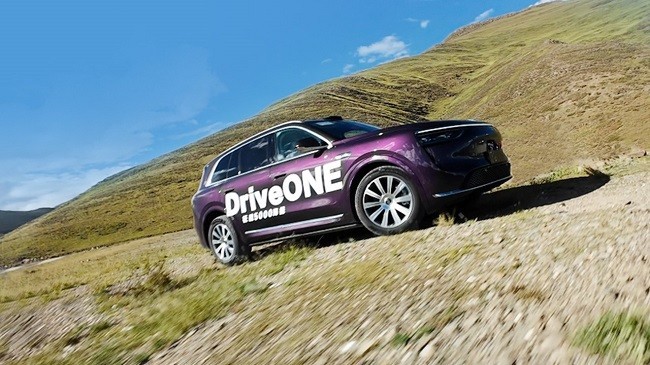
华为DriveONE护航新能源车队挑战超高海拔
Huan Qiu Wang· 2025-10-10 09:18
Core Insights - Huawei's DriveONE technology showcases its performance and reliability in extreme high-altitude conditions through a live challenge event [1][4] - The DriveONE system is a key component of Huawei's digital energy business, emphasizing technological innovation in electric power and thermal management [1] - Safety is a primary focus in the development of DriveONE, integrating multiple safety barriers to ensure stable operation and support for L3 autonomous driving [2] Group 1: Product Performance - The newly launched AITO M8 pure electric version and M9 range-extended version both utilize the DriveONE motor, demonstrating strong performance in high-altitude environments [1] - The AITO M8 pure electric version features a high-pressure seven-in-one motor, enhancing space utilization for passengers and storage [1] - The AITO M9 range-extended version achieves a fuel consumption of 6.9L per 100 kilometers, balancing fuel economy with electric vehicle performance [1] Group 2: Safety Features - DriveONE incorporates a triple safety barrier system, including power supply, power, and motion safety [2] - The power supply safety features include dual-path redundancy and real-time monitoring to ensure stable operation [2] - Motion safety is enhanced through a collaborative architecture that improves vehicle control precision, particularly in challenging driving conditions [2] Group 3: Quality Assurance - Huawei adheres to a "quality first" philosophy, conducting extensive testing with nearly a thousand test vehicles across various complex driving conditions [4] - Long-term commitment to quality has led to continuous optimization in safety, reliability, and overall efficiency of the DriveONE system [4] - The live demonstration highlighted the stable performance of high-quality electric drives in complex high-altitude environments, reinforcing consumer confidence in electric vehicles [4]

15.98万元起!鸿蒙智行攻入主流大众车市!或将重塑行业竞争格局|人民智行
Zheng Quan Shi Bao Wang· 2025-10-10 03:14
Core Insights - Huawei's automotive division, Hongmeng Zhixing, has officially launched the Shangjie H5, its most affordable model, priced starting at 159,800 yuan, marking its entry into the sub-200,000 yuan automotive market [1][2] - The launch of Shangjie H5 is expected to intensify competition in the domestic automotive market, particularly affecting self-owned and some joint venture brands in the same price range [2][6] Market Dynamics - In 2024, vehicles priced below 200,000 yuan are projected to account for over 70% of the domestic automotive market share, with the segment currently dominated by fuel vehicles, while the penetration rate of new energy vehicles stands at approximately 40% [2][5] - Over the past four years, Huawei has captured a significant share of the traditional luxury car market, delivering 930,000 vehicles, and has positioned itself as a leader among new force brands in the automotive sector [3][4] Competitive Landscape - The Shangjie H5 is designed to compete directly with models like Tesla Model Y and BYD Song PLUS, potentially forcing joint venture brands to accelerate their electrification efforts [4][6] - Traditional luxury brands, including BMW, Mercedes-Benz, and Audi, are experiencing declining sales, with each brand's sales dropping over 10% year-on-year, indicating increased pressure from new entrants like Huawei [3][4] Strategic Implications - Huawei's dual strategy of high-end and mainstream market penetration is seen as a significant move to challenge traditional luxury brands while expanding its market presence [4][9] - The introduction of Shangjie H5 is expected to push the automotive industry towards greater technological integration and lower pricing, altering consumer expectations regarding the value of smart vehicles [5][6] Future Outlook - The automotive industry is anticipated to shift from mechanical manufacturing to smart terminal production, with technology capabilities becoming the core competitive advantage [9] - Companies are advised to enhance their product intelligence, optimize cost structures, and explore new markets to maintain competitiveness against emerging players like Huawei [7][8]
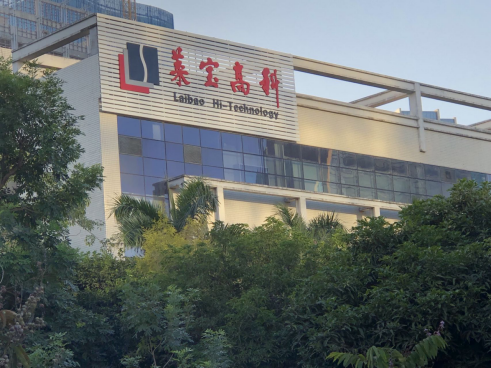
莱宝高科:车载触摸屏业务今年销售收入能否同比增长存不确定性
Ju Chao Zi Xun· 2025-10-09 02:21
Core Viewpoint - The company faces challenges in its automotive touch screen business due to ongoing price pressures and increasing competition from InCell integrated touch display technology, leading to uncertainty in achieving year-on-year sales growth in 2025 [2][3]. Group 1: Market Trends - The automotive industry is increasingly moving towards electrification, intelligence, and connectivity, which is driving the integration of traditional dashboard components into unified designs, resulting in a shift from single screens to dual and triple screen setups [2]. - There is a growing demand for customized designs and production of automotive cover glass in various shapes, including 3D, curved, and irregular forms, as product sizes expand [2]. Group 2: Sales and Production Outlook - The company reported a certain degree of growth in product production and sales in the first half of 2025 compared to the same period last year, as it actively works to meet customer delivery demands [3]. - The global market for automotive touch screens is expected to grow in line with the anticipated increase in global electric vehicle shipments, which will drive demand for larger and multi-screen touch displays [3]. Group 3: Strategic Initiatives - The company plans to enhance its development efforts with overseas Tier 1 automotive manufacturers, achieving positive progress in 2024, which is expected to lead to new product projects and increased demand for touch sensor panels in automotive touch screens [3]. - The company intends to expand its production capacity for automotive touch screens and cover glass in response to customer demand and will explore additional high-value product markets within the automotive touch screen segment [3]. Group 4: Overall Sales Projection - Overall, the company's automotive touch screen business is projected to continue experiencing year-on-year sales growth in 2025 [4].

9月第4周乘用车环比+26.7%,继续看好汽车板块 | 投研报告
Zhong Guo Neng Yuan Wang· 2025-10-09 01:08
Core Insights - The automotive industry is experiencing a shift with electric vehicle (EV) adoption nearing its peak while the focus is now on automotive intelligence and robotics innovation [5] Group 1: Market Performance - In September, the top 15 domestic new energy vehicle companies delivered 877,000 units, a year-on-year increase of 15% [4][5] - Xpeng, Xiaomi, and Great Wall's new energy vehicles each surpassed 40,000 units for the first time, while Hongmeng exceeded 50,000 units [4][5] - Li Auto's deliveries returned to over 30,000 units, and NIO set a new delivery record of 34,700 units [4][5] Group 2: Segment Performance - The performance of automotive segments for the week showed: SW commercial trucks (+3.8%) > SW passenger cars (+2.8%) > SW automotive (+1.7%) = SW automotive parts (+1.7%) > SW commercial passenger vehicles (-1.7%) [2][4] - The insurance premium for compulsory traffic insurance reached 644,000 units, with a week-on-week increase of 26.7% and a month-on-month increase of 25% [2] Group 3: Key Developments - Tesla released the FSD V14 version, expanding the model scale by ten times and increasing context length by three times [3] - Xpeng's deliveries in September reached 42,000 units, a year-on-year increase of 95% and a month-on-month increase of 10% [3] - Ideal Auto delivered 34,000 units in September, a year-on-year decrease of 37% but a month-on-month increase of 19% [3] Group 4: Investment Opportunities - The automotive sector is entering a new phase with three main investment opportunities: electric vehicle benefits nearing an end, the dawn of automotive intelligence, and innovations in robotics [5][6] - Key investment areas include Robotaxi and Robovan applications, with major players like Tesla, Xpeng, and various technology providers [6]



骏鼎达(301538):高分子改性保护材料领先企业 打造机器人“腱绳+保护套管”一体化解决方案
Xin Lang Cai Jing· 2025-10-07 10:27
Group 1 - The company, established in 2004, specializes in functional protective sleeves and monofilaments, widely used in automotive, construction machinery, rail transportation, and communication electronics sectors [1] - The products are known for their excellent temperature resistance, UV resistance, flame retardancy, and chemical corrosion resistance, providing safety protection for wiring systems and fluid pipelines [1] - The projected net profit for the company from 2025 to 2027 is 226 million, 290 million, and 364 million yuan, with current market valuations corresponding to PE ratios of 32.3, 25.2, and 20.1 times [1] Group 2 - The demand for functional protective sleeves is expected to grow due to the electrification of vehicles and the increasing requirements for protection in wiring systems and fluid pipelines [1] - The market size for functional protective sleeves in China's new energy vehicle sector is projected to reach 4.932 billion yuan in 2024 [1] - The company aims to leverage its experience in the automotive industry to expand into the robotics sector, focusing on functional protective sleeves and tendon protection components [2] Group 3 - The company's tendon protection sleeve mimics the human tendon sheath structure, addressing key issues such as lubrication, flame retardancy, heat insulation, wear resistance, and lifespan [2] - The protective sleeves for wiring systems are suitable for robotic joints and arms, ensuring reliability under long-term high-load operations [2]

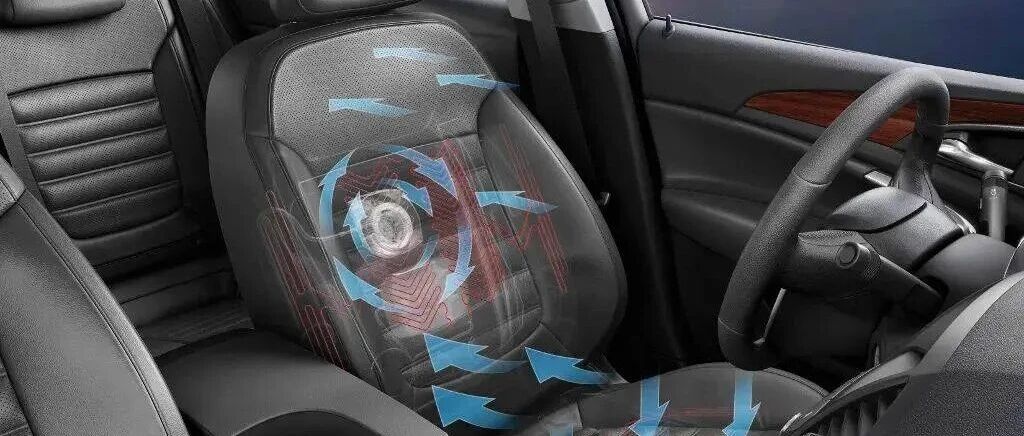
7万块享受座椅通风!豪车象征被国产车拉下神坛,还玩出了新花样?
电动车公社· 2025-10-07 00:18
关注 「电动车公社」 和我们一起重新思考汽车 大家好,我是电动车公社的社长。 最近这两年, "冰箱彩电大沙发" 俨然成了大家选择新车的重要评判指标。 其中 大沙发 作为三项指标中最古早的,也成了车企们玩得最花的配置,甚至没有之一。 不仅电动调节从简单的6向拓展到了夸张的20多向,各种电动腿托腰托应有尽有,零重力座椅从"老板座"延伸到了主副驾,就连座椅按摩功能也开始联合中 医,增强穴位叩击的准确性和力度,实现快速缓解疲劳的效果。 01. 旧时王谢堂前燕,飞入寻常百姓家 时间回到十几年前燃油车横行的时代, 座椅通风几乎可以说是百万豪车才能拥有的顶级舒适配置 , 同时 选装价格不菲 。 就拿BBA为例,想要用上座椅通风,至少得是"56E"的级别,买车就得准备四五十万,选配座椅通风普遍也要2万块起步。 由于是定制车,不仅要交一笔大额定金,优惠折扣也比普通车型更少。 至于那些非豪华品牌,想要座椅通风几乎是不可能的,就只能 到后市场做改装。 送到改装店后,不仅要彻底拆解座椅,内部的结构、走线都要大改,工时费也不会太便宜。而即便改装好,效果也很难比得上出厂前装的。 看到这里,相信有小伙伴会好奇: 座椅通风,不就是在座椅里面 ...
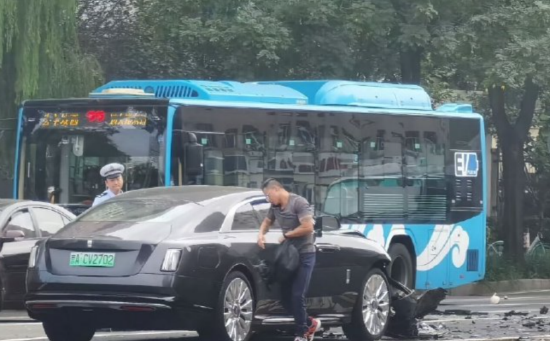
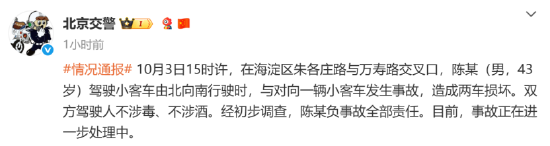
交警通报陈震劳斯莱斯事故!车辆或报废 维修费堪比车价
Xin Lang Ke Ji· 2025-10-05 15:47
Core Viewpoint - A serious traffic accident involving a Rolls-Royce vehicle owned by prominent automotive influencer Chen Zhen has raised questions about the brand's image and sales performance in the Chinese market, particularly amid ongoing controversies and declining sales figures [1][5][7]. Group 1: Accident Details - The accident occurred on October 3 in Beijing, with initial investigations indicating that Chen Zhen is fully responsible for the incident [1]. - The vehicle involved is a Rolls-Royce Phantom, which has an official price of 5.75 million yuan, and even as a second-hand car, its market price starts at 4 million yuan [1][4]. - There are allegations from netizens suggesting that the vehicle may have been driving in the wrong direction, but local traffic police declined to comment on the matter [2][4]. Group 2: Insurance and Repair Costs - Chen Zhen's public statement about only purchasing mandatory traffic insurance has sparked discussions, as this type of insurance has a compensation limit of only 2,000 yuan for property damage [4]. - An industry expert noted that without comprehensive insurance, the repair costs could approach the price of a new vehicle, potentially leading to the car being declared a total loss [4][5]. Group 3: Rolls-Royce Sales Performance - In 2023, Rolls-Royce delivered 6,032 vehicles globally, marking a historical high, but projections for 2024 indicate a decline to 5,712 vehicles, a decrease of 5.3% [5]. - The brand's sales in the Greater China region have also been declining, with a reported 23% drop in sales during the first five months of the year compared to the previous year [5]. - Despite maintaining stable official prices, the brand has been offering flexible promotions in the domestic market to adjust to sales challenges [5]. Group 4: Brand Image and Controversies - Rolls-Royce has faced multiple controversies in recent years, including backlash for a promotional video featuring internet celebrities that was deemed inconsistent with the brand's luxury image [7]. - These controversies, along with the recent accident, have contributed to a tarnished brand image, impacting consumer perception and sales in the competitive luxury automotive market [7].
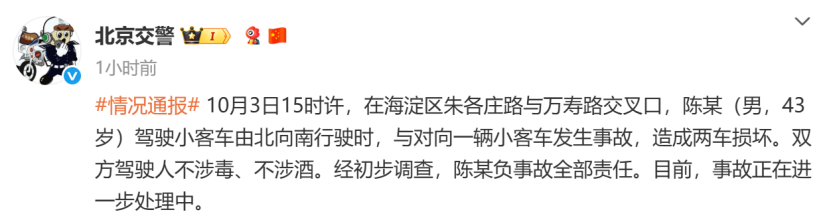
交警通报陈震劳斯莱斯事故,车辆或报废,维修费堪比车价?
Hu Xiu· 2025-10-04 08:03
Core Points - A serious traffic accident involving a Rolls-Royce vehicle owned by a well-known car reviewer, Chen Zhen, occurred in Beijing, with the car sustaining significant damage [1][2] - Initial investigations by Beijing traffic police indicate that Chen Zhen is fully responsible for the accident, which is still under further processing [2] - The involved Rolls-Royce model, known as the Spectre, has an official guide price of 5.75 million yuan, with second-hand market prices starting at 4 million yuan [3][7] Insurance and Financial Implications - Chen Zhen publicly stated that he only purchased mandatory traffic insurance, which has a compensation limit of 2,000 yuan for property damage, raising concerns about the financial implications of the accident [8] - The repair costs for a Rolls-Royce can be exorbitant, with estimates for repairs potentially nearing the price of a new vehicle, leading to the possibility of the car being declared a total loss if comprehensive insurance was not purchased [9] Market Performance and Brand Image - Rolls-Royce has experienced a decline in sales in the Greater China region, with a reported 23% decrease in sales in the first five months of the year compared to the previous year [10] - The brand's global deliveries in 2024 are projected to be 5,712 units, a 5.3% decrease from 6,032 units in 2023, marking the end of three consecutive years of growth [10] - The brand has faced multiple controversies in recent years, which have affected its image and sales performance [13]
交警通报陈震劳斯莱斯事故:车辆或报废 维修费堪比车价的节奏
Xin Lang Ke Ji· 2025-10-04 07:13
Core Viewpoint - A serious traffic accident involving a luxury Rolls-Royce vehicle owned by prominent automotive influencer Chen Zhen has raised questions about the vehicle's insurance coverage and the brand's declining sales in the Greater China region [1][2][3]. Group 1: Accident Details - The accident occurred on October 3 in Beijing, with initial investigations indicating that Chen Zhen is fully responsible for the incident [1]. - The vehicle involved is a Rolls-Royce Spectre, which has an official guide price of 5.75 million yuan (approximately 575 million) and a market price starting at 4 million yuan for used models [1][2]. - There are allegations from netizens suggesting that the vehicle may have been driving in the wrong direction, but local traffic police declined to comment on the matter [2]. Group 2: Insurance Controversy - Chen Zhen previously stated that he only purchases mandatory traffic insurance, which has a compensation limit of 2,000 yuan for property damage, raising concerns about the potential repair costs for the severely damaged vehicle [2][3]. - An industry expert noted that if comprehensive insurance had been purchased, the annual cost for the Spectre would be around 200,000 yuan, and without it, repair costs could approach the price of a new vehicle, potentially leading to the car being declared a total loss [3]. Group 3: Rolls-Royce Sales Performance - Rolls-Royce has experienced a decline in sales in the Greater China region, with a reported 23% decrease in sales during the first five months of 2023 compared to the previous year [4]. - Despite a record global delivery of 6,032 vehicles in 2023, projections for 2024 indicate a drop to 5,712 vehicles, marking a 5.3% decline and ending a three-year growth streak [3][4]. - The brand has faced multiple controversies in recent years, impacting its image and sales, including backlash over promotional content that was deemed inconsistent with its luxury branding [4].