
清洁能源转型

Search documents
英媒:中国清洁能源项目在印尼蓬勃发展
Huan Qiu Wang· 2025-09-01 01:02
Group 1 - The article highlights the contrast between the slow progress of Western financing for Indonesia's energy transition and the rapid expansion of Chinese investments in the country's green energy sector [1][2][3] - The "Just Energy Transition Partnership" (JETP) proposed by Western countries, which promised $20 billion to help Indonesia reduce its reliance on coal, has only seen $1.2 billion disbursed so far, with the U.S. withdrawing its support [1][2] - Chinese companies are actively participating in Indonesia's green energy projects, including solar, hydropower, and electric vehicle manufacturing, often supported by national financing and expedited plans [1][2][3] Group 2 - A report from the Lowy Institute indicates that Western commitments to support Southeast Asia's clean energy transition have not translated into more on-the-ground projects, while Chinese development financing in the region increased by $1.6 billion to $4.9 billion from 2022 to 2023 [2] - China's infrastructure investment in Southeast Asia has nearly tripled in one year, reaching almost $10 billion in 2023, contrasting with a reduction of over $2 billion in official development financing from the U.S., EU, and UK [2] - Indonesia's government is increasingly favoring Chinese investments, as they perceive faster action and tangible results compared to the bureaucratic delays associated with JETP [3]

A股半年报“交卷”:近八成公司盈利 人工智能引领增势
Zheng Quan Shi Bao· 2025-08-30 01:11
Core Viewpoint - The A-share market shows robust performance in the first half of 2025, with nearly 80% of companies reporting positive net profits, driven by sectors like AI, agriculture, and technology [1][3]. Financial Performance - A total of 5,299 companies disclosed their half-year reports, with 4,085 companies achieving positive net profits, representing 77.09% [1][3]. - The total operating revenue for these companies was approximately 32.25 trillion yuan, remaining stable year-on-year, while net profit totaled around 2.63 trillion yuan, showing a slight increase [3]. - Companies with operating revenues exceeding 10 billion yuan numbered 2,411, with 41 companies surpassing 100 billion yuan in net profit [3]. Industry Highlights - Key industries with significant net profit growth include agriculture, steel, computer technology, electronics, and non-ferrous metals [1]. - Leading companies such as China Mobile, Guizhou Moutai, and Ningde Times reported net profits exceeding 100 billion yuan, showcasing strong market leadership [6]. - Guizhou Moutai led the consumer sector with a net profit of 454.03 billion yuan, attributed to effective marketing and technological advancements [6]. Sector Recovery - Several sectors are experiencing a rebound, with companies like Northern Rare Earth and Sany Heavy Industry reporting substantial revenue and profit growth due to improved market conditions [9][10]. - Northern Rare Earth achieved a net profit of 9.3 billion yuan, a year-on-year increase of 1,951.52%, driven by heightened demand in the rare earth market [9]. AI as a Growth Engine - AI technology is emerging as a significant growth driver, with companies like Luxshare Precision and Industrial Fulian reporting substantial revenue increases due to AI-related business [12][13]. - Luxshare Precision's revenue reached 1,245.03 billion yuan, growing by 20.18%, while Industrial Fulian's revenue hit 3,607.6 billion yuan, a 35.6% increase [12][13]. - The semiconductor industry is also benefiting from AI applications, with companies like Rockchip achieving a revenue growth of 63.85% [14].





碳酸锂日报-20250827
Guang Da Qi Huo· 2025-08-27 05:55
1. Report Industry Investment Rating - Not provided in the content 2. Core View of the Report - On August 26, 2025, the 2511 contract of lithium carbonate futures fell 0.75% to 79,020 yuan/ton. The average price of battery - grade lithium carbonate dropped 800 yuan/ton to 81,700 yuan/ton, and the average price of industrial - grade lithium carbonate decreased 800 yuan/ton to 79,400 yuan/ton. The price of battery - grade lithium hydroxide (coarse particles) declined 250 yuan/ton to 77,080 yuan/ton. The warehouse receipt inventory increased 1,060 tons to 26,690 tons [3]. - In the first half of 2025, Zimbabwe's lithium exports surged 30% to 586,197 tons of spodumene concentrate, highlighting its growing influence in the global supply chain [3]. - In terms of fundamentals, the supply - side production slowed down slightly due to mica shutdown. With the previous price increase and more overseas imports, spodumene - based lithium production is expected to continue rising. The high ore price still supports the lithium carbonate price. The total demand in August increased 6% month - on - month, and downstream production scheduling may remain strong in September, a traditional peak season. The social inventory remains at 141,000 tons with a two - week slight destocking trend [3]. - After the rapid price increase last week, lithium carbonate prices face short - term correction pressure and await new driving factors. Short - term focus is on lithium ore transaction prices, and medium - term attention is on the progress of other projects that need to complete report compilation and submission by September 30 [3]. 3. Summary by Relevant Catalogs 3.1 Daily Data Monitoring - Futures: The closing price of the main contract decreased 360 yuan/ton to 79,020 yuan/ton, and the closing price of the continuous contract dropped 320 yuan/ton to 79,260 yuan/ton. The price of spodumene concentrate (6%, CIF China) fell 5 dollars/ton to 920 dollars/ton, and the price of lithium mica (Li2O: 1.5% - 2.0%) decreased 20 yuan/ton to 1,245 yuan/ton [5]. - Lithium ores and lithium salts: Most prices declined, such as battery - grade lithium carbonate, industrial - grade lithium carbonate, and various types of lithium hydroxide. The price of hexafluorophosphate lithium dropped 100 yuan/ton to 56,200 yuan/ton [5]. - Price differences: The price difference between battery - grade and industrial - grade lithium carbonate remained unchanged at 2,300 yuan/ton, while the price difference between battery - grade lithium hydroxide and battery - grade lithium carbonate increased 550 yuan/ton to - 4,620 yuan/ton [5]. - Precursor and cathode materials: The prices of most ternary precursors and cathode materials remained stable, with only a few showing minor decreases [5]. - Batteries: The prices of most batteries and cells were stable, with only a few showing small changes [5]. 3.2 Chart Analysis - Ore prices: Charts show the price trends of spodumene concentrate, lithium mica, and phospho - lithium - aluminum stone from 2024 to 2025 [6][8]. - Lithium and lithium salt prices: Charts present the price trends of metal lithium, battery - grade and industrial - grade lithium carbonate, lithium hydroxide, and hexafluorophosphate lithium from 2024 to 2025 [11][13][15]. - Price differences: Charts display the price differences between different lithium products, including battery - grade and industrial - grade lithium carbonate, battery - grade lithium hydroxide and battery - grade lithium carbonate, etc., from 2024 to 2025 [18][20][22]. - Precursor and cathode materials: Charts show the price trends of ternary precursors and cathode materials from 2024 to 2025 [25][27][29]. - Lithium battery prices: Charts present the price trends of 523 square ternary cells, square lithium iron phosphate cells, cobalt - acid lithium cells, and square lithium iron phosphate batteries from 2024 to 2025 [31][34]. - Inventory: Charts show the downstream and smelter inventory trends of lithium carbonate in 2025 [38]. - Production cost: The chart shows the production profit trends of lithium carbonate from different raw materials from 2024 to 2025 [44].
“英”明投资|行业计划发布加速英国清洁能源发展
Zhong Guo Neng Yuan Wang· 2025-08-26 09:31
Core Points - The UK government has launched a ten-year development plan called the "UK Modern Industrial Strategy" aimed at overcoming growth barriers and making the UK a preferred destination for global investment and development [1] - The "Clean Energy Industry Plan" focuses on ambitious clean energy initiatives, world-class innovation capabilities, and a stable regulatory environment, with a legal commitment to achieve net-zero emissions by 2050 [1] Investment Plans - The UK plans to attract £2.3 billion in clean technology venture capital in 2024, with an increase in clean energy industry investment to over £30 billion annually by 2035 [14] - The government will provide catalytic public investment, including £1 billion through the Great British Energy Company supply chain fund and at least £5.8 billion from the National Wealth Fund for CCUS, low-carbon hydrogen, super factories, ports, and green steel [15] Skills Development - An investment of £100 million will be made over three years to support engineering skills in England, with a new clean energy workforce strategy to be released by 2025 [16] International Cooperation - The UK aims to lead the global clean power alliance to promote the global transition to clean energy [17] Sector-Specific Initiatives - Offshore Wind: A joint investment of £1 billion will be made in the offshore wind supply chain, with reforms to provide market certainty [18] - Nuclear Fission: The government has committed £14.2 billion for the construction of the Sizewell C nuclear power station, aiming for 70% of contract value to be allocated to UK suppliers [19] - Fusion Energy: An investment of £2.5 billion will support fusion energy research, with a goal to build a prototype fusion power plant by 2040 [20] - Hydrogen: Plans to launch hydrogen allocation rounds and simplify processes for investment in hydrogen transport and storage [21] - Carbon Capture, Utilization, and Storage (CCUS): The UK has the geological capacity to safely store up to 78 billion tons of CO2, with £9.4 billion in capital support for the CCUS industry [22] - Heat Pumps: £13.2 billion has been allocated for the "Warm Homes Plan," including new heat pump investment accelerators [23] Opportunities for Chinese Enterprises - The UK Modern Industrial Strategy presents attractive opportunities for Chinese enterprises in clean energy transition, emphasizing innovation, sustainable development, and global collaboration [26] - Specific sectors such as offshore wind, energy storage, hydrogen, and CCUS align well with Chinese companies' capabilities and strategic interests [27][30][31]
印尼布托纳斯石化拟建甲醇工厂
Zhong Guo Hua Gong Bao· 2025-08-26 02:28
Group 1 - The company, Butonas Petrochemical, plans to invest $1 billion to build a methanol plant in Bojonegoro, East Java, with an annual production capacity of 1 million tons, expected to start operations in 2029 [1] - Indonesia's annual methanol consumption is approximately 2.35 million tons, while the domestic supply from KMI is only about 680,000 tons, resulting in a 1.75 million ton import gap that the new plant aims to fill [1] - The methanol plant is part of Indonesia's 77 national strategic projects for 2025-2029 and will support the country's energy goals, particularly with the implementation of B40 and B50 biodiesel blending policies [1] Group 2 - The company has selected Air Liquide from France as the technology provider for the methanol plant, which will utilize steam methane reforming (SMR) technology optimized for scalability, energy integration, and environmental performance [1] - The plant will occupy 130 hectares and will use 90 million cubic feet of natural gas and 24 million cubic feet of carbon dioxide annually, sourced from the nearby JTB gas processing plant operated by a subsidiary of the Indonesian National Oil Company [1] - The company is also planning to build a bioethanol plant next to the methanol facility to support Indonesia's clean energy transition, although this project is currently in the early development stage [2]
中集安瑞科(03899) - 2025 H1 - 电话会议演示
2025-08-26 01:30
Financial Performance - Clean Energy revenue significantly increased by 222% YoY[9], reaching RMB 9626 million[9] - Basic Earnings Per Share Increased to RMB 0278 per share[12] - Net Asset Value (NAV) per Share increased to RMB 6540 per share[14] - Annualised ROE Increased by 1pp to 97% YoY[15] - Overall Cash Conversion Cycle (CCC) was 25 days[18], optimised by 11 days YoY[18] Segment Results and Orders - Clean energy reportable segment profit increased significantly by 295% YoY[31], reaching RMB 560 million[31] - Newly signed orders for clean energy totaled RMB 897 billion[40], with offshore clean energy accounting for RMB 324 billion[40] - Backlog orders of clean energy stood at RMB 2520 billion[43], up 10% YoY[43] - Newly signed orders for liquid food reached RMB 690 million[40], a 62% QoQ increase from Q1 to Q2 in 2Q25[40] Business Highlights and Outlook - China's LNG imports declined by 206% YoY[59] to 3011 million tons[59] - The global tank container fleet reached 882023 units[147], representing an increase of 396% compared with 2024[147] - CLPT completed a new round of private placement in July 2025[154], raising RMB 110 million[154] and adding 19079434 new shares[154]

钱塘综合能源站正式启用
Hang Zhou Ri Bao· 2025-08-22 02:27
Core Viewpoint - The Qiantang Comprehensive Energy Station has officially commenced operations, serving as the only LNG refueling station in the Dajiangdong area, contributing to the optimization of the regional transportation energy structure and promoting green low-carbon development [1] Group 1: Operational Details - The Qiantang Comprehensive Energy Station covers an area of 252.2 square meters and is equipped with two refueling machines, achieving a refueling capacity of 15 tons per day [1] - Each refueling session takes approximately 30 minutes, capable of meeting the daily refueling needs of 30 heavy trucks or 150 buses [1] Group 2: Economic Impact - The station is expected to significantly reduce energy costs in the logistics industry, with potential annual fuel cost savings of 40,000 to 50,000 yuan for a heavy truck traveling an average of 150,000 kilometers per year when refueled at the station [1] Group 3: Location and Accessibility - The station is strategically located near the S9 Sutai Expressway exits, only 350 meters from the main road, eliminating the need for detours that traditional refueling stations require, thus enabling "refuel and go" convenience [1] - A 24-hour convenience store is available on-site, providing drivers with a one-stop service for refueling, shopping, and resting [1] Group 4: Future Developments - The Qiantang Comprehensive Energy Station has reserved space for hydrogen refueling, which, once developed, will support hydrogen fuel buses and public transport [1]
澳大利亚启动5亿澳元“电池突破计划”,全力支持本土电池制造
中关村储能产业技术联盟· 2025-08-21 04:02
Core Viewpoint - The Australian government has launched a significant $500 million Battery Breakthrough Initiative (BBI) to enhance the country's battery manufacturing capabilities and position Australia as a key player in the global battery manufacturing sector [2][3]. Group 1: Program Overview - The BBI is the largest investment by the Australian federal government in battery manufacturing to date, aimed at addressing critical gaps in local manufacturing capabilities [2]. - The initiative is part of the broader "Future Made in Australia" plan, which has a total investment of AUD 22.7 billion, focusing on re-industrialization and clean energy technologies [3]. Group 2: Funding Mechanism - The BBI will provide targeted funding across three strategic areas of the battery value chain where Australia has competitive advantages: battery materials manufacturing, cell production, and system assembly [5][6]. - Funding will be tailored to project needs, including capital grants for infrastructure and production incentives for ongoing operations [9]. Group 3: Specific Areas of Focus - In battery materials manufacturing, the initiative will support the processing and production of advanced battery materials using Australia's abundant key mineral resources such as lithium, nickel, cobalt, and graphite [7]. - The program aims to transform Australia from a component exporter to a high-value cell production country by promoting the establishment and expansion of cell manufacturing facilities [8]. - BBI will also encourage the development of assembly capacities to serve both domestic and export markets, particularly in fixed energy storage applications [9]. Group 4: Application Process - A simplified approval process has been established for projects seeking AUD 50 million or less, allowing direct approval by the ARENA board [10]. - This mechanism is designed to expedite the deployment of medium-sized manufacturing enterprises while ensuring appropriate governance for larger investments [11]. Group 5: Technical Requirements - The initiative has set clear technical thresholds for project applications, requiring a technology readiness level (TRL) of 6 or higher, ensuring that funding supports projects with realistic commercialization pathways [14]. - Project evaluations will consider potential contributions to local manufacturing capabilities, innovation value, commercial viability, and alignment with broader clean energy transition goals [15].
澳记者瞠目结舌:中国一个月的新增装机量,比澳大利亚过去25年的还多
Guan Cha Zhe Wang· 2025-08-14 03:37
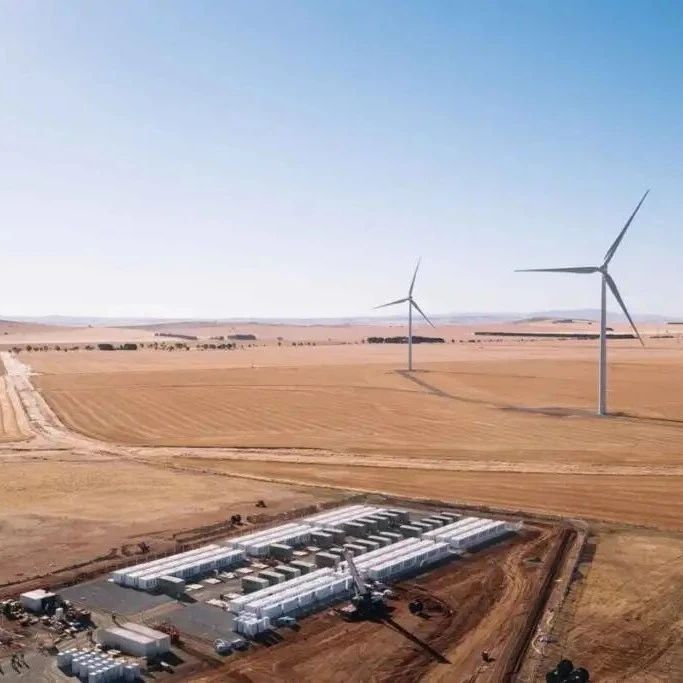
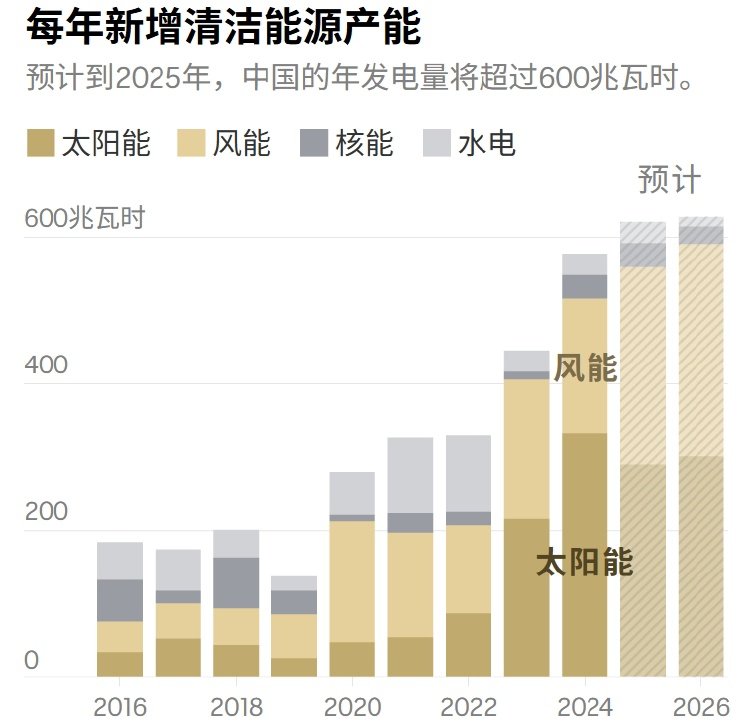
Core Viewpoint - The article highlights China's rapid transition to becoming the world's first electrified nation, leading the global clean energy technology sector and accelerating the end of the fossil fuel era [1][4]. Group 1: China's Clean Energy Achievements - In April 2023, China's solar power installation in one month exceeded Australia's total installation since 2001, with 45.2 GW added, a year-on-year increase of 214.7% [1][4]. - China currently holds half of the world's solar, wind, and electric vehicle installations, significantly reducing emissions [5]. - China's emissions decreased by 1.6% in Q1 2025, with the country accounting for 30% of global emissions, marking a critical milestone for climate action [5]. Group 2: Strategic Shift to Renewable Energy - China's shift to renewable energy began in the late 20th century, driven by the need to address environmental degradation and air pollution [4]. - The "Made in China 2025" initiative emphasizes green manufacturing, with energy-saving and new energy vehicles as key focus areas [4]. - The Chinese government has provided substantial support to the green industry, emphasizing targeted investments rather than indefinite subsidies [4]. Group 3: Global Impact and Leadership - China's clean energy exports have contributed to a 1% reduction in global emissions outside China in 2024, demonstrating its role as a leader in clean technology [5]. - The rapid electrification in China serves as a model for other countries, potentially altering geopolitical dynamics by reducing reliance on fossil fuels [9][10]. - The transition to renewable energy is seen as a way to enhance energy security and mitigate risks associated with traditional energy sources [8][9].
沙特能源企业深化对华合作
Jing Ji Ri Bao· 2025-08-13 21:58
阿尔—法季今年早些时候表示,中国政府持续推进制造业升级和新兴产业快速成长,这一趋势正推动化 工行业向智能化、高端化、可持续化方向加速发展,也为沙特基础工业公司创造了巨大成长机遇。他还 表示,沙特基础工业公司将继续加强与中国企业、研究机构和产业链伙伴的合作,创新与合作是实现可 持续增长的核心驱动力,中国市场无疑是公司全球战略布局的核心组成部分。 沙特国际电力和水务公司(ACWA Power)本年度正式在中国可再生能源市场开展业务。今年1月,公 司宣布签署了横跨中国多个省份的可再生能源项目协议,首批项目的总装机量将超过1吉瓦。今年3月, 公司宣布其首个海外创新中心在上海市浦东新区正式启用,一期投资额为2000万元人民币,目前设 有"研发中心"及"绿色能源实验室",聚焦光伏、风电、储能、绿色氢能及海水淡化五大领域的创新研 发。 纳赛尔表示,中国是沙特阿美重要的战略市场,沙特阿美与中国伙伴长期保持着出色的合作关系。公司 将持续推进在华投资,双方合作前景广阔。 沙特基础工业公司(SABIC)近日召开2025年二季度财报发布会,公司首席执行官阿卜杜拉哈曼·阿尔 —法季在会上强调,沙特基础工业公司在中国的福建石化综合体项目 ...
