
芯片

Search documents
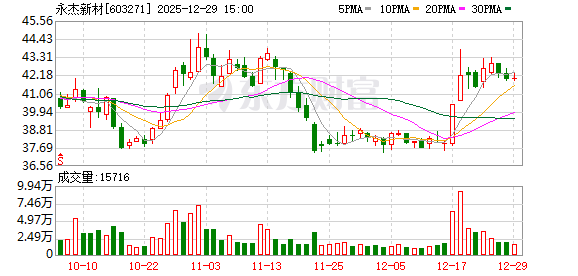
永杰新材:公司产品不直接用于芯片或半导体中
Zheng Quan Ri Bao· 2025-12-29 11:46
证券日报网讯 12月29日,永杰新材在互动平台回答投资者提问时表示,公司产品不直接用于芯片或半 导体中,在半导体设备结构件与腔体材料、散热器与热管理组件和靶材背板等有使用铝板带箔产品。 (文章来源:证券日报) ...

明面是酒厂背地搞金融,酒企大佬追风口比投资圈还猛……
3 6 Ke· 2025-12-29 07:46
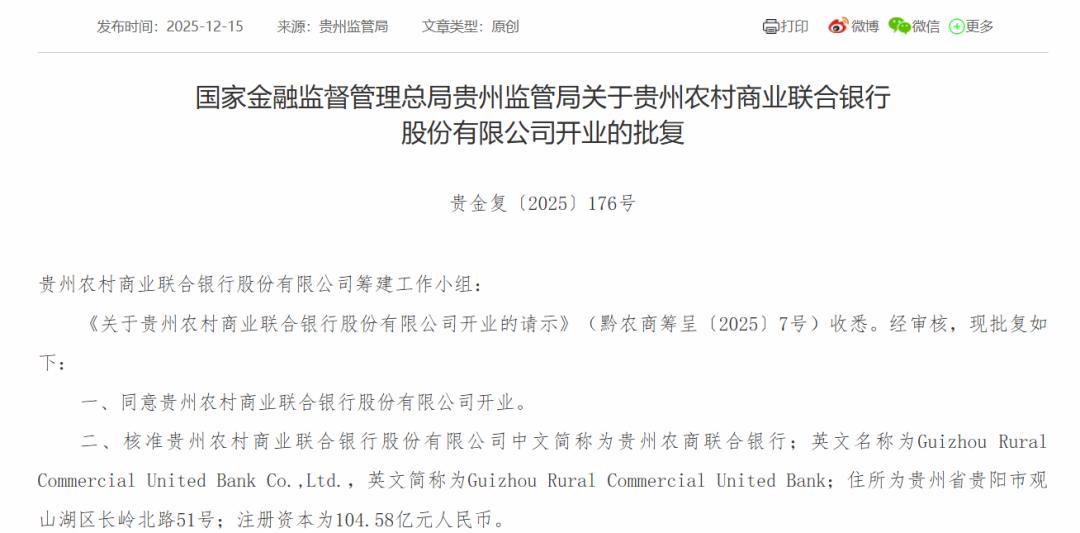
Core Viewpoint - Major Chinese liquor companies, while publicly recognized as distilleries, have increasingly become financial giants behind the scenes, investing in various sectors including banking, renewable energy, synthetic biology, AI, and semiconductors [1][19]. Group 1: Banking Investments - Moutai Group has recently invested in Guizhou Rural Commercial Bank, marking it as the fourth bank under its umbrella [1][6]. - Guizhou Rural Commercial Bank has a registered capital of 10.458 billion yuan, with Moutai holding a 9.56% stake [2][4]. - Other liquor companies like Wuliangye and Luzhou Laojiao have also made significant investments in banks, with Wuliangye increasing its stake in Yibin Commercial Bank [7][9]. - Luzhou Laojiao holds approximately 15.97% of Luzhou Bank and has stakes in other financial institutions [10][12]. Group 2: Diversified Financial Interests - Liquor companies are not limited to banking; they have also invested in insurance and securities firms, such as Moutai's 20% stake in Huagui Life and Luzhou Laojiao's involvement with various securities [13][15]. - Moutai has established a comprehensive financial ecosystem, including a financial company and multiple investment funds, expanding its influence in various sectors [20][21]. Group 3: Investment in Emerging Industries - Recently, liquor giants have shifted their investment focus towards high-tech industries, including renewable energy, AI, and biotechnology [22][24]. - Moutai has launched several funds targeting biotechnology and AI, investing in companies like Jiangxi Silicon and others [27][28]. - Wuliangye has also made strides in the renewable energy sector, collaborating with various companies to expand its footprint in this area [25][26]. Group 4: Financial Performance and Shareholder Returns - Major liquor companies are beginning to announce substantial dividend plans, with Moutai and Wuliangye collectively distributing 40 billion yuan to shareholders [30].


上证指数再度冲击4000点,科技或仍是行情主线
Mei Ri Jing Ji Xin Wen· 2025-12-29 06:25
Group 1 - A-shares trading volume has rebounded, with significant movements in the technology sector, particularly in artificial intelligence, chips, and 5G communications [1] - The AI ETF (515070) saw a rapid increase in holdings, with stocks like Cambricon Technologies rising over 6%, and other companies such as Tuowei Information and Xiechuang Data also experiencing gains [1] - The automotive parts sector (562700) rose over 1%, with stocks like Siling Zhichu increasing over 13%, and other companies such as Wuzhou Xinchun and Xinquan Co. also seeing substantial increases [1] Group 2 - The central bank stated that artificial intelligence is becoming a crucial engine for high-quality development across various industries, emphasizing its role in the digital transformation of finance [1] - The "14th Five-Year Plan" suggests the comprehensive implementation of the "AI+" initiative to seize the high ground in AI industry applications, with a focus on deepening and expanding AI governance [1] - According to Xinda Securities, the year-end market will rapidly rotate around policies and themes, recommending an increase in value sector allocations, with potential structural rebounds in previously lagging sectors [1] Group 3 - The Smart Car ETF (159888) closely tracks the CS Smart Car index, with constituent stocks primarily distributed across electronics, computers, automotive, and communications sectors, showcasing strong technological attributes [2] - The Automotive Parts ETF (562700) tracks the CSI Automotive Parts Theme Index, covering high-quality parts companies in various automotive fields, benefiting from the trends of electrification and intelligence in the automotive industry [2] - The AI ETF (515070) tracks the CS AI Theme Index, selecting stocks that provide technology, foundational resources, and applications in AI, focusing on the midstream and upstream of the AI industry chain [2]
澄清后继续涨停!这家公司“8天8板”!
Zheng Quan Ri Bao Zhi Sheng· 2025-12-29 05:39
Group 1 - The core viewpoint of the news is that Shenjian Co., Ltd. has seen significant stock performance, achieving an 8-day consecutive limit-up and a total market capitalization of 13.78 billion yuan, with a monthly increase of 128.55% [1][3] - Shenjian Co., Ltd. is a supplier for major aerospace companies and has begun supplying components for the commercial aerospace sector, aligning with current market trends and supporting its performance growth [3][4] - The company has clarified that there are no undisclosed significant matters affecting its stock price, and its business structure focuses on "chemical new materials + high-end equipment manufacturing," with a strong emphasis on aerospace and rail transportation sectors [4] Group 2 - The company's recent performance remains stable, with a reported revenue of 1.834 billion yuan for the first three quarters of 2025, reflecting a year-on-year growth of 5.64%, and a net profit of 30.32 million yuan, up 3.81% year-on-year [5] - The commercial aerospace sector in China is experiencing positive developments, including the establishment of a dedicated regulatory body and new investment initiatives aimed at enhancing the industry [6] - Industry forecasts indicate a strong growth trajectory for commercial aerospace, with expectations of reaching an annual output value of 85 billion yuan by 2030, driven by technological advancements and increased collaboration within the industry [7][8]

本周8只新基金启动募集,全部为含“权”品种
中国基金报· 2025-12-29 04:26
Core Viewpoint - The new fund issuance in the last week of 2025 saw a decrease, with only 8 new funds launched, all of which are "equity" products, indicating a continued focus on equity funds despite a turbulent market environment [2][5]. Fund Issuance Overview - In the week of December 29 to December 31, only 8 new funds were launched, marking a decline in the number of new fund issuances [2][3]. - The issuance was concentrated on December 29, with 4 funds starting their subscription, while December 30 and 31 saw 2 funds each [4]. - The longest subscription period was for the Qianhai Kaiyuan Xinghe fund, lasting around 3 months, while some funds had a subscription period as short as 1 day [4]. Fund Types and Focus - All 8 new funds are categorized as "equity" products, with 2 being mixed secondary bond funds and the rest being equity funds [6]. - Among the new funds, 4 are index equity funds tracking specific industry indices, focusing on sectors like semiconductor and artificial intelligence [7]. - The active equity funds include the Dachen Hong Kong Stock Hengxin, a QDII mixed fund targeting the Hong Kong market, and the Shanzheng Asset Management Digital Economy fund, focusing on the digital economy sector [7]. Bond Market Trends - The bond market's profitability has weakened, leading to a continued decline in bond fund issuances; however, "fixed income +" funds are still being introduced [8]. - This week saw the launch of 2 mixed secondary bond funds, indicating some activity in the bond fund space despite the overall downturn [8].

与时代同频 共创辉煌——中晨集团30周年庆典暨答谢晚宴圆满举行
Xin Lang Cai Jing· 2025-12-29 01:47
中晨集团创立于1995年,总公司设立于广州,并在南通、江门等地建立原材料生产工厂,在苏州、武汉、重庆、黄石、中国香港、泰国、新加坡设立分公 司。公司始终将质量放在首位,已通过ISO 9001国际质量管理体系认证和ISO 14001环境管理体系认证,为产品质量提供了坚实保障。 作为CPCA常务理事单位,中晨集团自2005年起连续入选中国电子电路行业主要企业营收,凭借卓越的综合实力,多次荣获中国电子电路行业优秀企业、 A级纳税单位、质量信得过单位、国家高新企业、专精特新企业等多项荣誉称号,在技术创新方面,集团拥有FPC及PCB专用材料三十多项专利,多项产 品还荣获优秀产品贡献奖。 2025年12月28日晚,以"与时代同频 共创辉煌"为主题的中晨集团三十周年庆典暨答谢晚宴,在温暖而辉煌的氛围中盛大启幕。这是一场致敬过往峥嵘岁 月的深情回眸,也是一次展望未来壮阔征程的集体启航。各界宾朋、合作伙伴与集团同仁共聚一堂,在笑语与掌声中,共同见证这一时刻。 在二十余年的发展历程中,中晨集团在PCB业界积累了卓著实绩,全球PCB制造客户已达四百余家,其中包括鹏鼎控股、深南电路、华通电器、博敏电 子、方正电路、景旺电子、TTM、 ...

【公告全知道】6G+商业航天+芯片+算力+低空经济+人工智能!公司深度参与我国低轨卫星互联网建设
财联社· 2025-12-28 15:22
Group 1 - The article highlights the importance of tracking major announcements in the stock market, including suspensions, share buybacks, investment wins, acquisitions, performance reports, and unlocks, to help investors identify potential investment hotspots and mitigate risks [1] - It emphasizes the involvement of a company in China's low-orbit satellite internet construction, which is linked to sectors such as 6G, commercial aerospace, chips, computing power, low-altitude economy, and artificial intelligence [1] - Another company is noted for its products that have broad applications in missiles, rockets, sounding rockets, and commercial aerospace launch vehicles, integrating commercial aerospace, artificial intelligence, military industry, and drones [1] Group 2 - A company is recognized for its contributions to aerospace missions, including Long March, Shenzhou, and Chang'e, through its products that support aerospace engines and nuclear power, connecting commercial aerospace, aviation engines, and nuclear energy [1]

吴世春:现在想快速融资,仅凭一份漂亮BP,远远不够
创业家· 2025-12-27 10:06
Core Viewpoint - The current investment landscape emphasizes the importance of tangible business models and proven market viability over mere ideas and presentations [1][2][23]. Group 1: Investment Criteria - Startups that attract investment must align with significant market trends, avoiding over-saturation in popular sectors like AI and new energy [3][5][7]. - Founders with substantial industry experience are preferred over those with impressive resumes but lacking practical management skills [4][11][14]. - Projects must demonstrate validated business models, showing real customer interest and operational data, rather than relying solely on theoretical concepts [17][20][22]. Group 2: Changing Investment Logic - The focus has shifted from future potential and visionary ideas to current realities and practical implementations [24]. - Investors now prioritize execution capabilities and resilience over academic credentials and past achievements [25][26].

涨价潮,来了?
大胡子说房· 2025-12-26 09:33
Core Viewpoint - A new wave of price increases is anticipated across various industries, driven by factors such as supply reduction, wage increases, and government policies aimed at stimulating domestic demand [1][5][30]. Group 1: Price Increases in Various Industries - McDonald's will raise prices on several menu items by 0.5-1 yuan starting December 15, 2025 [2]. - Moutai's wholesale prices for all products have increased, with the 25-year Flying Moutai rising by 40 yuan to 1600 yuan per bottle, and the Zodiac Snake variant surging by 230 yuan to 2000 yuan per bottle [3]. - SMIC has implemented a price increase of approximately 10% on certain production capacities, particularly focusing on the 8-inch BCD process platform [4]. - Major global shipping companies, including MSC, CMA CGM, Maersk, and Hapag-Lloyd, have announced plans to adjust freight rates starting January 1, 2026, including seasonal surcharges [4]. - Smartphone manufacturers like Xiaomi, OPPO, vivo, and Honor have raised prices on new models by 100 to 600 yuan compared to previous generations since October [5]. Group 2: Reasons Behind Price Increases - Price increases are partly a response to policies aimed at reducing overcapacity and promoting quality over quantity in production, as seen in industries like Moutai and SMIC [5][6]. - The price of lithium carbonate has risen from 92,800 yuan per ton to 104,900 yuan per ton, reflecting a monthly increase of over 13%, driven by production cuts from leading companies [6]. - The government has emphasized the need to stimulate domestic demand by increasing residents' income, which may lead to higher wages and consequently higher prices [6][7]. Group 3: Economic Outlook and Market Trends - The expectation is that inflation will become the main theme moving forward, with CPI gradually rising as the economy recovers from deflation [28][45]. - Monetary policies, including potential interest rate cuts, are anticipated to continue, providing a basis for inflation as liquidity increases in the market [34][40]. - The A-share market is expected to experience a slow bull market due to improved regulations, increased long-term capital inflows, and enhanced liquidity [41][43]. - As capital markets stabilize and residents' financial conditions improve, consumer spending is likely to increase, further driving price rises across various sectors [42][44].

日本史上最大预算案:“减少超长债发行”安抚债市,将芯片与AI扶持资金增加三倍
Hua Er Jie Jian Wen· 2025-12-26 07:20
Core Viewpoint - Japan's government has approved a record budget of 122.3 trillion yen (approximately $785 billion), aiming to implement an expansionary fiscal policy while addressing concerns in the bond market through reduced issuance of ultra-long-term bonds and controlled new debt issuance [1] Fiscal Policy - The budget is set at a historic high but is considered manageable relative to the economy, with the initial budget size remaining stable compared to nominal GDP for three consecutive years [1] - New bond issuance has been successfully limited to below 30 trillion yen, achieving a long-standing goal of the Ministry of Finance [1] - The total issuance of government bonds for the new fiscal year will be 180.7 trillion yen, a decrease of nearly 5% from the previous fiscal year [2] Debt Management - The issuance of ultra-long-term bonds has been reduced by nearly one-fifth to 17.4 trillion yen, the lowest level in 17 years, in response to rising bond yields and market concerns about the government's fiscal policies [2] - The debt-to-GDP ratio is projected to decrease to 24.2%, the lowest level since 1998, despite the overall budget increase [4] Technology Investment - The budget for the Ministry of Economy, Trade and Industry has increased by approximately 50% to 3.07 trillion yen, driven by significant investments in chips and AI, which will rise from about 300 billion yen to 1.23 trillion yen, nearly quadrupling [3] - The government has allocated 150 billion yen to support the state-owned chip company Rapidus Corp., bringing total investment in the company to 250 billion yen [3] - An additional 387.3 billion yen is earmarked for developing domestic AI models and enhancing data infrastructure [3] Tax Revenue and Expenditure - Tax revenue is expected to grow by 7.6% to a record 83.7 trillion yen, which will help fund increased expenditures [5] - However, tax growth will not fully offset the rising costs of debt repayment and increased social security and defense spending, with debt repayment costs projected to rise by 10.8% to 31.3 trillion yen, the highest level in 29 years [5] - The government plans to abandon the goal of achieving annual fiscal balance, setting new multi-year targets to allow for more flexible spending arrangements [5]