软件定义汽车

Search documents
合力筑牢安全底线成智能驾驶辅助技术发展共识
Zhong Guo Zheng Quan Bao· 2025-10-17 20:19
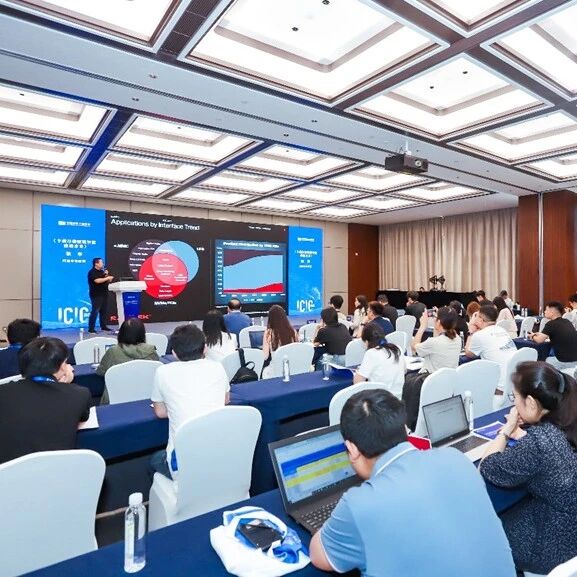
Core Insights - The 2025 World Intelligent Connected Vehicle Conference highlighted the rapid development and future prospects of the intelligent connected vehicle industry, emphasizing its role in overcoming industrial bottlenecks and fostering new growth drivers [1] - Despite achievements, challenges remain in legal frameworks, key technology breakthroughs, and infrastructure development, with a consensus on the need for a strong safety foundation in intelligent driving assistance technology [1] Industry Development Acceleration - The penetration rate of new passenger cars with combined driving assistance functions in China reached 62.6%, while those with navigation driving assistance functions stood at 21.5% [1] - Over 3 million vehicles are equipped with 5G and C-V2X technology, and 88 national and industry standards have been established [1] - Intelligent connected vehicles integrate various technologies, significantly enhancing traffic safety, travel efficiency, and driving industry upgrades [1] Transformation of Automotive Value Models - AI is reshaping the automotive product value model, with software-defined vehicles becoming a key trend, leading to new value increments through subscription services, data monetization, and personalized services [2] - By 2030, the expected value distribution of automotive products will be 40% hardware, 40% software, and 20% content services [2] - The traditional competitive focus is shifting from one-time hardware sales to a lifecycle operation model combining software and services [2] Challenges in Driving Assistance Systems - The current "human-machine co-driving" business model faces challenges due to usability issues, with low adoption rates of driving assistance systems despite marketing efforts [2][3] - Driving assistance systems must be trained to respond as effectively as experienced human drivers to improve user experience and safety [3] Safety and Regulatory Concerns - The intelligent connected vehicle industry is at a critical stage of technological growth and commercialization, with L2-level driving assistance safety compliance being crucial for consumer safety and industry sustainability [4] - The number of recalls related to driving assistance systems has increased, with 2.5561 million vehicles recalled in 2024 due to such issues, accounting for 23% of total recalls [4] - The complexity of safety issues is rising with new technologies and market changes, necessitating stricter regulatory measures and standards [4] Corporate Initiatives for Safety Enhancement - Companies are actively working to improve the safety levels of driving assistance systems, with efforts to enhance emergency response capabilities in extreme situations [4][5] - The introduction of satellite communication aims to create an integrated safety system, reinforcing the importance of safety in the commercial deployment of autonomous driving [5] - Companies are encouraged to be role models for compliance and to clearly communicate to consumers that driving assistance does not equate to full automation [5]
企业竞争图谱:2025年车载芯片,头豹词条报告系列
Tou Bao Yan Jiu Yuan· 2025-10-11 11:56
Investment Rating - The report indicates a positive investment outlook for the automotive chip industry, driven by the growth of electric vehicles and advancements in autonomous driving technology [4]. Core Insights - The automotive chip market is expected to grow significantly, with projections indicating a market size increase from 66.692 billion yuan in 2020 to 171.181 billion yuan by 2025 [37]. - The demand for automotive chips is being propelled by the electrification of vehicles, with electric vehicles requiring approximately twice the number of chips compared to traditional vehicles, and L4 autonomous vehicles needing over ten times the number of chips [12][39]. - The report highlights a clear trend towards domestic chip production in China, with local companies rapidly advancing in the automotive chip sector due to supply chain vulnerabilities exposed by global chip shortages [13][49]. Industry Definition - Automotive chips, also known as vehicle-grade chips, are semiconductor integrated circuits specifically designed for automotive electronic systems, serving as core components of Electronic Control Units (ECUs) [5]. - The industry is characterized by high technical barriers, stringent certification processes, and a growing trend towards domestic production in response to global supply chain challenges [11][14]. Industry Characteristics - The report identifies three main characteristics of the automotive chip industry: 1. Electrification driving market demand growth [12] 2. Significant domestic replacement of imported chips [13] 3. High technical barriers due to rigorous certification requirements [14] Development History - The automotive chip industry has evolved through three main phases: 1. Emergence phase (1970-1999) focused on basic electronic control [16] 2. Initiation phase (2000-2009) marked by the rise of electric and intelligent vehicles [17] 3. Rapid development phase (2010-present) characterized by the integration of advanced processing units and the rise of AI technologies [19]. Industry Chain Analysis - The automotive chip industry chain consists of three segments: upstream (raw materials and equipment), midstream (chip design and manufacturing), and downstream (system integration and vehicle application) [20]. - Upstream segments are heavily reliant on global suppliers, with low domestic penetration in high-end materials and equipment [21]. - Midstream manufacturers are increasingly competitive, with local companies making significant strides in various chip categories [22]. - Downstream demand is surging due to the rapid growth of electric and smart vehicles, with significant increases in chip requirements for power modules and advanced driver-assistance systems [34]. Market Size and Growth - The automotive chip market is projected to grow from 66.692 billion yuan in 2020 to 171.181 billion yuan by 2025, driven by the increasing penetration of electric vehicles and advancements in autonomous driving technology [37][41]. - The report notes that the market is expected to maintain a high growth rate due to the ongoing transformation of the automotive industry towards electrification and intelligence [42]. Competitive Landscape - The report outlines a competitive landscape where domestic companies are rapidly increasing their market share, with a notable shift from less than 3% to approximately 15% in domestic chip production [49]. - Key players in the domestic market include BYD Semiconductor, Sinda Semiconductor, and Horizon Robotics, with each company demonstrating strong technical capabilities in their respective fields [50].

传大众汽车放弃软件自研,子公司CARIAD降级
Ju Chao Zi Xun· 2025-10-09 07:59
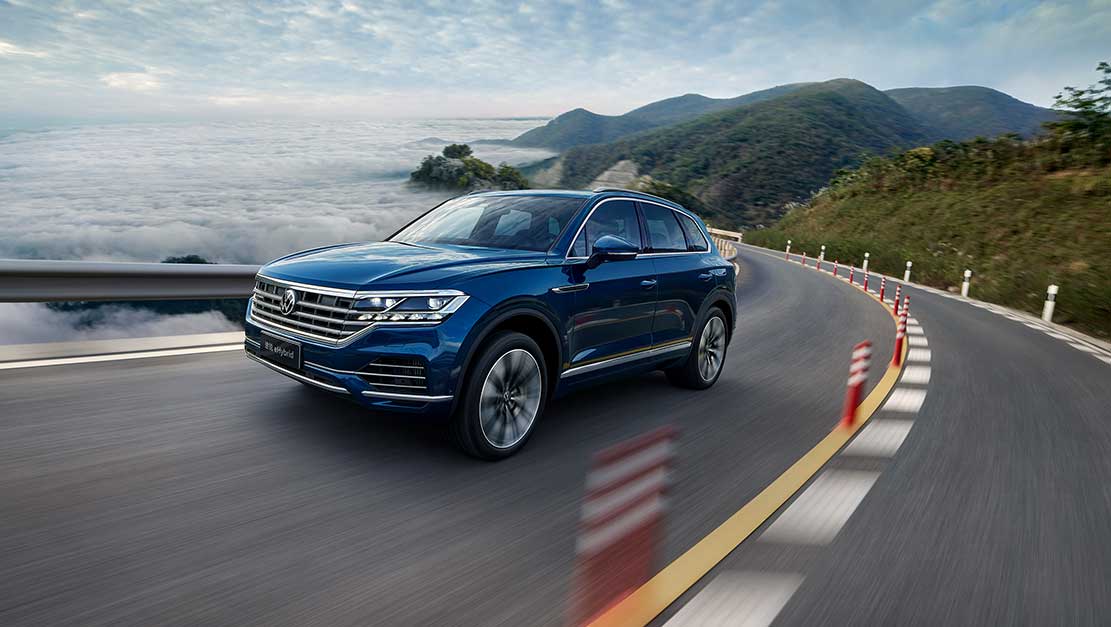
Core Insights - Volkswagen Group officially abandons its software self-development strategy, downgrading its software subsidiary CARIAD to a role of coordinator for partnerships, marking a significant setback for the "software-defined vehicle" initiative previously championed by former CEO Herbert Diess [2] Group 1: CARIAD's Development Journey - CARIAD's journey began in 2019 when Herbert Diess established the "Digital Car & Service" department, which later evolved into CARIAD in 2020 to address issues like brand fragmentation and system redundancy [2] - In 2021, CARIAD launched the "2030 NEW AUTO" strategy, outlining its critical role in the transformation of the Volkswagen Group [2] - CARIAD expanded its operations by establishing a subsidiary in China in April 2022, marking its first international expansion outside Europe [2] - The company formed a joint venture with Horizon in late 2022 and another with ThunderSoft in China in April 2023 [2] Group 2: Challenges Faced by CARIAD - CARIAD's development has been fraught with challenges, including a major restructuring and layoffs in May 2023, which further delayed the anticipated new software architecture [2] - The multitude of brands under Volkswagen Group, each with distinct technological legacies and market positions, has led to friction in CARIAD's cross-cultural and cross-system collaboration [3] - Internal role ambiguity, resource dispersion, and slow project advancement have resulted in significant delays for several core electric vehicle projects [3] Group 3: Future Direction - As of October 2025, CARIAD will be downgraded to a coordinator role, but it will collaborate with Rivian and Xiaopeng to leverage combined strengths, aiming to accelerate technology development and commercialization [3]

智能网联汽车准入和上路通行试点 为数字经济注入强劲动力
Zheng Quan Ri Bao· 2025-10-08 16:19
Core Viewpoint - The recent issuance of the "Guiding Opinions on Vigorously Developing Digital Consumption to Co-create a Better Life in the Digital Age" aims to promote the development of digital consumption, particularly through the pilot of intelligent connected vehicles, which is expected to drive significant upgrades across the entire industry chain and create new employment opportunities [1][6]. Digital Product Consumption Expansion - The guiding opinions propose trials for the access and road use of intelligent connected vehicles, which will inject policy momentum into the automotive industry's intelligent transformation [1]. - The pilot is anticipated to stimulate technological upgrades in upstream and downstream sectors such as chip design, high-precision mapping, and vehicle-road collaboration, potentially unlocking a trillion-yuan scale industry upgrade [1]. Implementation of Pilot Projects - The Ministry of Industry and Information Technology is accelerating the construction of 20 "vehicle-road-cloud integration" pilot cities, with over 35,000 kilometers of test demonstration roads opened and more than 10,000 test demonstration licenses issued [2]. - Initial pilot cities include major urban centers like Chongqing, Guangzhou, Shenzhen, Shanghai, Beijing, Changsha, and Wuhan, with some cities already achieving regular operations of high-level autonomous vehicles in designated areas [2]. Local Innovations and Practices - Beijing is advancing its "dual-intelligence" city construction, achieving coverage of 600 square kilometers with vehicle-road-cloud integration infrastructure and issuing over 1,100 test licenses [3]. - Wuhan's "car valley" initiative has attracted over 500 companies in the intelligent connected vehicle industry, with a significant increase in the production of new energy and intelligent connected vehicles [3]. Industry Ecosystem Reconstruction - The technological system of intelligent connected vehicles is evolving from single-function iterations to multi-dimensional integrated innovations, enhancing environmental perception and decision-making capabilities [4]. - The traditional linear structure of the automotive industry is being replaced by a networked ecosystem centered around "software-defined vehicles," leading to new business models such as subscription services and data monetization [5]. Market Growth Projections - The intelligent connected vehicle market is expected to exceed 5 trillion yuan by 2030, becoming a new growth driver for high-quality economic development [6]. - The Ministry of Industry and Information Technology has indicated conditional approval for L3-level vehicle production, shifting the focus of industry competition from L2 to L3 levels [6].
新问界M7幸福旗舰规模交付活动在济南隆重举行
Qi Lu Wan Bao· 2025-10-01 03:49
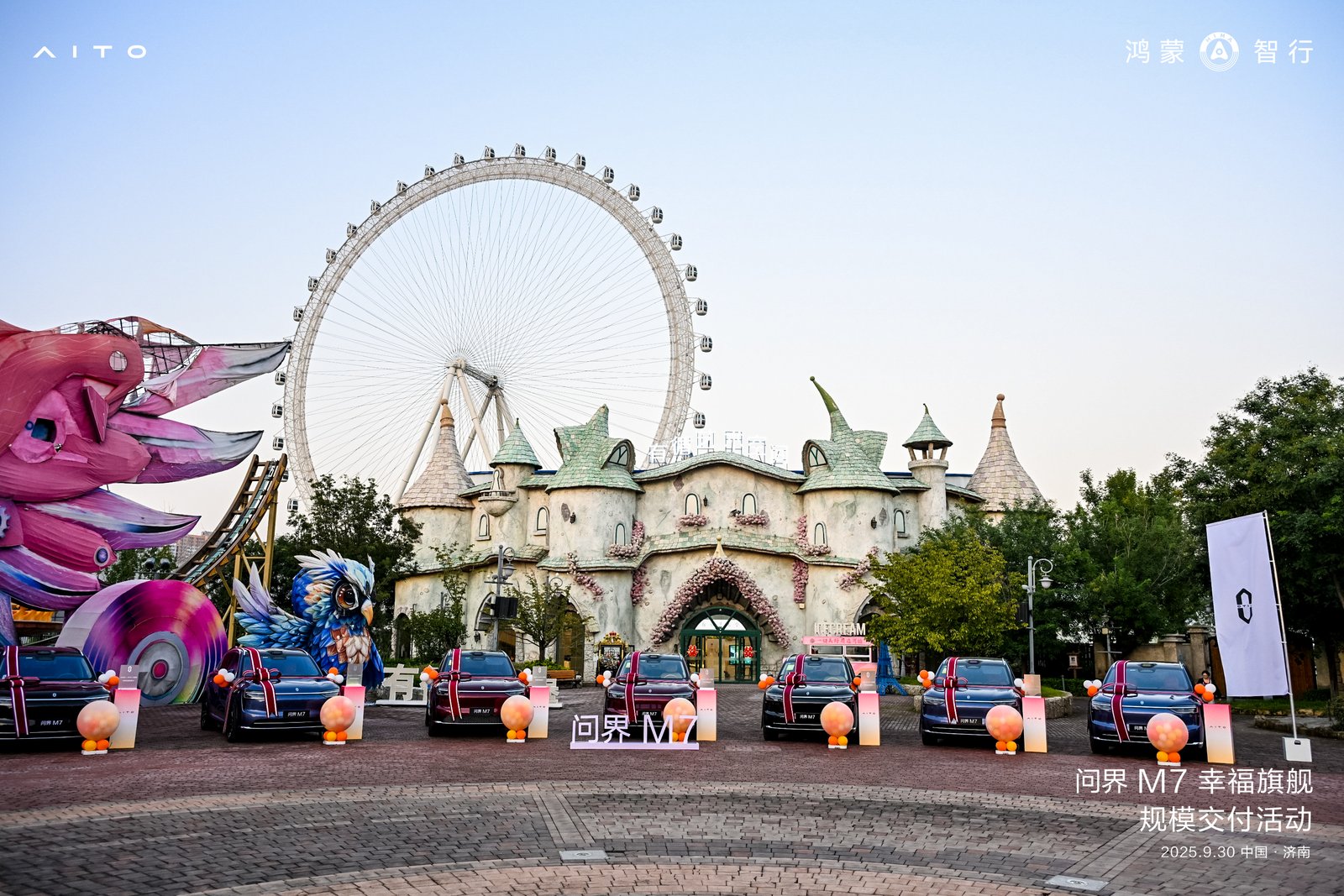
Core Insights - The new AITO Wenjie M7 has achieved over 60,000 pre-orders within just seven days of its official launch on September 23, marking a significant milestone for the brand in the high-end electric vehicle market [1][3][12] - The delivery ceremony in Jinan signifies the commencement of vehicle deliveries in the Shandong region, reinforcing Wenjie's leadership in the smart automotive sector [3][15] - The Wenjie M7, developed with an investment of 4 billion, showcases advancements in design, performance, and safety, aimed at meeting the needs of multi-person households [9][18] Delivery and Market Position - The first batch of eight vehicles was delivered in Jinan, indicating a strong market entry for the M7 model in the region [1][15] - The M7 is positioned as a "national happiness flagship SUV," focusing on the demands of families for both daily commuting and long-distance travel [18] Product Features and Innovations - The Wenjie M7 integrates a high-performance power system and a luxurious cabin experience, emphasizing both comfort and environmental sustainability [15][18] - The vehicle benefits from deep collaboration with Huawei, enhancing its technological capabilities in innovation and assisted driving [12][21] Future Developments - The company plans to increase investment in core smart electric technologies, aiming for continuous improvement in battery systems and user interaction experiences [21]
汽车会“成长”:鸿蒙智行与老用户的一场双向奔赴
Feng Huang Wang· 2025-09-30 12:02
Core Insights - The future of vehicles is determined by hardware setting the lower limits and software defining the upper limits, with evolutionary capabilities determining the overall potential of a vehicle [1] Group 1: Product Upgrades - Hongmeng Zhixing has announced a significant upgrade, including the Huawei Qian Kun Intelligent Driving ADS 4 and over 30 experience optimizations, enhancing core functions like intelligent driving and human-machine interaction [1][2] - The ADS 4 system features a new WEWA architecture that reduces end-to-end latency by 50%, improves traffic efficiency by 20%, and decreases emergency braking rates by 30%, providing safety and comfort that can match or exceed human drivers [2] Group 2: Market Performance - In the 38th week of 2025, Hongmeng Zhixing achieved sales of 13,446 units, ranking first among new force brands, with cumulative annual sales also leading the new force brand list [1] - The company has adopted a "five realms and ten vehicles" strategy, achieving explosive growth with weekly orders reaching 35,000 units, covering both mainstream and ultra-luxury markets [2] Group 3: User Experience and Brand Loyalty - The upgrade emphasizes a long-term user experience, allowing even older models to enjoy the latest intelligent features, addressing the common anxiety of "buying outdated technology" [3][4] - This approach fosters brand loyalty and encourages word-of-mouth marketing, as users begin to view their vehicles as lifelong companions rather than one-time purchases [4]
问界M8交付突破10万台;东风汽车与腾讯签署战略合作协议
Mei Ri Jing Ji Xin Wen· 2025-09-29 23:05
Group 1 - Huawei's AITO M8 has surpassed cumulative deliveries of 100,000 units, showcasing strong competitiveness in the smart electric vehicle sector [1] - The M8 has completed several technological upgrades, including ADS4, super privacy mode, and smart headlight interactive games, which may enhance market focus on smart driving and connected vehicle sectors [1] - This milestone is expected to boost sentiment in the new energy vehicle supply chain and attract capital towards the smart and software-defined automotive sectors [1] Group 2 - Dongfeng Motor Group has signed a strategic cooperation agreement with Tencent, focusing on smart driving and intelligent cockpit innovations [2] - The collaboration aims to enhance the integration of AI technology and digital transformation within traditional automotive manufacturing, injecting new momentum into the sector [2] - This partnership is likely to increase market attention on the convergence of automotive and technology, providing business expansion opportunities in the smart driving and AI model sectors [2] Group 3 - In August 2025, China's automotive goods import and export total reached $25.81 billion, with a month-on-month increase of 3.3% but a year-on-year decrease of 0.3% [3] - Import value was $4.17 billion, reflecting a month-on-month decline of 7.4% and a year-on-year drop of 38.4%, while export value was $21.64 billion, showing a month-on-month increase of 5.6% and a year-on-year growth of 13.2% [3] - The data indicates a strong domestic demand and a robust export performance, enhancing the global competitiveness of China's automotive industry and potentially boosting market confidence in high-end manufacturing [3] Group 4 - Great Wall Motors' chairman Wei Jianjun emphasized a "full power development" strategy, advocating for the development of gasoline, hybrid, electric, and hydrogen technologies [4] - This strategy reflects the company's commitment to addressing consumer needs and aims to serve global markets effectively [4] - The approach is expected to enhance market recognition of Great Wall Motors' technological capabilities and global potential, boosting investor confidence in multi-technology automotive enterprises [4]
中科创达(300496) - 2025年09月投资者关系活动记录表
2025-09-28 11:54
Group 1: Company Overview and Strategy - The company has been focusing on the smart automotive sector since 2013, acquiring Rightware in 2017 to enhance its UI development tools for smart cockpits [3] - In 2025, AI is expected to redefine the automotive industry, transitioning from hardware-driven to AI-driven ecosystems [3] - The company aims to provide an integrated solution with "AIOS + AIBOX," creating a closed loop from software architecture to hardware support [3] Group 2: Product Innovations - The "滴水 AIOS" redefines the smart cockpit operating system, utilizing an AI-native architecture for dynamic resource management and seamless cloud integration [3] - The AIBOX, equipped with NVIDIA Drive AGX chips, offers up to 200 TOPS of AI computing power and 205 GB/s bandwidth, enabling smooth operation of large models [3][6] - The AI cockpit, built on Snapdragon Ride platform, features a 14B parameter model with a response time under 500ms, enhancing human-machine interaction [4] Group 3: Global Expansion and Market Strategy - The company has established a global R&D team across 16 countries, enhancing its ability to respond to local market needs [4] - The AIOS supports both domestic and international application ecosystems, aiding Chinese automotive manufacturers in their global strategies [4] Group 4: IoT and AI Applications - The IoT business has rapidly expanded, covering handheld devices, smart vision, edge computing, and AI glasses, among others [4][5] - The TurboXAI glasses utilize Qualcomm's Wear5100+MCU, providing millisecond-level response times and various functionalities [5] Group 5: Collaborations and Partnerships - The company has partnered with Volcano Engine since 2024, developing a comprehensive solution for the smart automotive sector [5] - The collaboration has led to the creation of an AI cockpit solution that integrates real-time cloud and vehicle communication, achieving a 500ms voice feedback response [5] Group 6: Robotics and Future Trends - The company is advancing its mobile robotics products, focusing on logistics and manufacturing sectors, with successful implementations in major global enterprises [6] - By mid-2025, the robotics products have been deployed in various industries, including automotive parts and logistics, with a growing presence in international markets [6]

克服汽车芯片设计面临的三重挑战,快速平稳地驶向未来!
半导体行业观察· 2025-09-27 01:38
Core Viewpoint - Automotive chips are essential for the development of electric and intelligent vehicles, facing challenges such as high reliability requirements, large-scale circuit verification, and stringent functional safety standards [2][14]. Group 1: Quality, Safety, and Reliability Challenges - Automotive chips must meet high-quality testing and zero-defect (0 DPPM) requirements, eliminating defects introduced during manufacturing [4]. - The verification cycle for automotive-grade chips is longer than for consumer-grade chips, requiring rigorous testing certifications like AEC-Q100, which increases design cycle and cost challenges [4]. - The complexity of fault types and testing scales has increased with the development of large-scale integrated circuits, leading to higher testing difficulty, time, and costs [4]. Group 2: Testing Solutions - Siemens EDA's Tessent™ solution helps automotive chip designers ensure high quality, enhance safety, and improve reliability, accelerating time-to-market [4]. - Tessent DFT technology provides high-quality testing to ensure zero defects, generating defect-oriented fault models for comprehensive testing coverage [5]. - Tessent™ LogicBIST and MemoryBIST solutions enable in-chip self-testing capabilities and non-destructive memory testing during system operation, respectively [8]. Group 3: Verification Challenges - Accurate functional verification before chip tape-out is crucial, with increasing complexity in automotive chips making this process more challenging [10]. - The new Veloce™ CS hardware-assisted verification system from Siemens EDA significantly enhances hardware acceleration performance, supporting over 40 billion gates [11]. - Veloce proFPGA CS allows for rapid execution of silicon verification, facilitating firmware and application development [12]. Group 4: Functional Safety Requirements - The performance and safety of chips directly impact driving safety, necessitating compliance with functional safety standards like ISO 26262 [14]. - There is a growing demand for higher safety levels in automotive chips, particularly for ASIL-D level designs related to advanced driver-assistance systems (ADAS) [15]. - Siemens EDA's Austemper platform enhances efficiency in safety analysis and verification, supporting clients in meeting ASIL-B and ASIL-D requirements [15][17]. Group 5: Industry Impact - Automotive chips play an indispensable role in the intelligent and electric transformation of modern vehicles, with Siemens EDA providing advanced solutions to ensure high quality and reliability [17].

引领汽车存储创新,闪迪助力中国汽车高质量发展
半导体芯闻· 2025-09-26 10:43
Core Viewpoint - The article emphasizes the growing importance of automotive storage solutions driven by the rise of smart vehicles and advanced technologies, highlighting a shift from traditional storage applications to more complex requirements in the automotive sector [1][3][5]. Group 1: Evolution of Automotive Storage - Historically, automotive storage was primarily focused on basic functionalities such as radio and navigation systems, but now it has evolved to support advanced features like voice interaction and smart displays, necessitating higher read performance [5][6]. - The demand for storage in smart driving applications, such as ADAS, has increased due to the need for real-time data storage and analysis, leading to a shift towards storage solutions that can handle both intensive read and write operations [6][7]. - The transition from distributed to centralized computing architectures in vehicles is changing the storage landscape, presenting new challenges in logical partition management and system compatibility [6][7]. Group 2: Technological Advancements - The automotive storage market is moving towards faster and more versatile interfaces, with UFS and NVMe/PCIe becoming more prevalent, while e.MMC remains dominant for now [6][7]. - New standards like UFS 4.1 are enhancing software update efficiency and system responsiveness, indicating a trend towards more integrated and capable storage solutions [7][9]. - Flash storage is being widely applied across various automotive systems, including communication, entertainment, and monitoring, underscoring its critical role in modern vehicles [7][9]. Group 3: SanDisk's Innovations - SanDisk leverages its expertise in NAND flash technology to offer a comprehensive range of automotive-grade storage products, including SD cards, e.MMC, UFS, and NVMe SSDs, catering to diverse automotive applications [9][10]. - The iNAND AT EU752 UFS 4.1 embedded flash drive is designed for next-generation connected vehicles, featuring high sequential read speeds of up to 4,300 MB/s and write speeds of 4,100 MB/s, enhancing AI system performance [10][12]. - SanDisk's AT EN610 product is tailored for high-performance centralized computing architectures, offering flexible storage configurations and high durability, suitable for demanding automotive environments [12][13]. Group 4: Commitment to the Chinese Market - SanDisk recognizes the strategic importance of the Chinese market and aims to provide innovative storage solutions tailored to local needs, supporting the high-quality development of the Chinese automotive industry [15][16]. - The company is enhancing collaboration with local automakers and suppliers to deliver high-performance, reliable automotive-grade embedded storage products for key applications [15][16].