通胀压力

Search documents
金银铂技术位攻坚 突破定趋势
Jin Tou Wang· 2025-11-06 07:24
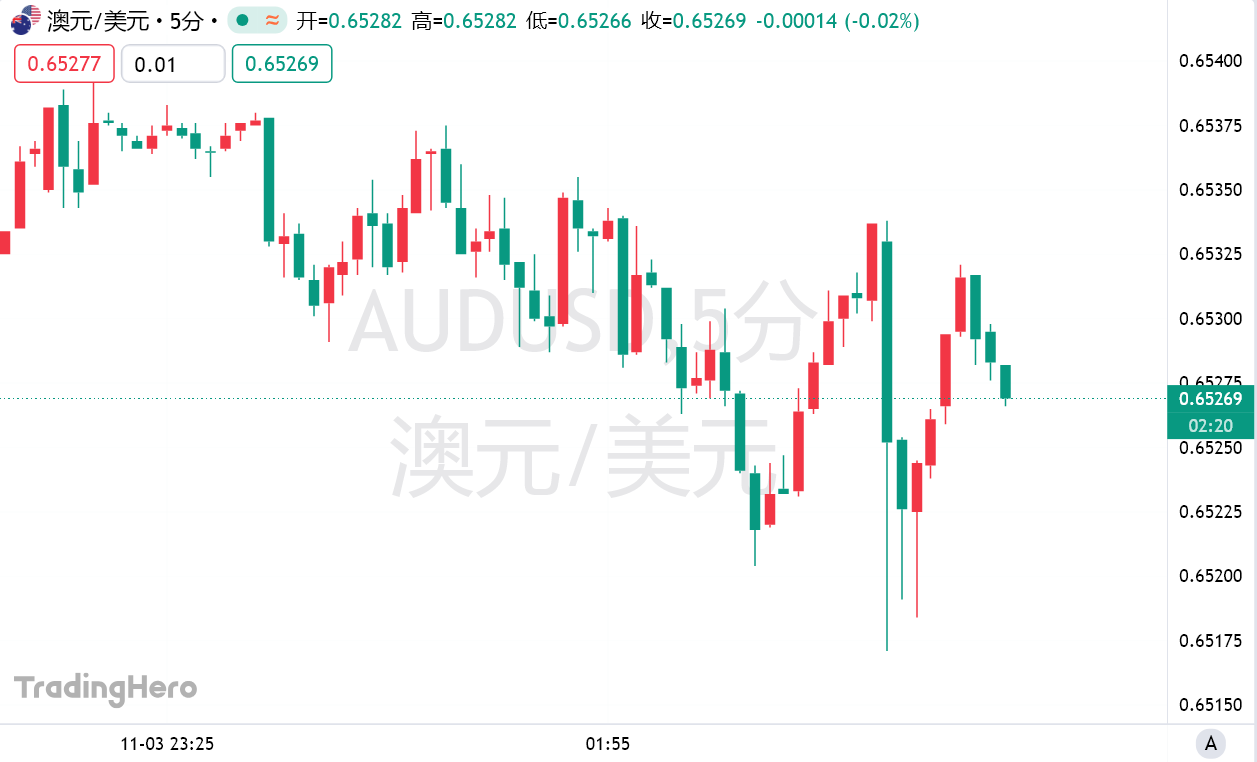
周四(11月6日)欧盘市中,尽管美元走强,美国国债收益率上升,但由于交易员买入黄金,金价反弹 至4000美元水平。随着贵金属需求增加,白银上涨2%。铂金在贵金属需求上升的背景下上涨,铂金试 图回到1540美元上方。 在ISM服务业数据公布之前,ADP发布的数据显示出劳动力市场的强劲韧性。私营企业在招聘方面的表 现超出预期,新增就业岗位数量可观,这无疑暗示着就业市场依然保持着良好的运行状态。然而,华尔 街最初的反应却并不乐观,不过避险情绪的升温在一定程度上限制了金价的上涨幅度,使得黄金价格始 终未能突破4,000美元这一关键大关。 美联储内部对于经济形势的看法也存在分歧。一些官员的言论引起了市场的关注,例如美联储理事 Stephen Miran对ADP数据表示认可和赞赏,但他同时暗示利率或许应该进一步降低。芝加哥联邦储备银 行行长Austan Goolsbee在周一指出,通胀压力依然是一个不容忽视的问题;而美联储理事Lisa Cook则认 为,就业市场已经显露出一些脆弱的迹象。 此外,美国国内的政治动态也给市场带来了一定的不确定性。早些时候,美国最高法院计划就特朗普总 统征收关税的合法性举行听证会。此前,一家下 ...
【UNforex财经事件】黄金承压回落至3970,美元强势与道琼斯反弹共振
Sou Hu Cai Jing· 2025-11-06 03:31
Group 1 - The ADP employment report for October shows that the U.S. private sector added 42,000 jobs, exceeding expectations and ending a two-month decline [1] - The ISM services PMI increased to 52.4, indicating a rebound in business activity, while the ISM prices paid index reached a new high since 2022, highlighting ongoing inflation pressures [1] - The strong dollar, with the index rising to 100.22, has put downward pressure on gold prices, which retreated to $3,970, failing to break the critical $4,000 level [1][2] Group 2 - Recent hawkish comments from Federal Reserve officials have heightened market tension, with expectations for continued tightening policies, further pressuring gold prices [2] - The U.S. government shutdown has entered its 37th day, creating uncertainty in the market and delaying the release of important data, which has amplified the impact of the ADP employment report [2] - Gold prices are currently fluctuating around $3,970, with short-term gains constrained by the strong dollar; a breakthrough above $4,000 could target $4,082, while a drop below $3,929 may lead to a decline towards $3,854 [2] Group 3 - The strong U.S. economic data continues to support a robust dollar, putting downward pressure on gold, which has not yet surpassed the $4,000 mark [3] - Global uncertainties, including the U.S. government shutdown, geopolitical tensions, and Federal Reserve policy expectations, still provide support for gold as a safe-haven asset [3] - Investors should closely monitor the Federal Reserve's policy direction and the progress of the government shutdown, as these factors will significantly influence market sentiment and asset prices [3]
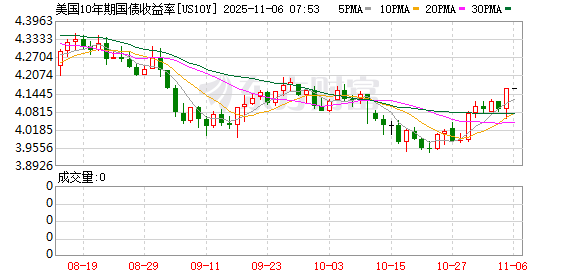
经济数据优于预期 美债收益率普遍回升
Xin Hua Cai Jing· 2025-11-05 23:52
Group 1 - The overnight rise in U.S. Treasury yields was driven by strong economic data, with all maturities experiencing increases [2] - The latest non-farm payroll data showed an increase of 206,000 jobs in June, surpassing economists' expectations of 190,000, while the unemployment rate remained steady at 4.1% and average hourly earnings rose by 3.9% year-on-year, above the expected 3.8% [2] - The Federal Reserve's policy path remains unclear, with Powell emphasizing that a rate cut in December is not guaranteed, which could lead to further rebounds in Treasury yields if the Fed slows its rate-cutting pace [2] Group 2 - Despite strong economic data, inflation pressures continue to be a focal point for the market, with the U.S. Consumer Price Index rising by 3% year-on-year in September and 0.3% month-on-month, driven by a 4.1% increase in energy prices and rapid food price increases [3] - The U.S. Treasury has alleviated long-term Treasury supply pressures through increased short-term bond issuance and adjustments in financing strategies, contributing to a decline in "term premium" [3] Group 3 - Columbia Threadneedle bond manager Ed Al-Hussainy noted that the core issue is not whether to buy U.S. Treasuries, but rather if there are better alternatives available, highlighting the challenges faced by those who shorted Treasuries earlier in the year [4]

美国服务业回暖但就业亮红灯 价格指数触及两年新高
Zhi Tong Cai Jing· 2025-11-05 15:50
Core Insights - The US services sector showed signs of recovery in October, with the ISM services PMI rising to 52.4%, indicating expansion for the eighth consecutive month, although still below historical averages [2] - The business activity index increased significantly to 54.3%, while the new orders index reached 56.2%, reflecting improved demand in the services sector [2] - Employment index remained in contraction at 48.2%, indicating weak hiring intentions among businesses despite a slight improvement from the previous month [2] - The prices index surged to 70%, the highest level since October 2022, indicating persistent inflationary pressures in the services sector [2][3] Industry Performance - Eleven industries experienced growth in October, including accommodation and food services, retail, wholesale, real estate, healthcare, and transportation and warehousing [3] - Six industries faced contraction, including arts and entertainment, management services, finance and insurance, public administration, and construction [3] - Seasonal demand improvements were noted in sectors like healthcare and retail, while some manufacturing and equipment firms continued to struggle with import restrictions and rising prices [3] Supply Chain and Inventory - The supplier deliveries index remained in expansion at 50.8%, indicating slower delivery speeds, which may relate to improved demand or supply chain constraints [2] - The inventory index recorded at 49.5%, suggesting a reduction in inventory levels as businesses respond to demand and cost uncertainties [3] - Backlog orders dropped significantly to 40.8%, the second-lowest level since 2009, indicating that businesses can manage current orders without significant delivery delays [3]
美国服务业回暖但就业亮红灯 价格指数触及三年新高
智通财经网· 2025-11-05 15:42
Core Insights - The US services sector activity returned to expansion in October, with the ISM services PMI recorded at 52.4%, up from 50% in September, marking the eighth consecutive month above the threshold [1] - The business activity index rose significantly to 54.3%, a 4.4 percentage point increase from September's 49.9%, indicating a return to expansion [1] - The new orders index surged to 56.2%, a rise of 5.8 percentage points, reflecting improved demand in the services sector [1] Industry Performance - Eleven industries experienced growth in October, including accommodation and food services, retail, wholesale, real estate, healthcare, and transportation and warehousing [2] - Six industries faced contraction, including arts and entertainment, management services, finance and insurance, public administration, and construction [2] Employment and Inventory Trends - The employment index remained in contraction at 48.2%, indicating weak hiring intentions despite a slight improvement from September [1] - The inventory index recorded at 49.5%, still in contraction, as businesses generally reduced inventory levels to manage demand and cost uncertainties [2] Price and Supply Chain Dynamics - The prices index rose to 70%, the highest level since October 2022, indicating persistent inflationary pressures in the services sector, driven by tariffs affecting material and service costs [1] - The supplier deliveries index stood at 50.8%, indicating a continued slowdown in delivery speeds, which is typically associated with improved demand or supply chain constraints [1] Order Backlog and Economic Signals - The backlog of orders index dropped significantly to 40.8%, the second-lowest level since 2009, suggesting that businesses can manage current orders without significant delivery delays [2] - Feedback from industries indicated mixed economic signals, with some sectors experiencing seasonal demand improvements while others faced challenges from import restrictions and rising prices [2]
英国服务业PMI超预期攀升 通胀压力缓解
Sou Hu Cai Jing· 2025-11-05 12:38
Group 1 - The core point of the article highlights that the UK services sector showed unexpected performance in October, with the Purchasing Managers' Index (PMI) rising to 52.3, indicating expansion and the strongest business outlook since October 2024 [1] - The services sector output and new orders both rebounded in October, driven by strong domestic market demand, which is a key growth driver for the industry [1] - Employment in the services sector has stabilized, with a significant slowdown in layoffs since September, reflecting improved business confidence regarding market prospects [1] Group 2 - The services sector's cost inflation rate has dropped to its lowest level since November 2024, providing important support for the decline in inflation [1] - The Bank of England is expected to maintain the benchmark interest rate at 4% during the upcoming monetary policy meeting, closely monitoring price changes in the services sector to assess inflationary pressures [2] - The collaborative improvement between the services and manufacturing sectors suggests that the UK economy may have moved past its previous sluggish period, gradually showing signs of recovery [2]
欧元区10月综合PMI升至29个月新高,德国强劲复苏成增长引擎,法国深陷收缩泥潭
Hua Er Jie Jian Wen· 2025-11-05 11:55
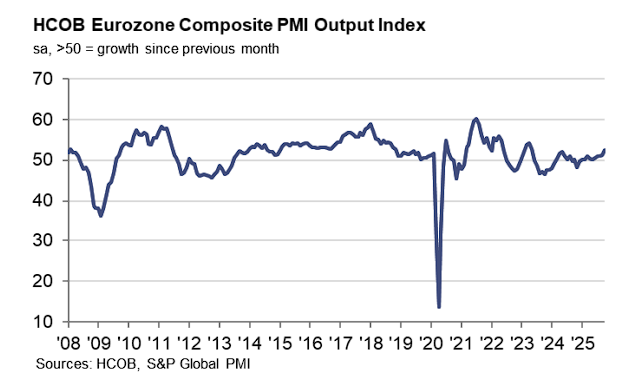
Core Insights - The Eurozone economy experienced its strongest expansion since May 2023 in October, driven significantly by Germany, which offset the weak performance of France [1][4]. Economic Performance - The final composite PMI for the Eurozone in October rose to 52.5, with Germany's composite PMI reaching a 29-month high, marking it as the growth engine for the region despite France's continued contraction [1][3]. - The services PMI for the Eurozone increased to 53, the highest in 17 months, with business activity index rising from 51.3 in September to 53.0, indicating robust growth in new orders and sales [3]. Germany's Economic Growth - Germany's composite PMI surged to 53.9, providing crucial support for regional economic expansion [4]. - The services PMI in Germany jumped from 51.5 in September to 54.6, marking the fastest growth in over two years, indicating a recovery from previous sluggishness [6]. - Employment in the services sector saw its fastest growth since April, driven by a significant increase in new business [8]. France's Economic Struggles - France's composite PMI fell to 47.7, the lowest in eight months, indicating a deepening contraction [9]. - The services PMI in France was at 48.0, remaining in contraction for the 14th consecutive month, with political uncertainty dampening demand [11]. - Despite the economic downturn, service sector employment grew for the third month, showing some resilience, although the decline in backlogs suggests potential challenges ahead [15]. Inflation and Pricing Trends - Input cost inflation in the Eurozone eased for the second consecutive month, reaching a three-month low, while output prices increased to the highest level in seven months [3][17]. - The overall inflation rate returned to the survey average, with service sector pricing showing a notable increase [17]. - The current economic growth and manageable inflation pressures provide the European Central Bank with policy flexibility to balance economic support and price stability [17].
瑞达期货焦煤焦炭产业日报-20251105
Rui Da Qi Huo· 2025-11-05 08:43
Report Summary 1. Report Industry Investment Rating No relevant information provided. 2. Core Viewpoints - On November 5, for the manganese - silicon 2601 contract, it was reported at 5776, up 0.24%. The spot price in Inner Mongolia was 5540, down 10 yuan/ton. It should be treated as a volatile market, and investors should control risks. For the silicon - iron 2601 contract, it was reported at 5560, up 0.98%. The spot price in Ningxia was 5220, down 40 yuan/ton. It should also be treated as a volatile market, and investors should control risks [2]. 3. Summary by Related Catalogs Futures Market - JM主力合约收盘价 was 1268.50 yuan/ton, up 15.50 yuan; J主力合约收盘价 was 1753.00 yuan/ton, up 24.00 yuan. JM期货合约持仓量 was 939019.00 hands, up 4651.00 hands; J期货合约持仓量 was 49255.00 hands, down 185.00 hands. The net position of the top 20 JM contracts was - 57205.00 hands, up 14755.00 hands; the net position of the top 20 J contracts was - 5144.00 hands, up 470.00 hands. The JM5 - 1 month contract spread was 63.50 yuan/ton, up 5.00 yuan; the J5 - 1 month contract spread was 142.00 yuan/ton, up 1.00 yuan. The JM and J warehouse receipts remained unchanged at 900.00 and 2070.00 respectively [2]. Spot Market - The prices of various types of coking coal and metallurgical coke in the spot market remained unchanged. The JM主力合约基差 was 301.50 yuan/ton, down 15.50 yuan; the J主力合约基差 was 22.00 yuan/ton, down 24.00 yuan [2]. Upstream Situation - The daily output of clean coal from 314 independent coal washing plants was 27.50 million tons, up 1.00 million tons; the weekly inventory was 295.00 million tons, up 10.60 million tons. The capacity utilization rate of 314 independent coal washing plants was 0.38%, up 0.01%. The monthly raw coal output was 41150.50 million tons, up 2100.80 million tons. The monthly import volume of coal and lignite was 4600.00 million tons, up 326.00 million tons. The daily average output of raw coal from 523 coking coal mines was 190.30 million tons, down 0.60 million tons. The weekly inventory of imported coking coal at 16 ports was 513.89 million tons, up 6.71 million tons; the weekly inventory of coke at 18 ports was 269.90 million tons, up 9.11 million tons [2]. Industry Situation - The monthly import volume of coking coal was 1092.36 million tons, up 76.14 million tons; the monthly export volume of coke and semi - coke was 54.00 million tons, down 1.00 million tons. The monthly output of coking coal was 3975.92 million tons, up 279.06 million tons. The capacity utilization rate of independent coking enterprises was 73.44%, down 0.03%. The weekly profit per ton of coke in independent coking plants was - 32.00 yuan, up 9.00 yuan. The monthly output of coke was 4255.60 million tons, down 4.10 million tons [2]. Downstream Situation - The weekly blast furnace operating rate of 247 steel mills nationwide was 81.73%, down 3.00%; the weekly blast furnace iron - making capacity utilization rate of 247 steel mills was 88.59%, down 1.33%. The monthly crude steel output was 7349.01 million tons, down 387.84 million tons [2]. Industry News - On November 4, some steel mills in Hebei and Tianjin raised the coke purchase price for the third time, with an increase of 50 - 55 yuan/ton, effective from 0:00 on November 5, 2025. The Reserve Bank of Australia kept the key interest rate at 3.6% and warned of increased inflationary pressures. The CEOs of Morgan Stanley and Goldman Sachs warned that the stock market may be heading for a pull - back. The President of the Swiss National Bank said that inflation should rise slightly in the next few quarters [2]. Manganese - Silicon and Silicon - Iron Market - Manganese - silicon 2601 contract: On November 5, it was reported at 5776, up 0.24%. The spot price in Inner Mongolia was 5540, down 10 yuan/ton. Some steel mills in Shanxi planned to shut down for maintenance earlier than last year. The inventory increased rapidly, the output continued to decline slightly from a high level, and the cost of imported manganese ore decreased by 11.3 million tons. The iron - water demand declined seasonally. The spot profit in Inner Mongolia was - 160 yuan/ton, and in Ningxia was - 260 yuan/ton. The mainstream steel procurement price in October was 5820 yuan/ton, down 180 yuan/ton month - on - month [2]. - Silicon - iron 2601 contract: On November 5, it was reported at 5560, up 0.98%. The spot price in Ningxia was 5220, down 40 yuan/ton. The macro - environment saw the Reserve Bank of Australia keeping the key interest rate at 3.6% and warning of inflation. The supply - demand was in a weak balance, the inventory was at a neutral level, and the cost was supported in the short term. The spot profit in Inner Mongolia was - 310 yuan/ton, and in Ningxia was - 510 yuan/ton [2].

澳洲联储如期维持利率不变 警告经济中通胀压力增强
智通财经网· 2025-11-04 06:25
智通财经APP获悉,澳洲联储周二如期维持关键利率不变,同时警告称经济中通胀压力增强,并重申未来的政策走向将由最新数据决定。澳洲联储货币政策 委员会九名成员一致同意将现金利率维持在3.6%不变,原因是上季度消费者价格指数涨幅超出预期,而劳动力市场依然紧张。该委员会在声明中表示:"最 近的通胀数据表明,经济中可能仍存在一些通胀压力。""由于私人需求正在复苏,劳动力市场状况仍显得有些紧张。委员会在本次会议上将现金利率维持在 当前水平是合适的。" 澳洲联储此次利率决议出台之际,高盛集团和澳大利亚联邦银行等机构的经济学家普遍认为,澳洲联储的降息周期已结束。市场普遍预测,澳洲联储下一次 降息将在2026年5月进行。分析人士指出,在家庭现金储备充裕、经济增速预期回升的背景下,通胀再度抬头的风险促使澳洲联储谨慎行事。 在澳洲联储按兵不动之前,美联储已于上周连续第二次降息。尽管包括美联储主席鲍威尔在内的多位政策制定者立场偏向鹰派,但市场仍认为美联储在12月 有可能再次降息。与此同时,市场预计英国央行同样将在周四按兵不动,因为它也在与通胀压力作斗争。 全球就业网站Indeed Inc的经济学家Callam Pickering表示 ...
通胀担忧再度燃起!澳洲联储继续按兵不动
Jin Shi Shu Ju· 2025-11-04 04:32
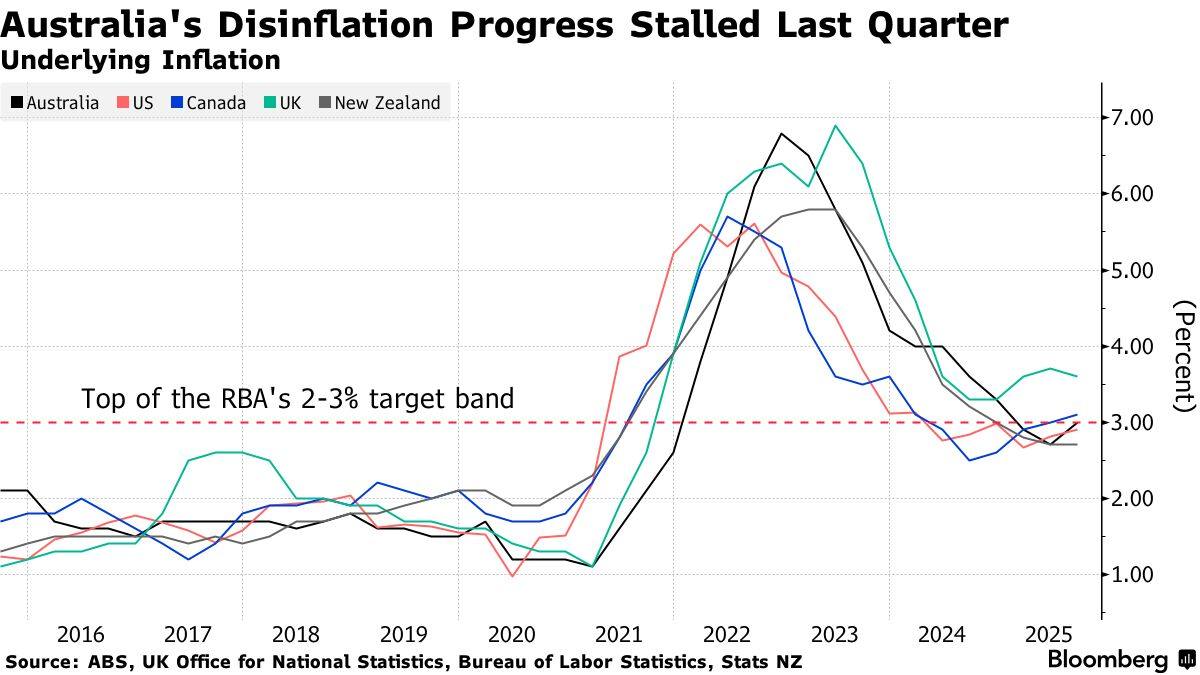
周二,澳洲联储继续维持其关键利率不变,但同时警告经济中存在更强的通胀压力,并重申未来的行动将以新出炉的数据为指导。 澳洲联储周二决定将现金利率维持在3.6%不变。此前,澳大利亚上季度消费者价格指数涨幅超出预期,而劳动力市场依旧紧张。根据声明,这一决定由九 人组成的委员会一致通过。行长布洛克将在晚些时候举行新闻发布会。 委员会在声明中表示:"最近的通胀数据表明,经济中可能仍然存在一定的通胀压力。鉴于私人需求正在复苏,劳动力市场状况似乎仍有些紧张,委员会认 为在本次会议上将现金利率维持在当前水平是合适的。" 决议公布后,澳元小幅走低,而对政策敏感的三年期政府债券收益率则跌至3.61%。 澳洲联储周二还发布了季度宏观经济预测,显示核心通胀预计将在2026年中期前攀升至2-3%目标区间的上限以上,而劳动力市场可能保持大致稳定。最新 的预测是基于明年第二季度将有一次降息的假设。 澳洲联储表示,强于预期的第三季度CPI报告"表明潜在的通胀压力可能比我们之前想象的要大一些",并指出,近期的一系列数据增加了这样一种可能性, 即"经济中的产能压力比我们之前评估的要稍大"。 澳洲联储在双重使命下运作,其目标是在实现可持续的充分就 ...