
关税政策

Search documents
【环球财经】美研究机构:关税政策或“致贫”百万美国人
Xin Hua She· 2025-09-12 12:05
Core Insights - The new tariff policy implemented by the U.S. government in 2025 is projected to increase the number of Americans living in poverty by 650,000 to 875,000, raising the poverty rate by 0.2% to 0.3% [1] Group 1: Poverty Metrics - The U.S. Census Bureau has two main poverty indicators: the official poverty measure and the supplemental poverty measure [1] - According to the official poverty measure, approximately 875,000 people will fall into poverty due to the new tariffs, including about 375,000 children, raising the poverty rate from 10.4% to 10.7% [1] - Under the supplemental poverty measure, the poverty rate will increase from 12.0% to 12.2%, with an additional 650,000 people affected, including 150,000 children [1] Group 2: Impact of Tariffs - Tariffs are essentially a tax on American households, disproportionately affecting low-income families who spend a larger share of their income on consumption [2] - The average effective tariff rate in the U.S. has risen to 17.4%, the highest level since 1935, due to the tariffs implemented by the Trump administration [2] - A significant portion of the tariffs is currently under legal dispute, with the Supreme Court agreeing to hear a case regarding the legality of these tariffs [2][3]
关税与移民政策双重压力下 美国制造商大幅削减岗位
Zhong Guo Xin Wen Wang· 2025-09-12 08:09
Group 1 - The core point of the article highlights that despite the Trump administration's efforts to revitalize manufacturing through economic policies, U.S. manufacturers are significantly reducing jobs [1] - In August, the U.S. manufacturing sector lost 12,000 jobs, and since April, a total of 42,000 jobs have been cut in this industry [1] - The job losses are attributed to three main actions by the Trump administration: imposing new tariffs, a hardline stance on immigration, and the "Big and Beautiful" bill supported by the Republican Party, which negatively impacts renewable energy companies [1] Group 2 - The report indicates that by 2025, the total number of jobs in U.S. manufacturing is expected to decrease by 33,000, with layoffs concentrated in durable goods sectors such as automotive, home appliances, and electronics [1] - The overall hiring pace in the U.S. job market has slowed significantly, which is occurring against the backdrop of manufacturing layoffs [1] - The uncertainty surrounding the scale and scope of tariffs has left manufacturing companies in a passive position, leading to increased costs and reduced hiring willingness [2] Group 3 - The ongoing legal challenges against the Trump administration's tariffs further exacerbate uncertainty in the manufacturing sector, making it difficult for companies to plan for the future and make investment decisions [2] - The crackdown on immigration by the Trump administration is also impacting manufacturing recruitment, as immigrants have been a crucial labor source for certain manufacturing sectors [3] - The reduction in labor supply from immigration cuts may drive companies to adopt more automated and capital-intensive manufacturing processes [3]
美国8月CPI走高 难阻美联储下周降息
Jin Rong Shi Bao· 2025-09-12 04:37
Group 1 - The core inflation data for August shows a year-on-year increase of 2.9%, the largest rise since January, indicating a potential shift in monetary policy by the Federal Reserve [1][2] - The Consumer Price Index (CPI) rose by 0.4% month-on-month, surpassing market expectations, with significant increases in housing costs and food prices, particularly a 4.5% surge in tomato prices [2][3] - The labor market is showing signs of weakness, with initial jobless claims reaching the highest level since October 2021, suggesting a potential increase in layoffs and a shift in the labor market balance [2][3] Group 2 - The interplay of rising inflation and a weakening labor market presents a complex policy challenge for the Federal Reserve, with a low probability of a significant rate cut in September [3] - The increase in inflation is attributed to the transfer of rising costs from tariffs on imported goods to consumers, raising concerns about potential stagflation risks [3]
报告:关税政策或使美增加近百万贫困人口
Xin Hua Wang· 2025-09-12 03:19
Core Insights - The new tariff policy implemented by the U.S. government in 2025 is projected to increase the number of Americans living in poverty by 650,000 to 875,000, raising the poverty rate by 0.2% to 0.3% [1] Summary by Categories Poverty Measurement Standards - The U.S. Census Bureau has established two main poverty indicators: the official poverty measure and the supplemental poverty measure [1] - The official poverty measure compares cash income against inflation-adjusted thresholds, while the supplemental measure considers family resources and living costs [1] Impact of Tariff Policy - According to the official poverty measure, approximately 875,000 individuals, including about 375,000 children, will fall into poverty due to the recent tariff measures, increasing the poverty rate from 10.4% to 10.7% [1] - Under the supplemental poverty measure, the poverty rate is expected to rise from 12.0% to 12.2%, with an increase of about 650,000 individuals, including 150,000 children [1] Economic Implications - The report indicates that tariffs directly reduce the purchasing power of low-income households by lowering nominal income or increasing prices, thereby contributing to a higher poverty rate [1]
关税扰动供应链,整车出口逆势涨--2025上半年汽车出口分析
Zhong Guo Qi Che Bao Wang· 2025-09-12 01:22
Export Overview - In the first half of 2025, China's vehicle exports showed a fluctuating upward trend, with a peak of 666,300 units in May, leading to a total export of 3.3368 million vehicles, a year-on-year increase of 18.0% [1] - The total export value reached $59.396 billion, reflecting a year-on-year growth of 8.0%, although the growth rate has significantly slowed down [1] Export Structure Analysis - Passenger vehicles accounted for 84.2% of total vehicle exports, with a total of 2.8 million units exported, contributing 74.2% to the export value [3] - Exports of pure electric passenger vehicles reached 829,000 units, a year-on-year increase of 13.8%, but the export value decreased by 5.8% to $15.641 billion [3] - New energy vehicle exports totaled 1.482 million units, up 50.2% year-on-year, with an export value of $29.5 billion, representing 44.4% of total vehicle exports [3] Market Distribution - Asia was the largest market for vehicle exports, accounting for 39.5% of export volume and 41.3% of export value [4] - Europe ranked second with 826,400 units exported, valued at $15.970 billion, making up 24.8% and 26.9% of the total respectively [4] - Exports to North America saw a significant decline, primarily due to the impact of the U.S. tariff policies [4] Model-Specific Export Characteristics Passenger Vehicles - Asia led in passenger vehicle exports with 1.12 million units, a year-on-year increase of 40.6%, while Europe saw a decline in both volume and value [7] - The top three markets by export volume were Mexico, the UAE, and Russia, while by export value, the UAE, Belgium, and Mexico topped the list [7] Pure Electric Passenger Vehicles - Exports to Mexico and Turkey showed significant growth, with Mexico's exports reaching 45,700 units, up 161.8%, and Turkey's exports at 42,700 units, up 328.4% [8] Commercial Vehicles - Asia dominated commercial vehicle exports with 197,700 units, a year-on-year increase of 47.9% [10] - The top three markets for commercial vehicle exports by volume were Mexico, Vietnam, and Australia, while by value, Saudi Arabia, Vietnam, and Mexico led [10] Buses - Bus exports totaled 47,200 units, a year-on-year increase of 26.3%, with a total export value of $3.196 billion [11] - The main markets for bus exports were in the Middle East, Asia, and parts of Latin America [11] Trucks - Truck exports reached 373,800 units, a year-on-year increase of 35.4%, with an export value of $6.576 billion [12] - The leading markets for truck exports by volume were Mexico, Australia, and Vietnam [12] Provincial Export Rankings - Shanghai, Anhui, and Jiangsu were the top three provinces for vehicle exports in the first half of 2025, with Shanghai experiencing a 10.5% decline in export value despite volume growth [13] Global Market Sales Situation - In the first half of 2025, domestic vehicle sales in China reached 15.653 million units, a year-on-year increase of 11.4% [14] - The U.S. light vehicle market saw only a 3% year-on-year growth, totaling 8.14 million units, indicating a sluggish market [14] - The EU experienced a 1.9% decline in new passenger car sales, with pure electric vehicle sales growing by 8% [14] Export Outlook for the Second Half of 2025 - Global new vehicle sales are projected to reach 95.3147 million units in 2024, with China maintaining a significant market share [17] - The external macroeconomic environment remains challenging due to U.S. tariff policies and global economic uncertainties [18][19] - The geopolitical landscape is influencing the global new energy vehicle supply chain, particularly with the EU's anti-subsidy investigations against Chinese electric vehicles [22][23]


自特朗普发动关税战以来,美国哪些行业失业最严重?
财富FORTUNE· 2025-09-11 13:10
Core Insights - The trade war initiated by Donald Trump has led to significant job losses in industries affected by tariffs, with a net reduction of 90,100 jobs since February [2][4] - The overall employment growth in the U.S. has been positive, with an increase of 385,000 jobs during the same period, driven mainly by sectors less impacted by tariffs, such as healthcare and hospitality [4] - The unemployment rate has slightly increased to 4.3%, marking a four-year high [2] Industry Impact - Industries directly affected by tariffs include manufacturing, mining and logging, construction, wholesale trade, retail trade, transportation, and warehousing [3] - Manufacturing has seen a loss of 41,000 jobs, while wholesale trade has lost 34,000 jobs [4] - In contrast, retail trade has added 19,000 jobs, and construction employment has remained stable [4] Economic Outlook - Despite job losses in tariff-impacted sectors, there are layoffs in other industries due to overall economic uncertainty stemming from the trade war [5] - Moody's Analytics warns that the current trend of more layoffs than new jobs typically occurs during economic recessions [5] - The Trump administration claims that tax cuts and deregulation will stimulate economic growth and ultimately create more jobs [5]
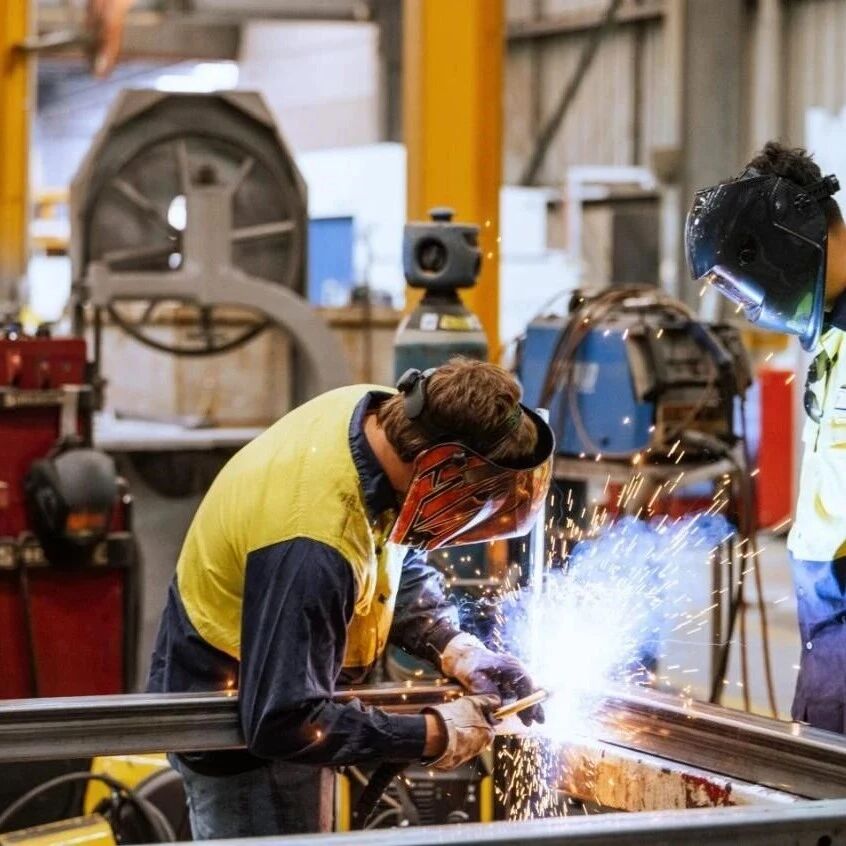
关税迷雾压顶 瑞银CEO对降息持谨慎立场:通胀传导尚不明 美联储政策路径难判
Zhi Tong Cai Jing· 2025-09-11 07:16
Group 1: Economic Outlook and Federal Reserve Policy - UBS CEO Sergio Ermotti expressed uncertainty regarding the impact of global tariff policies initiated by President Trump on the U.S. economy and inflation, complicating predictions for Federal Reserve policy [1][3] - Market expectations are leaning towards the Federal Reserve initiating a new round of rate cuts in September, with traders betting on three consecutive cuts by the end of the year to address a slowing economy and a weak labor market [1][2] - Barclays economists have adjusted their forecasts, now predicting three rate cuts of 25 basis points each this year, aligning with Goldman Sachs' expectations, indicating a shift in focus from combating inflation to addressing potential economic slowdown [1][2] Group 2: Employment Data and Market Reactions - The U.S. non-farm payrolls increased by only 22,000 in August, significantly below the median economist estimate of 75,000, with the unemployment rate rising to 4.3%, the highest since 2021 [2] - The downward revision of previous months' employment data has led some traders to anticipate a larger rate cut of 50 basis points, with expectations for more easing measures from the Federal Reserve by the end of 2025 [2] Group 3: UBS's Position and Regulatory Challenges - UBS is engaged in discussions with the Swiss government regarding trade agreements, particularly in light of high tariffs imposed by the U.S. on Swiss exports, which pose a significant threat to Swiss businesses [4][6] - The bank's relationship with the Swiss government has been strained due to UBS's opposition to new capital regulation proposals, which are seen as excessively punitive and could limit the bank's growth [6] - Ermotti emphasized that UBS has no plans to reduce its operations and aims to maintain its global presence while integrating clients from Credit Suisse, with the integration expected to be completed by next year [6]

?关税迷雾压顶 瑞银CEO对降息持谨慎立场:通胀传导尚不明 美联储政策路径难判
Zhi Tong Cai Jing· 2025-09-11 07:16
(原标题:?关税迷雾压顶 瑞银CEO对降息持谨慎立场:通胀传导尚不明 美联储政策路径难判) 智通财经APP获悉,来自欧洲金融巨头瑞银集团(UBS Group AG)的首席执行官塞尔吉奥·埃尔莫蒂周四 接受采访时表示,美国总统特朗普发起的面向全球关税政策对美国经济前景以及通胀路径的影响仍不清 晰,这使得预测美联储政策前景更加困难。埃尔莫蒂还表示,关税的真正问题将体现在庞大的美国消费 者身上,目前尚不清楚美国关税是否带来持续性的长期通胀。 这位征战金融市场多年的老兵对于美国通胀与美联储降息路径的展望,与市场普遍预期相比可谓谨慎得 多,当前交易员们集体押注美联储9月开启新一轮降息,并且认为关税对于美国通胀的影响将是短暂 的,因此押注在年底之前美联储将连续三次降息来提振大幅放缓的美国经济以及陷入萎靡的劳动力市 场。 "在美国市场,我们仍然认为经济增长会持续存在,但是增速可能大幅放缓。不过,关于通胀的问题及 其如何体现在央行货币政策上仍未有定论,"埃尔莫蒂周四在香港接受媒体采访时说道。 尽管美联储将在9月16-17日会议上降息的预期已被市场100%定价,但对于美联储9月降息25基点还是更 激进的50基点,以及在此之后的 ...
关税迷雾压顶 瑞银CEO对降息持谨慎立场:通胀传导尚不明 美联储政策路径难判
智通财经网· 2025-09-11 07:14
Group 1 - UBS CEO Sergio Ermotti expressed uncertainty regarding the impact of global tariff policies initiated by President Trump on the U.S. economy and inflation, complicating predictions for Federal Reserve policy [1][3] - Market expectations are leaning towards the Federal Reserve initiating a new round of rate cuts in September, with traders betting on three consecutive cuts by the end of the year to stimulate a slowing economy and a weak labor market [1][2] - Barclays economists have adjusted their forecasts, now predicting three rate cuts of 25 basis points each this year, aligning with Goldman Sachs' expectations, indicating a shift in focus from combating inflation to addressing potential economic slowdown [1][2] Group 2 - The U.S. non-farm payrolls increased by only 22,000 in August, significantly below the median economist estimate of 75,000, with the unemployment rate rising to 4.3%, the highest since 2021 [2] - The downward revision of non-farm payrolls for June and July by a total of 21,000, including a negative growth in June, has led some traders to anticipate a larger rate cut of 50 basis points [2] - The current economic conditions suggest that the Federal Reserve's monetary policy may be "slightly behind" the actual economic situation, potentially leading to more aggressive dovish signals than expected in September [2] Group 3 - Ermotti highlighted the need to understand whether tariffs will have a lasting negative impact on inflation, indicating that the true effects will be felt by consumers [3] - The global economy is becoming increasingly divided, driven by emerging technologies and artificial intelligence, contrasting with more traditional sectors [3] - The complex geopolitical environment adds to the uncertainty surrounding economic growth, as noted by Ermotti [4] Group 4 - UBS is engaged in discussions with the Swiss government regarding trade agreements, particularly in light of high tariffs imposed by the U.S. on Swiss exports [4] - The relationship between UBS and the Swiss government has been strained due to UBS's opposition to new capital regulation proposals, which are seen as overly punitive [6] - Following the collapse of Credit Suisse, the Swiss government is considering new capital rules that could significantly increase UBS's capital requirements, raising concerns about the bank's growth and operational strategy [6]
高盛“杀疯了”:四年来最猛IPO周来袭,科技股打新盛宴重启
Zhi Tong Cai Jing· 2025-09-11 06:57
Group 1 - Goldman Sachs CEO David Solomon stated that the firm expects the busiest week for IPOs since July 2021, following the successful IPO of Swedish buy-now-pay-later company Klarna [1] - Solomon emphasized that Goldman Sachs' IPO activity will surpass any period since July 2021, driven by a recovery in the stock market and a surge in tech stock IPOs [1] - Notable IPO performances include Figma Inc and Bullish, both seeing stock prices more than double on their first trading day, while Firefly Aerospace's stock soared nearly 56% [1] Group 2 - The current M&A activity has increased by approximately 32% year-over-year, with transactions exceeding $10 billion experiencing a 100% growth [1] - Despite the vibrant IPO window, the market faces multiple risks, including inflation rates remaining above the Federal Reserve's 2% target and signs of weakness in the U.S. labor market [2] - Solomon highlighted uncertainties surrounding tariff policies and their potential impact on consumer spending, noting the difficulty in quantifying the specific effects on economic growth [2]