国产替代

Search documents
今天,科创板第600个IPO诞生
投资界· 2025-12-30 03:06
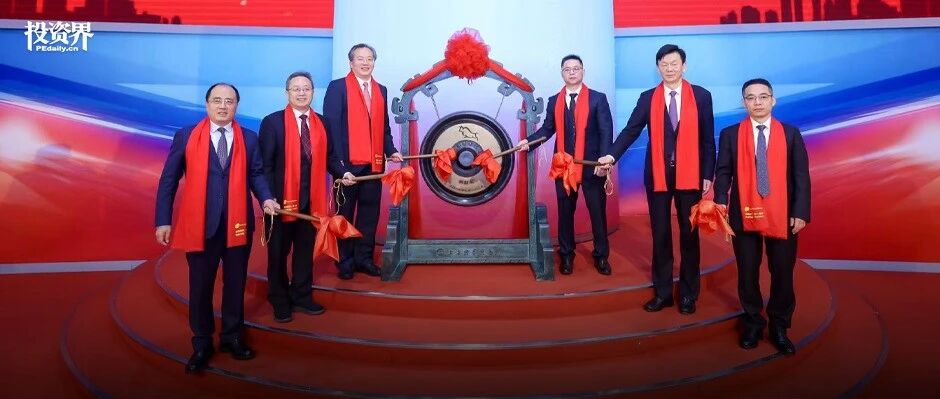
Core Viewpoint - The article highlights the successful IPO of Qiangyi Semiconductor, marking a significant milestone for the Sci-Tech Innovation Board and showcasing the potential of domestic semiconductor companies in China [2]. Group 1: Company Overview - Qiangyi Semiconductor officially listed on the Sci-Tech Innovation Board, becoming the first company in the semiconductor probe card sector and the 600th listed company on the board, with an opening price increase of over 200% and a market capitalization exceeding 33 billion [2]. - The company has achieved rapid growth, becoming the first in mainland China to possess independent design capabilities for vertical probe cards and has established a cleanroom facility with a hundred-level cleanliness standard [5]. Group 2: Investment Insights - Fengnian Capital was the first institutional investor in Qiangyi Semiconductor, investing during a time when the market was dominated by foreign companies, and has since seen returns close to three times its fund size from this investment [2][4]. - The investment from Fengnian Capital was crucial in supporting the core process validation, enabling Qiangyi Semiconductor to achieve stable mass production of 2D MEMS probe cards by the end of 2020 [5]. Group 3: Financial Performance - Qiangyi Semiconductor's revenue for 2022, 2023, and 2024 is projected to be 254 million, 354 million, and 641 million respectively, with a compound annual growth rate of 58.85% [9]. - The net profit for the same years is expected to be 15.62 million, 18.66 million, and 233 million respectively, with a forecasted profit of 355 million to 420 million for 2025, indicating a year-on-year growth of 52.30% to 80.18% [9]. Group 4: Market Potential - The global semiconductor probe card market is projected to reach 2.651 billion USD in 2024 and is expected to grow to 3.972 billion USD by 2029, indicating significant growth potential for Qiangyi Semiconductor [10]. - The company ranks ninth in the global semiconductor probe card industry in 2023 and is expected to rise to sixth place in 2024, marking it as the only domestic company to enter the top ten [9].

AI需求重塑芯片产业,存储、晶圆厂涨价超预期,半导体设备ETF(561980)持续吸金!
Sou Hu Cai Jing· 2025-12-30 02:46
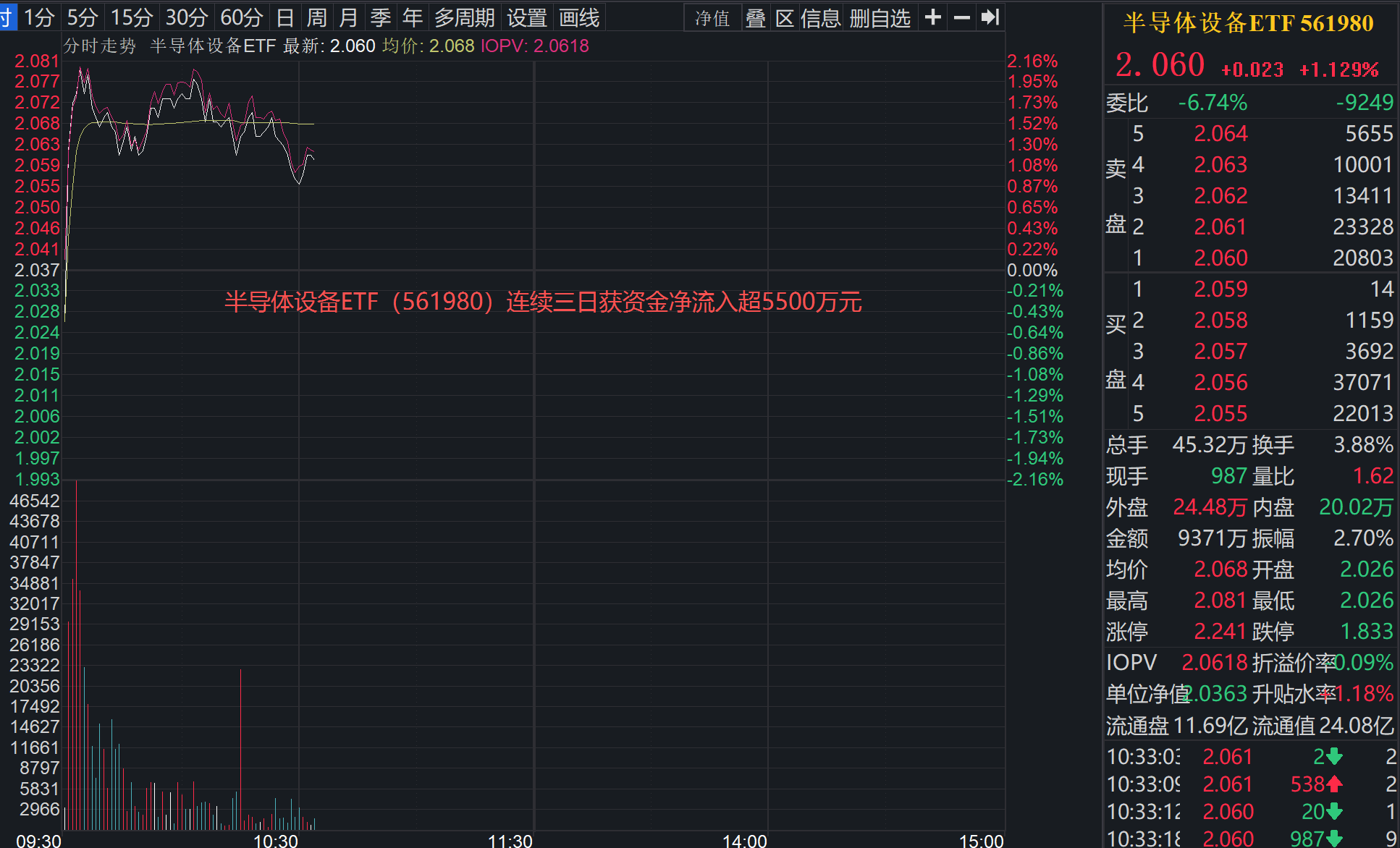
Core Viewpoint - The semiconductor industry is experiencing a price surge driven by increased demand from AI applications and supply constraints, particularly in the storage and wafer sectors [3][6]. Group 1: Semiconductor Price Trends - The NAND flash wafer prices increased by over 10% in December, while SSD prices rose by 15%-20% [3]. - Major international storage suppliers have raised HBM3E prices by nearly 20% for 2026 [3]. - The current price uptrend is attributed to high demand for high-bandwidth memory (HBM) and large-capacity storage, coupled with a structural shift in production towards high-end products [3][6]. Group 2: Semiconductor Equipment Market - The global semiconductor equipment market is projected to reach $133 billion by 2025, with a year-on-year growth of 13.7%, and is expected to continue growing to $145 billion in 2026 and $156 billion in 2027 [6][11]. - The semiconductor equipment ETF (561980) has seen significant inflows, indicating strong investor interest in the sector [1][12]. - The ETF focuses on companies with high exposure to semiconductor equipment, materials, and integrated circuit design, with nearly 60% of its index comprising equipment [12]. Group 3: Domestic Semiconductor Development - The domestic semiconductor equipment sector is expected to accelerate growth in orders by 2026, driven by the expansion of storage and advanced processes [8]. - The domestic semiconductor equipment industry has achieved significant progress in replacing mature processes with local alternatives since 2019 [11]. - The focus on domestic substitution is not only in equipment but also in chip design and manufacturing processes [8][11].

光伏硅片价格回升,出光兴产、三井化学整合千叶乙烯业务 | 投研报告
Zhong Guo Neng Yuan Wang· 2025-12-30 02:02
Industry Overview - The chemical sector's overall performance ranked 7th this week (2025/12/22-2025/12/26) with a fluctuation of 4.23%, outperforming the Shanghai Composite Index by 2.35 percentage points and the ChiNext Index by 0.34 percentage points [1] - The chemical industry is expected to continue its differentiated trend in 2025, with a focus on synthetic biology, pesticides, chromatography media, sweeteners, vitamins, light hydrocarbon chemicals, COC polymers, and MDI [1] Synthetic Biology - The arrival of a pivotal moment in synthetic biology is anticipated, driven by the adjustment of energy structures, which may disrupt fossil-based materials and favor low-energy products [1] - Traditional chemical companies are expected to compete based on energy consumption and carbon tax costs, with successful firms leveraging green energy alternatives and integrated advantages to reduce costs [1] - The demand for bio-based materials is projected to surge, leading to potential profitability and valuation increases for leading companies in the synthetic biology sector, such as Kasei Bio and Huaheng Bio [1] Refrigerants - The implementation of quota policies is expected to usher in a high-growth cycle for third-generation refrigerants, with supply entering a "quota + continuous reduction" phase starting in 2024 [2] - The demand for refrigerants is anticipated to grow steadily due to the development of heat pumps, cold chain markets, and the expansion of the air conditioning market in Southeast Asia [2] - Companies with a high quota share, such as Juhua Co., Sanmei Co., Haohua Technology, and Yonghe Co., are expected to benefit significantly from this trend [2] Electronic Specialty Gases - Electronic specialty gases are critical to the electronics industry and represent a core component of domestic industrial chain localization [2] - The domestic market faces a contradiction between rapid upgrades in wafer manufacturing and insufficient high-end electronic specialty gas capacity, presenting significant domestic substitution opportunities [2] - Key players like Jinhong Gas, Huate Gas, and China Shipbuilding Gas are positioned to capitalize on the growing demand driven by integrated circuits, panels, and photovoltaics [2] Light Hydrocarbon Chemicals - The trend towards light raw materials in the global olefin industry is becoming increasingly significant, with a shift from heavy naphtha to lighter low-carbon alkanes like ethane and propane [3] - Light hydrocarbon chemicals are characterized by low carbon emissions, low energy consumption, and low water usage, aligning with global carbon neutrality goals [3] - Companies in the light hydrocarbon sector, such as Satellite Chemical, are expected to see a revaluation of their value as this trend continues [3] COC Polymers - The industrialization process of COC/COP (cyclic olefin copolymer) is accelerating in China, driven by domestic companies achieving breakthroughs and the shift of downstream industries to domestic sources [4] - COC/COP materials are increasingly used in various applications, including mobile camera lenses and medical packaging, with a focus on high-end applications [4] - Companies like Acolyte are recommended for their potential in the COC polymer production segment [4] Potash Fertilizers - Potash fertilizer prices are expected to rebound as the industry enters a destocking cycle, with supply constraints due to Canpotex withdrawing new quotes and Nutrien announcing production cuts [5] - The demand for potash fertilizers is likely to increase as farmers respond to rising grain prices, leading to a potential reversal in potash prices [5] - Leading companies in the potash sector, such as Yara International, Salt Lake Potash, and Zangge Mining, are recommended for investment [5] MDI Market - The MDI market is characterized by oligopoly, with demand steadily improving due to the expansion of polyurethane applications [6] - The global MDI production capacity is concentrated among five major chemical giants, which control approximately 90.85% of the market [6] - Companies like Wanhua Chemical are expected to benefit from the favorable supply dynamics and demand recovery in the MDI sector [6] Chemical Price Tracking - The top five price increases this week included NYMEX natural gas (9.59%), PTA (8.95%), and butadiene (6.83%) [6] - The top five price decreases included pure MDI (-4.23%) and acrylic fiber (-3.45%) [6] - A total of 170 chemical companies reported production capacity impacts this week, with 6 new repairs and 10 restarts [6]


供需缺口叠加AI需求高增,存储、晶圆厂等半导体多产业链进入涨价周期
Sou Hu Cai Jing· 2025-12-30 01:29
Core Viewpoint - The semiconductor industry is experiencing a price increase cycle across various segments, driven by AI demand and domestic substitution trends, indicating a structural market shift [2][20][23]. Group 1: Market Performance - The three major indices experienced fluctuations, with the Shanghai Composite Index achieving a nine-day winning streak, facing resistance around the 4000-point mark [1]. - The semiconductor equipment ETF (561980) saw a slight decline of 0.29%, but has attracted over 55 million yuan in capital inflows over the past three trading days [1]. Group 2: Price Increases in Semiconductor Sector - In December, NAND flash wafer prices rose by over 10% month-on-month, while solid-state drive (SSD) prices increased by 15%-20% [2][5]. - Major international storage suppliers have raised HBM3E prices by nearly 20% for 2026 [2]. - Semiconductor manufacturers, including SMIC, have issued price increase notices to downstream clients, particularly for the 8-inch BCD process platform, with increases around 10% [6]. Group 3: Industry Trends and Projections - According to SEMI, global semiconductor manufacturing equipment sales are projected to reach $133 billion in 2025, marking a 13.7% year-on-year increase, with continued growth expected into 2026 and 2027 [11]. - The semiconductor industry is benefiting from a recovery trend, with the China Securities Index reporting a 32.12% year-on-year revenue growth for the semiconductor sector in Q3 [13]. Group 4: Investment Focus - Current semiconductor investments are concentrated on high-end logic chips and memory (HBM) that directly benefit from the surge in computing power demand, as well as opportunities in domestic equipment manufacturing [23]. - The domestic semiconductor equipment industry is expected to see significant growth driven by both technology and inventory cycles, alongside increasing domestic substitution demand [2][20]. Group 5: ETF and Index Performance - The semiconductor equipment ETF (561980) tracks the China Securities Semiconductor Index, which has a nearly 60% focus on equipment, with over 90% of its composition in the semiconductor supply chain's upstream sectors [3]. - The index has shown a remarkable performance, with a year-to-date increase of over 62% as of December 29, outperforming other major semiconductor indices [3].

机构:2026年国产算力业绩弹性及投资确定性兼备
Zheng Quan Shi Bao Wang· 2025-12-30 01:17
Group 1 - The core viewpoint is that both Chinese and US technology stocks have performed well since 2025, with the computing power sector leading the market, and there are localized explosive opportunities in models and applications [1] - Looking ahead to 2026, domestic computing power is on the rise, with performance elasticity and investment certainty, potentially replicating the long bull market seen in US stocks since 2023 [1] - The urgency for development in semiconductor equipment and AI chips has increased under overseas restrictions, making domestic substitution a prevailing trend [1] Group 2 - Domestic chip manufacturers have begun to explore solutions such as super nodes to compensate for the performance disadvantages of single cards by leveraging the advantages of multiple cards [1] - The construction of multi-card clusters raises higher demands for the quantity and quality of components, creating greater investment opportunities across the supply chain, particularly in segments like liquid cooling, storage, power supply, optical modules, PCB, and quantum computing [1] - North American computing power is experiencing a rigid expansion in AI model computing demand, with the North American computing power industry chain having mature capacity and technical barriers in server assembly, high-end PCBs, and optical modules, which are core support links for computing infrastructure construction [1] Group 3 - Domestic computing power is forming a complete ecosystem through technological collaboration between AI models and domestic chip manufacturers, with continuous capacity expansion expected to accelerate the penetration of domestic computing power chips into the domestic computing infrastructure supply chain under the dual logic of "self-control + supply chain security" [1]
芯原股份爆单,验证国产AI芯片进入“流片潮” ,抢占逾万亿市场空间
Jin Rong Jie· 2025-12-30 00:47
Core Viewpoint - The significant increase in orders for Chip Origin Co., Ltd. reflects the growing demand for AI chip design services driven by domestic policy support and the acceleration of computing power construction [1][2] Group 1: Company Performance - Chip Origin Co., Ltd. announced new orders amounting to 2.494 billion yuan from October 1 to December 25, 2025, representing a substantial increase of 129.94% compared to the same period last year and a further growth of 56.54% from the previous quarter, achieving a historical high for a single quarter [1] - The rise in orders is indicative of heightened activity in the AI chip design sector, driven by both the acceleration of domestic substitution and the demand for computing power [1] Group 2: Industry Trends - The Chinese AI chip market is projected to grow from 142.537 billion yuan in 2024 to 1,336.792 billion yuan by 2029, indicating a vast market opportunity for domestic AI chip manufacturers [1] - Domestic policies are increasingly supporting the substitution of chips, with significant investments such as the National Integrated Circuit Industry Investment Fund Phase III, which has a registered capital of 344 billion yuan, aimed at overcoming critical challenges in the industry [1] - Major domestic AI chip manufacturers, including Huawei Ascend, Cambricon, and others, are developing their ecosystems, highlighting the competitive landscape in the AI chip sector [1][2]

申万宏源证券晨会报告-20251230
Shenwan Hongyuan Securities· 2025-12-30 00:45
Group 1: Key Insights on Xingfu Electronics - The company is backed by Xingfa Group, a leading player in the phosphate chemical and fine chemical industry, ensuring strong supply chain support [8] - It focuses on semiconductor applications, with a complete wet electronic chemical product system, including 60,000 tons of electronic-grade phosphoric acid and 100,000 tons of electronic-grade sulfuric acid, leading the domestic market [8] - The company aims to become a world-class electronic materials enterprise, with ongoing internationalization and diversification strategies [8] Group 2: Key Insights on JD Industrial - JD Industrial is a leading provider of industrial supply chain technology and services in China, with a projected revenue of 20.398 billion yuan and an adjusted net profit of 909 million yuan for 2024 [10] - The company has established a comprehensive digital infrastructure for supply chain management, covering 80 product categories and serving over 11,100 key enterprise clients [10] - The industrial supply chain market in China is vast, with a size of 11.4 trillion yuan in 2024, and JD Industrial holds a market share of 4.1% in the industrial supply chain technology and services market [10] Group 3: Insights on the Coal Industry - The coal industry is experiencing a restructuring due to stricter safety regulations, with a cumulative coal production of 4.402 billion tons from January to November, showing a year-on-year increase of 1.4% [14] - The demand for coal remains stable, with a projected increase in coal consumption in the chemical industry, and the overall coal demand is expected to grow slightly [14] - Investment recommendations include stable high-dividend stocks like China Shenhua and Shaanxi Coal, as well as growth stocks such as TBEA and Huaihe Energy [14] Group 4: Insights on MEMS Sensor Industry - The company is a leading player in high-performance MEMS inertial sensors, with a revenue and net profit CAGR exceeding 38% from 2019 to 2024 [15] - The MEMS technology market is expanding, with applications in consumer electronics, automotive, industrial, and aerospace sectors [16] - The company is actively pursuing new market opportunities, including partnerships in autonomous driving and low-altitude aviation [16] Group 5: Insights on Automotive Industry - The automotive market is seeing a shift towards intelligent and high-end vehicles, with a focus on new energy vehicles and the potential for significant growth in the second-hand car market [24] - Recent data indicates a 9% month-on-month increase in retail sales of passenger vehicles, despite a year-on-year decline [26] - Investment recommendations include companies with strong alpha potential and those benefiting from the ongoing reforms in state-owned enterprises [27]



浙江华业(301616) - 301616浙江华业投资者关系管理信息20251230
2025-12-30 00:36
Group 1: Market Position and Strategy - The company has maintained the number one market share in domestic screw and barrel products for several consecutive years, with a focus on enhancing its competitive edge through technology upgrades, cost control, and deepening customer cooperation [2][3] - Future strategies to expand market share include launching optimized product solutions in niche markets like semi-solid metal injection molding and increasing overseas market penetration in the extruder screw and barrel sector [2][3] Group 2: Customer Relationships and Collaboration - The company collaborates with major international and domestic clients, including Engel and Husky, through customized design and manufacturing, ensuring long-term stable partnerships [3][4] - The cooperation model includes both standard parts supply and joint development of new products, such as ultra-large injection molding machines [3] Group 3: Industry Resilience and Risk Management - The company experienced a significant recovery in performance in 2025 after facing industry adjustments in 2022-2023, attributed to strategies like product structure optimization and overseas market expansion [3] - Maintaining strong relationships with key clients and enhancing product innovation have been crucial for sustaining future operational performance [3] Group 4: Technological Advancements and Production Capacity - The company’s core technologies, such as multi-axis screw polishing and gradient wear-resistant composite processes, exceed industry standards in terms of product precision, hardness, and wear resistance [3] - Current production capacity utilization exceeds 100%, with a planned expansion project expected to increase capacity by approximately 50% by 2028 [3][4] Group 5: Global Market Expansion and Domestic Substitution - The company is actively expanding its presence in overseas markets, particularly in Europe and Southeast Asia, while also focusing on domestic high-end market segments to reduce reliance on imported components [4] - Successful development of the first domestic 8500-ton ultra-large injection molding machine screw and barrel product demonstrates the company's commitment to achieving self-sufficiency in high-end components [4]
疑似华宝基金前基金经理 以“劳动争议”起诉原公司
Shen Zhen Shang Bao· 2025-12-29 18:20
Group 1 - The core issue involves Huabao Fund being sued by Chen Long for "labor dispute," with the case accepted by the Shanghai Pudong New District People's Court, scheduled for a hearing on January 19, 2026 [1] - Chen Long joined Huabao Fund in September 2018 as a senior analyst and managed products starting from September 2, 2021, with a total tenure of 3 years and 62 days [1] - During Chen Long's management, the net value of two funds he managed decreased significantly, with a drop of 54.8% for Huabao Green Theme Mixed Fund and 46.75% for Huabao Competitive Advantage Mixed Fund [1] Group 2 - Chen Long resigned from the Huabao Green Theme Mixed Fund on April 9, 2024, and from the Huabao Competitive Advantage Mixed Fund on November 2, 2024, citing "business adjustment" as the reason for his departure [1] - In the last six months of his management, the A share of the Huabao Competitive Advantage Mixed Fund increased by nearly 18%, outperforming the benchmark by approximately 11 percentage points [1] - After Chen Long's departure, the semiconductor and domestic substitution sectors experienced a significant rebound, with the new manager, Shi Jian, achieving a return of 80.18% over 2 years and 98 days for the A share of the Huabao Competitive Advantage Mixed Fund [1]
国产替代:160页PPT详解19种“补链强链”国产新材料(附下载)
材料汇· 2025-12-29 16:01
Overview - The new materials industry in China is transitioning from self-sufficiency in low-end products to independent research and development of mid-to-high-end products, currently positioned in the second tier globally, with a total output value of 5.3 trillion yuan in 2020, a 15% increase from the previous year, and expected to reach 10 trillion yuan by 2025, with a compound annual growth rate of approximately 13.5% [4][10][11]. New Material Directions Lightweight Materials - Carbon fiber is recognized as the most widely used and market-oriented material in the new materials sector, with China becoming the second-largest producer globally. However, challenges remain in production capacity utilization and high-end product development, leading to significant reliance on imported carbon fiber [28][29]. Aerospace Materials - Polyimide and silicon carbide fibers are highlighted as key materials in the aerospace sector, with increasing demand driven by advancements in aerospace technology [3]. Semiconductor Materials - Silicon wafers, silicon carbide (SiC), and high-purity metal sputtering targets are essential for the semiconductor industry, which is critical for technological advancement and self-sufficiency [3]. New Plastics - New types of plastics such as polyamide (PA), polyphenylene sulfide (PPS), and polylactic acid (PLA) are being developed to meet the growing demand in various applications [3]. Electronic and Electrical Capacitor Materials - Electronic pastes, electronic ceramics, and polybutylene terephthalate (PBT) are crucial for the electronics industry, reflecting the need for advanced materials in electronic applications [3]. Multi-purpose New Materials - Materials like polyphenylene oxide (PPO), para-aramid fibers, and superabsorbent polymers (SAP) are being explored for their versatility across different industries [3]. Optical and Electronic Chemicals - Optical films, photoresists, and OLED materials are essential for the electronics and display industries, indicating a shift towards high-performance materials [3]. Conclusion and Recommendations - The "14th Five-Year Plan" emphasizes the strategic importance of the new materials industry, aiming for high-quality development and increased self-sufficiency. The plan addresses the need for stronger innovation and collaboration within the industry to enhance competitiveness on a global scale [20][22][23].