
数字化转型

Search documents
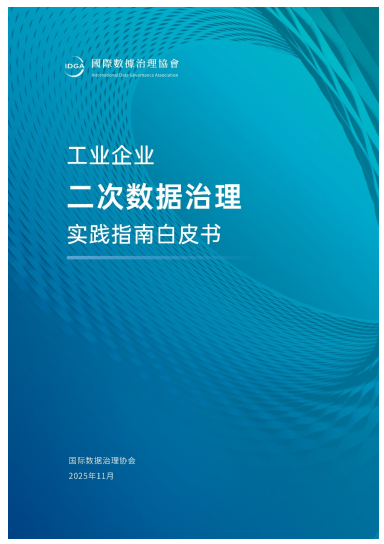
《工业企业二次数据治理实践指南白皮书》正式发布,深化数字化转型新路径
Zhong Guo Fa Zhan Wang· 2025-11-17 11:33
Core Insights - The release of the "Industrial Enterprises Secondary Data Governance Practice Guide White Paper" by the International Data Governance Association (IDGA) marks a new phase in data governance within China's industrial sector [1][3] - The white paper consolidates insights from over twenty leading industry companies and more than forty experts, providing a systematic methodology and practical pathways for secondary data governance in industrial enterprises [1][3] Challenges in Data Governance - Industrial enterprises face three core challenges in data governance: lack of a cohesive governance framework, persistent data quality issues, and insufficient coverage of core business data resources [3][4] - The IDGA expert committee emphasizes that data governance is a long-term endeavor, requiring strategic approaches to address complex data issues accumulated over years [3] Four-Dimensional Governance System - The white paper proposes an innovative "strategy-standard-technology-application" four-dimensional governance system to address existing pain points [3][4] - It recommends a five-year strategic plan with annual rolling planning to translate strategy into actionable tasks, alongside a unified standard system for comprehensive lifecycle management [3][4] Technological Support - The white paper highlights the introduction of an external data quality automatic verification platform, which employs a dual-layer architecture for comprehensive data lifecycle management [4] - This platform utilizes an intelligent routing mechanism to dynamically apply differentiated verification rules based on data types and business scenarios [4] Innovative Governance Framework - The most innovative contribution of the white paper is the "three zones and one loop" panoramic governance framework, which systematically illustrates the entire process from data generation to value release [5][6] - This framework aims to achieve the goals of "controllable, usable, and value-added" data [5] Optimization Strategies - For enterprises with existing master data management platforms, the white paper provides specific optimization strategies, including establishing cross-departmental governance committees and enhancing data quality management [6] - It introduces a data quality scoring system that incorporates key performance indicators (KPIs) related to master data completeness and accuracy [6] Enhancing Data Value - The white paper advocates for a shift from merely visualizing data metrics to enhancing data application value through comprehensive management practices [7] - It proposes a five-level directory structure for data resource inventory, combining top-down and bottom-up approaches [7] Organizational and Talent Support - The white paper emphasizes the critical role of organization and talent in data governance, recommending the establishment of a data governance office led by the Chief Information Officer [9] - It suggests a three-dimensional training system for talent development, including internal and external training, and collaboration with academic institutions [9] Expected Outcomes - The white paper anticipates significant improvements in data standardization, quality enhancement, business process optimization, and data-driven decision-making through systematic implementation of secondary data governance [10] - Specific targets include achieving over 98% accuracy in data consistency checks and significantly reducing approval cycles in core business processes [10]

购股权协议调整 申通快递与阿里巴巴战略合作持续深化
Zheng Quan Ri Bao Zhi Sheng· 2025-11-17 10:36
业内人士认为,目前国内主要快递品牌在淘宝天猫、抖音、拼多多三大平台的业务占比基本相当。此次 协议调整有助于申通快递继续保持独立多元的运营结构,有望增强其在资本市场的吸引力,进一步巩固 行业竞争优势。 (编辑 张昕) 本报讯 (记者吴文婧)11月17日晚,申通快递股份有限公司(以下简称"申通快递")公告称,接到公 司控股股东和实际控制人陈德军和陈小英、股东上海德殷投资控股有限公司与阿里巴巴(中国)网络技 术有限公司(以下简称"阿里巴巴")签署协议通知,将购股权行权期延长至2028年12月27日,行权价格 为每股16.413元。此次调整基于双方对长期战略协同共识,为深化合作提供充分时间窗口,且扣除两次 分红后实际行权单价保持不变,充分体现了阿里巴巴对申通快递长期价值的持续认可。 据悉,自双方开启战略合作以来,申通快递在数智化升级、产能提升等方面成效显著。截至目前,公司 服务品质稳步提升,预计年底常态日产能将突破9000万单。申通快递方面将持续推进"稳中求进"发展策 略,加速数字化转型,为投资者和客户创造长期稳定价值。 ...


行进的海岸线丨3D+AI赋能全球航线枢纽 “蓝色动能”连刷世界纪录
Yang Guang Wang· 2025-11-17 10:08
Core Insights - The article highlights the advancements and operational efficiency of the fully automated pulp terminal at Qingdao Port, which has set multiple records in unloading efficiency and is transforming the port into a comprehensive supply chain service provider [1][4]. Group 1: Operational Efficiency - Qingdao Port's automated pulp terminal achieved a 22.5% year-on-year increase in pulp throughput in the first half of 2025, showcasing its capability to handle large volumes of imported pulp efficiently [1]. - The terminal has set a new world record for pulp unloading, achieving a throughput of 51,676 tons in a 24-hour period, marking the fourth time this record has been broken [2]. - The implementation of AI and 3D technology has improved operational efficiency by over 20% by optimizing unloading sequences through dynamic electronic ship mapping [2][3]. Group 2: Technological Integration - The "PulpCrane" platform integrates logistics, trade, and finance, serving 45 upstream and downstream pulp manufacturers and traders, facilitating end-to-end online processing for booking, customs clearance, and settlement [3]. - The digital transformation at Qingdao Port has reduced the international logistics process from weeks to hours, effectively creating a "green channel" for pulp shipments [3]. Group 3: Supply Chain Development - The port is evolving from a mere unloading hub to a comprehensive supply chain service provider, enhancing its competitive edge through real-time data synchronization and streamlined operations [3][6]. - The "dock direct loading—railway direct dispatch—port area direct access" model has enabled seamless connections in pulp transportation, significantly reducing logistics costs and improving delivery times [3][6]. Group 4: Economic Impact - The integration of the port with local industries has fostered a "port-industry-city" development model, driving collaboration among the paper, packaging, and printing sectors, and contributing to the green and high-quality development of Shandong [6]. - The port's strategic initiatives are positioning it as a growth engine for the regional economy, focusing on global pulp capacity and establishing connections with foreign pulp mills and shipping companies [4].


Cognizant收购3Cloud,塑造行业领军力量
Huan Qiu Wang· 2025-11-17 06:59
Core Insights - Cognizant has signed a definitive agreement to acquire 3Cloud, a leading independent Microsoft Azure service provider, enhancing its capabilities in data, AI, application innovation, and enterprise cloud platforms [1][3][4] - The acquisition is expected to significantly expand Cognizant's Azure product portfolio and deepen its expertise in complex engineering projects, driving AI-led business transformation [3][5] - 3Cloud has achieved a 20% organic compound annual growth rate since 2020, with expectations to maintain similar growth through 2025, driven by strong demand for Microsoft Azure-based business transformation [3][6] Company Overview - 3Cloud primarily serves enterprise clients across sectors such as banking, healthcare, technology, and consumer goods [3] - The integration will add over 1,000 Azure experts and more than 1,500 Microsoft certifications to Cognizant's existing team of nearly 20,000 Azure-certified employees [3][5] - 3Cloud has been recognized multiple times as a top Microsoft Azure partner, winning various awards for its innovative Azure solutions [6] Strategic Implications - The acquisition is seen as a critical step for Cognizant in advancing its enterprise AI strategy, enabling organizations to rapidly build, deploy, and scale AI solutions [3][4] - Cognizant aims to establish itself as a leading partner within the Azure ecosystem, leveraging 3Cloud's expertise to enhance client value in their AI journeys [4][5] - The deal is expected to close in the first quarter of 2026, pending regulatory approvals and other closing conditions [6]


招商银行成都分行深耕场景化服务 以数字金融赋能实体经济
Zhong Guo Jin Rong Xin Xi Wang· 2025-11-17 06:59
Core Insights - The digital economy has become a crucial engine for China's economic growth, with its share of GDP exceeding 40% since 2022, and is experiencing rapid growth [1] - Digital finance is recognized as one of the key components for high-quality development of the digital economy, as emphasized by the central financial work conference [1] Group 1: Digital Financial Initiatives - China Merchants Bank Chengdu Branch is leveraging the "Smart Bank" strategy to enhance customer service and accelerate digital transformation in response to national and head office strategies [1] - The branch has implemented an immersive experience in its digital finance exhibition hall, allowing customers and employees to engage with AI tools for practical applications [2] - The bank has introduced digital solutions targeting pain points in key industries such as manufacturing, retail, and high-tech, providing comprehensive digital services for human resources and finance [3] Group 2: Regional Economic Support - The Chengdu Branch is actively supporting local enterprises' digital transformation in line with the Chengdu-Chongqing economic circle strategy, enhancing convenience for citizens through services like roadside parking payments via the bank's app [4] Group 3: Talent and Mechanism Innovation - The bank emphasizes the recruitment of tech talent, with over 65% of its tech team possessing relevant R&D skills, and promotes deep integration of tech personnel with business lines [5] - The "Ferry Plan" has been established to collaborate with the head office on IT projects, accelerating the digital transformation process [5] Group 4: Cloud Infrastructure Development - The bank has completed a comprehensive cloud migration project over three years, breaking traditional architecture barriers and supporting rapid business validation and iteration through a microservices approach [6] Group 5: Social Value and Financial Inclusion - Since the 14th Five-Year Plan, the bank has utilized "technology + finance" to empower digital transformation for enterprises and support rural revitalization, addressing financing bottlenecks for small and micro enterprises [7] - The bank's future digital initiatives will continue to focus on serving the real economy and social welfare, with products designed to enhance efficiency and convenience for citizens and businesses alike [8]

南方电网广东电网公司:从“人工评分”到“AI考评”
Zhong Guo Dian Li Bao· 2025-11-17 06:41
Core Insights - The Southern Power Grid Guangdong Electric Power Company has developed a remote intelligent evaluation system supported by digital and intelligent technologies, marking a significant shift from manual on-site scoring to AI-driven remote automatic scoring, enhancing fairness and efficiency in skill evaluation [1][2] Group 1: AI Integration in Skill Assessment - The traditional skill assessment in the power industry relied on on-site evaluators, which was subject to subjective influences. The Guangdong Electric Power R&D team has integrated advanced technologies such as voice recognition, computer vision, and deep learning to create an AI algorithm base for skill assessments [2] - The AI system has achieved an accuracy rate of over 85% in scoring pilot test questions after extensive data collection and training, addressing concerns about evaluators missing operational details during assessments [2] Group 2: One-Stop Service System - The intelligent evaluation system is developed on the internal power grid management platform, providing customized interfaces for different roles and achieving seamless integration with existing evaluation systems for a complete online management process [3] - The system can support simultaneous online examinations for 10 positions and generates real-time results, significantly improving efficiency compared to traditional methods that required extensive coordination [3] - A dual-track model of "AI scoring + manual review" is employed, where AI quickly scores objective evaluation items while experienced evaluators review key aspects, reducing overall assessment time by 30% [3] Group 3: Comprehensive Talent Development - The intelligent evaluation system extends its value beyond assessment to encompass teaching and practice, introducing a model of "intelligent internal trainers + intelligent evaluators" in training programs [4] - The system monitors practice sessions in real-time and provides corrective feedback, generating personalized analysis reports to identify individual weaknesses [4] - The innovative application of this system has received multiple accolades, including the "Digital Technology Innovation Application Award" from the State-owned Assets Supervision and Administration Commission, exemplifying the integration of digital transformation and skill talent development in the power industry [4]
梦祥公司出席全联金银珠宝业商会重要会议 锚定政策方向谋发
Sou Hu Cai Jing· 2025-11-17 06:05
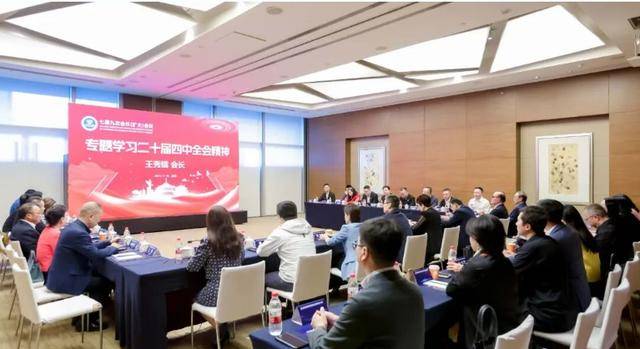
Core Viewpoint - The meeting held on November 16 focused on industry policy direction and new development opportunities, emphasizing the importance of digital transformation and compliance in the jewelry sector [1][4][5] Group 1: Industry Developments - The meeting conveyed the spirit of the 20th Central Committee's fourth plenary session and discussed the "14th Five-Year Plan" recommendations, addressing the work of the association and the 2026 work outline [4] - Key topics included the impact of new gold policies on the industry and changes in the consumer market landscape [4] - The association emphasized the need for modern enterprise systems and compliance operations, urging members to focus on digital transformation, brand building, and market expansion [4] Group 2: Company Positioning - Dreamxiang Company, with over 30 years in the jewelry industry, is committed to the inheritance and innovation of intangible cultural heritage in silver and gold craftsmanship [5] - The company aims to align with national policy directions by integrating heritage preservation with digital transformation and compliance operations [5] - Dreamxiang Company is determined to contribute to the high-quality development of the industry by actively participating in the construction of a unified national market [5]
“已经不投老登了”
3 6 Ke· 2025-11-17 05:58
Core Viewpoint - The traditional consumer sectors, referred to as "old industries," are losing their appeal for investment, as evidenced by declining valuations and performance metrics in sectors like liquor, dining, and retail [1][4][8]. Summary by Sections Old Industries Overview - "Old industries" include traditional sectors such as clothing, dining, home appliances, regional supermarkets, and low-value manufacturing, which were once considered stable investments due to demographic dividends and consumption upgrades [1][4]. - These sectors accounted for a significant portion of RMB fund allocations between 2016 and 2021, often viewed as "cash cows" for investment [4][8]. Market Performance - The liquor sector, a representative of high-end consumption, has seen a significant decline, with the total market capitalization of 20 major liquor companies dropping by over 500 billion RMB from previous highs [4][5]. - The white liquor index has experienced a 51% retracement since its peak in February 2021, indicating a severe market correction [5][6]. Financial Metrics - In 2025, the first three quarters showed a 5.83% decline in total revenue and a 6.76% drop in net profit for the liquor sector, with the third quarter witnessing an alarming 18.42% revenue drop [7][8]. - The overall price-to-earnings (PE) ratio for the liquor sector has fallen to approximately 18.7, significantly below the long-term average of 27.6 [5][6]. Shift in Investment Focus - Investment capital is shifting away from "old industries" towards "new productive forces," such as artificial intelligence, semiconductors, and advanced manufacturing, reflecting a broader trend in venture capital [9][10]. - Despite a 32% decline in overall VC financing in 2024, significant funding is still directed towards high-potential sectors, indicating a concentration of capital in fewer, more promising areas [9][10]. Government and Institutional Support - The Chinese government has emphasized the importance of "new productive forces" in its economic policies, encouraging investment in strategic emerging industries [10][11]. - Various funds, including national AI and technology innovation funds, are being established to support these new sectors, further driving the shift in investment focus [11][12]. Evolution of Traditional Industries - Traditional industries are not disappearing; rather, they are evolving. Companies that embrace digital transformation and new technologies are beginning to attract investment again [14][15]. - Examples include traditional clothing brands that have successfully integrated digital supply chains and advanced manufacturing techniques to enhance efficiency and profitability [15][16]. Conclusion - The phrase "no longer investing in old industries" reflects a strategic pivot rather than a complete abandonment of traditional sectors, as new players and innovative approaches emerge within these markets [18][19].

安粮期货:以赛为翼 展专业风范 助实体发展
Qi Huo Ri Bao Wang· 2025-11-17 02:55
Core Viewpoint - Anliang Futures has actively participated in the national futures (options) trading competition, showcasing its professional capabilities and commitment to serving the real economy, thereby promoting high-quality development in the futures industry [1]. Group 1: Company Strategy and Positioning - Anliang Futures aims to enhance its brand influence and market recognition through participation in the competition, viewing it as an opportunity to gain insights into customer needs and optimize services [2]. - The company positions itself as a professional service provider connecting the real economy with capital markets, using the competition platform to facilitate knowledge and information flow among traders, experts, and its business team [2][3]. - Continuous participation in the competition serves as a "live advertisement" for the company's strength and credibility, reinforcing its brand image as a reliable and proactive industry participant [2]. Group 2: Industry Impact - The competition is seen as a comprehensive platform for investor education, talent selection, and market construction, contributing to the healthy ecosystem of the futures market and promoting a shift from "scale expansion" to "high-quality development" [3]. - The event significantly enhances trading activity and liquidity in the futures market, which is crucial for effective price discovery and hedging functions that serve the real economy [3]. Group 3: Support Services and Investor Education - Anliang Futures has developed a comprehensive support service system for participants, including a digital registration system that improves the registration experience and provides efficient backend management [4]. - The company offers robust research resources and organizes online events to provide participants with market insights and strategies, ensuring they stay informed about market trends [4]. - Anliang Futures emphasizes investor education, conducting both online and offline activities to promote knowledge of futures trading and risk management, thereby contributing to financial safety [5]. Group 4: Future Outlook and Industry Trends - The company recognizes the challenges posed by global economic conditions and advocates for futures companies to leverage their expertise to support the real economy and national strategic initiatives [7]. - Anliang Futures plans to enhance its service standards and invest in talent and technology, transitioning traditional client managers to more specialized roles to better serve the industry [7]. - The company encourages investors to adopt a long-term perspective in the futures market, focusing on risk management and industry value rather than short-term trading profits [8].
三菱瓦斯完成泰国工厂扩建
Zhong Guo Hua Gong Bao· 2025-11-17 02:48
Core Insights - Mitsubishi Gas Chemical Company announced the completion of its expansion project for Mitsubishi Gas Chemical Electronics Technology (Thailand) Co., Ltd. (ETT) in Thailand, focusing on the production of bis-maleimide triazine (BT) materials for semiconductor packaging, with production set to commence in December 2025 [1] Group 1: Company Developments - The expansion aims to double the production capacity of BT materials at ETT, enhancing Mitsubishi Gas Chemical's competitive edge and enabling the company to seize new business opportunities [1] - The company will operate under a "Japan + Thailand" dual-base model, integrating R&D advantages from its Japanese headquarters with mass production capabilities from its Thai facility [1] Group 2: Industry Context - The expansion responds to the growing global market demand driven by advancements in 5G/6G communications, digital transformation, the Internet of Things, automotive innovation, and artificial intelligence technologies, which are significantly increasing the demand for high-performance semiconductors [1] - The semiconductor industry has become a core component of national strategies for multiple countries, highlighting the critical challenge of maintaining a stable and diversified supply chain [1]