均值回归

Search documents
外部扰动下内需重要性凸显把握消费赛道投资新机遇——访泉果消费机遇基金经理孙伟
Shang Hai Zheng Quan Bao· 2025-05-11 14:09
Core Viewpoint - The importance of domestic demand has become more prominent under external disturbances, highlighting new investment opportunities in the consumption sector [2][5]. Investment Strategy Evolution - The investment strategy has evolved from traditional value investing to a focus on industry prosperity and fundamental analysis, reflecting a deeper understanding of market cycles [3][4]. - The turnover rate has increased, with a greater emphasis on industry conditions rather than solely on undervalued stocks [3]. - A more nuanced understanding of mean reversion has developed, prioritizing industry prosperity before identifying specific investment opportunities [4]. New Consumption Trends - Since 2021, new consumption trends have emerged, enhancing the investability of sectors with strong performance indicators [6]. - Three categories of new consumption investment opportunities are identified: emotional consumption, mature consumption products, and the "going out" consumption sector [6]. International Market Potential - Chinese brands are increasingly entering international markets, demonstrating competitive advantages in various sectors such as milk tea, new energy vehicles, and cultural products [7]. - The "going out" consumption strategy differs from traditional exports, focusing on higher value-added products and showcasing the strength of Chinese brands abroad [7]. Investment Focus Areas - Four key investment directions are highlighted: the internet, emerging consumption sectors (including cultural trends, pets, AI+ consumption, and the silver economy), "going out" consumption, and consumer electronics [8]. - The current portfolio allocation remains cautious, with a stock position of 72.86% of net fund assets, reflecting a stable approach amid economic uncertainties [8]. Market Recovery Signals - Recent economic data indicates signs of recovery, such as increased delivery orders, travel activity, and hiring trends, suggesting potential positive developments in various industries [8].


翁富豪:5.7黄金布林带上轨失守风险升温?今日最新操作策略
Sou Hu Cai Jing· 2025-05-06 23:45
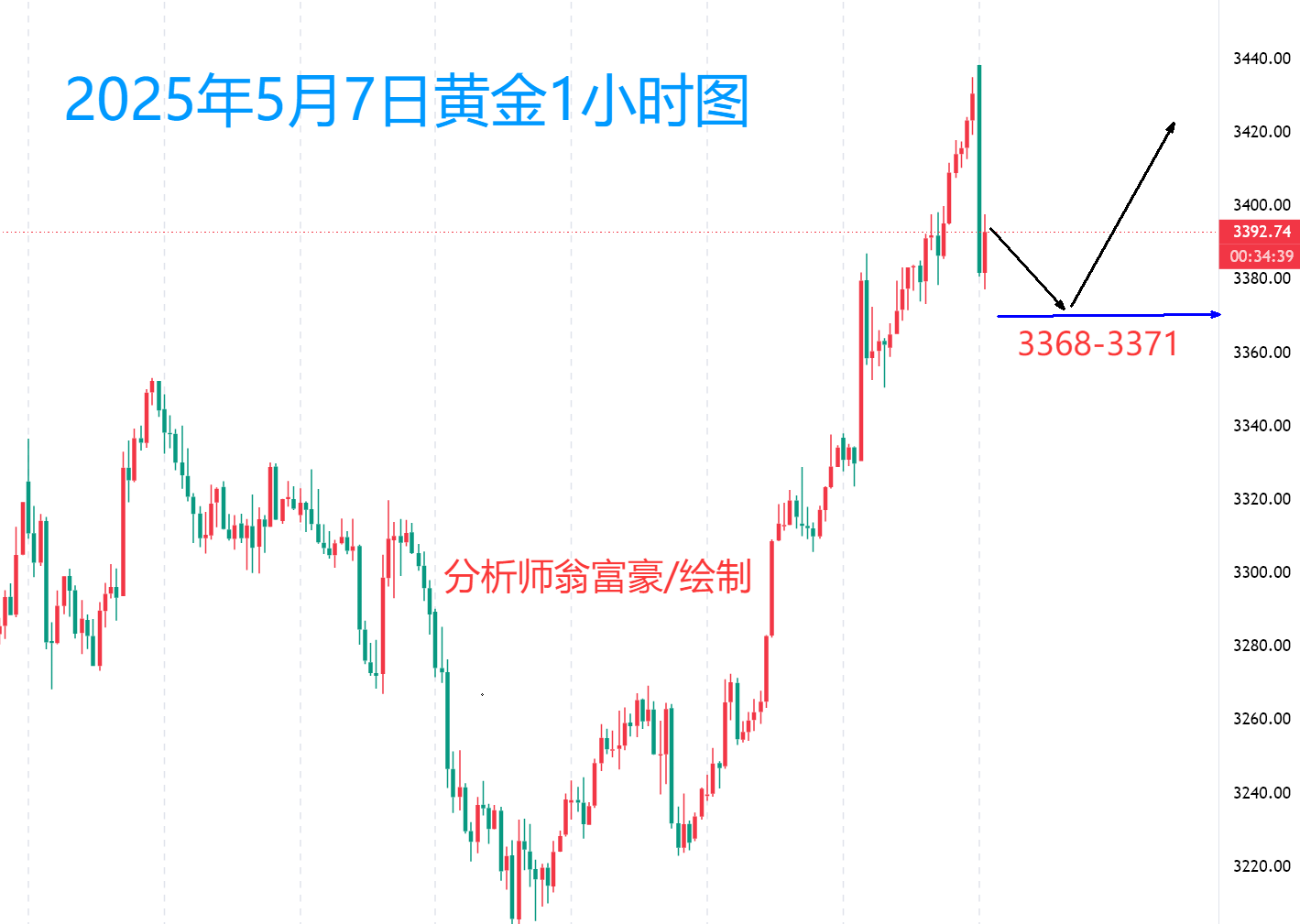
Group 1 - The Federal Reserve is expected to maintain interest rates in the range of 5.25%-5.50% during the upcoming FOMC meeting, with Chairman Powell's statements on monetary policy being a key focus for the market [1] - The U.S. non-farm payrolls added 177,000 jobs in April, exceeding market expectations of 160,000, which may lead Powell to continue a hawkish stance on inflation [1] - The domestic gold ETF holdings increased by 23.47 tons in the first quarter, reflecting institutional investors' recognition of gold's long-term value [2] Group 2 - The SPDR Gold ETF (GLD) experienced significant capital inflows and outflows, with over $2 billion net inflow in March followed by over $1.5 billion net outflow in April, indicating increased market volatility [2] - Technical indicators show that gold prices are over 25% above the 200-day moving average, and the RSI has entered the overbought territory above 80, suggesting potential for a mean reversion if no major geopolitical events occur [2] - Gold prices surged over 3% in a single day, reaching a high of $3,435 per ounce, with a strong bullish trend confirmed by breaking key resistance levels [4] Group 3 - The suggested trading strategy includes buying gold in the $3,368-$3,371 range with a stop loss at $3,361 and targets set at $3,390-$3,420, with further upside potential if the price breaks above $3,435 [5] - The market should be cautious of potential resistance in the $3,450-$3,465 range, which aligns with historical trading volumes and weekly channel resistance [5]
德银:美国资产抛售过度了
Hua Er Jie Jian Wen· 2025-05-06 03:45
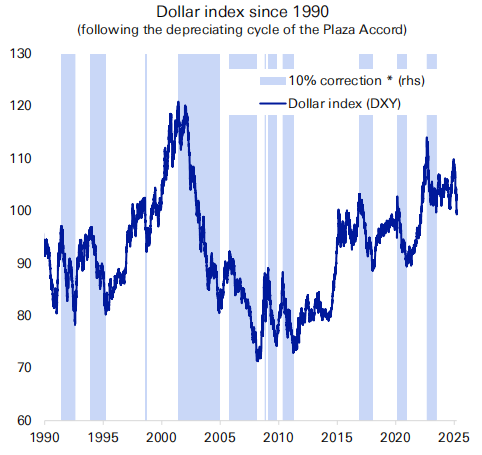
Group 1 - The core viewpoint of the article is that despite the volatility in the US stock market in early April, Deutsche Bank's research suggests that many market movements may have been overreacted and are likely to mean revert [1] - Deutsche Bank's May report indicates that the panic regarding the dollar, US consumer data, and overall confidence in US assets may have been excessive, making valuations in certain sectors attractive [1][2] - The current market conditions reflect emotional swings, transitioning from extreme optimism post-2024 US elections to current pessimism, with many growth and policy expectations having completed a full cycle [1] Group 2 - Concerns regarding the decline of the dollar and US consumer stocks have been overstated, as the dollar index has experienced 11 corrections of over 10% since 1990, with a 10% drop so far in 2025 [2] - US consumer stocks have significantly dropped since April 2 due to tariff concerns and worries about US demand, with median declines in US consumer stocks being notably higher than their European counterparts [4] - Despite a low US consumer confidence index, retail sales in the US remain strong, growing above trend levels [6] Group 3 - From a relative valuation perspective, certain cyclical US consumer companies, including apparel and essentials, may begin to show investment appeal, as the valuation premium of the US compared to Europe has significantly decreased in some sectors [8] - During the sell-off in early April, no asset truly acted as a "safe haven," including US 10-year Treasury bonds, which behaved more like bonds from struggling emerging markets [9] - The US credit default swap (CDS) spreads increased by 15 basis points last month, reaching the highest level since concerns over the debt ceiling and Moody's downgrade, now close to levels seen in Greece and Italy [11]

利率市场趋势定量跟踪:利率择时信号转为看多
CMS· 2025-04-05 15:09
Quantitative Models and Construction Methods 1. Model Name: Interest Rate Price-Volume Multi-Cycle Timing Strategy - **Model Construction Idea**: This model uses kernel regression algorithms to identify the trend patterns of interest rates, capturing support and resistance levels. It integrates signals from long, medium, and short investment cycles to form a composite timing strategy[11][23] - **Model Construction Process**: 1. **Signal Generation**: - Use kernel regression to identify support and resistance levels for interest rate data across different cycles (long, medium, short)[11] - Signals are generated based on whether the interest rate breaks through these levels in an upward or downward direction[11] 2. **Cycle Frequency**: - Long cycle: Monthly signal switching - Medium cycle: Bi-weekly signal switching - Short cycle: Weekly signal switching[11] 3. **Composite Signal Scoring**: - If at least two out of three cycles show a downward breakthrough, the signal is "bullish" - If at least two out of three cycles show an upward breakthrough, the signal is "bearish"[11][23] 4. **Portfolio Construction**: - Full allocation to long-duration bonds when at least two cycles show a downward breakthrough and the trend is not upward - 50% allocation to medium-duration bonds and 50% to long-duration bonds when at least two cycles show a downward breakthrough but the trend is upward - Full allocation to short-duration bonds when at least two cycles show an upward breakthrough and the trend is not downward - 50% allocation to medium-duration bonds and 50% to short-duration bonds when at least two cycles show an upward breakthrough but the trend is downward - Equal allocation across short, medium, and long durations in other cases[23] 5. **Stop-Loss Mechanism**: - Adjust holdings to equal allocation when the daily excess return of the portfolio falls below -0.5%[23] 6. **Benchmark**: - Equal-duration strategy: 1/3 allocation to short, medium, and long durations[23] 2. Model Name: Public Bond Fund Duration and Divergence Tracking - **Model Construction Idea**: This model uses an improved regression model to dynamically track the weekly changes in the duration and divergence of public bond funds[13] - **Model Construction Process**: 1. **Duration Calculation**: - Median, 4-week moving average, and mean values of the duration (including leverage) of medium- and long-term pure bond funds are calculated[13][20] 2. **Divergence Measurement**: - Cross-sectional standard deviation of fund durations is used to measure divergence[14] 3. **Yield-to-Maturity (YTM) Analysis**: - Median, 4-week moving average, and mean values of YTM (including leverage) are calculated for the funds[20] --- Model Backtesting Results 1. Interest Rate Price-Volume Multi-Cycle Timing Strategy - **Long-Term Performance (2007.12.31 to Latest Report Date)**: - Annualized Return: 6.3% - Maximum Drawdown: 1.55% - Return-to-Drawdown Ratio: 2 - Excess Return: 1.78% - Excess Return-to-Drawdown Ratio: 0.92[23][24] - **Short-Term Performance (Since 2023 Year-End)**: - Annualized Return: 8.05% - Maximum Drawdown: 1.62% - Return-to-Drawdown Ratio: 6.91 - Excess Return: 2.78% - Excess Return-to-Drawdown Ratio: 2.85[4][23][24] - **Historical Success Rates (18 Years)**: - Absolute Return > 0: 100% - Excess Return > 0: 100%[24] 2. Public Bond Fund Duration and Divergence Tracking - **Duration Metrics**: - Median Duration: 3.13 years - 4-Week Moving Average: 3.19 years - Mean Duration: 3.4 years - Historical 5-Year Percentile: 91.51%[13][14] - **Divergence Metrics**: - Cross-Sectional Standard Deviation: 2.03 years - Historical 5-Year Percentile: 98.46%[14] - **YTM Metrics**: - Median YTM: 1.99% - 4-Week Moving Average: 2.12% - Mean YTM: 2.1%[20]
指数回来了,钱却没回来
Sou Hu Cai Jing· 2025-03-25 09:58
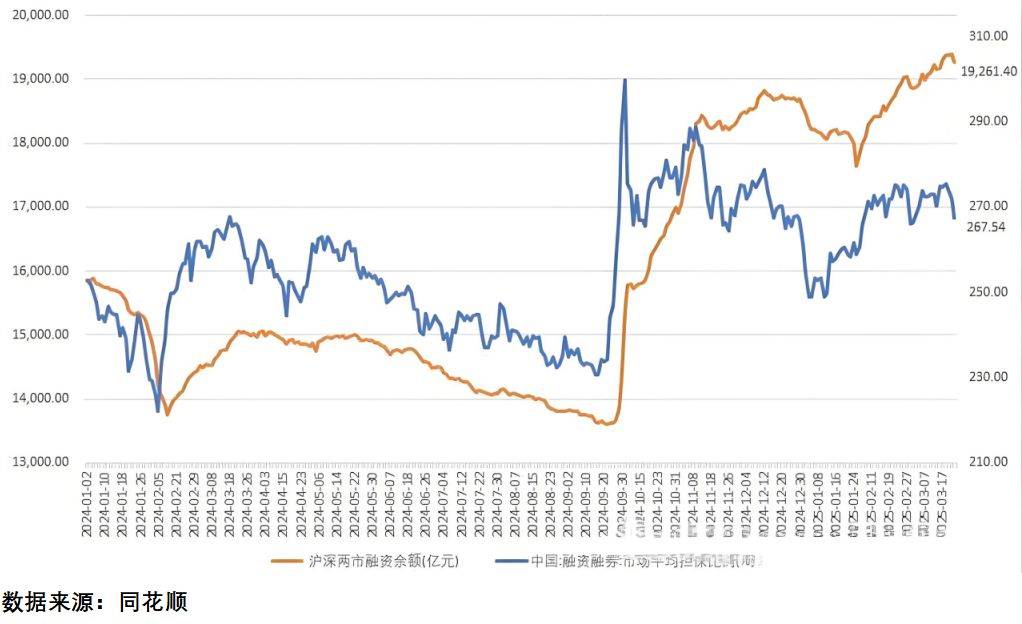
指数回来了,钱却没回来 昨天市场出现了一个值得玩味的现象: 虽然三大指数最终收红,但微盘股却领跌全市场,明明指数是涨的,为什么自己反而亏了大钱? 这种指数与个股表现背离的情况,今天我来给大家好好分析一下。 文末有重要干货提示,千万不要错过! 一,微盘股领跌 表面上看,微盘股的下跌可以归因于监管边际趋严、缺乏热点题材等短期因素。 但究其根本,是市场内部的杠杆水平和真实赚钱效应之间的扭曲程度已经达到了一个极点。 过去一段时间,部分微盘股凭借资金推动和概念炒作积累了过高涨幅,而随着市场回归理性,均值回归的规律开始发挥作用。 值得庆幸的是,昨天下午两点半的那波强力拉升,避免了市场重演去年12月17日的单边下跌剧情,这显示出市场仍具备一定的自我修复能力。 二,指数涨了,钱却亏了 这种指数与个股分化的现象给我们一个重要启示: 单纯盯着指数涨跌来判断市场好坏是远远不够的。 即便指数上涨,如果选错了板块和个股,依然可能面临亏损。 这就是为什么专业投资者更关注机构资金的动向——因为机构往往能更早感知市场风向的变化。 机构掌握着股价的定价权,对于市场中稀有的有价值的信息能够提前掌握并分析。 当前市场正处于一个关键转折期,前期涨幅 ...
宏观经济宏观周报:国内经济增长动能稳健提升
Guoxin Securities· 2025-03-23 07:14
Economic Growth - The domestic economic growth momentum is steadily improving, with the Guosen High-Frequency Macro Diffusion Index A remaining positive and Index B continuing to rise[1] - Investment sector sentiment is improving, while consumer and real estate sectors show little change; investment performance is relatively strong[1] - Seasonal comparison indicates that Index B typically rises by an average of 0.17 weekly after the Spring Festival, with this week's standardized increase at 0.14, aligning with historical averages[1] Asset Prices and Predictions - Current domestic interest rates are low, while the Shanghai Composite Index is high; a mean reversion suggests that the ten-year government bond yield is expected to rise and the Shanghai Composite Index to fall in the upcoming week[1] - The predicted ten-year government bond yield for the week of March 21, 2025, is 2.47%, while the actual yield is 1.87%, indicating a deviation of 61 basis points[18] - The predicted Shanghai Composite Index for the same week is 3,174.98, lower than the actual value of 3,411.22[19] Price Trends - Food and non-food prices have both slightly decreased, with March CPI food expected to be -1.0%, non-food at -0.1%, and overall CPI at -0.3%[2] - The domestic Producer Price Index (PPI) is expected to remain flat month-on-month, with a slight year-on-year increase to -2.1%[2]
资产配置|定量指标看当前红利策略的底部特征
中信证券研究· 2025-03-12 00:19
Core Viewpoint - The current dividend strategy shows significant bottom characteristics, indicating potential recovery momentum in the market [1][3][4]. Group 1: Quantitative Indicators - The dividend index has exhibited a rare "negative return - high volatility" feature over the past three months, deviating significantly from its long-term central distribution [1][3]. - As of March 7, the excess return of the dividend index compared to the CSI 300 index has dropped to -7%, with an excess volatility of 12%, suggesting a suitable window for contrarian investors [3]. - The dividend ETF is in a state of reduced net subscriptions, typically corresponding to a bottoming phase for the strategy, with net subscription volume decreasing to approximately 0.3 million yuan [3][4]. Group 2: Long-term Value of Dividend Strategy - The dividend strategy has high returns, low volatility, and low drawdown characteristics, with an annualized return of 14.14% and a Sharpe ratio of 0.64 from January 2006 to February 2025, making it the highest among various style indices [2]. - The dividend strategy remains an attractive allocation direction due to strengthened dividend policies, a low risk-free yield environment, and long-term capital inflow policies [2]. Group 3: Technical Indicators - The current volume indicator for the dividend style has fallen below the warning line (0.8), triggering a buy signal historically associated with significant rebounds in excess returns [4]. - The market turnover ratio for the dividend index has dropped below 5%, indicating a "cooling" phase in trading volume over the past five years, which suggests a safety margin for allocation [4][5].


中金:利率传导到了哪一步?
中金点睛· 2025-02-27 23:34
Core Viewpoint - The liquidity in the market has been tight since the beginning of the year, with short-term interest rates rising without immediate transmission to long-term rates due to several factors, including increased demand for long-term bonds and changing market expectations regarding interest rate cuts [1][2]. Group 1: Initial Conditions for Short-Term to Long-Term Rate Transmission - The initial lack of transmission from short-term to long-term interest rates is attributed to three main factors: increased demand for long-term bonds due to the "opening red" period and deposit self-discipline, heightened concerns over tariffs leading to increased risk premiums, and a stronger "substitution effect" of long-term bonds over short-term bonds [4][5][6]. Group 2: Recent Developments in Rate Transmission - Since February 6, the pressure from short-term rates has begun to transmit to long-term rates, with the 10-year government bond yield rising from 1.60% to 1.76%. This change is driven by three mechanisms: a decrease in the pulse demand for long-term bonds, a marginal correction in interest rate cut expectations, and an increase in the opportunity cost of long-term bond investments [8][9][10]. Group 3: Future Outlook for Long-Term Bond Yields - The tightening liquidity environment may lead to a return to a more stable long-term bond yield, with expectations that the liquidity environment will shift back to a more accommodative stance. The future trajectory will depend on the extent of fiscal stimulus and the strength of economic recovery [12].