
大模型

Search documents
中国软件国际(00354.HK):3月2日南向资金减持275.6万股
Sou Hu Cai Jing· 2026-03-02 19:58
Group 1 - The core viewpoint of the article highlights the recent trading activity of southbound funds in China Software International (00354.HK), indicating a reduction of 2.756 million shares on March 2, while also noting a net increase of 12.464 million shares over the past five trading days [1] - Over the last 20 trading days, southbound funds have increased their holdings in China Software International for 13 days, resulting in a total net increase of 54.99 million shares [1] - As of now, southbound funds hold 913 million shares of China Software International, which accounts for 33.39% of the company's total issued ordinary shares [1] Group 2 - China Software International Limited is an investment holding company that provides global technology software and information technology services [1] - The company operates through two main segments: technology professional services and internet information technology services [1] - Its primary business focuses on the development of generative artificial intelligence (AIGC), sales of large model software and hardware, and digital transformation consulting services for enterprise resource planning (ERP) [1] - Key products include the "Question Series" solutions, large model application integrated machines, and the Lingxi AI application platform [1] - The company serves various sectors including water conservancy, transportation, government platforms, military, energy, education, and finance, operating in both domestic and international markets [1]


汽车行业需要新型整零关系
董扬汽车视点· 2026-03-02 10:32
Core Viewpoint - The article emphasizes the necessity of establishing a new type of collaboration between automotive manufacturers and AI innovation companies, focusing on a comprehensive cooperation model that spans product definition, development, and operation. Group 1: New Collaboration Models - Automotive companies need to form new collaborative relationships with key partners to adapt to technological advancements, industry ecology, and market demands, which is an inevitable trend of the times [1] - The automotive industry is facing significant technological breakthroughs across multiple fields, making it impossible for a single manufacturer to lead all technological developments [1] - New technologies require deep collaboration between supply and demand sides to provide users with mature applications and experiences, moving beyond simple transactional relationships [1] Group 2: Market Demand - The completion of production and sales of new automotive products is not the endpoint of technology but rather the starting point for ongoing technological progress and functional iterations [2] - Strong, long-term, and close collaborative relationships are essential for automotive companies and their partners to effectively respond to market demands and provide optimal user experiences [2] Group 3: Tesla's Approach - Tesla is a benchmark for smart connected new energy vehicles, and its initial independence from traditional system suppliers was due to the latter's inability to meet Tesla's technological needs and iteration frequency [3] - Tesla is not a "winner-takes-all" entity; it values long-term partnerships and considers the interests of its collaborators, as evidenced by its relationship with CATL in the battery sector [3] Group 4: Dangers of "Winner-Takes-All" Mentality - The "winner-takes-all" mentality is harmful to the automotive industry, as automobiles are long-cycle products where new technologies cannot be monopolized for long periods [4] - The automotive industry must focus on unique user experiences and product differentiation rather than merely competing on who adopts new technologies first [4] - Safety is paramount in automotive products, necessitating that new technologies meet stringent safety requirements, contrasting with the iterative nature of some internet products [4]


传媒行业周报:字节发布SEED2.0系列模型,千问位居中国企业级大模型市场第一-20260302
CHINA DRAGON SECURITIES· 2026-03-02 08:01
Investment Rating - The report maintains a "Recommended" investment rating for the media industry [2][30]. Core Insights - ByteDance has released the Seed 2.0 series model, which significantly upgrades its multi-modal capabilities and complex task execution levels, aiming to enhance performance in real-world applications [5][24]. - Alibaba's Qwen model leads the Chinese enterprise-level large model market, with a daily usage share of 32.1% in the second half of 2025, nearly doubling from 17.7% in the first half [19][20]. - The report emphasizes three core directions for investment in the media sector: AI technology empowerment, IP value release, and recovery of the film industry [30]. Summary by Sections Industry News - Windy Technology collaborates with leading companies to establish a smart application pilot base in Hangzhou, focusing on embodied intelligence as a key component of new productivity [18]. - The Chinese enterprise-level large model market is dominated by Alibaba's Qwen, which has seen a significant increase in daily usage [19][20]. Key Company Announcements - Kyeing Network has approved a share repurchase plan, intending to buy back shares worth between 100 million and 200 million RMB, enhancing investor confidence and aligning interests [22]. - Ice River Network has received approval to use idle funds for cash management, aiming to improve capital efficiency [23]. Investment Recommendations - The report suggests focusing on companies with high-performance agent model development capabilities and those deeply engaged in vertical industry MaaS services [30]. - Specific companies to watch include Kyeing Network, Giant Network, and Tencent Holdings for AI technology empowerment, and Huace Film and Wanda Film for the recovery of the film industry [30].

大模型告别技术奇观:日活飙升背后,如何帮用户玩转AI?
经济观察报· 2026-03-02 05:33
Core Viewpoint - The article discusses the surge in daily active users of AI applications during the Spring Festival, highlighting the challenges of user retention due to the cognitive and operational barriers associated with large models [1][6][8]. Group 1: User Engagement Strategies - Major tech companies launched aggressive cash incentive campaigns during the Spring Festival, with Baidu, Tencent, Alibaba, and ByteDance investing significant amounts in red envelope activities to attract users [2][4]. - The cash subsidies and high-profile event collaborations led to a spike in downloads and user engagement, with applications like Alibaba's Qianwen and ByteDance's Doubao topping the App Store download charts [2][4]. Group 2: User Retention Challenges - Despite the initial surge in user numbers, there is a concern that many users may not return after the novelty wears off, as they struggle to understand how to effectively use AI applications [6][8]. - The article emphasizes the need for a content ecosystem that allows users to learn from each other and share usage experiences to improve retention [9]. Group 3: Shifts in User Discussion - There has been a notable shift in user discussions on social media from technical breakthroughs to practical usage and tutorials, indicating a growing interest in how to effectively utilize AI tools [12][13]. - Influencers and creators on platforms like Weibo have begun to fill the gap by providing detailed guides and templates for using AI models, making it easier for ordinary users to engage with the technology [16][17]. Group 4: Real-World Applications - Users have started to explore practical applications of AI models in everyday scenarios, such as generating responses for social interactions during the holiday season [20][21]. - The article notes that the integration of AI tools into various creative processes is expanding, with creators using AI for diverse content creation beyond traditional text [22][23]. Group 5: Advertising and Market Perception - During the Spring Festival, many AI companies invested in long advertisements to communicate the practical benefits of their models, reflecting a common industry anxiety about user understanding and engagement [25]. - The article suggests that without direct interaction and feedback, traditional advertising methods may not effectively establish user habits with complex AI technologies [25][26].

挽尊一下恒生
小熊跑的快· 2026-03-02 01:48
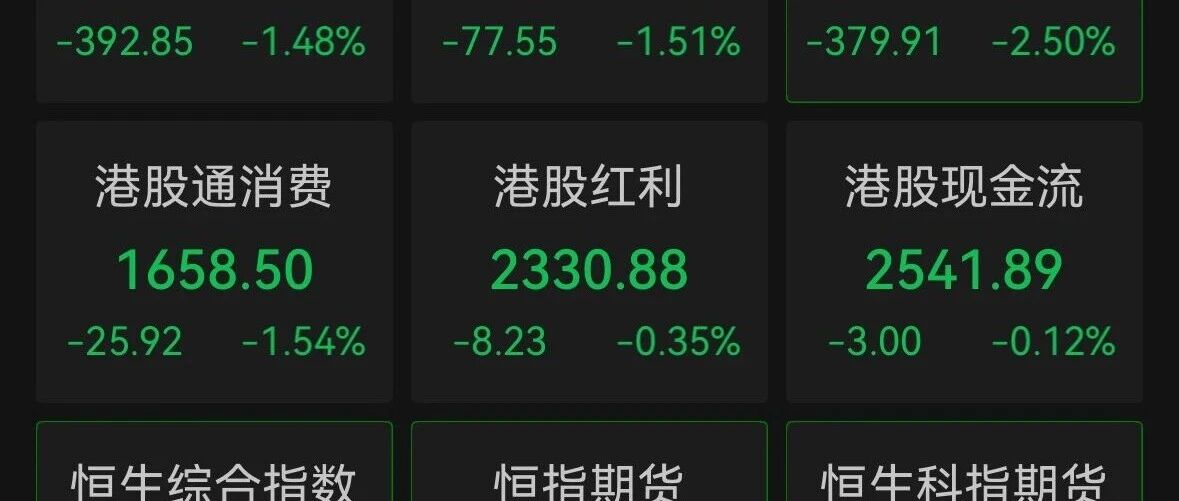
Market Overview - The Hang Seng Index closed at 26,237.69, down by 392.85 points or 1.48% [1] - The Hang Seng Technology Index decreased by 77.55 points, a decline of 1.51%, closing at 5,060.29 [1] - The Hang Seng Biotech Index fell by 379.91 points, representing a 2.50% drop, ending at 14,822.24 [1] Sector Performance - The Hong Kong Stock Connect Consumer Index was at 1,658.50, down by 25.92 points or 1.54% [1] - The Hong Kong Stock Connect Dividend Index decreased by 8.23 points, a decline of 0.35%, closing at 2,330.88 [1] - The Hong Kong Stock Connect Cash Flow Index fell by 3.00 points, down by 0.12%, ending at 2,541.89 [1] Futures Market - The Hang Seng Composite Index futures were at 4,007.51, down by 61.00 points or 1.50% [1] - The Hang Seng Index futures closed at 26,195, a decrease of 413 points or 1.55% [1] - The Hang Seng Tech Index futures fell by 75 points, down by 1.46%, closing at 5,066 [1] Company Insights - The article suggests that the theoretical application of large models should benefit Hong Kong stocks like Alibaba, indicating potential positive sentiment towards these companies [3]
迅策20260226
2026-03-01 17:23
Company and Industry Summary Company Overview - The company focuses on AI, Data, and Agent as core components, providing end-to-end data services and is responsible for delivery results. Initially concentrated on the Southeast Asian financial market, it has expanded into 7-8 industries including retail, urban operations, and healthcare. Clients include private equity funds, public funds, and large enterprises like China Mobile [2][3] Core Business Model - The revenue model primarily consists of annual fees charged per module, supplemented by a transaction model. The company has high customer stickiness due to continuous delivery and support. In the first half of 2025, revenue was approximately 200 million yuan, although this figure is affected by client acceptance delays [2][6][7] Competitive Advantages - The company does not directly own client data, allowing clients to choose their front-end tools and models. Its strength lies in transforming heterogeneous and dirty data into high-quality usable data and providing adaptation and tuning capabilities between data and large models, creating deep binding relationships, especially in high-demand industries like finance [2][8] Industry Expansion Strategy - The company adopts a top-down expansion strategy, entering 1-2 new industries each year, starting with leading clients for customized delivery and gradually increasing standardization. Industries that are expected to take 3-5 years or 5-7 years to converge will be postponed. In 2026, the focus will be on investing in a robot training data platform and commercial aerospace [2][10] Project Delivery and Client Engagement - Typical projects cover the entire process from data acquisition, cleaning, standardization, to modeling, transforming large amounts of heterogeneous and dirty data into high-quality data. Delivery methods depend on client needs and can support remote delivery if data formats are adequate [4][11] Research and Development - Approximately 67% of the workforce is dedicated to R&D, with around 320 personnel. The company’s tools and engineering capabilities are reusable across industries, but entering new industries requires learning specific industry data and bringing in expert personnel [12] Pricing and Revenue Growth - The current pricing model is primarily based on annual fees per module, with exploration into backend revenue sharing based on value creation. Future considerations may include pricing based on traffic or tokens. The goal is to gradually align gross margins across industries towards the financial sector's level of around 80% [13] Client Concentration and Risk - The current client concentration is not significantly high, with revenue derived from both financial and diversified industry clients. As the amount from diversified clients increases, overall revenue is expected to rise [9] Market Trends and Client Acquisition - The company relies on client referrals for customer acquisition, with low sales personnel costs. There is a notable increase in interest from state-owned enterprises in AI, shifting from hardware-focused investments to recognizing the value of data [19] Financial Performance and Future Outlook - The company anticipates considerable growth in 2025, with expectations to achieve breakeven and generate profit in 2026. Current trends and forecasts indicate a normal and relatively optimistic performance [20]
首都在线20260226
2026-03-01 17:23
Summary of Conference Call Company and Industry Overview - The conference call involved **Shoudu Online**, a company transitioning towards AI-driven computing (AIDC) and GPU-based services, amidst a growing demand in the IDC (Internet Data Center) market. The discussion highlighted the company's strategic adjustments and market dynamics in the AI and computing sectors. Key Points and Arguments Financial Performance and Strategic Adjustments - In 2025, the company anticipates a decline in overall revenue, aligning with its strategic adjustments, while expecting a significant reduction in losses, which is in line with projections [2][3] - The GPU segment has shown an impressive growth rate of over **60%**, surpassing initial expectations of **40-60%** growth [2] - New client acquisitions, such as Minimax, have contributed to revenue generation in the latter part of the year, with deployments of **500 NVIDIA cards** in Gansu and **126 cards** in the U.S. [2][3] Market Dynamics and Demand - The demand for computing power is surging, driven by the success of model companies like Zhiyu and Minimax, which have gained recognition both domestically and internationally [3][4] - The company has observed a notable increase in demand from mid-tier companies seeking to leverage AI capabilities, particularly after the IPOs of key players in the market [7][8] Pricing Trends in the IDC Market - The IDC market is experiencing upward pricing pressure due to increased demand and rising costs. The company expects price increases of **15-20%** for new contracts upon renewal [7][8] - The pricing dynamics are influenced by both demand surges and cost increases, with current price hikes potentially leading to further increases in the future [26][28] Infrastructure and Capacity Expansion - The company is transitioning from a light asset model to a more asset-heavy approach, with significant investments in data centers, including a **20 MW** supercomputing center in Hainan and another **20 MW** facility in Dallas [10][11] - Future expansions include a **50 MW** data center in Hebei and a **100 MW** facility in Anhui, with plans for additional capacity in Gansu [11][12] Strategic Partnerships and Collaborations - The company is actively collaborating with model manufacturers to enhance its service offerings and meet the growing demand for computing power [16][17] - There is a focus on establishing strategic centers to provide timely support to domestic model manufacturers, with ongoing efforts to improve the supply of high-end computing cards [17][24] Future Outlook - The company anticipates that the demand for computing power will continue to grow, necessitating effective management of card supply and pricing strategies [19][20] - The potential for further price increases in the IDC market is expected, with the company positioned to capitalize on these trends through its established infrastructure and partnerships [28][33] Additional Important Insights - The company has been proactive in managing its card inventory, transitioning to newer models to meet demand [19][20] - The strategic focus on international expansion and the establishment of a global network for computing services is seen as a significant opportunity for growth [4][33] - The ongoing transformation towards AIDC is viewed positively, with expectations of substantial growth in the coming years [31][33]

芯原股份20260226
2026-03-01 17:23
Summary of the Conference Call for Chip Origin Technology Co., Ltd. Company Overview - **Company Name**: Chip Origin Technology Co., Ltd. (芯原股份) - **Industry**: Semiconductor and Chip Design - **Global Presence**: Over 2000 employees, with 89% in R&D and 88% holding master's degrees or higher. Operates 9 R&D centers and 11 sales offices globally, with over 30% of revenue from international markets [2][7]. Key Financial Highlights - **Revenue Growth**: Projected revenue for 2025 is 3.1 billion CNY, a 35% year-on-year increase. The volume business is expected to grow by 73%, while NRE (Non-Recurring Engineering) services are projected to grow by 20% [2][9]. - **Order Growth**: New orders reached 5.9 billion CNY in 2025, more than doubling year-on-year. The fourth quarter saw new orders of 2.7 billion CNY, a 70% increase from the previous quarter [4][11]. - **R&D Investment**: R&D expenditure for 2025 is 1.349 billion CNY, accounting for 43% of revenue, with a reasonable decrease of nearly 11 percentage points [4][14][15]. - **Loss Reduction**: Net profit loss narrowed by 34% in the second half of 2025 compared to the first half, primarily due to non-recurring project adjustments [4][16]. Business Model and Revenue Structure - **Business Segments**: The company operates two main segments: - **IP Licensing**: Comprises about one-third of total revenue, including IP license fees and royalties based on chip production [2][5]. - **One-Stop Chip Customization Services**: Accounts for approximately two-thirds of revenue, including NRE fees and production services [2][6]. - **Cost Solutions**: The business model aims to reduce clients' capital expenditures (Capex) and R&D costs, addressing operational cost issues for fabless companies [3]. Market Trends and Opportunities - **Data Processing Growth**: Revenue from the data processing sector grew by 95%, now representing 34% of total revenue [2][9]. - **AI ASIC Orders**: AI-related ASIC orders accounted for over 73% of total new orders, indicating a strong market demand in this area [12]. - **AR and Automotive Opportunities**: The company sees significant potential in AR glasses and toys, as well as in the automotive sector, particularly in autonomous driving, where China is positioned as a leader [4][33]. Challenges and Strategic Outlook - **Inventory Management**: The company is navigating a cautious approach to new projects as clients enter inventory destocking phases [8]. - **2026 Outlook**: Management views 2026 as a critical window for opportunities, particularly in light of improving Sino-U.S. relations and the potential for new uncertainties post-elections [4][33]. Additional Insights - **IP Integrity**: The company emphasizes its comprehensive IP portfolio, claiming a leading position globally with over 500 IPs and 450 licenses [17]. - **AI Development**: The company discusses the importance of both large and small AI models, highlighting the need for edge computing capabilities and the potential for small models in consumer devices [21][32]. - **Collaboration with Major Tech Firms**: The expansion of self-developed chip teams by major internet companies does not pose a significant threat, as the industry has proven the necessity of specialized collaboration [31]. This summary encapsulates the key points from the conference call, providing insights into the company's performance, market positioning, and strategic direction.

0226评级日报
2026-03-01 17:23
Summary of Conference Call Notes Company Overview - The company specializes in service robots, primarily focusing on consumer (C-end) markets, with significant growth in vacuum cleaners. The new companion robot RK3 is set to launch, integrating multiple large models to enhance interaction capabilities [1][2]. Key Financial Metrics - **Revenue for 2024**: Expected to be 5.442 billion yuan, representing a year-on-year increase of 12.41% [2]. - **Net Profit for 2024**: Projected at 504 million yuan, showing a year-on-year decrease of 10.52% [2]. - **Camera Business**: Anticipated to recover to a growth rate of 5% to 10% in 2025, supported by national subsidies for certain SKUs [2]. - **Smart Home Business**: Expected to grow over 50% in 2024, driven by the increased sales of smart locks, with profitability expected to improve in Q4 2024 [2]. Product Developments - The RK3 companion robot is highlighted as an AI agent, with expected improvements in interaction capabilities compared to its predecessor, RK2 [2][3]. - The company has integrated the real-time voice large model from ByteDance, enhancing the "human-like" interaction experience in its products [3]. Market Position - The market share for the company's vacuum cleaners in Q2 to Q4 of 2024 is reported as 0.20%, 0.29%, and 0.27% respectively, indicating an increase in market share in the second half of the year compared to the first half [2]. Strategic Initiatives - The company has established benchmark cases for its B-end product BS1 and plans to expand its client base beyond Hikvision by 2025 [2]. Industry Insights - The integration of advanced AI models is expected to significantly enhance the interaction capabilities of various products, including the S10, RK3, and smart control screens [3]. Additional Notes - The company is positioned within the broader context of the service robot industry, which is experiencing growth driven by technological advancements and increasing consumer demand for smart home solutions [1][2]. Related Stocks - Mentioned stocks include Wanlong Magnetic Plastic (603150.SS), Xinhua Insurance (601336.SS), and Yingzi Network (688475.SS), indicating a focus on companies within the technology and insurance sectors [4]. Research Sources - Reports from Guotai Junan and Guojin Securities provide insights into the company's performance and market outlook [6]. This summary encapsulates the key points from the conference call, focusing on the company's financial outlook, product developments, market position, and strategic initiatives within the service robot industry.
深度解读春晚机器人技术水平&模型进展;人形机器人行业26年年度策略
2026-03-01 17:23
Summary of Conference Call Notes Industry Overview - The discussion revolves around the robotics industry, particularly focusing on humanoid robots and their performance during the Spring Festival Gala, which has seen significant public interest and investment potential [1][2][3]. Key Insights and Arguments 1. **Performance Comparison**: The performance of humanoid robots during the Spring Festival Gala this year exceeded expectations compared to previous years, with a notable increase in the number of participating robot manufacturers [1][2]. 2. **Technological Advancements**: The robots showcased improved hardware stability and motion capabilities, with advancements in motor performance and control algorithms leading to more fluid movements [2][3]. 3. **Real-time Calculations**: Robots demonstrated enhanced stability through real-time calculations of their center of gravity, showcasing significant improvements in force control [3][4]. 4. **Virtual Simulation Training**: The use of virtual simulation for pre-training robots has matured, allowing for higher success rates in executing complex movements in real-world scenarios [4][5]. 5. **Market Sentiment**: Despite a post-festival decline in stock prices, the overall sentiment towards the robotics sector remains optimistic, driven by technological advancements and market potential [5][6]. Company Highlights 1. **Yusu Technology**: Recognized as a leading robotics platform in China, focusing on humanoid robots and robotic dogs. Expected revenue for 2025 is projected to reach approximately 2 billion yuan, with significant profit growth anticipated [6][7]. 2. **Galaxy General**: Noted for its advancements in large model applications and virtual simulation data, leveraging synthetic data for training, which has led to successful partnerships, including one with Meituan [7][8]. 3. **Zhuimi Technology**: Engaged in various robotics applications, including household robots, with a focus on internal incubation of projects and maintaining a robust supply chain [9][10]. Market Trends and Future Outlook 1. **Investment Strategies**: The investment strategy emphasizes the importance of technological iteration and cost reduction, with a focus on new technologies that enhance efficiency and reduce costs [12][16]. 2. **Order Growth**: 2025 is expected to be a pivotal year for large-scale order fulfillment in the robotics sector, with significant contributions from government and service sectors [13][14]. 3. **Technological Challenges**: The industry faces challenges in scaling production and ensuring the reliability of new technologies, particularly in the context of labor shortages in developed countries [14][15]. 4. **Supply Chain Dynamics**: The supply chain for core components is evolving, with a focus on Tier-1 suppliers and the need for clarity in the competitive landscape [15][20]. Additional Important Points - The robotics sector is experiencing a cyclical market sentiment, with potential for recovery as technological advancements continue to unfold [11][20]. - The focus on reducing costs and improving the performance of components like motors and sensors is critical for the industry's growth [18][19]. - The integration of advanced technologies such as electronic skin and improved processing units is seen as essential for enhancing robot capabilities [19][20].
