市场竞争

Search documents
泳池机器人厂商进军小型潜水艇赛道;清洁品牌新业务先拉订单后研发;割草机厂商「高端方案」实测崩盘丨鲸犀情报局Vol.17
雷峰网· 2025-08-15 08:28
Group 1 - A pool robot manufacturer focuses on in-house production and rigorous testing, including extreme environment tests, to ensure product quality [2] - The founder plans to invest 20 million to develop a prototype for a small submarine targeting tourist attractions [2] - A small home appliance company misjudged the market, leading to an 80 million loss on its second product due to high marketing costs and poor sales performance [3][4] Group 2 - A cleaning brand's cross-industry hardware line struggles with product definition and internal team conflicts, leading to a lack of progress [4] - The brand's strategy of securing orders before product development has proven ineffective in the hardware sector [4] - A 3D printer company ended its investment collaboration with a laser engraving company after only four months, leading to competition between the two [5] Group 3 - A personal care company failed to protect its product innovation with patents, resulting in competitors replicating its features and launching negative marketing campaigns [5] - An intelligent appliance company's overseas market struggles are compounded by frequent leadership changes and declining profit margins [6][7] - A smart garden robot company maintains strict confidentiality about its operations and has reportedly shipped over 100,000 units this year [6] Group 4 - A laser engraving company faced significant losses due to leaked core technology, which allowed competitors to release similar products ahead of its planned launch [7] - A storage giant's performance is heavily reliant on external factors like natural disasters and geopolitical events, leading to unstable revenue [7] - An industrial manufacturer is cautiously entering the smart lawn mower market with a modest investment, aiming for realistic sales targets [8] Group 5 - A lawn mower manufacturer faced poor market reception in North America due to technical failures in its high-end product, resulting in negligible sales [9] - User feedback highlighted severe operational issues, including frequent malfunctions and inability to recognize obstacles [9]


捷荣国际控股收入增长8.9%至3.8亿港元,净利润却下降31%,毛利率从35.7%降至30.5%
Jin Rong Jie· 2025-08-15 01:48
Core Viewpoint - Despite an 8.9% increase in revenue to HKD 380.4 million, the company's net profit fell by 31.0% to HKD 24.9 million, highlighting the challenges faced in a tough business environment, particularly due to rising costs and intensified market competition [1][3][4]. Revenue Performance - For the six months ending June 30, 2025, the company reported total revenue of HKD 380.4 million, an increase of HKD 31.0 million from HKD 349.4 million in the same period of 2024, representing an 8.9% growth [3]. - The net profit attributable to shareholders was approximately HKD 24.9 million, down from HKD 36.1 million in 2024, a decrease of HKD 11.2 million or 31.0% [3][4]. - The net profit margin dropped significantly from 10.3% in 2024 to 6.5% in 2025, indicating a substantial impact on profitability [3][4]. Cost and Margin Analysis - The company's gross profit margin decreased from 35.7% in 2024 to 30.5% in 2025, a decline of 5.2 percentage points, primarily due to rising global coffee bean prices [4]. - Historical data shows that the gross profit margin for the entire year of 2024 was 34.11%, which was an improvement from 33.00% in 2023, but the first half of 2025 shows a significant drop below the 2024 annual level [4]. Market Outlook - The company anticipates a highly competitive and sluggish business environment in Hong Kong, which poses ongoing challenges for its operations in this key market [6]. - Conversely, there are early signs of recovery in the Chinese market, with expectations of gradually improving consumer confidence and demand, providing a more optimistic outlook for business expansion in mainland China [6]. - The company has launched a new coffee production line during the reporting period, aimed at enhancing production efficiency and supporting long-term business growth, although the effectiveness of this initiative under current cost pressures remains to be seen [6].

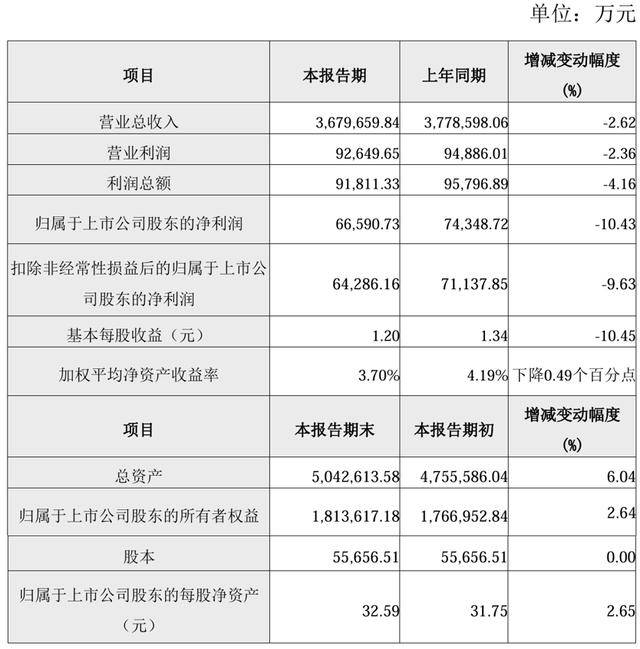
国药控股:国药一致上半年归母净利润6.66亿元,同比下降10.43%
Zhi Tong Cai Jing· 2025-08-14 11:39
Group 1 - The core viewpoint of the news is that China National Pharmaceutical Group Corporation (国药控股) reported a decline in revenue and net profit for its subsidiary, China National Pharmaceutical Group Co., Ltd. (国药一致), for the first half of 2025 [1] - The total revenue for the distribution segment was RMB 26.783 billion, a year-on-year decrease of 1.09%, while net profit was RMB 482 million, down 7.82% due to industry policy changes and intensified market competition [1] - The retail segment, operated by China National Pharmaceutical Group Co., Ltd. (国大药房), achieved revenue of RMB 10.479 billion, a year-on-year decline of 6.46%, but net profit increased by 215.81% to RMB 17 million due to strategic store closures and cost reductions [2] Group 2 - The overall revenue for China National Pharmaceutical Group Co., Ltd. (国药一致) was RMB 36.797 billion, a decrease of 2.62% year-on-year, with net profit falling to RMB 666 million, down 10.43% [1] - The increase in long-term accounts receivable due to delayed payments from downstream customers led to a rise in bad debt provisions, contributing to the profit decline in the distribution segment [1] - The performance of important joint ventures was negatively impacted by pharmaceutical industry policies and market supply-demand factors, resulting in reduced investment income from joint ventures [2]


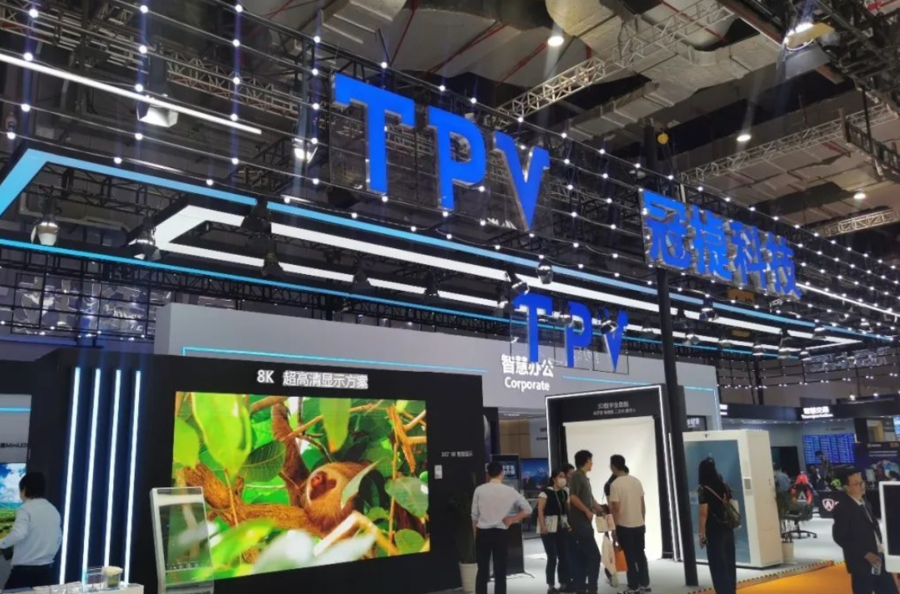
冠捷科技上半年营收249.45亿元,净亏损4.92亿元
Zhong Guo Ji Jin Bao· 2025-08-14 10:21
Core Insights - Company reported a revenue of 24.945 billion RMB for the first half of 2025, a year-on-year decrease of 6.93% [2] - Net profit attributable to shareholders was -0.492 billion RMB, a decline of 1021.9% compared to the same period last year [2] - The company aims to address industry challenges through brand innovation, smart manufacturing, and multi-channel market expansion [2] Financial Performance - Revenue for the display business decreased by 0.74% to 15.699 billion RMB, with sales volume growing by 2.04% to 19.51 million units [2] - Television business sales volume fell by 2.66% to 4.76 million units, with revenue declining by 21.62% to 7.154 billion RMB [2] - The overall global display market saw a shipment increase of 3.2% [2] Market Conditions - The competitive landscape in the global display industry has intensified, leading to a continuous decline in end product prices [2] - Core raw material costs, such as panels, remained relatively stable, putting pressure on overall gross margins [2] - Increased marketing investments were made to enhance brand recognition and optimize overseas marketing channels [2] Challenges and Strategies - The company faced increased costs due to foreign exchange fluctuations and rising hedging costs, contributing to the overall loss for the first half of the year [2] - Strategies to combat industry homogenization and price wars include leveraging quality control and cost advantages [2]

国药一致上半年净利降10.43%,行业政策、市场环境及竞争格局多因素影响|财报速递
Sou Hu Cai Jing· 2025-08-14 10:18
Core Viewpoint - The company reported a decline in both revenue and net profit for the first half of 2025, indicating challenges in the distribution and retail sectors due to market competition and policy changes [1][2]. Financial Performance Summary - Total operating revenue for the first half of 2025 was 36.797 billion yuan, a decrease of 2.62% compared to the same period last year [2]. - Net profit attributable to shareholders was 666 million yuan, down 10.43% year-on-year, with basic earnings per share decreasing by 10.45% to 1.20 yuan [1][2]. - The weighted average return on equity fell by 0.49 percentage points to 3.70% [2]. Segment Performance - The distribution segment generated operating revenue of 26.783 billion yuan, a decline of 1.09%, with net profit of 482 million yuan, down 7.82% [2]. - The retail segment, represented by "China National Pharmaceutical Group Co., Ltd.," achieved operating revenue of 10.479 billion yuan, a decrease of 6.46%, but net profit increased by 215.81% to 17 million yuan [3]. - The performance of important joint ventures was negatively impacted by industry policies and market supply-demand factors, leading to a reduction in investment income from these ventures [3].
盈利能力尚未完全恢复!金龙鱼二季度营收环比下滑超20%
Nan Fang Du Shi Bao· 2025-08-14 08:35
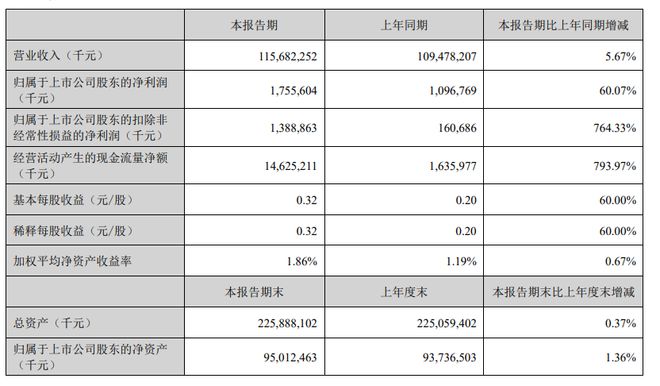
Core Viewpoint - The company, Jinlongyu, reported significant growth in profitability for the first half of 2025, with a notable increase in net profit and a substantial rise in non-recurring net profit, despite facing challenges in the second quarter and ongoing industry competition [1][11][17]. Financial Performance - Jinlongyu achieved operating revenue of 1156.82 billion yuan, a year-on-year increase of 5.67% [2][3]. - The net profit attributable to shareholders reached 17.56 billion yuan, reflecting a year-on-year growth of 60.07% [2][3]. - The non-recurring net profit surged to 13.89 billion yuan, marking a dramatic increase of 764.33% compared to the previous year [2][3]. - The net cash flow from operating activities increased by 793.97% to 14.63 billion yuan [2][9]. Segment Performance - The kitchen food segment remained the largest revenue contributor, generating 715.51 billion yuan, accounting for 61.85% of total revenue, with a year-on-year growth of 2.69% [3][4]. - The feed raw materials and oil technology segment reported revenue of 431.79 billion yuan, representing 37.32% of total revenue, with a year-on-year increase of 10.81% [3][4]. - Other products generated 9.51 billion yuan in revenue, accounting for 0.8% of total revenue, with a growth of 13.56% [3][4]. Profitability and Cost Analysis - The gross margin for the kitchen food segment improved by 0.8 percentage points to 7.66% [5][12]. - The feed raw materials and oil technology segment saw a significant increase in gross margin from 1.01% to 4.26%, a rise of 3.25 percentage points [5][12]. - The overall revenue growth of 5.67% outpaced the cost increase of 3.85%, indicating a positive trend in profitability [12]. Challenges and Market Dynamics - Despite the overall positive performance, the second quarter showed a decline in net profit by over 20% compared to the first quarter, with revenue decreasing by 4.19% [10][11]. - The company noted that the demand for cooking oil in the restaurant industry has slowed, impacting growth [11][17]. - Increased competition in the cooking oil sector has led to higher marketing expenditures and promotional activities, which may constrain profit margins [11][17]. Inventory and Sales Dynamics - The kitchen food segment experienced a significant inventory increase of 19.13%, despite a 4.37% rise in sales volume [12][13]. - The feed raw materials and oil technology segment showed a healthy sales increase of 21.02% with only a moderate inventory growth of 9.33% [12][13]. Future Outlook - The company faces uncertainties regarding its ability to maintain growth momentum in the second half of 2025, particularly due to inventory pressures and competitive market conditions [17]. - Delays in key investment projects may further complicate the company's growth trajectory and ability to optimize cost structures [16][17].
屋漏偏逢连夜雨,风电巨头暴跌夯实丹麦“全球表现最差股市”
Feng Huang Wang· 2025-08-11 22:23
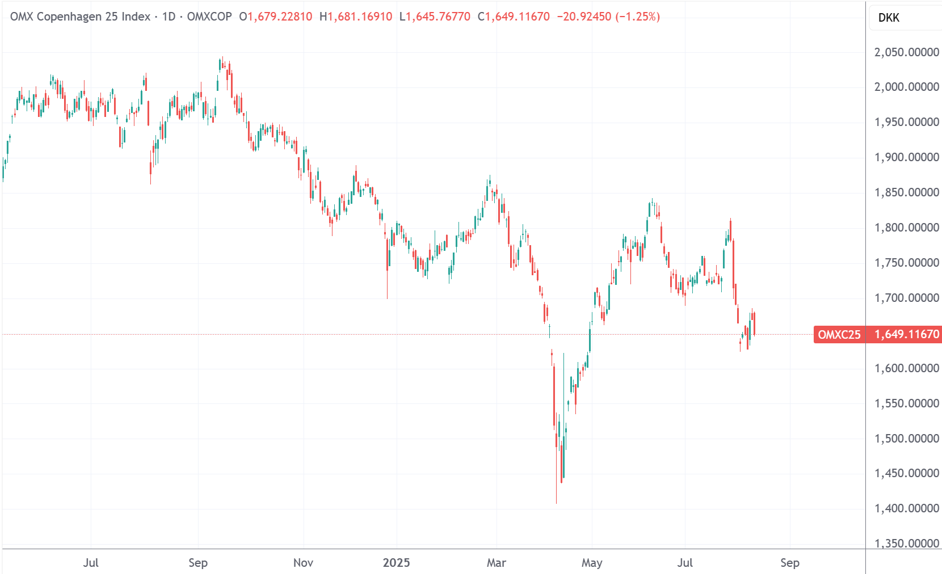
Group 1 - The OMX Copenhagen 25 Index (OMXC25), which includes Denmark's 25 largest stocks, has fallen by 7.5% year-to-date and has dropped 20% from its one-year high [1] - Denmark's stock index is the worst-performing developed market benchmark this year, while the Stoxx Europe 600 Index and the S&P 500 Index have both risen nearly 8% [3] - Major Danish companies are facing various crises, with Ørsted, a leading offshore wind power company, announcing a capital increase plan of up to 60 billion Danish kroner (approximately 67.1 billion RMB), leading to a record single-day stock price drop of 29% [4][6] Group 2 - Ørsted's capital increase is a response to the impact of U.S. policies under the Trump administration, which halted offshore wind project permits and reduced tax credits for the industry [6] - Novo Nordisk, Denmark's largest company, has also faced a significant stock price drop due to increased competition in the weight-loss drug market and challenges in the profitable U.S. market [6] - The decline in major stocks has severely impacted household wealth in Denmark, with a single-day drop in Novo Nordisk's stock on July 29 resulting in a loss of 38 billion Danish kroner for ordinary Danish stock portfolios, equivalent to 3% of the country's annual private consumption [8] Group 3 - Other companies in the Danish benchmark index have also seen significant declines, with Zealand Pharma down over 50%, Pandora down 20% due to U.S. tariff concerns, and Coloplast down over 20% after the CEO was dismissed [8]
海外视点丨欧洲央行称,来自中国的竞争已导致欧元区制造业就业岗位流失
Sou Hu Cai Jing· 2025-08-07 15:01
Group 1 - The European Central Bank (ECB) reports that increased competition from Chinese manufacturers has led to significant job losses in the Eurozone, with an estimated 240,000 jobs lost or shifted to lower-risk sectors from 2015 to 2022 [2] - The automotive and chemical industries are particularly vulnerable, with job vacancies in the automotive sector expected to decline by 55% and in the chemical sector by 95% from 2019 to 2024 [2] - The ECB warns that rising U.S. tariffs on Chinese imports may intensify competition, prompting Chinese companies to seek new markets, including Europe, which could further challenge local manufacturers [2] Group 2 - Industries most affected by Chinese competition employ approximately 29 million workers, accounting for about 27% of total employment in the Eurozone by 2024 [3] - Despite the competitive threat, the Eurozone's unemployment rate has remained at historical lows, with a rate of 6.2% recorded for three consecutive months as of June [3] - EU leaders expressed disappointment over the influx of cheap Chinese products during recent meetings, indicating potential market access restrictions for Chinese companies if concerns are not addressed [3]
五年间累计亏损超13亿,呷哺呷哺「不好吃了」?
36氪· 2025-08-07 13:24
Core Viewpoint - The article discusses the struggles of the hot pot chain company Xia Bo Xia Bo, highlighting its significant financial losses and challenges in maintaining market share amidst increasing competition in the hot pot industry [4][5][6][14]. Financial Performance - Xia Bo Xia Bo is expected to report revenues of approximately 1.9 billion yuan and a net loss between 80 million to 100 million yuan for the fiscal year ending June 30, 2025 [5]. - Since 2021, Xia Bo Xia Bo has been on a losing streak, accumulating losses of approximately 1.326 billion yuan over five years [6][9]. - The company's net losses from 2021 to 2024 were 293 million yuan, 353 million yuan, 199 million yuan, and 401 million yuan, with an additional loss of about 80 million yuan in the first half of 2025 [9]. Brand Performance - Xia Bo Xia Bo's core revenue sources are its two brands: Xia Bo Xia Bo and its high-end sub-brand Cou Cou, which has been underperforming [11]. - In 2024, Cou Cou's revenue decreased significantly, with a net loss of 353 million yuan, accounting for nearly 90% of the group's overall losses [12]. - The average customer spending at Cou Cou dropped from 142.3 yuan to 123.5 yuan, and table turnover rates fell from 2 times to 1.6 times compared to the previous year [12]. Market Position and Competition - Xia Bo Xia Bo's stock price has plummeted to 0.77 HKD, with its market capitalization dropping from 29 billion HKD to 830 million HKD [8][13]. - The hot pot market is becoming increasingly competitive, with new brands emerging and capturing market share, which has led to a decline in Xia Bo Xia Bo's visibility among consumers [20][21]. - The overall hot pot market in China is projected to grow to 668.9 billion yuan by 2025, but the growth rate is expected to slow from 10% in 2019 to 4.3% in 2025 [20]. Challenges Faced - Xia Bo Xia Bo faces challenges from various competitors, including fast-casual hot pot brands and regional players that offer lower prices and better operational efficiency [22]. - The company has struggled with unclear positioning and failed attempts to transition from a fast-food model to a light dining experience, leading to a loss of its original value proposition [16][17]. - The hot pot industry is experiencing a significant exit of businesses, with over 210,000 stores closing in the past year, indicating a highly competitive environment [23].
日本要求苹果iOS系统开放第三方浏览器引擎
Huan Qiu Wang Zi Xun· 2025-08-07 04:25
Core Points - The Japanese government has officially requested Apple to open its iOS system to third-party browser engines, with a deadline for compliance set for December 2025 [1][4] - This initiative is based on the newly released guidelines of the "Mobile Software Competition Law," which expands upon the recently passed "Smartphone Law" targeting Apple's restrictive policies in the App Store [1][4] Group 1 - Apple currently requires that iOS versions of browsers like Chrome, Firefox, and Edge use its proprietary WebKit engine, which has been criticized for limiting market competition and hindering the performance and functionality of other browsers [4] - The Open Web Advocacy organization, involved in legal consultations, stated that Apple's enforcement of WebKit obstructs the development of independent browsers on iOS [4] - The new guidelines prohibit Apple from hindering the adoption of third-party browser engines and from setting unreasonable technical or financial barriers [4] Group 2 - The law ensures that browser developers have full access to critical system APIs, and any alternative APIs provided by Apple must not significantly underperform compared to those used by Safari or WebKit [4] - A notable requirement of the law is that devices must present a browser selection interface immediately upon activation, ensuring users can choose their preferred browser during the setup process [4][5] - Compared to related EU legislation, Japan's regulations are stricter regarding the timing and manner of user prompts, emphasizing the importance of user choice in the browser market [5]