粉丝经济

Search documents
深度揭秘小米家电:9年毛利率增50倍,雷军"爆款公式"蚕食美的、格力们的超额利润
Sou Hu Cai Jing· 2025-07-03 08:35
Group 1 - Xiaomi has become a significant topic of discussion among major home appliance manufacturers due to its innovative approach in the industry, focusing on a "explosive product" strategy rather than traditional manufacturing and capital investment [2][11] - Major players like Haier and Midea are closely monitoring Xiaomi's developments, indicating a shift in market dynamics since Xiaomi's entry into the home appliance sector [3][4][11] - Xiaomi's gross margin for IoT and lifestyle products has shown a steady increase, rising from 0.4% in 2015 to 20.26% in 2024, indicating a significant improvement in profitability [13][15][18] Group 2 - Xiaomi's entry into the home appliance market has been marked by a focus on a limited number of high-quality products, with its SKU count in air conditioning being only one-tenth of traditional manufacturers [27][29] - The company has leveraged its fan base and low customer acquisition costs to drive sales, with a high repurchase rate among its users [24][23] - Xiaomi's research and development expense ratio reached 6.57% in 2024, higher than that of Haier and Midea, reflecting its commitment to innovation despite being a newer player in the market [32][34] Group 3 - The competitive landscape has shifted, with Xiaomi's strategies prompting established companies to adapt, as seen in Midea's extensive research on Xiaomi's business model [4][26] - Xiaomi's approach is not solely based on low pricing; instead, it emphasizes product efficiency and cost-sharing through high sales volumes, which allows for reduced marginal costs [30][35] - The company has successfully differentiated its products in the market, avoiding direct competition with leading brands by positioning itself in a different price segment [39][26]





if港股上市:无中国员工,高成长能否 hold 住高溢价?
Sou Hu Cai Jing· 2025-07-01 14:51
Core Viewpoint - IFBH Limited, the parent company of coconut water brand if, successfully debuted on the Hong Kong stock market with a share price of 27.8 HKD, peaking at 46.5 HKD during trading, reflecting a strong market interest and a subscription oversubscription rate of 2682 times, with frozen funds reaching 259.4 billion HKD, setting a new record for the Hong Kong market [2][3]. Company Overview - IF has maintained a market share of one-third in mainland China and 60% in Hong Kong, positioning itself as a leading player in the coconut water sector, directly competing with industry benchmark Vita Coco [3]. - The company reported revenues of 87 million USD and 158 million USD for 2023 and 2024, respectively, with net profits of 16.75 million USD and 33.32 million USD, indicating a revenue growth of 80.3% and a net profit growth of 98.8% year-on-year for 2024 [5][6]. Business Model - The company operates a "light asset" model, likened to a "beverage SaaS" approach, which allows for flexible cash flow management, with costs tied to production volume, logistics, and channel commissions, minimizing depreciation and inventory pressures [6]. - 45% of the 1.1 billion HKD raised in its IPO is allocated to new product development and expansion into Southeast Asia, rather than building manufacturing facilities [6]. Marketing Strategy - The brand's marketing strategy leverages celebrity endorsements, with significant spikes in sales and online engagement following the announcement of popular figure Xiao Zhan as a global ambassador, demonstrating the effectiveness of fan-driven marketing [8]. - The company reported a 300% increase in sales on Tmall within 24 hours of the endorsement announcement, highlighting the deep value of fan engagement in driving sales [8]. Market Dynamics - The current market environment is characterized by a gentle repricing of consumer stocks, with IFBH's 80% revenue growth and stable net profit margin of around 21% making its valuation appear reasonable amidst a trend favoring health and consumption upgrades [13]. - The reliance on Thai coconut supply (96%) poses risks related to climate anomalies and potential cost increases, while the doubling of marketing expenses in 2024 raises concerns about profit margins if consumer interest wanes [13]. Future Outlook - The company is positioned to capitalize on the growing trend of health-conscious consumption, with coconut water evolving from a niche product to a mainstream choice among young consumers [2][10]. - However, the sustainability of its high repurchase rates and user retention is contingent on maintaining brand strength and managing potential risks associated with celebrity endorsements and market sentiment [10].

QQ音乐上线“泡泡”,TME这次瞄准了“饭圈粉丝”
3 6 Ke· 2025-07-01 12:16
Core Viewpoint - QQ Music has launched a new paid feature called "Bubble," allowing users to chat with celebrity artists for a monthly subscription fee of 28 yuan, aiming to tap into the potential of fan economy and diversify revenue streams [1][3][11]. Group 1: Product Launch and Market Strategy - "Bubble" is a localized version of the Korean LYSN platform's "Bubble," reflecting Tencent Music Entertainment Group's (TME) strategic expansion into the Korean market [3]. - The launch follows a strategic partnership between SM Entertainment and TME, focusing on collaborative projects, IP business, and local performances, thereby establishing a comprehensive cooperation system [3]. - TME aims to provide a variety of paid services to K-POP fans, including online music content, physical album sales, and fan meeting events, leveraging the growing fan economy [3][7]. Group 2: Historical Context and Fan Engagement - The concept of "Bubble" draws inspiration from Japan's fan clubs, which have historically provided exclusive content and benefits to members, proving effective in engaging fans [5]. - The model of paying for additional information and closer access to idols has been validated by successful examples from both Japanese and Korean idol groups [5][11]. - K-POP fans are accustomed to expressing their support through financial means, making the subscription model appealing despite its higher cost compared to traditional music subscriptions [11][13]. Group 3: Revenue Diversification and Consumer Behavior - TME's exploration of fan economy is a response to the need for new revenue channels beyond music subscriptions, especially after previous controversies regarding repeated purchases by fans [7][9]. - The introduction of "Bubble" is seen as a more sustainable approach compared to encouraging repeated purchases for chart rankings, aligning better with fan expectations [11]. - The high willingness to pay among K-POP fans, driven by a culture of support and engagement, positions TME favorably to capitalize on this demographic [13].


当外国古典音乐家遇上中国网红经济
Bei Jing Ri Bao Ke Hu Duan· 2025-06-30 22:17
Core Viewpoint - The article highlights the ambitious concert tour of German pianist Romanyer Zhuo in China, which includes 18 performances across various provinces, showcasing a unique blend of classical and popular music that resonates with local audiences [2][4]. Group 1: Concert Tour Details - Romanyer Zhuo's concert tour will kick off in Beijing and will span multiple provinces including Sichuan, Shandong, Guangdong, Jiangsu, Zhejiang, Hunan, Hubei, Henan, Anhui, Shaanxi, Liaoning, Tianjin, Chongqing, and Shanghai, with a total of 18 concerts scheduled until the end of the year [2]. - The tour has already seen several sold-out performances shortly after ticket sales began, indicating strong demand and interest [2]. Group 2: Artist's Unique Approach - Romanyer Zhuo, who is fluent in Mandarin and has a significant online presence with 2 million followers on Bilibili, utilizes social media to engage with fans, often performing popular Chinese songs and adapting them for piano [3][4]. - His performance style, which includes playing at iconic landmarks and interacting with fans through social media, has created a unique niche that combines music with cultural tourism [3][4]. Group 3: Market Trends and Opportunities - The article notes a growing trend of foreign musicians, like Romanyer Zhuo and Japanese violinist Ayako Ishikawa, tapping into the Chinese market, which is characterized by a large population and a burgeoning cultural creative industry [5][6]. - The increasing presence of foreign musicians in China is seen as a response to the diverse and evolving demands of Chinese audiences, providing opportunities for performances that go beyond traditional classical repertoires [5][6].

没有雷军附体,还要不要学做小米?
Sou Hu Cai Jing· 2025-06-30 07:12
小米YU7上市订单的爆破力,注定久久不会消逝,而且极可能令惊恐的汽车圈很快卷起一波研判学习的浪潮。但究竟怎么学、到底能不能学小米,是个问 题。 售价超过25万元一台的车,3分钟爆单20万台,1小时大定28.9万台,18小时锁单24万台,事后雷军说这是"中国工业史上的奇迹"。必须说,这一点,雷总 没有夸张和虚假宣传。 此事不仅在国内引发轰动,外媒也纷纷跟踪报道,并将小米认为是特斯拉必须正视的头号劲敌,使用的话术都是"超越"、"颠覆"。比如彭博社是这么说 的,"小米SU7销量已经超越特斯拉Model 3,YU7的爆单进一步验证其颠覆能力"。 不是外媒故意放糖衣炮弹,确实是小米YU7不仅超越了当年特斯拉Model 3发布后创下的订单纪录,甚至比肩Iphone、LaBuBu等消费电子和潮玩IP的营销 效果。 可小米YU7是台价格并不便宜的汽车,无论核心属性、使用场景、生命周期、容错率,与消费电子和潮玩商品都存在极大的本质的不同。何况小米YU7的 上市,实际上还受着小米SU7在今年3月安徽铜陵事故的余波影响,小米YU7外观造型与法拉利Purosangue和保时捷Taycan的相似度也令不少网友颇有微 词。 但雷军和其领 ...

模型即 Agent 的含金量:Kimi深度研究功能详评
歸藏的AI工具箱· 2025-06-24 04:17
Core Viewpoint - Kimi's deep research capabilities have been significantly enhanced, demonstrating high content richness, accuracy, and logical rigor, distinguishing it from similar products through its end-to-end self-reinforcement learning technology [2][4]. Group 1: Kimi's Deep Research Capabilities - Kimi's deep research model is trained using a self-reinforcement learning technique, and it will open-source both the basic pre-trained model and the subsequent reinforced model, which is highly anticipated [2]. - The model has shown strong performance in tests such as HLE (Humanity's Last Exam) and Sequoia's Agent tests [2]. - Kimi's deep research has the ability to autonomously identify credible information by planning multiple search keywords and reviewing numerous web pages, ensuring high-quality sources and comprehensive coverage [4]. Group 2: Labubu's Popularity Analysis - Labubu, a character under Pop Mart, has recently gained significant popularity, although its heat has slightly decreased in recent days [7]. - The analysis of Labubu's rise includes its design philosophy, product evolution, operational strategies, and the impact of fan economy and secondary market speculation [26][20]. - The report generated by Kimi on Labubu reached approximately 19,000 words, showcasing a complete logical chain and covering various aspects such as IP design, marketing strategies, and the secondary market [11][26]. Group 3: Xiaomi's Upcoming Product Launch - Kimi conducted a detailed search and analysis for Xiaomi's upcoming launch event on June 26, 2025, categorizing products and estimating specifications while comparing them with competitors [39]. - The report for Xiaomi's launch also reached around 17,000 words, indicating thoroughness in addressing the requested content [40]. - Kimi's analysis included a sales forecast for Xiaomi's YU7 SUV, with conservative, baseline, and aggressive estimates based on market trends and competitive analysis [55][58]. Group 4: Visual Presentation and User Experience - Kimi generates a visual web page alongside the research report, ensuring that the content is detailed and well-structured, enhancing user experience [70][75]. - The visual presentation includes interactive elements such as charts and highlights, making complex information easily digestible [75]. - The design adapts to the brand's theme, providing a tailored experience for users [73].


小米250亿市场预算背后的权力迁徙
海豚投研· 2025-06-20 10:00
Core Viewpoints - The recent public relations issues surrounding Xiaomi stem from its automotive business, reflecting a deeper internal and external redistribution of interests [1] - By the second half of 2025, Xiaomi's smartphone business gross margin will continue to face pressure, while the honeymoon period for its home appliance segment will also come to an end, leading to a focus on "defense" for these two major businesses [1] - Xiaomi should consider returning to its original approach of engaging with fans [1] Group 1: Historical Context and Business Strategy - Xiaomi initially thrived in the smartphone market during a time dominated by contract phones, known for its high cost-performance ratio and thin profit margins, typically around 3% [3] - To compete with industry giants, Xiaomi required substantial budgets for channel development and brand advertising, which was challenging given its low margins, prompting a pivot to fan economy and community marketing [4][5] - The fan economy strategy allowed Xiaomi to maintain operational sustainability despite low margins, as it fostered genuine connections with users [5] Group 2: Current Financial Dynamics - In Q1 2025, Xiaomi's smartphone average selling price (ASP) reached a historical high, but gross margins declined, indicating a passive increase in ASP driven by rising material costs [7][8] - The marginal effectiveness of market expenses is decreasing, leading Xiaomi to rely on pricing as the primary customer acquisition method, despite an increase in ASP [8] - The automotive business has become a significant growth area for market expenses, with Q1 2025 gross profit reaching 4.3 billion yuan and a gross margin of 23.2% [9] Group 3: Future Outlook and Challenges - Xiaomi's smartphone gross margin is expected to stabilize post-2024, primarily influenced by declining global storage prices [11] - The IoT and home appliance segments have surpassed the smartphone business in gross profit contribution, with a gross margin of 25.2% [13] - The home appliance sector faces challenges as government subsidies diminish, and price competition may intensify in the future [14] - With the success of the Xiaomi SU7, the management has raised the 2025 automotive sales target to 350,000 units, indicating a strategic shift in budget allocation towards the automotive sector [15]

李子园(605337):健康新品维他命水有望放量,分红慷慨高股息积极回报股东
Guotou Securities· 2025-06-20 03:58
Investment Rating - The report assigns a "Buy-A" investment rating with a 6-month target price of 15.78 CNY [5][6]. Core Insights - The company is expected to benefit from the launch of its new health-oriented product, VitaYoung, which features a "6-zero" formula, aligning with health consumption trends and potentially driving significant sales growth [1]. - A new generation manager has taken over, indicating a shift towards professional and youthful governance, alongside a revamped marketing strategy that leverages online media and celebrity endorsements to enhance brand visibility among younger consumers [2]. - The company is experiencing a reduction in the cost of bulk powder, leading to an increase in gross margin, which is projected to continue improving due to favorable raw milk prices [3]. - The company has a strong commitment to shareholder returns, planning to distribute approximately 194 million CNY in cash dividends, which represents 86.57% of the net profit for the year [4]. Financial Projections - Revenue growth is forecasted at 8.0%, 8.5%, and 9.0% for the years 2025 to 2027, with net profit growth expected at 7.5%, 15.5%, and 15.1% respectively, indicating strong growth potential [5][18]. - The company’s revenue for 2025 is projected to be 1,528 million CNY, with a gross margin of 41.7% [19][26]. - The company’s earnings per share (EPS) is expected to increase from 0.60 CNY in 2023 to 0.81 CNY by 2027 [19][26]. Business Structure and Product Lines - The company focuses on sweet milk beverage products, with a significant portion of revenue coming from its core dairy drink segment, which has shown consistent growth [10][12]. - The product mix includes a variety of beverages, with dairy drinks accounting for 95.69% of revenue, while new product lines like plant protein and vitamin water are being developed to meet diverse consumer needs [12][16]. - The company has established a strong distribution network, covering over 2,600 dealers nationwide, which supports its market presence [13].

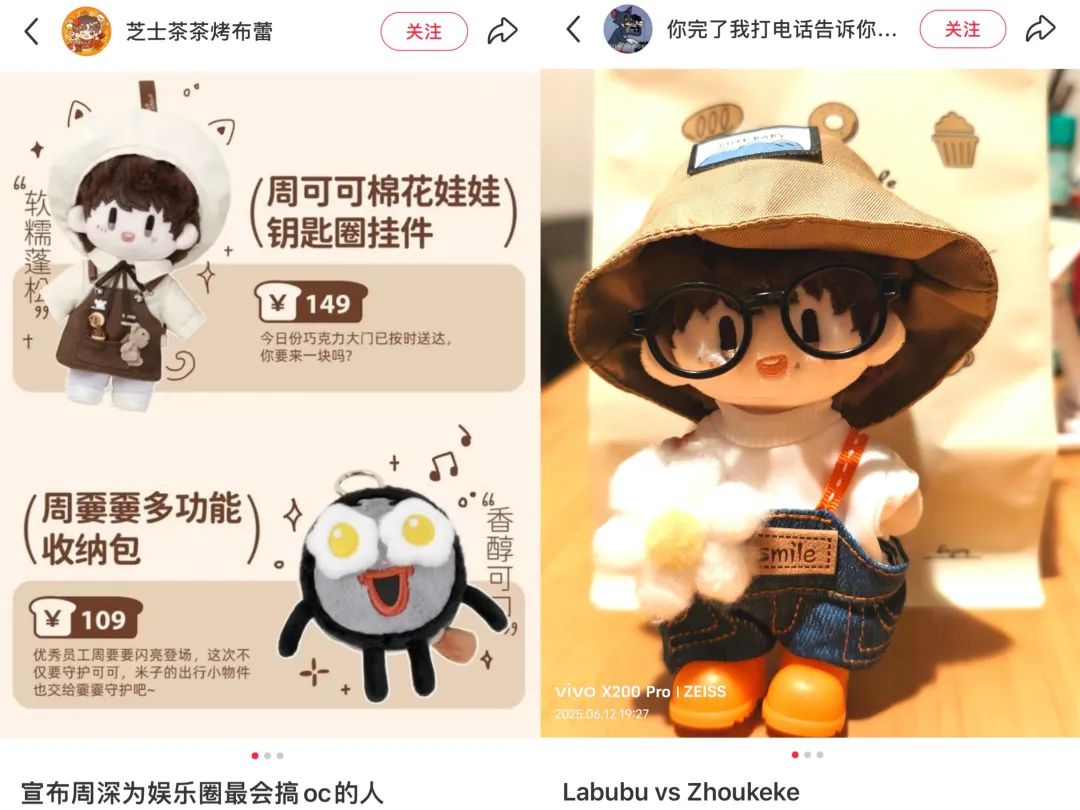
“歌迷捧红自己的LABUBU”,五月天、周深衍生IP杀入热卖榜
3 6 Ke· 2025-06-19 10:46
Core Insights - The number of "cross-border players" opening stores on Tmall's platform for trendy toys has surged fourfold in 2024, with a notable influx from the entertainment industry [1] - Star products, particularly those related to original characters created by celebrities, have gained significant traction, exemplified by the success of Zhou Shen's "Zhou Keke flagship store" during the 618 shopping festival [1][3] Group 1: Celebrity Influence on Trendy Toys - Zhou Shen's original character "Zhou Keke" achieved over 10 million in sales on its launch day, marking it as the first celebrity merchandise to break the 10 million mark during this year's 618 event [1] - The "Zhou Keke flagship store" ranked 18th on Tmall's trendy toy sales list, traditionally dominated by established brands like Pop Mart and LEGO [1] - Zhou Keke's plush toy saw over 40,000 items added to shopping carts, with only 800 units available, indicating a 2% chance of purchase akin to a lottery [3] Group 2: Brand Development and Market Trends - Zhou Shen's associated company registered multiple trademarks related to "Zhou Keke" and "Zhou Biao Biao" in August 2022, indicating a strategic move towards brand development within three years [3][11] - The rapid rise of celebrity merchandise sales is evident, with brands like Mayday's STAYREAL and the carrot-shaped IP "Bubu" becoming regulars on e-commerce hot sales lists [3][4] - The emotional connection between fans and celebrities is driving the success of these products, as seen in the collaborative creation of characters that resonate with fan communities [8][11] Group 3: Evolving Fan Economy - The fan economy is evolving from simple merchandise to more complex IP brand development, moving through various stages from basic merchandise to emotional engagement [18][19] - The successful integration of celebrity IPs into everyday life demonstrates the potential for these brands to transcend their origins and establish broader market appeal [17] - The case of "Bubu" illustrates a unique path where the character's development is closely tied to the celebrity's activities, creating a symbiotic relationship that enhances both the character's and the celebrity's market presence [21][22] Group 4: International Comparisons and Future Trends - The dual development of artist IP and character IP has been validated in markets like South Korea, where successful models like BTS's BT21 have set a precedent for integrating character creation with artist branding [22][24] - The trend of IP development is expected to extend beyond entertainment, with companies increasingly focusing on emotional fulfillment and diverse content creation to enhance product commercialization [26] - The rise of "trendy toy" culture represents a new paradigm in cultural consumption, promising to reshape market dynamics and consumer engagement strategies [26]
漫展内卷,卖掉热爱
3 6 Ke· 2025-06-18 12:23
Core Insights - The commercial anime and manga exhibition market in non-first-tier cities is facing challenges such as rising costs, increased competition, and a singular profit model, leading to unstable revenue streams [2][29] - Ticket sales are the primary revenue source for most exhibitions, accounting for up to 90% of total income in many non-first-tier cities, making ticket sales critical for survival [4][29] - The rising costs of inviting guests, which have increased significantly post-pandemic, are straining the profitability of exhibitions, with guest fees rising four to five times compared to pre-pandemic levels [16][19] Group 1: Market Dynamics - The number of exhibitions has doubled in some areas, but the audience growth has only increased by 1.2 times, leading to decreased average attendance per event [5][19] - The lowering of entry barriers has resulted in an oversupply of smaller exhibitions, which compete for the same audience, further diluting attendance [7][19] - Major exhibitions like Bilibili World and ComicUp can secure significant sponsorship and ticket sales, while smaller events struggle to attract similar levels of interest and revenue [4][19] Group 2: Cost Structure - The cost structure of a commercial exhibition typically allocates 40% to venue and guest fees each, with the remaining 20% covering miscellaneous expenses and team salaries [10][19] - Venue operators benefit significantly from the exhibition business, often having little negotiation power over rental costs, which can further squeeze the margins of exhibition organizers [20][29] - Ticketing platforms also profit from the exhibitions, taking a commission from ticket sales, which adds to the overall cost burden on organizers [23][29] Group 3: Audience and Consumer Behavior - The primary audience for exhibitions has shifted to younger demographics, particularly middle and high school students, who have limited disposable income and are sensitive to ticket prices [8][29] - The evolution of audience preferences has led to a decline in the novelty of exhibitions, as frequent events and similar content contribute to audience fatigue [5][29] - The reliance on guest interactions, such as signings, has become a new revenue stream, but the effectiveness of this model varies and can lead to uncertain financial outcomes [17][29] Group 4: Regulatory Environment - The pandemic has led to stricter regulations for large gatherings, impacting the ability of organizers to host events and increasing compliance costs [26][28] - Government support for the anime and manga industry has not translated into tangible benefits for smaller exhibition organizers, who often face challenges in accessing subsidies [25][29] - The balance between promoting local cultural events and ensuring safety and compliance has created a complex environment for exhibition organizers [26][29]