贸易顺差

Search documents
特朗普关税施压,德国8月对美出口跌至四年新低
Feng Huang Wang· 2025-10-09 12:44
Core Insights - Germany's exports to the U.S. have declined for five consecutive months, reaching the lowest level in nearly four years due to U.S. tariff policies [1] - In August, German exports to the U.S. fell by 2.5% month-on-month to €10.9 billion, and year-on-year, there was a dramatic drop of 20% [1] - Conversely, imports from the U.S. increased by 3.4% month-on-month to €8 billion, with an annual growth of nearly 8% [1] Trade Balance - Overall, Germany's trade balance improved in August, with total exports amounting to €129.7 billion, a month-on-month decrease of 0.5% and a year-on-year decrease of 0.7% [3] - Imports totaled €112.5 billion, showing a month-on-month decline of 1.3% but a year-on-year increase of 3.5% [3] - The trade surplus for August expanded to €17.17 billion, marking the second consecutive month of increase, although it is down 21.6% compared to the same month last year [3] EU vs Non-EU Trade - The trade surplus is primarily driven by intra-EU trade, with exports to EU member states at €72.5 billion and imports at €58.8 billion, resulting in a significant intra-EU surplus [3] - Exports to the EU decreased by 2.5% month-on-month, while imports from the EU fell by 1.9% [3] - In contrast, trade with non-EU countries showed a deficit, with exports to non-EU countries at €57.1 billion and imports at €53.7 billion [3] UK Trade Impact - In the non-EU market, imports from the UK have significantly declined, with German exports to the UK dropping by 6.5% month-on-month to €6.5 billion [4]
【环球财经】9月巴西对美出口继续大幅下降
Xin Hua Cai Jing· 2025-10-07 08:04
Core Insights - Brazil's exports to the U.S. fell by 20.3% year-on-year in September, amounting to $2.58 billion, while imports from the U.S. increased by 14.3% to $4.35 billion, resulting in a trade deficit of $1.77 billion with the U.S. [1] - Despite the pressure on exports to the U.S., Brazil's total trade in September reached $58.07 billion, a 12% year-on-year increase, with an overall surplus of $2.99 billion. Total exports were $30.53 billion, up 7.2%, and total imports were $27.54 billion, up 17.7% [1] - For the first nine months of the year, Brazil's cumulative exports reached $257.79 billion, a 1.1% increase, while cumulative imports were $212.31 billion, an 8.2% increase, resulting in a cumulative trade surplus of $45.5 billion. Exports to China and Argentina grew by 14.7% and 24.9%, respectively [1] - The Brazilian Ministry of Development, Industry, and Trade projects a trade surplus of $60.9 billion for the entire year of 2025, an increase from the previous forecast of $50.4 billion [1] - The September import figures included a $2.4 billion offshore oil platform, which significantly impacted the import data and reduced the trade surplus [1] - Since August, the U.S. has imposed a 40% tariff on Brazilian products, with most products facing tariffs as high as 50%. Exports to the U.S. fell by 18.5% in August [1]
巴西9月贸易顺差30亿美元 同比下降41%
Zhong Guo Xin Wen Wang· 2025-10-07 02:06
Core Points - Brazil's trade surplus in September was $3 billion, a year-on-year decline of 41%, marking the largest monthly drop of the year [1] - Exports to the U.S. have significantly decreased for the second consecutive month due to a 40% tariff imposed by the U.S. on Brazilian products [1] - The trade deficit with the U.S. reached $1.77 billion in September, the highest value for the year [1] Trade Data Summary - In September, Brazilian exports to the U.S. fell from $3.23 billion in the same month last year to $2.58 billion, while imports rose from $3.8 billion to $4.35 billion [1] - Despite the setback in U.S. trade, Brazil's exports to other markets remained strong, with a 14.7% increase to China, a 27.6% increase to Mercosur countries, and a 29% increase to Central America and the Caribbean [1] Government Response - Brazilian President Lula and U.S. President Trump discussed tariff issues in a 30-minute phone call, with optimism expressed regarding the potential removal of the 40% additional tax on Brazilian imports [1]
韩国:已与美国就外汇问题达成一致
Hua Er Jie Jian Wen· 2025-09-28 06:19
Group 1 - The core point of the article is that the U.S. has agreed that South Korea is not manipulating its currency for trade advantages, which clears the way for South Korea to be removed from the U.S. Treasury's currency manipulation monitoring list [1] - This agreement alleviates pressure on South Korea in bilateral trade negotiations, although officials emphasize it is not directly related to ongoing currency swap discussions [2] - The U.S. had previously monitored South Korea's foreign exchange policies due to concerns over a large current account surplus and trade surplus with the U.S., leading to its inclusion on the monitoring list [2] Group 2 - South Korean officials indicated that the currency agreement is separate from discussions regarding a $350 billion investment commitment related to tariff negotiations [3] - There is a discrepancy in understanding between South Korea and the U.S. regarding the nature of the $350 billion investment, with South Korea viewing it primarily as loans rather than direct investments [3] - Analysts note that the resolution of the currency manipulation dispute creates better conditions for cooperation on other issues between the U.S. and South Korea [4]
中国的高储蓄模式,是奇迹还是陷阱?
伍治坚证据主义· 2025-09-26 07:30
Core Viewpoint - The article discusses the evolution of China's economic model, emphasizing the "high savings - high investment" approach that has driven rapid GDP growth but has also led to structural imbalances and reliance on exports [2][3][4]. Group 1: Economic Growth and Investment Model - China's economic growth has been characterized by a high savings rate, which has facilitated significant investments in infrastructure and manufacturing, resulting in an average GDP growth rate exceeding 10% from the 1990s to the 2000s [2][3]. - Despite the rapid GDP growth, the increase in household income has lagged behind, with annual growth rates of 6-7%, leading to a situation where savings are high but consumption remains low [2][3]. Group 2: Structural Imbalances and Export Reliance - The high savings rate has resulted in insufficient domestic consumption, forcing China to rely on exports to absorb excess production capacity, with a current account surplus reaching 10% of GDP around 2007 [3][4]. - The article references the concept of "beggar-thy-neighbor" policies, highlighting that one country's surplus necessitates another's deficit, which has implications for international trade dynamics [3][4]. Group 3: Challenges of Overcapacity and Market Competition - China's investment model has undergone three significant shifts: large-scale infrastructure projects, a real estate bubble, and a focus on renewable energy manufacturing, each leading to overcapacity and intense price competition [4][5]. - The competitive landscape in sectors like solar energy and electric vehicles has resulted in unsustainable pricing strategies, where companies prioritize survival over profitability, reminiscent of historical economic challenges faced by other nations [4][5]. Group 4: Future Economic Directions - The article outlines three potential paths for China's economic future: continuing to expand trade surpluses, reducing output to lower investment, or significantly increasing domestic consumption to stimulate demand [5][6]. - The challenge lies in transitioning to a model that enhances consumer spending without exacerbating unemployment or economic slowdown, a feat that has historically been difficult for many nations [5][6]. Group 5: Global Economic Rebalancing - The ongoing dynamics of savings, investment, and consumption extend beyond economics, touching on social equity and global order, with the U.S. and Europe unwilling to perpetually absorb China's excess production [6]. - The concept of "decoupling" or "de-risking" reflects a new arrangement where more countries share the burden of China's overcapacity while China increases its own consumption, a process fraught with potential friction [6].


贸易战再升级,欧美联手打压中国,中国靠一招完成逆袭
Sou Hu Cai Jing· 2025-09-24 21:55
Group 1 - The core viewpoint of the article highlights China's significant role in global trade, with the country accounting for 14.2% of the world's exports in 2023, maintaining its position as the largest exporter for 15 consecutive years [3][4] - China's trade surplus has been consistent for over three decades, with a notable acceleration post-2005, particularly after joining the WTO, which opened up global markets for Chinese textiles [7][9] - The manufacturing sector has evolved, showcasing a comprehensive industrial system that allows for rapid production and adaptation to market demands, which has become a core competitive advantage for China [9][11] Group 2 - China's export landscape is shifting, with emerging markets such as Uzbekistan, Kazakhstan, and Mexico gaining traction, while traditional markets like the US and EU are experiencing declines in export growth [11][13] - The composition of exports has also changed, with a significant increase in high-tech products such as electric vehicles and batteries, reflecting a transition from low-end to high-quality goods [13][15] - Small and medium-sized enterprises (SMEs) are increasingly becoming key players in exports, leveraging specialization and agility to meet niche market demands, supported by favorable conditions in coastal provinces [15][19] Group 3 - The article emphasizes the importance of innovation and R&D in driving the success of SMEs, with companies investing a significant portion of their sales into research to compete in global markets [17][19] - The growth of cross-border e-commerce has simplified logistics and payment processes, enabling even small businesses to access global customers, which was previously unimaginable [19][21] - The overall increase in exports in the first half of 2024, despite global economic challenges, underscores the resilience and adaptability of China's export sector, driven by numerous SMEs and their evolving product offerings [19][21]
刷新纪录!外贸顺差近1万亿美元,但许多外贸工厂倒闭,为什么?
Sou Hu Cai Jing· 2025-09-23 08:51
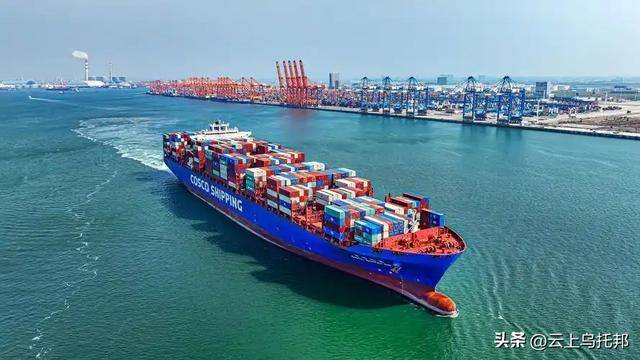
Core Viewpoint - China's trade surplus has reached nearly $1 trillion, a historical high, yet thousands of foreign trade factories are closing down, indicating a structural shift in the export landscape rather than a decline in exports [1][11]. Group 1: Trade Surplus and Structural Changes - The official trade surplus is calculated by subtracting the total value of imports from exports, focusing solely on monetary value without considering the underlying industries [3]. - High-value products like electric vehicles and lithium batteries have replaced traditional labor-intensive goods, leading to a higher trade surplus but not necessarily benefiting all factories [3][5]. - Traditional small and medium-sized foreign trade enterprises are facing severe survival challenges despite the rising surplus [3][5]. Group 2: Impact on Traditional Manufacturing - Many garment factories in Zhejiang report a lack of orders, with clients shifting to countries like Vietnam and Bangladesh or to more automated factories [5]. - The shift towards automation is resulting in significant job losses, as machines replace skilled labor [5][7]. - The transition to high-tech industries is not friendly to low-skilled workers, who find it difficult to adapt to new job requirements [5][9]. Group 3: Economic and Social Implications - Local governments face a dilemma between supporting traditional factories and allowing them to close, which could lead to reduced tax revenue and increased unemployment [7]. - The financial sector is increasingly favoring high-tech industries for credit and financing, tightening loans for traditional manufacturing [7]. - Unemployment is spreading from coastal areas to inland regions, with older workers struggling to find new jobs in a rapidly changing economy [7][9]. Group 4: Need for Systemic Support - There is a pressing need for social safety nets, such as unemployment insurance and skill training programs, to support workers during this transition [9]. - The education system is adapting by removing outdated vocational programs and introducing new fields like robotics and renewable energy [9]. - A unified national skills certification system is necessary to facilitate the transition of workers into high-value industries [9]. Group 5: Future Outlook - The current export structure is undergoing a transformation, with old industries declining and new ones emerging, which may lead to a stronger economy in the long run [11]. - The ability to navigate this transition will determine whether Chinese manufacturing can achieve lasting success on the global stage [11].
“中国出口竞争力太强,美国保护主义沦为纸老虎”
Guan Cha Zhe Wang· 2025-09-23 01:46
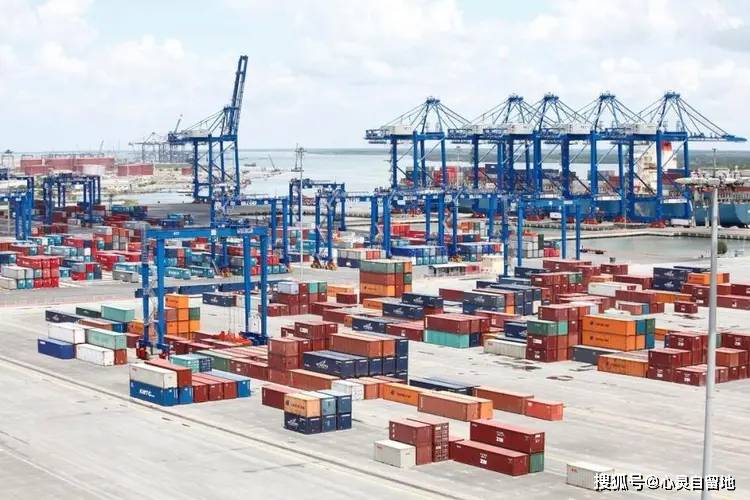
Core Insights - Despite the high tariffs imposed by the U.S., China's export engine remains robust, heading towards a record trade surplus of $1.2 trillion [1] - China has successfully diversified its export markets, with significant increases in exports to India, Africa, and Southeast Asia, compensating for reduced sales to the U.S. [1][3] - The competitive nature of Chinese exporters has allowed them to absorb some of the tariff impacts and adapt by shifting production to lower tariff countries [1][3] Trade Dynamics - China is currently the largest trading partner for over half of the world's countries, with only a few, like Mexico, openly adopting punitive measures against Chinese products [3] - Many countries are hesitant to engage in trade conflicts with China, likely influenced by ongoing negotiations with the U.S. [3][4] - Countries like South Africa and Brazil are opting for investment rather than punitive tariffs against Chinese products, indicating a preference for collaboration [4] Export Performance - In the first seven months of the year, Chinese electric vehicle exports, including brands like BYD and NIO, reached a total value of over $19 billion, maintaining levels from the previous year despite EU tariffs [6] - China's exports to India reached a record $12.5 billion last month, driven by the demand for components and products, showcasing the interdependence in supply chains [5] - The depreciation of the Chinese yuan has further enhanced the competitiveness of Chinese exports, with the currency at its lowest effective exchange rate since December 2011 [5] Economic Indicators - In the first half of the year, China's total goods trade reached 21.79 trillion yuan, with exports growing by 7.2% to 13 trillion yuan, while imports fell by 2.7% [7] - The overall performance of China's foreign trade is seen as resilient, with a focus on maintaining growth amidst rising global protectionism [7][8]



受美国关税影响,韩国9月前20天日均出口额同比下降10.6%!对中国出口同比增长1.6%,对美国出口同比增长6.1%
Ge Long Hui· 2025-09-22 06:50
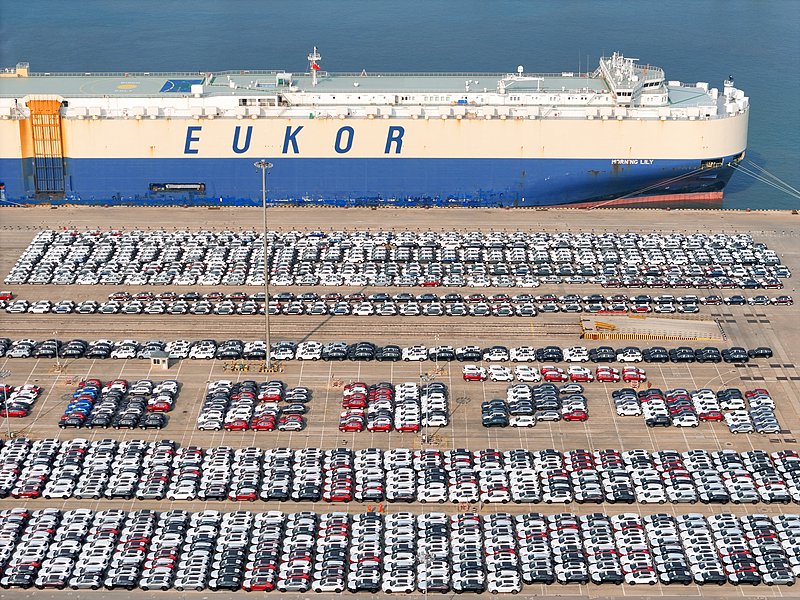
Group 1 - South Korea's exports increased by 13.5% year-on-year in the first 20 days of September, reaching a total of $40.12 billion compared to $35.36 billion in the same period last year [1][3] - The average daily export amount decreased by over 10% due to new tariff plans from the United States [1][4] - Imports rose by 9.9% year-on-year to $38.22 billion, resulting in a trade surplus of $1.9 billion [4] Group 2 - Semiconductor exports amounted to $9.49 billion, a 27% increase year-on-year, accounting for 23.7% of total exports, up 2.5 percentage points from the previous year [4] - Automotive exports grew by 14.9% to $3.42 billion, while ship exports surged by 46.1% to $1.51 billion [5] - Steel exports increased by 7.1% to $2.53 billion, whereas chemical product exports fell by 4.5% to $2.68 billion [6] Group 3 - Exports to China, South Korea's largest trading partner, rose by 1.6% to $7.77 billion, while exports to the United States increased by 6.1% to $6.55 billion [7] - However, the average daily export amount to the U.S. decreased by 16.4% due to aggressive tariff measures from the Trump administration [7]

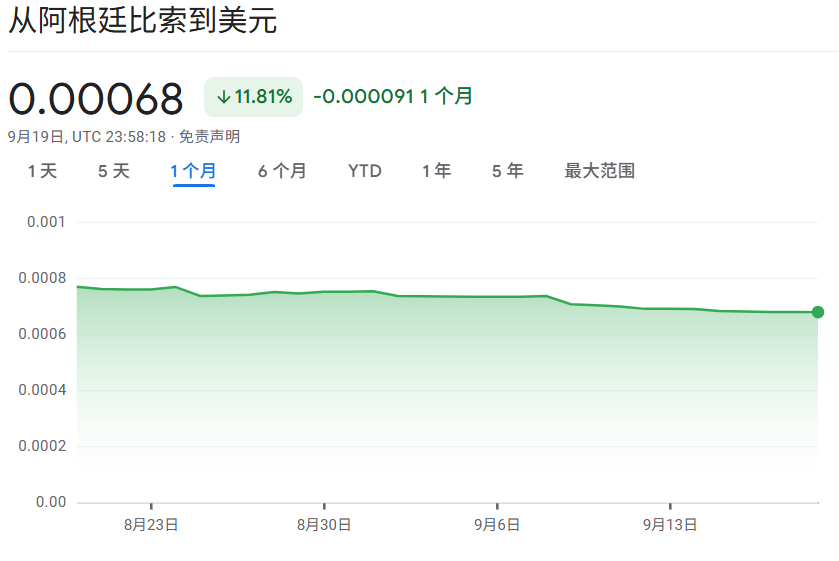
米莱危机愈演愈烈,3天抛售10亿美元“保汇率”,阿根廷外储要耗尽了?
Hua Er Jie Jian Wen· 2025-09-20 04:55
Core Viewpoint - The Argentine central bank has sold over $1 billion in foreign reserves within three days to defend the peso's exchange rate, indicating severe pressure on the currency and the government's economic policies [1][11]. Group 1: Currency Intervention - The Argentine central bank sold $678 million on Friday, marking the third intervention in the currency market that week, following sales of $379 million and $53 million on Thursday and Wednesday, respectively [1]. - The peso has depreciated nearly 12% against the dollar over the past month, raising doubts about the government's ability to maintain its current exchange rate policy [1]. Group 2: Economic Challenges - Economist Gabriel from Outlier Financial Consulting warns that the massive amount of pesos withdrawn from the market to sell dollars will have a "very strong" impact on economic activity, potentially leading to credit tightening and economic contraction [4]. - The core issue for Argentina is the lack of "non-borrowed reserves," with the IMF loan constituting a significant portion of the central bank's reserves [5][7]. Group 3: Political Factors - The recent sharp decline in the peso was triggered by a political setback for President Javier Milei's liberal party in local elections, which undermined investor confidence in his ability to maintain a free-market agenda [11]. - Concerns about the government's debt repayment capacity have increased, reflected in the sharp rise in sovereign bond yields, which have surged by 5.5 percentage points in two weeks [12].