
避险需求

Search documents
黄金主题基金总规模已近3800亿元
Zheng Quan Ri Bao· 2026-01-28 16:19
Group 1 - The international gold price has been rising continuously this year, leading to increased attractiveness of gold-themed funds, with a total scale nearing 380 billion yuan, a growth of nearly 100 billion yuan or 35.7% compared to the end of last year [1] - Among the 53 gold-themed funds, 12 have scales exceeding 10 billion yuan, with the leading product, Huaan Gold ETF, surpassing 120 billion yuan, making it the first gold-themed fund to reach this milestone [1] - Performance-wise, 18 products have seen net value growth exceeding 30% this year, indicating strong market recognition and demand for gold assets [2][3] Group 2 - The momentum for the rising international gold price is driven by macroeconomic fluctuations and increased demand for safe-haven assets, alongside expectations of loose monetary policy in overseas markets [2] - Investors are utilizing funds to capture gold trading opportunities, with ETFs being favored for their low cost and lower risk, suitable for medium to long-term allocations [2] - The market is currently favoring defensive assets, with significant capital flowing into gold and other hedging assets, reflecting a positive growth trend in both product scale and performance [3]
3天涨300美元!国际金价一度突破5300美元
Sou Hu Cai Jing· 2026-01-28 13:11
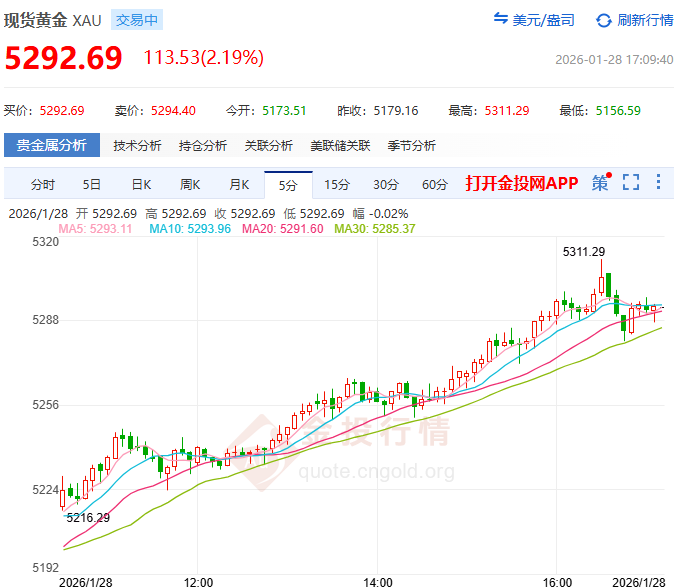
1月28日欧洲交易时段,全球央行增持黄金、多重地缘政治风险以及美国联邦政府可能再次"停摆"推高避险需求,国际金价持续冲高, 纽约黄金期货主力 合约价格一度突破每盎司5300美元整数关口,再创盘中历史新高,盘中最高触及每盎司5306美元。截至北京时间28日16时50分,纽约商品交易所2月交割 的黄金期货价格报每盎司5293.60美元,涨幅为4.15%。 美国东部时间25日傍晚,纽约商品交易所2月黄金期货价格在电子盘交易中突破每盎司5000美元的历史性关口。 三天时间,黄金期货价格上涨300美元,屡创历史纪录。 // 3天涨300美元,屡创纪录 ...

金价,又飙升!冲上5300美元!什么原因?
Xin Lang Cai Jing· 2026-01-28 11:37
28日欧洲交易时段,全球央行增持黄金、多重地缘政治风险以及美国联邦政府可能再次"停摆"推高避险 需求,国际金价持续冲高,纽约黄金期货主力合约价格一度突破每盎司5300美元整数关口,再创盘中历 史新高,盘中最高触及每盎司5306美元。截至北京时间28日16时50分,纽约商品交易所2月交割的黄金 期货价格报每盎司5293.60美元,涨幅为4.15%。 美元指数27日在纽约汇市跌至近四年新低,是金价上行的主要原因之一。高盛外汇策略师指出,美元短 线走软的主要原因是,美国和日本政府释放了联合干预汇市的信号。展望今年全年,发达经济体货币政 策分化,可能导致美元进一步贬值。 近期,随着贵金属价格连创历史新高,美国华尔街大型金融机构纷纷上调黄金目标价,高盛预计国际金 价可能在今年年底触及每盎司5400美元的目标。高盛指出,黄金供应增长缓慢,而全球央行与私人投资 者因战略性目标或避险目的增持黄金,推动需求增长,导致金价屡创新高。高盛指出,未来,如果私营 机构增加黄金配置,金价可能涨至其目标价上方。 ...
大有期货:市场焦点将转向美联储会议 贵金属价格出现史诗级行情
Jin Tou Wang· 2026-01-28 11:35
【黄金期货行情表现】 美国总统特朗普周一表示,他将把进口自韩国的汽车、木材和药品的关税提高到25%,同时指责韩国的 立法机构"未能履行"两国达成的贸易协议。韩国产业通商资源部称,部长即将访问美国并与卢特尼克会 面,同时总统顾问将与相关部会召开会议,讨论因应措施。总统府则表示:美国政府尚未就可能的关税 调升发出正式通知。 美国官员周一表示,如果伊朗希望与华盛顿接触,美国将"愿意进行对话"。当被问及与伊朗谈判的条件 时,这位官员对记者说:"我认为他们知道这些条件。他们清楚这些条件。" 美国核心资本财订单11月增幅超预期,显示第四季企业在设备方面的支出维持稳健增长态势。核心资本 财订单已连续第五个月增加。 1月28日,沪金主力暂报1186.20元/克,涨幅3.58%,今日沪金主力开盘价1146.80元/克,截至目前最高 1186.76元/克,最低1134.70元/克。 【机构观点】 【宏观消息】 地缘政治不确定性引发的避险需求与全球央行稳健的购金行为,推动了贵金属价格出现史诗级行情。白 银价格波动大于黄金,其工业属性使其对全球经济增长前景的预期更为敏感。在交易所持续限制投机炒 作后,白银走势转弱,需关注能否守住10 ...
牛市再提速!黄金连闯四关本周累计涨超300美元
Jin Tou Wang· 2026-01-28 09:39
高盛预计,国际金价有望在今年年底触及5400美元/盎司,其指出,黄金供应增长缓慢,而全球央行与 私人投资者出于战略配置或避险目的持续增持黄金,供需失衡推动金价屡创新高,若私营机构进一步加 大黄金配置,金价可能突破该目标上限。 德意志银行则更为乐观,认为若美元持续疲软推动资金向非美资产及实物资产轮动,2026年金价或上探 6000美元/盎司,甚至有望挑战6900美元/盎司。 盛宝银行大宗商品策略主管Ole Hansen表示,投机势头或将推动金价升至5500美元/盎司。加拿大皇家银 行更是给出激进预测,称黄金涨势仍有充足空间,年底可能上探7100美元/盎司。 周三(1月28日)国际现货黄金延续史诗级涨势,价格一路上扬并首次突破5300美元/盎司,周内已连续攻 克5000、5100、5200、5300四大整百关口,本周累计涨超300美元,牛市动能持续拉满。北京时间周四 凌晨03:00,美联储将公布2026年首场利率决议,金价迭创新高、美指跌至四年谷底,今夜市场恐再掀 巨浪? 此番金价狂飙并非偶然,多重核心因素形成共振支撑。一方面,美元指数跌至近四年低位,以美元计价 的黄金资产吸引力大幅提升;另一方面,特朗普宣称将提 ...
【UNFX财经事件】政治与地缘风险叠加 黄金在避险驱动下走强
Sou Hu Cai Jing· 2026-01-28 09:35
从政策层面看,市场普遍预期美联储将在本次会议上维持利率水平不变。芝商所数据显示,本次会议降 息概率处于低位,投资者关注重点更多集中在政策声明措辞以及主席鲍威尔在新闻发布会上的态度变 化。在 2025 年下半年连续三次降息后,联邦基金利率目标区间已降至 3.5% 至 3.75%,接近官员普遍认 可的中性区间。近期多位美联储官员强调,当前政策立场具备足够灵活性,短期内更倾向于观察经济数 据变化。不过,围绕美联储内部立场分化、特朗普可能提前公布下一任主席人选,以及白宫持续向货币 政策施压的背景,使市场对政策沟通不确定性的评估明显上升。这种不确定性本身,正在被市场计入黄 金的风险溢价之中。 在金价站稳 5200 美元关口后,部分机构开始提示运行节奏的变化。盛宝银行指出,当前黄金上涨更多 反映的是对财政扩张预期、美元偏弱以及地缘政治不确定性的综合定价,而非单一事件推动。该机构认 为,在中期逻辑尚未被破坏的前提下,黄金更可能通过高位震荡的方式消化此前涨幅,而非出现明显回 撤。从结构上看,各国央行潜在的购金需求以及全球资产配置再平衡趋势,仍为金价提供中长期支撑。 相比之下,机构对白银的态度明显更为谨慎。在年内涨幅显著扩大的 ...
1月28日白银晚评:凌晨美联储将公布利率决议 白银走势开始回落
Jin Tou Wang· 2026-01-28 09:32
Core Viewpoint - The article discusses the current state of silver prices and the factors influencing them, particularly focusing on the impact of U.S. monetary policy and political statements on market sentiment and silver's value. Group 1: Silver Price Movements - As of January 28, the spot silver price is at $113.93 per ounce, having opened at $112.14 and reaching a high of $116.10 and a low of $110.65 during the day [1][2] - The trading strategy indicates a bullish trend for silver, with a target resistance level set at $122.00, and a trading range expected between $107.00 support and $122.00 resistance [4] Group 2: Influencing Factors - President Trump's comments on the value of the U.S. dollar have led to a decline in the dollar index, reaching its lowest point since February 2022, which supports dollar-denominated assets like silver [3] - Concerns regarding the independence of the Federal Reserve may increase safe-haven demand, benefiting silver prices [3] - The Federal Reserve is expected to maintain interest rates during its upcoming policy meeting, following three consecutive rate cuts by the end of 2025, with market participants closely watching for insights on the U.S. economic outlook [3]
盛宝银行:投机热潮有望推动黄金站上5500,短期不会大幅回调
Jin Shi Shu Ju· 2026-01-28 08:04
Group 1 - The core viewpoint of the articles highlights that international spot gold has stabilized above the $5,000 mark and is making a push towards $5,300 per ounce, recording over a 20% increase at the start of the year, marking the best performance since 1980 [1] - Analysts suggest that while gold prices are supported and have momentum to rise further, global economic resilience may pose a challenge to gold's upward trajectory [2] - The driving factors behind gold's rise include concerns over unchecked fiscal debt expansion, the weakening of the US dollar, geopolitical uncertainties, and persistent inflation worries, although these concerns have not yet materialized into severe market reactions [3] Group 2 - There is an increasing risk of long-term consolidation for gold rather than a significant pullback, as the structural logic supporting gold remains intact [4] - In contrast, there are greater concerns regarding silver, which has seen its best start to the year since records began in 1972, with a nearly 60% increase in January alone [5] - The rise in silver prices is attributed to retail participation, speculative positions, and investor anxiety, leading to historical high levels compared to gold and platinum, which may disrupt industrial demand [5]
高盛:视当前金价水平为“不确定”进场点 预计年底达每盎司5,400美元 银价预计续波动
Zhi Tong Cai Jing· 2026-01-28 06:43
对技术投资者而言,高盛将当前的金价水平视为一个"不确定"进场点。若局势缓解可能促使金价暂时回 落,但若风险进一步升级,则可能支撑金价整盘或再次推高价格。长远而言,预计金价保持涨势,因来 自新兴市场央行强劲买盘,及美联储放宽政策时激发了投资者需求。 高盛基本预测仍认为,金价将在今年12月前达到每盎司5,400美元;银价年内累升51%,高盛预计白银 极端的价格波动(无论上行或下行)将持续,建议对波动性忍耐力较低的投资者保持谨慎。 (原标题:高盛:视当前金价水平为"不确定"进场点 预计年底达每盎司5,400美元 银价预计续波动) 智通财经APP获悉,高盛发布研报称,因上周地缘政治紧张局势、日本国债殖利率于周末前急升,可能 推动避险需求激增,令金价飙升至每盎司5,000美元以上。有关担忧仍在演变中,而日本的政策不确定 性或持续至2月8日大选,使避险需求维持高涨。 ...

美元跌势市场目光转向黄金 金价继续上探冲破5200元
Jin Tou Wang· 2026-01-28 06:06
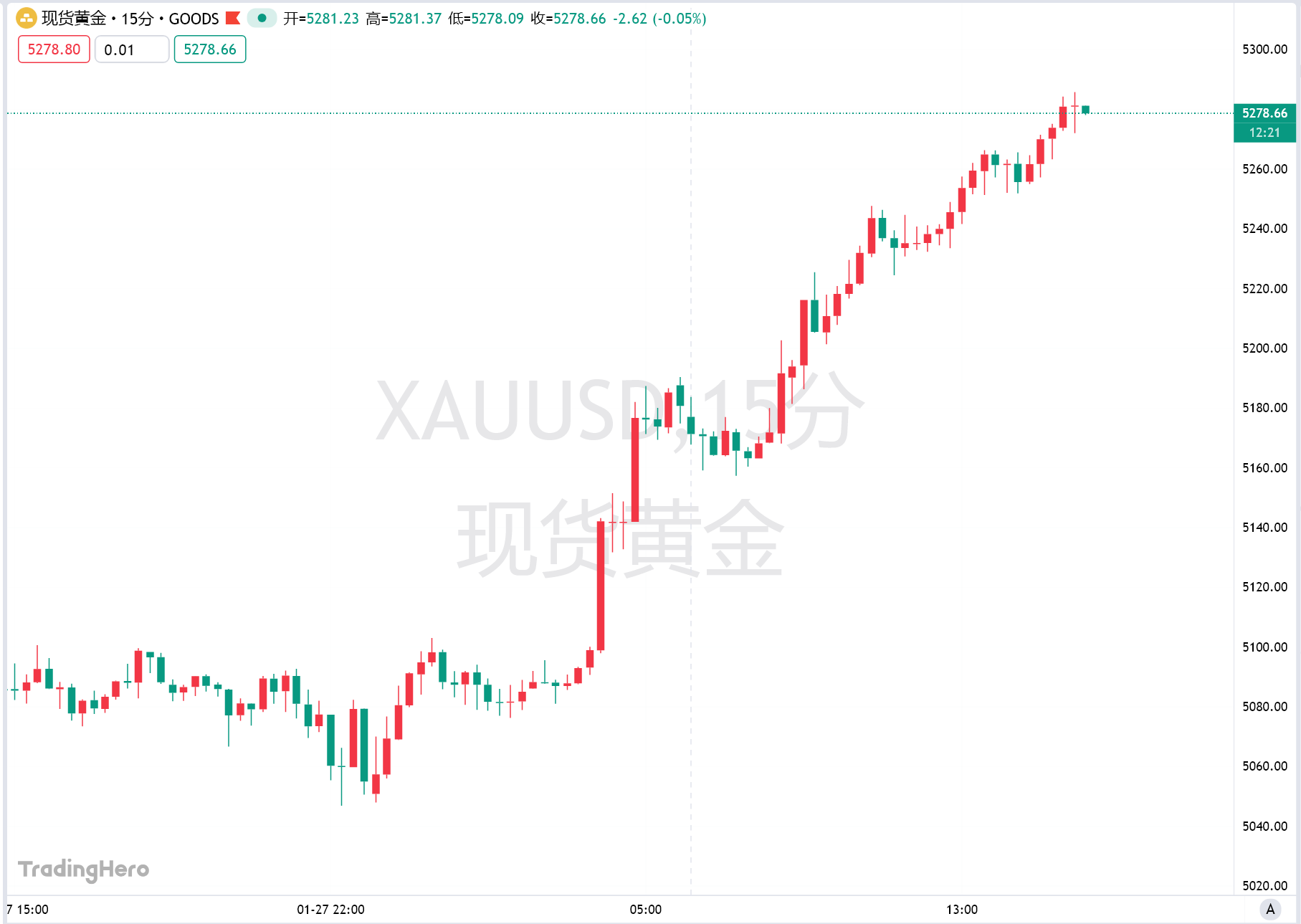
另外,据数据,当前市场上共有20只黄金主题ETF产品,其中14只为黄金ETF、6只为黄金股ETF。受国 际金价波动带动,近两个交易日黄金ETF普遍走高,其中1月26日涨幅显着,27日涨幅有所回调。数据 显示,1月26日当日涨幅前十的ETF中,黄金股票ETF占了六席,其中4只涨幅超8%。 周三(1月28日)亚洲时段,现货黄金价格延续走强,截至发稿,现货黄金暂报5248.793美元/盎司,上涨 1.34%,最高触及5249.76美元/盎司,最低下探5156.59美元/盎司。美元指数下滑至多年低点,为金价提 供重要支撑,同时地缘政治紧张、全球贸易担忧情绪以及经济不确定性持续推升避险需求,支撑金价连 续刷新历史高位,目前市场波动率进一步增加。 美政策不确定性拉低美元指数,美总统暗示他可以操纵美元,美东时间周二尾盘,美元指数快速回落, 盘中一度跌破96关口,跌至四年低位,日内跌幅超过1%,支撑黄金走高。另外,美国政府在1月底前发 生新一轮停摆的概率走高,进一步影响市场对美国政经稳定的信心。 其次,地缘局势仍动荡不安继续支撑黄金上涨。近期,美国被曝向以色列通报针对伊朗可能采取军事行 动的准备进展,据消息人士透露,美方相关 ...