地缘政治风险

Search documents
药明康德“美颜”三季报:营收增18.6%,非经常性收益支撑利润,多项指标显露增长隐忧
Hua Xia Shi Bao· 2025-11-25 06:37
本报(chinatimes.net.cn)记者张斯文 于娜 北京报道 近日,无锡药明康德新药开发股份有限公司(下称"药明康德",603259.SH)披露了2025年第三季度报 告,前三季度实现营业收入328.57亿元,同比增长18.61%;归属于上市公司股东净利润120.76亿元,同 比大增84.84%。 (数据来源:Wind) 但细究业绩结构,可以看到,公司存在非经常性收益贡献显著,国内业务增长停滞、部分板块疲软、研 发投入收缩等问题。 非经常性收益拉高利润 报告显示,前三季度公司非经常性损益达25.53亿元,主要来自出售联营企业WuXi XDC Cayman Inc.部 分股票的收益(32.23亿元)。扣除该部分后,归属于上市公司股东的扣除非经常性损益净利润为95.22 亿元,同比增长率下降至42.51%,显著低于净利润增速。 对此,山东隆湶律师事务所主任、高级合伙人李富民对《华夏时报》记者表示,利润结构的健康度要 看"可持续性"。84%的净利润里,超过四成来自非经常性收益,扣非增速落后同行20个百分点,说明主 业溢价能力在收窄。CXO板块普遍把闲置资金做理财或跟投客户股权,但把公允价值变动当"主营味 道 ...



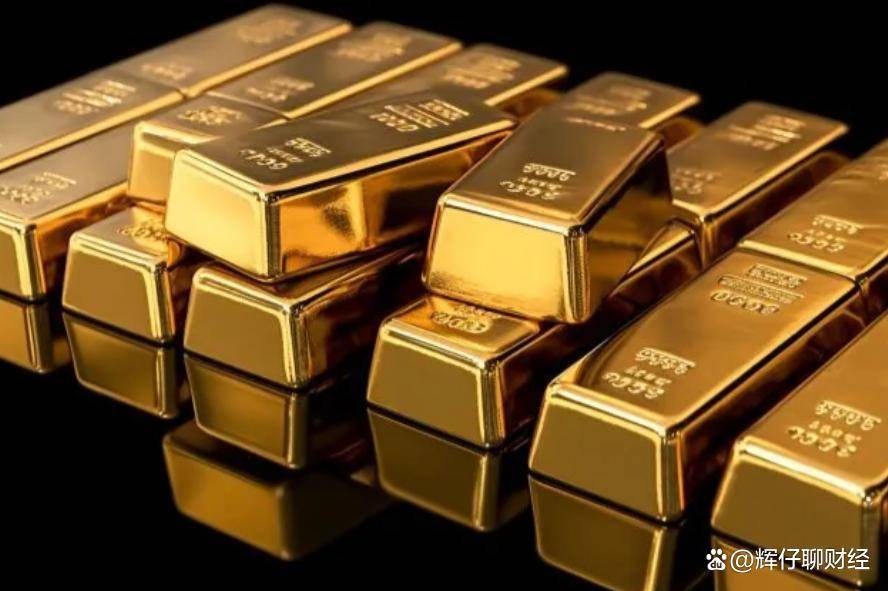
双重利好助推金价创一周半新高 聚焦晚间美关键数据
Jin Tou Wang· 2025-11-25 06:15
Group 1 - The core viewpoint of the articles highlights the recent surge in gold prices, attributed to expectations of a dovish stance from the Federal Reserve, with a significant probability of a rate cut in December [1][2] - The New York Fed President John Williams indicated that a rate cut would not threaten the Fed's inflation targets, while Fed Governor Christopher Waller supported the conditions for a 25 basis point cut due to a weak labor market [2] - The futures market shows an 80% probability for a rate cut to the range of 3.50%-3.75% in December, which has suppressed the recent rebound of the US dollar [2] Group 2 - Geopolitical tensions, particularly the recent Russian attacks on Ukraine, are contributing to the demand for safe-haven assets like gold, as ongoing conflicts create uncertainty in the market [3] - The market is closely monitoring upcoming US economic data, including the Producer Price Index (PPI) and retail sales, which may influence the dollar's performance and provide short-term trading opportunities for gold [3] - Technical analysis indicates that gold prices have confirmed support in the $4030-$4040 range, with potential upward movement towards $4177-$4178 and possibly testing the monthly high of $4244.96 [4]
金价再跌,瑞银看涨,明年黄金冲4900美元
Sou Hu Cai Jing· 2025-11-25 04:45
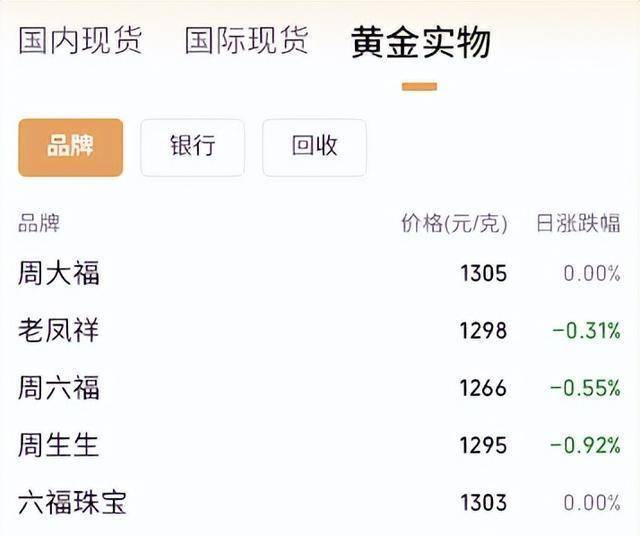
周生生、老庙、周大福、六福、老凤祥的足金首饰报价在11月21日前后出现小调整,有的下调12元,有的微幅下挫或持平,零售端的波动被细碎地 传递出去; 事情起因之一是美国劳工部在11月20日发布的滞后就业数据,显示9月失业率升至4.4%,9月非农就业增加11.9万人,远超预估,这个数据被市场当 作既能喂鹰派也能喂鸽派的"双刃剑"; 道明证券的分析师把这份报告说成让双方都能回到各自阵营的话,市场于是开始赌美联储的节奏,美元走强成为短期金价承压的直接因素; 同日COMEX报4044.9美元,差不多是那个节奏,先跌后稳,像是被人拉扯了一把; 国内市场也没逃过波及,11月21日收盘上海金Au99.99报924.44元,跌了0.59%,金店的价签也跟着动了; | 国内现货 | 国际现货 | 黄金实物 | | | --- | --- | --- | --- | | 品牌 | 银行 回收 | | | | 品牌 | | 价格(元/克) | 日涨跌幅 | | 周大福 | | 1305 | 0.00% | | 老凤祥 | | 1298 | -0.31% | | 周六福 | | 1266 | -0.55% | | 周生生 | | 12 ...
今日观点集锦-20251125
Xin Shi Ji Qi Huo· 2025-11-25 04:22
Report Industry Investment Ratings - No information provided Core Viewpoints of the Report - The short - term adjustment of the stock - bond market is expected, but the medium - term trend remains optimistic, and the high - tech industry continues to grow. The interest rate of treasury bonds is consolidating, and the market trend rebounds slightly [3]. - The coal - coke market is adjusting at a high level due to concerns about supply resumption. The supply and demand of finished products are expected to remain stable, and the impact of December's macro - policies on winter storage should be noted [4]. - The market's expectation of the Fed's December interest rate cut is less than 40%, and the long - term support for gold prices comes from the Fed's interest rate cut cycle, central bank gold purchases, and geopolitical risks [5]. - Log prices are expected to fluctuate at the bottom due to weak spot prices, increased supply, and weak demand [6]. - Natural rubber prices will continue to fluctuate in the short term due to strong cost support and weak demand [7]. - Soybean meal is expected to fluctuate weakly in the short term due to sufficient domestic supply and weak demand [8]. - Oil prices rise due to the increased probability of the Fed's December interest rate cut. PX, PTA, and MC show different supply - demand and price trends [9]. - Hog prices may remain volatile as sufficient supply is offset by increased consumption [10]. Summary by Related Categories Stock - Bond Market - The short - term adjustment of the stock - bond market is expected, with the medium - term trend remaining optimistic. The high - tech industry continues to grow. Treasury bond interest rates are consolidating, and the market rebounds slightly [3] Black Industry - Affected by import news and supply - guarantee meetings, the coal - coke market adjusts at a high level. The supply and demand of finished products are expected to be stable, and the impact of December's macro - policies on winter storage should be noted [4] Gold Market - The market's expectation of the Fed's December interest rate cut is less than 40%. The long - term support for gold prices comes from the Fed's interest rate cut cycle, central bank gold purchases, and geopolitical risks [5] Log Market - Spot log prices are weak, supply is under pressure, demand is hard to sustain, and prices are expected to fluctuate at the bottom [6] Rubber Market - Due to rainfall in the main production areas, cost support is strong. Demand is weak, and prices will continue to fluctuate in the short term [7] Soybean and Soybean Meal Market - US soybean export is weak, domestic supply is sufficient, and soybean meal is expected to fluctuate weakly in the short term [8] Oil and Chemical Market - Oil prices rise due to the increased probability of the Fed's December interest rate cut. PX, PTA, and MC show different supply - demand and price trends [9] Hog Market - Hog supply is sufficient, consumption may increase, and prices may remain volatile [10]
有色金属日报-20251125
Wu Kuang Qi Huo· 2025-11-25 03:09
Group 1: Report Overview - The report is a non - industry - rated daily report on non - ferrous metals dated November 25, 2025 [1] Group 2: Core Views - For copper, with Fed officials turning dovish, reduced geopolitical risks, tight raw material supply, and strong downstream demand, copper prices are well - supported [3][4] - For aluminum, low global visible inventory and supply disruption expectations support aluminum prices, and it may strengthen after adjustment [6][7] - For lead, due to increased supply, stable domestic demand, and weak overseas market, lead prices are expected to be weak in the short - term [8][9] - For zinc, although zinc ore is currently tight, it will loosen in the long - run. With weak financial assets globally, zinc prices may be weak in the short - term [10][11] - For tin, short - term supply and demand are in a tight balance. Considering price suppression on consumption and eased ore shortage, tin prices are expected to fluctuate [12][13] - For nickel, with increasing supply, weak demand, and possible cost - price negative feedback, nickel prices are under pressure [15][16] - For lithium carbonate, with easing position contradictions, weakening downstream demand, and potential supply and valuation factors, lithium prices may be weak but with an expected higher bottom [19][20] - For alumina, with recovering overseas ore supply, over - capacity in smelting, and prices near the cost line, it's recommended to wait and see [22][23] - For stainless steel, due to over - supply, weak demand, and falling costs, prices are expected to decline [25][26] - For cast aluminum alloy, with strong cost support and policy - induced supply disruptions, prices are expected to fluctuate [28][29] Group 3: Copper Market Information - LME copper 3M contract rose 0.03% to $10,781/ton, and SHFE copper main contract closed at 86,040 yuan/ton. LME copper inventory increased by 725 tons to 155,750 tons, and the cancellation warrant ratio declined. Domestic electrolytic copper social inventory decreased by about 14,000 tons, bonded area inventory increased slightly, and SHFE daily warrants decreased by 6,000 tons to 44,000 tons. Shanghai spot premium over futures dropped to 85 yuan/ton, while in Guangdong, it rose to 125 yuan/ton. The domestic copper spot import loss widened to about 800 yuan/ton, and the refined - scrap spread widened to 2,820 yuan/ton [3] Strategy - The expected operating range for SHFE copper main contract is 85,600 - 87,000 yuan/ton, and for LME copper 3M is $10,680 - 10,900/ton [4] Group 4: Aluminum Market Information - LME aluminum rose 0.18% to $2,813/ton, and SHFE aluminum main contract closed at 21,405 yuan/ton. SHFE weighted contract positions decreased by 8,000 to 605,000 lots, and futures warrants decreased by 1,000 tons to 68,000 tons. Domestic aluminum ingot and aluminum bar social inventories decreased by 8,000 tons each. LME aluminum inventory increased by 2,000 tons to 546,000 tons, and the cancellation warrant ratio rebounded. Cash/3M remained at a discount [6] Strategy - The expected operating range for SHFE aluminum main contract is 21,300 - 21,600 yuan/ton, and for LME aluminum 3M is $2,780 - 2,830/ton [7] Group 5: Lead Market Information - SHFE lead index fell 0.19% to 17,132 yuan/ton, and LME lead 3S fell $5.5 to $1,992/ton. SMM1 lead ingot average price was 17,075 yuan/ton, and the refined - scrap spread was 25 yuan/ton. SHFE lead ingot futures inventory was 29,600 tons, and LME lead ingot inventory was 262,900 tons [8] Strategy - Due to increased supply and weak demand, lead prices are expected to be weak in the short - term [9] Group 6: Zinc Market Information - SHFE zinc index rose 0.01% to 22,398 yuan/ton, and LME zinc 3S rose $17 to $3,006.5/ton. SMM0 zinc ingot average price was 22,380 yuan/ton. SHFE zinc ingot futures inventory was 74,600 tons, and LME zinc ingot inventory was 47,300 tons [10] Strategy - Although zinc ore is currently tight, it will loosen in the long - run. With weak financial assets globally, zinc prices may be weak in the short - term [11] Group 7: Tin Market Information - On November 24, 2025, SHFE tin main contract closed at 293,510 yuan/ton, up 0.73%. Tin smelting in Yunnan and Jiangxi remained stable at a high level, but raw material supply was tight. In October 2025, China imported 11,632 tons of tin concentrate, and imports from Congo (Kinshasa) recovered. Tin imports from Myanmar may increase by over 2,000 tons in November. Traditional demand is weak, but emerging sectors support tin prices. National tin ingot social inventory increased by 311 tons to 8,245 tons [12] Strategy - Tin prices are expected to fluctuate. The recommended operating range for domestic main contract is 280,000 - 300,000 yuan/ton, and for overseas LME tin is $36,000 - 38,000/ton [13] Group 8: Nickel Market Information - SHFE nickel main contract rebounded 1.30% to 115,530 yuan/ton. Spot premiums were stable. Nickel ore prices were stable, while nickel iron prices continued to fall [15] Strategy - Nickel prices are under pressure. It's not recommended to short or bottom - fish. Wait for nickel iron prices to stabilize. The expected operating range for SHFE nickel is 113,000 - 118,000 yuan/ton, and for LME nickel 3M is $13,500 - 15,500/ton [16][17] Group 9: Lithium Carbonate Market Information - The MMLC spot index of lithium carbonate fell 2.06% to 90,311 yuan. LC2601 contract closed at 90,480 yuan, down 0.59% [19] Strategy - With easing position contradictions and weakening downstream demand, lithium prices may be weak. The expected operating range for the GZCE lithium carbonate 2601 contract is 86,600 - 94,600 yuan/ton [20] Group 10: Alumina Market Information - On November 24, 2025, the alumina index rose 0.84% to 2,760 yuan/ton. Shandong spot price fell 5 yuan/ton to 2,770 yuan/ton, with a premium of 68 yuan/ton over the 12 - contract. Overseas, MYSTEEL Australia FOB remained at $319/ton, with an import loss of 43 yuan/ton. Futures warrants increased by 3,600 tons to 254,500 tons [22] Strategy - With recovering overseas ore supply and over - capacity in smelting, it's recommended to wait and see. The expected operating range for the domestic main contract AO2601 is 2,600 - 2,900 yuan/ton [23] Group 11: Stainless Steel Market Information - SHFE stainless steel main contract closed at 12,335 yuan/ton, up 0.37%. Spot prices in Foshan and Wuxi showed different trends. Raw material prices were stable. Futures inventory decreased by 5,441 tons to 64,924 tons, and social inventory decreased to 1,071,700 tons [25] Strategy - Due to over - supply, weak demand, and falling costs, stainless steel prices are expected to decline [26] Group 12: Cast Aluminum Alloy Market Information - The main AD2601 contract of cast aluminum alloy rose 0.19% to 20,635 yuan/ton. Weighted contract positions decreased to 23,500 lots, and trading volume was 7,300 lots. Domestic three - region aluminum alloy ingot inventory decreased by 300 tons to 50,200 tons [28] Strategy - With strong cost support and policy - induced supply disruptions, prices are expected to fluctuate [29]
11月24日金市晚评:地缘双刃剑与联储迷雾下 黄金震荡回升
Jin Tou Wang· 2025-11-25 02:20
Core Viewpoint - The future trajectory of the gold market will depend on several key factors, including the Federal Reserve's interest rate decision in December and upcoming economic data, particularly the November CPI report scheduled for release on December 18 [1][4]. Group 1: Market Overview - As of November 24, the dollar index slightly retreated, trading around 100.120, while gold prices were at $4066.81 per ounce, with a slight increase of 0.05% [1]. - Gold prices reached a high of $4076.69 and a low of $4039.72 during the trading session [1]. Group 2: Economic Indicators - Recent U.S. employment data showed a "strong but weak" trend, with non-farm payrolls increasing by 119,000 in September, significantly above the expected 50,000, but with downward revisions of 33,000 for July and August [3]. - The unemployment rate unexpectedly rose to 4.4%, the highest since October 2021, leading to significant fluctuations in market expectations for a rate cut by the Federal Reserve in December, with probabilities swinging between 40% and 74% [3]. Group 3: Geopolitical Factors - Progress in the Russia-Ukraine peace process and developments in the Middle East are influencing market sentiment. The U.S. proposed a "28-point peace plan" for Ukraine, which has led to a decrease in geopolitical risk [3][4]. - The escalation of tensions in the Middle East, particularly following discussions on a ceasefire involving Hamas and the death of a Hezbollah leader, has provided support for gold prices due to increased geopolitical risks [4]. Group 4: Technical Analysis - Technically, gold is at a critical juncture, with $4148 acting as a significant support/resistance level. A stable position above this level could lead to testing above $4200, while a drop below $4040 may trigger a decline towards $4000 or lower [7]. - The demand for physical gold in major Asian markets remains weak, and fluctuations in interest rates are hindering potential buyers, which may limit upward movement in gold prices [7].
金晟富:11.25黄金多头卷土重来!日内黄金上方还有空间
Sou Hu Cai Jing· 2025-11-25 02:19
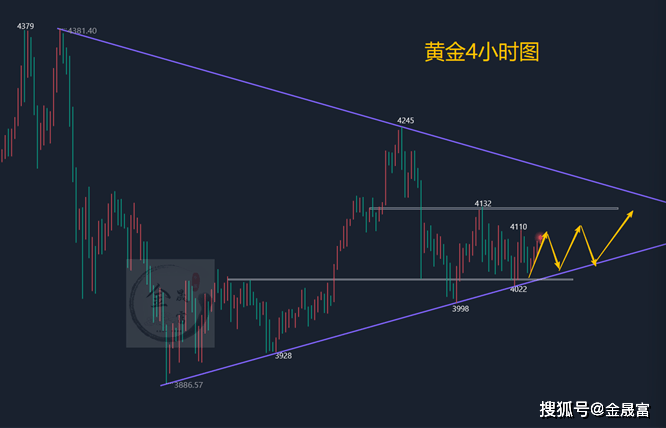
换资前言: 黄金目前的行情足以用惊心动魄4个字来形容,整体的波动幅度不算大,但是来来回回洗盘的次数可不 少,有时候就是看破位了才选择去进场,进场了发现是虚破,于是骂骂咧咧的亏了钱,然后骂骂咧咧的 在下一次要破位的时候进场,赌了个不破位,结果破位之后骂骂咧咧又亏一单,于是骂骂咧咧选择不进 场了,结果惊奇的发现,自己前期看的支撑位和压制位全部有效,于是一直都在骂骂咧咧。这大概就是 现在投资者的状况吧,也不是看不对,就是做不对,做着做着,自己的交易心态还崩了,多少就是黄金 在磨练人的意志了,这可能就是另一本"钢铁是怎样炼成的"。 近期有哪些消息面影响黄金原油走势?后市黄金多空该如何研判? 周二(11月25日)亚市早盘,现货黄金守住涨幅,目前交投于4140美元/盎司附近。周一现货黄金强势 收在4134.54美元/盎司,单日大涨1.7%,创近两周最大单日涨幅,成功站稳4100美元心理关口。美联储 内部"鸽声四起",12月降息概率从上周的40%一路飙升至81%,市场对宽松预期的重新定价成为本轮金 价暴拉的绝对主线。与此同时,俄乌局势再生波澜,基辅紧急拉响防空警报,地缘风险再度为黄金提供 避险溢价。双重利好共振之下,黄金多 ...
11.25黄金来回震荡洗盘节奏是关键!后市黄金分析参考
Sou Hu Cai Jing· 2025-11-24 16:31
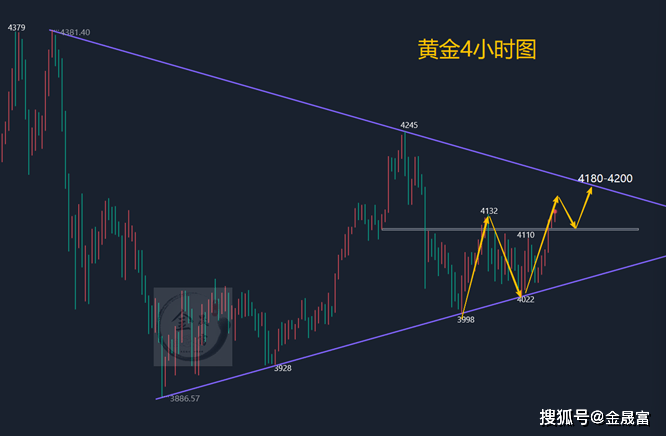
换资前言: 黄金目前的行情足以用惊心动魄4个字来形容,整体的波动幅度不算大,但是来来回回洗盘的次数可不 少,有时候就是看破位了才选择去进场,进场了发现是虚破,于是骂骂咧咧的亏了钱,然后骂骂咧咧的 在下一次要破位的时候进场,赌了个不破位,结果破位之后骂骂咧咧又亏一单,于是骂骂咧咧选择不进 场了,结果惊奇的发现,自己前期看的支撑位和压制位全部有效,于是一直都在骂骂咧咧。这大概就是 现在投资者的状况吧,也不是看不对,就是做不对,做着做着,自己的交易心态还崩了,多少就是黄金 在磨练人的意志了,这可能就是另一本"钢铁是怎样炼成的"。 多单策略: 威廉姆斯上周五表示,美国利率可能在不危及美联储通胀目标的情况下下降,同时有助于防止就业市场 进一步恶化。根据 CME FedWatch 工具,受威廉姆斯的鸽派表态推动,下月降息的押注从周五的 40% 飙升至 72%。与此同时,投资者正在等待本周晚些时候公布的重要经济数据,包括美国零售销售、初 请失业金人数以及生产者物价指数(PPI)。美国政府停摆推迟了原本用于判断降息概率的关键经济数 据发布。降息路径相当难以预测,接近五五开,因此金价可能继续在当前区间震荡。我认为黄金短期内 不 ...
11月24日金价,大家提前做好准备,明后两天,金价很可能大变盘
Sou Hu Cai Jing· 2025-11-24 16:26
Core Viewpoint - The recent divergence between international and domestic gold prices indicates underlying market dynamics, with key events expected to influence gold prices in the near future [1][3][5]. Group 1: International Gold Market Dynamics - International spot gold is trading around $4063.94 per ounce, showing a slight decline of 0.35% from the previous day [1]. - Global central banks have increased their gold holdings by 166 tons, maintaining a historically high level of purchases despite a slowdown in growth [3]. - The Federal Reserve's monetary policy, particularly the upcoming inflation and employment data, will be crucial in determining future gold price movements [5][6]. Group 2: Domestic Gold Market Trends - Domestic gold prices, such as the T D price at 932.03 yuan per gram, have risen by 0.49%, contrasting with the international market [1]. - The demand for physical gold in China is supported by seasonal factors, including wedding seasons and asset preservation needs [10]. - The relationship between domestic and international gold prices is asymmetric, with domestic prices showing less volatility in response to international price changes [10]. Group 3: Geopolitical Influences - The geopolitical situation in the Middle East, particularly the U.S.-Saudi defense agreements, adds uncertainty to gold prices, potentially driving investors towards safe-haven assets like gold [8]. - Historical precedents show that geopolitical tensions can lead to significant increases in gold prices, as seen during the Russia-Ukraine conflict [8]. Group 4: Investment Strategies and Tools - Various investment tools are available for gold investors, including gold ETFs, T D trading, and futures contracts, each with different risk profiles and liquidity [12]. - The performance of gold mining stocks is closely tied to gold prices, but they exhibit greater volatility compared to physical gold [14]. Group 5: Economic Indicators and Predictions - Economic forecasts suggest a potential slowdown in global growth, with central banks increasing gold reserves as a hedge against economic uncertainty [12][18]. - Predictions for gold prices in 2025 vary widely among investment banks, reflecting differing assessments of Federal Reserve policies and geopolitical risks [27].
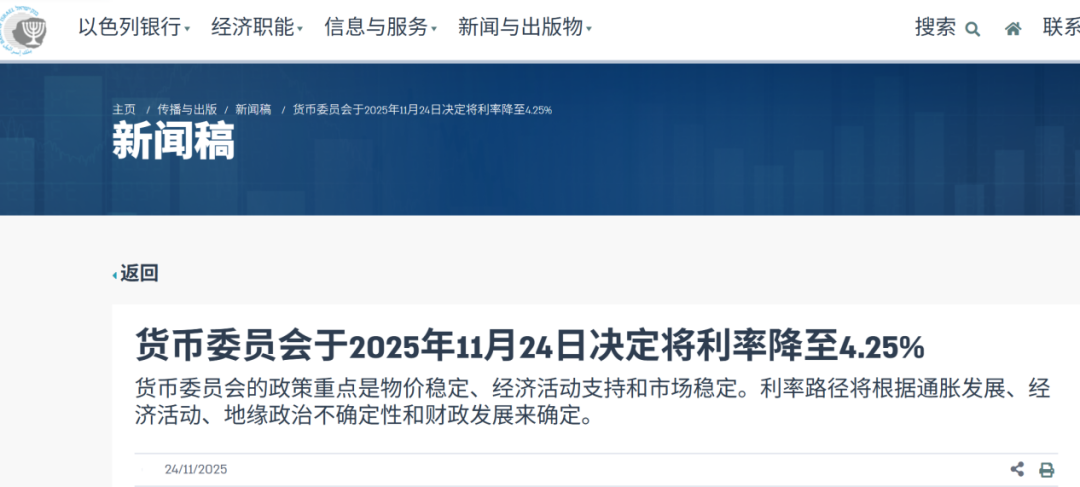
刚刚,降息25个基点!
Zhong Guo Ji Jin Bao· 2025-11-24 15:10
Core Viewpoint - The Bank of Israel has lowered its interest rate by 25 basis points to 4.25%, marking the first rate cut since January 2024, indicating a shift towards a more accommodative monetary policy [1][5]. Economic Indicators - The decision to cut rates aligns with market expectations, as 13 out of 14 economists predicted a reduction to 4.25% [5]. - The annual inflation rate in Israel has eased, stabilizing at 2.5% in October, with expectations for a slight increase by year-end before stabilizing within target ranges [5]. - The labor market remains tight, with a high ratio of job vacancies to unemployment and ongoing wage growth [5]. Market Reactions - The Israeli stock market has shown positive performance, with indices rising and risk premiums slightly above pre-war levels [5]. - The New Israeli Shekel has appreciated against the US dollar by 1.3% and against the euro by 2.9% since the last rate decision [6]. Economic Growth - Israel's GDP grew by 12.4% year-on-year in Q3 2025, significantly surpassing the expected 7.3%, driven by strong private consumption, exports, and fixed asset investment [6]. - Private consumption increased by 23%, fixed asset investment rose by 36.9%, and exports of goods and services grew by 23.3% in Q3 [6]. Future Outlook - The Bank of Israel's monetary policy will focus on price stability, supporting economic activity, and maintaining market stability, with future rate decisions influenced by inflation, economic activity, and geopolitical uncertainties [5].