自动驾驶

Search documents
36亿注资!一汽战略控股卓驭科技 央国企智驾生态布局再落重子
Xin Lang Cai Jing· 2025-11-23 06:36
Core Insights - The strategic investment of over 3.6 billion yuan from China FAW Group into Zhuoyue Technology marks a significant development in the intelligent driving sector, with Zhuoyue's post-investment valuation exceeding 10 billion yuan [1][3] - Zhuoyue Technology will continue to operate independently, maintaining its existing management team and technological direction, while benefiting from China FAW's resources and business collaboration [1][3] Company Overview - Zhuoyue Technology, originally the automotive division of DJI, was established in 2016 and became an independent entity in 2023, rebranding itself in June 2024 [3] - The company focuses on developing high-level intelligent driving systems that cover various scenarios, including highways, urban areas, and parking, with its core product being the Chengxing platform [3][4] Market Position and Strategy - Zhuoyue Technology aims to penetrate the fuel vehicle market, which is seen as a strategic breakthrough point amidst increasing competition in the intelligent driving sector [4] - The company has established partnerships with several major automotive manufacturers, including China FAW, Volkswagen, and BYD, to expand its ecosystem [4][5] Investment Landscape - The investment from China FAW is part of a broader trend where multiple automotive companies invest in Zhuoyue Technology while allowing it to remain independent, reflecting a shift in the intelligent driving industry's dynamics [6] - The automatic driving sector has seen significant financing activity in 2025, with approximately 20 financing events totaling around 35 billion yuan, indicating a growing interest in the commercialization of technology [6]

雷军提醒:辅助驾驶不是自动驾驶,驾驶时仍需时刻保持专注
Sou Hu Cai Jing· 2025-11-23 06:25
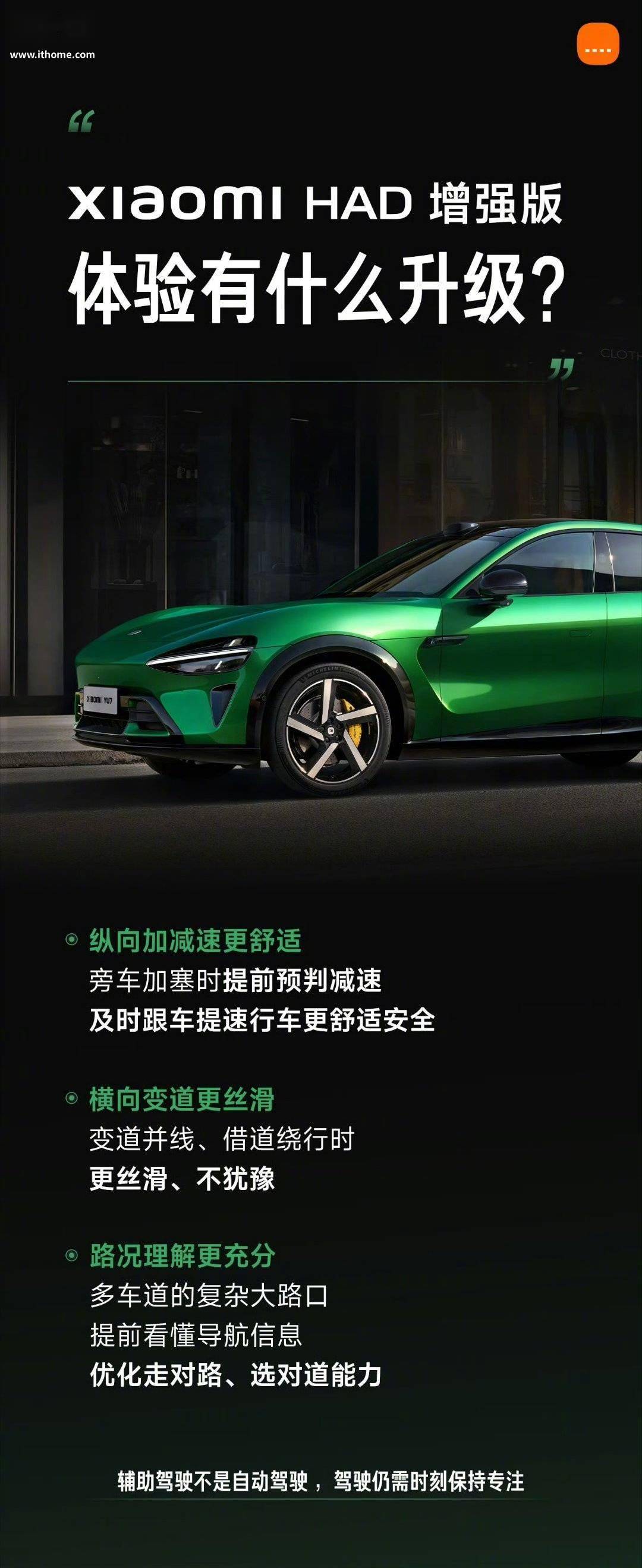
IT之家 11 月 23 日消息,小米创办人、董事长兼 CEO 雷军今日发文,总结了小米端到端辅助驾驶 HAD 增强版的升级点。 纵向加减速更舒适,旁车加塞时提前预判减速,及时跟车提速行车更舒适安全。 横向变道更丝滑,变道并线、借道绕行时,更丝滑、不犹豫。 路况理解更充分,多车道的复杂大路口,提前看懂导航信息,优化走对路、选对道能力。 雷军也再次提醒:辅助驾驶不是自动驾驶,驾驶时仍需时刻保持专注。 据IT之家此前报道,在 11 月 21 日 2025 广州车展开幕日当天,小米汽车端到端辅助驾驶"Xiaomi HAD 增强版"正式发布,其在 1000 万 Clips 版本的基础上 引入了「强化学习」与「世界模型」,同时 AEB 防碰撞辅助升级,并新增紧急转向辅助。 车道保持辅助 - 预警 车道保持辅助 - 纠偏 紧急车道保持 盲区监测预警 车门开启预警 变道辅助预警 其他安全能力 超速告警 红绿灯提醒 自适应防眩目矩阵3 辅助驾驶不是自动驾驶,驾驶仍需时刻保持 侧向安全能力 ...


IT员工抄公司量化代码赚8千万,被罚1.7亿;传毫末智行停工解散、赔偿不明;实习生抽中显卡被公司要求上交?回应来了 | AI周报
AI前线· 2025-11-23 05:33
Group 1 - An IT employee in Zhejiang was fined 1.7 billion yuan for stealing company trading algorithms and profiting 88.58 million yuan through insider trading [3][4][5] - The employee, Lin Yiping, was involved in key responsibilities at a tech company linked to two private equity firms, allowing him access to confidential information [3][4] - The regulatory body found sufficient evidence of his wrongdoing, leading to a five-year ban from the securities market [5] Group 2 - The autonomous driving company, Haomo Zhixing, backed by Great Wall Motors, has reportedly ceased operations and is in the process of dissolution [6][7][8] - Haomo Zhixing, established in November 2019, was known for its advancements in autonomous driving technology and had over a thousand employees at its peak [6][7] - The company faced challenges as Great Wall Motors shifted focus to other suppliers, leading to significant management turnover [7] Group 3 - ByteDance's Seed team has seen the departure of seven core members this year, including key figures who have joined Meta and Apple [11] - Former Baidu VP Jing Kun's AI startup Genspark raised $275 million in Series B funding, achieving a valuation of $1.25 billion [12][13] - TikTok's algorithm head, Song Yang, has left for Meta, indicating a trend of talent migration from TikTok to major competitors [14][15] Group 4 - Rabbit, a tech company, has reportedly delayed employee salaries for several months, leading to employee strikes, while the CEO claims a new AI hardware version is forthcoming [16] - New Oriental's chairman, Yu Minhong, faced backlash for a planned trip to Antarctica with employees, which he later clarified was intended for educational purposes [17][18][19] Group 5 - Alibaba's AI application "Qianwen" faced service interruptions due to high user traffic on its launch day, prompting a response from the company [20][21] - Ant Group's AI assistant "Lingguang" also experienced service issues shortly after its launch, indicating high demand for AI tools [22] Group 6 - Google launched the Gemini 3 Pro image model, which is designed for advanced image generation and editing tasks, showcasing significant improvements over competitors [29][30][31] - OpenAI introduced the GPT-5.1-Codex-Max model, optimized for long-running tasks and capable of handling extensive context windows [32][33] - Musk's xAI company released Grok 4.1 Fast, a low-cost model that excels in real-time applications, indicating a competitive landscape in AI development [34][35]

雷军缺席!两大新主角联袂登场 “处处都有华为的身影”
Zhong Guo Ji Jin Bao· 2025-11-23 03:04
Core Insights - The absence of key figures like Lei Jun at the 2025 Guangzhou Auto Show marks a shift in the automotive landscape, with Huawei's new brand, Huawei QianKun, emerging as a significant player [2][4] - The proportion of new energy vehicles (NEVs) at the show increased to 57.97% from 43.72% in the previous edition, highlighting the growing importance of NEVs in the market [2][8] Group 1: Industry Trends - The 2025 Guangzhou Auto Show showcased 1,085 vehicles, with 629 being NEVs, indicating a strong consumer interest in electric vehicles [8] - The event highlighted three major trends: the rise of personalized and large-volume models, the pursuit of individuality by automakers, and the ongoing debate between range-extended and pure electric technologies [9][10] Group 2: Huawei's Role - Huawei QianKun transitioned from a background supplier to a prominent exhibitor, showcasing partnerships with various automakers and emphasizing its smart automotive solutions [4][5] - The collaboration between Huawei and automakers like Avita is deepening, with a focus on upgrading their partnership to include comprehensive areas such as user insights and product development [4][5] Group 3: New Energy Vehicles - The introduction of new brands like "Qijing" by GAC Group in collaboration with Huawei aims to target the high-end smart NEV market, with plans to launch models priced around 350,000 yuan [5][6] - The competition between range-extended and pure electric vehicles remains a hot topic, with companies like NIO advocating for pure electric technology while others explore hybrid solutions [10] Group 4: AI Integration - AI technology is becoming a central theme, with companies like Seres and XPeng showcasing advancements in AI-driven automotive solutions [11][12] - XPeng's focus on AI applications, including autonomous driving and humanoid robots, reflects a broader trend of integrating AI into the automotive industry [12][14]

毫末智行突然原地解散!宇宙第一正式下线
具身智能之心· 2025-11-23 02:11
Core Insights - The article discusses the recent dissolution of a prominent AI driving company, Maomao Zhixing, which has faced significant operational challenges and staff turnover [2][3]. Company Overview - Maomao Zhixing was established on November 29, 2019, as a subsidiary of Great Wall Motors, focusing on autonomous driving technology [6]. - The company initially made rapid advancements, launching its first autonomous delivery vehicle, "Xiao Mo Tuo," in November 2020, and developing the MANA data intelligence system by December 2021 [6][8]. Recent Developments - The company has experienced substantial layoffs, with reports indicating that nearly one-third to half of its functional departments were cut last year [5]. - Key personnel, including the Vice President of Technology and the Public Relations team, have left the company, raising concerns about its stability [5][6]. - As of June 2023, the company's official communications have ceased, with the last update being a holiday poster on October 1 [5]. Product and Technology - In April 2023, Maomao Zhixing launched the DriveGPT autonomous driving generative model, coinciding with the rise of ChatGPT [8]. - The HPilot 3.0 driver assistance system has been integrated into nearly 20 models under Great Wall Motors by 2025 [8]. - However, competition has intensified, with Yuanrong Qixing providing end-to-end smart driving solutions for Great Wall Motors, leading to speculation that Maomao Zhixing has become less favored within the company [8]. Market Reaction - Users of Maomao Zhixing's products have expressed concerns and dissatisfaction regarding their experience following the company's potential closure [9].

自动驾驶之心企业服务与咨询正式推出!
自动驾驶之心· 2025-11-23 02:04
点击下方 卡片 ,关注" 自动驾驶之心 "公众号 戳我-> 领取 自动驾驶近30个 方向 学习 路线 自动驾驶之心企业服务与咨询正式推出啦! 合作客户 平台目前已经和国内多个高校、职业院校、Tier1、主机厂、具身机器人公司建立了企业合作,我们期望能够 触达更多需要升级的公司,推动领域的进步。 联系我们 欢迎添加负责人微信oooops-life,做进一步咨询。 品牌宣传; 产业咨询; 技术培训; 团队升级; 创业前两年,团队一直在专注C端市场,为领域研发了近50门自驾&具身课程。虽谈不上完美,但也提供了很 多学习、求职和工作的资源。今年初始,我们陆续收到了很多企业的业务需求,特别是品牌宣传、技术咨询、 培训、团队升级等服务。 目前自动驾驶之心已经积累了近3年的行业咨询、培训经验,储备了大量的专家人才库,全平台粉丝近40w。 现正式对外推出企业服务,包括但不限于: 我们将助力技术路线的升级、团队人员的升级、提供更多决策参考。 ...

小米的MiMo-Embodied,到底讲的是什么?整合自驾和具身任务,29项SOTA!
具身智能之心· 2025-11-22 16:03
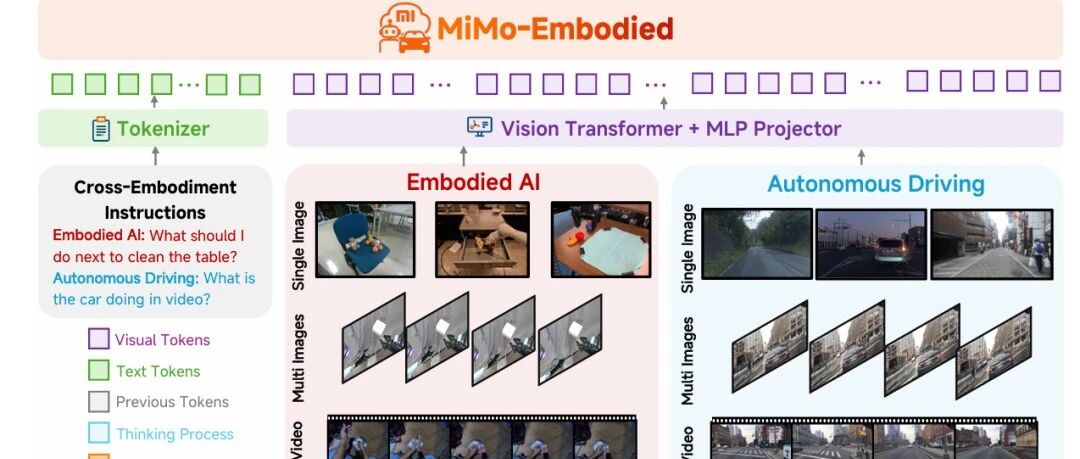
Core Insights - The article discusses Xiaomi's MiMo-Embodied, the first cross-domain foundational model that integrates autonomous driving and embodied intelligence, achieving state-of-the-art (SOTA) performance across 29 benchmark tests [5][7]. Summary by Sections Existing Model Limitations - Current models are limited to single domains and lack a unified visual language model (VLM) that connects outdoor autonomous driving and indoor embodied intelligence, resulting in insufficient cross-scenario generalization capabilities [5]. MiMo-Embodied's Solutions - MiMo-Embodied is the first open-source cross-domain unified model, integrating tasks from both autonomous driving and embodied intelligence into a single framework, enabling positive transfer and mutual enhancement between the two domains [7]. Comprehensive Capabilities - The model supports three core capabilities for autonomous driving: environment perception, state prediction, and driving planning, as well as three core capabilities for embodied intelligence: usability prediction, task planning, and spatial understanding [8]. Training and Data Construction - MiMo-Embodied employs a carefully designed dataset and a four-stage training strategy to overcome cross-domain task interference, leading to performance improvements [9]. Model Architecture - The architecture includes a Vision Transformer (ViT) for visual encoding, a multi-layer perceptron (MLP) for projection, and a large language model (LLM) for text understanding and logical reasoning [12][13]. Training Strategy - The four-stage training strategy includes: 1. General and embodied knowledge learning 2. Autonomous driving knowledge learning 3. Chain of Thought (CoT) reasoning fine-tuning 4. Reinforcement Learning (RL) fine-tuning [20][21]. Performance Metrics - MiMo-Embodied demonstrates superior performance in usability prediction, task planning, spatial understanding, environment perception, state prediction, and driving planning across various benchmarks [24][25]. Ablation Studies - Single-domain training leads to significant performance loss in cross-domain generalization, while the four-stage training strategy enhances both embodied and autonomous driving performance by 4% and 8.1%, respectively [27]. Real-World Task Evaluation - The model has been evaluated in real-world tasks, showcasing its capabilities in embodied navigation and manipulation tasks [29].
罗福莉首个小米成果!开源具身大模型
量子位· 2025-11-22 06:00
Core Insights - The article discusses the launch of MiMo-Embodied, the world's first open-source model that integrates embodied intelligence and autonomous driving, developed by Xiaomi's MiMo team [2][6][8]. Group 1: Model Overview - MiMo-Embodied is a unified multimodal foundation model that successfully merges the fields of autonomous driving and embodied AI [6][8]. - The model achieved state-of-the-art (SOTA) performance across 29 benchmarks in tasks related to planning, spatial understanding, environmental perception, and driving [8][25]. Group 2: Challenges Addressed - Previous models in the embodied and autonomous driving domains lacked a unified approach, limiting their ability to interact effectively with dynamic environments [10][12]. - The absence of a comprehensive evaluation system for cross-embodied capabilities hindered the assessment of models' performance across both fields [13][14]. Group 3: Data and Training Strategy - MiMo-Embodied utilizes a high-quality dataset that encompasses general visual understanding, embodied tasks, and driving scenarios, employing a progressive four-stage training strategy [19][21]. - The training strategy includes phases for embodied AI supervision, autonomous driving supervision, chain-of-thought reasoning, and reinforcement learning [23][24]. Group 4: Experimental Results - Quantitative evaluations showed MiMo-Embodied's competitive results in affordance prediction, task planning, and spatial understanding, outperforming both general multimodal models and specialized embodied models [28][29]. - In autonomous driving capabilities, the model demonstrated strong performance in perception, prediction, and planning across various benchmark tests [30][31]. Group 5: Real-World Applications - The model's qualitative assessments highlighted its effectiveness in complex interactive environments, particularly in embodied navigation and operational tasks [32][34]. - MiMo-Embodied excelled in handling diverse driving scenarios, including intersection turns, lane changes, and obstacle avoidance, showcasing its robust decision-making capabilities [38][41].

你的快递,是无人车送的
Jing Ji Guan Cha Wang· 2025-11-22 04:40
Core Insights - The article highlights the rapid adoption and operational efficiency of unmanned delivery vehicles in the logistics sector, particularly in remote areas where traditional delivery methods are less viable [2][3][4][5][6]. Group 1: Unmanned Vehicle Adoption - Unmanned delivery vehicles are increasingly being deployed across various provinces, with over 6,000 units expected to be operational by the end of 2024, surpassing the number of unmanned taxis [3][10]. - Major logistics companies like Zhongtong, Jitu, and Shunfeng have invested heavily in unmanned vehicles, with Zhongtong deploying nearly 3,000 units and plans for further expansion [3][4]. - The cost of unmanned vehicles has significantly decreased, with prices dropping from over 1 million yuan in 2018 to a range of 40,000 to 70,000 yuan by 2025, making them more accessible for logistics companies [13][14]. Group 2: Operational Efficiency and Cost Savings - Unmanned vehicles can operate in sparsely populated areas, reducing delivery costs significantly. For instance, one operator reported saving 200 yuan daily on fuel and labor costs [2][4]. - In rural areas, unmanned vehicles can deliver packages even when not fully loaded, making operations more cost-effective compared to traditional delivery methods [4][5]. - The use of unmanned vehicles has allowed logistics companies to address labor shortages, particularly in regions where attracting delivery personnel is challenging [5][6]. Group 3: Technological Advancements - Continuous improvements in unmanned vehicle technology, including better sensors and algorithms, have enhanced their operational reliability in various weather conditions [7][14]. - Companies like Jiushi Intelligent are iterating their vehicle models annually to adapt to different climates and road conditions, ensuring stable performance [7][12]. - The integration of software updates and real-time data collection is helping to optimize the performance of unmanned vehicles in real-world scenarios [7][12]. Group 4: Regulatory Environment and Challenges - The deployment of unmanned vehicles is contingent on local government regulations, with over 100 cities having opened road rights for these vehicles, though the distribution remains uneven [10][12]. - Companies are actively engaging with local authorities to establish operational frameworks and ensure compliance with safety standards [9][10]. - Despite the growing acceptance of unmanned vehicles, concerns about liability and accident management remain, necessitating clearer legal frameworks [15][16]. Group 5: Future Outlook - The logistics industry is optimistic about the long-term integration of unmanned vehicles, viewing them as a transformative force in delivery operations [16][17]. - Recent government initiatives are promoting the use of unmanned vehicles, indicating a supportive policy environment for their continued expansion [16][17]. - The consensus within the industry is that the introduction of unmanned vehicles marks the beginning of a new phase in logistics, rather than an endpoint [17].

重磅官宣!三一重卡第四代自动驾驶卡车明年量产
第一商用车网· 2025-11-22 04:08
Core Viewpoint - The strategic cooperation between SANY Heavy Truck and Pony.ai marks a significant step towards the large-scale commercialization of autonomous freight transport in China, with the fourth-generation autonomous trucks set for mass production and operation starting next year [1][14]. Group 1: Product Development and Features - The fourth-generation autonomous truck is built on SANY Heavy Truck's advanced pure electric platform, featuring a battery capacity of over 400 kWh, which is expected to reduce carbon emissions by approximately 60 tons annually, setting a benchmark for low-carbon transformation in the industry [3][14]. - The vehicle incorporates a fully redundant control chassis design, enhancing safety and reliability by covering six core systems: steering, braking, communication, power, computing, and sensors, thus elevating safety standards in autonomous freight transport [5][14]. Group 2: Operational Efficiency - The "1+4" autonomous driving solution (one manned lead vehicle and four unmanned follower vehicles) is projected to reduce freight costs by 29% per kilometer and increase profits by 195%, providing a replicable solution for cost reduction and efficiency enhancement in smart logistics [8][14]. Group 3: Strategic Collaboration and Industry Impact - Since the initiation of their strategic partnership in 2022, SANY Heavy Truck's expertise in control chassis and vehicle development has complemented Pony.ai's leading autonomous driving technology, achieving the world's first application of "5G + autonomous driving + electrification" [11][12]. - The collaboration has established a "vehicle + technology + scenario" model, which serves as a paradigm for efficient industry cooperation, laying a solid foundation for the upcoming mass production of a thousand units [12][14].