
供给侧结构性改革

Search documents
政策助力破解结构性矛盾,行业景气度持续上行,石化ETF(159731)布局价值凸显
Sou Hu Cai Jing· 2025-11-26 02:12
Group 1 - The core viewpoint of the article highlights the recent performance of the petrochemical ETF, which has seen a slight decline of 0.12%, while several of its constituent stocks have shown positive gains. The ETF has experienced net inflows in 8 out of the last 10 trading days, totaling 24.13 million yuan, with its latest share count reaching a record high of 227 million shares [1][2] - The introduction of the "Petrochemical Industry Steady Growth Work Plan (2025-2026)" aims to address the dual challenges of intensified competition in basic raw materials and insufficient supply of high-end chemicals. The plan's core objective is to reduce "involutionary" competition and shift the development model from "quantitative expansion" to "qualitative improvement" [1] - According to Zhongyin Securities, the industry has been significantly impacted by tariff-related policies and fluctuations in crude oil prices. The medium to long-term investment recommendations include: 1) Recovery in demand supported by policies, with continuous optimization on the supply side, leading to potential dual improvements in performance and valuation for leading enterprises; 2) Rapid development in downstream industries such as semiconductor materials, OLED materials, and new energy materials, providing ample growth opportunities; 3) Focus on sub-industries like fluorochemicals, agrochemicals, refining, dyes, polyester filament, and tires, which are expected to maintain or improve their high levels of prosperity [1] Group 2 - The petrochemical ETF closely tracks the CSI Petrochemical Industry Index, with the basic chemical industry accounting for 60.85% and the oil and petrochemical industry for 32.16%. Driven by policy, China's petrochemical industry is expected to reshape its competitiveness, with supply-side structural reforms promoting sustained improvement in industry prosperity [2]
打通堵点为大市场创造更多优势
Jing Ji Ri Bao· 2025-11-25 00:42
Core Viewpoint - The article emphasizes the importance of building a unified national market to enhance domestic demand and drive economic growth in China, particularly in the context of the 14th Five-Year Plan [1]. Group 1: Market Potential and Economic Structure - China's super-large market is characterized by a steadily expanding middle-income group, advanced digital infrastructure, and a well-defined regional development pattern, which together create a robust economic ecosystem [1]. - The current population of over 1.4 billion is projected to see the middle-income group exceed 800 million in the next decade, indicating significant market potential [1]. - The diverse and tiered demand from various demographics, such as the elderly seeking health services and the younger generation desiring personalized experiences, provides ample opportunities for innovation and industrial upgrades [1]. Group 2: Reform and Demand Transformation - To convert market potential into effective demand, it is essential to deepen reforms that eliminate barriers to economic circulation, such as local protectionism and market segmentation [2]. - The construction of a unified national market will facilitate smoother movement of goods and resources, allowing local products to access broader markets at lower costs and higher efficiency [2]. - The focus should be on enhancing supply quality and optimizing income distribution alongside expanding domestic demand, addressing the shift in consumer preferences from quantity to quality [2]. Group 3: Technological Empowerment - Technology plays a crucial role in unlocking new spaces for domestic demand, with China's vast data resources and highly digitalized consumption activities extending consumption scenarios [3]. - The development of the digital and smart economy promotes deeper integration of online and offline consumption, creating new consumer hotspots and transforming supply-demand matching [3]. - Utilizing big data allows companies to gain insights into subtle changes in consumer needs, enabling precise targeting and efficient supply, thus making the super-large market dynamic and capable of generating new demands [3].
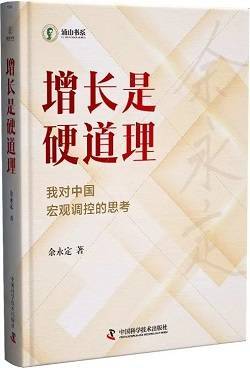
余永定:增长是硬道理
Sou Hu Cai Jing· 2025-11-25 00:31
Core Insights - The book "Growth is the Hard Truth" by Yu Yongding provides a historical commentary on China's macroeconomic issues from 2019 to 2025, analyzing the causes of declining growth rates and the challenges of structural reforms [1][2] - The author emphasizes the need for enhanced counter-cyclical adjustments in macroeconomic policies to help China move out of the "L-shaped" growth phase [1][6] Summary by Sections Economic Growth and Policy Adjustments - The book discusses the evolution of China's macroeconomic policies, highlighting the shift in focus from high growth to stabilizing prices and addressing overcapacity since 2011 [3][4] - It notes that China's GDP growth rate has declined from 10.3% in 2010 to a target of 5% by 2025, indicating a significant slowdown in economic momentum [5] Key Issues and Recommendations - The author identifies critical issues such as the housing market, local government debt, and the impact of the pandemic, providing judgments and suggestions for each [1] - The book argues against the notion that a decline in growth to 6% or lower is inevitable, advocating for proactive fiscal and monetary policies to stimulate demand [7][8] Infrastructure and Local Government Debt - Infrastructure investment is highlighted as a crucial tool for macroeconomic regulation, with a call for increased central government support to alleviate local government debt issues [8] Global Perspectives and Lessons - The book reflects on changes in Western macroeconomic thought post-global financial crisis, discussing the implications of aggressive fiscal and monetary policies adopted by Western countries [8] Annual Economic Analysis - The final chapter provides an annual analysis of China's economic situation based on statistical data, offering policy recommendations to achieve growth targets [9]

金观平:打通堵点为大市场创造更多优势
Jing Ji Ri Bao· 2025-11-25 00:03
Group 1 - The core viewpoint of the articles emphasizes the importance of expanding domestic demand through the construction of a unified national market, which is seen as a strategic move to leverage China's vast market potential and support high-quality economic development [1][2][3] - China's current economic landscape is characterized by a growing middle-income group, advanced digital infrastructure, and a diverse regional development pattern, which together create a robust ecosystem for consumption upgrades [1][2] - The prediction from the Ministry of Commerce indicates that China's middle-income group will exceed 800 million in the next decade, highlighting significant market potential driven by diverse consumer demands across different demographics [1][2] Group 2 - To convert market potential into effective demand, it is essential to deepen reforms that address barriers in economic circulation, facilitating smoother flow of goods and factors across the country [2] - The strategy involves breaking down local protectionism and market segmentation, allowing regional products to access broader markets at lower costs, thus enriching consumer choices [2] - The focus on expanding domestic demand should be aligned with improving supply quality and optimizing income distribution, addressing the shift in consumer preferences from quantity to quality [2] Group 3 - Technological empowerment is identified as a key driver for unlocking new spaces in domestic demand, with China's large data scale and high digitalization enhancing consumer engagement [3] - The development of the digital and smart economy is crucial for integrating online and offline consumption, creating new consumption hotspots and transforming supply-demand matching [3] - By leveraging technology and breaking down barriers through innovation, the internal circulation of the economy can be strengthened, providing a stable foundation for future growth and resilience against external challenges [3]
今年是否上调赤字率红线?财政部回应:需综合考虑经济形势等各种因素
Mei Ri Jing Ji Xin Wen· 2025-11-24 08:07
Core Viewpoint - The Chinese government is focusing on strengthening local fiscal "three guarantees" to effectively respond to the impacts of the COVID-19 pandemic, emphasizing the need for proactive fiscal policies and targeted measures to support economic recovery [2][4]. Group 1: Fiscal Policy Measures - The Ministry of Finance will ensure the execution of existing policies to support economic recovery, with timely fund allocation and transfer payments being highlighted as effective [4]. - There will be a focus on industries and sectors severely affected by the pandemic, with plans to introduce targeted measures and optimize expenditure structures [4]. - The government aims to implement both short-term and long-term measures aligned with supply-side structural reforms to promote high-quality economic development [4]. Group 2: Economic Outlook - The relationship between fiscal revenue and economic performance is emphasized, with the potential for economic recovery and fiscal balance as the pandemic situation improves [4]. - The determination of fiscal deficits will consider various factors, including economic conditions and macroeconomic controls, and will undergo legal procedures such as review by the National People's Congress [5].

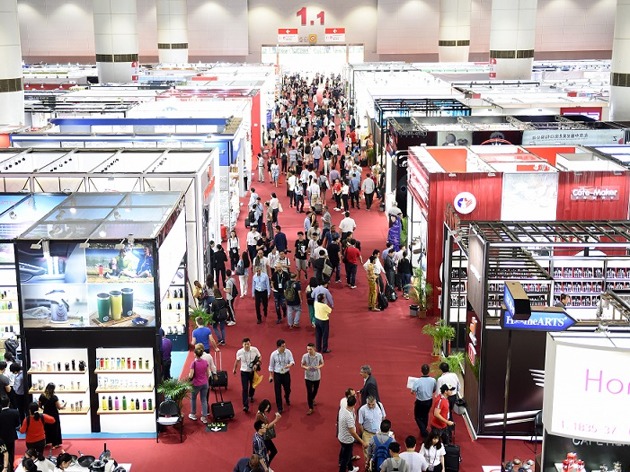
从广交会到进博会 中国外贸格局迎“多级跳”
Mei Ri Jing Ji Xin Wen· 2025-11-24 04:09
Core Viewpoint - The China International Import Expo (CIIE) represents a significant policy action by China to open its market to the world, following the Belt and Road Initiative, and aims to reshape the foreign trade landscape of China [2][3]. Group 1: Comparison between CIIE and Canton Fair - The Canton Fair, established in 1957, focused on expanding exports during a time when China's trade partners were limited, primarily to Eastern Europe [3]. - In contrast, the CIIE emphasizes a comprehensive opening-up strategy, focusing on imports to meet domestic market demands and support industrial and consumption upgrades [5][9]. Group 2: Significance of Shanghai as the Venue - Shanghai was chosen for the CIIE due to its strong economic growth, with a GDP growth rate of 6.9% and a consumption growth rate of 8%, indicating a robust market for imported goods [5][6]. - The city also has a significant outbound consumption, with over 43 million residents spending an average of $2,650 abroad, highlighting the need for better domestic supply [5][6]. Group 3: Characteristics of the CIIE - The CIIE will cover over 240,000 square meters, including both goods and service trade, attracting a diverse range of products from both developing and developed countries [7]. - It serves as an important opportunity for foreign companies to enter the Chinese market, particularly those with potential for expansion [7][8]. Group 4: Opportunities for Domestic Enterprises - The CIIE provides domestic and foreign enterprises in China with a platform to expand their sourcing channels, allowing them to introduce urgently needed products and services to the domestic market [8]. - This event is crucial for enhancing consumer satisfaction and supporting service trade enterprises in establishing partnerships and improving service capabilities [8]. Group 5: Trade Balance and Structural Reform - The CIIE is a key initiative in China's supply-side structural reform, aiming for high-quality imports and contributing to the country's economic rejuvenation [9][10]. - The strategy focuses on achieving a balance in trade, promoting both export quality and increased imports to meet the needs of domestic consumption upgrades [10].
韩文秀发表署名文章
财联社· 2025-11-24 00:09
Core Viewpoint - The article emphasizes the significant role of the "14th Five-Year Plan" period in the historical process of achieving socialist modernization in China, highlighting the need for a combination of goal-oriented and problem-oriented approaches to ensure steady progress in economic and social development [3][4]. Group 1: Importance of the "14th Five-Year Plan" Period - The "14th Five-Year Plan" period is crucial for advancing China's modernization, requiring a strategic focus on consolidating advantages, breaking bottlenecks, and addressing weaknesses [5][8]. - The period is characterized by a need to adapt to profound changes in domestic development conditions, including a shift towards a more balanced and sustainable economic model [6][7]. Group 2: Economic and Social Development Strategies - The article outlines the importance of formulating and implementing five-year plans as a key political advantage for the governance of the country, aiming for significant progress towards modernization by 2035 [5]. - It stresses the need to enhance the quality and efficiency of economic growth while maintaining reasonable growth rates, with a target of achieving per capita GDP at the level of moderately developed countries by 2035 [11]. Group 3: Addressing Challenges and Opportunities - The article discusses the dual challenges of strategic opportunities and risks in the current global landscape, emphasizing the need for resilience and proactive measures to strengthen domestic capabilities [6][9]. - It highlights the necessity of overcoming bottlenecks in high-quality development, particularly in technology and industry, to ensure sustainable progress [9][10]. Group 4: Enhancing National Strength - The article calls for a comprehensive enhancement of both hard and soft national power, focusing on economic, technological, and cultural strengths to improve China's global influence [16]. - It emphasizes the importance of ensuring security in development, advocating for a unified approach to development and safety to foster a stable and prosperous society [17].

2026年A股年度策略:科技成长的弹性与消费价值的回归
Zhongyuan Securities· 2025-11-21 09:22
External Environment - The Federal Reserve's policy has shifted from inflation reduction to seeking balance, with a focus on managing inflation and debt sustainability in 2026 [6][20] - The U.S. stock market has experienced significant growth despite aggressive interest rate hikes due to factors such as ineffective interest rate transmission, market expectations, and the resilience of technology sector profits [11][12] Internal Environment - The Chinese economy is facing challenges with slowing investment growth, weakened traditional industry momentum, and cautious market expectations, while consumer confidence needs to be boosted [21][22] - The government is implementing policies to enhance internal demand and stabilize the economy, focusing on preventing excessive competition and promoting upgrades in various industries [23][24] Market Environment - The market is experiencing a shift in risk preferences, with a potential transition from small-cap to large-cap stocks as valuation dynamics change [36] - The bond market has shifted from a bull market to a wide-ranging oscillation, with a focus on stable income assets and low-valuation value assets expected to attract incremental funds [39][40] Investment Outlook for 2026 - The technology sector, particularly AI and related industries, is expected to see a slowdown in profit growth after rapid valuation increases, with a focus on undervalued segments with performance support [7] - Traditional industries are advised to focus on quality upgrades driven by AI and the recovery of profits following capacity clearing due to anti-competitive policies [7] - The consumer sector is anticipated to experience a recovery in inventory cycles, with long-term capital gradually returning to the market, particularly in food and beverage, pharmaceuticals, and duty-free sectors [7][41]
「经济发展」林毅夫:坚持高质量发展 推进中国式现代化
Sou Hu Cai Jing· 2025-11-20 16:52
三、实现高质量发展的主要方式。一要加快构建新发展格局。注重科技创新,打好关键核心技术攻坚 战。发挥我国超大规模市场优势,推动供应链产业链优化升级。依托国内大循环,吸引全球高质量的商 品、资源和要素,畅通国内国际双循环。二要构建高水平社会主义市场经济体制。坚持社会主义市场经 济改革方向,毫不动摇巩固和发展公有制经济,毫不动摇鼓励、支持、引导非公有制经济发展。充分发 挥市场在资源配置中的决定性作用。三要深化供给侧结构性改革。提升供给体系的水平和质量,更好适 应、引领和创造新需求。同时加强需求侧管理,努力扩大内需。实施区域协调发展战略。四要在高水平 对外开放中推动高质量发展,促进国际合作,实现互利共赢。五要把实体经济特别是制造业做实、做 强、做优,加快构建市场竞争力强、可持续的现代产业体系。六要深入实施创新驱动发展战略。坚持科 技是第一生产力、人才是第一资源、创新是第一动力,塑造发展新动能新优势。充分发挥民营企业在科 技创新中的重大作用,走"专精特新"发展道路。 【林毅夫:长安街读书会成员、北京大学新结构经济学研究院院长】 注:授权发布,本文已择优收录至"长安街读书会"理论学习平台(人民日报、人民政协报、北京日报、 ...

持续夯实高质量发展安全根基
Jing Ji Ri Bao· 2025-11-20 00:41
Group 1: Innovation and Technology - The current technological revolution and industrial transformation are characterized by unprecedented levels of innovation, particularly in fields like artificial intelligence and quantum communication, which are reshaping global order and development patterns [2] - China's original innovation capabilities remain relatively weak, especially in critical core technologies, leading to risks in certain industrial sectors [2] - There is a need to enhance security guarantees while promoting innovation and industrial upgrading, ensuring that core technologies are firmly in national control [2] Group 2: Economic Coordination and Development - Long-standing issues of uncoordinated development in China manifest as imbalances in industrial growth and regional disparities [3] - Emphasis on supply-side structural reforms is crucial to maintain the stability of industrial and supply chains while fostering new industries and upgrading traditional sectors [3] - Regional coordination and urban-rural integration are essential for optimizing productivity distribution and reducing disparities [3] Group 3: Ecological and Energy Security - Respecting and protecting nature is vital for building a modern socialist country, necessitating a focus on ecological and energy security [4] - Continuous improvement of environmental quality and a transition to green, low-carbon development are prioritized to enhance ecological resilience [4] - A multi-faceted energy supply system that includes traditional, renewable, and new energy sources is essential for ensuring energy security [4] Group 4: Open Economy and Security - Increased openness in China's economy necessitates a heightened focus on security, particularly in foreign trade and investment [5] - Diversifying trade partnerships and aligning with high-standard international economic rules are critical to mitigate risks associated with over-reliance on single partners [5] - As Chinese enterprises expand globally, there is a need for robust policy guidance and emergency management systems to protect overseas interests [5] Group 5: Shared Development and Social Equity - Shared development aims to address social equity issues, ensuring that economic growth benefits all citizens and fosters social stability [6] - Enhancing public services in education, healthcare, and social security is essential for improving the quality of life and ensuring equitable access [6] - Promoting high-quality employment is fundamental to achieving social stability and ensuring that laborers share in the economic development outcomes [6]