
内需主导

Search documents
中央经济工作会议,多位券商首席经济学家火速解读!
Zheng Quan Shi Bao Wang· 2025-12-12 03:48
Core Viewpoint - The Central Economic Work Conference held in Beijing from December 10 to 11 outlines the economic work for 2026, emphasizing a shift in policy focus from merely increasing efforts to enhancing collaboration and effectiveness in economic measures [1] Policy Framework - The policy tone has shifted from "promoting stability through progress" to "seeking progress while maintaining stability and improving quality and efficiency" [2][3] - The conference continues to advocate for a moderately loose monetary policy, with potential adjustments in reserve requirement ratios and interest rates to stimulate economic growth [2] - Fiscal policy is expected to maintain necessary levels of deficit and debt, with a focus on optimizing expenditure structure rather than aggressive expansion [3] Domestic Demand Strategy - The strategy to "build a strong domestic market" is prioritized, addressing the imbalance between strong supply and weak demand [4] - Key initiatives include optimizing the implementation of "two new" policies (equipment updates and trade-ins), establishing a plan for urban and rural income growth, and addressing the decline in fixed asset investment [4][5] Innovation and Competition Regulation - The conference emphasizes "innovation-driven development" and the need to cultivate new growth drivers while addressing "involution" in competition [6] - Specific focus areas for innovation include advancements in artificial intelligence, semiconductor research, and the application of digital technologies in manufacturing [6] - The regulation of competition is set to become a key reform task, with a focus on establishing a unified national market and addressing issues like price wars and local investment incentives [7] Real Estate and Capital Market - The policy approach to the real estate market has shifted to a long-term model focusing on controlling increments, reducing inventory, and optimizing supply [7] - The capital market is expected to see deeper reforms, with a shift in focus from stability to enhancing market mechanisms and supporting new quality productivity [7]
社服视角学习中央经济工作会议精神的体会:内需主导提振消费,民生为大谋办实事
Bank of China Securities· 2025-12-12 03:42
社会服务 | 证券研究报告 — 行业点评 2025 年 12 月 12 日 社服视角学习中央经济工 作会议精神的体会 内需主导提振消费,民生为大谋办实事 中央经济工作会议(以下简称会议)于 2025 年 12 月 10 日至 11 日在北京举 行,中共中央总书记、国家主席、中央军委主席习近平出席会议并发表重要 讲话。习总书记重要讲话主要总结了 2025 年我国经济工作,分析了当前经济 形势,部署了 2026 年经济工作。会议提出的五个"必须"是做好新形势下经 济工作新的认识和体会。结合会议确定的 2026 年"八大"经济工作重点任务, 从社会服务行业的视角,我们预计内需主导是提振消费的重要支撑动力,我 们维持行业 强于大市 评级。 支撑评级的要点 投资建议 在学习习总书记重要讲话和会议精神后,我们对 2026 年及"十五五"期 间以社会服务为主的消费恢复及发展方向更为明确,对行业及企业的进 一步深耕与供给创新更有信心。我们建议关注三条主线:一是会议明确 的稳岗就业标的科锐国际、北京人力、上海外服;二是跨境消费需求提 振后有望进一步释放业绩增量的同程旅行、岭南控股、众信旅游、长白 山、黄山旅游;三是新消费场景与 ...
中央经济工作会议会议确定:明年经济工作这8项重点任务
Ren Min Ri Bao· 2025-12-12 00:28
Group 1 - The core focus of the Central Economic Work Conference is to prioritize domestic demand and build a strong domestic market through various initiatives aimed at boosting consumption and investment [1][2] - Emphasis on innovation-driven growth by fostering new momentum, enhancing education and technology development, and strengthening intellectual property protection in emerging sectors [1][2] - Reform efforts are aimed at enhancing high-quality development, including the establishment of a unified national market and deepening state-owned enterprise reforms [2][3] Group 2 - The strategy includes promoting coordinated development to enhance urban-rural integration and regional collaboration, with a focus on high-quality county-level economic development [3][4] - A commitment to green transformation is highlighted, with initiatives for energy efficiency, carbon reduction, and the establishment of a national carbon trading market [3][4] - The plan emphasizes improving people's livelihoods through job stability, education resource allocation, and healthcare reforms [4][5] Group 3 - The approach to risk management includes stabilizing the real estate market and addressing local government debt risks through various measures [4][5] - The government aims to encourage the acquisition of existing housing for affordable housing purposes and reform the housing provident fund system [4][5]
国际经贸斗争怎么打
Sou Hu Cai Jing· 2025-12-12 00:28
Group 1 - The article emphasizes the need for effective strategies in international economic and trade struggles to safeguard national development interests and expand international cooperation [1] - The concept of "precise countermeasures" is introduced as a response to U.S. trade hegemony, integrating industrial balance, rule negotiation, and diplomatic coordination [3][4] - The article highlights the importance of "self-initiated openness" in countering unilateralism and protectionism, advocating for broader and deeper foreign openness [4][6] Group 2 - The article discusses the necessity of leveraging international rules and multilateral mechanisms to counteract targeted pressures from allied nations of the U.S. [6] - It points out the need for reform in international trade rules to address structural deficiencies and to shift from being rule takers to rule makers and leaders [7] - The focus on domestic demand as a primary driver of economic resilience is emphasized, with specific targets set for optimizing consumer goods supply by 2027 and achieving a high-quality development pattern by 2030 [9][10]

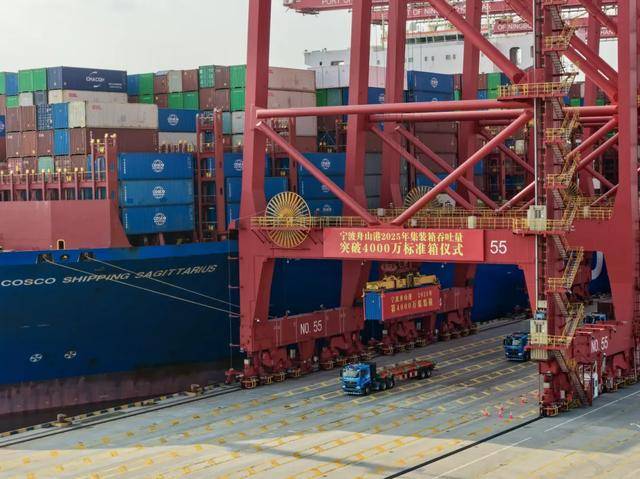
中央经济工作会议:如何定调2026?
Yang Shi Wang· 2025-12-12 00:17
Core Viewpoint - The annual Central Economic Work Conference concluded on December 11, 2025, outlining the economic development direction for 2026, emphasizing stability and progress, quality improvement, and efficiency enhancement [1] Group 1: Economic Policy Direction - The conference clarified the policy orientation for economic work in 2026, focusing on maintaining stability while seeking progress [1] - The emphasis is on domestic demand as the main driver, innovation as a key factor, and reform as a critical challenge [1] Group 2: Key Tasks for 2026 - Eight major tasks for 2026 were identified, highlighting the importance of improving people's livelihoods [1]
中信建投解读经济工作会议:财政政策延续更加积极的政策基调 总体表述偏稳
Di Yi Cai Jing· 2025-12-11 23:53
Core Viewpoint - The report interprets the 2025 Central Economic Work Conference, highlighting a continuation of a more proactive fiscal policy and a stable overall expression in economic strategy [1] Fiscal Policy - The fiscal policy will maintain a more proactive tone, aiming to stimulate economic growth through increased government spending and investment [1] Monetary Policy - The monetary policy emphasizes "reasonable recovery of prices," placing greater importance on price levels and transmission mechanisms [1] Domestic Demand - Domestic demand and the large domestic market are identified as key drivers for economic growth, with a focus on boosting consumption through institutional revenue increases [1] Investment - There is a clear intention to stabilize investment and address downward pressure on investment levels, indicating a proactive approach to counteract investment declines [1] Technology and Industry Policy - The report outlines two main focuses: building an international innovation center and key industrial chains, with specific directions for industries such as AI+, digital trade, green trade, marine economy, and new energy systems [1]

中信建投研报解读2025年中央经济工作会议:财政政策延续更加积极的政策基调,总体表述偏稳
Sou Hu Cai Jing· 2025-12-11 23:47
Core Viewpoint - The report interprets the 2025 Central Economic Work Conference, highlighting a continuation of a more proactive fiscal policy and a stable overall expression in economic strategy [1] Fiscal Policy - The fiscal policy will maintain a more proactive stance, indicating a commitment to stimulate economic growth through increased government spending and investment [1] Monetary Policy - The monetary policy emphasizes "reasonable recovery of prices," placing greater importance on price levels and transmission mechanisms within the economy [1] Domestic Demand - Domestic demand and the large domestic market are identified as key drivers for economic growth, with a focus on boosting consumption through institutional revenue increases [1] Investment - There is a clear intention to stabilize investment and address downward pressure on investment levels, indicating a proactive approach to counteract potential declines [1] Technology and Industry Policy - The report outlines two main focuses: building an international innovation center and key industrial chains, with specific directions for industries such as AI+, digital trade, green trade, marine economy, and new energy systems [1]
(经济观察)明确“路线图” 中央经济工作会议部署八项任务
Zhong Guo Xin Wen Wang· 2025-12-11 15:28
Core Insights - The Central Economic Work Conference outlined eight key tasks for China's economic work in 2026, emphasizing the importance of domestic demand and innovation as primary drivers for economic growth [1][2][3] Group 1: Domestic Demand and Market Development - The first task is to "insist on domestic demand as the main driver and build a strong domestic market," highlighting its significance in the overall economic development strategy [1] - The conference plans to implement actions to boost consumption and optimize policies related to new projects, indicating that expanding domestic demand remains a primary focus for economic work [1] Group 2: Innovation and New Growth Drivers - The second task emphasizes "insisting on innovation-driven development and accelerating the cultivation of new growth drivers," which is seen as crucial for constructing a new development pattern and expanding domestic demand [1][2] - Technological innovation is expected to create new products and consumption demands while reducing costs, thereby increasing supply [1] Group 3: Reform and High-Quality Development - The third task focuses on "insisting on reform to enhance the vitality of high-quality development," which includes deepening reforms and optimizing the business environment to remove institutional barriers [2] - This approach aims to stimulate internal dynamics and facilitate economic circulation [2] Group 4: Open Economy and International Cooperation - The fourth task is to "insist on opening up and promoting win-win cooperation in multiple fields," recognizing the complex changes in the development environment and the need for high-level openness to enhance domestic and international market interactions [2] Group 5: Coordinated Development - The fifth task emphasizes "insisting on coordinated development to promote urban-rural integration and regional linkage," which is essential for achieving a broader and more robust new development pattern [2] Group 6: Green Transformation - The sixth task focuses on "insisting on carbon neutrality as a guiding principle to promote comprehensive green transformation," aligning with the goals of reducing carbon emissions and promoting sustainable growth [2] Group 7: Social Welfare and Stability - The seventh task is to "insist on prioritizing people's livelihoods and strive to do practical things for the public," reiterating the importance of stabilizing employment, businesses, markets, and expectations [2][3] Group 8: Risk Management - The eighth task is to "insist on maintaining a bottom line and actively and prudently resolving risks in key areas," particularly in stabilizing the real estate market and managing local government debt risks [3] - The conference emphasizes a shift in economic policy focus from growth to quality and efficiency, advocating for a coordinated approach to policy implementation [3]
申万宏源:中央经济工作会议的十大亮点
Xin Lang Cai Jing· 2025-12-11 15:03
Core Insights - The 2025 Central Economic Work Conference emphasized five "musts" to address current economic challenges, focusing on potential economic growth and the need for policy support and reform innovation [1][12][23] - The conference highlighted the significant issue of "strong supply and weak demand" in the domestic economy, contrasting with the previous year's focus on demand-side challenges [2][12][24] - The 2025 conference set a general economic growth target for 2026, aiming for stable and reasonable growth without detailing specific indicators, aligning with the "14th Five-Year Plan" goals [2][24] Economic Policy Focus - Fiscal policy will remain "more proactive," with an emphasis on maintaining necessary fiscal deficits and total debt levels, while addressing local fiscal difficulties [3][25][29] - Monetary policy will focus on promoting stable economic growth and reasonable price recovery, with tools like reserve requirement ratio cuts and interest rate reductions being considered [3][25][26] - The conference stressed the importance of integrating existing and new policies to enhance their effectiveness and ensure alignment with current economic goals [4][26] Domestic Demand and Investment - The conference underscored the need to prioritize domestic demand, with plans to implement urban and rural resident income increase programs and stimulate service consumption [5][27][28] - Investment strategies will include increasing central budget investment and optimizing the use of local government special bonds to enhance investment stability in 2026 [5][27][28] Structural Reforms and Green Development - The conference called for deepening the construction of a unified national market and addressing "involution" competition, aiming for a shift from quantity expansion to quality improvement in the economy [5][28][29] - Green and low-carbon initiatives were prioritized, with a commitment to accelerate the development of a new energy system and expand green electricity applications [5][28][29]

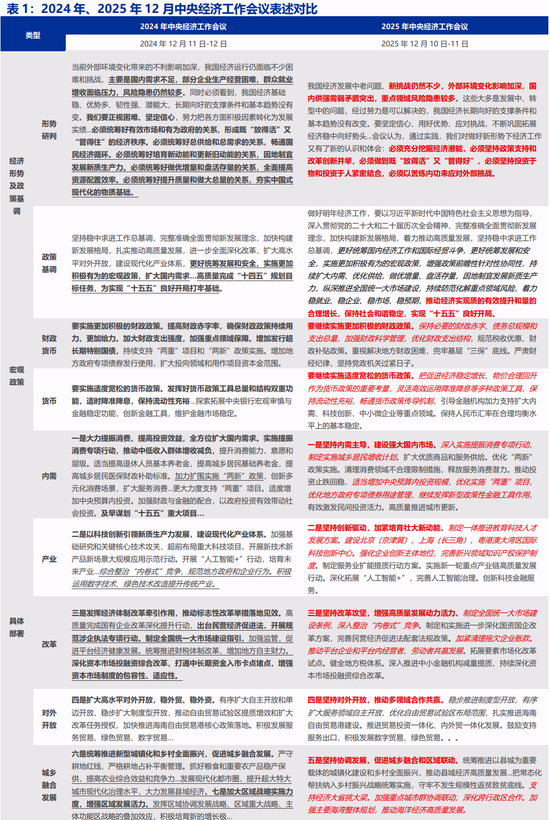
中央经济工作会议点评:积极政策继续
HUAXI Securities· 2025-12-11 15:02
Economic Outlook - The central economic work conference highlighted the need for a more proactive fiscal policy, maintaining a fiscal deficit rate around 4% and a deficit scale of approximately 5.88 trillion yuan[4] - The economic growth target for 2026 is expected to remain around 5%, focusing on stabilizing employment, enterprises, markets, and expectations[2] Fiscal Policy - The government plans to continue implementing a more proactive fiscal policy, with an emphasis on optimizing fiscal expenditure structure and addressing local fiscal difficulties[4] - New local government special bonds are projected to be around 4.4 trillion yuan, excluding a 2 trillion yuan debt replacement quota[4] Monetary Policy - A moderately loose monetary policy will be maintained, with expectations of a 20 basis points interest rate cut and a 0.5% reserve requirement ratio reduction in 2026[6] - The growth rates for social financing and M2 are anticipated to be approximately 8% and 7.5%, respectively, with M1 growth expected to exceed the compound growth rate of the past two years[6] Domestic Demand - The focus will be on domestic demand, with policies aimed at enhancing consumer capacity and increasing the supply of quality goods and services[7] - Investment strategies will include stabilizing investment levels and optimizing the management of local government special bonds[7] Innovation and Reform - Emphasis on innovation-driven growth, with plans to strengthen the role of enterprises in innovation and improve the protection of intellectual property rights in emerging fields[8] - The conference called for deepening reforms to eliminate "involutionary" competition and promote win-win development among platform enterprises[8] Real Estate Market - The strategy for the real estate market will prioritize stability, with measures to control supply, reduce inventory, and encourage the purchase of existing homes for affordable housing[9] - The government aims to reform the housing provident fund system and promote the construction of quality housing[9] Risk Management - Continuous efforts will be made to manage and mitigate risks in key areas, including local government debt and the real estate sector, to prevent systemic risks[10] - The importance of maintaining social stability and economic growth while addressing potential external challenges was emphasized[10]