
高端化

Search documents
安徽三大产业实施方案落地 推动传统产业优化升级
Zhong Guo Jin Rong Xin Xi Wang· 2026-01-17 04:06
Group 1: Core Insights - The Anhui provincial government has issued three implementation plans focusing on the optimization and upgrading of the non-ferrous metals, building materials, and textile industries, aiming for high-quality development through targeted policies [1][4]. - The non-ferrous metals industry aims to achieve a revenue target of 500 billion yuan by 2027, with plans to cultivate two trillion-level industries (copper and aluminum) and two hundred billion-level industries (magnesium and lead) [2]. - The building materials industry targets a revenue of 270 billion yuan by 2027, promoting the synergy between traditional and new materials, with a focus on ultra-low emissions and the elimination of inefficient production capacities [3]. - The textile industry aims for a revenue of 120 billion yuan by 2027, positioning itself as a significant hub for innovative textile manufacturing and fashion branding, with a focus on technology, sustainability, and health [4]. Group 2: Strategic Initiatives - The non-ferrous metals plan emphasizes five key tasks, including optimizing industrial structure, promoting green transformation, and enhancing investment effectiveness, while establishing a comprehensive recycling system for copper and aluminum [2]. - The building materials plan outlines 14 measures to drive innovation and set standards, including the development of high-performance fibers and special glasses, transitioning from scale expansion to quality enhancement [3]. - The textile plan includes seven special actions focusing on innovation, structural optimization, and green quality improvement, with significant achievements in establishing innovation centers and smart factories [4]. Group 3: Policy Support and Implementation - The three plans emphasize policy coordination and integration of resources, aiming to enhance the competitiveness of the entire industrial chain in the three sectors [4]. - The Anhui provincial government will strengthen inter-departmental collaboration and ensure the effective implementation of these initiatives, contributing to the province's industrial foundation and the cultivation of new productive forces [4].
鞋服行业分化显现:国产品牌领跑 传统企业谋转型
Zhong Guo Jing Ying Bao· 2026-01-16 20:15
Core Insights - The Chinese footwear and apparel industry is experiencing significant differentiation in 2025 due to market adjustments and industrial transformations, with the sports and outdoor segment leading the way [1] - Domestic brands are reshaping the market through technological innovation and globalization, while traditional brands struggle with high inventory and rigid channels [1][2] Industry Performance - In the first three quarters, revenue for large apparel enterprises fell by 4.63% year-on-year, with total profits declining by 16.19%, reflecting severe industry pressure [1] - The sports footwear and apparel market is projected to reach a scale of 598.9 billion yuan, with predictions of exceeding 896.3 billion yuan by 2030 [1] Market Dynamics - The market is shifting from incremental expansion to stock competition, with leading companies gaining more influence while smaller brands face shrinking survival space [2] - Traditional brands are struggling, with notable failures such as Fuqiniaos' bankruptcy and Hongqiao's losses, attributed to slow product updates and over-reliance on offline channels [2][3] Brand Competition - Domestic sports brands are gaining market share, with local brands expected to occupy about 60% of the top 20 brands by 2025 [2] - Anta Group reported a 14.3% year-on-year revenue increase to 38.54 billion yuan, surpassing the combined revenue of Li Ning, Xtep, and 361° [2] Consumer Trends - The domestic sports goods market is becoming more concentrated, with the top 20 companies accounting for over 30% market penetration, leading to a widening gap between large and mid-sized firms [3] - Consumers are increasingly favoring high-quality, precise consumption, with a lack of innovation and differentiation leading to brand elimination [9] Channel Innovations - The industry is focusing on two main changes: deep exploration of niche markets and reconstruction of channel models, integrating offline large stores with online instant retail [4][6] - Major brands are opening larger stores, with Anta planning to add 160 "super stores" by 2025, which can achieve 2-2.5 times the sales efficiency of regular stores [5][6] Future Outlook - The industry is expected to see trends of premiumization, globalization, and technological advancement, with a significant reshuffle anticipated [7][8] - Brands that can maintain scale advantages or have precise positioning will likely survive, while small and medium enterprises will face increasing challenges [8]
伊之密:公司尊重股东依法合规开展股份变动
Zheng Quan Ri Bao Wang· 2026-01-16 15:14
Core Viewpoint - The company, Yizhiming (300415), emphasizes its commitment to shareholder rights and plans to focus on its core business while enhancing product upgrades, market expansion, and operational efficiency over the next two years to create sustainable long-term value for shareholders [1] Group 1 - The company respects shareholders' legal and compliant shareholding changes [1] - The company will continue to focus on its main business in the next two years [1] - The company aims to advance high-end, international, and intelligent product upgrades [1] Group 2 - The company is committed to market expansion and improving operational efficiency [1] - The company strives to create stable and sustainable long-term value for shareholders [1]

春风动力(603129):首次覆盖报告:四轮春华秋实,两轮风驰电掣
Western Securities· 2026-01-16 11:46
Investment Rating - The report assigns a "Buy" rating to the company, Chuanfeng Power (603129.SH), with a target market value of 49.8 billion yuan based on a PE ratio of 21 times for 2026 [1][7][19]. Core Insights - Chuanfeng Power is positioned as a leading manufacturer of all-terrain vehicles (ATVs) and large-displacement motorcycles in China, with product performance reaching international standards and a competitive price advantage over overseas counterparts. The company is expected to continue capturing market share from foreign manufacturers, while its electric two-wheeler business is anticipated to contribute to ongoing revenue growth [1][19]. - The projected net profit for the company from 2025 to 2027 is estimated at 1.907 billion, 2.371 billion, and 2.805 billion yuan, respectively, with corresponding PE ratios of 21, 17, and 14 times [1][19]. Summary by Sections Company Overview - Chuanfeng Power was established in 1989 and has transitioned from manufacturing core components to producing ATVs, motorcycles, and electric two-wheelers. The company has maintained a focus on self-owned brands and has become a leading power sports enterprise in China, exporting to over 100 countries [20]. All-Terrain Vehicles - The global ATV market has shown a clear trend towards high-end products, with the average selling price of Chuanfeng's ATVs increasing from 33,700 yuan per unit in 2020 to 46,500 yuan in the first half of 2025. The company is expected to benefit from this trend and continue to increase its market share in Europe and North America [2][19]. - The company’s ATV sales are projected to grow significantly, with revenue growth rates of 24%, 17%, and 7% from 2025 to 2027, respectively [15]. Large-Displacement Motorcycles - The domestic penetration rate of large-displacement motorcycles is on the rise, and Chuanfeng Power is well-positioned to benefit from both domestic and international sales opportunities. The potential market for large-displacement motorcycles in China is expected to double in the next 2-3 years [2][19]. Electric Two-Wheelers - The electric two-wheeler segment has seen exponential growth, with sales reaching 250,500 units and revenue of 872 million yuan in the first half of 2025, marking a year-on-year increase of 652.06%. The company plans to expand its store network and product offerings, which is expected to sustain growth in this segment [3][19].

明泰铝业:公司聚焦“高端化+绿色化+智能化”主战略
Zheng Quan Ri Bao Wang· 2026-01-16 11:41
Core Viewpoint - The company focuses on a strategic approach of "high-end, green, and intelligent" development, aiming to establish a closed-loop industrial chain for aluminum recycling and processing [1] Group 1: Strategic Focus - The company aims to build a recycling capacity of over 1 million tons of recycled aluminum, integrating waste aluminum collection, smelting, and deep processing [1] - The company utilizes advanced recycling technology and laser-induced breakdown spectroscopy to expand the range of waste aluminum recovery and achieve high-value utilization, significantly reducing raw material costs [1] Group 2: Technological Advancements - The company is advancing its intelligent transformation and high-end capacity construction by investing in advanced equipment such as air cushion furnaces and roller hearth furnaces [1] - The focus is on high-value sectors such as new energy battery materials and lightweight aluminum for automobiles, leveraging technological premiums and green low-carbon advantages to counteract industry profit pressures [1] Group 3: Financial Performance - The company has achieved a continuous increase in pre-tax profit per ton, indicating successful financial performance [1] - The results of the green transformation are expected to gain additional premiums under the EU carbon border tax policy [1]

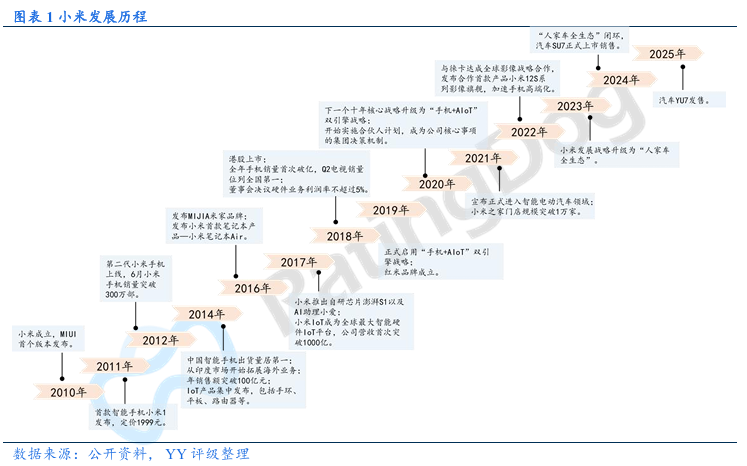
小米集团:“人家车全生态”,小米要打高端局
Zheng Quan Ri Bao· 2026-01-16 11:06
Core Viewpoint - Xiaomi Group is a leading consumer electronics and smart manufacturing company in China, known for its "extreme cost-performance" strategy. The company is pushing for a high-end transformation, with the launch of its electric vehicle, the Xiaomi SU7, in 2024, marking a significant step in its "home, car, and ecosystem" strategy [1]. Group 1: Company Overview - Xiaomi's business model is described as a "triathlon," focusing on market expansion through cost-effective hardware, profit generation via high-margin internet services, and enhanced sales efficiency through a new retail model that integrates online and offline channels [1]. - The company has established a stable user base, with its internet services primarily driven by advertising and value-added services [2]. Group 2: Smartphone Segment - Smartphones are Xiaomi's core products, with a strong competitive position in emerging markets. The company is transitioning from a low-cost to a high-end market strategy, including collaborations with Leica for high-end imaging and the development of its own 3nm smartphone chip, expected to launch in 2025 [2]. - Despite the growth in average selling price (ASP) for high-end smartphones, Xiaomi's ASP remains lower than that of domestic competitors like Samsung and Vivo, indicating a need for further brand elevation [2]. Group 3: IoT and Consumer Products - Xiaomi is a global leader in the smart IoT platform, with a product ecosystem structured as "1+4+N." The synergy between its various business segments is expected to enhance overall performance [3]. - The company faces competition in the home appliance sector, particularly from leading brands, and may encounter growth pressures due to the reduction of government subsidies [3]. Group 4: Smart Automotive - Xiaomi entered the smart electric vehicle market in 2021, and the SU7 has quickly become a bestseller due to its high configuration, competitive pricing, and brand influence. However, challenges such as supply chain rigidity and increasing market competition are present [3]. - Concerns regarding the safety of autonomous driving features and the overall driving experience of Xiaomi vehicles have been raised, necessitating further validation of their technology [3]. Group 5: Financial Analysis - The company's revenue has seen rapid growth in recent years, driven by its high-end transformation and automotive business expansion. Gross margins are on the rise, indicating improved profitability [4]. - Xiaomi's R&D expenses have significantly increased, but remain at a reasonable proportion of revenue. The company maintains a healthy cash flow and liquidity position, with a debt-to-asset ratio around 50% [4].


重庆啤酒20260115
2026-01-16 02:53
Summary of Chongqing Beer Conference Call Industry Overview - The overall beer market in 2025 is expected to remain flat, with significant product innovations such as tea-flavored beer and one-liter packaging, and changes in distribution channels, particularly the rise of non-on-premise channels, which are growing rapidly. Online sales account for a low percentage of about 4-5% of total sales [2][6]. Company Performance and Strategy - Uusu beer has seen growth in both domestic and international sales, while Lebao has experienced three consecutive years of growth. However, the Chongqing and Dali brands are facing challenges. International brands like Carlsberg and local brands such as Fenghua Xueyue have achieved double-digit growth [2][4]. - The company plans to launch approximately 300 new products in 2024 to meet diverse consumer demands [2]. - The company emphasizes precise advertising spending and has increased the promotion of one-liter canned products, optimizing brand combinations and improving management efficiency to control costs [3][18]. - The dividend payout ratio is expected to remain around 90%-100% in the coming years, and the company is open to acquisitions that align with its industry chain [3][27]. Sales Channels and Consumer Trends - The beer market is currently in a mature state with no significant demand breakthroughs. The shift from on-premise to off-premise consumption is expected to continue, driven by technological advancements and changes in consumer habits [8][16]. - The company has observed a significant increase in canning rates, from approximately 18% in 2019 to nearly 29% by the third quarter of 2025, reflecting the growing importance of non-on-premise channels [16]. Product Innovation and Future Plans - The company is focused on continuous innovation in flavors, packaging, and sales models, with new products like tea-flavored beer and one-liter cans being introduced [9][10]. - The company has plans to launch non-alcoholic beer products and is exploring high-end products to increase unit prices, such as the one-liter can [10][11]. - Future product launches include Uusu brand's Jin Junmei tea beer and amber lager, as well as various regional products tailored to local market demands [10][11]. Cost Management and Raw Material Procurement - The company has locked in prices for major raw materials and packaging for the upcoming year, expecting cost savings on barley and other materials, with a slight increase in aluminum can prices having a minimal impact [13]. - The overall procurement cost savings are anticipated to positively contribute to gross margins [13]. Market Challenges and Opportunities - The company faces challenges in raising selling prices (SP) due to potential declines in overall demand, which is a significant concern for the industry [14]. - The high-end market is growing, with an increasing share of female consumers, leading to the introduction of products that cater to this demographic [15]. Long-term Strategy and Outlook - The company is focused on implementing the "Sail 27" strategy until 2027, aiming to develop the Chinese market while adjusting to the group's overall direction, including potential expansions into beverage categories following acquisitions [21][22]. - The company is also monitoring the impact of imported beers on the domestic market, although specific data on market share is not available [23]. Conclusion - Chongqing Beer is navigating a challenging market landscape with a focus on innovation, cost management, and strategic growth through new product launches and potential acquisitions, while adapting to changing consumer preferences and market dynamics [2][3][10][14].

迁安先进钢铁产业集群向“新”发力
Xin Hua Cai Jing· 2026-01-16 01:39
Core Viewpoint - Hebei Province's Qian'an City is focusing on the high-end, intelligent, and green development of the steel industry, significantly enhancing the quality and strength of its steel sector [1] Group 1: Industry Development - Qian'an City is promoting the steel industry's transformation towards high-end manufacturing, emphasizing shared production, inspection, collective procurement, and logistics trade [1] - The city is establishing a steel-sharing economic industrial park that integrates "Internet + IoT + big data," creating an "online + offline" sharing platform [1] Group 2: Product Focus - The advanced steel manufacturing industrial cluster in Qian'an has developed four high-end product segments: electrical steel, high-end rolled sheets, premium wire rods, and specialty steel [1] - The proportion of premium steel products has reached 46% [1]
中国蓝观察丨外企为何纷纷看好中国市场前景?
Xin Lang Cai Jing· 2026-01-15 14:15
Group 1 - In 2025, China's economy demonstrates strong resilience and vitality, continuously consolidating a "stable" pattern and enhancing "progress" momentum, injecting valuable confidence into the world economy [1][16] - Foreign enterprises are optimistic about China's development prospects and are increasing their investment, sharing the broad opportunities brought by China's high-level opening and high-quality development [1][16] - Foreign business leaders believe that China's policies to expand openness and optimize the business environment have created a more transparent, stable, and predictable investment environment [1][16] Group 2 - Michelin's joint venture in Shenyang, established in 1995, reflects the company's long-term commitment to the Chinese market, which has become the world's largest automotive consumer market [2][17] - The Shenyang factory has an annual production capacity of 17.1 million passenger car tires and has produced a cumulative total of 100 million tires [4][19] - Bayer has invested over 1 billion yuan in its crop science supply center in Hangzhou, which has recently launched a new manufacturing center with an annual output value of 2 billion yuan [4][19] Group 3 - Messer's new factory project in Hangzhou, with an initial investment of 50 million USD, aims to produce 300,000 tons of industrial and specialty gases annually [6][21] - BMW's Shenyang plant has implemented approximately 200 artificial intelligence applications, significantly enhancing production efficiency, with one in four BMW cars sold globally manufactured in China [8][24] - The establishment of the first German center in Shenyang by the German Federal Association of Small and Medium-sized Enterprises aims to promote industrial interaction and attract more German enterprises [10][26] Group 4 - The continuous improvement of the business environment in Shenyang has attracted foreign investment, with companies like HJ Biotech expressing confidence in the market's appeal [12][28] - The local government has implemented various measures to optimize the investment environment, including establishing a business service system for foreign-invested enterprises [15][31] - Shenyang has developed a strong industrial ecosystem, particularly in high-end equipment manufacturing and new energy vehicles, providing substantial support for foreign enterprises [15][31]

宇通客车:公司将通过四项举措应对行业竞争
Zheng Quan Ri Bao Zhi Sheng· 2026-01-15 12:09
Core Viewpoint - Yutong Bus is implementing strategies to enhance its competitiveness in the industry by focusing on market demand and customer needs [1] Group 1: Strategies to Address Industry Competition - The company will strengthen research and analysis of market demand to deeply understand customer needs and develop differentiated products and solutions that align with customer operations [1] - Yutong Bus aims to accelerate the development of large and medium-sized buses towards electrification, intelligent networking, and high-end features to improve product competitiveness [1] - The company plans to enhance customer relationships by assisting clients in exploring new development models and improving operations to support order conversion [1] - Yutong Bus is actively seizing opportunities in niche markets such as high-end business vehicles, airport shuttle buses, and trackless trams [1]
