IP经济

Search documents
情绪消费推高溢价 机构提示隐忧
Zhong Guo Zheng Quan Bao· 2025-09-05 17:54
Core Viewpoint - The rise of "pain gold," a combination of anime, gaming IPs, and gold jewelry, is becoming popular among young consumers, seen as a more valuable alternative to traditional merchandise [1][2][4] Group 1: Market Trends - "Pain gold" has gained traction on social media and is viewed as a new growth point for jewelers [1][2] - The retail price of gold jewelry has increased significantly, with IP-linked gold items showing even higher premiums compared to standard gold jewelry [3][6] - Young consumers are increasingly willing to pay for emotional value and personal significance in their purchases, shifting from traditional investment motives [4][5] Group 2: Pricing and Premiums - The average price of "pain gold" ranges from 1800 to 2000 yuan per gram, significantly higher than the standard gold jewelry price of around 1000 yuan per gram [6][7] - Specific examples of premium pricing include a 3-gram gold piece priced at 6600 yuan, equating to approximately 2200 yuan per gram, nearly double the market rate [2][3] Group 3: Consumer Behavior - Young consumers are increasingly focused on personal enjoyment and emotional connections, leading to a rise in spending on high-value items like "pain gold" [5][6] - Discussions around "pain gold" on social media platforms have garnered over 20,000 posts and nearly 3 million views, primarily from the 90s and 00s generations [3][4] Group 4: Industry Perspectives - Analysts express mixed views on the sustainability of the "pain gold" trend, with some believing it represents innovation in the jewelry sector, while others caution about the potential for price corrections as consumer rationality increases [7][8] - The demand for gold jewelry is evolving, with a projected increase in sales, particularly in high-end and innovative designs that appeal to younger consumers [9]
名创优品,距离泡泡玛特还有多远?
Ge Long Hui· 2025-09-05 14:01
Core Viewpoint - The article highlights the contrasting performance of Pop Mart and Miniso in the new consumption sector, with Pop Mart continuing to thrive while Miniso faces volatility in its stock price and market perception [1][3]. Group 1: Company Performance - Pop Mart's stock price has increased by 37% since August, with a market capitalization exceeding 400 billion yuan [1]. - Miniso's market capitalization is currently less than 60 billion HKD, with a valuation of only 22 times earnings, indicating a lack of investor enthusiasm [3]. - In the first half of 2025, Miniso reported revenue of 9.393 billion yuan, a year-on-year increase of 21.1%, but its net profit dropped nearly 20% [4]. Group 2: Store Expansion and Revenue - Miniso opened 554 new stores overseas in the first half of 2025, nearly three times the number of new stores opened in mainland China [4]. - As of June 30, 2025, Miniso had a total of 7,612 stores globally, with 3,307 located overseas [5]. - Approximately 75% of Miniso's new stores in the past year were opened overseas, highlighting its focus on international expansion as a key growth driver [5]. Group 3: IP and Brand Strategy - The significant difference in performance between Pop Mart and Miniso can be attributed to their respective approaches to intellectual property (IP) [3]. - Pop Mart's revenue for the first half of 2025 reached 13.876 billion yuan, 1.5 times that of Miniso, with a year-on-year growth of 204.4% [13]. - Pop Mart's gross profit margin was 70.3%, compared to Miniso's 44.3%, showcasing the impact of brand premium and IP operations [14]. Group 4: Challenges and Future Outlook - Miniso's reliance on a retail store model for growth may limit its performance potential, as increasing store density can lead to diminishing returns [6][10]. - The company faces challenges in transforming its business model and effectively leveraging IP to enhance store performance [12][29]. - Miniso has been gradually shifting towards original IP development, with plans to increase investment in this area, which could lead to greater growth if successful [28][31].


名创优品,距离泡泡玛特还有多远?
格隆汇APP· 2025-09-05 13:11
Core Viewpoint - The article discusses the contrasting performance of Pop Mart and Miniso in the new consumption sector, highlighting Pop Mart's strong growth driven by its IP strategy, while Miniso faces challenges in its business model transformation [2][12][25]. Group 1: Pop Mart's Performance - Since August, Pop Mart's stock price has increased by 37%, with a market capitalization exceeding 400 billion yuan [3]. - Pop Mart's recent mini LABUBU release sold 300,000 units in just one minute, showcasing its strong consumer demand [4]. - In the first half of 2025, Pop Mart achieved revenue of 13.876 billion yuan, 1.5 times that of Miniso, with a year-on-year growth of 204.4% [27]. Group 2: Miniso's Challenges - Miniso's stock has experienced significant volatility, with a 20% drop following its 2024 annual performance release and a subsequent rise of over 20% after its 2025 first-half results [7][8]. - For the first half of 2025, Miniso reported revenue of 9.393 billion yuan, a year-on-year increase of 21.1%, but its net profit decreased by nearly 20% [14]. - Miniso's market capitalization is still below 60 billion HKD, with a valuation of only 22 times earnings, indicating a lack of investor enthusiasm [10]. Group 3: IP Strategy Comparison - The disparity between Pop Mart and Miniso largely stems from their approaches to IP. Pop Mart has successfully integrated IP into its business model, while Miniso struggles to replicate this success [12][40]. - In the first half of 2025, Pop Mart's gross margin was 70.3%, significantly higher than Miniso's 44.3% [28]. - Pop Mart's revenue from self-developed products accounted for 99.1%, with 88.1% coming from artist IP, indicating a strong reliance on proprietary IP for revenue generation [29]. Group 4: Miniso's Growth Strategy - Miniso has expanded its overseas presence significantly, opening 554 new stores in international markets, nearly three times the number of new stores opened in mainland China [16][18]. - Despite the rapid expansion, Miniso faces high operational costs in overseas markets, leading to low same-store sales growth rates [20][21]. - The company is exploring ways to leverage IP to enhance its store offerings and drive growth, but it remains to be seen if it can effectively transform its business model [25][54]. Group 5: Future Outlook - The article suggests that Miniso's future growth may depend on its ability to develop and leverage its own IP, which could enhance its product offerings and market position [54][60]. - As the global market for Chinese cultural products expands, there is potential for significant growth in the IP economy, which could benefit companies like Miniso if they adapt successfully [60].

9月4日午间涨停分析
Xin Lang Cai Jing· 2025-09-04 03:48
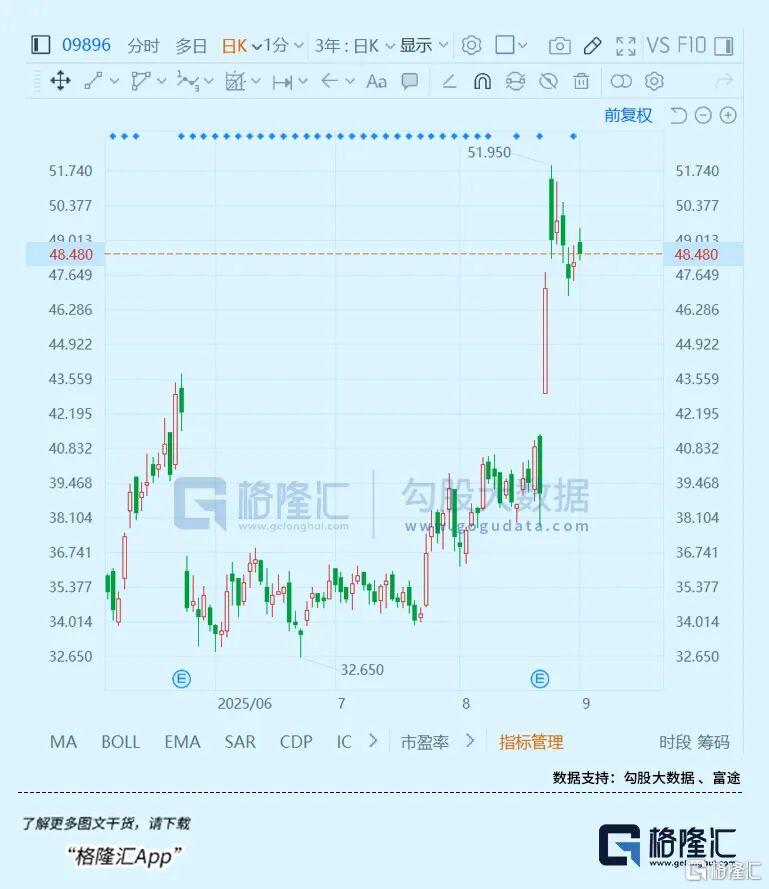
Group 1: Company Developments - Anzheng Fashion focuses on mid-to-high-end brand fashion, achieving a turnaround in net profit year-on-year in the first half of the year [2] - Zhengye Technology's subsidiary has mastered the "silver-free process" for heterojunction battery technology [2] - Meibang Clothing, a leading domestic leisure apparel brand, is set to enhance its production capacity for foldable screens significantly by 2025 [3] Group 2: Industry Trends - The State Council emphasizes the acceleration of service consumption and new consumption growth points [2] - The demand for data centers and energy storage is expected to grow rapidly [4] - The National Development and Reform Commission is promoting the development of the biopharmaceutical industry among central enterprises [4] Group 3: Market Movements - Companies like Tongrun Equipment and China Ruilin are experiencing stock price increases, with Tongrun Equipment's stock rising for two consecutive days [4] - The international gold price has reached a historical high, benefiting companies like Eurasia Group, which collaborates with well-known gold brands [4] - The stock price of Pop Mart has reached a new historical high, indicating strong market interest in IP economy [5]



IP经济等新型情绪消费场景点燃年轻群体热情,游戏ETF(159869)打开低位布局通道
Sou Hu Cai Jing· 2025-09-04 02:38
Group 1 - The gaming sector experienced fluctuations on September 4, with the gaming ETF (159869) dropping to around 1%, creating a low-positioning opportunity [1] - Among the holdings, Fuchun Co., Huali Technology, Tianzhou Culture, and Aofei Entertainment saw significant gains, while Jibite, Giant Network, Kaiying Network, and Iceberg Network faced notable declines [1] - 37 Interactive Entertainment announced on September 3 that it has secured game adaptation rights for multiple IPs, including "Dou Po Cang Qiong," "Gui Mi Zhi Zhu," and "Dou Luo Da Lu," enhancing its diverse product matrix [1] Group 2 - The China Securities Association released a report on August 31 indicating that cultural consumption demand is continuously being released, with the gaming and film industries achieving revenue growth and net profit growth exceeding 70% in the first half of the year [1] - New emotional consumption scenarios, such as the pet economy and IP economy, have ignited enthusiasm among younger demographics, leading to significant performance growth for related listed companies, with net profit increases of 40.29% and 54.90% respectively [1] - Relevant ETFs include the gaming ETF (159869), which focuses on leading companies in the A-share IP gaming industry, and the cultural and entertainment media ETF (516190), which provides balanced exposure across marketing, film, cultural tourism, and IP toy sectors [1]
迷你LABUBU价格炒至翻倍但部分旧款亏本出售,下一个LABUBU是星星人?
Di Yi Cai Jing· 2025-09-03 09:08
Core Insights - The recent launch of the mini LABUBU dolls has created a significant demand, leading to rapid sellouts and inflated prices in the secondary market [2][3][4] - While the new mini LABUBU dolls are highly sought after, older models have seen a drastic price drop, with some being sold at or below original prices [4][5] - Quality issues have emerged with the new LABUBU dolls, prompting consumer complaints and returns, raising concerns about the brand's quality control [6][7][8] Pricing Dynamics - The mini LABUBU dolls are priced at 79 yuan each and 1106 yuan for a set, with over 580,000 items added to shopping carts at launch [2] - In the secondary market, the price for a set of mini LABUBU has surged to 2450 yuan, reflecting the high demand [3] - Older LABUBU models, which previously sold for 300-3000 yuan, are now being listed at original prices or even at a loss, indicating a market correction [4][5] Quality Concerns - Consumers have reported various quality issues with the new LABUBU dolls, including stability problems and cosmetic defects [6][7] - Complaints have been made regarding the inconsistency in quality across different production batches, raising questions about manufacturing practices [7] - The company has a policy for handling defective products, allowing for exchanges or refunds, but some consumers feel their rights are not adequately protected [7][8] Financial Performance - The company reported a revenue of 138.8 billion yuan for the first half of the year, a year-on-year increase of 204.4%, with net profit rising by 362.8% [9][10] - The LABUBU series accounted for 48.1 billion yuan in revenue, representing 34.7% of total sales [10] - The company aims for a revenue target of 200 billion yuan for the year, with potential to exceed 300 billion yuan [10] Future Prospects - The company is exploring new IPs to sustain growth, as reliance on LABUBU may not be sustainable long-term [10][11] - The "Star People" IP is gaining traction and may become the next big hit, with recent releases showing strong sales performance [11][12] - Other IPs like HACIPUPU and CRYBABY are also experiencing rapid growth, indicating a healthy diversification strategy [12]
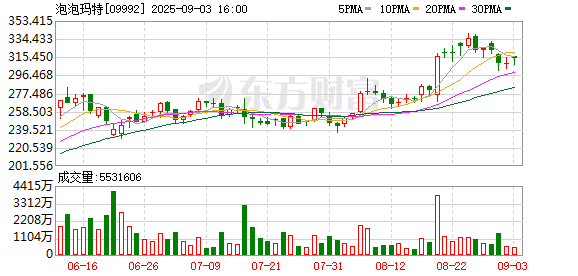
文化消费需求释放,游戏、影视院线等行业净利增速超70%,聚焦游戏传媒板块布局机遇
Mei Ri Jing Ji Xin Wen· 2025-09-01 02:41
Group 1 - The gaming sector experienced fluctuations with a slight recovery, as the gaming ETF (159869) saw a near 1.5% decline but attracted a net inflow of 272 million yuan over the last five trading days, indicating strong investor interest [1] - miHoYo's announcement of the UGC gameplay "Thousand Star Realm" for Genshin Impact marks a shift from being a content provider to a platform ecosystem builder, enhancing user engagement and community activity [1] Group 2 - The China Listed Companies Association reported that cultural consumption demand has been released in the first half of the year, with significant revenue growth in the gaming and film industries, and net profit growth exceeding 70% [2] - New emotional consumption scenarios, such as the pet economy and IP economy, have ignited enthusiasm among younger demographics, leading to notable performance increases for related listed companies, with net profit growth rates of 40.29% and 54.90% respectively [2] - Relevant ETFs include the gaming ETF (159869), which focuses on leading companies in the A-share IP gaming industry, and the cultural and entertainment media ETF (516190), which provides balanced exposure across marketing, film, cultural tourism, and IP toy sectors [2]
晨光股份(603899):IP化与出海构筑成长新曲线,传统业务阶段性承压
Xinda Securities· 2025-08-28 07:27
Investment Rating - The investment rating for the company is not explicitly stated in the provided documents, but the analysis suggests a focus on growth strategies and potential recovery in profitability, indicating a positive outlook for investors [1][5]. Core Viewpoints - The company reported a revenue of 10.809 billion yuan in H1 2025, a year-over-year decrease of 2.19%, and a net profit of 557 million yuan, down 11.97% year-over-year [1][2]. - Traditional core business is under pressure, but the company is actively pursuing IP product development and expanding its online channels, which have shown promising growth [2][3]. - The company is transitioning from being a "functional provider" to an "emotional value provider" by enhancing product competitiveness and embracing the IP economy [2][3]. Financial Performance Summary - In H1 2025, the traditional core business (manufacturing and sales of educational and office supplies) generated approximately 4.026 billion yuan in revenue, a decline of 7% year-over-year [2]. - The revenue breakdown for H1 2025 includes writing tools at 1.136 billion yuan, student stationery at 1.435 billion yuan, and office supplies at 1.607 billion yuan, with respective year-over-year changes of -0.16%, -8.52%, and -8.48% [2]. - The overall gross margin for H1 2025 was 19.45%, showing a slight increase of 0.04 percentage points year-over-year [4]. Business Segment Performance - The KOLIP business achieved revenue of 6.129 billion yuan in H1 2025, with a slight year-over-year increase of 0.15%, while the retail store segment generated 779 million yuan, up 6.98% year-over-year [3]. - The company has over 830 retail stores, with the "Nine Wood Miscellaneous Society" brand contributing significantly to revenue and membership growth [3]. Future Outlook - The company expects to see gradual recovery in profitability as it enhances its IP and high-end product offerings and optimizes its channel structure [4]. - Profit forecasts for 2025-2027 indicate net profits of 1.52 billion, 1.70 billion, and 1.89 billion yuan, with corresponding P/E ratios of 19.0X, 17.1X, and 15.4X [5][6].

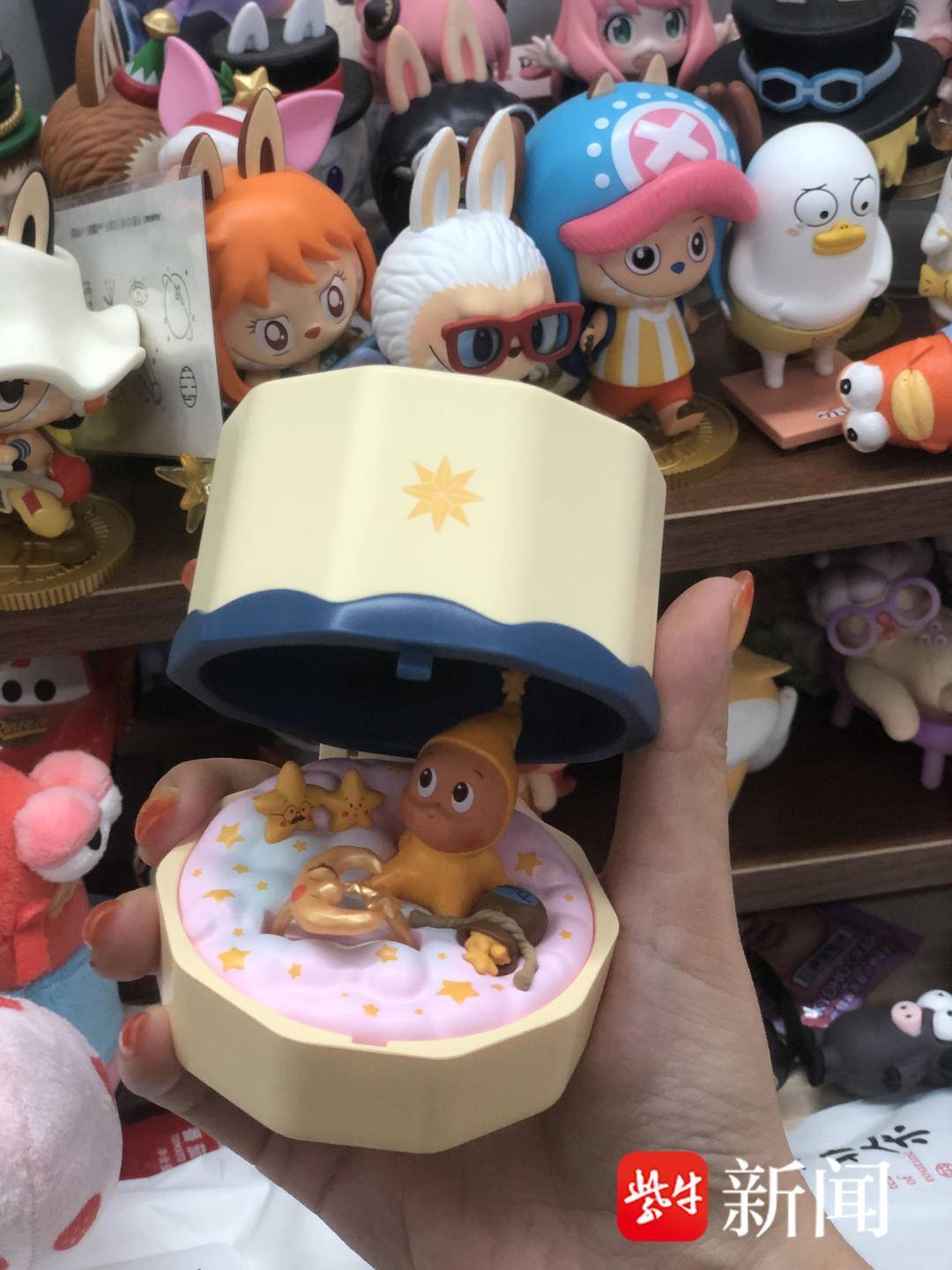
疯了,比黄金还离谱!泡泡玛特新品上线后很快售罄!专家忠诚度依赖持续创新,要避免过度营销透支信任
Qi Lu Wan Bao· 2025-08-27 06:25
Core Insights - The recent launch of the "Starry Dream Meteorological Bureau Series" blind boxes by Pop Mart reflects the willingness of Generation Z to pay for emotional value, but their loyalty depends on continuous innovation to avoid over-marketing and trust depletion [1][9]. Product Launch and Sales Performance - Pop Mart's new plush blind boxes sold out within seconds across its official mini-program and major e-commerce platforms, causing some platforms to experience lag and temporary crashes due to overwhelming traffic [4][5]. - The blind boxes are priced at 79 yuan each and 474 yuan for a full box of six, with reports of customers facing difficulties in purchasing due to high demand [1][5]. Market Response and Pricing Dynamics - The "Starry" IP has seen a rapid increase in demand, with secondary market prices soaring. For instance, a complete box sold for 1350 yuan on the Qianshao app, representing a nearly threefold premium, while individual pieces averaged around 150 yuan, reflecting a twofold premium [7][8]. - Experts suggest that the current hype around the "Starry" IP mirrors the previous success of the LABUBU 3.0 series, indicating potential for continued price increases in the future [8]. Consumer Behavior and Trends - Young consumers are willing to spend on products that offer emotional connection and companionship, with the combination of IP economics and scarcity marketing driving the sales of these toys [9]. - The blind box mechanism enhances the excitement of randomness and scarcity, effectively stimulating purchasing frenzy among consumers [9]. Long-term Considerations - The "Starry" IP is currently in a growth phase, benefiting from the traffic generated by LABUBU 3.0, but it must maintain its appeal through ongoing content iteration to avoid the cyclical decline in popularity seen with previous IPs [9]. - The long-term value of the "Starry" IP will depend on the establishment of a robust IP ecosystem and community engagement, as well as compliance with regulations regarding blind box sales and secondary market transactions [9].
泡泡玛特新品很快售罄!网友:比黄金还离谱 专家:过度营销或透支信任
Sou Hu Cai Jing· 2025-08-26 20:50
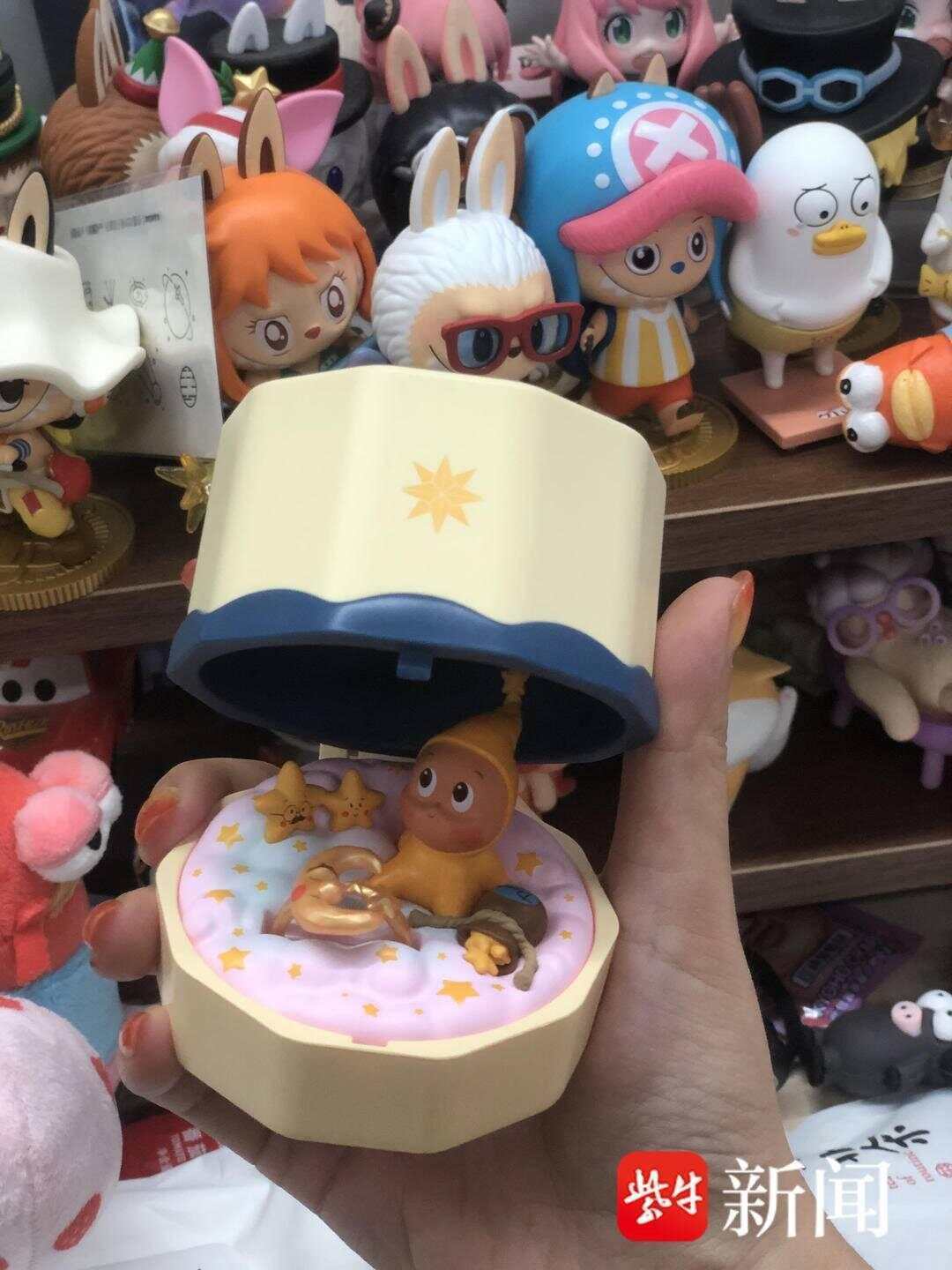
Core Viewpoint - The recent launch of the "Starry Dream Meteorological Bureau Series" blind boxes by Pop Mart reflects the willingness of Generation Z to pay for emotional value, but their loyalty depends on continuous innovation to avoid over-marketing and trust depletion [1][12]. Product Launch and Sales Performance - Pop Mart's new plush blind boxes sold out quickly, with individual boxes priced at 79 yuan and a full box at 474 yuan, indicating high demand [1][4]. - The official sales platforms experienced overwhelming traffic, leading to stockouts within seconds, with users reporting difficulties in completing purchases [4][5]. - The "Starry" IP has become highly sought after, with resale prices on secondary markets soaring, reaching up to 1350 yuan for a full box, representing a nearly 300% markup [7][10]. Market Dynamics and Consumer Behavior - The overwhelming demand for the "Starry" series mirrors the previous success of the LABUBU 3.0 series, suggesting a potential for "Starry" to become the next popular IP [10][12]. - Experts note that the success of these products is a result of combining IP economics with scarcity marketing, appealing to the emotional needs of young consumers [11][12]. - The pricing strategy effectively matches the spending power of the younger demographic, with bundled sales increasing average transaction values [11][12]. Future Outlook and Challenges - The "Starry" IP is currently in a growth phase, but there are concerns about the cyclical nature of IP popularity, as seen with LABUBU 3.0, which may lead to price declines in the future [12]. - Long-term value will depend on the development of the IP ecosystem and community engagement, as well as compliance with regulations regarding blind box sales [12].