碳中和

Search documents
2025诺贝尔化学奖,带来一场材料学革命
Hu Xiu· 2025-10-08 10:39
Core Viewpoint - The 2025 Nobel Prize in Chemistry is awarded to Susumu Kitagawa, Richard Robson, and Omar Yaghi for their contributions to the development of Metal-Organic Frameworks (MOFs) [1][2][22]. Group 1: Contributions of Awardees - Susumu Kitagawa is recognized as a pioneer in the field of porous coordination polymers (PCPs) and has made significant advancements in their physical and chemical properties, particularly for energy gas storage [8][12]. - Richard Robson contributed to the early description of MOFs and has been influential in the development of coordination polymers, demonstrating the potential of metal ions and organic linkers to create new materials [11][12]. - Omar Yaghi is a leading figure in the synthesis and application of MOFs and Covalent Organic Frameworks (COFs), significantly impacting gas storage, separation, and capture technologies [6][19]. Group 2: Impact of Metal-Organic Frameworks - MOFs have shown great potential in various applications, including hydrogen and methane storage, carbon dioxide capture, and gas separation, which are crucial for addressing environmental and energy challenges [6][22]. - The MOF market is projected to grow at an annual rate of 34%, reaching approximately $410 million by 2024, indicating a strong industrial interest and potential for commercialization [21]. - Companies like BASF have already achieved industrial production of MOFs for applications in high-pressure methane storage and catalysis, showcasing the transition from laboratory research to practical applications [21][22]. Group 3: Future Prospects - The recognition of these three scientists is expected to accelerate the application and industrialization of MOFs, facilitating the transition from experimental research to broader societal benefits [22].


许正宇:香港可担当碳市场对接桥梁 助力内地CCER标准“输出国际”
智通财经网· 2025-10-08 03:19
Core Viewpoint - Hong Kong is positioned as a key bridge between mainland China and international markets, focusing on voluntary carbon credit standards and methods, with plans to facilitate the trading of mainland Chinese emission reduction projects in the future [1] Group 1: Hong Kong's Role in Carbon Market - Hong Kong has unique advantages to serve as a critical connector between the mainland and international markets [1] - The city will initially participate in discussions to establish voluntary carbon credit standards and methods with mainland authorities [1] - Long-term goals include exploring interconnectedness of carbon markets and facilitating cross-border trading [1] Group 2: Current State of Mainland Carbon Market - The mainland's voluntary carbon market, CCER, is currently in a transformation phase and only allows domestic companies to participate [1] - Foreign entities are currently excluded from the mainland carbon market, presenting an opportunity for Hong Kong to leverage its international positioning [1] Group 3: Future Initiatives - The government aims to collaborate with mainland regulators to develop a framework for participation in the international carbon market [1] - Efforts will be made to attract mainland Chinese institutions' overseas emission reduction projects to be listed on Hong Kong's voluntary carbon market [1] - There are plans for cooperation with the Greater Bay Area carbon market to test cross-border transaction settlement paths [1]
年产值超千亿元!宁德时代洛阳基地二期项目正式投产,年产能增加 30GWh【附宁德时代企业分析】
Qian Zhan Wang· 2025-10-07 08:45
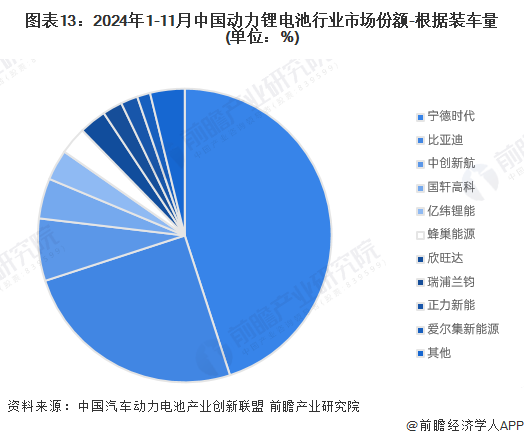
Core Insights - CATL's Luoyang base phase II project has officially commenced production, enhancing its global manufacturing footprint and aligning with "lighthouse factory + zero-carbon factory" standards [1] - The phase II project includes 3 cell production lines and 10 PACK production lines, expected to increase annual capacity by 30GWh, contributing to an anticipated annual output value exceeding 100 billion yuan once fully operational [1] - CATL maintains a dominant position in the global battery market, with a significant market share in both automotive and energy storage sectors, outperforming competitors [3][6] Company Developments - The Luoyang base's phase I project has achieved a cumulative output value exceeding 10 billion yuan since its production began in November 2024 [1] - Construction progress for phases III and IV is ongoing, with 60% and 25% completion respectively, indicating a strong commitment to expanding production capabilities [1] - CATL's strategic focus on building "lighthouse factories" aims to reduce unit costs through scale and intelligent production while adhering to global carbon neutrality trends [6] Market Position - In the automotive battery sector, CATL leads with over 5% market share, significantly ahead of competitors like BYD and Zhongchuang Xinhang, which have less than 5% [1] - In the energy storage battery market, CATL holds over 33.5% market share, reinforcing its leadership position [3] - As of February 2023, over 18 million vehicles globally are equipped with CATL batteries, showcasing strong market recognition and trust in its products [3]

光伏产业链价格全面上涨 融资资金大幅加仓+机构高度关注个股名单出炉
Zheng Quan Shi Bao Wang· 2025-10-07 06:44
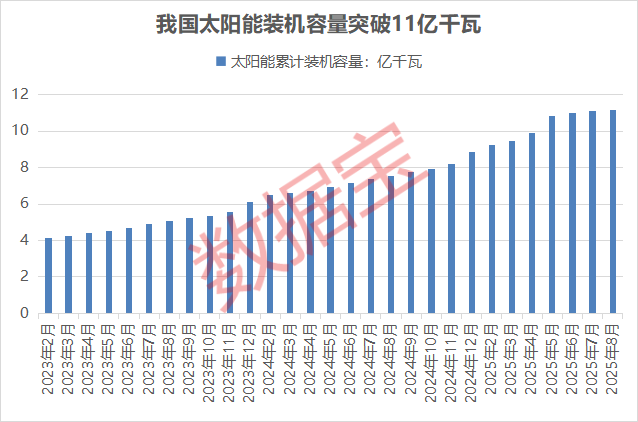
Core Insights - The photovoltaic industry is experiencing a rebound in prices across the supply chain, indicating a potential recovery in profitability due to ongoing "anti-involution" policies [1][3] - Solar power continues to dominate new power generation installations, with significant growth in capacity and a strong outlook for future installations [2] - Financing for photovoltaic stocks has surged, with substantial net purchases indicating strong institutional interest [4][5] Group 1: Industry Trends - The photovoltaic industry has seen a price rebound since September, with average stock prices for photovoltaic concept stocks rising by 7.82% in September, outperforming the CSI 300 by approximately 4 percentage points [1] - From January to August, new solar power generation capacity added 231 million kilowatts, a year-on-year increase of 90.62 million kilowatts, accounting for 66.81% of all new power generation capacity [2] - The total installed solar power capacity reached 1.12 billion kilowatts by the end of August, marking a year-on-year growth of 48.5% [2] Group 2: Price Movements - Prices in the photovoltaic supply chain have increased, with polysilicon prices rising by 45.71% to 51 yuan per kilogram, and monocrystalline N-type silicon wafer prices increasing by over 50% [3] - The price of photovoltaic glass has also seen significant increases, with 2.0mm and 3.2mm glass prices rising by 28.2% and 15.5%, respectively, since the end of July [3] Group 3: Financing and Stock Performance - In the third quarter, photovoltaic concept stocks received a total net purchase of 16.168 billion yuan in financing, with 22 stocks seeing net purchases exceeding 100 million yuan [4] - Sunshine Power's stock has surged by 139.01% since July, reaching a market value of 335.819 billion yuan, with a net profit of 7.735 billion yuan in the first half of the year, a year-on-year increase of 55.97% [4] - Institutional interest is high, with 15 out of 22 stocks attracting attention from 10 or more institutions, indicating strong market confidence [5]

【赛道掘金之光伏】产业链价格全面上涨,融资资金大幅加仓+机构高度关注个股名单出炉
Zheng Quan Shi Bao Wang· 2025-10-07 05:01
Core Viewpoint - The photovoltaic industry is experiencing a rebound in prices and profitability due to ongoing "anti-involution" policies, with significant stock price increases observed in September 2023 [1][7]. Group 1: Industry Performance - In the first eight months of 2023, solar power accounted for 66.81% of all new power generation capacity in China, with an addition of 23.1 million kilowatts, marking a year-on-year increase of 48.5% [2][4]. - The total installed solar power capacity in China surpassed 1.12 billion kilowatts by the end of August 2023, reflecting strong growth momentum [2][4]. Group 2: Price Recovery - Since September, prices across the photovoltaic supply chain have been rising, with polysilicon prices increasing by 45.71% to 51 yuan per kilogram, and monocrystalline N-type silicon wafer prices rising over 50% [5][7]. - Photovoltaic glass prices have also seen significant increases, with 2.0mm and 3.2mm glass prices rising by 28.2% and 15.5%, respectively, since late July [5]. Group 3: Financing and Investment - In the third quarter of 2023, photovoltaic stocks received a net inflow of 16.168 billion yuan in financing, with 22 stocks attracting over 100 million yuan each, led by Yangguang Electric with 7.605 billion yuan [6][9]. - Yangguang Electric's stock price surged by 139.01% since July, reaching a market capitalization of 335.819 billion yuan, while its net profit for the first half of 2023 increased by 55.97% year-on-year [9]. Group 4: Regulatory Environment - The Chinese government has implemented measures to regulate the photovoltaic industry, focusing on eliminating outdated capacity and promoting orderly competition, which has contributed to the recent price recovery [7][9].
新一轮涨价潮来袭!新能源金属孕育的重大投资机会!
Ge Long Hui· 2025-10-07 03:45
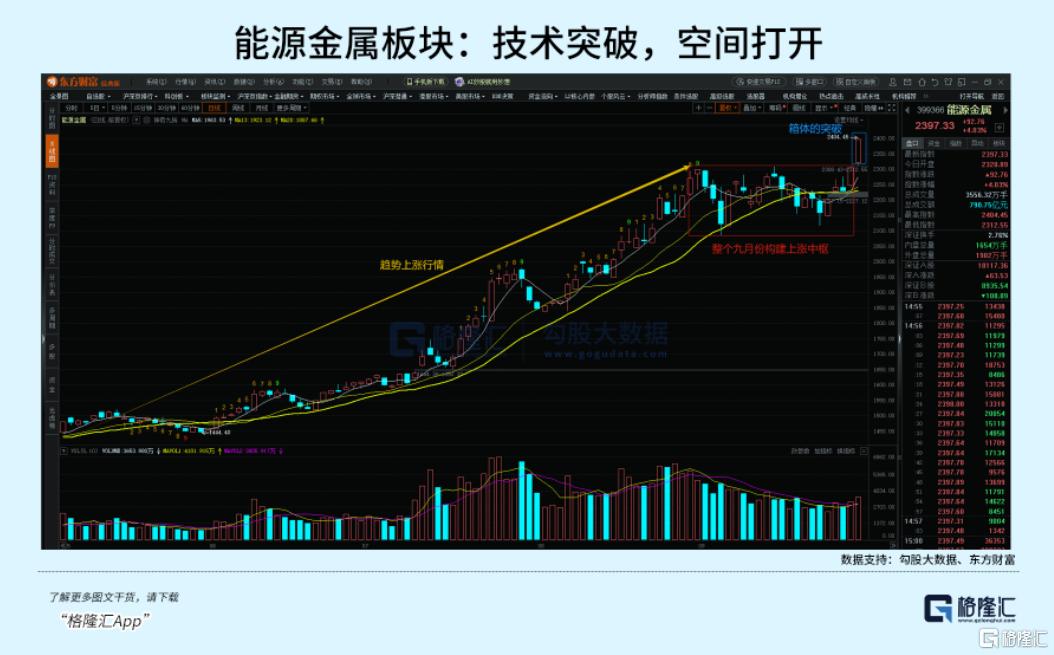
Core Viewpoint - A resource revolution is underway as the world strives for carbon neutrality, with energy metals like lithium, cobalt, and nickel becoming essential for the clean energy transition [1] Group 1: Energy Metals Market Trends - The energy metals sector index has shown a consistent upward trend since April, with a significant breakout on September 30, where the index rose by 4.03%, indicating potential for further gains [3] - Energy metals, including lithium, cobalt, nickel, and rare earths, are critical raw materials for new energy devices such as lithium batteries and fuel cells [3] Group 2: Lithium Demand and Supply - Lithium demand is expected to surge due to the rise of the new energy industry, with global sales of electric vehicles projected to reach 19.2 million by 2025, contributing over 15 million from China [4][6] - The demand structure for lithium is characterized by a dominant role of power batteries, with a projected 52% year-on-year growth in domestic lithium carbonate demand by 2025 [4] Group 3: Cobalt Market Dynamics - The Democratic Republic of the Congo (DRC) has extended its cobalt export ban to stabilize prices, with a shift towards an annual export quota management system expected to tighten supply [7] - Global cobalt supply is projected to increase from 20.7 thousand tons in 2022 to 32.9 thousand tons by 2026, while demand is expected to rise from 18.7 thousand tons to 28.0 thousand tons in the same period [8] Group 4: Nickel Supply and Demand - Nickel prices are supported by rising costs across the supply chain, with the stainless steel sector accounting for 70% of nickel demand, while the battery sector is growing rapidly [9][11] - The global stainless steel production is expected to grow at a compound annual growth rate of 3.85% from 2017 to 2024, indicating a stable demand for nickel [9] Group 5: Investment Outlook - The current global interest rate cut cycle enhances the investment value of the non-ferrous metals sector, particularly energy metals, which are poised to benefit from the energy transition and carbon neutrality efforts [12] - Investors are encouraged to focus on companies with resource advantages in lithium, cobalt, and nickel production, as well as those leading in battery material technology [12]
中方早已布局另一张王牌,其储量超140万吨,特朗普连发推都不敢
Sou Hu Cai Jing· 2025-10-06 12:33
Core Insights - Thorium is emerging as a strategic asset for China, potentially more significant than rare earth elements, due to its high energy density and low extraction costs [1][3]. Resource Potential - Thorium has an energy density so high that 1 ton can produce electricity equivalent to 3.5 million tons of coal [3]. - China's proven thorium reserves of 220,000 tons could sustain energy needs for approximately 14 billion people for thousands of years, while the total national reserves of 1.4 million tons could meet energy demands for nearly 20,000 years [3]. Technological Advancements - China has developed a technological advantage by successfully operating thorium-based molten salt reactors, which could potentially lower electricity prices to 0.05 yuan per kilowatt-hour [5]. - The country is currently the only one capable of stable operation of thorium-based molten salt reactors [5]. Strategic Implications - The U.S. has historically researched thorium but has since fallen behind in both mining and extraction technology, making it difficult for them to catch up [7]. - Thorium reactors can be built in arid regions, are inherently safe, and can also produce green hydrogen for electric vehicles [8]. Geopolitical Context - The U.S. has shifted its rhetoric regarding China, indicating a recognition of the strategic importance of thorium and its implications for energy independence [9]. - China's advancements in thorium technology position it favorably in the global clean energy race, addressing both energy security and green transition [9]. Long-term Strategy - China's focus on developing rare earth and thorium technologies is aimed at strengthening its position on the international stage, rather than undermining others [11]. - The strategy emphasizes that true international influence is built on genuine capabilities rather than mere rhetoric [11].
东方科脉:抢滩千亿绿色显示赛道,电子纸龙头价值几何?
Zhi Tong Cai Jing· 2025-10-06 09:54
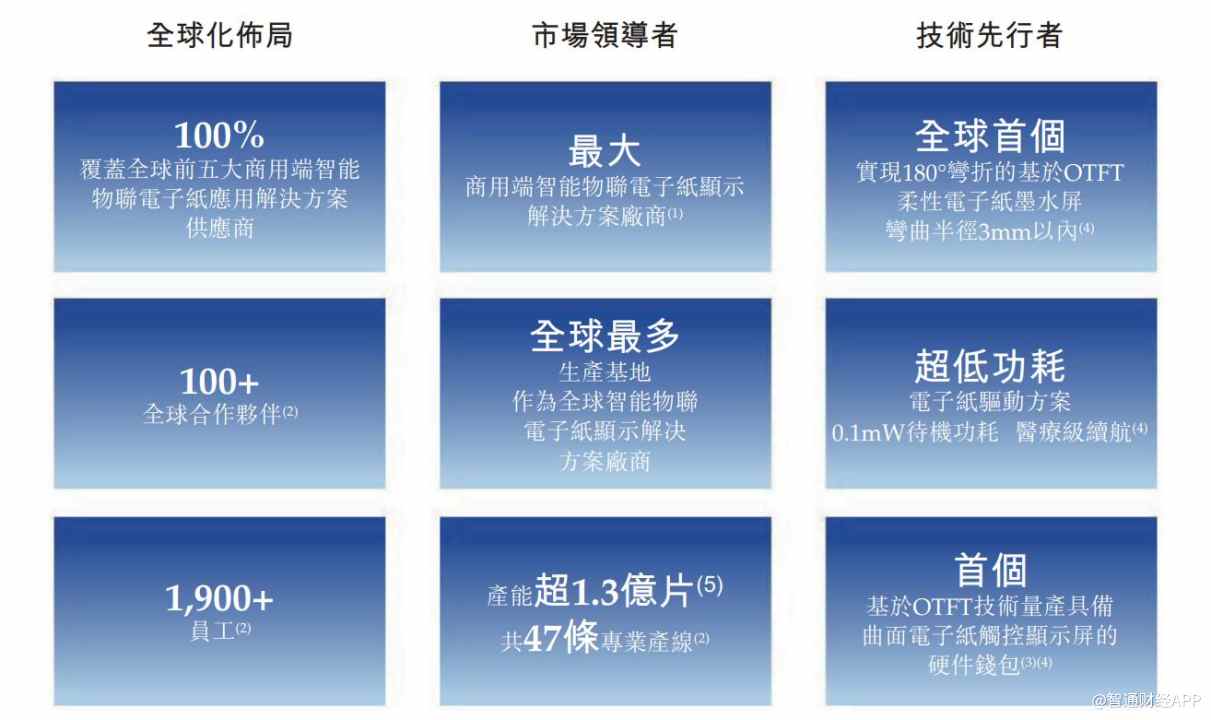
Core Viewpoint - The global transition towards green and low-carbon technologies is driving the demand for smart IoT devices, with electronic paper emerging as a leading display technology due to its low power consumption and user-friendly features, positioning Zhejiang Dongfang (东方科脉) as a market leader in commercial smart IoT electronic paper display solutions [1][12]. Company Overview - Zhejiang Dongfang has over a decade of experience in the electronic paper display technology sector, focusing on the research and production of various smart IoT electronic paper display modules and solutions [2]. - The company's product range includes full-size and full-color displays, widely applied in smart retail, smart office, smart education, smart logistics, and other emerging applications [2]. Competitive Advantages - The company holds 94 patents, including 28 invention patents, and has developed several pioneering technologies in the electronic paper display field [4]. - As of June 30, 2025, the company has established four global production and R&D bases with an annual production capacity exceeding 130 million smart IoT electronic paper display modules, leading the industry [4]. - The company has formed deep partnerships with key suppliers, ensuring a stable supply chain and reducing operational risks [5]. Financial Performance - The company's revenue from 2022 to 2024 was 1.214 billion, 1.024 billion, and 1.152 billion RMB, with a net profit of 92 million, 51 million, and 53 million RMB respectively [5]. - In the first half of 2025, revenue reached 796 million RMB, nearing 70% of the total revenue for 2024, indicating strong growth momentum [5]. Market Dynamics - The global market for smart IoT electronic paper solutions is projected to grow from 54.8 billion RMB in 2024 to 108.4 billion RMB by 2029, with a compound annual growth rate of 14.6% [13]. - The smart retail sector, particularly electronic price tags, is expected to see a compound growth rate of 15.6% from 2024 to 2029 [13]. Industry Opportunities and Risks - The electronic paper display sector is experiencing a growth phase driven by both policy support and increasing demand for low-power solutions [12]. - However, the industry faces risks from high competition and potential technological advancements in alternative display technologies like LCD and OLED [16].

新股前瞻|东方科脉:抢滩千亿绿色显示赛道,电子纸龙头价值几何?
智通财经网· 2025-10-06 09:51
Core Insights - The global transition towards green and low-carbon technologies is driving the demand for smart IoT devices, with electronic paper technology emerging as a leading solution due to its low power consumption and user-friendly features [1][12][15] - Zhejiang Oriental Kema Electronic Co., Ltd. (referred to as "Oriental Kema") holds the top position in the commercial smart IoT electronic paper display solutions market, with a projected market share of 26.3% in 2024 [1][16] - The company has submitted a listing application to the Hong Kong Stock Exchange to enhance its global production capacity and accelerate the commercialization of full-color and flexible electronic paper technologies [1][2] Company Overview - Oriental Kema has over a decade of experience in the electronic paper display technology sector, focusing on the design and manufacturing of various smart IoT electronic paper display modules [2] - The company's product range includes full-size and full-color displays, widely used in smart retail, smart office, smart education, smart logistics, and other emerging applications [2] Competitive Advantages - Oriental Kema's competitive edge lies in its technology, production capacity, supply chain, and global layout [4] - As of June 30, 2025, the company has obtained 94 patents, including 28 invention patents, covering key areas such as drive design and flexible packaging [4] - The company has established four global production and R&D bases, with an annual production capacity exceeding 130 million smart IoT electronic paper display modules, leading the industry [4][5] Financial Performance - Oriental Kema's revenue from 2022 to 2024 was 1.214 billion, 1.024 billion, and 1.152 billion RMB, respectively, with a net profit of 92 million, 51 million, and 53 million RMB during the same period [5][10] - The company's revenue for the first half of 2025 reached 796 million RMB, nearing 70% of the total revenue for 2024 [5] Market Dynamics - The global market for smart IoT electronic paper solutions is expected to grow from 54.8 billion RMB in 2024 to 108.4 billion RMB by 2029, with a compound annual growth rate of 14.6% [13] - The smart retail sector, particularly electronic price tags, is projected to grow at a compound annual growth rate of 15.6% from 2024 to 2029 [13] Risks and Challenges - The company faces high customer and supplier concentration risks, with revenue from the top five customers accounting for 93.3% in 2022 and 89.7% in the first half of 2025 [7] - The financial data indicates potential cash flow issues, with net cash from operating activities turning negative in the first half of 2025 due to increased inventory levels [8][10] - The company's debt ratio increased from 38% in 2022 to 48.4% by June 30, 2025, indicating rising liquidity pressure [11]
2025年三边经济报告
Sou Hu Cai Jing· 2025-10-05 07:44
Core Insights - The 2025 Trilateral Economic Report highlights the resilience and opportunities of the East Asian economic circle amid global uncertainties, emphasizing the importance of trilateral cooperation among China, Japan, and South Korea [1][6]. Economic Scale and Trade - In 2024, the combined GDP of China, Japan, and South Korea reached USD 24.21 trillion, a 2.7% increase from 2023, accounting for over 24% of global GDP [2][40]. - The total population of these three countries is approximately 1.584 billion, representing nearly 20% of the global population, making it one of the most promising consumer markets [2][40]. - The goods trade volume among the three countries is estimated at USD 8.93 trillion in 2024, which is 18.8% of global trade, highlighting their role as stabilizers in global supply chains [2][40]. Demographic Challenges - The aging population is a significant challenge, with Japan having 30% of its population aged 65 and older, South Korea at 18%, and China nearing 14%, all exceeding the global average of 10% [3]. - Fertility rates are critically low, with South Korea at 0.7, Japan at 1.2, and China at 1.0, indicating potential long-term population decline [3]. Economic Outlook - The report predicts that the economic growth rate for the ASEAN+3 region may fall below 4% in 2025 due to global trade shocks, with growth for China, Japan, and South Korea expected to decrease from 4.1% in 2024 to 3.7% [3][40]. - Long-term projections suggest that potential economic growth for ASEAN+3 and the CJK economies could decline to 2.8% and 3.0% by 2050, respectively [3][40]. Regional Economic Integration - The Regional Comprehensive Economic Partnership (RCEP) has shown positive impacts on trade and investment, with the trade volume reaching USD 13 trillion in 2023, accounting for 30% of global exports [4]. - However, challenges remain, such as small and micro enterprises struggling to benefit from RCEP, and the need for improved customs facilitation [4]. Semiconductor Industry Collaboration - The semiconductor industry is highlighted as a critical area for trilateral cooperation, with South Korea leading in memory chips, Japan dominating in manufacturing equipment, and China rapidly advancing [5]. - Recommendations include establishing a trilateral semiconductor supply chain dialogue platform and joint research initiatives to enhance regional supply chain resilience [5]. Future Cooperation Directions - The report emphasizes the need for accelerated negotiations on the China-Japan-Korea Free Trade Agreement (CJKFTA) and collaboration in emerging sectors like electric vehicles and renewable energy [5]. - Strengthening regional cooperation is deemed essential to navigate uncertainties and promote sustainable growth across the region [6].