十五五规划

Search documents
“十五五”关键部署·双碳目标的实现与美丽中国建设如何联动?
Yang Shi Wang· 2025-11-04 07:04
Core Viewpoint - The "14th Five-Year Plan" emphasizes accelerating the comprehensive green transformation of economic and social development to build a beautiful China, with green development as a distinctive feature of Chinese modernization [1] Group 1: Green Transformation and Carbon Goals - The plan aims to leverage carbon peak and carbon neutrality goals to promote carbon reduction, pollution control, green expansion, and economic growth [3][5] - The "14th Five-Year Plan" period is crucial for achieving significant improvements in ecological and environmental conditions, focusing on pollution prevention and ecosystem optimization [4][8] Group 2: Energy and Innovation - Accelerating the green and low-carbon energy transition is identified as a key driver for comprehensive green transformation, with China having established the world's largest and fastest-growing renewable energy system [5][7] - Since 2016, China has accounted for 37% of the world's new green low-carbon patents, and when including overseas applications, this figure rises to 58%, indicating a robust innovation environment supporting a burgeoning new industry [6] Group 3: Structural Transformation - The transition from controlling total energy consumption to precise management of carbon emission quality is expected to respond more effectively to carbon reduction targets [8] - By 2035, the goal is to have a fundamentally built beautiful China, with the carbon peak and carbon neutrality targets set as new national contributions [8]


三季报压力出清且基本面进入上行周期,建议加大行业关注度:国防军工行业周报(2025年第45周)-20251104
Shenwan Hongyuan Securities· 2025-11-04 07:04
Investment Rating - The report suggests an "Overweight" rating for the defense and military industry, indicating a positive outlook for the sector based on the upcoming growth cycle and government policies [5][26]. Core Insights - The defense and military industry is entering an upward cycle as per the "14th Five-Year Plan" recommendations, with expectations of performance recovery in Q4 2025 [5]. - The report highlights that the overall performance of the military industry is gradually improving, with a narrowing decline in net profit year-on-year for the first three quarters of 2025, and anticipates a return to positive growth in Q4 [5]. - The global military trade demand is expected to increase due to geopolitical uncertainties, creating a strong resonance between supply and demand in China's military trade [5]. - Key investment opportunities are identified in high-end combat capabilities and new types of combat power, with specific companies recommended for investment [5]. Market Review - Last week, the Shenwan Defense and Military Index decreased by 0.07%, while the overall market indices showed mixed results, with the Shanghai Composite Index rising by 0.11% [6]. - The military industry sector ranked 22nd among 31 Shenwan primary industries in terms of performance [6]. - The report notes that the average increase in the civil-military integration index was 1.93%, indicating a positive trend in this segment [6]. Valuation Changes - The current PE-TTM for the Shenwan military sector is 85.71, placing it in the upper range historically, with significant differentiation among sub-sectors [14][19]. - The aerospace and aviation equipment sectors are noted to be at relatively high valuation levels since 2020 [14][18]. Key Valuation Targets - The report provides a detailed valuation table for key companies in the defense and military sector, highlighting projected net profits and PE ratios for the upcoming years [20][22].




国防军工行业周报(2025年第45周):三季报压力出清且基本面进入上行周期,建议加大行业关注度-20251104
Shenwan Hongyuan Securities· 2025-11-04 06:41
Investment Rating - The report maintains an "Overweight" rating for the defense and military industry, indicating a positive outlook for the sector compared to the overall market performance [3][5][26]. Core Insights - The defense industry is entering an upward cycle as indicated by the "14th Five-Year Plan" and recent quarterly reports showing a narrowing decline in performance, with expectations for positive growth in Q4 [5][6]. - The report highlights a significant recovery in quarterly earnings, with a projected return to year-on-year growth in Q4, driven by the realization of orders related to the "14th Five-Year Plan" and increased military trade [5][6]. - Global geopolitical uncertainties are expected to boost military trade demand, creating a strong resonance between supply and demand in China's military trade market [5][6]. - The report suggests increasing focus on flexible and thematic investment opportunities within the military sector, particularly in next-generation equipment and unmanned systems [5][6]. Market Review - Last week, the Shenwan Defense and Military Index decreased by 0.07%, while the overall market showed mixed performance with the Shanghai Composite Index rising by 0.11% [3][6]. - The report notes that the defense sector's performance ranked 22nd among 31 primary industries, with a notable average increase of 1.93% in the civilian-military integration index [3][6]. - Top-performing stocks in the defense sector included Donghua Testing (16.03%), Jianglong Shipbuilding (13.57%), and Gaode Infrared (11.76%) [3][6][13]. Valuation Changes - The current PE-TTM for the Shenwan Defense sector is 85.71, indicating it is at a historically high valuation level, with significant differentiation among sub-sectors [14][19]. - The report provides a detailed valuation table for key defense industry stocks, highlighting projected net profits and PE ratios for the coming years [20][22].
习近平会见俄罗斯总理米舒斯京
第一财经· 2025-11-04 04:55
Group 1 - The core viewpoint emphasizes the strategic importance of maintaining and developing Sino-Russian relations amidst challenging external environments, with a focus on mutual benefits for both nations [1][2] - Both countries aim to expand mutual investments and enhance cooperation in traditional sectors such as energy, connectivity, agriculture, and aerospace, while also exploring new areas like artificial intelligence, digital economy, and green development [1][2] - The Chinese government is committed to high-quality economic and social development and seeks to align its "14th Five-Year Plan" with Russia's economic strategies to benefit both nations [1][2] Group 2 - The Russian Prime Minister conveyed President Putin's greetings and expressed confidence in China's ability to achieve the goals set out in the "14th Five-Year Plan" [2] - The two leaders have met twice this year to strategically plan the development of Sino-Russian relations, reinforcing their comprehensive strategic partnership [2] - There is a mutual commitment to deepen cooperation in various fields, including trade, technology, energy, agriculture, and digital economy, while enhancing cultural exchanges and multilateral coordination [2]

【午评】超3700股飘绿,资金涌向何处?最新操盘策略来了
Sou Hu Cai Jing· 2025-11-04 04:41
Core Viewpoint - The A-share market shows a "defensive leading, growth under pressure" trend, while the Hong Kong market remains stable, driven by energy and financial stocks, indicating a significant divergence in market dynamics between the two regions [1][2]. Market Overview - A-share indices experienced a slight decline, with the Shanghai Composite Index down 0.19% to 3969.05 points, and over 3700 stocks in the market fell, reflecting a decrease in profitability despite high trading activity with a half-day turnover of 1.23 trillion yuan [2]. - The Hong Kong market showed relative resilience, with the Hang Seng Index up 0.20% to 26210.51 points, supported by energy and financial sectors, while the Hang Seng Tech Index fell 0.20% due to divergence within tech stocks [2]. Sector Analysis - In the A-share market, defensive sectors are highlighted, with the banking sector rising 2.04% driven by stable interest margins and resilient earnings, making it a preferred choice for long-term capital allocation [3]. - The coal sector continued its strong performance with a 22.83% quarter-on-quarter increase in net profit, supported by OPEC+ production pause, enhancing energy price expectations [3]. - The tourism and hotel sector showed positive movement due to expectations of consumption subsidies and the winter travel peak [3]. - Conversely, the non-ferrous metals sector fell 2.24%, impacted by weakened global industrial demand and a stronger dollar, while the power equipment sector dropped 1.83% due to ongoing price declines in storage and photovoltaic components [3]. - In the Hong Kong market, the energy sector, particularly oil stocks, continued to rise, with Morgan Stanley raising the short-term target price for Brent crude oil to $60 per barrel [3]. - The financial sector, particularly domestic banks, showed strong performance with better-than-expected profit growth in Q3, while tech stocks displayed mixed results, with some AI applications benefiting from commercialization [3]. Investment Recommendations - The current market is at a crossroads of "policy window" and "earnings verification," suggesting a balanced layout across technology growth, cyclical resources, and policy-driven sectors [4]. - Focus on technology growth sectors with performance certainty and industry catalysts, particularly in AI and high-end manufacturing [4]. - For cyclical and resource sectors, look for opportunities in profit recovery, especially in gold and copper, while benefiting from "de-involution" policies in the chemical sector [4]. - Policy-driven opportunities should align with the "14th Five-Year Plan" and domestic demand stimulation, particularly in AI, high-end manufacturing, and consumer goods [5]. - Overall, the market is expected to maintain a volatile pattern, recommending a core allocation in "banking + energy" alongside technology growth and policy-sensitive sectors [5].
划重点!官方详解“投资于人”
第一财经· 2025-11-04 03:36
Core Viewpoint - The article emphasizes the importance of investing in human capital during the "14th Five-Year Plan" period, highlighting the need to combine investments in physical assets and human development to enhance economic growth and improve living standards [3][4]. Investment in Human Capital - The article discusses the shift from capital-intensive to talent-intensive global industrial competition, stressing the urgency of increasing investments in human capital to drive innovation and demand [4][5]. - It points out that historically, China has underinvested in areas related to people's well-being and comprehensive development, indicating that increased investment in education, healthcare, and elderly care is essential for improving quality of life and achieving common prosperity [4][5]. Key Directions for Investment - The article outlines several key areas for investment in human capital: 1. Improving income distribution systems to ensure fair compensation based on contribution [5]. 2. Promoting equal access to basic public services and reducing disparities across regions and demographics [5]. 3. Increasing government investment in social welfare sectors such as childcare, education, healthcare, vocational training, and cultural sports [5]. 4. Enhancing human resource development by investing in various talents, especially in technology and innovation [5][6]. 5. Establishing a long-term mechanism for human capital investment, optimizing fiscal responsibilities, and encouraging social participation [5][6]. Government Investment Strategy - The article mentions that China's fixed asset investment has reached 50 trillion yuan, but there is still a significant need for investment in social welfare and development [6]. - It highlights that the government will focus on combining investments in physical and human capital, which is expected to create new opportunities, such as the planned construction and renovation of over 700,000 kilometers of underground pipelines during the "14th Five-Year Plan," requiring an additional investment of over 500 billion yuan [6][7]. Economic Perspective - The article notes that the focus on human capital investment is not merely a welfare policy but a strategic approach to address systemic challenges and enhance development potential [6][7]. - It emphasizes that investments in human capital will be aligned with improving living standards and development quality, addressing key areas such as education, healthcare, and housing [6][7].

程强:市场震荡反弹,红利与微盘领涨
Sou Hu Cai Jing· 2025-11-04 03:26
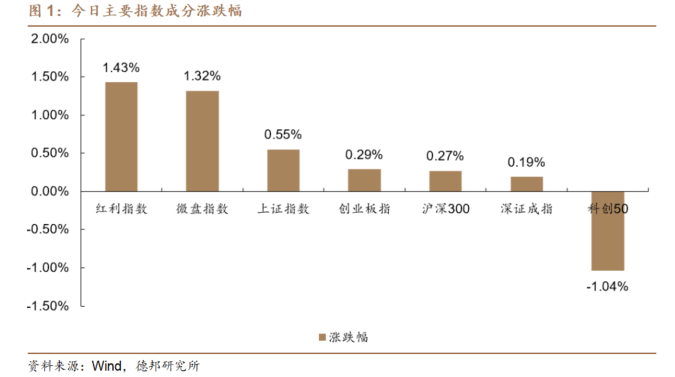
Market Overview - The A-share market experienced a slight rebound with reduced trading volume, while commodity indices rose, particularly with soybean meal increasing over 4% [1][10]. Stock Market Analysis - The stock market showed a rebound with reduced trading volume, led by the dividend and micro盘 indices. The Shanghai Composite Index closed at 3976.52 points, up 0.55%, while the Shenzhen Component rose 0.19% to 13404.06 points. The ChiNext Index initially dropped about 2% but ended up 0.29% at 3196.87 points. The total market turnover was 2.13 trillion yuan, down 9.2% from the previous trading day, but still above 2 trillion yuan [2][4]. - The market style exhibited a rotation between high and low sectors. The Hainan Free Trade Port concept surged by 4.25%, driven by new tax policies and expectations for full island closure in 2026. The nuclear power sector also saw gains due to the acceleration of fourth-generation nuclear technology commercialization, with indices rising by 4.23% [4][7]. Bond Market Analysis - The bond market showed weak fluctuations, with the 30-year main contract closing at 116.51 yuan, down 0.11%. The 10-year contract slightly increased by 0.01% to 108.680 yuan, while the 5-year and 2-year contracts fell by 0.01% and 0.03%, respectively [8][9]. - The central bank conducted a 783 billion yuan reverse repurchase operation, maintaining a rate of 1.40%. Despite a significant net withdrawal of 2590 billion yuan, market liquidity remained ample, with short-term interest rates declining [8][9]. Commodity Market Analysis - The commodity index rose, with agricultural products showing strength while energy and black metals were weaker. The South China commodity index closed at 2542.22 points, up 0.13%. Soybean meal futures surged by 4.23% to 2491 yuan/ton, driven by supply-demand mismatches [10][11]. - Lithium carbonate prices rebounded, maintaining strength due to anticipated supply tightening and high demand growth in battery production, with the closing price at 82280 yuan/ton [11]. Trading Hotspots - Recent hot sectors include artificial intelligence, nuclear fusion, domestic chips, and consumer goods, driven by increased capital expenditure from global tech giants and domestic policy support [12][14]. Core Thoughts Summary - The market is entering a policy and performance vacuum, with major indices expected to fluctuate. A balanced allocation is recommended, with continued focus on technology sectors and the new directions outlined in the 14th Five-Year Plan [14]. - The bond market is expected to remain loose in the short term, with potential support from the central bank's actions [14]. - In the commodity sector, the value of precious metals is becoming more apparent post-Fed rate cuts, suggesting a gradual build-up in positions [14].
官方详解“投资于人”,划出这些重点 | 解读“十五五”
Di Yi Cai Jing· 2025-11-04 03:06
Core Viewpoint - The importance and urgency of investing in people during the "14th Five-Year Plan" and beyond are increasingly highlighted, emphasizing the need to combine investments in material and human resources for sustainable economic growth [2][3]. Investment in People - The "14th Five-Year Plan" emphasizes that investment in people is a crucial direction, aiming to enhance development momentum, expand domestic demand, and promote comprehensive human development [2][3]. - Investment in people refers to enhancing capabilities and potential across the entire population and lifecycle, including areas such as childcare, elderly care, health, education, and skills training [2]. Economic Transition - The shift from capital-intensive to talent-intensive global industrial competition necessitates increased investment in human capital to achieve innovation-driven and demand-driven economic growth [3]. - There has been insufficient investment in areas related to people's well-being and comprehensive development, making it essential to increase funding for education, healthcare, and elderly care to ensure high-quality population development [3][4]. Key Directions for Investment - Key areas for investment in people include: 1. Improving income distribution systems to ensure fair compensation based on contribution [3]. 2. Promoting equal access to basic public services and reducing disparities across regions and demographics [3]. 3. Increasing government investment in public welfare sectors such as education, healthcare, and vocational training [4]. 4. Strengthening human resource development, particularly for high-skilled and innovative talents [4]. 5. Establishing a long-term mechanism for investing in people, optimizing fiscal responsibilities, and enhancing local government incentives [4]. Government Investment Strategy - The National Development and Reform Commission highlighted that while fixed asset investment has reached 50 trillion yuan, there is still a significant need to focus government funds on critical development areas and improving people's lives [4]. - The government aims to optimize investment structures, increasing the proportion of public investment in people's welfare to enhance overall investment effectiveness [5]. Broader Economic Implications - Investment in people is seen as a strategic key to addressing systemic challenges and enhancing both social welfare and development quality [5][6]. - The focus on human welfare encompasses various aspects, including education, healthcare, and housing, aiming to alleviate family burdens and improve public service capabilities [6].
元瞻经纬总量月报(2025年10月):“十五五”承前启后,接续奋进谱新篇-20251104
Guoyuan Securities· 2025-11-04 02:34
Group 1 - The "15th Five-Year Plan" emphasizes high-quality development as the core theme and primary goal, reflecting a significant historical moment and the need to align with economic development trends [3][22][23] - The plan prioritizes the construction of a modern industrial system, placing it at the forefront of strategic tasks, indicating a shift in focus compared to the previous five-year plan [27][28] - The report highlights the importance of domestic demand in driving economic growth, suggesting that enhancing domestic consumption is crucial for sustainable development [23][24] Group 2 - The industrial sector is identified as a key area for development, with a focus on upgrading traditional industries and fostering new and future industries, such as renewable energy and advanced manufacturing [31][32] - The report indicates that consumer confidence is gradually recovering, with policies aimed at stimulating consumption and improving living standards being prioritized [35][36] - The financial sector is experiencing a decline in social financing and credit, indicating a need for recovery in the financing demands of the real economy [4][25]
“十五五”规划建议里那些有关中企出海的表述 | 跨越山海
Sou Hu Cai Jing· 2025-11-04 02:27
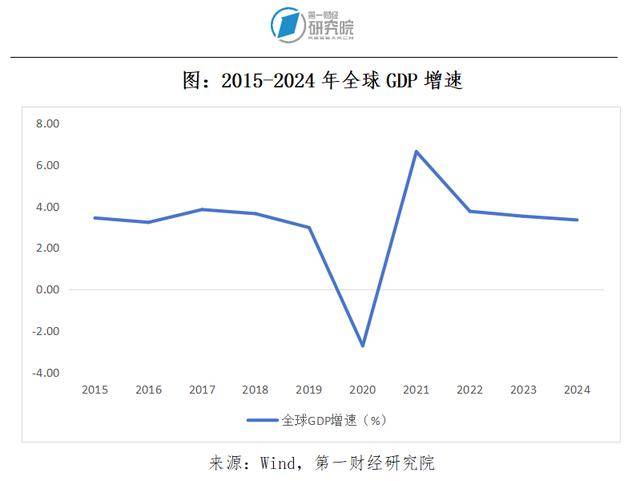
Core Viewpoint - The "15th Five-Year Plan" emphasizes the importance of China's globalization efforts amid a complex international environment, highlighting both challenges and opportunities for Chinese enterprises in their overseas expansion. Group 1: External Environment and Challenges - The "15th Five-Year Plan" acknowledges the intensified international competition and challenges posed by unilateralism, protectionism, and geopolitical tensions, which affect Chinese enterprises' overseas operations [2][3]. - The International Monetary Fund forecasts global GDP growth rates of 3.2% and 3.1% for 2025 and 2026, respectively, indicating a relatively slow economic growth environment [2]. - Changes in trade policies, such as new tariffs imposed by countries like Mexico on imports from China, complicate the export landscape for Chinese companies [3]. Group 2: Opportunities for Globalization - The "15th Five-Year Plan" introduces new proposals for Chinese enterprises to actively shape international environments and leverage their advantages in global supply chains [4]. - Chinese enterprises are increasingly demonstrating strong global market competitiveness, particularly in sectors like electric vehicles and 5G technology, despite geopolitical pressures [5]. Group 3: Cultural and Traditional Industry Development - The plan emphasizes the importance of enhancing the influence of Chinese culture globally, encouraging cultural enterprises to expand overseas [7][9]. - There is a focus on optimizing and upgrading traditional industries, with specific mentions of enhancing the global competitiveness of sectors such as mining, metallurgy, and textiles [10]. Group 4: Infrastructure and Connectivity - The plan highlights the need for robust international logistics and infrastructure, aiming to improve trade facilitation through diversified and resilient transportation networks [12]. - The ongoing geopolitical factors affecting trade are acknowledged, yet the overall trend towards globalization remains strong, necessitating improved logistics to enhance competitiveness [12]. Group 5: Service Trade and Financial Integration - The "15th Five-Year Plan" places greater emphasis on the development of service trade, aiming to expand market access and improve service trade standards [15]. - The plan also stresses the importance of advancing the internationalization of the Renminbi and building a self-controlled cross-border payment system, which will facilitate trade and reduce risks for Chinese enterprises [16].