人民币国际化

Search documents
美联储宣布投降,特朗普逼宫成功,人民币却成最大赢家
Sou Hu Cai Jing· 2025-09-01 14:46
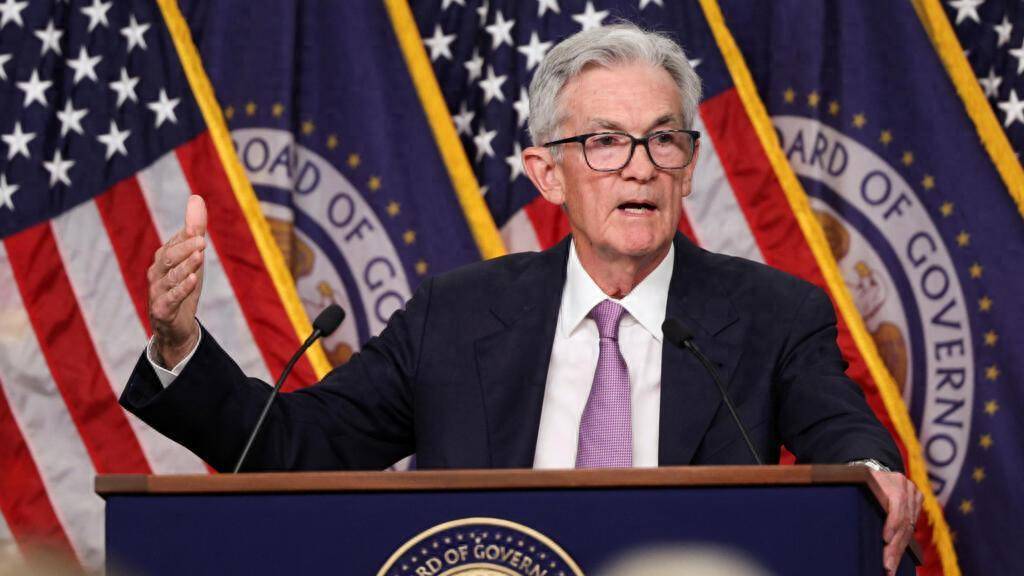
Group 1 - The Federal Reserve's shift from a hardline stance against inflation to a more accommodative approach under pressure from political figures like Trump indicates a significant policy change [1][5][9] - The probability of a rate cut in September surged to 86.9% following comments from Fed officials, signaling a potential capitulation to political pressure [5][9] - Trump's actions, including the dismissal of a Fed board member, have created substantial political pressure on the Fed to lower interest rates, which could save the U.S. government approximately $1 trillion in annual interest payments if rates drop to 1% [7][9] Group 2 - The depreciation of the U.S. dollar, with the dollar index falling from 110.17 to 97.77, has led to a significant appreciation of the Chinese yuan, which strengthened from 7.42 to 7.12 yuan per dollar [11][11] - The decline in U.S. interest rates has made the dollar less attractive, prompting capital to flow towards markets with higher yields, such as China, where economic recovery is evident [13][15] - Foreign investment in Chinese assets has surged, with a net increase of $10.1 billion in domestic stocks and funds in the first half of the year, reversing a two-year trend of net outflows [20][22] Group 3 - China's economic fundamentals are strong, with a 6.1% increase in exports from January to July, particularly to regions like the EU and Latin America, which helps mitigate declines in exports to the U.S. [22][24] - The Chinese government has increased its fiscal spending significantly, with a new debt quota up by 2.5 trillion yuan, enhancing economic growth potential [24] - The comparative stability and professionalism of China's monetary policy, in contrast to the politicization seen in the U.S., has made Chinese assets more appealing to global investors [26] Group 4 - The Federal Reserve's rate cuts provide the Chinese central bank with more policy space to lower financing costs for businesses, particularly in manufacturing and technology sectors [28][29] - While a stronger yuan may pose challenges for traditional exporters, the overall demand for Chinese goods may increase due to a stabilized U.S. economy [31][33] - The potential rise in commodity prices due to a weaker dollar could lead to increased costs for China, but moderate inflation may stimulate consumption and investment [35] Group 5 - The changes in monetary policy and capital flows present a unique opportunity for the internationalization of the yuan, with more central banks considering increasing their yuan asset allocations [39] - The evolving dynamics between the U.S. and China may lead to a new phase in economic relations, impacting investment strategies and market behaviors [39]

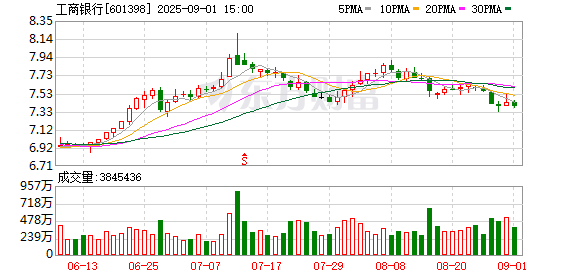
工商银行上半年实现营业收入4271亿元 行长刘珺:永远与市场同频共振 不追求超常增长率
Mei Ri Jing Ji Xin Wen· 2025-09-01 12:40
Core Viewpoint - Industrial and Commercial Bank of China (ICBC) reported strong financial performance for the first half of 2025, with total assets exceeding 52 trillion yuan and maintaining leadership in customer loans and deposits [2][3]. Financial Performance - ICBC achieved an operating income of 427.1 billion yuan, a year-on-year increase of 1.6%, and a net profit of 168.8 billion yuan, leading the domestic industry [3]. - The annualized average return on total assets (ROA) was 0.67%, and the annualized weighted average return on equity (ROE) was 8.82%, with a cost-to-income ratio of 24.10% [3]. - As of June 30, 2025, the non-performing loan (NPL) ratio was 1.33%, a decrease of 0.01 percentage points from the end of the previous year, while the provision coverage ratio increased by 2.8 percentage points to 217.71% [3]. Asset Quality and Risk Management - ICBC's total provision balance exceeded 1 trillion yuan for the first time, which is crucial for the stable operation of a large commercial bank [3]. - The bank's asset quality control remains robust, contributing to confidence in its development strategy [3][4]. Strategic Direction - The bank emphasizes steady growth and strategic adjustments rather than pursuing extraordinary growth rates, reflecting its responsibility as a leading financial institution [4]. - ICBC plans to continue its cash dividend policy, distributing 109.8 billion yuan in cash dividends for 2024 and an expected 50.4 billion yuan for the current year [5]. Internationalization and Comprehensive Operations - ICBC's international network covers 69 countries and regions, with total assets of nearly 460 billion USD in overseas institutions [6]. - The bank is enhancing its international and comprehensive operations to strengthen its core competitiveness and achieve high-quality development [5][6]. - Cross-border RMB business volume surpassed 5 trillion yuan, a year-on-year increase of 6%, while RMB clearing volume reached 60 trillion yuan, up 23% [7].

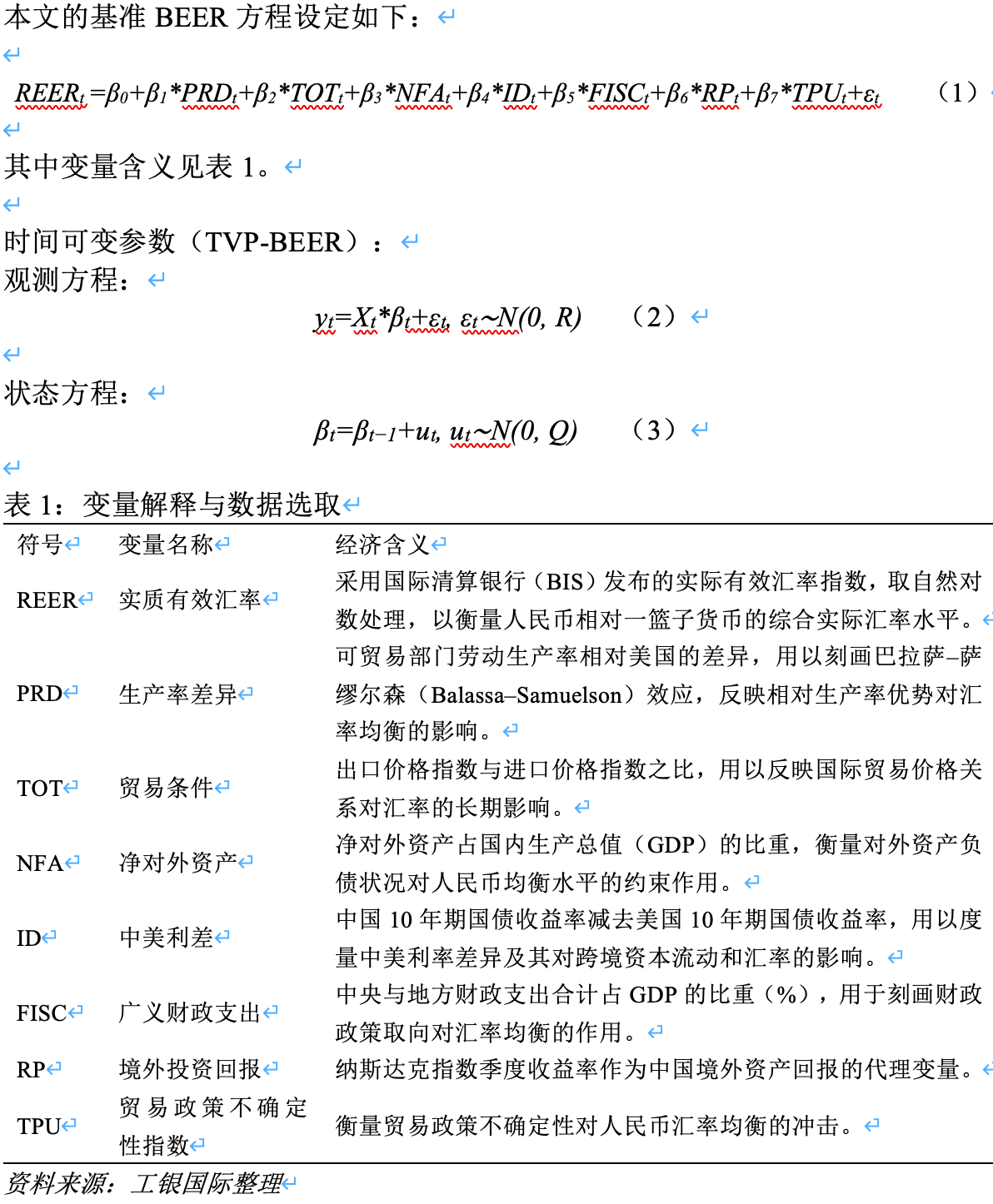
程实:人民币未现系统性偏离,内核稳定支撑走势稳健丨实话世经
Di Yi Cai Jing· 2025-09-01 12:25
Core Viewpoint - The current operational status of the Renminbi (RMB) is in line with its equilibrium level, indicating a positive interaction between fundamentals and the market [1] Summary by Relevant Sections RMB Equilibrium Exchange Rate Model Selection - Four main paths have emerged in the study of equilibrium exchange rates: 1. Price benchmark method, primarily represented by Purchasing Power Parity (PPP), which often underestimates equilibrium rates in developing countries due to various factors [2] 2. Fundamental Equilibrium Exchange Rate (FEER) framework, which links equilibrium to macroeconomic balance but is sensitive to assumptions about current accounts [2] 3. Natural Real Exchange Rate (NATREX) framework, emphasizing the dynamic adjustment of exchange rates based on economic fundamentals, though it has limited operational stability [3] 4. BEER method, which establishes a long-term co-integration relationship between actual exchange rates and a basket of macroeconomic variables, widely used in practical research [3] Introduction of Time-Varying Parameters - The BEER framework was chosen for estimating the RMB equilibrium exchange rate due to its empirical operability and explanatory power. The introduction of time-varying parameters (TVP) allows the model to adapt to structural changes and external shocks, enhancing its responsiveness [4] RMB Real Effective Exchange Rate Trends - The RMB real effective exchange rate (REER) has shown phase characteristics over the past 15 years, with significant appreciation driven by productivity differences and improved trade conditions before 2010. The REER remained relatively stable post-2015, despite external pressures [7][8] TVP-BEER Model Performance - The TVP-BEER model outperformed static BEER during structural shifts and external shocks, maintaining a deviation of less than 1% from actual values, while static models showed deviations of 1% to 2% [8][10] Factors Influencing RMB Equilibrium Level - The static BEER model indicates significant positive impacts from productivity differences and trade conditions on the RMB equilibrium level, while net foreign assets and fiscal spending have negative coefficients, reflecting potential risk spillover effects [12] Future Outlook for RMB - The RMB is expected to maintain a stable trajectory, supported by ongoing economic structural transformation, consumption upgrades, and steady progress in RMB internationalization. The equilibrium exchange rate is projected to remain within the range of 6.9 to 7.2 against the USD, indicating no systemic overvaluation or undervaluation [14]
美国霸权并非无解!专家:世界可以离开美元,但却离不开中国制造
Sou Hu Cai Jing· 2025-09-01 03:01
Core Viewpoint - The global economic landscape is shifting, with the decline of the dollar's dominance becoming increasingly evident due to the U.S. economic structure and the rise of China's manufacturing capabilities [1][3][12] Group 1: Dollar's Decline - The foundation of dollar hegemony relies on the U.S.'s comprehensive strength and international credibility, which are weakening as the economy becomes more financialized and manufacturing moves abroad [1][3] - The U.S. has been able to exchange printed dollars for global resources without relying heavily on domestic industries, leading to a growing trade deficit, particularly with China [3][5] - Experts highlight three critical flaws in dollar hegemony: the spillover effects of Federal Reserve policies causing global financial instability, the frequent weaponization of the dollar disrupting international settlements, and the ability of the U.S. to transfer its crises to other countries [5][9] Group 2: China's Role - China is actively promoting the internationalization of the renminbi, covering 109 countries and regions through the CIPS system, handling about 38% of global renminbi cross-border payments [7][11] - The BRICS nations are working on a new currency basket to reduce reliance on the dollar, with countries like Saudi Arabia considering oil transactions in renminbi [7][11] - China's manufacturing dominance is increasingly critical, as U.S. consumers rely heavily on Chinese products, making it difficult for the U.S. to maintain living standards without these imports [7][12] Group 3: Global Economic Shifts - The sanctions against Russia have backfired, leading to an energy crisis in Europe and highlighting the vulnerabilities of U.S. hegemony, which relies on military support and alliances [9][11] - The trend towards de-dollarization is becoming clearer, with expectations that gold prices may exceed $3,500 per ounce by mid-2025, indicating declining confidence in the dollar [9][12] - Emerging economies are increasingly seeking alternatives to the dollar, moving towards a new model of equitable exchange that does not depend on the traditional "dollar-manufactured goods" framework [11][12]

人民币升值:外资FOMO还是事件催化?
2025-09-01 02:01
人民币升值:外资 FOMO 还是事件催化?20250831 摘要 人民币汇率受国债收益率利差、通胀水平和风险溢价三大因素影响。中 美利差收窄,中国通胀较低而美国通胀反弹,美国货币政策不确定性增 加,均支撑人民币升值。 购买力评价显示人民币被低估约 50%,当前汇率约为 7.1 到 7.2,而实 际汇率应为 3.5 到 4。资本账未完全放开及房地产风险是主要原因。 中国经济和政策的稳定性,出口企业市场份额提升,以及 2024 年三中 全会后资本市场和宏观经济的稳定,降低了人民币风险溢价,吸引外资 流入。 人民币国际化与中国综合国力、军事影响力和地缘政治能力增强密切相 关,推动更多国家在贸易和结算中使用人民币,促进离岸人民币市场发 展。 年初以来美元走弱,美联储降息预期强化,以及企业结汇意愿提升,是 近期人民币升值的重要因素。CFETS 人民币汇率指数年初至 6 月底降至 95.3。 Q&A 近期人民币汇率的升值趋势是什么样的? 今年以来,人民币汇率经历了三波升值。第一波发生在年初,主要由于美元指 数从高点 110 开始走弱,人民币汇率随之出现幅度不大的升值。然而,这一波 升值在关税发酵后结束。第二波升值发生在 ...
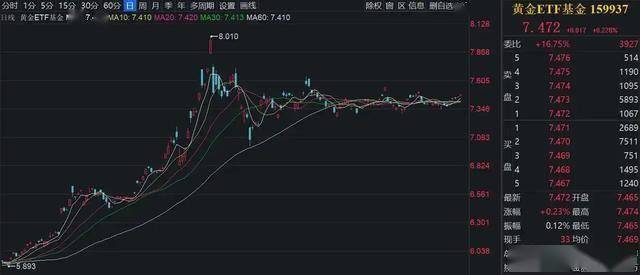
8月金价猛涨4.8%,背后或藏国际金融博弈大阴谋!
Sou Hu Cai Jing· 2025-08-31 10:50
Core Insights - The significant rise in gold prices in August 2025, with a monthly increase of 4.8%, is attributed to heightened geopolitical tensions and increased demand for safe-haven assets like gold [3][5][12] - The Federal Reserve's potential interest rate cuts are influencing market sentiment, contributing to the upward trend in gold prices [8][10] - China's strategy of increasing gold reserves reflects its proactive approach to financial security and its response to global economic uncertainties [6][10][12] Geopolitical Factors - The escalation of conflicts in the Middle East, particularly in Gaza, has intensified global market anxieties, prompting investors to shift towards gold [5][6] - Historical parallels are drawn between the current situation and the 1970s oil crisis, highlighting gold's role as a safe haven during crises [5] Market Dynamics - The Philadelphia Gold and Silver Index recorded a notable increase of 21.97% in August, indicating strong market interest in gold [3] - The recent softening of U.S. inflation data has bolstered expectations for Federal Reserve rate cuts, further supporting gold prices [8] China's Financial Strategy - China's gold reserves have reached 2076 tons, showcasing its strategic positioning in the international financial market [3][6] - The country is actively enhancing its financial resilience through increased gold holdings and foreign exchange reserves, aiming to mitigate external economic pressures [8][10] International Monetary Relations - Other nations, such as Russia, are also increasing their gold reserves while reducing reliance on U.S. dollar assets, reflecting a broader trend in international financial strategies [10] - The ongoing geopolitical and economic shifts are prompting a reevaluation of global monetary systems, with China positioning itself as a key player in this evolving landscape [12]
一张人民币的环球旅行
吴晓波频道· 2025-08-31 00:30
Core Viewpoint - The article discusses the evolving landscape of cross-border payment systems, highlighting the challenges faced by traditional infrastructures and the emergence of new payment methods driven by geopolitical tensions and technological advancements [2][34]. Traditional Cross-Border Payment - Cross-border payment involves the transfer of funds across countries, which is often complex and requires intermediaries like correspondent banks [10][12]. - SWIFT and CHIPS are key components of the traditional cross-border payment system, with SWIFT facilitating communication between banks and CHIPS handling the actual fund transfers [19][20]. - The global cross-border payment market is projected to reach $212.55 billion in 2024, growing to $320.73 billion by 2030, with a compound annual growth rate of 7.1% [5]. Challenges in Traditional Systems - Traditional cross-border payment systems are criticized for being inefficient, costly, and vulnerable to political manipulation, as seen in the sanctions against Russia [27][32]. - The dominance of the US dollar in global transactions (41% of cross-border payments) and its role in SWIFT has raised concerns about the politicization of payment systems [32][34]. Emergence of New Payment Methods - New payment infrastructures are emerging in response to the limitations of traditional systems, with cryptocurrencies like Bitcoin and USDT gaining popularity for their speed and lower costs [35]. - However, the volatility of cryptocurrencies and the lack of regulatory frameworks pose significant risks [35]. Renminbi Cross-Border Payment - The CIPS (Cross-Border Interbank Payment System) is a Chinese initiative aimed at enhancing the international use of the Renminbi, providing a faster and cheaper alternative to SWIFT [38][40]. - CIPS has seen rapid growth, with 174 participating institutions and a transaction volume of 175.5 trillion Renminbi, marking a 43% year-on-year increase [43]. - The CIPS 2.0 system significantly reduces transaction costs and processing times, with some transactions completed in seconds compared to days with SWIFT [41][44]. Future Developments - China is exploring further innovations in cross-border payments, including digital Renminbi and stablecoin initiatives, to enhance efficiency and reduce reliance on traditional banking systems [45][46]. - The ongoing development of these systems is crucial for establishing a stable and reliable cross-border payment environment for the Renminbi [47].

美国还是没能撑住,国际金价突破3500,人民币升值,美元深夜跳水
Sou Hu Cai Jing· 2025-08-30 14:55
Group 1: Gold Market Dynamics - International gold prices surged past $3,500, reaching a historical high, with COMEX gold hitting $3,516.10 per ounce, marking a 2.86% increase for the week [1][3][22] - The rise in gold prices has positively impacted the physical gold market, with domestic gold jewelry prices exceeding 1,000 yuan per gram, and gold stocks in Hong Kong showing significant gains [3][22] - The bullish sentiment in the gold market is closely linked to the Federal Reserve's monetary policy, with expectations of a 25 basis point rate cut in September, further driving gold demand [3][5] Group 2: Currency and Economic Factors - The offshore RMB exchange rate surged over 300 points, reaching a high of 7.1182, the strongest in nearly nine months, influenced by the Fed's dovish signals [1][9] - The weakening of the US dollar index, which fell below 98, reflects the market's anticipation of a shift in the Fed's policy and concerns over structural issues in the US economy [12][11] - China's economic stability, characterized by strong export performance and a rising stock market, has bolstered the RMB's attractiveness, leading to increased capital inflows into Chinese assets [9][18] Group 3: Market Reallocation and Investment Trends - The decline in the US dollar has prompted a reallocation of global capital from low-yield dollar assets to higher-yield RMB assets, enhancing liquidity in the A-share market [16][18] - Concerns over the sustainability of US fiscal deficits and rising debt levels have led investors to seek refuge in gold and other safe-haven assets [12][20] - The ongoing transition from a dollar-dominated international order to a more multipolar financial landscape is expected to drive further demand for gold as central banks diversify their reserves [18][20]
境外业务收入大增76%!中金公司跨境服务能力“护城河”持续深化
券商中国· 2025-08-30 08:27
Core Viewpoint - The article highlights the successful dual listing of Jiaxin International Resources on the Hong Kong Stock Exchange and the Astana International Exchange, marking a significant milestone in cross-border financial cooperation under the Belt and Road Initiative [1][2]. Group 1: Company Performance - In the first half of the year, the company reported a revenue of 12.83 billion yuan, a year-on-year increase of 44%, and a net profit of 4.33 billion yuan, up 94% [3]. - The main drivers of growth were investment banking, wealth management, and equity investment, with investment banking revenue increasing by 149.70% to 1.445 billion yuan [3][4]. - Wealth management contributed the most to revenue at 4.179 billion yuan, growing by 41.11%, while equity business revenue reached 3.307 billion yuan, up 106.43% [3]. Group 2: Cross-Border Business Capabilities - The company has established a strong cross-border business capability, covering over 13,000 institutional investors and maintaining a leading market position in QFII business for 22 consecutive years [4][7]. - The company’s internationalization strategy has led to a 75.66% increase in overseas business revenue, which now accounts for 31% of total revenue, up from 26% year-on-year [7][8]. Group 3: Investment Banking Leadership - The company led the Hong Kong capital market by acting as the sponsor for 13 IPO projects, with a total underwriting scale of 2.866 billion USD, ranking first in the market [5]. - Notable projects included the successful IPO of CATL, which became the largest IPO globally in 2023, showcasing the company's innovative approach to attracting long-term investors [5][6]. Group 4: Strategic Initiatives - The company is expanding its global footprint, having opened a licensed branch in Dubai, marking a significant step in its international strategy [8]. - It aims to enhance its core competitiveness and broaden its business moat by actively engaging in cross-border capital flows and promoting the internationalization of the RMB [8].
丁志杰:在全球经贸重构中把握大湾区金融开放新机
Sou Hu Cai Jing· 2025-08-30 07:15
Core Insights - The Guangdong-Hong Kong-Macao Greater Bay Area (GBA) is positioned as a key player in China's financial openness and international competitiveness amid global economic restructuring [1][3][4] Group 1: Financial Development and Globalization - The GBA should actively engage in high-level financial openness to establish benchmarks in international competition [1] - China is one of the biggest beneficiaries of globalization, with the current global economic fragmentation presenting new opportunities for the internationalization of the Renminbi [3] - China's robust foreign investment and foreign exchange reserves provide a strong foundation for promoting domestic currency settlement and a multipolar international monetary system [3] Group 2: Strategic Focus Areas for GBA - The GBA should emphasize collaborative competition among its cities to achieve win-win outcomes [4] - There is a dual focus on "bringing in" foreign investment and "going out" to enhance China's international standing [4] - Leveraging the GBA's geographical and institutional advantages is crucial for cultivating a globally influential international financial center [4] Group 3: Mission and Opportunities - The GBA has a significant role in building a strong financial nation and advancing China's modernization process [4] - It is essential to seize the opportunities presented by global economic restructuring to enhance financial openness and cooperation [4] - The GBA is expected to contribute significantly to the internationalization of the Renminbi and the overall development of China's financial sector [4]