资产配置

Search documents
把握股债布局机遇,华夏 6 个月持有期债券重磅发售
Quan Jing Wang· 2025-08-04 03:12
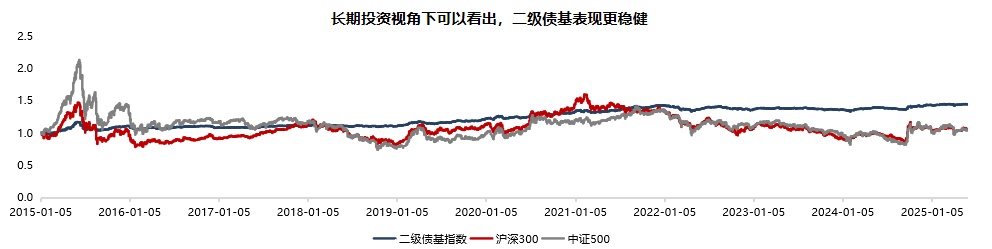
Group 1 - The A-share market is characterized by multiple driving forces, with sectors like computing power, innovative pharmaceuticals, and cyclical industries alternating in performance, contributing to overall market strength [1] - The macroeconomic environment is complex, with unprecedented structural shocks affecting the global economic landscape, leading to a focus on asset allocation strategies that balance stability and returns [1][2] - The launch of the Huaxia 6-Month Holding Period Bond Fund (Class A: 024296 / Class C: 024297) on August 4 provides investors with a new asset allocation option that aims for both growth and protection [1][2] Group 2 - Central banks worldwide are adopting accommodative monetary policies due to inflation and economic growth pressures, while China's 10-year government bond yield has decreased to 1.68% as of July 21, 2025, highlighting the appeal of bonds as a safe asset [2] - The A-share market continues to exhibit structural trends amid index fluctuations, with increased risk appetite among investors, although the rapid rotation of hot topics complicates equity investment [2] - The secondary bond fund category, represented by "fixed income +", is gaining traction as it combines stable income with equity market exposure, allowing investors to balance risk and returns effectively [2][3] Group 3 - Secondary bond funds invest at least 80% of their assets in the bond market for stable interest income while using up to 20% in equities to capture growth opportunities, demonstrating a "steady progress" strategy [3] - Over the past five years, the mixed bond secondary fund index has achieved an annualized return of 3.3%, significantly outperforming major indices like the CSI 300 and CSI 500, which had returns of -0.14% and 0.99%, respectively [3][5] - The maximum drawdown for the mixed bond secondary fund index was -6.93%, much lower than the drawdowns of the CSI 300 (-45.60%) and CSI 500 (-41.81%), showcasing its resilience in various market conditions [3] Group 4 - The Huaxia 6-Month Holding Period Bond Fund is designed with a six-month holding period to minimize short-term volatility and encourage long-term investment, allowing for flexible exits without redemption fees after the holding period [6] - This structure helps fund managers estimate redemption pressures effectively, reducing the impact of cash assets on overall returns, and promotes a stable fund size for better execution of investment strategies [6] Group 5 - The fund manager, Wu Fan, has eight years of experience in securities and over two years in public fund management, focusing on balanced asset allocation and macro strategy research [7] - The Huaxia Fund has a strong research foundation and has been a pioneer in credit research in China, establishing a comprehensive bond research system over the years [7][8] - In the current low-interest-rate environment, the Huaxia Fund is evolving its product strategies to enhance investment experiences and meet diverse investor needs [8]

赢了业绩输了规模!绩优主动权益基金遭ETF“偷袭”,什么情况?
Zheng Quan Shi Bao Wang· 2025-08-04 01:52
Group 1 - The core viewpoint of the articles highlights a divergence in performance between actively managed equity funds and ETFs, where actively managed funds have outperformed in terms of returns, but ETFs have seen greater growth in scale [1][2][3] - The innovation drug sector has driven significant performance for both actively managed funds and ETFs, with a notable number of funds achieving double returns this year, particularly in the innovation drug theme [2][3] - Despite strong performance, actively managed funds have not attracted as much capital as ETFs, which have expanded significantly in scale, particularly in response to high-performing sectors like innovation drugs and humanoid robots [3][4] Group 2 - Data shows that 10 actively managed innovation drug funds had a total scale of only 9.4 billion yuan at the end of Q2, with a modest increase of 5.8 billion yuan during the quarter, while 7 ETFs saw an increase of 12.9 billion yuan, reaching a total scale of 28.4 billion yuan [3] - The rapid growth of ETFs is attributed to their passive tracking mechanism, which allows them to capture industry beta returns effectively, leading investors to prefer ETFs for quick exposure to high-growth sectors [4][5] - The management fees for ETFs are generally lower than those for actively managed funds, providing a cost and efficiency advantage that attracts investors, especially when returns are comparable [6][7] Group 3 - The increasing popularity of ETFs has pressured actively managed funds, as the latter struggle to attract new capital despite their strong performance, with many investors favoring the transparency and flexibility of ETFs [5][6] - The shift in focus towards passive investment strategies by fund companies further constrains the space for actively managed funds, as new ETF products are increasingly being launched in high-demand sectors [6][7] - The current trend indicates that ETFs are more appealing to investors compared to actively managed funds, prompting the latter to seek differentiated strategies for survival [7]
财经聚焦|银行理财交出上半年“成绩单”:规模站上30万亿元
Sou Hu Cai Jing· 2025-08-03 11:19
Core Insights - The banking wealth management market in China has shown significant growth in the first half of 2025, with a total scale reaching 30.67 trillion yuan, marking a 2.38% increase from the beginning of the year and a 7.53% year-on-year increase [1][3] Group 1: Market Performance - The average annualized yield of wealth management products in the first half of 2025 was 2.12%, generating a total return of 389.6 billion yuan for investors, which is a 14.18% increase compared to the same period last year [1][3] - The number of investors holding wealth management products reached 136 million by the end of June 2025, reflecting an 8.37% growth since the beginning of the year [3] Group 2: Product Composition - Fixed income products dominate the market, with a total scale of 29.81 trillion yuan, accounting for 97.2% of the total wealth management product scale, showing a slight decrease of 0.13 percentage points from the beginning of the year but an increase of 0.32 percentage points year-on-year [2] - Open-ended wealth management products are increasingly favored, with a scale of 24.82 trillion yuan, representing 80.93% of the total, which is an increase of 0.13 percentage points from the start of the year [2] Group 3: Investor Behavior - The growth in personal pension wealth management accounts is notable, with over 1.439 million accounts opened, a 46.2% increase since the beginning of the year, and a total purchase balance of 110.36 billion yuan [1] - The decline in bank deposit rates has led investors to seek safer and more stable returns through bank wealth management products, which are perceived as lower risk [3][4]
投资的第一性原理是风险控制
雪球· 2025-08-03 05:33
Core Viewpoint - The article emphasizes the importance of risk control in investment, particularly through diversification, especially in the current high valuation environment of the market [4][10][14]. Market Overview - The market experienced significant volatility, with a notable drop on Thursday and a slight decline on Friday, indicating a turbulent market environment since around July 30, 2023 [2][8]. - The current market sentiment is concerning, with many investors overly optimistic despite high valuation levels, particularly in dividend indices [4][5]. Risk Control Strategies - The article reiterates three core risk control strategies: risk diversification, stop-loss measures, and volatility control [4]. - It highlights the necessity of diversification during bull markets, as those who concentrate their investments often face severe losses in bear markets [10][11]. Diversification Techniques - The "Three-Part Method" is introduced as a means to effectively manage risk through time, asset, and market diversification [12]. - **Time Diversification**: Advocates for dollar-cost averaging and adjusting investment based on market valuations [12]. - **Asset Diversification**: Encourages not to concentrate investments in a single asset class, suggesting a mix of stocks, bonds, and commodities, while also considering alternative investments when traditional options are overvalued [12]. - **Market Diversification**: Recommends allocating assets across different markets to mitigate regional risks, such as including U.S. Treasuries in the portfolio [13]. Investment Philosophy - The ultimate goal of investment is to achieve stable cash flow and financial independence, which can be accomplished through a diversified and risk-managed approach [14][15]. - The article concludes by urging investors to reflect on their portfolio's diversification and to adopt a mindset that prioritizes risk management [14].

已清空所有美股,仍持有中国股票!罗杰斯最新发声:下一次美国经济危机将是他有生以来最严重的
Hua Xia Shi Bao· 2025-08-02 12:46
Group 1 - Jim Rogers has liquidated most of his stock holdings in various countries, including the US, but continues to hold Chinese equities, particularly in the tourism sector, which he views as having strong growth potential [1] - Rogers emphasizes that all sectors in China have potential, with tourism and hospitality being particularly promising due to the increasing desire of Chinese citizens to explore the world and foreigners wanting to understand China [1] - He holds gold and silver as safe-haven assets during economic crises, noting that while he is not currently buying more gold due to its high price, he believes silver is undervalued and is purchasing it [1] Group 2 - Rogers expresses deep concern over the US debt situation, suggesting that the next economic crisis in the US could be the most severe of his lifetime, contrasting the current bullish sentiment in the market [2] - He warns that the prolonged period of economic prosperity, marked by significant money printing and low interest rates, is unsustainable and that a downturn will follow [2] - Despite his concerns about the US economy, Rogers maintains a significant amount of US dollars, anticipating that during the next economic crisis, people will seek safe havens, although he does not view the dollar as a true safe haven [2]
华尔街传奇大佬:已清空所有美国股票,目前持有中国股票和黄金白银
Mei Ri Jing Ji Xin Wen· 2025-08-02 12:26
Group 1: Jim Rogers' Investment Views - Jim Rogers has cleared all his U.S. stock holdings and currently holds stocks from only two countries, one of which is China [1][4] - He expresses a strong belief in the potential of various industries in China, particularly highlighting the tourism sector as having significant growth prospects [3][4] - Rogers emphasizes the historical changes in China and predicts that it will be the most important country in the 21st century [3][4] Group 2: Economic Concerns and Predictions - Rogers warns that the next U.S. economic crisis could be the most severe he has ever witnessed, citing the unsustainable nature of the current economic boom [4] - He expresses deep concern over the U.S. debt situation, suggesting that the perception of safety regarding U.S. debt may change if the country's leading position is challenged [4] - The U.S. stock market has experienced a prolonged bull run since 2009, but Rogers believes that the subsequent recession will be equally extraordinary [4] Group 3: Market Reactions to U.S. Policies - Following President Trump's announcement of "reciprocal tariffs," the U.S. stock market saw significant declines, with the Dow Jones Industrial Average dropping by 542.4 points [5][6] - The employment data released by the U.S. Labor Department showed disappointing job growth, which contributed to market volatility and dissatisfaction from President Trump [5][6] - The average effective tariff rate on imported goods in the U.S. has reached its highest level since 1934, which is expected to negatively impact GDP growth and increase household expenses [11][12] Group 4: Global Economic Impact - Experts believe that the U.S. tariff policy will not only affect the domestic economy but will also exert additional pressure on the global economy [15] - The combination of tariffs and weak employment data is likely to lead to further declines in the U.S. stock market, with potential repercussions for consumer spending and business investment [14][15] - The tariffs are projected to increase consumer prices significantly, particularly for clothing and footwear, which could further strain household budgets [11][12]

华尔街传奇大佬:已清空所有美国股票,目前持有中国股票和黄金白银!
Mei Ri Jing Ji Xin Wen· 2025-08-02 09:51
Group 1: Jim Rogers' Investment Views - Jim Rogers has cleared all his U.S. stock holdings and currently holds stocks from only two countries, one of which is China [1][4] - He expresses a strong belief in the potential of various industries in China, particularly highlighting the tourism sector as having significant growth prospects [3][4] - Rogers emphasizes the historical changes in China and predicts that it will be the most important country in the 21st century [3][4] Group 2: Concerns About U.S. Economy - Rogers expresses deep concern over the U.S. debt situation, suggesting that it could lead to severe consequences [4] - He predicts that the next U.S. economic crisis will be the worst in his lifetime, following a prolonged bull market since 2009 [4] - The Federal Reserve's extensive money printing and low interest rates are unsustainable, and Rogers warns that economic downturns often follow periods of excessive optimism [4] Group 3: Market Reactions and Economic Policies - Following the announcement of new tariffs by the U.S. government, the stock market experienced significant declines, with the Dow Jones dropping 542.4 points, marking a 1.23% decrease [5][6] - The average effective tariff rate on imported goods in the U.S. has reached 18.3%, the highest level since 1934, which is expected to impact consumer prices and economic growth [12][13] - Experts predict that the tariff policies will lead to increased consumer costs and could result in a slowdown in U.S. economic growth, with potential implications for global trade [13][15][17]

逾70家港股公司宣布中期分红,金额超500亿港元
Zheng Quan Shi Bao· 2025-08-01 14:57
Core Viewpoint - Hong Kong-listed companies are actively distributing dividends to reward investors, with over 70 companies announcing interim dividend plans totaling more than 500 billion HKD, enhancing the attractiveness of the Hong Kong stock market in a low-interest-rate environment [1][3][5]. Dividend Distribution - As of now, 74 Hong Kong-listed companies have distributed interim dividends, amounting to approximately 563.60 billion HKD, with a slight decrease in total dividend amount compared to the previous year [3]. - HSBC Holdings announced a significant dividend plan, distributing 138.39 billion HKD in the first quarter and an additional 136.75 billion HKD for the fiscal year ending December 31, 2025, ranking first in dividend distribution [3]. - Other notable companies include Brilliance China and CATL, with dividends exceeding 50 billion HKD, and several companies like Hong Kong Telecom and Hang Seng Bank distributing no less than 20 billion HKD [4]. Market Attractiveness - The trend of high dividends is expected to enhance the market's appeal, especially in the context of a low-interest-rate environment and increasing asset allocation difficulties [1][5]. - Insurance companies have been actively acquiring shares in Hong Kong banks and public utility companies, with 21 acquisitions recorded this year, surpassing the total from the previous three years [6]. - High dividends from Hong Kong-listed companies are attracting significant attention from institutional investors, particularly in light of the ongoing low-interest-rate environment [6][8]. Future Projections - Goldman Sachs projects that by the end of 2025, the total dividend distribution from onshore and offshore Chinese companies will reach 3 trillion RMB, marking a historical high [1][6]. - In 2024, over 4,300 Chinese companies listed in mainland China, Hong Kong, and the U.S. are expected to distribute 2.7 trillion RMB in dividends, reflecting a 10% increase from the previous year [7]. - The trend of increasing dividends is supported by national policies aimed at enhancing cash dividend regulations, with a notable rise in the dividend payout ratio [7].
两个最惨的指数,活生生的演示了怎样把钱亏光!
雪球· 2025-08-01 13:01
以下文章来源于不在此山中 ,作者不在此山中 不在此山中 . 专注基金投资和资产配置,著有《指数基金投资从入门到精通》,雪球有基金组合"天行健" 风险提示:本文所提到的观点仅代表个人的意见,所涉及标的不作推荐,据此买卖,风险自负。 万得近端次新股指数 , 跟踪的是那些刚上市不久的新鲜股票 。 从2015年2月1日到2025年7月29日 , 这 十年多点的时间 , 从1000点跌到目前的35点 , 跌幅高达96.5% , 年化-27.9% : 为什么这两个指数会这么惨 ? 它们到底做错了什么 ? 这两个指数的亏损根源 , 其实是类似的 , 就是投资中许多人爱做的事 —— 追热点 ! 作者: 不在此山中 来源:雪球 在股市里 , 要问怎么赚钱 , 可能各有各的办法 , 但要问怎么亏钱 , 却往往是大同小异 。 今天要说这两个最惨的股票指数 , 活生生的演示了怎样把钱亏光 ! ↑点击上面图片 加雪球核心交流群 ↑ 这两个难兄难弟 , 一个叫申万活跃指数 , 另一个叫万得近端次新股指数 。 申万活跃指数 , 从1999年12月30日到2017年1月20日 , 大概17年的时间 , 从1000点开始 , 最后还 剩10点 ...

减少现金增持黄金,三成亚太区家族办公室拟增加对大中华区投资
Hua Xia Shi Bao· 2025-08-01 12:39
Core Insights - The report from UBS indicates a shift in asset management strategies among ultra-high-net-worth clients, with a notable decrease in cash holdings and an increased interest in gold and alternative investments [2][6] Group 1: Family Office Trends - The average net worth of surveyed family offices reached $2.7 billion, with total assets under management amounting to $651 billion [2] - Family offices plan to hold only 6% of their assets in cash by 2025, reflecting a desire to invest more in global assets [2] - 21% of family offices globally plan to increase their allocation to gold and precious metals, a significant rise from the 10%-16% range observed in the past five years [2] Group 2: Investment Allocation - In the U.S., alternative investments constitute 54% of family office portfolios, with private equity at 27% and real estate at 18% [5] - Swiss family offices allocate 56% to traditional assets, with 34% in stocks and 13% in fixed income, while 44% is directed towards alternative assets [5] - North America is the preferred region for family office investments, accounting for 55% of allocations, followed by Western Europe at 21% and the Middle East at 14% [5] Group 3: Motivations Behind Investment Shifts - The decline in cash holdings and the increase in gold investments are driven by low interest rates and geopolitical instability, making gold an attractive option for wealth preservation [6] - The current 4% interest rate on USD deposits is no longer appealing to ultra-high-net-worth clients, leading them to seek greater appreciation potential in gold and alternative investments [6] Group 4: Interest in Chinese Assets - 35% of family offices plan to increase investments in the Asia-Pacific region over the next five years, with 30% targeting Greater China [7] - 39% of family offices intend to boost their investments in China within the next 12 months, indicating a growing interest in the Chinese market [7] - There is a consensus among global family offices regarding investment opportunities in sectors like pharmaceuticals and generative AI, with a significant focus on healthcare technology and innovation [7] Group 5: Hong Kong Market Appeal - The Hong Kong stock market has become increasingly attractive to global family offices, particularly due to the strong performance of technology companies listed there [8] - The availability of high-growth A+H listed companies has drawn overseas investors to the Hong Kong capital market [8]