
下沉市场拓展

Search documents
星巴克中国易主,这步棋怎么看
Xin Lang Cai Jing· 2025-11-04 15:04
Core Insights - Starbucks has entered a strategic partnership with Boyu Capital, marking the first time it has sold equity in its Chinese operations after 26 years in the market [2][3][7] - Boyu Capital acquired a 60% stake in a newly formed joint venture for $4 billion, while Starbucks retains a 40% stake and continues to own the brand and intellectual property [2][5] Industry Context - The Chinese coffee market is experiencing rapid growth, with local coffee chains and tea brands capturing significant market share from Starbucks, particularly in first- and second-tier cities [3][4] - Starbucks' market penetration in these cities is nearing saturation, prompting the need for a local partner to effectively expand into lower-tier cities and emerging business districts [3][4] Strategic Implications - The partnership with Boyu Capital is seen as a way for Starbucks to share operational risks and adapt to a more competitive landscape, contrasting with its traditional high-investment model [4][6] - Boyu Capital's deep understanding of Chinese consumers and established relationships in commercial real estate are expected to enhance Starbucks' site selection and operational efficiency in smaller cities [3][4] Financial Outlook - The valuation of Starbucks China exceeds $13 billion, and despite recent challenges, the acquisition is viewed as a potentially lucrative investment for Boyu Capital and other interested parties [5][6] - The joint venture aims to increase the number of Starbucks stores in China from approximately 8,000 to 20,000, indicating a commitment to long-term growth in the region [7]

县城消费崛起:山姆抢滩超级县,国际酒店品牌布局小县城
第一财经· 2025-10-22 02:13
Core Viewpoint - The article highlights the rapid growth of county-level consumption in China, driven by economic development and improved infrastructure, with major brands expanding into these markets to capture emerging opportunities [3][5]. Group 1: County-Level Market Expansion - Major brands, including Sam's Club, are increasingly targeting county-level cities as urban markets become saturated, with Sam's Club opening its fourth store in Suzhou, specifically in Zhangjiagang [3][6]. - The article notes that there are five counties in China with GDP exceeding 300 billion, referred to as the "Four Little Dragons of Southern Jiangsu" and Jinjiang in Fujian, indicating strong economic potential in these regions [4]. - The county-level market's share of total retail sales has increased, with the first three quarters showing a 38.8% contribution to social retail sales, up by 0.1 percentage points from earlier in the year [5]. Group 2: Brand Strategies in County Markets - International hotel brands like Hilton and Marriott are expanding into county markets, capitalizing on the growing demand for high-quality accommodations driven by tourism and local attractions [6][7]. - Starbucks has reached a total of 7,758 stores in China, covering over 1,000 county-level markets, indicating a strategic push into lower-tier cities [6]. - The cinema industry is also expanding in county markets, with Jiangyin being the first county-level city in Jiangsu to achieve full digital cinema coverage, showcasing the growing entertainment infrastructure [6]. Group 3: Economic and Social Factors - The article emphasizes that county cities are becoming important hubs for rural revitalization, attracting high-quality brands that enhance local consumer appeal and investment environments [7]. - As county economies grow, they offer lower costs of living and business operations compared to larger cities, making them attractive for new investments [7]. - The improvement in education and healthcare resources in county cities is contributing to population growth and urban expansion, further driving local consumption [7].


遇见小面更新IPO招股书,2025半年报利润同比翻倍
Guan Cha Zhe Wang· 2025-10-15 13:54
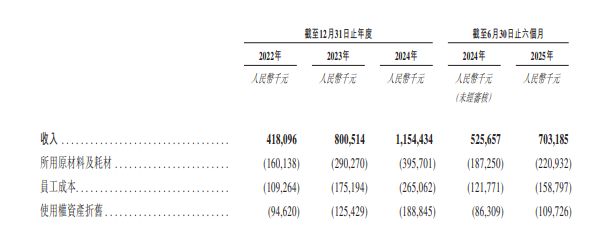
Core Viewpoint - Guangzhou Yujian Xiaomian Catering Co., Ltd. is on the verge of launching its IPO on the Hong Kong Stock Exchange, following the approval from the China Securities Regulatory Commission, with significant revenue and profit growth reported in its updated prospectus [1][12]. Financial Performance - In the first half of 2025, the company achieved a revenue of 703.185 million RMB, representing a year-on-year growth of 33.8%, and an adjusted net profit of 52.175 million RMB, up 131.56% from the previous year [1][2]. - The total revenue for 2022 was 418.096 million RMB, projected to reach 800.514 million RMB in 2023 and 1.154434 billion RMB in 2024 [2]. - The adjusted net profit margin is expected to improve from 5.9% in 2023 to 7.4% in 2025 [2][4]. Expansion and Market Position - The number of restaurants has increased from 133 to 451, with plans to exceed 500 by the end of the year, including the first overseas store in Singapore [3][8]. - The company is recognized as the largest operator of Sichuan-Chongqing style noodle restaurants in China, with a compound annual growth rate (CAGR) of total merchandise transaction value from 2022 to 2024 being the highest among competitors [5][7]. Market Trends - The Chinese noodle restaurant market is projected to grow from 183.3 billion RMB in 2020 to 296.2 billion RMB by 2024, with a CAGR of 12.7% [5]. - The Sichuan-Chongqing style noodle segment is expected to expand from 45 billion RMB in 2020 to 72.7 billion RMB by 2024, with a CAGR of 12.8% [5]. Customer Engagement - The company has attracted over 22.1 million members, with a 44.5% repurchase rate among stored-value members in 2024 [8]. - Total order numbers reached 42.094 million in 2024, with a year-on-year growth of 32.52% in the first half of 2025 [8]. Future Plans - The company plans to continue expanding into lower-tier markets and overseas, with a target of opening approximately 150 to 180 new restaurants in 2026, 170 to 200 in 2027, and 200 to 230 in 2028 [10][12].
火锅迈入“70元时代”,性价比、细分赛道、区域深耕成破局关键
Sou Hu Cai Jing· 2025-09-10 18:06
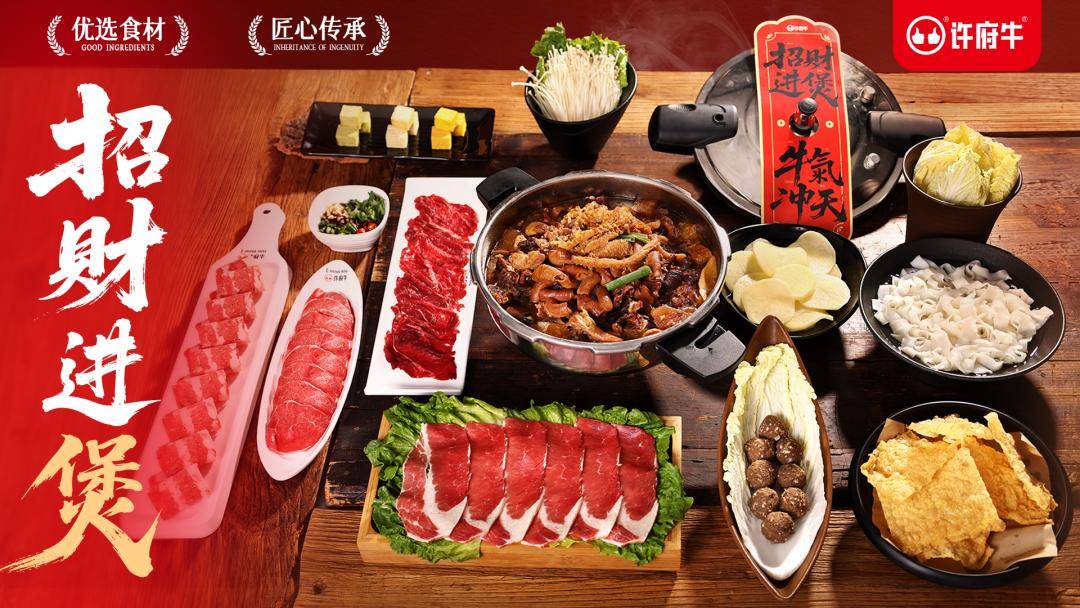
Industry Overview - The hot pot industry is undergoing significant transformation, with the market size expected to exceed 617.5 billion yuan in 2024 and reach 650 billion yuan in 2025, alongside a total of over 490,000 hot pot restaurants nationwide and a chain rate of 28%, surpassing the overall restaurant industry level [1] - Despite the apparent prosperity, the industry faces challenges with "scale expansion but profit decline," leading to increased survival pressure for companies [1] Consumer Behavior - Consumer spending on hot pot has decreased from 86.7 yuan per person in 2022 to 77.1 yuan in 2025, marking an 11% decline over four years, prompting companies to adjust their strategies [1] - The number of newly registered hot pot businesses in the first half of 2025 was only 22,000, a significant slowdown compared to the previous four years, which saw annual increases of 50,000 to 100,000 [1] Competitive Strategies - Some brands are adopting a "value-for-money revolution" to navigate the competitive landscape, with Hai Di Lao's sub-brand "Ju Gao Gao" offering over 100 SKUs at 59.9 yuan, and other brands enhancing consumer experience through free desserts and affordable pricing [1] - Brands like Xu Fu Niu are shifting from "affordable hot pot" to "beef specialists," streamlining their SKUs to 40 and emphasizing the richness of beef products [3] Supply Chain Innovations - Supply chain upgrades are reshaping industry competitiveness, with brands collaborating to develop unique products and establishing direct sourcing and regional distribution networks to lower costs [4] - The establishment of vegetable bases and partnerships with logistics companies has enabled brands to reduce food costs by 20% and enhance quality control [4] Market Expansion - The proportion of hot pot restaurants in third-tier cities and below reached 52.3% by May 2025, covering over 700 million people, indicating a shift towards lower-tier markets as a new growth area [4] - Brands like Ba Nu are achieving higher profit margins in lower-tier markets compared to first-tier cities, demonstrating the presence of quality consumption demand in these areas [4] Innovation in Niche Segments - Continuous innovation in niche segments is evident, with brands like Shan Ye Hot Pot gaining popularity and introducing new themes such as "mountain wild" and "health trends" [5] - New product offerings like "Shan Ye Secret Pot" have slightly increased average spending, showcasing the effectiveness of thematic differentiation in attracting consumers [5]
新茶饮企业上半年冷热不均:蜜雪赚了26.9亿,奈雪仍处关店调整期
第一财经· 2025-08-30 12:49
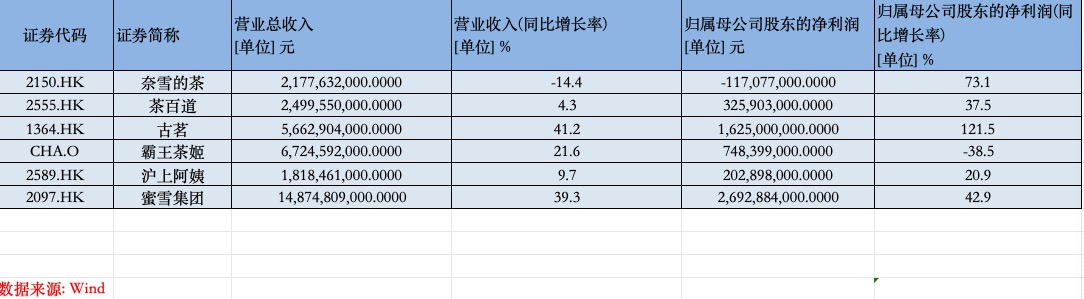
Core Viewpoint - The new tea beverage industry is experiencing significant growth, with companies like Mixue Group leading in revenue and net profit, while others like Naixue Tea are struggling with losses but showing signs of improvement [3][4]. Group 1: Company Performance - Mixue Group (2097.HK) reported the highest revenue of 14.87 billion yuan, with a year-on-year growth of 39.3%, and a net profit of 2.69 billion yuan, up 42.9% [4]. - Gu Ming (1364.HK) achieved a net profit growth of 121.51%, ranking first in the industry for profit increase [3][4]. - Naixue Tea (2150.HK) was the only company to report a loss in the first half of the year, with a revenue of 2.18 billion yuan, down 14.4%, and a net loss of 117 million yuan, although the loss narrowed compared to the previous year [4][3]. Group 2: Market Strategy - Mixue Group has a significant presence in lower-tier cities, with 57.6% of its 48,000 stores located in third-tier cities and below, while only 4.9% are in first-tier cities [6][5]. - Gu Ming also focuses on lower-tier markets, with 52% of its stores in third-tier cities and only 3% in first-tier cities [6]. - Naixue Tea's strategy differs, with 29.5% of its stores in first-tier cities, indicating a focus on higher-end markets [7]. Group 3: Business Model - The franchise model is a key revenue driver for many new tea beverage companies, with Mixue Group having 99% of its 52,996 stores as franchises [8]. - The majority of revenue for these companies comes from selling raw materials and providing management services to franchisees, indicating a "to B" supply chain business model [8][9]. - The scale of stores directly impacts the revenue ceiling for headquarters, with Mixue's extensive network providing strong economies of scale and bargaining power [9]. Group 4: Market Trends - The new tea beverage industry is expanding into lower-tier markets, where lower operational costs allow for higher profit margins and increased customer traffic [7]. - The competitive landscape is changing, with some companies benefiting from delivery subsidies while others, like Bawang Tea Ji, are experiencing declines in performance due to not participating in discount activities [10]. - The overall market for ready-to-drink beverages is projected to grow significantly, with a compound annual growth rate of 7.2% expected from 2023 to 2028, indicating ongoing opportunities despite challenges in the industry [11].

新茶饮企业上半年冷热不均:蜜雪赚了26.9亿 奈雪仍处关店调整期
Di Yi Cai Jing· 2025-08-30 08:51
Core Insights - The new tea beverage companies have reported their performance for the first half of the year, with Mixue Group leading in both revenue and net profit, followed by Cha Yujia and Gu Ming in respective rankings [1][2] - Gu Ming achieved the highest net profit growth rate in the industry at 121.51% year-on-year, while Nayuki Tea was the only company to report a loss, although the loss has narrowed compared to the previous year [1][2] Revenue and Profit Summary - Mixue Group: Revenue of 14.87 billion yuan, net profit of 2.69 billion yuan, with a year-on-year revenue growth of 39.3% and net profit growth of 42.9% [2] - Cha Yujia: Revenue of 6.72 billion yuan, net profit of 748.4 million yuan, with a revenue growth of 21.6% but a net profit decline of 38.5% [2] - Gu Ming: Revenue of 5.66 billion yuan, net profit of 1.63 billion yuan, with a revenue growth of 41.2% and net profit growth of 121.5% [2] - Tea Baidao: Revenue of 2.50 billion yuan, net profit of 325.9 million yuan, with a revenue growth of 4.3% and net profit growth of 37.5% [2] - Hu Shang A Yi: Revenue of 1.82 billion yuan, net profit of 202.9 million yuan, with a revenue growth of 9.7% and net profit growth of 20.9% [2] - Nayuki Tea: Revenue of 2.18 billion yuan, with a revenue decline of 14.4% and a net loss of 117.1 million yuan, although the loss has narrowed [2] Market Expansion and Strategy - Mixue Group has opened over 53,000 stores globally, with approximately 57.6% of its stores located in third-tier cities and below, indicating a strong focus on lower-tier markets [3][4] - Gu Ming also emphasizes expansion in lower-tier cities, with 52% of its stores located in third-tier cities and below [3] - The trend of expanding into lower-tier markets is becoming a common strategy among new tea beverage companies, allowing for lower operational costs and higher profit margins [4] Business Model and Operations - The majority of Mixue Group's stores are franchise-based, with 99% of its 52,996 stores being franchise outlets, which contributes significantly to its revenue through the sale of raw materials and equipment [6][7] - Nayuki Tea has a higher proportion of direct-operated stores, with 1,321 out of 1,638 stores being direct-operated, which poses challenges in terms of operational costs in high-rent areas [8] Impact of External Factors - The "takeaway war" in July led to increased subsidies from delivery platforms, benefiting some companies while negatively impacting others like Cha Yujia, which chose not to participate in discount activities [9] - Nayuki Tea reported an increase in revenue from takeaway orders, contributing 48.1% of total revenue, up from 40.6% in the previous year [9] Industry Outlook - The global ready-to-drink beverage market is expected to grow from $598.9 billion in 2018 to $779.1 billion in 2023, with a projected compound annual growth rate of 7.2% from 2023 to 2028 [10] - Despite the growth potential, the saturation of tea beverage stores and declining investment interest may lead to challenges for smaller or independent tea shops [11]
新茶饮企业上半年冷热不均:蜜雪赚了26.9亿,奈雪仍处关店调整期
Di Yi Cai Jing· 2025-08-30 08:38
Core Insights - The new tea beverage industry is experiencing varied performance among companies, with some achieving significant growth while others face challenges [1][8] - The expansion into lower-tier cities is a common strategy among leading brands, contributing to their revenue growth [3][4] - The impact of delivery platform subsidies is uneven, benefiting some companies while negatively affecting others [8] Group 1: Company Performance - Mixue Group (2097.HK) leads the industry in both revenue and net profit, with a revenue of CNY 14.87 billion and a net profit of CNY 2.69 billion, reflecting a 42.9% increase [2] - Gu Ming (1364.HK) shows the highest net profit growth at 121.5%, with a net profit of CNY 1.63 billion [2] - Nayuki (2150.HK) is the only company reporting a loss in the first half of the year, with a net loss of CNY 117 million, although the loss has narrowed compared to the previous year [2][1] Group 2: Market Strategy - Mixue Ice City has over 53,000 stores globally, with 57.6% located in lower-tier cities, leveraging low prices to capture market share [3][6] - Gu Ming also focuses on lower-tier cities, with 52% of its stores in these areas [3] - Nayuki's strategy differs, with a higher proportion of its 1,638 stores located in first-tier cities, leading to higher operational costs [4][7] Group 3: Impact of Delivery Subsidies - The "delivery war" has led to increased subsidies from platforms, benefiting companies like Mixue, which saw a rise in daily sales and order volume [8] - Ba Wang Cha Ji (CHA.O) experienced a decline in same-store GMV by 23% due to its non-participation in discount activities [8] - Nayuki reported that delivery orders contributed 48.1% of its total revenue, up from 40.6% in the previous year [8] Group 4: Industry Outlook - The global ready-to-drink beverage market is projected to grow from USD 799 billion in 2023 to USD 1,103.9 billion by 2028, with a compound annual growth rate (CAGR) of 7.2% [9][10] - Despite growth potential, the saturation of tea beverage stores and declining investment interest pose challenges for smaller brands and independent shops [10]
锅圈(2517.HK)2025年中报业绩点评:运营效率优化 提高股东回报
Ge Long Hui· 2025-08-08 19:59
Core Viewpoint - The company is expected to continue optimizing operational efficiency in the first half of 2025, with promising growth potential for store expansion in the future [1] Financial Performance - In the first half of 2025, the company reported revenue of 3.24 billion yuan, a year-on-year increase of 21.6%, with a gross profit of 717 million yuan, up 17.8%. The gross margin was 22.1%, down 0.7 percentage points year-on-year. Net profit reached 190 million yuan, a significant increase of 122.5%, while core operating profit also stood at 190 million yuan, up 52.3% [1] - The company plans to distribute an interim dividend of 0.0716 yuan per share, totaling 190 million yuan, with a payout ratio of 100% [1] Revenue Breakdown - Revenue from franchise sales was 2.595 billion yuan, up 11% year-on-year, while sales to other channels (mainly B2B) reached 560 million yuan, a substantial increase of 125% [1] - As of the first half of 2025, the company operated 10,400 stores, an 8% increase year-on-year, with a net addition of 250 stores, including 270 new stores in rural areas. Average revenue per franchise store increased by 8% year-on-year [1] Product and Membership Growth - The company launched 175 new SKUs in the hot pot and barbecue categories in the first half of 2025, enhancing its product offerings and introducing various meal sets and fruit beers [1] - The registered membership reached approximately 50.3 million, reflecting a year-on-year growth of 62.8% [1] Cost and Efficiency Improvements - The gross margin was 22.1%, down 0.7 percentage points year-on-year. The selling expense ratio improved to 9.5%, down 1.8 percentage points, mainly due to enhanced advertising efficiency. The management expense ratio also decreased to 6.5%, down 1.9 percentage points, attributed to steady operational efficiency improvements [1] Strategic Expansion Plans - The company aims to enhance market penetration in existing regions and expand its store network into new areas, focusing on county and rural markets, with preliminary plans to explore overseas markets [2] - In terms of supply chain, the company adheres to a "single product, single factory" strategy and plans to establish a food production base in Danzhou, Hainan Province, to improve bargaining power and optimize production costs [2]
锅圈(02517):运营效率优化,提高股东回报
GUOTAI HAITONG SECURITIES· 2025-08-07 05:06
Investment Rating - The investment rating for the company is "Cautious Accumulate" [1]. Core Views - The company's operational efficiency continues to improve in H1 2025, with promising growth potential for future store expansions [2]. - The report maintains an "Accumulate" rating and raises the forecast for the company's net profit attributable to shareholders for 2025-2027 to 4.20 billion, 5.05 billion, and 6.17 billion RMB respectively [11]. Financial Summary - Total revenue for 2023 is reported at 6.094 billion RMB, with projections of 6.470 billion for 2024, 7.451 billion for 2025, 8.309 billion for 2026, and 9.471 billion for 2027, reflecting a growth rate of -15%, 6%, 15%, 12%, and 14% respectively [5]. - Gross profit for 2023 is 1.351 billion RMB, with estimates of 1.417 billion for 2024, 1.654 billion for 2025, 1.845 billion for 2026, and 2.103 billion for 2027 [5]. - The net profit attributable to shareholders is projected to be 240 million RMB for 2023, decreasing to 231 million in 2024, then increasing significantly to 420 million in 2025, 505 million in 2026, and 617 million in 2027, with growth rates of 4%, -4%, 82%, 20%, and 22% respectively [5]. - The company plans to distribute an interim dividend of 0.0716 RMB per share, totaling 1.90 billion RMB, with a dividend payout ratio of 100% [11]. Operational Highlights - In H1 2025, the company achieved a revenue of 32.40 billion RMB, a year-on-year increase of 21.6%, with a gross profit of 7.17 billion RMB, up 17.8% [11]. - The number of stores reached 10,400, an 8% increase year-on-year, with a net addition of 250 stores in H1 2025 [11]. - The company introduced 175 new SKUs in the hot pot and barbecue categories, enhancing its product offerings [11]. Market Positioning - The company aims to strengthen its supply chain and expand into lower-tier markets, with plans to explore overseas markets [11]. - The report suggests a target price of 4.24 HKD for 2025, based on a PE ratio of 26x, which is above the industry average [11].
星巴克中国待价而沽的筹码是什么
Hu Xiu· 2025-06-28 00:30
Group 1 - Hillhouse Capital has shown interest in acquiring Starbucks' China business, which is valued at approximately $5 to $6 billion, with the transaction expected to continue until 2026 [1] - Starbucks believes in the significant growth opportunities in the Chinese market and is evaluating the best ways to capture future growth, focusing on revitalizing its business in China [2][3] - Starbucks' global CEO, Brian Niccol, mentioned that there is considerable interest from potential investors regarding the sale of minority stakes in Starbucks China, highlighting the brand's value and the coffee market's growth [2][3] Group 2 - Starbucks China recently announced a price reduction for non-coffee products, which reflects a cautious approach to pricing while maintaining its premium coffee positioning [3][9] - The company aims to expand its store count from 8,000 to 20,000, with strategies to attract consumers in lower-tier markets [4][17] - The non-coffee product price adjustments are intended to enhance performance and broaden the brand's price range, thereby increasing transaction volumes [14][20] Group 3 - Starbucks China has experienced a decline in same-store sales for ten consecutive quarters, but recent data shows a 4% increase in transaction volume despite a 4% decrease in average ticket price [15][16] - The company is focusing on the lower-tier market, where membership sales are growing at twice the rate of higher-tier cities, indicating significant potential [17][18] - The dual product strategy of coffee and non-coffee beverages is becoming increasingly common in the industry, with competitors also expanding their offerings [18][19] Group 4 - The current market dynamics suggest that Starbucks must balance its high-end brand positioning with the need to appeal to a broader consumer base [21][22] - The coffee industry has seen a downward trend in pricing, prompting Starbucks to consider potential changes in its pricing strategy to remain competitive [23]