
产品结构升级

Search documents
通化东宝2025年大幅预盈,双线驱动开启增长新篇
Cai Fu Zai Xian· 2026-02-02 07:06
Core Viewpoint - Tonghua Dongbao Pharmaceutical Co., Ltd. has announced a significant profit forecast for 2025, projecting a net profit of approximately 1.242 billion yuan, highlighting the company's strong resilience and growth potential in the industry [1] Group 1: Financial Performance - The company expects a substantial recovery in its performance, driven by steady growth in its core business and positive contributions from non-recurring gains [1] - Investment income from the transfer of shares in Xiamen Te Bao Bioengineering Co., Ltd. has provided strong support for the company's performance [1] - Core profitability indicators have significantly improved due to ongoing efforts in product structure upgrades, international expansion, and innovative research and development [1] Group 2: Market Position and Product Development - As a leading player in the domestic insulin market, the sales volume of insulin analog products has become the main driver of the company's growth in 2025, with a year-on-year increase of over 100% [1] - The revenue share of insulin analogs continues to rise, facilitating a strategic transition from a focus on human insulin to a balanced development of both human insulin and insulin analogs [1] - The company has achieved significant breakthroughs in hospital access and sales for insulin analogs, laying a solid foundation for ongoing performance recovery [1] Group 3: Market Share and International Expansion - According to data from Yao Yi Magic Cube, the company ranks second in market share for human insulin and insulin analogs, with a human insulin market share of 45.5%, maintaining the top position domestically [2] - The market share of glargine insulin has steadily increased to 15.0%, while the market share of aspart insulin is rapidly expanding, contributing to a significant rise in domestic sales revenue [2] - Following a nearly 80% year-on-year growth in overseas revenue in 2024, the company continues to experience strong growth in 2025, expanding its international product registration and market presence [2] Group 4: Future Outlook - The company aims to leverage the continuous recovery of its 2025 performance to solidify its domestic insulin market position, optimize product structure, and expand market share [2] - There is a focus on accelerating international strategic initiatives, enhancing research and development efforts, and building a comprehensive pipeline to foster sustainable high-quality development [2]

二锅头也不好卖了!顺鑫农业去年亏损最多近2亿元
Sou Hu Cai Jing· 2026-01-30 11:10
Core Viewpoint - Shunxin Agriculture's stock price dropped by 6.6% on January 30, following the announcement of a projected net loss of 116 million to 188 million yuan for 2025, marking a significant decline of 150.18% to 181.33% year-on-year due to intensified competition and a downturn in the liquor industry [1]. Company Summary - Shunxin Agriculture attributes its performance decline to a deep adjustment in the liquor industry and increased market competition, particularly affecting its core product, the "Niulanshan" series, which saw a decrease in sales [1]. - The company launched a new product, the "36% Jinbiao Niulanshan" white liquor, priced at 78 yuan per bottle, aiming to enter the high-end market [2]. - The "Niulanshan" brand, known for its affordable products, has struggled to maintain its previous sales levels, with the flagship product "Bai Niu Er" experiencing over a 40% decline in sales since being reclassified as a flavored liquor under new national standards [4]. Industry Summary - The low-end liquor market is becoming increasingly competitive, with major brands like Fenjiu and Wuliangye entering the light bottle liquor segment, leveraging their brand strength and distribution channels to capture market share [6]. - Young consumers are shifting towards more cost-effective and health-oriented alternatives, such as domestic red wine and yellow wine, which are gaining popularity in the market [7]. - The liquor industry is transitioning from a focus on scale expansion to value cultivation, with the low-end market now requiring a comprehensive approach to consumer psychology, scene adaptation, and brand storytelling [7].


华立股份:预计2025年度净利润为3900万元~5460万元,同比增长68.82%~136.35%
Mei Ri Jing Ji Xin Wen· 2026-01-29 11:15
Group 1 - The company, Huali Co., expects a net profit attributable to shareholders of the parent company for the year 2025 to be between 39 million to 54.6 million, representing a year-on-year growth of 68.82% to 136.35% [1] - The main reason for the performance change is the company's active promotion of product structure upgrades and business strategy transformation, which has solidified its leading position in the edge banding market [1] - The decorative panel business has achieved rapid growth in sales revenue and profit contribution during the reporting period, becoming a significant driver of overall performance growth [1] Group 2 - The reporting period marks the first complete year of the integration of the smart water business, with a significant increase in the year-on-year comparison due to the inclusion of two months of data from the previous year [1] - Major projects in the smart water business have met acceptance conditions as planned, and the profitability level is in line with expectations [1]

华立股份:预计2025年净利润同比增长68.82%-136.35%
Xin Lang Cai Jing· 2026-01-29 10:59
Core Viewpoint - The company, Huali Co., Ltd., expects a significant increase in net profit for the fiscal year 2025, driven by product structure upgrades and strategic business transformation [1] Financial Performance - The projected net profit attributable to shareholders is estimated to be between 39 million and 54.6 million yuan, representing an increase of 15.899 million to 31.499 million yuan compared to the previous year, which translates to a year-on-year growth of 68.82% to 136.35% [1] - The net profit attributable to shareholders after deducting non-recurring gains and losses is expected to be between 40 million and 56 million yuan, with an increase of 29.0348 million to 45.0348 million yuan compared to the previous year, indicating a year-on-year growth of 264.79% to 410.71% [1] Business Drivers - The growth in performance is primarily attributed to a substantial increase in sales revenue and profit contributions from the decorative panel business, as well as the incorporation of the smart water business [1]
伊之密:公司会推动产品结构持续向中高端升级
Zheng Quan Ri Bao Wang· 2026-01-29 10:10
Core Viewpoint - The company aims to continuously upgrade its product structure towards mid-to-high-end offerings while enhancing its process and complete delivery capabilities in key industries to improve customer loyalty and profitability quality [1] Group 1 - The company will promote the continuous upgrade of its product structure towards mid-to-high-end [1] - The focus will be on deepening process and complete delivery capabilities in key industries [1] - The company plans to steadily advance its globalization efforts, enhancing overseas channels and localized service capabilities [1] Group 2 - The company intends to reduce manufacturing and operational costs through lean manufacturing, supply chain collaboration, and digital efficiency improvements [1] - The goal is to enhance scale effects while maintaining a focus on profitability quality [1]

“降本”失灵,国药现代陷营利双降困局
Bei Jing Shang Bao· 2026-01-27 15:15
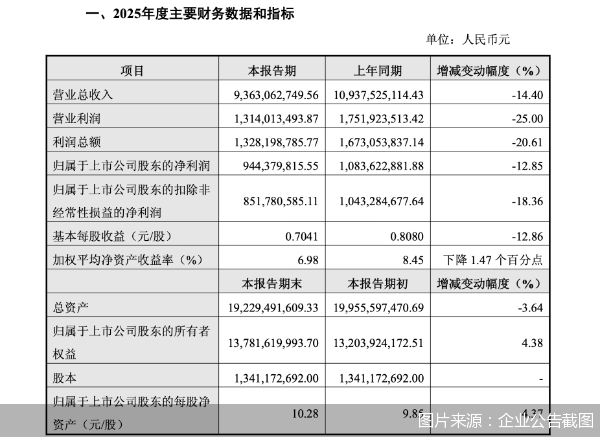
Core Insights - The company reported a significant decline in both revenue and net profit for 2025, with total revenue at 9.363 billion yuan, down 14.4% year-on-year, and net profit at 944 million yuan, down 12.85% [1][4][6] - This marks the fourth consecutive year of revenue decline for the company, with previous years also showing negative growth in revenue due to pressures in both raw material and formulation businesses [4][9] - Despite the revenue decline, net profit had previously reached historical highs due to aggressive cost-cutting measures, particularly in sales expenses, which were reduced from 34.85 billion yuan in 2021 to 11.52 billion yuan in 2024 [5][6] Financial Performance - The company's operating profit for 2025 was 1.314 billion yuan, a decrease of 25% compared to the previous year [2] - The total profit for the period was 1.328 billion yuan, down 20.61% year-on-year [2] - The basic earnings per share decreased by 12.86% to 0.7041 yuan [2] Business Challenges - The decline in revenue and profit is attributed to a dual impact on core business segments, with both raw materials and formulations facing price pressures and reduced demand [6][8] - The overall gross margin decreased by 6.91 percentage points, despite a reduction in expense ratios [6] - The company is attempting to address these challenges through asset divestitures and restructuring, including the sale of a 51% stake in a subsidiary at a significant loss [8][9] Management Changes - The company has undergone significant management turnover in recent years, with multiple high-level resignations and appointments, indicating potential internal restructuring efforts [7][10] - The management changes are seen as part of a broader strategy to address ongoing performance issues and improve operational efficiency [7][10] Industry Context - The challenges faced by the company are reflective of broader issues within the "Guoyao" system, where multiple listed companies are experiencing performance pressures and are engaging in asset restructuring [9][10] - The industry is shifting from a focus on scale to efficiency, as companies seek to optimize resources and improve profitability amid competitive pressures [9][10]

鑫宏业:公司综合毛利率表现跟行业市场竞争、新产品产能爬坡、新建厂房折旧摊销等多种因素有关
Zheng Quan Ri Bao· 2026-01-27 11:16
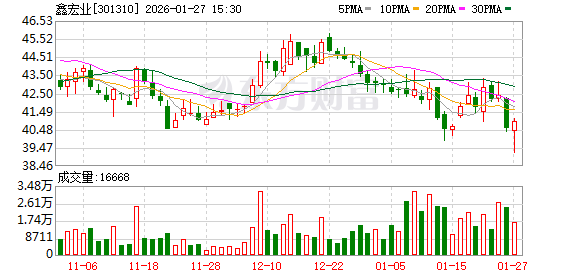
证券日报网讯 1月27日,鑫宏业在互动平台回答投资者提问时表示,公司综合毛利率表现跟行业市场竞 争、新产品产能爬坡、新建厂房折旧摊销等多种因素有关。公司正通过技术升级、优化产品和客户结 构,同步拓展特种装备、核电与聚变、车规级通讯线缆、液冷超充线缆等高附加值新兴领域,持续优化 产品结构,努力提升盈利水平。面对电解铜价格上涨带来的成本压力,公司一方面通过"铜价+加工 费"的定价模式实现成本及时传导,另一方面通过技术创新降本(如研发铜铝复合材料等)、深化上游 供应链协同稳定采购成本,双管齐下应对价格波动。目前公司暂未开展套期保值操作。关于迪链商票与 承兑汇票的风险管控,公司已建立相关应对机制:通过分类管理单独评估票据信用风险并计提坏账准 备,同时加快票据流转(如背书转让、贴现等)缩短资金占用周期。目前相关票据已充分计提减值准 备,整体风险处于可控范围。公司定增项目进展及订单情况请以公司公告信息为准。未来,公司将持续 深耕新兴领域拓展,加大核心技术研发投入,通过产品结构升级与成本精细管控,推动公司毛利水平稳 步改善。 (文章来源:证券日报) ...
通化东宝:2025年预计实现归母净利润约12.42亿元 同比扭亏为盈
Zhong Zheng Wang· 2026-01-26 12:58
Core Viewpoint - Tonghua Dongbao (600867) is expected to achieve a net profit of approximately 1.242 billion yuan and a net profit of approximately 402 million yuan after deducting non-recurring gains and losses in 2025, marking a significant turnaround from previous losses and a substantial recovery in performance [1] Group 1: Financial Performance - In 2025, the company anticipates a significant recovery in its financial performance, with both net profit and adjusted net profit turning positive compared to the previous year [1] - The company’s insulin similar products are projected to drive major growth, with annual sales expected to increase by over 100% year-on-year, contributing to a balanced development of its product structure [1][2] Group 2: Market Position and Strategy - Tonghua Dongbao has achieved significant improvements in market share, ranking second in the industry for human insulin and insulin similar products, with a market share of 45.5% for human insulin, maintaining the leading position domestically [2] - The company is focusing on enhancing its domestic insulin business, optimizing product structure, and expanding market share while accelerating its internationalization strategy [1][2] Group 3: Product Development and Innovation - The company has made substantial progress in international product registration, with various insulin formulations and GLP-1 products receiving approvals in multiple countries, including the U.S., Dominican Republic, and Indonesia [3] - Several R&D projects have achieved important clinical milestones, including the completion of Phase III trials for semaglutide and positive results for other diabetes-related products [4] Group 4: Shareholder Engagement - The controlling shareholder, Dongbao Industrial Group, has increased its stake in the company by investing 228 million yuan to acquire 1.42% of the shares, reflecting confidence in the company's future prospects [5] - The company plans to repurchase shares worth between 20 million and 40 million yuan to support employee stock ownership plans and/or equity incentives [5]
常宝股份(002478) - 002478常宝股份投资者关系管理信息20260123
2026-01-23 10:26
Group 1: Company Overview and Market Outlook - The company has established a strong reputation in the small-diameter boiler pipe market, with increasing production and sales in recent years, primarily used in coal-fired power generation and gas-fired power generation sectors [2][3] - The market for boiler pipes is expected to grow due to ongoing demand for electricity supply and the need for upgrades to aging power generation units [3] Group 2: Oil Casing Market Situation - The company has adapted to market changes by enhancing product structure and focusing on high-performance oil casing products, including a full range of API steel grades and proprietary series [4] - There is a growing demand for high-performance pipes in oil and gas extraction, and the company aims to expand its market presence with unconventional oil and gas extraction products [4] Group 3: Specialty Pipe Development - Specialty pipes, including those for petrochemical, construction machinery, automotive, marine, and gas cylinder applications, are a key focus area for the company [5] - The company is committed to high-end, segmented, and branded product positioning, with a steady increase in new product orders supporting structural transformation [5] Group 4: Recent Developments in Changbao Special Materials Project - The Changbao Special Materials project has completed the construction of several production lines and is now in the market operation phase, focusing on optimizing processes and expanding market channels [6] - The company plans to promote high-end products such as stainless steel boiler pipes and nickel-based alloy oil pipes while developing domestic alternatives for various applications [6] Group 5: Future Capital Expenditure Plans - The company will continue to invest in high-end project construction, production line upgrades, and automation to enhance competitiveness and respond to market demands [7] - Future investments will also consider external market conditions and opportunities for overseas expansion [7] Group 6: Employee Incentive Plans - The company has implemented stock incentive plans in 2021 and 2023 to foster employee engagement and development [8] - Future plans include optimizing the incentive mechanism and performance compensation system to promote long-term growth and collaboration between employees and the company [8]

燕京啤酒(000729):业绩持续高增,期待“十五五”新发展
GF SECURITIES· 2026-01-21 04:47
Investment Rating - The report assigns a "Buy" rating for the company [7] Core Views - The company is expected to achieve a net profit attributable to shareholders of RMB 15.8-17.4 billion in 2025, representing a year-on-year increase of 50-65%, which aligns with previous expectations and exceeds market consensus [7] - The company has demonstrated strong growth due to ongoing reforms, with a projected net profit of RMB 16.6 billion for 2025, reflecting a year-on-year increase of 57.5% [7] - The company is focusing on product structure upgrades and expanding its beverage business, which is anticipated to drive future growth [7] Financial Summary - Revenue projections for the company are as follows: - 2023: RMB 14,213 million - 2024: RMB 14,667 million (growth rate: 3.2%) - 2025: RMB 15,319 million (growth rate: 4.4%) - 2026: RMB 16,264 million (growth rate: 6.2%) - 2027: RMB 17,020 million (growth rate: 4.6%) [3] - EBITDA is projected to grow significantly, reaching RMB 3,724 million by 2027 [3] - The net profit attributable to shareholders is expected to increase from RMB 645 million in 2023 to RMB 2,371 million in 2027, with a growth rate of 16.9% in 2027 [3] - The earnings per share (EPS) is projected to rise from RMB 0.23 in 2023 to RMB 0.84 in 2027 [3] - The company’s price-to-earnings (P/E) ratio is expected to decrease from 37.7 in 2023 to 14.9 in 2027, indicating improved valuation [3] Strategic Focus - The company is undergoing comprehensive reforms, with a focus on enhancing its product offerings and operational efficiency, which is expected to lead to improved profit margins [7] - The introduction of the "燕京 U8" product aims to capture the preferences of younger consumers and drive national expansion [7] - The company is also exploring the health food segment with its natto products, indicating a diversification strategy [7]
