体验式消费

Search documents
京潮年货地图 | 景区快递单量上涨15%,非遗融合线下场景北京春节电商体验式消费扩容
Bei Jing Shang Bao· 2026-02-09 11:46
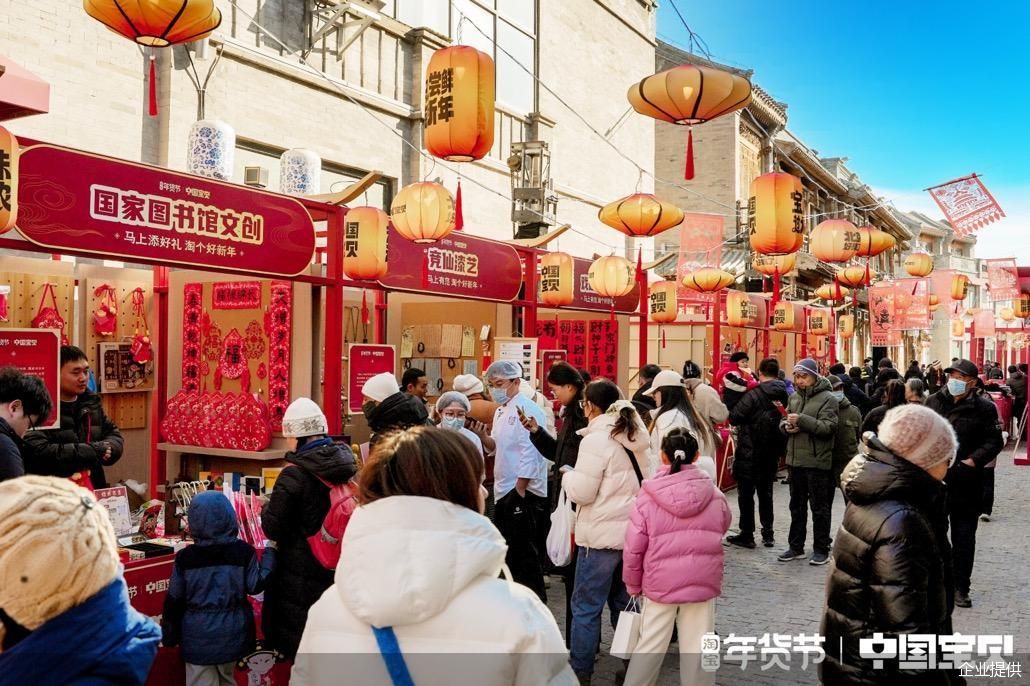
临近春节,北京年味消费愈发浓厚。2月9日,北京商报记者走访多家快递网点、电商平台获悉,今年年货节期间,北京部分景点现寄递热潮,快递网点日均 单量增长20%。京东、淘宝、抖音等平台结合非遗等传统元素,营造线下北京春节消费氛围。与此同时,北京年轻人热衷年货即买即得,让即时零售成为新 的增长极。相比于过去以商品交易为主的囤货性消费,北京春节电商消费呈现出即时化、体验化、服务化的消费趋势。 景区年货走俏 春节前夕,北京不少景区洋溢着新年氛围,游客络绎不绝,附近的快递网点也在紧张忙碌着。负责人杨子月所在的北京顺丰椿树营业店网点覆盖了黄金商圈 大栅栏,据她讲述,当前网点的日均单量上涨15%左右,网点日均单量3000—4000单,预计春节期间日均单量整体上涨20%。 近年来,越来越多的游客选择轻松、便捷化旅游,景区商家提供的特产礼盒寄递服务成为快递企业业务的增量点。中通快递北京王府井网点负责人都克磊也 向北京商报记者提及,最近年货节期间,网点日均收件量上涨了20%—30%,日均业务量8000票左右,旅游特产的寄递占比在10%—15%左右。 值得关注的是,今年电商平台除了开展线上年货节促销外,还尝试将传统文化元素融入线下消费 ...

新春市集上新,“洋年货”和“土特产”一站买齐
Xin Hua Wang· 2026-02-09 07:41
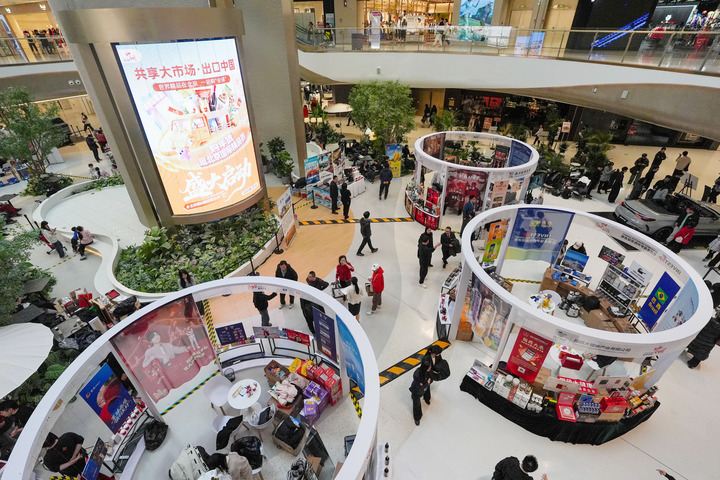
快过年了,你家年货备齐了吗? 如果还没,不妨去身边的热闹市集逛一逛——那里正上演着一场"土"与"洋"的奇妙相遇。天南地 北、国内海外的好东西,如今在一个市集里就能"一站买齐"。 1月30日,在浙江义乌中国进口商品城一家店铺内,店员给顾客推荐塞尔维亚葡萄酒。新华社记者 徐昱 摄 春节临近,在全球最大小商品集散中心浙江义乌,一列列自欧洲归来的中欧班列,正将西班牙的红 酒、葵花籽油和气泡水,波兰的牛奶,法国的红酒等"洋年货"准时送抵义乌,堪称"移动的欧洲年货集 市"。 非遗年货市场精彩纷呈 年货市场中各类非遗元素的加入为年货消费带来更多火花。 打造"家门口"的全球购 2月4日,在"共享大市场·出口中国"2026年首场活动暨北京国际精品荟的进口商品推介区,参观者 在参观展出的各国商品。新华社记者 鞠焕宗 摄 2月4日,"共享大市场·出口中国"2026年首场活动暨北京国际精品荟启动活动举行,现场打造了"一 站式"全球好物采购展区。活动还配套"全球甄选 悦享生活"进口优品体验周、"汇全球 聚雅宝"欧亚国家 精品推广周暨年货节等其他系列活动,将全球优质商品全面融入春节消费场景,让人们不出国门即可便 捷选购各国好物,激发节日 ...
有预感,过年这5个行业,将大赚特赚
Sou Hu Cai Jing· 2026-02-08 08:05
Group 1 - The article highlights five lucrative sectors during the Chinese New Year, indicating that while some people feel financially constrained, there are opportunities for profit in various industries [1] - Traditional cultural activities, once considered outdated, have become popular during the Spring Festival, with performances like lion dances and folk dances being heavily booked by businesses and malls [3] - The demand for handmade items and experiences is rising, with consumers preferring to create their own decorations rather than purchasing ready-made products, reflecting a trend towards experiential consumption [4] Group 2 - Young consumers, particularly those born in the 1990s and 2000s, are increasingly willing to spend on cute and trendy decorations, which are affordable and visually appealing [6] - Simple interactive games for children, such as duck fishing, are generating significant revenue for vendors during the holiday season, with some earning thousands of yuan daily [6] - Street food sales have surged during the festival, with local delicacies and visually appealing snacks being particularly popular, indicating a shift towards experiential and visually engaging food options [8] Group 3 - The Chinese New Year is not only a peak consumption period but also a time for many to explore new income opportunities, suggesting a vibrant market for innovative business ideas [10]

仪式感消费新变量:乐高花植系列卡位情人节经济
2 1 Shi Ji Jing Ji Bao Dao· 2026-02-03 08:38
2026年情人节前夕,杭州万象城"乐在花间"约会花房内,一对年轻情侣正低头合作拼搭乐高玫瑰花。男 孩小心地递过一片花瓣样式的乐高积木,女孩专注地对照说明书,两人的手指在积木间不经意轻触,相 视一笑。 而不远处,近两米高的乐高巨型玫瑰模型前,更多情侣正在打卡留念,记录这个与众不同的情人节瞬 间。这个被红粉色调乐高花海簇拥的空间里充满爱与回忆,情侣们在其中创造着属于彼此的独家记忆。 在艾媒咨询一项关于"七夕最希望伴侣做什么"的调研中,33.94% 的消费者选择了"陪伴",排在第一 位,其次才是吃美食、提前规划、送礼物和旅行。这一排名顺序也透露了情人节消费的新逻辑:礼物固 然重要,但"在场"才是核心。 "越来越多的成年人投身于拼搭与创作,在完成作品的过程中实现自我表达。"乐高集团中国区总经理马 世宁表示,这已成为全球趋势,尤其在中国——自我表达、自我愉悦、创造力与成就感正形成一股重要 潮流。 马世宁进一步指出,"我们更希望从两个方向出发:一方面为中国消费者设计,另一方面也让中国文化 与中国符号成为全球产品设计的重要灵感来源。" 从"物质拥有"到"情感记忆":Z世代情人节消费行为分析 "拼搭积木时手指的触碰,都藏着亲 ...
晶采观察丨提质惠民!服务消费新政落地 点燃内需增长新引擎
Sou Hu Cai Jing· 2026-02-02 14:40
Core Viewpoint - The State Council's recently released "Work Plan for Accelerating the Cultivation of New Growth Points in Service Consumption" emphasizes improving service quality to benefit the public, moving beyond traditional consumption stimulation approaches [1] Group 1: Key Policy Measures - The plan outlines 12 policy measures aimed at invigorating key sectors, nurturing potential areas, and strengthening support mechanisms [1] - A significant focus is on the home service sector, addressing issues such as insufficient quality service supply and varying qualifications of service personnel [1] Group 2: Home Service Sector Initiatives - The plan proposes a special training initiative for home service professionals to enhance the industry's professionalism and reliability [1] - It encourages the transformation of intermediary home service companies into employee-based models, aiming to cultivate leading enterprises in the sector [1] Group 3: Transportation and Cultural Services - In transportation, the plan includes policies to promote the integration of railways and tourism, enhancing service quality and developing themed tourist trains [4] - The cultural sector will see improvements through a robust policy framework aimed at fostering competition and innovation in audiovisual services, enriching cultural offerings [4] Group 4: Experience-Based Consumption - The plan targets the growing trend of experience-based consumption, including immersive entertainment and escape rooms, ensuring their regulated development [6] - It aims to address issues in ticketing for events and sports, making access to cultural and sporting events more equitable and convenient [6] Group 5: Overall Impact - The initiatives are designed to meet the real needs of the public, enhancing convenience and quality of life while stimulating economic growth [7] - The plan represents a proactive choice to adapt to changing consumer structures and respond to external economic challenges, aiming for a dual win of improved living standards and economic vitality [7]

极氪荣获“2026胡润至尚优品奖项”
Feng Huang Wang Cai Jing· 2026-02-02 05:29
Core Insights - The report reveals the evolving lifestyle, consumption habits, and brand preferences of China's high-net-worth individuals (HNWIs) [1][3] - The report is the 22nd edition by Hurun Research Institute, aiming to provide insights into the quality of life among HNWIs in China [1] Group 1: Demographics and Lifestyle - The average living area for HNWIs in China is 205 square meters, with an average of 4.1 residents per household [2] - HNWIs average 6.7 hours of sleep per day and engage in over 2 hours of exercise weekly, with hiking and running being the most preferred activities [2] - They spend an average of 6.3 days per month with family, favoring Cantonese cuisine for family meals and Japanese cuisine for dining with friends [2] Group 2: Consumption and Spending Habits - HNWIs plan to reduce material consumption by 10% and increase service experience consumption by 12% in the coming year [2] - 75% of HNWIs are considering self-education or further studies, with younger individuals leaning towards MBA programs and older individuals favoring online learning platforms [2] - The average annual vacation days for HNWIs is 21, with an average of 5 international trips in the past year, including 2.1 for leisure and 2.9 for business [2] Group 3: Investment Preferences - The top investment direction for HNWIs in the coming year is gold, followed by overseas investments such as U.S. and Hong Kong stocks, funds, and insurance [2] - On average, overseas assets account for 15% of their investable assets [2] - The average age at which HNWIs plan for their children to study abroad is 16 years [2] Group 4: Market Insights - The report highlights a shift towards experience-based consumption among HNWIs, emphasizing emotional satisfaction and experiential value in areas such as health management, education, entertainment, travel, and investment [3] - The number of high-net-worth families in China exceeds 2 million, with the Yangtze River Delta region accounting for 30% of this demographic [3] - The report is based on a survey of over 11,000 high-net-worth individuals in China, making it the largest study of its kind globally [3]
增加春节期间消费品以旧换新补贴数量 九部门发布活动方案
Jing Ji Guan Cha Wang· 2026-02-02 04:15
经济观察网据央视新闻客户端消息,2日,商务部等9部门印发《2026"乐购新春"春节特别活动方案》。 其中提出,鼓励各地增加春节期间消费品以旧换新补贴数量,加大线下实体零售支持力度,动员企业春 节期间持续开展汽车、家电、数码和智能产品相关展销活动,引导企业打造智能终端等产品体验专区, 对到店体验消费者给予更多优惠,加大政策解读和线下体验式消费宣传力度,营造浓厚换新氛围。 此外,方案还提出,鼓励金融机构与重点商户合作,策划春节专属活动,推出消费红包、消费立减等优 惠,扩大活动覆盖面。结合地方促消费活动,推出支付满减、积分抵现等优惠措施,鼓励使用数字人民 币智能合约消费红包。充分满足小额现金需求,加强手机红包技术保障。金融机构保障适量网点开门营 业,满足群众金融服务需求。 ...
2025年中国电影全产业链产值超8100亿元的背后
Jing Ji Ri Bao· 2026-02-01 01:37
Core Insights - The total value of China's film industry chain is projected to reach 817.26 billion yuan by 2025, with box office revenue estimated at 51.83 billion yuan, indicating a significant expansion beyond traditional metrics of success [1] - The film industry's economic and social value extends beyond box office sales, encompassing various revenue streams such as non-ticket income, multi-platform broadcasting, and derivative consumption from film IPs [1][2] - The film industry's growth is increasingly linked to consumer behavior, shifting from single product purchases to experience-driven, scenario-based, and emotionally resonant consumption [2] Industry Overview - The film industry's growth multiplier is approximately 1:15.77, suggesting that the economic impact of films extends well beyond the cinema [2] - The integration of technology development, cross-industry promotion, and IP licensing is becoming crucial for the industry's new growth drivers [2][3] - The film industry is encouraged to move away from reliance on box office revenue and to strengthen its entire value chain, focusing on quality content production, collaborative marketing, and transforming viewing spaces into cultural consumption hubs [3] Future Directions - The industry must enhance collaborative efforts across various sectors to convert short-term cultural phenomena into lasting IP influence and commercial viability [3] - There is a call for deeper integration of film with tourism, cultural creativity, and commercial sectors to better embed film consumption within local economic cycles [3] - The future competition in the film industry will hinge on the ability to construct IP ecosystems and integrate industry value, moving from a "film industry" to a "film ecosystem" approach for sustainable high-quality development [3]

产值超八千一百亿元的背后
Jing Ji Ri Bao· 2026-01-31 21:50
强化融合思维,深化跨领域合作。比如,各地文旅部门主动将电影作为推广城市形象、促进文旅融合的 重要载体,积极打造"电影+文旅""电影+文创""电影+商业"等融合场景,让电影消费更好地融入地方经 济循环,使其在拉动内需、促进服务业升级、增强文化软实力方面发挥更大作用。 8172.59亿元产值映照出电影产业的巨大外溢潜能。它启示行业,未来的竞争将不再是单部影片的票房 角逐,而是IP生态的构建能力与产业价值的整合能力的竞争。唯有主动拥抱从"电影工业"到"电影生 态"的升维之路,中国电影才能真正实现高质量发展,成为驱动文化繁荣与经济增长的强劲双引擎。 这一数据为电影产业高质量发展指明了方向。数据显示,电影票房拉动系数约为1∶15.77。这说明,电 影产业的增长动能已不再局限于银幕之内。上游的技术研发、中端的跨界宣发、下游的IP授权与文旅融 合,正日益成为行业新的增长极。 进一步释放电影全产业链价值,需要行业各方携手共赢。 摆脱单一票房依赖,加强全产业链布局。上游内容端持续产出优质内容,关注影片长尾、多元化的价值 增长;中游宣发端与消费品牌、线下商业、文旅景区共创融合消费场景;下游放映端从单一的观影空 间,转型为"文化消 ...
世邦魏理仕:租赁和投资需求逐步回升 2026年香港房地产市场有望更均衡发展
智通财经网· 2026-01-16 08:32
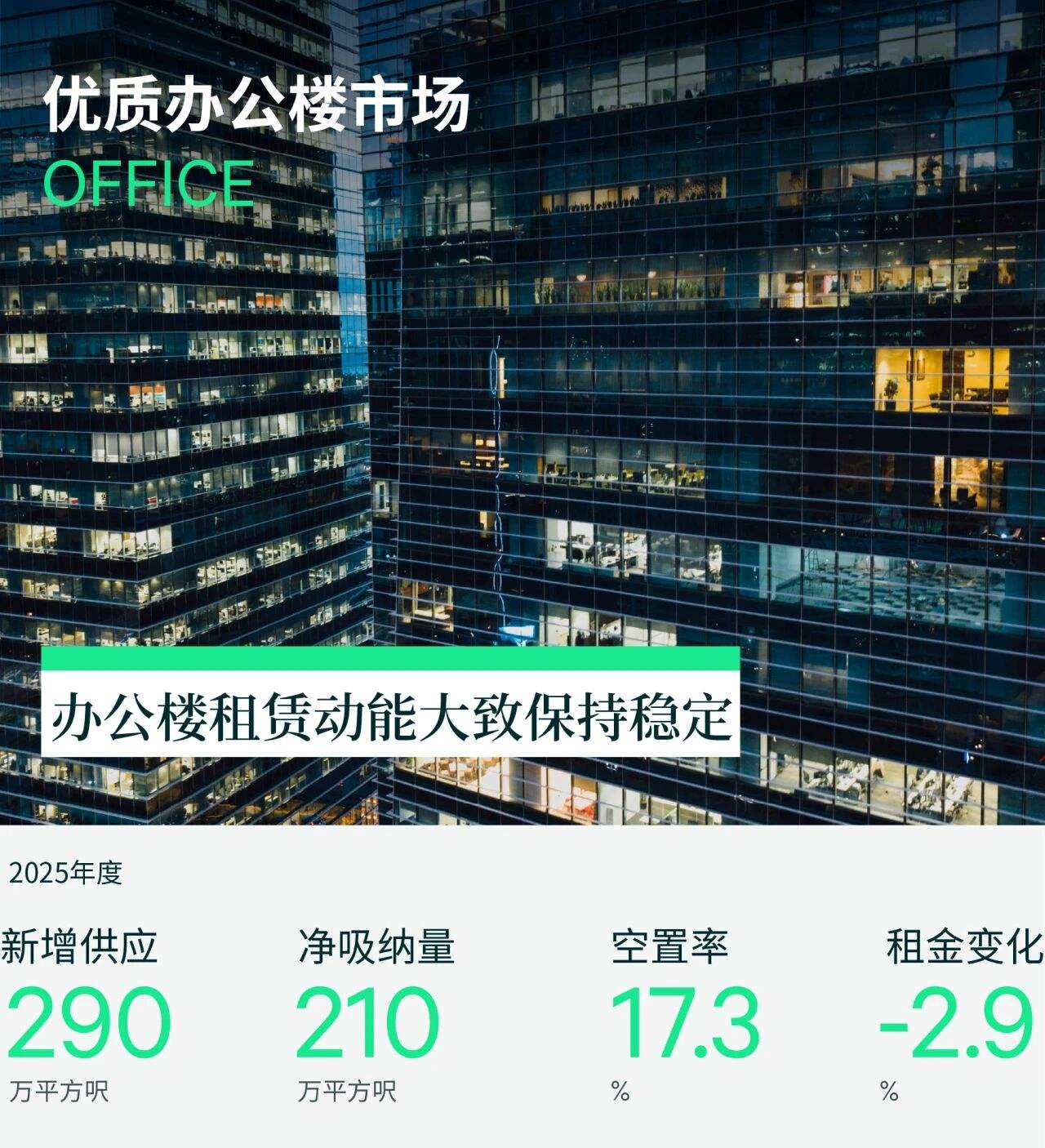
Core Insights - The Hong Kong real estate market is expected to show resilience in 2025, despite high vacancy rates and limited impact from interest rate cuts, with a gradual recovery in leasing and investment demand [1][4] - The office leasing momentum is anticipated to strengthen, with tenants favoring quality relocations, while the residential market will benefit from an increasing number of students and professionals [1][4] Office Market - In Q4 2025, Hong Kong achieved a net absorption of 1.5 million square feet, the highest since Q2 2008, with a total annual net absorption of 2.1 million square feet, the best since 2018 [3] - The overall vacancy rate rose by 0.4 percentage points to 17.3% due to 2.9 million square feet of new supply, while Central's vacancy rate decreased to 11.1% [3][4] - Overall rents increased by 0.6% quarter-on-quarter, marking the first growth since Q2 2019, although annual rents fell by 2.9%, the smallest decline since 2019 [3][4] Retail Market - The retail leasing market improved for the third consecutive quarter, with Q4 2025 leasing transactions reaching 349,000 square feet, driven by strong demand in the food and beverage sector [7][8] - The vacancy rate in core retail areas decreased by 2.2 percentage points to 5.8%, the lowest since Q4 2019, contributing to a 0.6% quarter-on-quarter rent increase and an annual increase of 2.9% [7][8] Industrial and Logistics Market - The warehouse vacancy rate rose by 1.3 percentage points to a historical high of 13%, with an annual increase of 5.5 percentage points, the largest recorded annual rise [13] - Warehouse rents fell by 2.0% quarter-on-quarter and 8.4% annually, the largest annual decline since 2002, although the industrial and logistics sector showed resilience due to stable external trade growth [13] Investment Market - In Q4 2025, commercial real estate investment in Hong Kong grew by 130% quarter-on-quarter to HKD 20.3 billion, the highest quarterly figure in nearly three years, with total annual investment reaching HKD 44.5 billion, a slight increase of 3% year-on-year [17] - The market was primarily driven by owner-occupiers, accounting for 79% of total investment, with notable acquisitions by mainland Chinese companies and local educational institutions [17] - The investment outlook for 2026 is cautiously optimistic, with expectations of moderate growth of about 5%, driven by further interest rate cuts and active mainland capital [17]