IP消费

Search documents
“科技年货”助力浙江春节消费 智能产品迎选购高峰
Zhong Guo Xin Wen Wang· 2026-02-24 12:10
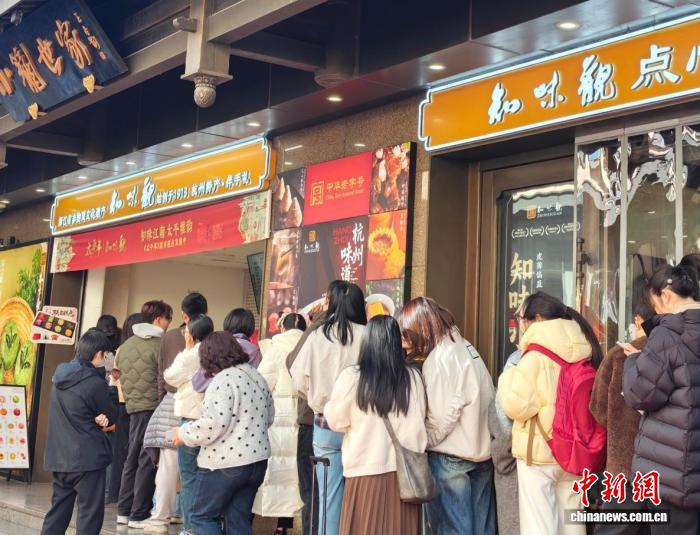
Core Insights - The consumption during the Spring Festival in Zhejiang has been significantly boosted by new trends such as "AI + consumption" and IP consumption, with key monitored commercial enterprises reporting an 8.2% year-on-year sales growth [1] - Demonstration pedestrian streets experienced an 11.6% increase in revenue year-on-year, while UnionPay's entertainment consumption total amount rose by 9.2% [1] Group 1: Technology and Consumer Trends - The "Spring Festival Gala effect" has continued to drive interest, with the search volume for "Yushut Technology" increasing over three times following the program "Wu BOT" [2] - Smart products, referred to as "technology New Year goods," have seen a surge in sales, particularly in Hangzhou's digital life district, where sales of Rokid smart glasses increased by 5.8 times year-on-year [2] Group 2: Tourism and Cultural Impact - The popularity of the TV drama "Tai Ping Nian" has turned several tourist attractions in Hangzhou into must-visit landmarks, with Qianwang Shrine receiving over 100,000 visitors during the holiday, marking a 45% increase year-on-year [2] - The city has introduced themed buses and customized routes to attract fans of the drama, enhancing the cultural tourism experience [2] Group 3: Dining and Culinary Trends - UnionPay's dining consumption in Zhejiang rose by 10.8% during the Spring Festival, with key dining enterprises seeing a more than threefold increase in reservations for New Year's Eve dinners [2] - Traditional "Hangzhou cuisine" brands have launched affordable meal packages, while rural hotels introduced specialty dishes, contributing to new growth points in dining consumption [2]

“集五福”11年,影视IP涌入支付宝过年
Sou Hu Cai Jing· 2026-01-28 22:47
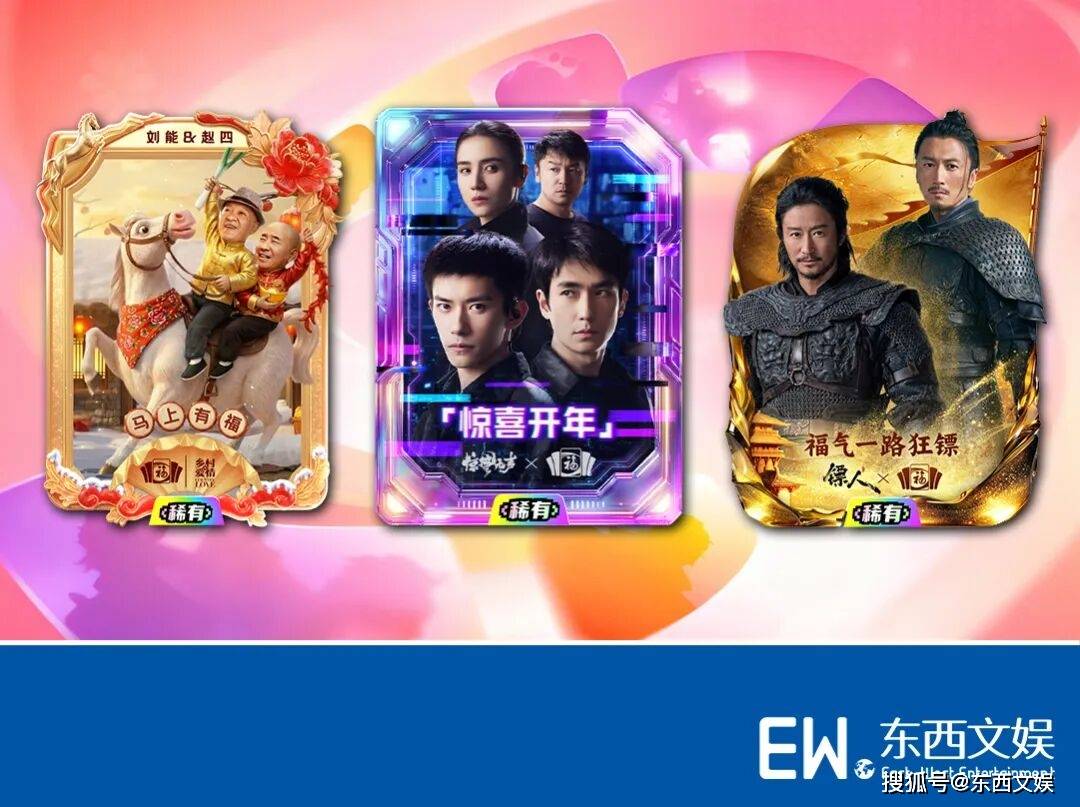
Core Insights - The "Collecting Blessings" activity by Alipay has evolved from a marketing campaign into a widely recognized New Year custom in China, engaging millions of users and becoming a unique entertainment experience for the younger generation [2][18] - The integration of various popular IPs into the "Collecting Blessings" event enhances emotional connections and user engagement, transforming traditional customs into modern interactive experiences [3][12] Group 1: Event Overview - The "Collecting Blessings" event for the Year of the Horse starts earlier this year, from January 27 to February 2, featuring a new "Grab the First Blessing" gameplay that combines traditional customs with social interaction [2][5] - This year's event includes 19 sets of blessing cards, with 18 themed around popular IPs and one classic set, allowing users to collect cards and gain recognition as "First Blessing People" [5][7] Group 2: User Engagement and Experience - The event's design encourages early participation through a feedback mechanism that rewards users for prompt action, thus increasing engagement and anticipation for the main event [7][9] - The blessing cards serve as social currency, allowing users to exchange and showcase their collections, fostering community interaction and enhancing the event's social media presence [9][10] Group 3: IP Strategy and Cultural Integration - Alipay's selection of IPs for the blessing cards is strategic, covering a wide range of interests from family-oriented films to popular games, ensuring broad appeal across different demographics [10][12] - Collaborations with trending films and long-standing series like "Country Love" create a cultural resonance that enhances user participation and emotional connection during the New Year [12][14] Group 4: Long-term Implications - The "Collecting Blessings" event not only serves as a marketing tool but also as a platform for cultural engagement, linking traditional values with contemporary entertainment [16][20] - By continuously innovating and integrating popular culture into the event, Alipay is redefining the New Year celebration, making it more relevant and appealing to younger audiences [18][20]
让IP成为消费加分项
Zhong Guo Zhi Liang Xin Wen Wang· 2026-01-15 09:34
Core Insights - The article discusses the transformation of IP collaborations in the Chinese consumer market from mere marketing tactics to strategic engines driving consumer upgrades and product value redefinition [1][2][3][4] Group 1: Evolution of IP Collaborations - IP collaborations have shifted from being viewed as short-term promotional tactics to deep, value-driven partnerships that resonate with brand identity and consumer emotions [1][2] - Successful collaborations, such as the partnership between Yili and "Zootopia 2," illustrate how brands can integrate IP's core spirit into their products, creating emotional connections and enhancing product value [1] - The collaboration between Mengniu and "Nezha 2" exemplifies how brands can align their core values with IP narratives, resulting in a deeper brand persona and enhanced consumer engagement [2] Group 2: Innovation in Product Categories - The partnership between Wolong and "Paw Patrol" has led to the creation of a new category of "healthy play food," addressing both nutritional needs and children's desire for fun [3] - This innovation reflects a paradigm shift from merely selling products to creating engaging experiences that combine safety, emotion, and context [3] Group 3: Role of E-commerce Platforms - E-commerce platforms play a crucial role in maximizing IP value by leveraging consumer data to identify target audiences and enhance product offerings [3] - The collaboration between Nestlé and the "Line Dog" demonstrates how platforms can integrate exposure, transactions, and membership to create sustainable user assets [3] Group 4: Trends in the IP Consumer Market - The current trends in the Chinese IP consumer market include a shift from well-known IPs to niche and emerging IPs, moving from simple licensing to deep co-creation, and evolving from marketing collaborations to ecosystem building [4] - As consumers increasingly seek emotional, social, and experiential value, IP collaborations are becoming essential rather than optional for brands [4] - The integration of IP into everyday consumer products signifies a deeper connection between products and emotions, transforming consumption into a meaningful experience [4]
功能还是情绪?IP消费的价值抉择与增长路径
Zhong Guo Jing Ying Bao· 2025-12-23 14:31
Core Insights - The holiday season, particularly Christmas, is a significant time for emotional consumption, with brands leveraging various IPs to boost sales and profits [1] - The collaboration between popular IPs and consumer products is gaining traction, with companies like Bubble Mart and Miniso actively engaging in cross-industry partnerships [2][4] - The IP retail market in China is experiencing substantial growth, with a reported retail value of $13.77 billion in 2023, reflecting a year-on-year increase of 9.6% [6] Group 1: IP Collaborations and Market Trends - Popular IP collaborations, such as the partnership between Heytea and Bubble Mart's "Star People," have generated significant buzz on social media, with sales exceeding 100 million yuan in the first year of collaboration [2] - The interest consumption market is projected to surpass 380 billion yuan by the third quarter of 2025, indicating a growth rate of over 10% compared to the previous year [2] - The collaboration between Disney's "Zootopia 2" and over 60 brands showcases the potential for large-scale IP commercialization, with companies like Bubble Mart and Miniso leading the charge [3][5] Group 2: Strategies for IP Utilization - Companies are advised to segment their audience effectively, creating limited edition products for core fans while offering practical items for broader consumer groups [1] - The success of IPs relies on their ability to connect with consumers through quality content and innovative product offerings, as seen in the strategies of Disney and Bubble Mart [7][8] - Miniso's dual strategy of leveraging both international licensed IPs and signing exclusive agreements with original artists aims to build a robust IP ecosystem [8][9] Group 3: Challenges and Considerations - The risk of consumer fatigue due to oversaturation of IP collaborations is a concern, necessitating a focus on meaningful engagement rather than superficial partnerships [5][9] - The need for brands to align character emotions with consumer needs is crucial for successful IP integration, moving beyond mere branding to create relatable experiences [9] - The competitive landscape for IPs is intensifying, with companies exploring new methods to differentiate themselves and avoid homogenization in the market [7][9]

金山软件龚道军:解码IP消费的核心逻辑
2 1 Shi Ji Jing Ji Bao Dao· 2025-12-19 00:38
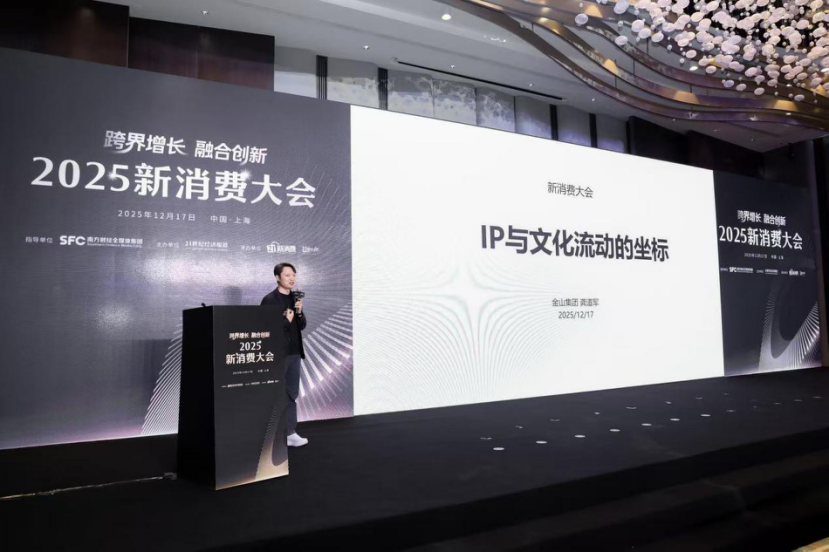
Core Insights - The "New Consumption Conference" organized by 21st Century Business Herald is a significant event in the consumer industry, taking place on December 17 in Shanghai [1] Group 1: IP and Cultural Flow - Gong Daojun, Vice President of Kingsoft, delivered a keynote speech titled "The Coordinates of IP and Cultural Flow," emphasizing the lack of a common understanding of IP within the industry [3] - The speech aimed to clarify the core logic of IP and its development trajectory in the consumer sector through two paths: extracting commonalities of IP products from a classification perspective and outlining the development path of IP in the consumption field [3] - Gong proposed a "two-dimensional quadrant analysis" to categorize entertainment consumption IP products based on "narrative" and "interactivity" [4] Group 2: IP Product Classification - The classification includes four categories: 1. High narrative + high interactivity: represented by video games, providing strong immersion and engagement [4] 2. High narrative + low interactivity: such as movies and short films, where the audience primarily participates through viewing [4] 3. Low narrative + low interactivity: typified by trendy toys and blind boxes, which establish emotional connections through symbolic imagery [4] 4. Low narrative + high interactivity: certain sports products or game branches focusing on strong interactive experiences without complex story support [4] Group 3: Cultural Flow and IP Development - Gong reviewed the historical trajectory of foreign entertainment IP entering China and the reverse flow of Chinese IP abroad, highlighting key phases from the 1960s to the present [5] - He noted significant milestones, such as the entry of Japanese anime and Hollywood films in the 1980s and the rise of Korean culture in the 2000s, driven by technological advancements [5] - The success of Chinese IP overseas was illustrated through examples like Kingsoft's "Jian Xia Qing Yuan" capturing 70% market share in Vietnam and the emergence of new IP carriers like web literature translation platforms and short dramas [5] Group 4: Key Factors for Successful IP Dissemination - Gong identified three core elements for successful IP dissemination: 1. Undergoing systematic cultural refinement to form a resonant value core [6] 2. Having a complete localized production system [6] 3. Achieving production capacity overflow to support global outreach [6] - He highlighted two parallel paths for Chinese IP going global: targeting mainstream global markets with games and focusing on niche segments with trendy toys and web literature [6] Group 5: Future Outlook - Gong concluded that Kingsoft, as a technology enterprise growing alongside China's reform and opening-up, has significant potential for cross-industry integration in its office, gaming, and cloud services [6] - He expressed confidence that Chinese companies can create globally influential IP brands, facilitating cultural exchange between East and West [6]

金山软件龚道军:解码IP消费的核心逻辑|直击新消费大会
2 1 Shi Ji Jing Ji Bao Dao· 2025-12-19 00:31
Core Insights - The conference "New Consumption Conference" held on December 17 in Shanghai highlighted the significance of IP (Intellectual Property) in the consumer industry, with a focus on its definition and logic [1] - The speaker, Gong Daojun from Kingsoft, emphasized the need for a common understanding of IP and proposed a two-dimensional analysis method to categorize IP products based on narrative and interactivity [2][4] Group 1: IP Definition and Analysis - Gong Daojun stated that IP has become a frequent term, yet there is no consensus on its definition and logic within the industry [1] - He introduced a "two-dimensional quadrant analysis" with "narrative" and "interactivity" as axes to classify entertainment IP products [2] - The highest form of IP experience is represented by video games, which offer high narrative and high interactivity, providing strong immersion [2] Group 2: Cultural Flow and IP Development - The historical trajectory of cultural flow and IP consumption was reviewed, detailing the entry of foreign entertainment IP into China and the globalization of Chinese IP [4][5] - Key phases included early entry through Eastern European films in the 50s and 60s, the popularization of Japanese anime and Hollywood films in the 80s, and the rapid penetration of Korean culture post-2000 [4] - The gaming sector's evolution was highlighted, from arcade games in the 80s to the rise of online gaming in the 2000s, driven by technological advancements [4] Group 3: Chinese IP Going Global - Gong Daojun shared notable examples of successful Chinese IP going global, such as Kingsoft's "Jian Xia Qing Yuan" capturing 70% of the Vietnamese market in 2005 [5] - He identified three core elements for successful IP dissemination: cultural resonance, a complete localization production system, and the ability to scale globally [5] - Two main paths for Chinese IP going global were outlined: targeting mainstream global markets with games and focusing on niche segments with products like toys and web literature [5] Group 4: Future Outlook - Gong Daojun concluded that Kingsoft, as a technology company, has significant potential for cross-industry integration in areas like office software, gaming, and cloud services [6] - He expressed confidence that Chinese companies can create globally influential IP brands, facilitating cultural exchange between East and West [6]
得力开出中国最大文具综合体 推动体验式消费
Jing Ji Guan Cha Wang· 2025-11-30 03:33
Core Insights - Deli World, a flagship store of Deli, opened in Jing'an Joy City, Shanghai, covering 1,500 square meters and offering a wide range of products including student stationery, premium stationery, IP stationery, and lifestyle goods, making it the largest stationery complex in China [1] - The store targets the growing demand for IP consumption among younger consumers, particularly Generation Z, by featuring popular IP collaborations such as Nezha and Water Pig stationery, emphasizing personalized expression and emotional connection [1] - Deli's Executive President, Chen Xueqiang, stated that the opening of this large-scale store is part of a strategic upgrade for the Deli brand, focusing on immersive experiences and becoming a trendy gathering place [1] Business Structure - Beyond its core stationery business, Deli has expanded into emerging business segments such as digital printing, premium tools, B2B, and IP cultural products, which have become significant growth drivers for the company [2]
中信证券轻工制造2026年度策略:反内卷、创新与出海将成发展主线
Zhi Tong Cai Jing· 2025-11-21 00:45
Core Viewpoint - The light industry sector is facing revenue and profit pressure in Q1-Q3 2025, but the paper and packaging printing industries are showing early signs of recovery, aligning with mid-year expectations [1][2] Group 1: Performance Review - The overall performance of the light industry sector is under pressure, with the home furnishing sector's net profit turning negative in Q1-Q3 2025, indicating significant profit pressure [2] - The entertainment light industry sector experienced a narrowing decline in both revenue and net profit in Q3 compared to Q2 [2] - The paper sector saw a loss in Q1, high growth in Q2, and significant growth in Q3, indicating an early recovery ahead of revenue improvements [2] - The packaging printing sector achieved a 9.6% year-on-year increase in revenue and a 12.7% increase in net profit in Q1-Q3 2025, marking it as the best performer [2] Group 2: Industry Outlook - The trend of "anti-involution" is expected to improve the supply-demand dynamics in the industry, particularly benefiting the metal packaging sector, which is anticipated to experience a revival [3] - The metal packaging industry is projected to see a concentration ratio (CR3) exceeding 70% following the acquisition of Zhongliang Packaging by Orijin in 2025, with total production capacity expected to decrease to approximately 76 billion cans by 2026 [3] - The paper industry is expected to improve due to cyclical recovery, with major paper manufacturers enhancing collaboration and price increases anticipated as raw material costs rise [3] Group 3: Innovation and Market Expansion - AI technology is expected to open new market opportunities for traditional industries, with AI glasses and AI toys poised for significant growth [4] - The trend of IP consumption continues to provide new growth paths for traditional consumer products, with cross-industry integration and functional upgrades becoming key breakthrough points [4] - The "going global" strategy is expected to deepen, with a focus on cost-effective production and refined overseas supply chain management [5] - Chinese brands with unique characteristics are beginning to pursue internationalization [5] Group 4: Investment Strategy - The metal packaging industry is anticipated to benefit from supply contraction following industry restructuring, with current valuations at historical lows [7] - The paper industry is expected to show improvement due to cyclical recovery, despite higher historical valuations, with the fastest profit growth anticipated [7] - Companies innovating in AI glasses and those optimizing product structures and sales models are recommended for investment [7] - Firms benefiting from toy product innovation and high dividend yields, as well as those with strong IP and export business, are also highlighted as potential investment opportunities [7] - The "going global" strategy is expected to gain importance, with recommendations for industry leaders with production advantages and companies with cost-effective brand offerings [7]

深度融合全运!广州暖冬消费季来了,多种商品有补贴
Nan Fang Du Shi Bao· 2025-11-04 15:46
Core Viewpoint - Guangzhou is launching a "Warm Winter Consumption Season" from November to March, integrating major events like the National Games and the Spring Festival to create a city-wide consumption festival [1][4]. Group 1: Event Structure - The consumption season will be divided into three phases: 1. **November to December**: "Vibrant Guangzhou - Dynamic Scene," leveraging the National Games to stimulate consumption through various events and discounts [6]. 2. **December to January**: "Tidal Wave Guangzhou - Fashion Circle," focusing on social consumption and fashion shopping with events like the Fashion Industry Conference and Guangzhou Design Week [6]. 3. **January to March**: "Flavors of Guangzhou - Flower Street," centered around traditional celebrations with enhanced consumption experiences and various festive activities [6]. Group 2: New Consumption Experiences - The initiative will offer a comprehensive experience combining "food, accommodation, transportation, tourism, shopping, and entertainment," introducing new formats like "cruise + consumption" and themed events [5]. - The introduction of a 240-hour visa-free transit policy at the Pazhou Passenger Port aims to enhance inbound tourism and consumption [7]. Group 3: Promotional Activities - Starting in November, Guangzhou will initiate promotional activities across various sectors, including automobiles, home appliances, and local specialties, with subsidies available [8][10]. - The city will also distribute dining vouchers and implement discounts for inbound consumers using foreign-issued UnionPay cards, with over 8,000 participating stores [8][9]. Group 4: Collaborative Efforts - The city is collaborating with 11 districts and over 300 key commercial entities to host the Guangzhou International Shopping Festival, featuring more than 3,000 events and various promotional offers [9].
价格弹性释放北京办公楼市场流动性 资本聚焦产业园区及零售赛道
Zhong Guo Jing Ying Bao· 2025-10-14 17:14
Core Insights - The Beijing office market is entering a new normal by Q3 2025, with a breaking down of rental barriers between regions enhancing cross-regional liquidity [1] - Despite overall market pressure, the investment market continues to focus on retail properties, long-term rental apartments, and industrial parks, with retail showing highlights in IP and emotional consumption [1][2] - The overall rental decline trend in Beijing is expected to continue at least until 2027, with a slight decrease in vacancy rates for Grade A office buildings [1] Group 1: Office Market Trends - The overall vacancy rate for Grade A office buildings in Beijing slightly decreased by 0.3 percentage points to 15.5% in Q3 [1] - The rental prices in the market continue to decline, with no new supply entering the market since the beginning of 2025, leading to a focus on retaining existing tenants [1] - The decision-making cycle for companies regarding relocation has been extended due to high renovation costs and narrowing price differences between renewing and new leases [1] Group 2: Retail Market Developments - Despite challenges, the retail real estate market has new growth highlights, such as the continued popularity of IP and emotional consumption, and the rise of the first-store economy [2] - Outdoor sports brands have become a significant driver in the fashion sector, accounting for 18% of the new store area in Q3 [2] - Domestic buyers remain the dominant force in the investment market, focusing on the safety of asset cash flows and long-term capital value, particularly in retail properties, long-term rental apartments, and industrial parks [2]