
全渠道融合

Search documents
国信证券:维持滔搏(06110)“优于大市”评级 下调合理估值区间至3.2~3.5港元
智通财经网· 2025-12-24 02:40
Group 1 - The core viewpoint of the report is that due to significant disruptions in offline retail, the profit forecast for Tmall (滔搏) has been slightly lowered, with expected net profits for FY2026-2028 being 1.22 billion, 1.33 billion, and 1.49 billion yuan respectively, reflecting a year-on-year change of -5.3%, +9.6%, and +11.5% [1] - The reasonable valuation range has been adjusted to 3.2 to 3.5 HKD, down from the previous range of 3.8 to 4.0 HKD, corresponding to a PE ratio of 14 to 15 times for FY2027 [1] Group 2 - In Q3 of FY2026, the total sales amount for the retail and wholesale business recorded a high single-digit decline year-on-year, with the gross sales area of direct-operated stores decreasing by 1.3% quarter-on-quarter and 13.4% year-on-year [2] - The online channel's growth rate remains better than that of the offline channel, although the growth rate has slightly slowed compared to the first half of the year due to base effects [3] - The company is optimizing its offline store network by cautiously closing underperforming stores and focusing on extending online channels for offline stores, with a significant reduction in the number of store closures expected this year compared to last year [3] Group 3 - The discount rate has deepened year-on-year due to the increased proportion of online channels, but the extent of discounting has narrowed compared to the first half of the fiscal year [4] - Nike's Q2 FY2026 performance slightly exceeded previous guidance and market expectations, with revenue of 12.4 billion USD, a year-on-year increase of 1%, while the Greater China region continues to face significant pressure [4] - Adidas reported Q3 results that fell short of market expectations for revenue but exceeded expectations for operating profit, with a 12% year-on-year increase in revenue for the Adidas brand [5] Group 4 - The company has maintained a strong growth momentum for its main brand, Adidas, with expectations of double-digit growth for FY2025, while Nike's performance in FY2026 Q2 was better than previous guidance but faced challenges in the Greater China market [6] - The company has been increasing its focus on outdoor and running segments, becoming the exclusive agent for several outdoor brands in the Chinese market and opening a running brand collective store [6]


国信证券:维持滔搏“优于大市”评级 下调合理估值区间至3.2~3.5港元
Zhi Tong Cai Jing· 2025-12-24 02:39
Core Viewpoint - Guosen Securities has slightly lowered the profit forecast for Tmall (06110) due to significant disruptions in offline retail, expecting net profits for FY2026-2028 to be 1.22/1.33/1.49 billion yuan, down from previous estimates of 1.29/1.41/1.57 billion yuan, reflecting a year-on-year change of -5.3%/+9.6%/+11.5% [1] Group 1 - The total sales amount for the retail and wholesale business in Q3 FY2026 recorded a high single-digit decline year-on-year [2] - As of November 30, the gross sales area of direct-operated stores decreased by 1.3% compared to the previous quarter and by 13.4% year-on-year [2] - The online channel's growth rate remains better than that of the offline channel, but the growth rate has slightly slowed compared to the first half of the year due to base effects [2] Group 2 - The total inventory at the end of Q3 decreased year-on-year, maintaining good turnover efficiency, but the promotional atmosphere in the industry has made it challenging to manage inventory healthily [3] - Nike's FY2026 Q2 revenue was $12.4 billion, up 1% year-on-year, slightly better than previous guidance and consensus expectations, with regional performance varying significantly [3] - The gross margin decline was less than previously guided, with North America leading revenue growth while the Greater China region faced significant pressure [3] Group 3 - Future Q3 revenue is expected to decline by a low single-digit percentage, with gross margin expected to decrease by approximately 175-225 basis points [4] - Adidas' Q3 revenue did not meet consensus expectations, but operating profit exceeded expectations, with a 12% year-on-year growth in brand revenue [4] - Adidas has raised its full-year guidance due to strong brand momentum and better-than-expected business performance [4] Group 4 - The company is optimistic about its operational resilience and long-term cash returns [5] - The retail pressure remains high with a high single-digit decline, but inventory improvement and a reduction in discount rates have been observed [6] - The company has been increasing its focus on outdoor and running segments, becoming the exclusive agent for several outdoor brands in the Chinese market [6]
2026掘金指南:全球全品类20大消费趋势报告
Sou Hu Cai Jing· 2025-12-22 15:12
Core Insights - The report titled "2026 Gold Mining Guide: Global All-Category 20 Major Consumer Trends" highlights the dynamic changes in the global consumer market, emphasizing the integration of technology, health orientation, sustainability, and personalized experiences as key trends [1] Group 1: Technology Integration - Artificial intelligence is deeply embedded across the consumer value chain, enhancing efficiency from product development to user service [1] - The market for smart hardware, such as sports headphones, is expanding due to diverse scenario demands, showing steady growth [1] Group 2: Health-Oriented Consumption - There is a comprehensive upgrade in health consumption needs, with consumers increasingly focused on health attributes and safety standards of products, driving the evolution of related categories towards refinement and functionality [1][11] - In North America, over 40% of the sleep technology product market is held, while in Europe, 86% of consumers prioritize sustainability, leading to a 12.8% growth in sustainable mattress development [11] Group 3: Sustainability and Green Consumption - Sustainable consumption has become a mainstream consensus, with consumers favoring products made from eco-friendly materials and low-carbon production methods [1] - The European Union's regulations require the use of digital passports for mattresses by 2027, documenting their components and recyclability [11] Group 4: Personalized and Experiential Consumption - Consumers are increasingly seeking customized, scenario-based, and emotionally engaging products and services, leading to a rise in niche brands and exclusive collaborations [1] - The toy market is experiencing a structural shift, with educational toys becoming the fastest-growing category, expanding at a 7.5% annual growth rate [24] Group 5: Cross-Channel Integration - The global consumer market is characterized by cross-channel integration, with online and offline interactions and cross-border consumption facilitating the expansion of category boundaries [1] - Emerging markets continue to show significant potential, with differentiated demand across various regional markets [1]



筹划赴港上市 搭建新管理团队 大商股份一系列动作背后有何战略考量?
Zheng Quan Ri Bao Wang· 2025-12-08 07:49
Core Viewpoint - Dashiang Co., Ltd. has announced significant personnel changes and plans for an overseas listing, indicating a strategic shift aimed at long-term development and adaptation to evolving retail industry trends [1][5]. Group 1: Personnel Changes - The company has nominated new non-independent directors and appointed a new management team, including Liu Jing as the general manager and several vice general managers [1][2]. - The new management team features a mix of experienced leaders and younger executives, reflecting a strategic balance between stability and innovation [2][3]. - Notable appointments include Lu Weishun, who has extensive experience within the company, and several younger executives who have risen through the ranks, indicating a focus on nurturing internal talent [2][3]. Group 2: Strategic Intent - The personnel changes are part of a broader strategy to enhance the company's operational efficiency and adapt to the evolving retail landscape, characterized by a shift towards experiential consumption and personalized services [3][5]. - The planned overseas listing is a key component of the company's internationalization strategy, aimed at improving its global brand image and diversifying its capital operations [5]. - The new management team is expected to drive the company's strategic transformation, leveraging their industry insights and operational expertise to capitalize on emerging market opportunities [5]. Group 3: Company Background - Dashiang Co., Ltd. has evolved from its origins in 1937 to become one of China's largest retail groups, operating multiple business formats including department stores, supermarkets, and electronics chains [4]. - The company has established a strong brand presence with well-known names such as Maikele, Xinmate, and Qiansheng, supported by a robust network of physical stores in key market areas [4]. - Dashiang's solid fundamentals and strong profitability, along with its ownership of prime properties in core business districts, position it well for future growth and value appreciation [5].

吕伟顺将再次挂帅董事长 大商股份新管理团队开启发展新阶段
Zheng Quan Shi Bao Wang· 2025-12-07 10:49
Core Viewpoint - Dashiang Co., Ltd. is undergoing a leadership change with the appointment of new directors and senior management, marking a new phase of innovative development in the retail industry [1] Group 1: Leadership Changes - The board has nominated Lv Weishun, Liu Jing, and Gao Changming as non-independent director candidates, with Lv expected to become chairman and Liu appointed as general manager [1] - The new management team is characterized by a blend of industry expertise, local depth, and execution capability, reflecting the company's commitment to strategic deployment and operational efficiency [1] Group 2: Team Composition - The new management team exhibits a trend towards youthfulness, with an average age of under 48 years, ensuring a balance of experienced leadership and fresh perspectives [3] - Key members include Lv Weishun, who has extensive experience in retail and has held various senior positions within the company, and Wang Peng, who has a strong background in finance and business management [2][3] Group 3: Performance and Strategy - The new management team possesses significant frontline business experience, which is expected to enhance operational effectiveness and strategic alignment with market demands [4][6] - Dashiang Co., Ltd. plans to initiate preparations for an H-share listing in Hong Kong, demonstrating confidence in future growth amid evolving consumer trends towards experience-based consumption [7] Group 4: Financial Outlook - The company anticipates achieving a net profit of 586 million yuan in 2024, representing a year-on-year growth of 16.05%, indicating robust operational resilience [7] - Dashiang Co., Ltd. holds a substantial portfolio of prime properties in key commercial areas, which may lead to a revaluation of its assets under refined operational strategies [7]
全域融合:SaaS分账如何打通O2O商业的“任督二脉”?
Sou Hu Cai Jing· 2025-11-28 21:16
Group 1 - The explosive growth of instant retail demands seamless integration of online stores, in-store pickup, and same-city delivery, with SaaS revenue-sharing services becoming key to addressing O2O business challenges [2] - In the first five months of 2025, China's online retail sales reached 6.04 trillion yuan, a year-on-year increase of 8.5%, driven by revenue-sharing services supporting complex transaction models [2] Group 2 - O2O revenue-sharing faces unique challenges, including fragmented channels, dynamic fulfillment, and diverse roles, with "three-in-one" (order, logistics, settlement) being a critical breakthrough [3] - The system used by Luckin Coffee requires simultaneous processing of product costs, delivery fees, and platform commissions, with potential fulfillment costs increasing by 8%-12% if not managed properly [3] - Xiaoguo Technology's O2O mall system supports real-time inventory synchronization, enabling Tongrentang to achieve 35% of its sales from O2O off-store sales [3] Group 3 - Private domain e-commerce revenue-sharing focuses on real-time incentives and flexible rules, with Xiaoguo Technology's virtual store model allowing zero-cost store openings and automatic profit distribution calculations [4] - Zhu Fei Workshop utilized this feature to achieve a 31% increase in distributors and a 28% rise in sales [4] - Integration of WeChat SCRM with revenue-sharing systems optimizes private domain conversion, with Xiaoguo Technology's design leading to over 300 new channels and a 39% increase in membership [4] Group 4 - Data-driven revenue-sharing decisions are enhanced by AIoT hardware, with Xiaoguo Technology's AI badge analyzing staff-customer interactions to optimize service commission ratios, resulting in a 90% increase in customer satisfaction [5] - The AI risk control module monitors abnormal transactions, triggering revenue-sharing suspension mechanisms to prevent financial losses [5] - In cross-border scenarios, AI supports multi-currency revenue-sharing, with the Creem platform's AI assistant facilitating automatic settlements across 80+ currencies and 100+ countries [5] Group 5 - Industry-specific solutions highlight significant differences in revenue-sharing needs across various sectors, requiring standardized foundations and customer-centric capabilities [7] - Rui Rong Tianxia's revenue-sharing cloud offers "batch revenue-sharing + automatic loss deduction" modules for fresh produce companies, while designing "price shielding" features for pharmaceutical retail to protect franchisee privacy [7] - Zhengda Group integrated AIoT store systems with electronic price tags and unified cash registers, achieving a 90% cost reduction and a 35% increase in customer retention [7] Group 6 - The essence of omnichannel integration is the collaboration of capital flow, information flow, and logistics, with SaaS revenue-sharing services transforming discrete transactions into structured fund allocation [8] - The rise of RaaS (Results as a Service) may evolve revenue-sharing systems into performance tools tied to business value [8]

京东、小红书、美团闪购交“双11”成绩单;字节跳动因泄密开除一大模型团队研究员|未来商业早参
Mei Ri Jing Ji Xin Wen· 2025-11-12 23:23
Group 1: E-commerce Performance - Xiaohongshu's e-commerce "Double 11" event saw a significant increase, with the number of merchants achieving over 10 million in transaction volume growing by 140% year-on-year, and products exceeding 1 million in transaction volume increasing by 145% [1] - Meituan's flash purchase reported that over 800 brands saw their sales double, with nearly 400 product categories experiencing over 100% growth, indicating a strong performance in the instant retail sector during the promotional period [4] - JD.com reported a 40% increase in the number of users placing orders and nearly a 60% increase in order volume during the "Double 11" event, setting new records for transaction volume [5][6] Group 2: Consumer Trends and Insights - Su Ning's insights revealed that nearly 60% of consumers in first and second-tier markets opted for new trend appliances with AI features, while the county market experienced a 48% year-on-year sales growth, highlighting the potential of lower-tier markets [2] - The popularity of new household items such as dryers, dishwashers, and water purifiers reflects a shift towards quality and smart home devices among consumers [2] Group 3: Technology and Competition - The incident involving ByteDance's model team researcher being dismissed for leaking confidential information underscores the importance of data security in competitive technology sectors [3] - JD.com's logistics capabilities were highlighted, with the deployment of advanced AI technology and automation achieving over 95% coverage in logistics processes, enhancing operational efficiency and supporting cost reduction for merchants [5][6]



进博面对面|宜家阮林娟:以本土化创新回应中国消费者需求
Sou Hu Cai Jing· 2025-11-08 17:41
Core Insights - The eighth China International Import Expo (CIIE) opened on November 5, showcasing IKEA's commitment to co-creating in China through new products and solutions [1] - IKEA's role has evolved from a participant to a co-creator at the CIIE, emphasizing the importance of dialogue and market insights gained from the event [2][3] Group 1: Value of CIIE - The CIIE serves as a platform for valuable dialogues and exchanges that extend beyond product displays, impacting IKEA's business strategies [2] - Last year, IKEA's booth attracted approximately 45,000 visitors, facilitating discussions on topics like the silver economy and circular economy [2] Group 2: Brand Positioning - IKEA China introduced a new brand positioning, "Home, Enriching Life," to resonate with the emotional needs of consumers, particularly the younger demographic [4][6] - The new positioning aims to address the changing consumer behaviors and the need for meaningful living experiences [4] Group 3: Localization and Innovation - IKEA emphasizes the importance of localized innovation in the Chinese market, exemplified by the collaboration with cultural experts for the "Festa" Chinese New Year series [7] - A successful case from the CIIE includes the launch of an electric sofa that became a best-seller, showcasing IKEA's responsiveness to local consumer needs [7] Group 4: Omnichannel Strategy - IKEA is accelerating its omnichannel integration, opening design order centers and smaller stores in cities like Shenzhen and Beijing to meet community needs [7] - The company has expanded its online presence by launching a flagship store on JD.com, aiming for deeper connections with consumers [7] Group 5: Future Outlook - The Chinese market is viewed as a "future laboratory" for IKEA, with strong consumer vitality and innovation ecosystems driving global solutions in product development and retail automation [8] - IKEA aims to continue leveraging the CIIE to reflect Chinese consumer trends and foster sustainable practices [8]
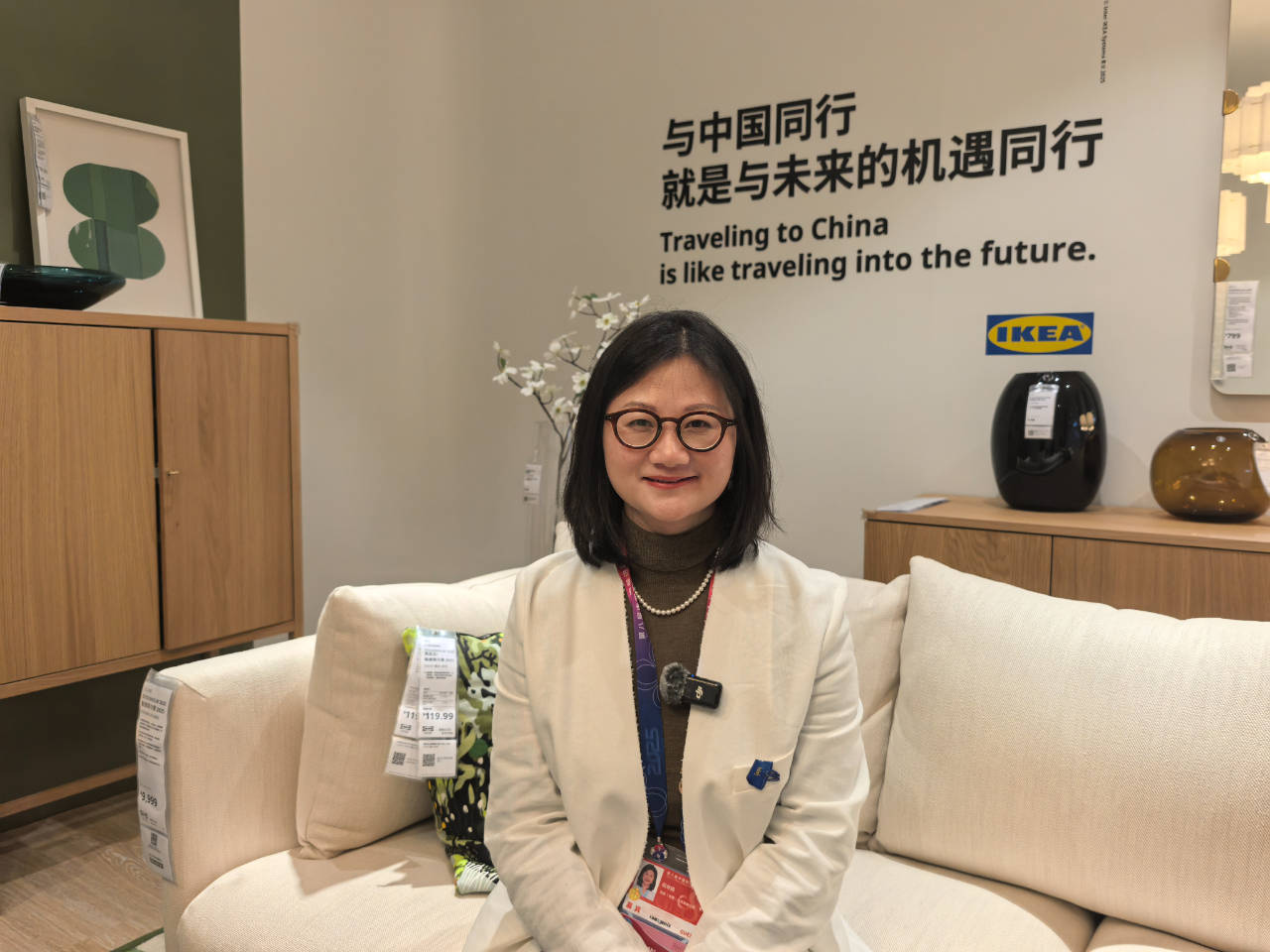
聚焦进博|专访宜家阮林娟:上海教会我们尊重需求,中国市场让我们实现进化
Guo Ji Jin Rong Bao· 2025-11-06 15:41
Core Insights - The eighth China International Import Expo (CIIE) is being held from November 5 to 10 at the National Exhibition and Convention Center in Shanghai [1] Company Highlights - IKEA's exhibition space at the CIIE is designed to resemble an immersive home aesthetic, blending Nordic nature with Chinese home decor [2] - The global launch of the FÖSSTA Spring Festival series, featuring 25 items that merge Chinese cultural elements with Nordic minimalist design, is a key attraction [5] - The FÖSSTA series from the previous year sold over 400,000 units and has been introduced in international markets including Germany, Japan, Singapore, Thailand, and Australia [5] - The upgraded version of the RULER electric sofa, which previously sold 78,000 units, has been adapted to meet the needs of modern Chinese households, particularly for compatibility with robotic vacuum cleaners [6] - IKEA's approach to product development includes collaboration with cultural experts to better understand Chinese traditions and consumer expectations [6] Market Strategy - IKEA has transformed its identity in China from a "sales terminal" to a "complete value chain," with 41 customer touchpoints nationwide [7] - The company reports that online sales account for approximately 25% of total sales, emphasizing a strategy of integrating online and offline channels [9] - The renovation of the Shanghai Xuhui store aims to create a multifunctional space that combines shopping and social interaction, reflecting local community needs [11] - IKEA has launched a digital design platform utilizing AI technology, allowing users to visualize home decor ideas, highlighting the trend towards personalized services [11] - The opening of design order centers in Shenzhen and Beijing marks IKEA's focus on customized services tailored to local community needs [12] Cultural Integration - IKEA's 27-year journey in China exemplifies the deep symbiosis between foreign brands and the Chinese market, with Shanghai serving as a strategic hub for innovation and market adaptation [12] - The company's philosophy of "democratic design" resonates with Shanghai's openness to new ideas, driving continuous product optimization [12]
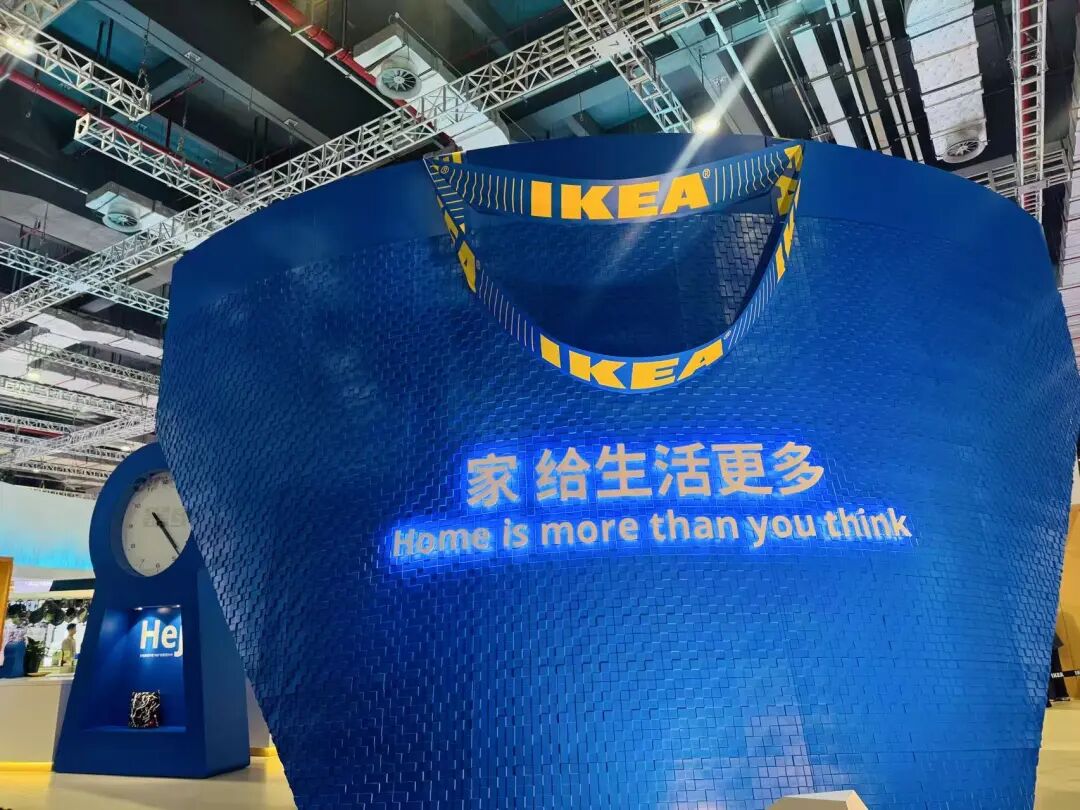
专访宜家阮林娟:上海教会我们尊重需求,中国市场让我们实现进化
Guo Ji Jin Rong Bao· 2025-11-06 14:14
Core Insights - The eighth China International Import Expo (CIIE) is being held from November 5 to 10 at the National Exhibition and Convention Center in Shanghai [1] Company Highlights - IKEA's booth at the expo is designed as an immersive home aesthetic space, blending Nordic nature with Chinese home decor, featuring a 360 square meter layout [2] - The global debut of the F SSTA series, which includes 25 items that merge Chinese cultural elements with Nordic minimalist design, highlights IKEA's commitment to local innovation [3] - The F SSTA series achieved sales of over 400,000 units after its previous launch, and the upgraded electric sofa model has sold 78,000 units, showcasing strong market demand [3][4] Product Development - The electric sofa's development involved user co-creation, responding to consumer feedback for modularity and compatibility with smart home devices [4] - IKEA's approach to product development emphasizes local cultural integration, as seen in the inspiration gathering sessions held in Xi'an for the New Year series [3][4] Market Strategy - IKEA's online sales account for approximately 25% of total sales, indicating a shift towards an integrated online and offline retail strategy [5] - The transformation of physical stores into experience centers is exemplified by the renovation of the Shanghai Xuhui store, which aims to enhance community engagement and social interaction [6] Customization and Community Engagement - IKEA is launching design order centers in Shenzhen and Beijing, focusing on personalized design services tailored to local community needs [6][7] - The design order centers aim to provide customized solutions based on consumer lifestyles and preferences, enhancing accessibility to IKEA's services [7] Strategic Importance of Shanghai - Shanghai serves as a strategic hub for IKEA, reflecting the brand's evolution and deep integration with the Chinese market over 27 years [7][8] - The city's open-mindedness and rational consumer behavior have influenced IKEA's product optimization and innovation strategies [8]