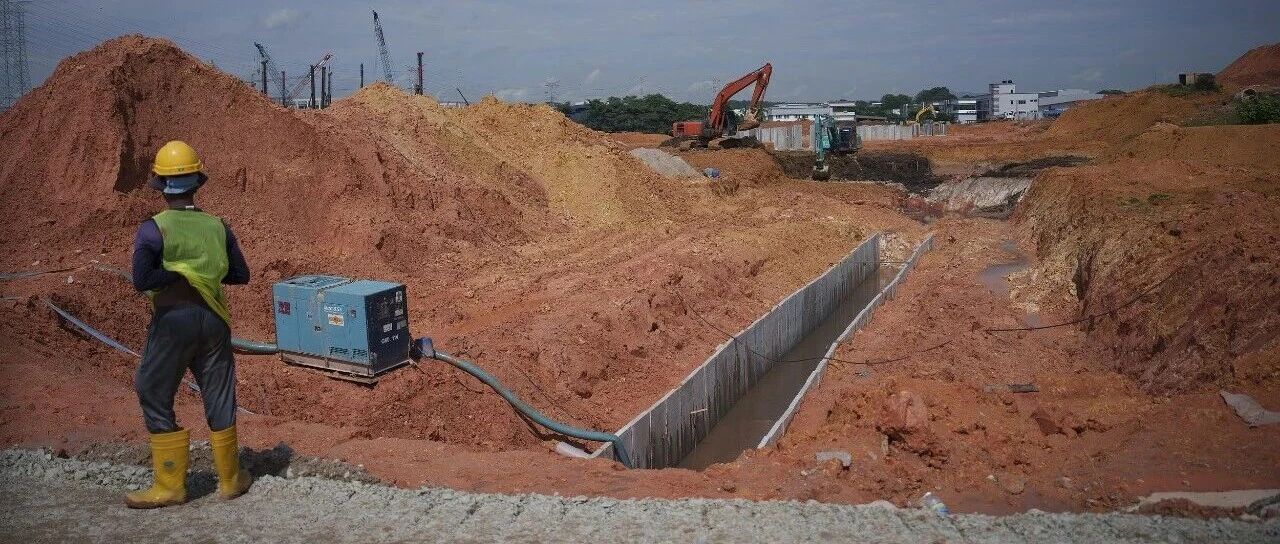
全球供应链重构

Search documents
天桥起重2025年业绩预增 多领域布局筑牢增长根基
Zheng Quan Ri Bao Wang· 2026-01-28 04:11
Core Viewpoint - The company, Zhuzhou Tianqiao Crane Co., Ltd., anticipates a significant increase in net profit for 2025, projecting a growth of 223.25% to 327.63% compared to the previous year, driven by enhanced operational quality and market expansion efforts [1] Group 1: Financial Performance - The company expects a net profit of between 96 million to 127 million yuan for 2025, excluding non-operating gains and losses [1] - This projected profit growth reflects the company's strategic initiatives to improve operational efficiency and revenue generation [1] Group 2: Business Development - The company is actively exploring and expanding business opportunities in various sectors, including high-end lifting equipment manufacturing, with a focus on non-ferrous metallurgy and port handling equipment [1] - The aluminum electrolysis sector is identified as a core competitive area, with successful project advancements in green low-carbon energy efficiency [2] - The company has made significant progress in the power industry, with customized equipment enhancing operational stability and meeting environmental standards [2] Group 3: Emerging Opportunities - The company is venturing into waste management, developing a small-scale waste incineration system that addresses specific challenges in county-level waste processing [2] - This new business line is expected to contribute to the company's growth by providing effective solutions for waste treatment [2] Group 4: International Expansion - The company has successfully completed a project in Guinea, providing essential equipment for a port project that enhances its presence in the West African market [3] - The project includes modernized systems with a design capacity of 10 million tons per year, showcasing the company's capability in international markets [3] Group 5: Industry Insights - An expert from Hunan University highlights that the company's substantial growth in 2025 is a result of its strategic industry trend analysis and diversified business layout [3] - The company is positioned to leverage its technological advantages and scale effects in niche markets, contributing to sustainable profitability amid global supply chain restructuring [3]

对华贸易战输得彻底,美国人猛然发现,印度一直在给中国送钱
Sou Hu Cai Jing· 2026-01-23 09:39
Core Viewpoint - The ongoing trade war between the US and China has not yielded the expected results for the US, as the trade deficit with China remains significant despite high tariffs and efforts to shift supply chains to countries like India [1][11]. Group 1: US-China Trade Relations - Since the initiation of tariffs in 2018, the US aimed to reduce its trade deficit with China and bring manufacturing back to the US or to other countries [1]. - By 2024, US tariffs on Chinese goods covered hundreds of billions of dollars, yet the trade deficit with China did not significantly decrease, with bilateral trade reaching $582.5 billion [1]. - The Biden administration continued to promote supply chain diversification, particularly through initiatives like the CHIPS Act, but the effectiveness of these measures remains questionable [1]. Group 2: India's Role in the Supply Chain - India has emerged as a potential alternative to China for manufacturing, with significant growth in exports, particularly in sectors like smartphones, where exports reached $6.96 billion in 2024 [2]. - Despite India's rising exports, it remains heavily reliant on Chinese components, with two-thirds of electronic components imported from China [5]. - The trade relationship between India and China is complex, as India's imports from China are growing at a rate twice that of its overall import growth [4]. Group 3: Challenges in Decoupling from China - India's manufacturing sector continues to depend on Chinese parts, with critical components for electronics and pharmaceuticals sourced from China [5][7]. - The trade deficit with China is projected to reach $99.2 billion by 2025, indicating that India's attempts to reduce reliance on China have not yet succeeded [9]. - India's efforts to decouple from China face significant hurdles, including the need for time to build domestic capabilities and reduce dependency on Chinese technology and components [11][19]. Group 4: Future Outlook - The Indian government plans to implement targeted tariffs and incentives to reduce reliance on Chinese imports and enhance local production capabilities [17]. - India is also focusing on building strategic reserves of critical minerals, such as rare earth elements, to support its manufacturing ambitions [19]. - The path to decoupling from China is expected to be long and challenging, with India's industrial position still needing significant improvement to compete effectively [11][19].

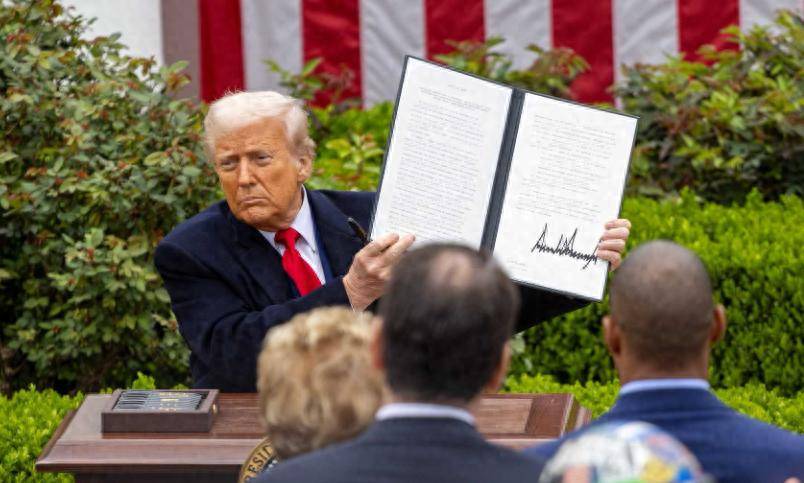
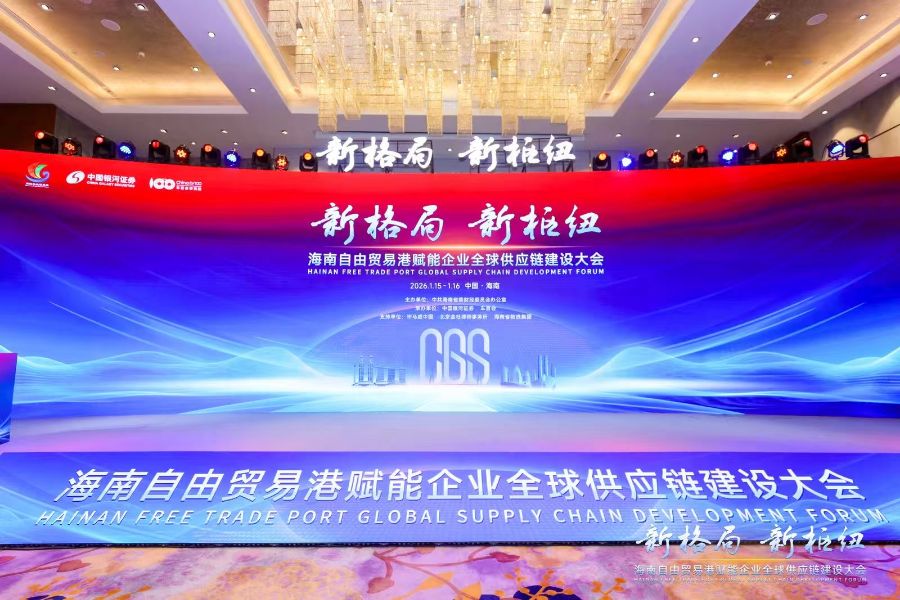
海南自由贸易港封关“满月”在即,中国银河证券聚力绘就全球供应链枢纽新蓝图
Zhong Guo Jing Ji Wang· 2026-01-19 08:29
2025年12月18日,海南自由贸易港全岛封关正式启动。作为中国深化改革、推进高水平对外开放的标志 性事件,海南自由贸易港封关通过构建"一线放开、二线管住、岛内自由"的特殊海关监管体系,正重塑 区域乃至全球供应链格局。 在此背景下,1月15日至16日,由海南省委财办主办,中国银河(601881)证券和车百会联合承办的"新 格局 新枢纽——海南自由贸易港赋能企业全球供应链建设大会"在海南省海口市举行。 这也是海南自由贸易港封关后,首场围绕"全球供应链"新格局展开的大会,旨在系统解读自由贸易港政 策与制度型开放对全球产业链供应链重构的赋能路径,为企业依托自由贸易港优势拓展全球市场凝聚共 识、汇聚力量,助力企业依托海南自由贸易港拓展全球市场。 凝聚市场共识,夯实全球供应链枢纽地位 海南长期以来在中国对外开放中扮演重要角色。海南自由贸易港正式封关运作以后,更成为全球最大自 由贸易港。 自2023年起,中国银河证券就先后三次助力海南省在港发行离岸人民币地方政府债券,累计规模达130 亿元,助力海南经济社会发展和自由贸易港建设。另外,公司还与海南财金集团共同成立自贸港建设投 资基金,聚焦旅游业、现代服务业、高新技术产业、 ...

中国银河:出海争范式,海南做支点
2 1 Shi Ji Jing Ji Bao Dao· 2026-01-19 06:31
Core Insights - The opening of the direct flight route from Haikou to Kuala Lumpur in 2025 symbolizes China's financial strength's deep involvement in the global supply chain restructuring [2] - Hainan's strategic positioning has shifted from a policy pilot zone to a global supply chain hub, supported by robust trade data and favorable policies [4] Group 1: Hainan's Strategic Role - Hainan's geographical advantage positions it as a natural bridge connecting China and Southeast Asia, with bilateral trade with ASEAN expected to exceed 6 trillion yuan in 2024, a 7.7% year-on-year increase [4] - The implementation of Hainan Free Trade Port's policies, including "zero tariffs, low tax rates, and simplified tax systems," provides institutional support for its hub function [4] - Companies are beginning to benefit from these policies, as seen with Hainan Libona Technology Development Co., which has secured orders in South Korea due to tariff exemptions [4] Group 2: China Galaxy Securities' Strategic Positioning - China Galaxy Securities has developed a comprehensive service ecosystem in Hainan, integrating platform, capital, financing, green initiatives, and innovation [6] - The establishment of a mother fund for the Free Trade Port construction, initially set at 10 billion yuan and recently expanded to 20 billion yuan, marks a significant capital initiative [7] - By the end of 2025, the cumulative scale of its sub-funds is expected to reach 20.9 billion yuan, effectively leveraging fiscal funds [8] Group 3: Financing and Green Initiatives - China Galaxy Securities has facilitated the issuance of 13 billion yuan in offshore RMB local government bonds for Hainan and assisted in issuing US dollar senior bonds for Hainan Agricultural Reclamation Group, diversifying financing channels [8] - The company has introduced the first domestic product to address EU carbon tariffs, providing financial tools for managing carbon cost risks, which has received multiple international awards [8] Group 4: Differentiated Pathways in Southeast Asia - China Galaxy Securities has adopted a unique approach of "acquisition integration and localized operation" in Southeast Asia, contrasting with other Chinese brokers [10] - The acquisition of Malaysia's CIMB Group's securities business in 2017 marked the first cross-border merger in the ASEAN core region, allowing rapid market access and customer base acquisition [10] - By mid-2025, its subsidiary, Galaxy Overseas, ranked first in Malaysia and second in Singapore, achieving significant market share [10] Group 5: Localization Strategy - The success of the acquisition is attributed to a localization strategy that retains and utilizes local teams, enhancing operational effectiveness [11] - Monthly meetings between domestic and overseas teams strengthen collaboration in strategy, risk compliance, and specific business projects [11] Group 6: Industry Landscape and Challenges - The internationalization of Chinese brokers is characterized by diverse pathways, with China Galaxy Securities providing a model for "acquisition integration and rapid market entry" [13] - Leading brokers face common challenges, including the shift from "business export" to "ecosystem empowerment," necessitating integrated cross-border solutions [14] - True localization involves not just establishing branches but also adapting governance, services, and compliance to local markets, posing high demands on headquarters' management capabilities [14]
金属狂欢退潮,谁在裸泳?商品市场的警钟为谁而鸣?
对冲研投· 2026-01-17 10:06
Group 1 - The core viewpoint of the article discusses the recent volatility in tin prices, suggesting that the surge was primarily driven by speculative capital rather than fundamental supply-demand dynamics [2][3][6] - Historical context is provided, comparing the current tin price surge to a previous bubble from late 2021 to 2022, where prices peaked due to geopolitical tensions and speculative trading, followed by a significant crash [3][5] - Current signals indicate that risks are accumulating in the tin market, with signs of weakening demand and regulatory measures aimed at cooling speculative trading [6][7] Group 2 - The article highlights the recent regulatory changes in trading rules for lithium carbonate, which have led to a significant drop in trading volume and a retreat of speculative funds from the market [9][11] - Internal market pressures are noted, including a rapid price increase of over 30% in a short period, leading to profit-taking among investors and a reassessment of the fundamental supply-demand situation [12] - The article emphasizes the importance of monitoring key technical levels and fundamental indicators to gauge future price movements in lithium carbonate [12] Group 3 - The article warns of emerging risk signals in the silver market, with recent price adjustments linked to increased margin requirements and changes in market sentiment [15][20] - The article discusses the potential impact of the U.S. 232 investigation on silver, platinum, and palladium, highlighting concerns over import tariffs and their implications for market dynamics [57][61] - The article notes that the silver market is currently facing multiple pressures, including index rebalancing and increased trading costs, which could lead to heightened volatility [62]

协同发展 打造中部对外开放桥梁
Xin Lang Cai Jing· 2026-01-15 05:03
2025年,在中国贸促会的支持以及湖北省委、省政府的坚强领导下,湖北省贸促会坚持以习近平新时代 中国特色社会主义思想为指导,深入学习贯彻党的二十届四中全会精神,认真贯彻落实习近平总书记考 察湖北重要讲话精神,落实中国贸促会"协同发展年"工作部署,立足湖北加快建成中部地区崛起的重要 战略支点实际,担当作为、锐意进取,各项工作实现多点突破、创新发展。 品牌活动出新出彩 在中国贸促会的指导帮助下,第三届链博会期间,湖北搭建全场唯一人形机器人全产业链主题展区,举 办湖北省人形机器人产业链对接会,多家人形机器人企业发布最新技术和产品,达成多项战略合作协 议;同时组织企业参展"六链一区",指导市州开展专题活动。中国贸促会会长任鸿斌巡视专题展区,湖 北省贸促会荣获金牌组织单位。任鸿斌还专程赴湖北调研,出席第四届链博会湖北推介会暨签约仪式, 就湖北企业参加链博会、拓展国际合作开展实地调研。组织百人团组出访日本、韩国,利用世博会最高 国际舞台,全面展示湖北开放发展成就,推动湖北省与世博会参展国家多层次交往合作,达成40多个合 作意向,成功签约项目金额3.2亿元。组织50余人代表团赴瑞士举办第二届"两湖对话",并在瑞士、意 大利 ...
撑不住了!欧洲经济第一大国的制造业正加速迁移中国!
Sou Hu Cai Jing· 2026-01-07 09:21
德国制造业面临能源供应中断和成本上升压力,导致本土生产效率降低。 这种情况源于2022年以来地缘政治因素影响下的能源转型,俄罗斯天然气供应减少后,德国工业电价上 涨超过一倍。 欧洲整体能源政策调整,进一步推高制造业运营费用。到2025年,德国制造业产出同比下降约2%,破 产企业数量达到2.4万家左右,创下近年高点。 相比之下,中国作为全球制造业中心,提供稳定供应链和较低能源成本,吸引德国企业转移产能。这种 迁移不是突发事件,而是长期积累的结果,反映出全球产业分工变化。 德国企业选择中国布局,主要因为本土竞争力削弱。能源费用占制造业成本比例从原来的10%上升到 20%以上,影响汽车和机械行业出口。 2025年德国对欧盟以外地区出口下滑,部分订单转向亚洲市场。中国市场规模巨大,消费需求支撑德国 产品本地化生产。 相比中国煤炭和可再生能源结合的供应体系,德国能源网络重建需投资数千亿欧元,短期内难以恢复。 制造业企业通过迁移分散风险,2025年德国对华直接投资额超过50亿欧元,同比增长约2%。这表明迁 移不是短期应对,而是战略调整,以适应全球技术迭代。 中国优势在于产业链一体化。 从原材料采购到成品出口,中国体系覆盖 ...
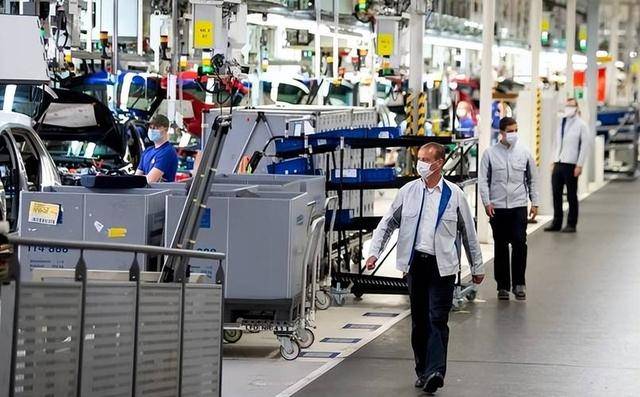
深化新能源汽车全要素出海,筑牢汽车产业全球竞争优势
Di Yi Cai Jing· 2026-01-05 13:17
Core Insights - The Chinese automotive industry is transitioning from a product-centric export model to a comprehensive approach that includes technology, capital, and production capacity as it seeks to compete globally in the context of a green and intelligent automotive transformation [1] Group 1: Export Growth and Challenges - In the first ten months of 2025, China's new energy vehicle exports reached 2.014 million units, marking a year-on-year increase of 90.4% [1] - Despite this growth, the industry faces challenges such as geopolitical tensions, rising trade protectionism, and a rapidly restructuring global supply chain [1] Group 2: Regional Market Dynamics - In Europe, trade protectionism has evolved into comprehensive institutional barriers, with the EU imposing additional tariffs through anti-subsidy investigations and stringent carbon footprint requirements under the New Battery Law and CBAM [2] - In the Americas, the risk of supply chain decoupling has increased due to the U.S. push for de-China-ization, leading to potential exclusion of Chinese suppliers from the North American supply chain [2] - In Southeast Asia, local service ecosystems hinder the upward mobility of Chinese brands, as they struggle with sparse after-sales networks and long parts supply cycles [3] Group 3: Strategic Recommendations - The industry should deepen standard recognition and compliance system construction to gain a proactive voice in global technical standards, including establishing a carbon footprint database covering the entire lifecycle of products [3] - Optimizing global production capacity and supply chain restructuring is essential, with a focus on "chain localization" and "KD dynamic assembly" to meet local compliance requirements and mitigate tariff risks [4] - A multi-faceted ecosystem combining services, finance, and infrastructure should be developed to address local market challenges, such as establishing regional parts centers and promoting integrated energy solutions in areas with weak infrastructure [5] Group 4: Product Strategy - Implementing a differentiated product strategy tailored to specific regional characteristics is crucial, such as focusing on compact cars in Europe and electric pickups in the Americas [6] - The industry should enhance vehicle durability for extreme environments in the Middle East and provide high-reliability solutions for commercial logistics in Africa [6]
2026-资本市场有哪些-预期差-值得重视
2026-01-04 15:35
Summary of Key Points from the Conference Call Industry Overview - The focus is on the capital markets and the anticipated trends for 2026, particularly in relation to geopolitical events and domestic policies affecting investment strategies and market dynamics [1][2][3]. Core Insights and Arguments - **Geopolitical Impact**: Recent geopolitical events, such as U.S. actions in Venezuela and Iran, may cause short-term market fluctuations but are not expected to alter long-term trends. The stability of the Maduro regime is highlighted despite economic challenges [2][3]. - **Domestic Policy Signals**: The Chinese government's New Year address emphasizes national strength and technological breakthroughs over consumer issues, indicating a strong commitment to stable macroeconomic policies with limited consumer stimulus [2][3]. - **Real Estate Policy**: The real estate sector is expected to see continued policy adjustments aimed at stabilizing expectations, particularly in core cities, but without comprehensive fiscal support. The decline in real estate investment is viewed as a necessary phase in the economic transition [3][8]. - **Market Strategy for 2026**: The market strategy for 2026 includes maintaining policy stability and enhancing international competitiveness, with a focus on technology, global supply chain restructuring, and gold-related investments [6][7]. Market Performance Expectations - **Short-term Market Trends**: The market is anticipated to experience a strong performance leading up to the Spring Festival, with potential new highs driven by collective capital inflow. Key sectors to watch include robotics, nuclear fusion, and consumer services [7][11]. - **Investment Sentiment**: There is a cautious but gradually increasing sentiment among retail investors, who are expected to participate in the market, albeit at a slower pace. The preference is shifting towards more stable investment vehicles like fixed income and ETFs rather than actively managed funds [12][14]. Additional Important Insights - **Funding Dynamics**: The spring market rally is expected to be supported by insurance capital and the maturity of large bank deposits, which will lead to passive capital inflows into the market [16][17]. - **Sector Focus**: Investors are advised to focus on sectors with strong growth potential, such as robotics and nuclear energy, which align with the spring investment themes and have long-term profitability prospects [11][17]. - **Investor Behavior**: The current market sentiment reflects a defensive posture among retail investors, with a preference for certainty in investment choices, indicating a slower recovery in risk appetite compared to previous market cycles [13][14]. This summary encapsulates the key points discussed in the conference call, providing insights into the anticipated market trends and investment strategies for 2026.
被“截胡”二十年:马来西亚如何在中美夹缝中复兴?
财富FORTUNE· 2025-12-29 13:11
Core Viewpoint - Malaysia's Johor state is actively seeking to attract Chinese investments, particularly in sectors like semiconductors, special chemicals, and aerospace materials, amidst a global supply chain restructuring due to US-China trade tensions and the COVID-19 pandemic [6][9]. Group 1: Investment Opportunities - The Johor delegation is meeting with Chinese companies to encourage them to invest in the state, with a focus on bringing their supply chains along [11][12]. - Chinese companies are motivated to invest in Malaysia due to lower tariffs on products labeled as "Made in Malaysia," which significantly reduces export costs to the US compared to products exported from China [12][13]. - The Malaysian government has identified five key industries for development by 2030: aerospace, data centers, electronics manufacturing, special chemicals, and medical devices [9][16]. Group 2: Challenges and Considerations - Despite the attractive investment landscape, Chinese companies face challenges such as higher labor costs in Malaysia compared to neighboring countries like Vietnam and Indonesia [14][15]. - Concerns about the completeness of the local supply chain in certain sectors, such as pharmaceuticals, may deter investment despite favorable export conditions [15]. - The potential for increased scrutiny from the US regarding Chinese investments in Malaysia, particularly in technology sectors, poses a risk for companies considering expansion [19]. Group 3: Strategic Positioning - Malaysia aims to position itself as a middle power that can serve both the US and China, focusing on industries that can thrive regardless of geopolitical tensions [9][19]. - The establishment of the "Johor-Singapore Economic Zone" is intended to replicate the success of Shenzhen by attracting investment and technology from Singapore while utilizing Johor's lower operational costs [16][17]. - The rapid growth of data centers in Johor, driven by the overflow from Singapore, highlights the state's potential as a new hub for technology infrastructure [17][18]. Group 4: Historical Context and Future Outlook - Malaysia's industrialization efforts have faced setbacks, particularly after China's entry into the WTO, which redirected investment and technology away from Malaysia [8][9]. - The "Forest City" project, initially a symbol of hope for Chinese investment, serves as a cautionary tale about the complexities and risks of cross-border investments [20][21]. - The evolving landscape of global competition, particularly between the US and China, necessitates that both Malaysian and Chinese companies adopt strategies to mitigate risks and ensure sustainable growth [22][23].