国潮经济

Search documents
杭州3处商业区入选国家级创新案例
Mei Ri Shang Bao· 2025-12-18 07:29
Core Insights - The Ministry of Commerce has officially announced the typical cases of innovation and improvement in the national retail industry for 2025, with three commercial areas in Hangzhou being recognized as benchmarks for the integration of culture, commerce, and tourism [1] Group 1: Commercial Areas Overview - Gonglian CC has transformed from a traditional department store into a cultural and commercial complex favored by young people, featuring a 20% share of the two-dimensional industry, including the first store of the well-known IP operator ANIPLEX in Hangzhou [1] - The annual foot traffic at Gonglian CC has doubled from 4 million to 8 million, with projected sales exceeding 1 billion yuan in 2024, representing a 42% increase from 2023 [1] - The nighttime economy at Gonglian CC has spurred a 25% increase in related job positions in the upper urban area, making it a popular destination for night tourism [1] Group 2: Cultural Integration - Qinghefang Historical Street serves as a high ground for the collision of Song culture and national trend creativity, featuring 56 intangible cultural heritage brands and over 50 boutique shops [2] - The street has seen a 13.87% increase in foot traffic and an 18.8% increase in revenue for 2024, with new media exposure exceeding 100 million, establishing itself as a "traffic password" for cultural tourism integration [2] Group 3: Community Services - Nanxingli focuses on "convenience + quality," providing a warm model for the renovation of old neighborhoods, retaining familiar old brands while introducing quality merchants and upgraded markets [3] - The daily foot traffic at Nanxingli has increased by 70%, with expected revenue reaching 15 million yuan by 2025, enhancing residents' sense of belonging and becoming a replicable community service hub [3] - The introduction of the "Nanxing Smart Neighbor" AI digital system offers intelligent convenience services to residents, making shopping more convenient [3] Group 4: Future Development Plans - The success of these three commercial areas reflects the innovation and development of Hangzhou's retail industry, with plans to focus on core commercial areas, characteristic streets, and convenient living circles [3] - The city aims to promote tailored renovations for commercial facilities, encourage multifunctional retail outlets, and develop new models such as instant retail and national trend economy [3] - More idle commercial spaces are expected to transform into new consumption scenes, providing richer shopping experiences for citizens and tourists [3]
商场“变形记”——智慧生活新枢纽
Zheng Quan Ri Bao· 2025-12-17 16:20
Core Insights - The retail industry is undergoing a transformation from a product-centric model to a customer-centric approach, emphasizing immersive shopping experiences and emotional engagement [3][6] - The Chinese government has emphasized the importance of expanding domestic demand and enhancing consumer spending as part of its economic strategy, which presents new opportunities for shopping malls [1][2] - The integration of digital technologies such as AI, 5G, and IoT is redefining the operational capabilities of modern shopping malls, creating new growth avenues [6][7] Group 1: Industry Transformation - Shopping malls are evolving from traditional department stores to comprehensive shopping centers that engage deeply with consumer lifestyles, breaking down industry boundaries [1][2] - The rise of personalized and experiential consumption is reflected in market data, with the "Guzi economy" growing by 40.63% year-on-year and the "Guochao economy" by 11.7% in 2024 [2] - Retailers must adapt to changing consumer habits and preferences, moving away from outdated practices to remain competitive [2][3] Group 2: Innovative Experiences - Modern shopping malls are enhancing customer experiences by incorporating interactive spaces, such as family-friendly areas and social lounges, transforming shopping into a shared leisure activity [2][3] - Unique concepts like combining retail with cultural experiences, such as museums and themed areas, are being implemented to attract customers and create memorable experiences [4][5] Group 3: Technological Integration - The application of advanced technologies is enabling shopping malls to improve operational efficiency and customer engagement, with examples including immersive environments and smart management systems [6][7] - Digital platforms are facilitating a shift from passive customer engagement to proactive marketing strategies, allowing for personalized shopping experiences [7] - The collaboration between online and offline channels is essential for modern retail, moving away from uniformity to tailored experiences based on consumer data [7]

【调查研究】国货“潮品”:一个IP撬动一整片产业森林
Sou Hu Cai Jing· 2025-12-05 05:20
Core Insights - The article highlights the emergence of "first-release economy" as a significant trend in consumer behavior, particularly among the youth, driven by cultural pride and innovative marketing strategies [1][3][10] Group 1: First-Release Economy - The "first-release economy" is supported by government initiatives aimed at promoting new consumption models and encouraging brands to launch flagship stores and products [1][3] - The popularity of cultural IPs, such as "Nezha: Birth of the Demon Child" and "Black Myth: Wukong," has led to a surge in related merchandise sales, indicating a strong consumer demand for culturally resonant products [3][5][10] Group 2: Youth Engagement and Cultural Connection - Young consumers show a natural affinity for traditional cultural symbols, which enhances their emotional connection to domestic IPs, translating into higher purchase intentions [5][10] - A report indicates that 78.9% of surveyed youth are more likely to buy products that incorporate national cultural elements, showcasing the potential for brands to leverage this trend [5] Group 3: Economic Impact and Job Creation - The rise of national cultural trends has stimulated local economies, as seen in the case of Xixian County, where tourism and related services have flourished due to the popularity of cultural IPs [8][10] - The "Wukong effect" has led to significant job creation in tourism and related sectors, with the number of tour guides increasing from 8 to 31, and new businesses emerging to cater to the influx of visitors [8][10] Group 4: Policy Support and Market Growth - Government policies are encouraging the development of original IPs across various sectors, including animation, esports, and gaming, which is expected to further boost the national cultural market [3][10] - The national cultural market has surpassed 2 trillion yuan and is projected to exceed 3 trillion yuan by 2028, driven by policy incentives and consumer upgrades [8]

泉州晋江机场开启第二届“国货潮品·一齐飞”消费季
Zhong Guo Min Hang Wang· 2025-12-02 04:03
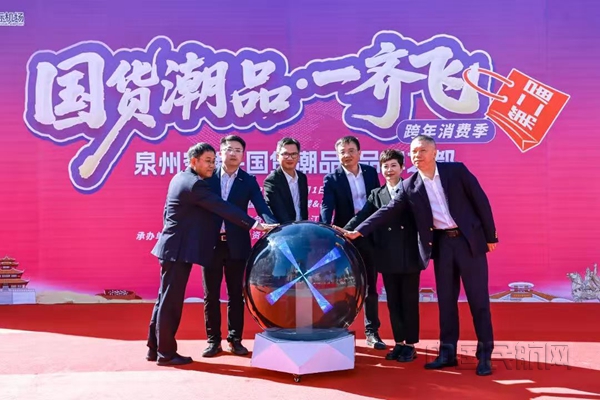
Group 1 - The second "National Goods Trend · Together Fly" cross-year consumption season was launched at Quanzhou Jinjiang International Airport, organized by the Jinjiang Municipal Bureau of Commerce and the airport [1] - The event will last until February 8, 2026, and aims to boost consumer activity in response to the "2025 Civil Aviation Service Consumption Promotion Year" initiative [2] - The consumption season features over 7,000 square meters of immersive shopping experience space, with more than 20 local shoe and clothing brands participating, enhancing the quality of consumer choices [2] Group 2 - The event includes significant discounts and government subsidies to stimulate consumer enthusiasm, enhancing the cost-effectiveness of the offerings [2] - Brands like K-Boxing, Karl May, and 361° will have a long-term presence at the airport's Peace International Square, which is set to become a one-stop shopping destination for local and visiting tourists [2] - The airport plans to integrate "aviation + culture + commerce" to create a new economic model, supporting local national goods to reach a broader market [3]
佛山禅城打造湾区首个T恤主题潮流IP 探索产业消费融合新模式
2 1 Shi Ji Jing Ji Bao Dao· 2025-11-23 00:38
Core Insights - Foshan is seeking to upgrade its traditional textile industry by focusing on brand building, leveraging its strong manufacturing base in knitting and children's clothing [1][2] - The first Foshan Trendy T-shirt Festival aims to integrate industry and consumer culture, promoting the "Foshan T-shirt" brand and enhancing market appeal [1][2] Group 1: Industry Background - Foshan has a complete textile and apparel industry chain, with "Zhangcha Knitting" being one of the largest knitting fabric production areas in China, producing about one-third of the nation's knitted fabrics annually [1] - Despite its manufacturing strength, Foshan's textile industry faces challenges such as insufficient brand influence and low added value, with many companies primarily engaged in OEM production [1] Group 2: Event Overview - The T-shirt Festival, running from November 21 to December 7, features an immersive sales matrix with a main venue and multiple sub-venues, breaking traditional exhibition models [1][2] - The event aims to create a cultural benchmark for consumption, characterized by "relaxed, micro-fashion, national trend, and light technology" [1] Group 3: Market Trends - The transformation aligns with current consumer trends, where the "Guochao" economy is expected to exceed 3 trillion yuan by 2028, reflecting a growing preference for Chinese cultural elements among young consumers [2] - There is a shift towards quality and personalized consumption, with Foshan introducing AI smart customization to meet these new demands [2] Group 4: Cultural Integration - The festival promotes local cultural symbols like lion dancing and martial arts, aiming to instill cultural confidence and a sense of belonging among the youth [2][3] - The design of the festival encourages the transformation of traditional cultural symbols into contemporary fashion language, creating a dialogue between intangible cultural heritage and modern life [2][3] Group 5: Technological Empowerment - The introduction of AI smart customization machines allows for rapid design and production, enhancing consumer engagement and meeting the demand for personalized experiences [3] - The event also establishes "Foshan Brand Launch Bases" at key city landmarks, extending the exhibition space into everyday consumer environments [3] Group 6: Future Plans - Foshan aims to establish a regular, fashionable platform for brand launches and production-sales connections, promoting synergy between "Foshan Design" and "Foshan Manufacturing" [3] - The local government plans to regularly host apparel-related events and integrate resources from e-commerce platforms and industry associations to streamline the entire production and sales chain [3]
研究做好下步经济工作等
Liao Ning Ri Bao· 2025-11-18 05:55
Core Viewpoint - The provincial government is focused on enhancing economic resilience and promoting high-quality development through various initiatives, including technological innovation and improved service sectors [1][2]. Economic Development - The provincial government recognizes the long-term potential and resilience of the economy, emphasizing the need for confidence and targeted efforts to achieve optimal results during the "14th Five-Year Plan" and to set a strong foundation for the "15th Five-Year Plan" [2]. - Key areas of focus include stabilizing key industries such as steel and oil, supporting enterprises in digital transformation, and fostering the integration of technological and industrial innovation [2]. Technological Innovation - Higher education institutions are encouraged to strengthen organized research and enhance the conversion of scientific achievements into productive forces by improving talent supply and establishing technology parks and pilot bases [3]. Service Sector Enhancement - The government plans to implement actions to boost service sector capacity and quality, maintain stable commercial circulation, and expand the scale of the platform economy [2]. - New consumption models such as event economy, silver economy, and national trend economy are to be developed to stimulate service consumption [2]. Investment and Business Environment - The government aims to enhance the role of public investment to stimulate private investment, improve project planning, and increase efforts in attracting investment [2]. - A comprehensive approach will be taken to optimize the business environment, focusing on public services, access to resources, fair competition, and legal frameworks [2]. Education and Workforce Development - Vocational schools are urged to align their educational direction with industry needs and improve their management to promote high-quality development in modern vocational education [3].
太湖雪(920262):2025Q1-Q3归母净利润同比+57%,品牌建设和渠道变革成效显著
Hua Yuan Zheng Quan· 2025-10-26 01:52
Investment Rating - The investment rating for the company is "Accumulate" (maintained) [5] Core Views - For Q1-Q3 2025, the company achieved a revenue of 402 million yuan, representing a year-on-year increase of 19%, and a net profit attributable to the parent company of 23.16 million yuan, up 57% year-on-year [6] - The gross profit margin was 43.4%, an increase of 2.9 percentage points year-on-year, while the sales expense ratio decreased by 0.8 percentage points to 25.25% [6] - The company has successfully built an online and offline integrated sales ecosystem, with live e-commerce platforms becoming a significant growth driver [6] - The company has maintained its position as the top-selling brand of silk quilts in China for six consecutive years, focusing on brand strength and product innovation [6] Summary by Sections Market Performance - The closing price as of October 23, 2025, was 27.00 yuan, with a market capitalization of 1,866.08 million yuan and a circulating market value of 842.01 million yuan [3] Financial Data - For Q1-Q3 2025, the company reported a revenue of 402 million yuan and a net profit of 23.16 million yuan, with a gross margin of 43.4% [6] - The company expects net profits for 2025-2027 to be 40 million, 56 million, and 73 million yuan respectively, with corresponding P/E ratios of 46.65, 33.56, and 25.46 [7] Profitability and Valuation - The company has a projected revenue growth rate of 18.26% for 2025, with a net profit growth rate of 42.57% [7] - The company’s return on equity (ROE) is expected to increase from 11.35% in 2025 to 17.58% in 2027 [7] Strategic Initiatives - The company is leveraging cultural tourism consumption recovery and tax refund policies to enhance its offline sales channels, achieving a 5.4% year-on-year growth in offline revenue [6] - Online sales channels saw a significant growth of 35.45% year-on-year, driven by refined operations and a comprehensive "live broadcast" marketing system [6]
“十四五”·答卷|文脉赓续 绘就高质量发展新图景
Yang Shi Wang· 2025-10-22 13:54
Core Insights - The "14th Five-Year Plan" emphasizes the development of socialist advanced culture and the enhancement of national cultural soft power, focusing on improving social civilization, public cultural service levels, and modern cultural industry systems [1][3] Public Cultural Services - The plan aims for a more balanced public cultural service layout, significantly improved service levels, and diversified service supply methods, with breakthroughs in digital and intelligent development [1][3] - By the end of 2024, there will be 3,248 public libraries and nearly 44,000 cultural institutions at the county level, providing more cultural service options for the public [3] - The expected annual circulation of public libraries is projected to reach 1 to 1.1 billion by 2025, with actual figures reaching 1.34 billion by 2024, surpassing the target [3] Cultural Industry Growth - The cultural industry has seen significant growth, with revenues reaching 19.14 trillion yuan in 2024, a 37.7% increase from 2020, indicating an average annual growth rate exceeding 8% [7][10] - The number of large-scale cultural enterprises has increased to 78,000, up by 1,300 from 2020, reflecting a shift from traditional models to innovative integrations [7][10] - The cultural industry's contribution to GDP has increased, indicating a broader market space and solid demand foundation for cultural industry development [7][10] Integration of Culture and Technology - The deep integration of culture and technology has become a key driver for the cultural industry's growth, with new business models emerging in digital creativity, online audio-visual, and digital publishing [10] - The rise of "Guochao" (national trend) culture has revitalized traditional crafts and industries, such as the ceramics industry in Jingdezhen, which has an annual output value exceeding 90 billion yuan [11][13] Cultural Heritage and Tourism - The integration of cultural heritage protection and tourism development has led to increased visitor numbers at cultural sites, enhancing the overall cultural experience [15][17] - The "cultural tourism" model has evolved, with immersive digital tourism products providing deeper engagement with local culture and heritage [15][17]
河南省消费市场人气旺新意足
He Nan Ri Bao· 2025-10-05 09:52
Core Insights - The consumption market in Henan province remains vibrant during the National Day and Mid-Autumn Festival holiday, with retail and catering enterprises achieving a total sales of 1.457 billion yuan, a year-on-year increase of 4.2% [1] - The introduction of "first store economy" and "first launch economy" has invigorated the consumption market, attracting crowds to new shopping areas and events [1][2] - The integration of cultural and tourism experiences with consumption has enhanced the attractiveness of various locations, leading to significant increases in restaurant revenues [2] Retail and Catering Performance - In the first four days of the holiday, key monitored retail enterprises in Henan achieved sales of 1.432 billion yuan, reflecting a 4% year-on-year growth [1] - The catering sector reported revenues of 25.186 million yuan, marking an 18.3% increase compared to the same period last year [2] Consumer Experience and Events - Various promotional activities, such as "ticket root benefits" and significant discounts from e-commerce platforms, have contributed to a booming dining market [2] - Events like the "Eleventh" Auto Culture Festival in Zhoukou attracted significant attendance, showcasing over 30 car brands and stimulating consumer interest through discounts and financial subsidies [2] Future Outlook - The Henan Provincial Department of Commerce plans to continue monitoring new consumption trends and support innovative service models to enhance consumer experiences [3]
假期过半,热度不减 河南消费市场人气旺新意足
He Nan Ri Bao· 2025-10-04 23:28
Group 1 - The core viewpoint highlights the strong consumer enthusiasm during the National Day and Mid-Autumn Festival holiday, with retail and catering sectors showing significant sales growth [2][3][4] - In the first four days of the holiday, key monitored retail and catering enterprises in the province achieved a total sales of 1.457 billion yuan, marking a year-on-year increase of 4.2% [2] - The introduction of "first store economy" and "first launch economy" has invigorated the consumer market, attracting crowds to new shopping areas and events [2][3] Group 2 - The catering sector reported a revenue of 25.186 million yuan in the first four days of the holiday, reflecting an 18.3% increase compared to the same period last year [3] - Various promotional activities, such as the "ticket root economy" and discounts from e-commerce platforms, have contributed to the vibrant sales in the catering market [3] - The automotive sector also saw increased activity with events like the "Eleventh" Auto Culture Festival, which featured over 30 car brands and numerous promotional offers, stimulating consumer interest [3][4]