
安全资产

Search documents
全球资配 | 周期洞察与战略布局
Sou Hu Cai Jing· 2025-11-12 17:49
Group 1 - The core viewpoint emphasizes the need for a new paradigm in asset allocation for residents due to the changing global macro environment, where traditional safe assets are losing their foundational stability [1] - The report suggests that the long-term perspective should embrace equity assets and industrial trends, utilizing a multi-cycle nested system for effective asset allocation [1] - It highlights that the recovery of corporate profits and the leadership of the AI industry by China and the US present significant investment opportunities, particularly in the technology sector [1] Group 2 - In the global asset allocation context, it recommends focusing on countries with favorable fundamentals and timing investments after technical corrections, particularly in the US, Japan, Eurozone, India, and Vietnam [1] - The report notes that the bond market's core logic has shifted from seeking yield to pursuing diversification, with expectations of monetary policy easing benefiting the bond market [2] - It indicates that gold remains in a long-term structural bull market despite recent healthy corrections, while oil supply surplus is a concern due to geopolitical factors [2]

金价剧震,投机资金动摇“安全资产”稳定性
日经中文网· 2025-10-23 03:10
Core Viewpoint - The decline in dollar credit and rising geopolitical risks are expected to continue driving funds into the gold market, maintaining an upward trend in gold prices. However, the influx of investment funds through ETFs has made gold prices more volatile [2][5]. Group 1: Price Movements - On October 21, New York gold futures fell by $250.3 (5.7%) to $4,109.1 per ounce, marking the largest single-day drop in history. The downward trend continued into Asian trading on October 22 [3]. - Gold prices had previously shown a rare upward trend, with a significant increase following the announcement of the dismissal of a Federal Reserve official in late August. By October 7, prices surpassed $4,000 per ounce, reaching a historical high of $4,398 per ounce by October 20, an increase of nearly $400 [3]. Group 2: Market Dynamics - The sell-off in gold was exacerbated by speculative funds collapsing rapidly, as noted by a representative from the Japan Market Strategy Institute. The intensifying U.S.-China tensions and credit risks in U.S. regional banks have diminished concerns that previously supported higher gold prices [5]. - The World Gold Council's survey indicated that demand for gold is projected to reach approximately 170 tons in the April to June 2025 period, accounting for about 20% of total demand, a stark contrast to nearly zero demand in the same period a year prior. This highlights the increased volatility in gold prices due to investor fund allocation [5]. - Analysts suggest that the significant increase in gold ETF demand has become a potential source of selling pressure, contributing to the recent price drops in other precious metals like silver and platinum, which fell by 7% and 8% respectively [5]. Group 3: Future Outlook - Despite the recent volatility, the perception of gold as a "safe asset" remains unchanged. Most analysts believe that the decline in dollar credit and rising geopolitical risks will continue to drive funds into the gold market, sustaining an upward price trend [5]. - There is a notable shift in the perception of price stability, with experts indicating that gold prices are likely to experience significant fluctuations in the future [6].
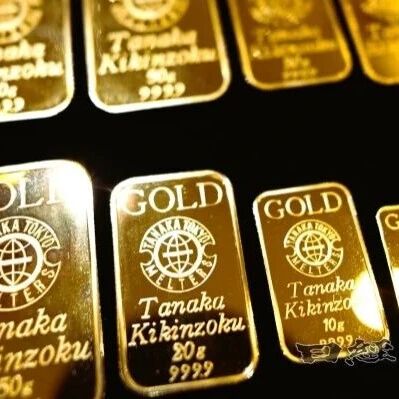
金价破4000美元:别光喊涨!这3个信号藏着普通人的资产危机
Sou Hu Cai Jing· 2025-10-13 14:10
Group 1 - The core viewpoint is that the surge in gold prices, surpassing $4,000 per ounce, signals a significant shift in investor perception of safe assets, moving away from traditional options like the US dollar and treasury bonds [1][2] - As of October 2025, gold prices have increased by 44% since the beginning of the year, reaching a historical high of $4,041 per ounce, indicating a departure from normal market behavior [1] - Central banks globally are accumulating gold, with the World Gold Council reporting that by Q2 2025, gold reserves held by central banks will account for 14.8% of total reserves, the highest in 30 years [1] Group 2 - In August 2025, the value of gold in global central bank reserves reached $4.5 trillion, surpassing the $3.5 trillion value of US treasury bonds, indicating a shift in the perception of safe assets among financial authorities [2] - Since 2022, central banks have been purchasing over 1,000 tons of gold annually, with projections of an additional 900-950 tons in 2025, reflecting a strategic long-term investment approach rather than short-term trading [1]
日本市场预期高市早苗将让日元快速贬值
Sou Hu Cai Jing· 2025-10-08 06:47
Core Viewpoint - The recent surge in gold retail prices in Japan is influenced by multiple factors, including domestic economic policies and international geopolitical concerns [1] Domestic Factors - The expectation that the new president of the Liberal Democratic Party, Sanae Takaichi, will implement expansionary fiscal policies has led to a rapid depreciation of the yen [1] - On October 8, the yen to dollar exchange rate fell below 152 yen per dollar, marking the lowest level in approximately eight months [1] - As a result of the yen's depreciation, gold prices in yen terms have increased [1] International Factors - Ongoing concerns regarding a potential U.S. government shutdown and international geopolitical tensions have heightened demand for gold, which is viewed as a safe-haven asset [1]
中金缪延亮:美元陷阱的形成与突破——读埃斯瓦尔·S. 普拉萨德《美元陷阱》
中金点睛· 2025-09-14 23:35
Core Viewpoint - The article discusses the sustainability of the dollar system and the so-called "dollar trap," emphasizing that while the dollar's dominance is being questioned, there are currently no viable alternatives to replace it [2][22]. Group 1: Formation of the "Dollar Trap" - The "dollar trap" is supported by three pillars: the necessity for emerging economies to hold foreign reserves, the unique status of U.S. Treasury bonds as a safe haven, and the lack of alternative safe assets [2][3][12]. - Emerging markets have accumulated significant foreign reserves, with their share rising from 37.5% to 67.2% between 2000 and 2013, driven by the need for self-insurance and currency stability [3][4]. Group 2: Characteristics of the "Dollar Trap" - Emerging countries voluntarily enter the "dollar trap" by accumulating dollar reserves to pursue export-led growth, but they face continuous devaluation risks [18]. - The "dollar trap" leads to significant potential losses for countries holding U.S. debt, as their currencies appreciate against the dollar, and U.S. inflation erodes the real purchasing power of dollar assets [19][20]. Group 3: Current Changes in the "Dollar Trap" - Since 2015, emerging markets have shown improved financial stability and reduced the necessity to accumulate foreign reserves, indicating a shift in their economic models [24]. - The credibility of U.S. Treasury bonds as a safe asset is weakening due to deteriorating economic fundamentals and fiscal discipline in the U.S., raising concerns about the sustainability of U.S. debt [26][27]. - The TINA (There Is No Alternative) framework is being challenged as emerging markets explore alternatives to the dollar, including the yuan, gold, and bitcoin [29][30].

国际货币体系改革:美元霸权的“使用”与“动摇”
2025-09-07 16:19
Summary of Key Points from Conference Call Records Industry or Company Involved - The discussion revolves around the **U.S. Dollar's dominance** in the international monetary system and its implications for global finance and investment. Core Points and Arguments 1. **U.S. Treasury Bonds as Safe Assets**: U.S. Treasury bonds are viewed as safe assets due to their value retention, liquidity, and appreciation during crises, reinforcing the dollar's position in the international monetary system [2][4][5] 2. **Dollar Hegemony**: The U.S. dollar's hegemony allows the U.S. to issue debt at lower costs, benefiting from a unique financing privilege that is not easily replicated by other nations [3][10] 3. **Structural Challenges**: The U.S. faces structural challenges in controlling debt, with rigid expenditures exceeding fiscal revenues and a bipartisan tendency to expand deficits [14] 4. **Impact of Dollar Strength**: The dollar's strength can lead to decreased export competitiveness and depreciation of overseas assets, presenting both advantages and disadvantages for the U.S. economy [16] 5. **Flight to Safety Phenomenon**: During financial crises, there is a tendency for investors to flock to safe assets like U.S. dollars and Treasury bonds, which can lower bond yields and provide the U.S. with additional fiscal stimulus [15] 6. **Potential for RMB as a Safe Asset**: The Chinese yuan (RMB) has potential to become a new safe asset, but it requires stable inflation, market liquidity, and a floating exchange rate mechanism [29][31] 7. **Dollar's International Reserve Currency Status**: The U.S. has paid a price for the dollar's status as an international reserve currency, with the currency often being overvalued during crises [18] 8. **Concerns Over Dollar Hegemony Erosion**: Discussions about the decline of dollar hegemony are ongoing, but historical patterns show that crises often reinforce the dollar's dominance [20][22] 9. **Investment Returns**: The U.S. has maintained positive net overseas investment returns, despite being in a current account deficit, primarily due to low-cost financing [10][24] 10. **Market Sentiment on U.S. Debt**: There are signs that the consensus on the safety of U.S. debt is weakening, with rising financing costs and reduced demand from traditional buyers [25][26] Other Important but Possibly Overlooked Content 1. **Comparison with Japan**: Japan's high debt levels are considered sustainable due to strong domestic ownership of its bonds and responsible fiscal policies, contrasting with the U.S.'s challenges in managing debt [13][14] 2. **Future of the International Monetary System**: The international monetary system is undergoing fragmentation and diversification, with a shift towards a multi-currency structure that includes the dollar, euro, and yuan [28][30] 3. **Implications of Dollar Appreciation**: Dollar appreciation can lower financing costs and enhance purchasing power for U.S. consumers, benefiting the economy [19] 4. **Consequences of Eroding Trust in U.S. Debt**: A complete loss of faith in the safety of U.S. debt could lead to significant economic consequences, including high inflation and elevated long-term interest rates [26] This summary encapsulates the critical insights from the conference call records, highlighting the complexities surrounding the U.S. dollar's role in the global economy and the potential rise of alternative currencies.
中金缪延亮:美元霸权的“使用”与“动摇”
中金点睛· 2025-08-25 00:27
Core Viewpoint - The article argues that the U.S. dollar's hegemony is not diminishing but is being undermined by the U.S. government's excessive debt issuance and the politicization of its "safe asset" status, which erodes global investor confidence in U.S. Treasuries [2][27][28]. Group 1: Foundation of Dollar Hegemony - The foundation of dollar hegemony lies in the consensus around U.S. Treasuries as a "safe asset," characterized by long-term value retention, liquidity, and negative beta properties during crises [3][6]. - The concept of "exorbitant privilege" refers to the unique advantages the U.S. enjoys as the issuer of the world's primary reserve currency, allowing it to issue debt to cover trade deficits without significant repercussions [4][11]. Group 2: Manifestations of Dollar Hegemony - Dollar hegemony manifests in three key privileges: low-interest financing, the ability to roll over debt without repayment, and enhanced fiscal space during crises [9][10][13]. - Low-interest financing results from the high liquidity and quality of U.S. Treasuries, leading to a "convenience yield" that lowers the cost of borrowing for the U.S. [10][11]. - The U.S. can sustain high levels of debt without immediate repayment obligations, effectively engaging in a "Ponzi-like" financing model, as long as interest rates remain below economic growth rates [13][14]. Group 3: Current Status of Dollar Hegemony - The current status of dollar hegemony is challenged by the U.S. government's excessive debt issuance, which has pushed the debt-to-GDP ratio above 120%, raising concerns about fiscal sustainability [27][28]. - The politicization of U.S. Treasuries, exemplified by the freezing of foreign reserves, has created uncertainty about their status as a "safe asset," potentially leading to a loss of confidence among global investors [28][29]. - The absence of "ultimate buyers" for U.S. debt, as countries diversify their reserves away from Treasuries, poses a significant risk to the maintenance of the dollar's hegemonic status [30].

2025,重置:新世界、新秩序、新财富的轮廓已经出现
Di Yi Cai Jing Zi Xun· 2025-08-12 14:28
Group 1: Global Financial Reset - The core theme for 2025 is a global financial reset, affecting asset prices, market expectations, and consumption patterns [2][4] - There is a significant shift in global capital flows, with a notable move away from U.S. Treasury bonds towards gold and cryptocurrencies, leading to substantial price increases [4][5] - The traditional belief in the safety of U.S. assets is being challenged, as global capital begins to diversify into other markets, including Europe and emerging markets [4][5] Group 2: Industry and Supply Chain Restructuring - The restructuring of global supply chains is driven by geopolitical tensions and trade wars, prompting capital to seek new safe havens [8] - Chinese companies are being re-evaluated in this context, with a focus on their resilience and ability to adapt to new global networks [8] - The trend of Chinese enterprises going global is becoming a consensus, with many companies looking to integrate into broader global supply chains [8][12] Group 3: Consumer Market Transformation - A new consumer structure is emerging in China, characterized by younger generations prioritizing personal expression and experiential consumption over traditional material values [10][12] - The shift in consumer values is leading to the rise of niche markets and smaller, more personalized products, reflecting a broader change in consumption narratives [10][12] - The transformation of the Chinese consumer market is indicative of a larger trend where growth is driven by diverse consumer preferences and values rather than mere market expansion [12][14]


王增武:一代企业家“家企分离”意识几乎为零,“法商”思维亟待加强|理财会客厅
Xin Lang Cai Jing· 2025-08-11 08:50
Core Insights - The central financial work conference emphasizes the importance of five key areas: technology finance, green finance, inclusive finance, pension finance, and digital finance, guiding the high-quality development of the financial sector [1] Group 1: Wealth Management Market Development - The wealth management market in China is transitioning to a more mature and stable phase following regulatory policies like the asset management new regulations [4] - The wealth management ecosystem should focus on "common prosperity," prioritizing fairness over mere efficiency [3] - The development of wealth management institutions varies, with some being significantly impacted by regulations while others remain relatively unaffected [4] Group 2: Entrepreneurial Perspectives - First-generation entrepreneurs exhibit minimal awareness of "separation of family and enterprise," often leading to ownership changes due to assets being registered under company names [2][6] - Second-generation entrepreneurs demonstrate a stronger risk-avoidance mindset and a better understanding of legal frameworks to mitigate risks [2][7] Group 3: Investment Strategies - Investors are advised to focus on "safe assets," suggesting a portfolio allocation of 30% in safe assets and the remaining 70% in protective products, equity products, or bank wealth management products [14] - High-net-worth clients tend to have a higher risk tolerance and are increasingly interested in sectors like technology, biotechnology, and artificial intelligence [5] Group 4: Financial Institutions' Role - Commercial banks are encouraged to enhance their core competitiveness, particularly in pricing and risk control capabilities, to achieve stable returns even in low-interest environments [13] - The structure of commercial banks should include a three-tier system to better promote business development in technology finance [10] Group 5: Family Office and Private Banking - Family offices are seen as a more advanced form of private banking, essential for matching effective supply and demand in financial services [8] - The private banking sector is transitioning from growth in scale to a focus on value cultivation, with no significant bottlenecks identified [7]
A股、港股强势上涨 沪指创年内新高!下半年有哪些投资机会?
Guang Zhou Ri Bao· 2025-06-25 16:50
Core Viewpoint - The A-share market is expected to show a trend of upward fluctuations, while the Hong Kong stock market may experience phase-based fluctuations, with investment opportunities in technology, consumption, and large financial sectors being highlighted [1][4]. Group 1: Market Performance - On June 25, the Shanghai Composite Index rose by 1.03%, the Shenzhen Component Index increased by 1.72%, and the ChiNext Index surged by 3.11% [2]. - The total market turnover reached 16,394 billion yuan, an increase of 1,915 billion yuan compared to the previous trading day, with over 3,800 stocks rising [2]. - The financial sector saw a significant rally, with multiple stocks hitting the daily limit, and the military and semiconductor sectors also performed strongly [2]. Group 2: Policy and Economic Factors - Recent financial policies, including the "Guiding Opinions on Financial Support to Boost and Expand Consumption," aim to enhance financial services from both supply and demand sides, thereby stimulating consumption growth [2]. - The People's Bank of China conducted a 3,000 billion yuan MLF operation to maintain ample liquidity in the market [2]. - Analysts noted that the development of stablecoins provides new opportunities for the financial sector, and the recovery of overseas markets has increased risk appetite, contributing to the positive market sentiment [3]. Group 3: Future Outlook - Analysts predict that the A-share market will maintain a stable upward trend, with current valuations remaining low compared to mature overseas markets, indicating relatively high investment value [4]. - The focus for structural opportunities is on safe assets, technological innovation, large consumption, and mergers and acquisitions [4]. - For the Hong Kong market, it is suggested to adopt a strategy of buying on dips, particularly in technology, consumption, and large financial sectors, which are expected to remain as core holdings [4].