
容量电价政策

Search documents
中信证券:容量电价带来收益高确定性 有望明显带动国内储能装机
Zhi Tong Cai Jing· 2026-02-03 01:26
Core Viewpoint - The implementation of the national capacity pricing policy for energy storage is expected to stabilize revenue expectations and stimulate investment enthusiasm among owners, which is significant for investment decisions by state-owned enterprises and other clients [1][7]. Group 1: Capacity Pricing Mechanism - The new capacity pricing mechanism categorizes and improves the pricing for coal, natural gas, pumped storage, and new energy storage, ensuring reasonable pricing for regulatory capacity [2][9]. - The document mandates that the proportion of fixed cost recovery through capacity pricing for coal power plants be raised to no less than 50% by 2026, with potential for further increases based on local market conditions [10]. - For new energy storage, local governments can provide capacity pricing for independent energy storage stations that do not participate in mandatory storage, which will be included in local system operating costs [2][12]. Group 2: Economic Impact and Growth Projections - The capacity pricing is expected to provide high revenue certainty, significantly boosting domestic energy storage installations, with projections indicating a growth rate of 84% year-on-year for new energy storage installations in 2025, reaching 183 GWh [5][6]. - The establishment of the capacity pricing mechanism is anticipated to enhance the investment return rate for projects, increasing from 4.1% to 6.3% with a capacity price of 55 yuan/kW [5][4]. - The capacity pricing policy is seen as a critical support for the independent development of energy storage, transitioning the industry from cost competition to value creation [1][7]. Group 3: Industry Dynamics and Competitive Landscape - The introduction of a reliability capacity compensation mechanism will strengthen assessments and encourage owners to improve the quality of energy storage products, benefiting high-quality products and promoting industry consolidation [6][7]. - The policy changes are expected to lead to a rational return of investment in the pumped storage sector, with new projects relying more on actual market demand [11][13]. - The energy transition is supported by the development of regulatory power sources, which will help alleviate downward pressure on electricity prices and enhance the absorption of renewable energy [9][13].

筑牢电源规模化 发展根基
Zhong Guo Dian Li Bao· 2026-02-03 01:24
Core Viewpoint - The recent policy notification establishes a reliable capacity compensation mechanism, addressing the need for stable revenue channels for various power sources, which is crucial for energy security and achieving carbon neutrality goals in China [1][2]. Group 1: Policy Overview - The notification introduces a three-phase development plan for capacity pricing in China's power generation sector: government pricing, capacity compensation, and capacity market [2]. - The new policy aims to optimize existing capacity pricing for coal, gas, and pumped storage while establishing a unified capacity pricing standard for new energy storage [2][3]. Group 2: New Energy Storage - New energy storage is positioned as the biggest beneficiary of the capacity mechanism, with its capacity pricing linked to peak load support capabilities [3][4]. - The policy clarifies that independent new energy storage systems not participating in grid storage can receive capacity price support, marking a significant recognition of their value [3][4]. Group 3: Pumped Storage - The policy provides a transitional arrangement for pumped storage, allowing for differentiated treatment based on project timelines and investment characteristics [5][6]. - It ensures that existing projects under previous pricing mechanisms can continue to receive reasonable returns, while new projects will have their capacity prices set based on average costs over 3-5 years [5][6]. Group 4: Market Integration - The notification addresses the need for uniform standards in charging and discharging prices for energy storage, promoting a more coherent market structure [7][8]. - It emphasizes the importance of regional collaboration in shared pumped storage projects, establishing clear guidelines for capacity cost sharing among provinces [8]. Group 5: Economic Viability - The policy supports the economic viability of new energy storage by linking capacity pricing to actual contributions to peak load support, thus enhancing revenue predictability [4][5]. - The investment cost for new energy storage systems has significantly decreased, making them commercially viable under the new capacity pricing framework [4].
中信证券:煤核短期受冲击,抽蓄分化,储能迎支撑
Jin Rong Jie· 2026-02-03 01:06
Core Viewpoint - The article highlights the improvements in the capacity mechanism for power generation, which promotes the development of adjustable power sources and facilitates the consumption of renewable energy [1] Group 1: Capacity Mechanism and Pricing - The capacity pricing for coal power is being enhanced while the long-term price floor is being relaxed, which may lead to downward pressure on comprehensive sales prices in regions with excess capacity [1] - The significant changes in the pumped storage pricing mechanism will result in new pumped storage projects relying more on the actual demand in the local electricity market for revenue generation [1] Group 2: Impact on Energy Sources - The introduction of capacity pricing policies is expected to be a crucial support for the independent development of energy storage [1] - The potential further decline in long-term electricity prices for thermal power in certain provinces may impact the nuclear power market prices in those areas [1] - The development of adjustable power sources is beneficial for enhancing the consumption of renewable energy and alleviating downward pressure on electricity prices [1]
储能最后拼图补齐-全国容量电价政策解读
2026-02-02 02:22
Summary of Key Points from the Conference Call Industry Overview - The conference call discusses the national capacity pricing policy for energy storage in China, which aims to unify local capacity compensation policies into a national standard, benefiting most provinces and promoting new energy storage development towards 4-hour continuous discharge [1][9]. Core Insights and Arguments - **National Capacity Pricing Policy**: The policy is designed to address stability issues in the power system due to rapid growth in wind and solar energy, ensuring that regulating power sources can achieve economic viability through fixed compensation [2][4]. - **Long-term Stability Mechanism**: The national capacity pricing is viewed as a long-term stable mechanism, providing a predictable development environment that attracts more investment into the new energy storage sector [10][12]. - **Investment Trends**: By early 2025, state-owned enterprises (SOEs) were initially cautious about new energy storage but gradually recognized its importance, leading to a consensus by the end of the year to accelerate investments in energy storage projects [13][14]. - **Economic Viability of New Energy Storage**: New energy storage has become highly competitive due to significant cost reductions, with installed capacity expected to exceed pumped storage by 2024, reaching over 70 million kW [5]. - **Pumped Storage Challenges**: While still important, pumped storage faces competition from emerging storage technologies. The new policy allows for compensation based on average prices over 3-5 years to stabilize investments [6][7]. - **Coal Power Decline**: The competitiveness of coal power is decreasing due to reduced operating hours, necessitating fixed subsidies to maintain viability [8]. Important but Overlooked Content - **Regional Policy Variations**: Different provinces have implemented varying capacity compensation policies, with some offering higher rates than others. For instance, Gansu's compensation is around 100 yuan per kW annually, while Shandong's is about 46 yuan, reflecting local market conditions [19][20]. - **Impact of Capacity Pricing on Investment Expectations**: The capacity pricing policy provides SOEs with a stable income source, which is crucial for large-scale investments, as they prioritize stability over high returns [12][28]. - **Future Market Dynamics**: The peak-valley price difference is expected to narrow, influencing market dynamics in the coming years, particularly in regions with varying energy resource availability [15]. - **Investment Directions for SOEs**: The most promising investment areas for power generation SOEs include wind energy, new energy storage, pumped storage, and green electricity desulfurization projects, with new energy storage being prioritized due to lower costs [18]. Conclusion - The national capacity pricing policy represents a significant shift in China's energy landscape, providing a framework that supports the growth of new energy storage while addressing the challenges faced by traditional energy sources. The emphasis on stability and predictability in investment returns is likely to shape the future of energy investments in the country.
电力设备行业跟踪周报:容量电价政策出台,储能锂电优质龙头利好
Soochow Securities· 2026-02-02 00:24
Investment Rating - The report maintains an "Accumulate" rating for the power equipment industry [1] Core Viewpoints - The introduction of a national capacity pricing policy for energy storage is expected to benefit leading lithium battery companies significantly [4] - The report highlights a strong growth forecast for energy storage, with an expected increase of over 60% in 2026, driven by high demand and supportive policies [4][8] - The report emphasizes the potential of solid-state batteries and the space photovoltaic sector, indicating a promising outlook for these technologies [4][8] Industry Trends - Energy Storage: The national capacity pricing mechanism has been released, marking a significant policy shift. The National Energy Administration has reported an addition of 62.24 GW/183 GWh of new energy storage capacity by 2025 [4] - Electric Vehicles: The report anticipates a recovery in electric vehicle sales, with a projected increase of 5-10% in domestic sales for 2026 [4] - Lithium Battery Market: The report notes a significant increase in lithium battery shipments, with a forecast of 1100 GWh globally in 2026, representing a 72% year-on-year growth [4] Company Insights - CATL (宁德时代) is highlighted as a global leader in power and energy storage batteries, with a low valuation and confirmed growth trajectory [7] - Other companies such as 阳光电源 (Sungrow Power Supply), 固德威 (GoodWe), and 比亚迪 (BYD) are also recommended for their strong market positions and growth potential [7] - The report mentions specific financial forecasts for various companies, indicating expected profitability improvements and revenue growth in the coming years [4][7] Investment Strategy - The report suggests a strong push for large-scale energy storage and lithium battery sectors, with a focus on leading companies that are expected to benefit from policy changes and market demand [4][8] - It recommends investing in companies with strong technological advantages and overseas market expansion capabilities, particularly in the robotics and automation sectors [4][8]



碳酸锂:容量补偿政策落地叠加现货采买放量,锂价或企稳
Guo Tai Jun An Qi Huo· 2026-02-01 07:21
Report Overview - Report Title: "Carbonate Lithium: Capacity Compensation Policy Implementation and Spot Purchasing Surge May Stabilize Lithium Prices" - Report Date: February 1, 2026 - Analysts: Shao Wanyi, Liu Hongru 1. Report Industry Investment Rating - Not provided in the report 2. Core Views - This week, the carbonate lithium futures prices dropped significantly, but the core logic of strong reality and expectations remains unchanged. The supply side is expected to contract marginally as some lithium salt plants plan for phased maintenance, while the demand side shows the characteristic of "not being in the off - season" and remains at a high level. After the price correction, the downstream replenishment willingness has significantly increased. The capacity price policy announced on Friday gives the market a clearer expectation, which may increase the economic viability of independent energy storage systems and potentially raise the project IRR. However, the potential negative feedback risk of demand needs continuous tracking. Currently, the absolute level of lithium prices has fallen to a relatively low level, and the downstream replenishment willingness will support the market. Attention should be paid to the changes in market funds next week [2][5]. 3. Summary by Relevant Catalogs 3.1 Market Data - This week, the carbonate lithium futures prices declined sharply. The 2605 contract closed at 148,200 yuan/ton, a weekly decrease of 33,320 yuan/ton, and the 2607 contract closed at 148,860 yuan/ton, a weekly decrease of 33,780 yuan/ton. The spot price decreased by 10,500 yuan/ton to 160,500 yuan/ton. The SMM spot - futures basis (2605 contract) strengthened by 7,700 yuan/ton to - 1,780 yuan/ton, and the Fubao trader premium/discount quotation was - 1,350 yuan/ton, strengthening by 40 yuan/ton week - on - week. The 2605 - 2607 contract spread was - 660 yuan/ton, strengthening by 460 yuan/ton compared to the previous week [2]. 3.2 Supply and Demand Fundamentals Supply - Domestic lithium salt plants are gradually entering the seasonal maintenance phase, and the overseas mining cost has increased significantly. Overseas Simga Lithium announced on January 26 that it has resumed mining operations, and it is expected to produce output around March according to the mining progress. The domestic weekly carbonate lithium production was 21,569 tons, a decrease of 648 tons from the previous week [3]. Demand - Short - term demand is relatively strong, and the power terminal is waiting for recovery. The actual production reduction of cathode material plants is limited, and the demand for export rush continues to be released, so the production is expected to remain at a high level. In 2025, the newly added installed capacity of new energy storage projects was 62.24GW/183GWh, a year - on - year increase of 47%/80%. On Friday evening, the National Development and Reform Commission and the National Energy Administration issued the "Notice on Improving the Capacity Price Mechanism on the Power Generation Side". This week, the total winning bid scale of energy storage projects was 2.15GW/2.31GWh, a week - on - week decrease of 70.03% and a year - on - year decrease of 47.58%. According to information providers, the production schedule of lithium iron phosphate batteries in February decreased by 9% month - on - month, and that of ternary batteries decreased by 15% month - on - month, with a smaller decline than the same period last year [3]. Inventory - This week, the carbonate lithium inventory continued to decline, with the industry inventory at 107,482 tons, a reduction of 1,414 tons from the previous week, and the inventory was transferred downstream. This week, 1,325 new futures warehouse receipts were registered, with a total of 30,211 lots [4]. 3.3 Market Strategy - Unilateral: High - level fluctuations are expected, and the price of the futures main contract is expected to range from 145,000 to 170,000 yuan/ton. - Inter - period: Referring to the downstream pre - holiday replenishment rhythm, take profit on long - short spreads at an appropriate time. - Hedging: Due to large price fluctuations, upstream and downstream enterprises are advised to hedge with options at an appropriate time [7].
两部门:可靠容量补偿机制建立后 相关煤电、气电、电网侧独立新型储能等机组不再执行原有容量电价
Jin Rong Jie· 2026-01-30 08:09
Core Viewpoint - The National Development and Reform Commission and the National Energy Administration have issued a notice to improve the capacity pricing mechanism on the generation side, emphasizing the need for alignment with the capacity pricing policy [1] Group 1: Capacity Pricing Mechanism - The notice highlights the establishment of a reliable capacity compensation mechanism, which will replace the existing capacity pricing for coal, gas, and independent new energy storage units [1] - Provincial pricing authorities are encouraged to implement the reliable capacity compensation mechanism for pumped storage power stations that commence construction after the issuance of the notice, allowing them to participate in the electricity market and receive all market revenues [1] - Pumped storage power stations that begin construction after the issuance of Document No. 633 are encouraged to autonomously choose to implement the reliable capacity compensation mechanism and participate in the electricity market [1]
建投能源20260121
2026-01-22 02:43
Summary of the Conference Call for Jiantou Energy Company Overview - **Company**: Jiantou Energy - **Year**: 2025 - **Key Financials**: - Net profit attributable to shareholders: 1.877 billion CNY, up 253.38% year-on-year - Earnings per share: approximately 1.04 CNY - Total power generation: 52.321 billion kWh, down 3.56% year-on-year - Total on-grid electricity: 48.562 billion kWh, down 3.58% year-on-year - Total heat supply: 70.7536 million GJ, down 1.27% year-on-year [2][3] Industry Insights - **Electricity Demand**: Decrease in overall electricity demand, rapid development of renewable energy, and a warmer heating season contributed to the decline in power generation [2][3][15]. - **Coal Procurement Strategy**: - Primarily relies on the spot market, with a flexible adjustment of long-term contracts and spot purchases to control costs. - Long-term coal contracts accounted for approximately 50% in 2025, with plans to maintain this as a core strategy while adjusting based on market demand [4][7][5]. Pricing and Revenue - **Coal Pricing**: - The long-term contract price for Hebei South Network thermal power is approximately 379.9 CNY/MWh, reflecting a decrease due to falling coal prices but still above benchmark prices by 15%-16% [8]. - **Capacity Pricing Policy**: - The capacity price policy in Hebei is set at 165 CNY/kW·month, expected to add approximately 0.42 CNY to per kWh revenue, significantly supplementing overall income [9]. Project Developments - **Thermal Power Projects**: - Ongoing projects include Xibaipo Phase IV and Renqiu Thermal Power Phase II, expected to be operational in 2026. - Participation in multiple new projects under Guoneng Holdings, with one unit in Qinhuangdao already in trial operation [13][14]. - **Renewable Energy Projects**: - Currently constructing a 650,000 kW solar project and participating in a 250,000 kW offshore wind project, both expected to be operational by June 2026. - Cautious investment in solar energy, contributing minimally to overall power generation and profits [15][4]. Financial Strategy - **Dividends**: - The company plans to maintain regular dividends, having distributed over 4 billion CNY since its listing, with a focus on balancing short, medium, and long-term interests [18][19]. - **Capital Expenditure**: - Annual capital expenditure is approximately 3 billion CNY, focusing on incremental projects including thermal power, solar, and pumped storage projects [20]. Additional Insights - **Auxiliary Services Revenue**: - Although auxiliary services revenue is growing, it remains a small portion of total revenue, primarily driven by Hebei's auxiliary service rules [11]. - **Market Dynamics**: - The company’s participation in spot trading for thermal desulfurization is less than 10%, with expectations of minimal changes in the future [10]. - **Industrial Heating Business**: - The industrial heating segment is seen as a key area for revenue expansion, with plans to develop comprehensive energy services centered around thermal power plants [17]. This summary encapsulates the key points from the conference call, highlighting Jiantou Energy's operational performance, strategic initiatives, and market positioning within the energy sector.

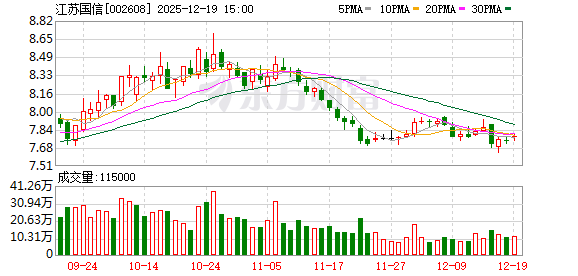
江苏国信:目前马洲电厂刚投产,正在办理相关手续
Zheng Quan Ri Bao· 2025-12-19 15:21
Core Viewpoint - Jiangsu Guoxin has recently stated that its newly commissioned Mazhou Power Plant is in the process of handling relevant procedures and is expected to soon be included in the capacity price compensation scheme [2] Group 1 - The Mazhou Power Plant has just been put into operation and is currently completing necessary formalities [2] - The company’s existing operational units are largely covered by the capacity price policy [2] - Newly commissioned units can typically enjoy the policy benefits within three months after starting operations [2]


中金:中国独立储能建设加速 大型储能行业转向“市场化驱动”
智通财经网· 2025-12-10 01:26
Core Viewpoint - The Chinese large-scale energy storage industry is transitioning from a "policy-driven" model to a "market-driven" model, with commercial models becoming clearer and application scenarios diversifying, entering a new phase of large-scale and high-quality development [1] Group 1: Market Trends - The domestic new energy storage bidding scale reached 205.30 GWh from January to October 2025, a year-on-year increase of 45%, with central and state-owned enterprises' procurement scale increasing by 61% year-on-year, driving sustained high growth in installed capacity [1] - The supply-side leading battery manufacturers are operating at near full capacity, and the supply-demand tightness is expected to continue until the second quarter of 2026 [1] Group 2: Business Model Evolution - Before the "Document 136," the value of strong matching projects was primarily derived from "obtaining new energy road permits," and the value of energy storage was not fully realized. After the "Document 136," independent energy storage can leverage "peak-valley price arbitrage + capacity market + ancillary services" to demonstrate its true value [2] - Economic assessments of independent energy storage in seven provinces indicate that the internal rate of return (IRR) on capital can exceed 10% in regions like Inner Mongolia, Xinjiang, and Hebei, while Shanxi, Shandong, and Gansu can achieve rates above 6.5% [2] Group 3: Demand Forecast - The introduction of capacity pricing policies is expected to create a short-term rush for installations, with independent energy storage likely to experience a surge during the policy window period [3] - The theoretical installation space for independent energy storage supported by reduced electricity costs from the generation side is estimated to be around 158 GW/634 GWh for 2026-2027 [3] - From 2027 onwards, as the electricity market matures and new energy installation scales increase, the demand for new energy storage will shift from passive policy stimulation to endogenous demand, primarily driven by active storage on the generation side and multi-scenario applications on the load side [3] - The total commercial configuration demand for energy storage during the 14th Five-Year Plan period is expected to be between 1.5-1.7 TWh (including pumped storage), with a compound annual growth rate exceeding 20% [3]