数字化消费

Search documents
朝外街道“爱逛码”累计引流增收百万元
Sou Hu Cai Jing· 2025-09-06 21:13
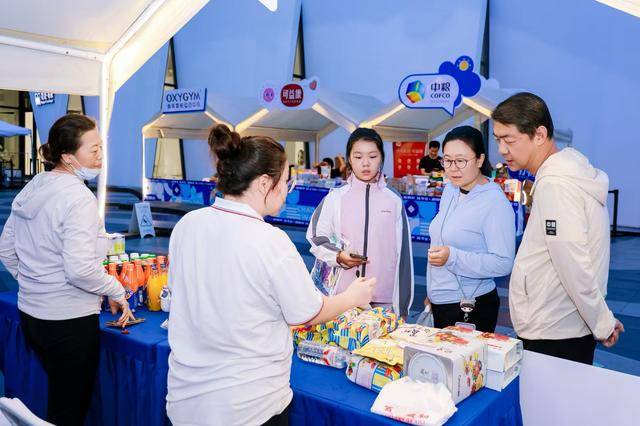
Core Insights - The "Ai Guang Ma" mini-program has attracted over 350 merchants in Chaoyang District within 8 months, generating over 1 million yuan in additional revenue for these merchants [1][5] - The "Chao Chao Wai Ma Shang GO" employee consumption season market opened on September 5 and will last until September 9, featuring various performances and a wide range of participating merchants [3] Group 1 - The "Ai Guang Ma" digital consumption platform was jointly developed by Chaowai Street and Chaoyang Cultural Tourism Group, launching with over 1,000 promotional products [5] - The platform has facilitated over 15,000 offline store consumption orders, saving consumers over 520,000 yuan [5] - The market features over 40 merchants, including well-known brands and a variety of products ranging from food to cultural and creative items [3] Group 2 - The market operates daily from 16:00 to 21:00, showcasing street performances including pop bands and intangible cultural heritage programs [3] - The integration of online and offline shopping experiences allows for a seamless "coupon-placing order-redeeming" process [5] - The event is held at Meike Meijia Square, which is part of a vibrant commercial area that includes several shopping centers and parks [3]

曾刚:化解压力求突破 消费金融再进阶
Jing Ji Guan Cha Bao· 2025-08-07 15:59
Core Viewpoint - The importance of consumer finance is increasingly recognized as a crucial bridge connecting finance and consumption, especially in the context of China's economic transformation and the need to stimulate domestic demand [1][5]. Economic Environment - China's economy is facing challenges such as insufficient domestic demand and weak consumer willingness, with consumer contribution to economic growth at 82.5% in 2024, still below pre-pandemic levels [1][2]. - The leverage ratio of households continues to rise, and income growth is slowing, which constrains consumer spending [1]. Market Dynamics - The consumer finance market has expanded significantly, exceeding 50 trillion yuan, accounting for about 40% of GDP, but growth rates have slowed from around 20% in 2020 to below 10% in 2024 [2]. - The competitive landscape is diversifying, with major players including commercial banks, licensed consumer finance companies, and internet platforms, each targeting different consumer segments [3]. Innovation in Products and Services - Consumer finance products are evolving towards scenario-based, differentiated, and intelligent offerings, covering a wide range of consumption scenarios from durable goods to frequent small purchases [4]. - Digitalization is enhancing the efficiency and reach of consumer finance services, with many institutions adopting online customer acquisition methods and utilizing advanced technologies [4]. Policy Initiatives - The "Notice" issued by the National Financial Supervision Administration outlines measures to support the development of consumer finance, emphasizing the need for diverse financial products and services to meet evolving consumer demands [5][6]. - Specific initiatives include promoting green consumption through low-interest loans for purchasing energy-efficient products and supporting the recovery of the tourism sector with targeted credit [6]. Consumer Protection and Market Regulation - The "Notice" stresses the importance of market transparency and consumer rights protection, requiring financial institutions to clearly disclose loan costs and improve contract clarity [7][8]. - A fair dispute resolution mechanism is highlighted to enhance market credibility and address illegal practices within the industry [8]. Future Outlook - The consumer finance industry is expected to continue evolving by aligning with consumer demand upgrades, accelerating digital transformation, and enhancing risk management practices [9]. - The dual support of digital technology and policy initiatives is anticipated to significantly boost consumer capacity and contribute to sustainable economic growth [9].
掘金泰国-市场洞察与战略机遇报告2025-海域出海研究
Sou Hu Cai Jing· 2025-08-06 17:02
Group 1: Thailand Overview - Thailand is the second largest economy in ASEAN with a GDP of $545 billion in 2023, and a per capita GDP of $7,830, which is above the ASEAN average of $5,210 [7][9] - The country has a population of 67.9 million, with over 90% practicing Buddhism, and Thai is the official language [9][7] - Thailand's total foreign trade reached $585 billion, accounting for 15.2% of ASEAN's total trade, and it attracted $12 billion in foreign direct investment, ranking third in ASEAN [7][9] Group 2: Policy Incentives and Opportunities - The Thai government supports nine key industries, including automotive and electronics, aiming to enhance GDP by at least 1% [23][19] - The EV3.0 and EV3.5 policies target a 30% production rate for electric vehicles by 2030, with Chinese companies holding a 75% market share in Thailand's electric vehicle sector [24][25] - The report highlights the importance of compliance, including ODI registration, trademark protection, and adherence to import regulations [30][19] Group 3: Consumer Insights - The Thai consumer market is shifting towards convenience and digitalization, with over 80% of online consumption occurring on mobile devices [30] - E-commerce is dominated by Shopee with a 49% market share, followed by Lazada at 30%, and TikTok Shop is rapidly growing with a live shopping penetration rate exceeding 40% [30] - The report identifies five trends in luxury consumption, including high-end dining experiences, cultural entertainment privileges, luxury travel, personalized health services, and collectible investments [28][30] Group 4: Chinese Enterprises in Thailand - Chinese companies are performing well in various sectors, including electric vehicles (BYD, Great Wall), home appliances (Haier, Midea), fast fashion (SHEIN, Pop Mart), and cosmetics (ZEESEA,橘朵) [30][19] - The report emphasizes the need for localization strategies and leveraging policy benefits to tap into consumer and industrial opportunities in Thailand [30][19]

释放毕业季消费潜能
Jing Ji Ri Bao· 2025-07-27 22:15
Group 1 - The core viewpoint is that the youth consumption market is shifting towards "new" trends, particularly during the graduation season, with significant increases in sales of digital products and outdoor equipment, reflecting new demands from the youth demographic [1] - The growth in graduation season consumption is driven by multiple factors, including government subsidies for digital products, financial institutions promoting consumption, and a focus on emotional and experiential aspects of purchases [1][2] - The rise of e-commerce, AI personalized recommendations, and AR technologies has expanded the choices available for youth consumers during the graduation season [1] Group 2 - The shift towards "new" consumption patterns can unlock potential for market growth and create new opportunities, emphasizing the need for a sustainable and rational consumption approach among graduates [2] - There is a call to increase quality supply by developing products that resonate emotionally with youth, incorporating elements of traditional culture into modern aesthetics, and offering discounts for graduates at tourist attractions [2] - Innovation in business models is encouraged, with a focus on creating new consumption venues such as themed hotels and creative markets, while enhancing the integration of online and offline experiences for youth [2][3] Group 3 - Improving the consumption environment is essential, which includes establishing a collaborative regulatory mechanism, enhancing consumer rights protection, and ensuring transparency in the consumption process [3] - Strengthening industry self-regulation and platform accountability is necessary to ensure quality and transparency in graduation season consumption [3] - There is a need for increased data security measures to protect against issues like information leakage and algorithmic discrimination, ensuring a safe digital consumption environment for youth [3]
一份消费双倍快乐?海口人这波赢麻了!
Sou Hu Cai Jing· 2025-07-26 13:18
Core Viewpoint - The "Happy Shopping" event in Haikou, featuring the "Snake Battle" H5 online game, aims to stimulate consumption and enhance the tourism experience during the upcoming Hainan International Tourism Island Happy Festival in 2025 [1][4]. Group 1: Event Overview - The "Snake Battle" event connects nine major commercial districts and six consumption scenarios, offering a total of 10 million yuan in prizes and high-end cultural tourism benefits [4][8]. - The event is designed to create a new ecosystem of cultural tourism consumption, promoting "all-domain consumption and nationwide celebration" [4][8]. Group 2: Consumer Engagement - The event utilizes an online H5 interactive platform, combining a check-in game with consumption incentives through a "spend to earn coins" model, allowing participants to earn "Happy Coins" for their purchases [8]. - From now until August 31, consumers can earn one Happy Coin for every 10 yuan spent at designated merchants in the nine commercial districts, which can be redeemed for various gifts and benefits [8]. Group 3: Special Offers and Activities - The event includes high-end cultural tourism services that can be exchanged for Happy Coins, such as night tours of Haikou Bay and yacht sunset experiences, along with tech experiences like drone delivery [8]. - A final competition for Happy Coins will take place on August 31, with a grand prize valued at 30,000 yuan for the champion [8]. Group 4: Promotional Strategies - The Haikou Municipal Bureau of Commerce announced that the nine commercial districts will launch August-exclusive promotions, enhancing consumer experiences with additional Happy Coin benefits [9].

14亿人,为何拉不动内需?
Sou Hu Cai Jing· 2025-07-06 11:56
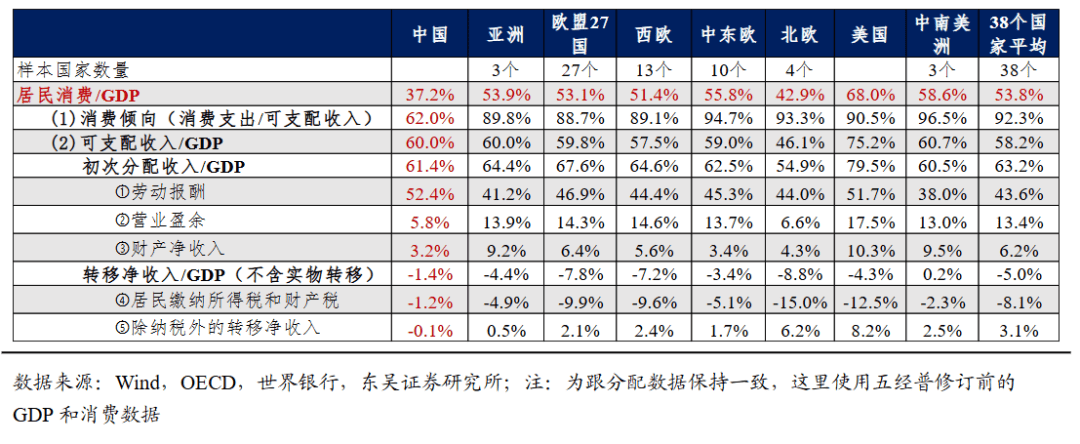
Core Insights - China's consumption growth is significantly lagging behind its large population and economic growth, raising questions about the underlying reasons for this consumption shortfall [1][2][4] Group 1: Current State of Consumption in China - The definition and measurement of consumption shortfall are established, with China's resident consumption rate at 37.2% in 2022, significantly lower than the global average of 53.8% [2][3] - The final consumption rate for China in 2023 is reported at 55.64%, which is still below the approximately 80% seen in developed countries [3] - A notable slowdown in consumption growth is observed, with a projected 3.5% increase in retail sales for 2024, contrasting sharply with historical growth rates that often exceeded 8% [2][4] Group 2: Multi-Dimensional Analysis of Consumption Shortfall - Low consumption propensity is identified as a core issue, with China's consumption propensity at 62% in 2022, compared to an average of 92.3% across 38 countries [6][8] - High housing prices contribute to consumer debt, with urban residents' real estate debt reaching 137.9% of household income, limiting their consumption capacity [9] - Income inequality is highlighted, with the top income group accounting for 46% of total income, leading to lower overall consumption rates [10] - An inadequate social security system is noted as a fundamental cause of low consumption, with high contribution rates and limited coverage increasing financial burdens on households [11] - Traditional consumption culture emphasizes saving over spending, which continues to influence consumer behavior [12] Group 3: Consumption Differences Across Demographics and Regions - Significant consumption behavior differences exist among income groups, with middle-income households contributing nearly 50% of total consumption [13] - Generational differences in consumption attitudes are emerging, particularly among the Z generation, who exhibit distinct purchasing behaviors [17][18] - Regional consumption disparities are noted, with consumption in central regions expanding while eastern and western regions show a trend towards balance [19] Group 4: International Comparisons and Lessons - China's service consumption accounts for approximately 46% of total spending, lower than that of the US (68.5%) and Japan (57.7%), indicating room for structural improvement [20][21] - Successful international experiences in enhancing consumption rates suggest that comprehensive policies are needed to boost service consumption and overall consumer confidence [22] Group 5: Future Consumption Trends - Predictions indicate that by 2030, service consumption levels in China could exceed 20,000 yuan, positioning it as a key growth driver [25][27] - The expansion of the middle-income group, projected to surpass 50% of the population by 2030, is expected to significantly enhance consumption potential [27]
200余场活动带你解锁郑州“醉美”之夜
Sou Hu Cai Jing· 2025-06-29 12:39
Group 1: Event Overview - The sixth "Drunken Beauty Night Zhengzhou" consumption season event was launched on June 27, featuring the theme "Great Discounts in Green City, Beautiful Life" [2] - The event adopts a "1+N" model, incorporating four themed consumption activities: "Shopping Zhengzhou," "Tasting Zhengzhou," "Vibrant Zhengzhou," and "Leisurely Zhengzhou" [2] Group 2: Government Initiatives - The government will issue 20 million yuan in "Drunken Beauty Night Zhengzhou" consumption vouchers, applicable to various sectors including retail, dining, and entertainment [3] - A home improvement subsidy program has been initiated, offering a 15% discount on smart home products, with a maximum reduction of 1,500 yuan per item [3] - Alipay will provide various payment discounts during the event, including "Tap to Save" and "Tap for Free" offers, enhancing consumer engagement [3] Group 3: Digital Solutions - Alipay has fully opened its "Tap to Pay" digital solution to Zhengzhou merchants, enhancing operational efficiency for over 300,000 stores [4] - The platform aims to invest more resources by 2025 to improve user payment experiences and support the construction of Zhengzhou as an international consumption center [4] Group 4: Thematic Activities - "Shopping Zhengzhou" will feature summer shopping events in major commercial complexes and markets, with participation from social media platforms like Douyin and Kuaishou [5][6] - "Tasting Zhengzhou" will highlight local culinary experiences through various themed routes and events, including a night market and food competitions [6][7] - "Vibrant Zhengzhou" will host summer sports events and cultural performances, integrating elements from international festivals [7] - "Leisurely Zhengzhou" will showcase artistic exhibitions and themed markets, contributing to a vibrant night economy [8] Group 5: Duration and Impact - The consumption season will run until August 31, featuring over 200 themed promotional activities, ensuring continuous engagement and excitement throughout the summer [8]

从“云购物”到“趣体验”:黑龙江618电商节解锁消费新玩法
Zhong Guo Xin Wen Wang· 2025-06-10 15:42
Group 1 - The "618 Longjiang E-commerce Festival" will take place from June 11 to June 25, organized by the commerce departments of 13 cities in Heilongjiang Province, focusing on promoting consumer spending with the theme "Carnival 618, Shopping Non-stop" [1][2] - Heilongjiang Province has conducted a series of e-commerce promotional activities since the beginning of the year, including the "2025 Heilongjiang Online New Year Goods Festival" and "Heilongjiang E-commerce Marketing Season," resulting in 6,869 live-streaming sessions and total online and offline sales reaching 3.16 billion yuan [1] - The province's online retail sales increased by 11.9% year-on-year in the first quarter, indicating effective release of online consumption potential [1] Group 2 - The launch ceremony of the "618 Longjiang E-commerce Festival" in Qiqihar City will feature unique exhibition booths from 13 cities, showcasing local specialty products and providing immersive shopping experiences [2] - The event will utilize the "Longjiang Good Products Mini Program" and "Longjiang Cloud Exhibition Platform" to create an online section that aggregates over a thousand quality products, enhancing digital shopping experiences for consumers [2] - During the festival, consumers in Heilongjiang can purchase electronics and home appliances through e-commerce platforms while enjoying multiple subsidies, including state and platform subsidies, as well as trade-in discounts [2]
200场大促燃动“双节”
Su Zhou Ri Bao· 2025-06-03 00:21
Group 1 - The Suzhou consumer market experienced a surge in activity during the Dragon Boat Festival coinciding with Children's Day, with over 200 promotional events launched by major commercial enterprises [1] - Key commercial enterprises in Suzhou achieved sales of 770 million yuan during the holiday, marking a year-on-year increase of 9.2%, driven by family-oriented activities and diverse consumption experiences [1] - Major shopping districts focused on "parent-child" themes, creating immersive shopping experiences, with one mall reporting over 20,000 visitors on June 1 and overall foot traffic increasing by 8% during the holiday [1] Group 2 - The "Su Products and Goods" selection store opened at the Humble Administrator's Garden, attracting over 400 visitors and generating 157 transactions within three hours, indicating strong consumer interest in high-quality local and foreign goods [2] - The overall foot traffic at Times Square during the holiday reached approximately 96,700, reflecting a year-on-year increase of 3%, with total sales amounting to 6.18 million yuan, up 4% from the previous year [2] - Regular weekend and holiday performances will be held at the Yuanrong Times Square Waterfront Music Festival until the end of October, enhancing the evening consumer atmosphere [2]
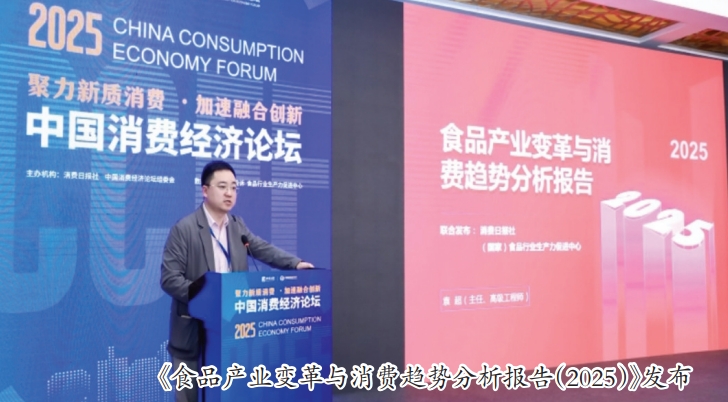
《食品产业变革与消费趋势分析报告(2025)》发布
Xiao Fei Ri Bao Wang· 2025-04-15 03:27
Core Insights - The 2025 China Consumer Economy Forum highlighted six major consumption trends and five future directions in the food industry, emphasizing the importance of pre-prepared meals and cell-cultured meat in driving industry transformation [1][4]. Industry Overview - The food industry is a crucial pillar of the national economy, with 430,000 large-scale food processing enterprises and a total output value exceeding 9 trillion yuan in 2024, maintaining a stable single-digit growth rate despite a slowdown compared to the end of the 13th Five-Year Plan [4]. - The deep processing ratio in the food industry has increased to 42% by the end of 2023, with emerging categories like functional foods and pet foods growing faster than traditional grain and staple products [4]. - The regional landscape is evolving, with traditional grain-producing provinces seeing a decline in market share, while regions like Chengdu and Liuzhou are experiencing rapid growth due to the development of specialty food ingredients [4]. Technological Innovation - Significant advancements in food processing technologies, such as synthetic biology and cell-cultured meat, are leading to lower production costs and increased industrialization [5]. - The integration of industrial and digital applications is enhancing food safety and consumer confidence through technologies like blockchain [5]. Consumer Trends - There is a shift towards precise nutrition and health demands, with consumers increasingly focusing on food functionality and health benefits [6]. - Convenience needs are driving a "fragmented dining revolution," with pre-prepared foods catering to the time-saving requirements of younger consumers and restaurants [6]. - Emotional value is becoming a new currency in consumer spending, with brands leveraging local cultural narratives to enhance product appeal [7]. - Sustainable consumption practices are gaining traction, with companies adopting green manufacturing and supply chain practices to reduce carbon footprints [7]. - Digitalization is reshaping the entire consumer journey, utilizing technologies like VR to enhance the shopping experience and standardizing culinary skills through smart devices [8]. Future Directions - The food industry is expected to evolve towards industrialized precise nutrition, a revolution in protein sources, a collaborative cooking era, a closed-loop carbon consumption model, and a service-oriented food approach [9]. - The cost of functional products is anticipated to decrease, leading to greater industrialization and a shift from mass production to personalized nutrition [9]. - The acceptance of cell-cultured meat is expected to rise, marking a significant transformation in protein sourcing and enhancing food security [9]. - The concept of "food as a service" is projected to redefine product value, focusing on consumer experience and emotional engagement [9].