新门罗主义

Search documents
美国“门罗主义”如何影响大宗商品定价?
Hua Er Jie Jian Wen· 2026-01-29 07:09
Core Viewpoint - The article discusses the transformation of the commodity market driven by a new Monroe Doctrine centered around the "Trump Doctrine," which emphasizes the U.S. prioritizing the Western Hemisphere for geopolitical and resource security [1][4]. Group 1: Geopolitical Strategy - The U.S. is expected to shift its foreign and security policy direction by early 2026, formally incorporating the "Trump Doctrine" into its National Security Strategy [1]. - This new approach aims to establish a controllable pricing base for resources, shipping routes, and supply chains, integrating them into national security and military deterrence frameworks [1][4]. - The U.S. is likely to adopt a more aggressive stance in securing resources, as evidenced by recent actions regarding Venezuela's oil assets and Greenland's mineral rights [4]. Group 2: Commodity Pricing Changes - Commodity pricing, particularly for copper, lithium, rare earths, energy, and precious metals, is undergoing a fundamental shift, now reflecting "availability, controllability, and political reliability" rather than just marginal supply and demand [2]. - A new commodity cycle characterized by a "security premium" is emerging, indicating that resources are increasingly viewed as geopolitical assets rather than mere commodities [3][25]. Group 3: Regional Political Dynamics - The U.S. strategic focus on the Western Hemisphere coincides with a significant political shift in Latin America, where there is a noticeable rightward movement in the political spectrum [5]. - The political transitions in countries like Argentina and Chile are expected to reduce resistance to U.S. initiatives aimed at enhancing security, trade, and supply chain cooperation [5][6]. Group 4: Resource and Economic Dimensions - The U.S. is highly dependent on imports for critical minerals, with over half of its consumption of 46 minerals reliant on foreign sources, including complete dependence on imports for 15 of them [10]. - The U.S. is attempting to reverse the structural changes in trade and investment in Latin America, where China has become a dominant trade partner in key sectors [6][9]. Group 5: Strategic Resource Management - The U.S. is reclassifying key minerals and energy assets as strategic facilities, integrating them into national security considerations [7]. - Recent trade agreements with countries like Argentina and Ecuador reflect a shift towards a political and security-driven market allocation of Latin American resources [8][9]. Group 6: Pricing Logic and Market Dynamics - The pricing logic for strategic resources is expected to undergo structural changes as they are formally integrated into national security frameworks [16]. - Key minerals are entering a phase dominated by "geopolitical pricing," characterized by heightened sensitivity to geopolitical news and limited price correction space [17][21]. - Precious metals are becoming not only safe-haven assets but also tools for pricing policy uncertainty, with expectations of a bullish trend in the first half of 2026 [18][25].

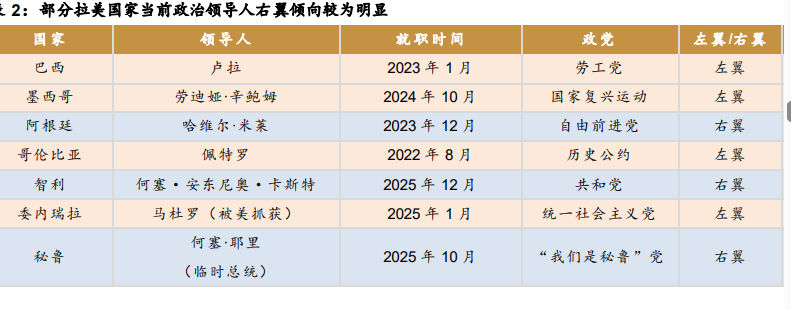
环球圆桌对话:“新门罗主义”是美国霸权的进一步帝国主义化
Xin Lang Cai Jing· 2026-01-26 23:12
Core Viewpoint - The discussion highlights the evolution of "Monroe Doctrine" into a tool for U.S. hegemony, emphasizing its aggressive nature and the implications for international relations, particularly in Latin America [1][2][4]. Group 1: Historical Context and Evolution - The "Monroe Doctrine" was initially a defensive principle aimed at protecting newly independent Latin American countries from European colonial ambitions, but it transformed into a justification for U.S. unilateral intervention [5][6]. - The doctrine's ambiguity allowed for various interpretations, leading to its use as a pretext for U.S. expansionism and intervention in Latin America, particularly during the imperialist phase under Presidents McKinley and Roosevelt [6][7]. - The shift from a defensive to an offensive stance is marked by the "Roosevelt Corollary," which justified U.S. intervention in Latin American affairs under the guise of maintaining order [6][7]. Group 2: Current Implications of "New Monroe Doctrine" - The "New Monroe Doctrine" is characterized by a more aggressive approach, prioritizing U.S. interests and security over those of Latin American countries, leading to widespread concern and opposition in the region [10][11]. - The doctrine's aggressive nature includes the assertion that the U.S. has the right to intervene militarily in Latin America to prevent the emergence of competitors or adversaries [10][11]. - The U.S. has been accused of undermining Latin American autonomy and fostering division among countries in the region, which threatens regional cooperation and unity [11][12]. Group 3: Global Impact and Response - The "New Monroe Doctrine" poses risks not only to Latin America but also to global south countries, as it undermines international order and disregards international law [12]. - There is a call for global south countries to unite against U.S. hegemony, promoting anti-imperialist coalitions and enhancing regional cooperation to counteract the threats posed by the "New Monroe Doctrine" [12].
原油周报:地缘溢价仍未消退,基本面尚待回归
Xin Lang Cai Jing· 2026-01-25 23:27
Market Overview - Recent crude oil prices have shown a strong fluctuation, with Brent crude futures settling at $65.88 per barrel, up $1.75 (+2.73%) from the previous week, while WTI crude futures rose to $61.07 per barrel, an increase of $1.63 (+2.74%) [6][49][53] - The market remains tense due to geopolitical factors, including potential changes in Iran and ongoing conflicts in Ukraine, alongside the U.S. military presence in the Middle East [5][48][55] Supply and Demand Dynamics - The latest EIA data indicates a weekly crude oil inventory increase of 3.602 million barrels, with gasoline inventories rising by 5.977 million barrels, both exceeding expectations [6][49][73] - Despite a slight reduction in production, overall demand appears weak, suggesting a continued trend of inventory accumulation [6][49][73] Geopolitical Influences - The U.S. has increased military presence in the Middle East, raising concerns about potential military actions against Iran, which could impact oil prices significantly [5][55] - The upcoming "U.S.-Ukraine" trilateral talks are expected to influence geopolitical tensions and, consequently, crude oil prices in the near future [5][48] Market Sentiment - The recent Davos Forum highlighted significant geopolitical narratives, with discussions around U.S. inflation, energy policies, and international relations affecting market perceptions [9][52] - The divergence in market sentiment regarding U.S. actions towards Iran reflects uncertainty, with mixed signals from U.S. officials regarding military engagement [5][55] Refinery Operations - U.S. refinery utilization has decreased by 2.0% to 93.30%, remaining above historical averages, indicating stable operational conditions despite minor fluctuations [76] - The overall demand for refined products has shown mixed trends, with gasoline demand slightly declining due to seasonal adjustments and extreme weather conditions [76][78]

美国要买下格陵兰?川普关税反击欧洲,真正目标其实不在北极
Sou Hu Cai Jing· 2026-01-24 09:56
五、为什么美国死盯着格陵兰? 理由只有一个词:国家安全。 1. **北极是战略预警核心** 格陵兰位于 高纬度地区,得天独厚的地理优势让这里的导弹预警雷达探测范围更广,能够更早地发现洲际弹道导弹 和高超音速武器。在冷战时期,美国就在这里建立了著名的图勒空军基地,现如今已更名为皮图菲克太 空基地,依然是美国全球预警体系的关键节点。从俄罗斯方向飞来的战略导弹,理论上必须先经过格陵 兰上空。 2. **控制俄潜艇的北大西洋咽喉** 如果俄罗斯的核潜艇想要进入大西洋,它必须通过格陵兰 —冰岛—英国(GIUK)通道。这是北约监听、围堵俄潜艇的关键水域。 四、美国真的会武力拿下格陵兰吗? 答案是:几乎不可能。无论从法律、政治还是军事层面来看,美 国都不可能对一个北约盟友直接动武。但这并不意味着美国会放弃格陵兰。在1月14日,美国副总统迈 克·彭斯和国务卿马尔科·卢比奥在白宫会见了丹麦外长拉尔斯·洛克·拉斯穆森及格陵兰外长莫茨·菲尔 德。会后,丹麦方面的表态大概可以用一句话概括:美国的立场没有变化,分歧依然很大。双方同意成 立一个高阶工作小组,继续探讨如何加强北约在格陵兰的存在。 二、人数不多,但政治信号极重 严格来说,这 ...

招银国际每日投资策略-20260123
Zhao Yin Guo Ji· 2026-01-23 04:51
Group 1: Market Overview - Global stock markets showed mixed performance, with the Hang Seng Index closing at 26,630, up 0.17% for the day and 3.90% year-to-date [1] - The Shanghai Composite Index rose by 0.14% to 4,123, while the Shenzhen Composite Index increased by 0.69% to 2,714, reflecting a positive trend in the Chinese market [1] - The US markets also experienced gains, with the Dow Jones up 0.63% and the S&P 500 up 0.55%, indicating a favorable environment for equities [1] Group 2: Sector Performance - In the Hong Kong market, the real estate sector led gains with a 1.62% increase, while the financial sector saw a decline of 0.37% [2] - The energy, real estate, and public utilities sectors in Hong Kong outperformed, while materials, healthcare, and information technology sectors lagged [3] - The A-share market saw significant gains in construction materials, defense, and oil & petrochemicals, while beauty care, banking, and pharmaceuticals underperformed [3] Group 3: Company Analysis - 康龙化成 (300759 CH) - 康龙化成 is recognized as a leading integrated CXO service provider in China, offering comprehensive drug development services [4] - The company is expected to benefit from the growing global demand for pharmaceutical R&D outsourcing, with a target price set at 38.08 RMB and a "buy" rating [4][8] - The company has established a one-stop CXO service platform, significantly reducing operational risks and costs for clients, which is crucial in the current biopharmaceutical landscape [4] Group 4: Business Growth and Projections - 康龙化成's laboratory services are projected to see over 15% growth in new orders in 2024, providing a solid foundation for revenue [5] - The small molecule CDMO segment is expected to grow over 35% in new orders in 2024, driven by commercialized projects [5] - The company anticipates revenue growth of 14.2% in 2025, with non-IFRS net profit expected to increase by 12.3% [8]

一个加剧分裂的北约:格陵兰“夺岛风波”如何激化美欧博弈
Nan Fang Du Shi Bao· 2026-01-19 11:33
Core Viewpoint - The article discusses the escalating tensions between the United States and European countries regarding President Trump's intention to acquire Greenland, highlighting the use of tariffs as a coercive measure and the potential military implications of this geopolitical maneuvering [1][2][8]. Group 1: Tariff Measures - On January 17, Trump announced a 10% tariff on goods from Denmark, Norway, Sweden, France, Germany, the UK, the Netherlands, and Finland, effective February 1, increasing to 25% by June 1 unless an agreement on the purchase of Greenland is reached [2]. - European leaders, including Italy's Prime Minister and Germany's Vice Chancellor, criticized the tariff measures as erroneous and not intimidating [2][5]. - The tariffs are seen as a significant threat to transatlantic relations, potentially leading to a "dangerous vicious cycle" [1][8]. Group 2: Military Implications - The U.S. has military interests in Greenland, with the Pituffik Space Base housing hundreds of military personnel, which could support any military actions [3]. - Denmark has confirmed troop deployments to Greenland for military exercises, indicating a response to U.S. threats [2]. - Analysts suggest that while military action is a possibility, it poses significant risks to NATO's stability and could lead to a breakdown in alliances [8][9]. Group 3: Historical Context and Legal Challenges - The U.S. has previously attempted to purchase Greenland, with historical offers made in the 19th and 20th centuries, all of which were rejected by Denmark [6]. - Current proposals include offering Greenland residents one-time payments to encourage independence from Denmark, but legal and political hurdles make this unlikely [6][7]. - The notion of purchasing territory is viewed as absurd by many, and international law prohibits the acquisition of territory by force [6]. Group 4: Impact on Alliances - The U.S. approach is seen as a challenge to the existing international political and economic order, straining relationships with European allies [9][10]. - Analysts argue that Trump's strategy reflects a desire to reshape global alliances and assert U.S. dominance, potentially at the expense of traditional partnerships [10]. - The situation places Europe in a difficult position, needing to negotiate with the U.S. while facing economic pressures and security dependencies [9][10].
特朗普紧急发文,直言美国可能会完蛋,中国已是他的最大救星
Sou Hu Cai Jing· 2026-01-16 10:41
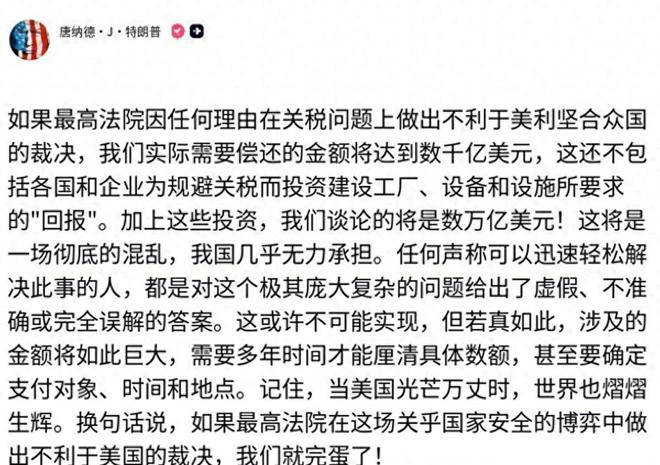
白宫陷入震荡!2025年1月12日,特朗普在个人社交平台上发出一条惊心动魄的消息:美国恐怕要撑不 住了,这一言论瞬间引爆全球舆论的浪潮。此言一出,媒体如潮水般涌向这一事件,纷纷报道这一惊人 声明。而这一表态背后,究竟隐藏着怎样的危机?为何国际社会普遍认为,在此时此刻,只有中国能够 成为特朗普逆转局势的关键支点? 关税和债务的重压,司法判决如悬刀高悬 特朗普的失态并非源自中东日益紧张的局势,而是来自于最高法院即将对其关税政策作出的违宪裁决。 这一判决意味着,美国政府必须退还数十亿美元被视为非法征收的关税,同时,还要赔偿企业为了规避 高额关税而迁移生产线所产生的巨额费用,而这笔钱,已经超出了联邦财政的承受能力。如今,特朗普 最为焦虑的,正是这把即将落下的司法利剑。 过去几年,特朗普利用《1962年贸易扩展法》第232条款,以国家安全为由推行高额进口税,从日本、 韩国到欧盟,几乎每个国家都成了他加征关税的目标。他将加征关税当作变相的保护费,通过这一手段 为财政收入添砖加瓦。然而,这一行为的法律依据却异常薄弱,突破了行政权限,侵蚀了国会专属的立 法权。随着时间的推移,这一政策遭遇了越来越多的诉讼和挑战,而上诉法院已经 ...
《有色》日报-20260116
Guang Fa Qi Huo· 2026-01-16 01:49
1. Report Industry Investment Rating There is no information about the industry investment rating in the provided reports. 2. Core Views of the Reports Tin - Short - term prices fluctuate greatly due to market sentiment, and cautious participation is recommended. Supply: Myanmar's tin ore imports increased significantly in November, and Indonesia's approved export quota for 2026 is about 60,000 tons. Demand: Tin solder enterprises in South China show certain resilience, while those in East China are more restricted [1]. Industrial Silicon - The industry is expected to continue the pattern of weak supply and demand. The decline in production is gradually being implemented. Pay attention to the change in polysilicon production and the lower support. The price is expected to fluctuate at a low level, with the main price range likely to be between 8,000 - 9,000 yuan/ton [3]. Polysilicon - The spot price is stable, and the futures are weakly volatile. There is support at the 48,000 yuan/ton level. The market has a certain bottom - support as silicon wafer and polysilicon supply and demand are basically matched. It is recommended to wait and see and pay attention to production cuts and downstream demand recovery [4]. Copper - The medium - and long - term fundamentals are good, and the bottom center is gradually rising. In the short term, the price remains high due to the global inventory imbalance and supply concerns. Pay attention to the change in CL premium, LME inventory, and the 99,000 - 100,000 support [7]. Zinc - The LME's suspension of zinc ingot delivery from Korea Zinc led to a supply - tightening expectation. The price is supported by the tight ore supply, but there is also pressure from imported ore supply and weak demand. Pay attention to zinc ore TC and refined zinc inventory changes, and the 24,000 support [9]. Aluminum Alloy - The market showed a high - level correction. The cost is the main driving factor, but the fundamentals are in a weak supply - demand pattern. It is expected to fluctuate in a high - level range, with the reference range of 22,000 - 24,000 yuan/ton [11]. Aluminum - The price is driven by macro and policy expectations, but the fundamentals are under pressure. It is expected to maintain a high - level wide - range shock, with the reference range of 23,000 - 25,000 yuan/ton. Pay attention to inventory accumulation, downstream consumption, and overseas events [12]. Nickel - The market is affected by Indonesia's nickel ore policy adjustment and geopolitical factors. The short - term is expected to be strongly volatile, with the main center reference range of 140,000 - 152,000 yuan [13]. Stainless Steel - The market is driven by raw material nickel. The supply pressure eases slightly, and the cost support is strengthened, but the demand is weak. It is expected to be strongly volatile, with the reference range of 13,800 - 14,500 yuan [15][16]. Lithium Carbonate - The futures are in shock adjustment. The production is slightly increasing, and the demand has certain resilience. The short - term is expected to be in a wide - range shock, with the reference range of 155,000 - 165,000 yuan. It is recommended to wait and see for unilateral trading and pay attention to positive spread opportunities [17]. 3. Summaries According to Relevant Catalogs Spot Price and Basis - **Tin**: SMM 1 tin rose 5.06% to 426,000 yuan/ton, and SMM 1 tin premium decreased 12.50% to 700 yuan/ton [1]. - **Industrial Silicon**: The prices of various grades of industrial silicon remained stable, and the basis of some varieties changed [3]. - **Polysilicon**: The average price of N - type materials was stable, and the basis of N - type materials increased 4.74% [4]. - **Copper**: SMM 1 electrolytic copper decreased 1.29% to 102,575 yuan/ton, and the premium increased [7]. - **Zinc**: SMM 0 zinc ingot rose 3.42% to 25,410 yuan/ton, and the premium decreased [9]. - **Aluminum Alloy**: SMM ADC12 decreased 0.83% to 24,000 yuan/ton, and the scrap - to - refined spread of some varieties changed [11]. - **Aluminum**: SMM A00 aluminum decreased 1.95% to 24,190 yuan/ton, and the premium decreased [12]. - **Nickel**: SMM 1 electrolytic nickel rose 2.46% to 150,050 yuan/ton, and the premium of 1 Jinchuan nickel decreased [13]. - **Stainless Steel**: The prices of 304/2B coils in Wuxi and Foshan rose, and the basis increased [15]. - **Lithium Carbonate**: SMM battery - grade lithium carbonate decreased 2.45% to 159,000 yuan/ton, and the basis changed [17]. Inter - month Spread - **Tin**: The spreads of 2602 - 2603, 2603 - 2604, etc. changed, with some spreads decreasing and some increasing [1]. - **Industrial Silicon**: The spreads of the main contract and other contracts changed, with some spreads increasing and some decreasing [3]. - **Polysilicon**: The spreads of contracts such as the main contract, near - month - to - first - continuous, etc. changed significantly [4]. - **Copper**: The spreads of 2602 - 2603, 2603 - 2604, etc. changed [7]. - **Zinc**: The spreads of 2602 - 2603, 2603 - 2604, etc. changed [9]. - **Aluminum Alloy**: The spreads of 2602 - 2603, 2603 - 2604, etc. changed [11]. - **Aluminum**: The spreads of AL 2602 - 2603, AL 2603 - 2604, etc. changed [12]. - **Nickel**: The spreads of 2602 - 2603, 2603 - 2604, etc. changed [13]. - **Stainless Steel**: The spreads of 2602 - 2603, 2603 - 2604, etc. changed [15]. - **Lithium Carbonate**: The spreads of 2602 - 2603, 2603 - 2604, etc. changed [17]. Fundamental Data - **Tin**: In November, tin ore imports increased 29.81%, and in December, SMM refined tin production decreased 0.06%. The开工率 of some sectors changed [1]. - **Industrial Silicon**: In December, the national industrial silicon production decreased 1.15%, and the开工 rates of different regions changed. The production of related downstream products and export volume also changed [3]. - **Polysilicon**: The weekly and monthly production, import, and export volumes of polysilicon and silicon wafers changed, and the inventory also changed [4]. - **Copper**: In December, electrolytic copper production increased 6.80%, and in November, the import volume decreased 3.90%. The开工 rate of copper rod production and inventory changed [7]. - **Zinc**: In December, refined zinc production decreased 7.24%, and in November, the import volume decreased 3.22%. The开工 rates of related sectors and inventory changed [9]. - **Aluminum Alloy**: In December, the production of regenerated and primary aluminum alloy ingots changed, and the开工 rates of different - sized enterprises and inventory changed [11]. - **Aluminum**: In December, the production of alumina and electrolytic aluminum increased, and the import and export volumes of electrolytic aluminum changed. The开工 rates of related sectors and inventory changed [12]. - **Nickel**: In December, China's refined nickel production decreased 9.38%, and the import volume increased 30.08%. The inventory changed [13]. - **Stainless Steel**: In December, the production of 300 - series stainless steel in China and Indonesia changed, and the import, export, and inventory changed [15]. - **Lithium Carbonate**: In December, the production and demand of lithium carbonate changed, and the import, export, and inventory changed [17]. Inventory Change - **Tin**: SHEF inventory decreased 12.61%, social inventory decreased 12.23%, and SHEF warehouse receipts increased 34.04% [1]. - **Industrial Silicon**: Social inventory increased 0.54%, and warehouse receipt inventory was basically stable [3]. - **Polysilicon**: Polysilicon inventory increased 6.29%, and silicon wafer inventory decreased 5.53% [4]. - **Copper**: Domestic social inventory increased 17.20%, and SHFE inventory increased 24.22% [7]. - **Zinc**: China's zinc ingot seven - region social inventory decreased 0.08%, and LME inventory was basically stable [9]. - **Aluminum Alloy**: The weekly social inventory of regenerated aluminum alloy decreased 1.41%, and the daily inventory of some regions changed [11]. - **Aluminum**: China's electrolytic aluminum social inventory increased, and LME inventory decreased 0.41% [12]. - **Nickel**: SHFE inventory increased 2.43%, social inventory increased 3.61%, and LME inventory increased 0.22% [13]. - **Stainless Steel**: The 300 - series social inventory in Wuxi and Foshan decreased 1.47%, and SHFE warehouse receipts decreased 0.89% [15]. - **Lithium Carbonate**: The total inventory of lithium carbonate decreased 12.23%, and the upstream and downstream inventories changed [17].
广发早知道:汇总版-20260115
Guang Fa Qi Huo· 2026-01-15 01:16
Report Industry Investment Rating No relevant content provided. Core Viewpoints of the Report - The report provides a comprehensive analysis of various futures products, including financial derivatives, precious metals, shipping, non - ferrous metals, ferrous metals, agricultural products, and energy chemicals. It assesses the market conditions, supply - demand relationships, and price trends of each product, and offers corresponding investment strategies and advice [1][2][3]. Summary by Directory Daily Selections - **Tin**: Market sentiment is strong, and tin prices have reached a record high. Supply may increase as Myanmar's tin mine复产 progresses, while demand shows regional differences. Short - term price fluctuations are large, and options are recommended for trading [2][31][35]. - **LLDPE**: Upstream prices have risen, and hedging transactions are booming. Supply is expected to increase, demand is in a seasonal off - peak, and some long positions are recommended to be closed [3]. - **Coking Coal**: Coal trading in Shanxi has improved, and Mongolian coal prices follow futures. Supply is increasing slightly, demand for restocking is warming up, and it is recommended to go long on dips and consider arbitrage strategies [3][59]. - **Pigs**: Driven by capital sentiment, the futures price has strengthened in the short term. Spot prices are oscillating, supply in January is expected to be abundant, and it is recommended to go short after stabilization [4][74]. Financial Derivatives Stock Index Futures - **Market Conditions**: A - shares were volatile at a high level. The TMT sector was hot, while the large - finance sector declined. The four major stock index futures contracts showed different trends, and the basis of some contracts changed [5][6]. - **News**: The margin ratio for margin trading has been adjusted, and overseas, the US is considering responses to the Iranian situation. A - share trading volume continued to increase, and the central bank conducted reverse repurchase operations [6][7]. - **Operation Suggestions**: A - shares may have limited downward space after a pull - back. It is recommended to control portfolio risks, avoid heavy - position chasing, and allocate IH appropriately. Use bull spreads for small - and medium - cap indexes [7]. Treasury Bond Futures - **Market Performance**: Most treasury bond futures closed higher. The yield of some bonds decreased [8]. - **Funding Situation**: The central bank conducted reverse repurchase operations, and the net investment was 2122 billion yuan. The funding situation was tight, but the central bank's long - term investment may stabilize short - term fluctuations [8]. - **Operation Suggestions**: The bond market is in a short - term oscillating situation. It is recommended to continue to wait and see on a single - side strategy and tend to steepen the curve on a curve strategy [10]. Precious Metals - **Market Review**: US economic data showed consumption and inflation resilience. The Fed's Beige Book indicated economic improvement, and the dollar index was stable. Precious metals generally rose, with gold and silver reaching new highs [11][13]. - **Outlook**: The US economy and employment are weak. Geopolitical risks drive capital to allocate precious metals. Gold is expected to maintain a strong - oscillating trend, and it is recommended to hold long positions above the 20 - day moving average. Silver is expected to have a higher price center, and platinum and palladium are expected to rise in the medium - to - long term [13][14]. Shipping (Container Shipping Index - European Line) - **Index Performance**: The SCFIS European line index and some shipping rates increased, while the SCFI composite index decreased slightly [15]. - **Fundamentals**: Global container capacity increased, and demand in the eurozone and the US showed different trends [15]. - **Logic and Suggestions**: The futures price oscillated upwards, but the spot price is in a downward cycle. It is expected to oscillate in the short term [15]. Non - Ferrous Metals - **Copper**: Copper prices are at a high level, and inventories are accumulating. Supply and demand are affected by factors such as US inflation data and the situation in Venezuela. The medium - to - long - term fundamentals are good, and it is recommended to hold long positions lightly and cautiously [16][19]. - **Alumina**: The spot price is loose, and the futures price oscillates widely. The core contradiction is between policy expectations and a weak fundamental situation. It is recommended to wait and see in the short term and go short on rallies in the medium term [20][22]. - **Aluminum**: The price is strong, driven by macro and policy expectations. However, the fundamental situation is under pressure, with increasing supply and weakening demand. It is recommended not to chase the price and consider long positions after a pull - back [23][25]. - **Zinc**: The price center has shifted upwards, and the spot premium has decreased. Supply is affected by mine shortages and smelter production cuts, and demand is suppressed by high prices. It is recommended to go long on dips in the long term and hold cross - market reverse arbitrage positions [28][31]. - **Tin**: The price has reached a record high. Supply may increase, and demand shows regional differences. It is recommended to wait and see [31][35]. - **Nickel**: The price oscillates at a high level. Supply is expected to decrease slightly, and demand varies in different sectors. The market is affected by Indonesian policies and geopolitical factors. It is recommended to have a bullish view [35][38]. - **Stainless Steel**: The price oscillates strongly, driven by raw material costs. Supply pressure eases slightly, and demand is weak in the off - season. It is recommended to expect a strong - oscillating trend [39][41]. - **Lithium Carbonate**: The price oscillates widely. Supply is expected to increase slightly, and demand has some resilience. Social inventory is accumulating. It is recommended to wait and see [43][45]. - **Polysilicon**: The futures price oscillates, with support at 48,000 yuan/ton. Supply is high, and demand is weak. It is recommended to wait and see [46][48]. - **Industrial Silicon**: The futures price oscillates strongly. Supply and demand are both weak, and it is expected to oscillate at a low level. It is recommended to pay attention to production cut implementation [48][50]. Ferrous Metals - **Steel**: Inventory has entered the seasonal accumulation phase, and steel prices oscillate. Spot prices are stable to weak, costs are rising, and production is increasing. It is expected to oscillate in January [50][52]. - **Iron Ore**: Supply is facing the off - season, and port inventories are accumulating. The futures price oscillates at a high level. Supply is expected to decrease, and demand has some support. It is recommended to trade within a range [53][54]. - **Coking Coal**: The price oscillates. Supply is increasing slightly, demand for restocking is warming up, and it is recommended to go long on dips and consider arbitrage strategies [55][59]. - **Coke**: The price oscillates. After the fourth price cut, the market is stable. Supply and demand are improving, and it is recommended to go long on dips and consider arbitrage strategies [60][64]. - **Silicon Iron**: The price oscillates. Supply is at a low level, and demand has some support from steelmaking and non - steel sectors. It is recommended to go long on dips [65][66]. - **Manganese Silicon**: The price oscillates. Supply is at a neutral - to - low level, and demand has support from steelmaking. Manganese ore prices are strong. It is recommended to go long on dips [67][70]. Agricultural Products - **Meal**: The auction premium is limited, and soybean meal oscillates. The US soybean supply and demand situation affects the market, and domestic supply is abundant. It is expected to oscillate in the short term [71][73]. - **Pigs**: Driven by capital sentiment, the futures price has strengthened in the short term. Spot prices are oscillating, supply in January is expected to be abundant, and it is recommended to go short after stabilization [74][75]. - **Corn**: The supply is tight, and the price oscillates at a high level. Northeast China has a strong reluctance to sell, and downstream demand for restocking exists. Policy auctions are ongoing. It is recommended to pay attention to farmers' selling attitudes and policy implementation [76][78]. - **Sugar**: The international raw sugar price oscillates weakly, and the domestic sugar price is expected to oscillate at a low level. Brazilian and Indian production situations affect the market, and domestic sales are affected by the Spring Festival [79][80]. - **Cotton**: The US cotton price oscillates at a low level, and the domestic cotton price stops falling and stabilizes. The US cotton supply and demand situation and domestic inventory and sales affect the market [81][83]. - **Eggs**: Egg prices are stable to rising, and the market digestion speed is acceptable. Supply is in an oversupply situation, and demand is supported by the Spring Festival. It is expected to oscillate at a low level [84][85]. - **Oils and Fats**: The prices of various oils and fats oscillate. Palm oil is affected by inventory pressure, soybean oil is affected by the US - Iran relationship and supply, and rapeseed oil is affected by multiple factors. It is recommended to pay attention to price trends [86][88]. - **Jujubes**: The futures price rebounds, but the supply - demand situation is still oversupplied. It is recommended to short on rallies and test the support at 9000 yuan/ton [89][90]. - **Apples**: The futures price is strong, driven by market sentiment. Short - term factors support the price, but long - term consumption may be affected. It is recommended to use long positions with put - option protection [91]. Energy Chemicals - **PX**: The price rebound is under pressure. Supply is at a high level, and demand is weak. It is expected to oscillate at a high level in the short term and have limited downward space in the medium term [92][93]. - **PTA**: The price rebound is under pressure. Supply is at a high level, and demand is weak. It is expected to oscillate in the short term and have a low - long strategy in the medium term [94]. - **Short - Fiber**: The supply - demand situation is weak. It is expected to follow raw materials and oscillate. It is recommended to do the same as PTA on a single - side strategy and shrink the processing fee on a high level [95]. - **Bottle Chips**: Supply and demand are both decreasing in January. It is expected to follow the cost side. It is recommended to do the same as PTA on a single - side strategy and expect the processing fee to oscillate within a certain range [96][97]. - **Ethylene Glycol**: The price is under pressure. Supply is high, and demand is weak. It is recommended to pay attention to the pressure at 4000 yuan for EG2605, do reverse arbitrage for EG5 - 9, and sell out - of - the - money call options [98]. - **Pure Benzene**: The price is under pressure due to high inventory. Demand has improved slightly. It is recommended to wait and see for BZ2603 and shrink the EB - BZ spread [99]. - **Styrene**: The price is short - term strong but has limited upward space. Supply is tight in the short term, but there is an inventory accumulation expectation during the Spring Festival. It is recommended to look for short - selling opportunities for EB03 and shrink the processing fee [100][101]. - **LLDPE**: Upstream prices have risen, and hedging transactions are booming. Supply is expected to increase, demand is in a seasonal off - peak, and some long positions are recommended to be closed [3][102][103]. - **PP**: The price is strong due to increased maintenance. Supply and demand are both weak, and inventory pressure has eased. It is recommended to hold PDH profit - expanding positions [103][105]. - **Methanol**: The price oscillates. Supply is increasing, and demand is weak. It is recommended to wait and see [105]. - **Caustic Soda**: The price is expected to be weak. Supply is increasing, and demand is weak. It is recommended to pay attention to downstream procurement and chlorine price fluctuations [106][107]. - **PVC**: The price is affected by export policies. Supply is stable, and demand is weak. It is recommended to wait and see for short - selling positions [108][109]. - **Urea**: The price center has shifted upwards. Supply is high, but agricultural demand in the Su - Wan region has increased. It is expected to be strong in the short term [110][111]. - **Soda Ash**: The price oscillates. Supply is increasing, and demand is stable. It is recommended to wait and see [113][114]. - **Glass**: The price is strong. Supply is decreasing, and demand has some support. It is recommended to wait and see [114][115]. - **Natural Rubber**: The price oscillates within a range. Supply is increasing, and demand is weak. It is recommended to wait and see [116][118]. - **Synthetic Rubber**: The price is expected to be strong in the short term. Cost is rising, and demand is expected to improve. It is recommended to pay attention to support levels and do arbitrage between BR2603 and NR2603 [119][120][121].
西部证券晨会纪要-20260115
Western Securities· 2026-01-15 00:47
Group 1: Oil Market Insights - The report indicates that WTI crude oil has a strong support level at $56, with geopolitical changes expected to drive demand for strategic reserves, leading to potential price increases in 2026 [5][12] - The geopolitical landscape, particularly actions by the U.S. regarding Venezuela, is analyzed, suggesting that while Venezuela has significant oil reserves, its current production is low, limiting short-term impacts on global oil supply [5][6] - The report discusses the implications of Trump's policies on oil prices, noting that low oil prices may not be beneficial for the Republican Party ahead of elections, as they could squeeze profits for oil companies [6][7] Group 2: Strategic Responses and Supply Dynamics - The report highlights that China and other manufacturing countries must enhance cooperation and increase strategic reserves to mitigate supply shocks, especially as energy security becomes more critical [8][10] - It predicts that China's oil reserve expansion could accelerate, with plans to increase reserves from approximately 1.2 billion barrels to 2 billion barrels, creating a demand of about 1.1 million barrels per day [10] - The report suggests that if global economic resilience exceeds expectations, it could lead to a supply-demand gap in the oil market [10] Group 3: Company-Specific Analysis - Baiwei Storage - Baiwei Storage is positioned as a leading player in embedded storage, with projected revenues of 10.935 billion, 14.439 billion, and 18.629 billion yuan for 2025, 2026, and 2027 respectively, alongside net profits of 936 million, 2.028 billion, and 2.289 billion yuan [13] - The company is noted for its unique capability in wafer-level packaging, which is expected to provide a competitive edge in the AI-driven market [13][14] - Baiwei Storage's partnership with META to develop wearable storage modules is highlighted as a significant growth opportunity, particularly in the context of AI applications [14]