清洁能源替代

Search documents
冀东油田二氧化碳循环利用与清洁能源转型取得进展
Xin Hua Wang· 2025-10-13 02:23
Core Viewpoint - China Petroleum's Jidong Oilfield Company is advancing its production towards a green and low-carbon transformation through the implementation of carbon dioxide recycling and clean energy substitution projects [1][3] Group 1: Carbon Dioxide Recycling - The Gao Shang Bao Gao 17 gathering station is a key facility currently undergoing trial operation, marking a significant step in carbon recovery for the oilfield [1] - The project leader, Li Dong, stated that once fully operational, the maximum injection capacity could reach 60,000 cubic meters per day, with an expected annual recycling of over 30,000 tons of carbon dioxide [3] - This technology recycles carbon dioxide produced during the oil extraction process, enhancing oil recovery rates while achieving carbon resource recycling [3] Group 2: Energy Efficiency Improvements - Jidong Oilfield is enhancing energy efficiency through system optimization and equipment upgrades, with a focus on energy conservation as a crucial pathway for green and low-carbon development [3] - The oilfield has simplified processes and conducted energy-saving renovations, resulting in the shutdown of multiple oil transfer stations and measurement rooms, reducing the total pipeline length by 323 kilometers and improving production system efficiency by 18.5% [3] - The projected electricity savings for 2024 is 6.57 million kilowatt-hours [3] Group 3: Clean Energy Substitution - The Jidong Oilfield has established a "photovoltaic + diversified microgrid" system and built a water surface photovoltaic project on idle platforms [3] - Since the construction of the diversified microgrid system, 1,495 photovoltaic panels have been installed, generating over 920,000 kilowatt-hours annually [3] - The water surface photovoltaic project is expected to save 28,200 tons of standard coal each year [3] Group 4: Future Plans - The Jidong Oilfield plans to continue expanding the application of renewable energy sources such as solar energy and advance carbon storage and carbon-driven oil projects, supported by digital technology to accelerate the goal of becoming a "negative carbon operation area" [3]

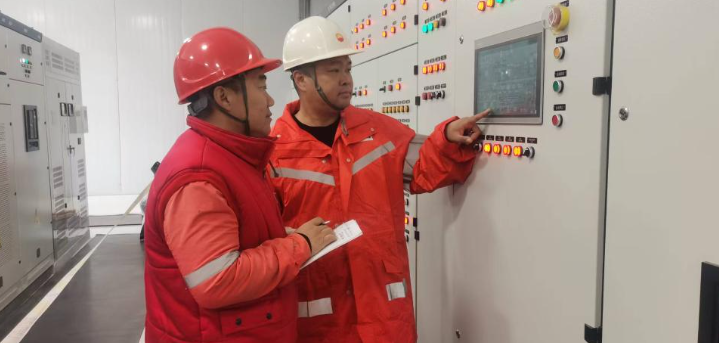
渤海之滨打造“绿色油田”——冀东油田绿色转型观察
Xin Hua Wang· 2025-10-11 11:29
Core Viewpoint - The article discusses the green transformation of the Jidong Oilfield, focusing on carbon recycling and energy efficiency improvements in oil production processes [1][2][4]. Group 1: Carbon Recycling and Utilization - The Jidong Oilfield is implementing a project to inject 20,000 cubic meters of carbon dioxide into oil layers to enhance oil recovery, with a maximum injection capacity of 60,000 cubic meters per day expected after full production [1][2]. - The project aims to recycle over 30,000 tons of carbon dioxide annually, significantly reducing external procurement costs and ensuring stable production [2]. Group 2: Energy Efficiency and Cost Reduction - The Jidong Oilfield has optimized its operational systems, promoted energy-saving equipment, and implemented meticulous management, leading to an 18.5% improvement in energy efficiency across production systems [4]. - The oilfield has closed down 7 oil transfer stations, 185 metering rooms, and 7 water injection stations, reducing the total length of various pipelines by 323 kilometers, resulting in a 44.9% decrease in energy consumption compared to historical highs [4]. Group 3: Clean Energy Integration - The Jidong Oilfield is accelerating the replacement of traditional energy sources with clean energy, including solar thermal and waste heat utilization, to achieve a greener production process [4][6]. - The oilfield has installed 1,495 solar panels, generating over 920,000 kilowatt-hours annually, and has developed the largest water surface photovoltaic project under PetroChina, saving 28,200 tons of coal per year [6]. Group 4: Future Goals and Certifications - The Jidong Oilfield's land operation area became the first oil extraction unit in PetroChina to receive "carbon neutrality" certification, with plans to expand the use of renewable energy and implement carbon storage and carbon-driven oil projects [6].

加快清洁能源替代,推动河南铝产业高端、绿色转型
Zhong Guo Neng Yuan Wang· 2025-09-24 07:42
Core Viewpoint - The implementation plan for the high-quality development of the aluminum industry in Henan from 2025 to 2027 aims to support the extension of the industrial chain and promote the integration of recycled aluminum with aluminum processing, providing significant guidance for the province's transition to a high-end and green aluminum industry [1] Group 1: Industry Overview - Henan is a major aluminum production province in China, with an aluminum output exceeding 12 million tons in 2024, ranking second in the country after Shandong [1] - The province has a complete aluminum processing industrial chain, with advantages increasingly evident in the mid and downstream processing sectors, which are extending into deep processing of aluminum [1][3] - Despite a complete industrial foundation, over 80% of aluminum products in Henan are used in low-end applications such as construction materials and packaging, contributing only a quarter of the downstream industry's total output value [2] Group 2: Future Development Goals - By 2025, Henan aims to achieve an advanced aluminum-based materials industry scale of 400 billion yuan, ranking among the top three in the country in terms of comprehensive competitiveness [3] - The total aluminum production in Henan is projected to reach approximately 14 million tons by 2030, with aluminum-based new materials consumption expected to account for half of this total [3] Group 3: Strategic Recommendations - The province should focus on deep processing to enhance innovation and cluster development, particularly in the aluminum foil and aluminum products sectors, while promoting high-performance aluminum materials [4] - There is a need to scale up the recycled aluminum industry and improve its high-value utilization, establishing resource recycling centers and enhancing the recycling and processing chain [5] - Accelerating the adoption of clean energy in the aluminum industry and establishing a carbon emission accounting system is crucial for promoting green transformation and enhancing competitiveness [6]
五部门:2025年底前全面完成超低排放改造目标任务
Di Yi Cai Jing· 2025-09-22 02:53
Core Viewpoint - The Ministry of Industry and Information Technology, along with four other departments, has issued the "Steel Industry Growth Stabilization Work Plan (2025-2026)", emphasizing the need for low-emission transformation and energy efficiency improvements in the steel sector [1] Group 1: Emission Reduction and Energy Efficiency - The plan aims to fully complete the ultra-low emission transformation targets by the end of 2025 [1] - Support will be provided for steel enterprises to implement energy efficiency enhancement modifications and promote the substitution of clean energy [1] - The industry will conduct research on collaborative pollution reduction and carbon reduction technology pathways [1] Group 2: Low-Carbon Technologies - The plan supports research and development of low-carbon common technologies such as hydrogen metallurgy [1] - It emphasizes accelerating the pilot verification and industrialization of integrated processes and equipment for green electricity, green hydrogen, and pure hydrogen metallurgy [1] Group 3: Digitalization and Carbon Management - The industry is encouraged to establish digital carbon management centers [1] - There will be a focus on developing a carbon footprint accounting standard system for steel products and enhancing carbon measurement management [1] - The plan aims to improve the quality of carbon accounting data and ensure proper quota trading and settlement after inclusion in the national carbon emission trading market [1]
九丰能源20250918
2025-09-18 14:41
Summary of Jiufeng Energy Conference Call Company Overview - Jiufeng Energy is an integrated natural gas company listed on A-shares, with a full industry chain layout from upstream to downstream. The company initially operated LPG business in South China and has expanded into LNG and LPG as its main businesses, along with energy services and specialty gases [3][4] Financial Performance - Over the past decade, Jiufeng Energy has achieved a compound annual growth rate (CAGR) of 25% in net profit attributable to shareholders. As of 2024, the company reported a debt-to-asset ratio of 37% and a return on equity (ROE) of 20%, indicating high asset quality [2][4] - In the first half of 2025, the company's net profit excluding non-recurring items grew by 3% year-on-year, despite pressures from warm winter and industrial gas demand [2][4] Business Strategy and Growth Plans - Jiufeng Energy plans to expand its road gas production capacity from 1 million tons to 2 million tons within three years to meet the demand from end transportation customers [2][6] - The company has committed to dividends of no less than 850 million and 1 billion yuan for 2025 and 2026, respectively, corresponding to a dividend yield of approximately 4% to 5% [2][6] - Specialty gases are a strategic focus, targeting the aerospace sector, with products like helium and hydrogen aligned with the needs of the Hainan commercial space launch site [2][7] Cash Flow and Financial Health - After completing LNG transport vessels in 2024, Jiufeng Energy's operating free cash flow significantly improved, reaching 1 billion yuan. As of mid-2025, the company held 4.6 billion yuan in cash, indicating a strong financial position [2][8] Market Trends and Industry Insights - China's apparent natural gas consumption is expected to grow by about 7% to 8% in 2024, with new segments like LNG heavy trucks and gas power contributing to this growth [10] - In the industrial sector, certain areas have achieved high natural gas substitution rates, but there remains significant potential for natural gas to replace coal in various industries [11] Resource and Customer Matching Strategy - Jiufeng Energy matches offshore long-term resources with direct domestic end-users, such as industrial parks and large customers, while road LNG resources are aligned with end transportation fuel users, primarily in western and northwestern China. This strategy helps stabilize price differences [12] Dividend and Buyback Plans - The company has set fixed dividend commitments for the next three years, with a cash dividend of 780 million yuan for 2024, a payout ratio of 46%, and a dividend yield of 4.3%. Additionally, a buyback plan of 200 to 300 million yuan is in place for employee stock ownership and equity incentives [14] Future Growth Potential - The expansion of road LNG production capacity is identified as a key growth area, combined with fixed dividend commitments and a strong customer base, suggesting a low overall valuation and high allocation value for the company [15]

最新一期环渤海综合煤炭价格指数小幅上涨 后续涨幅或受限
Xin Hua Cai Jing· 2025-09-17 11:18
Core Viewpoint - The price index for thermal coal in the Bohai Rim region has shown a slight increase, reflecting structural supply issues and rising costs despite a seasonal decline in demand [1][2]. Supply Side Analysis - The Bohai Rim thermal coal price index closed at 676 yuan per ton, up by 1 yuan from the previous period [1]. - There has been a noticeable increase in non-electric terminal procurement, particularly in coal-producing areas, leading to a rise in local prices [1]. - Although coal supply is gradually recovering due to government policies, the growth rate is slightly below expectations, and port inventory levels are not optimistic [1][2]. Demand Side Analysis - The daily coal consumption at power plants remains around 2.2 million tons, which is 200,000 tons lower than the same period last year, indicating a shift in inventory levels [1]. - The upcoming National Day holiday and maintenance on the Daqin line are expected to create a short-term increase in procurement demand, supporting coastal coal prices [1]. Market Outlook - The coastal coal market is currently characterized by weak supply and demand, with short-term price increases still possible due to cost support [2]. - However, the sustainability of the current price increase may be limited compared to previous rounds, influenced by the rise in clean energy generation and increased coal imports [2].
五项行动加快构建全球能源互联网
Zhong Guo Jing Ji Wang· 2025-09-10 06:11
Core Viewpoint - The 2025 Global Energy Internet Conference emphasizes the importance of clean and green energy solutions to meet global electricity demands, marking the 10th anniversary of the Global Energy Internet Initiative [1] Group 1: Conference Highlights - The conference gathered nearly a thousand guests from over 100 countries, providing a platform for international energy cooperation and promoting green development [1] - The Global Energy Internet Initiative has been integrated into various international frameworks, including the UN 2030 Sustainable Development Agenda and the Paris Agreement on climate change, receiving broad recognition and support from over 100 countries and international organizations [1][3] Group 2: Actions Proposed by Xin Baoan - Five key actions were proposed to accelerate the construction of a global energy internet, including the reliable replacement of fossil fuels with clean energy, promoting electrification across various sectors, enhancing cross-border electricity connectivity, fostering technological and industrial innovation, and strengthening international energy cooperation [2] - The initiative aims to create a fair and balanced global energy governance system, ensuring that the benefits of energy transition are shared equitably among all nations [2] Group 3: Research and Collaboration - During the conference, several research reports were released, including the "Global Power Development Transformation Report 2025" and "Global Energy Internet Development and Outlook 2025," alongside cooperation agreements with eight organizations, including the UN Development Programme and the Asian Development Bank [3] - The organization has been active since its establishment in 2016, focusing on promoting international cooperation, standardization, and project implementation in the energy sector, positioning itself among leading global energy international organizations [3]
煤炭行业观察:高温推升动力煤需求;反内卷重塑焦煤格局
Sou Hu Cai Jing· 2025-07-16 05:31
Group 1 - The coal market is showing differentiation due to high temperatures and the ongoing "anti-involution" policy, with thermal coal prices expected to rise supported by seasonal electricity demand, while coking coal prices stabilize due to supply adjustments and demand replenishment [1] - The daily consumption of thermal coal by power plants in eight coastal provinces has exceeded 2.148 million tons, leading to a continuous release of procurement demand, with spot prices for thermal coal rising from 609 CNY/ton to 632 CNY/ton, an increase of 3.8% [2] - Domestic coal supply growth is limited due to high production baselines and safety production pressures during the rainy season, with the operating rate in Shanxi dropping to 70.1% and port inventories decreasing by 19% compared to the peak in the first half of the year [3] Group 2 - Despite short-term demand recovery, the coal industry faces long-term pressure from clean energy alternatives, with thermal power generation decreasing by 72.5 billion kWh in the first five months, leading to a declining share of coal in primary energy consumption [4] - The "anti-involution" policy is driving adjustments in the coking coal market by eliminating low-price competition and accelerating the elimination of backward production capacity, with coking coal prices rebounding by 9.76% to 1,350 CNY/ton [5] - Downstream steel mills maintain high average daily pig iron production of 2.4 million tons, but with the arrival of the summer construction off-season and narrowed export windows, there may be downward pressure on pig iron production [6] Group 3 - The current "anti-involution" policy emphasizes market orientation and structural optimization, aiming to enhance the proportion of advanced production capacity and optimize resource allocation, which may lead to profits concentrating among leading companies [7]
25H1原油市场波动剧烈,关注地缘政治和OPEC+增产进展
2025-07-07 00:51
Summary of Key Points from Conference Call Industry Overview - The conference call primarily discusses the **oil market** and its dynamics, particularly focusing on the impact of geopolitical events and OPEC+ production plans on oil prices and supply-demand balance [1][2][4]. Core Insights and Arguments - **Geopolitical Events**: Geopolitical tensions, including sanctions on Russia, the Russia-Ukraine conflict, and the Iran-Israel conflict, have caused short-term fluctuations in oil prices but have not altered the overall downward trend. Brent crude and WTI crude have both decreased by approximately 10% year-to-date, with current prices at $66.63 and $64.97 per barrel, respectively [1][3]. - **OPEC+ Production Plans**: OPEC+ is set to increase production by 548,000 barrels per day in August, which is four times the increase planned in March. Cumulatively, OPEC+ has increased its production quota by 1.918 million barrels per day this year, intensifying supply pressure in the oil market [1][5]. - **Global Oil Demand Forecast**: The International Energy Agency (IEA) predicts a growth in global oil demand of 720,000 barrels per day this year, with a downward revision of 300,000 barrels per day from earlier estimates. This is attributed to sluggish economic growth and the rise of clean energy alternatives [1][7]. - **Supply-Demand Imbalance**: The IEA forecasts an increase in oil supply of 1.8 million barrels per day this year, with OPEC+ countries expected to contribute 400,000 barrels per day. The overall market is characterized by an oversupply, exerting downward pressure on oil prices [1][6][7]. Additional Important Content - **Impact of U.S. Shale Producers**: U.S. shale oil producers are reducing capital expenditures and drilling plans due to WTI prices being below the breakeven point of $66 per barrel. This reduction may help alleviate the global oversupply situation [2][6]. - **Response of Major State-Owned Oil Companies**: The three major state-owned oil companies (referred to as "Three Barrels of Oil") are increasing capital expenditures to drive production growth and technological advancements, with an average annual growth rate of 6.6% in capital expenditures planned for 2025. Their production growth rates are projected at 1.6%, 1.3%, and 5.9% respectively [2][8]. - **Geopolitical Influence on Market Trends**: The geopolitical landscape, particularly the ongoing Russia-Ukraine conflict and tensions in the Middle East, continues to influence market expectations and oil price volatility. The potential for escalation in these conflicts could lead to short-term price increases [4].
美媒失望:中美“短暂和解”,但美企发现中国不再买美国货了
Sou Hu Cai Jing· 2025-06-08 20:02
Group 1 - The core point of the article is the impact of the recent US-China tariff agreement, where the US cancels 91% of tariffs on Chinese goods, while China suspends additional tariffs for 90 days, leading to significant shifts in trade dynamics between the two countries [1][3][12] - Following the agreement, there was a surge in cargo traffic from US ports to China, but traditional US exports like energy and agricultural products faced a decline in demand from China [3][6] - The US soybean exports to China dropped by 32% in Q1 2025, while Brazil's soybean exports reached 60 million tons, indicating a shift in China's sourcing preferences towards South America [6][10] Group 2 - In the energy sector, US propane shipments were not approved for entry into China, redirecting to Southeast Asia, while China signed long-term contracts for liquefied natural gas with Qatar and Canada [8][22] - In manufacturing, China has replaced US scrap steel imports with nickel pig iron from Indonesia, and cobalt exports from the Democratic Republic of Congo to China surged by 47% [10][15] - China's chip self-sufficiency has increased to 35%, indicating a significant reduction in reliance on US semiconductor imports despite ongoing US restrictions [11][12] Group 3 - The article highlights a broader trend of China reducing imports from the US due to various factors, including a shift towards clean energy and a growing domestic market for electric vehicles, which has decreased the demand for US energy imports [15][17] - The trust crisis stemming from US policy fluctuations has led Chinese companies to seek stable and reliable supply sources outside the US [19][20] - The restructuring of supply chains and the establishment of a new global trade order based on the renminbi is underway, as China diversifies its energy and commodity sources [22][24] Group 4 - The article discusses the current state of the US economy, noting a decline in support for the Trump administration and a general perception of poor economic performance among Americans [26][28] - Economic uncertainty in the US has led to increased inflation and rising prices for consumers, with estimates suggesting an annual loss of $1,200 per household due to higher import tariffs [30][31] - The article concludes that the temporary resolution of the US-China trade conflict may provide short-term relief, but without a change in US policy, a trend towards economic recession is likely [37][38]