
现金为王

Search documents
费率成本最低的自由现金流ETF南方(159232)四季度以来涨超7%,跑赢沪深300指数
Ge Long Hui· 2025-12-05 02:42
Core Insights - The A-share market experienced a decrease in trading volume to 1.55 trillion yuan, continuing to show sideways movement, while the Southern Free Cash Flow ETF (159232) rose by 0.56%, accumulating a total increase of 7.64% since the beginning of the fourth quarter, outperforming the CSI 300 index by 9 percentage points during the same period [1] Market Performance - The market has seen increased volatility in the fourth quarter, with growth sectors showing signs of rebound this week, although trading volume has not effectively expanded, indicating ongoing cautious sentiment among investors [1] - The demand for blue-chip stocks has increased due to year-end style switching, with dividend and cash-oriented investments demonstrating strong defensive characteristics [1] ETF Characteristics - The Southern Free Cash Flow ETF (159232) closely tracks the CSI All Index Free Cash Flow Index and employs a unique cash flow screening standard, ensuring that only companies with positive operating cash flow for five consecutive years are selected, which guarantees long-term profitability [1] - The ETF uses Free Cash Flow Rate (FCF/EV) as a weighted indicator instead of traditional market capitalization weighting, providing a more accurate reflection of a company's value creation ability [1] - The ETF also balances returns through dividends and buybacks, aligning with the "cash is king" investment logic [1] - The fund's management and custody fees are a combined 0.2% per year, which is among the lowest in the market [1]
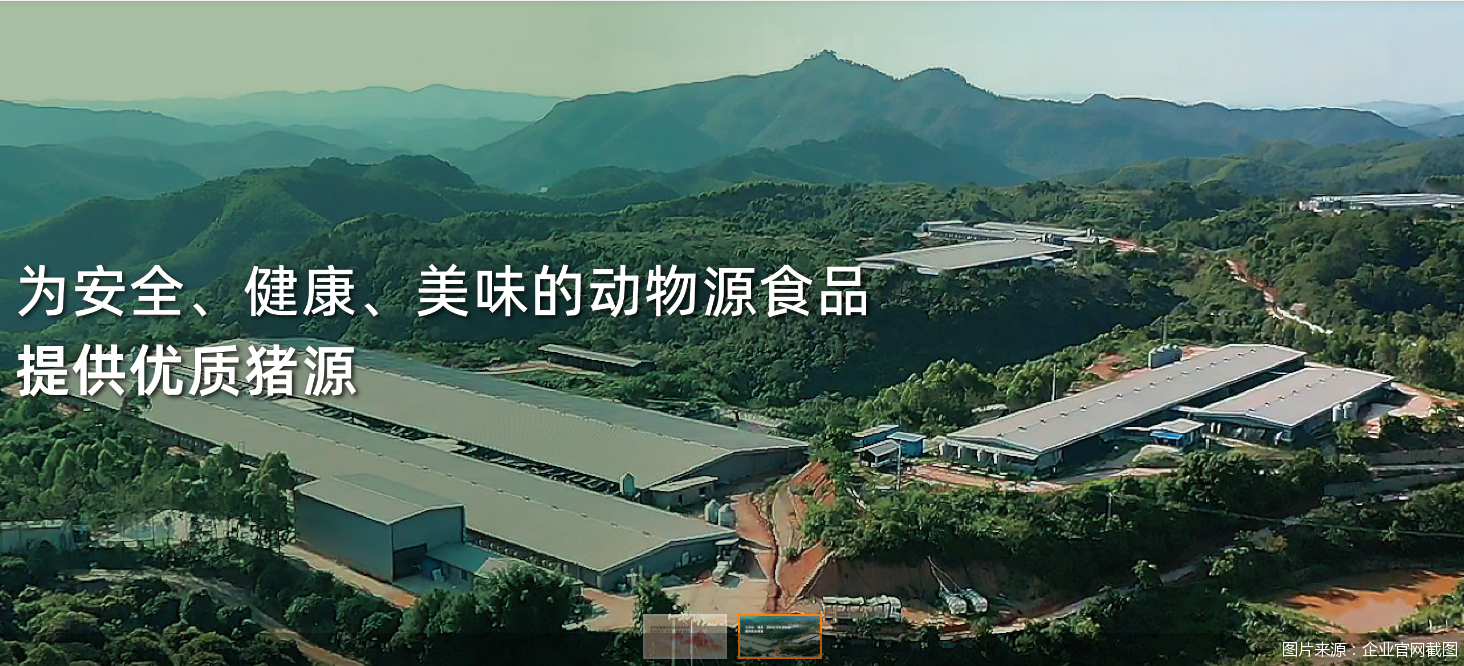
天邦食品叫停募投项目,上市猪企集体补流“过冬”
Bei Jing Shang Bao· 2025-12-02 12:37
Core Viewpoint - The pig farming industry is experiencing a prolonged downturn, leading multiple listed companies, including Tianbang Food, to terminate fundraising projects and redirect funds to maintain liquidity during this challenging period [2][3][5]. Group 1: Company Actions - Tianbang Food announced the termination of the "Tianbang Co., Ltd. Intelligent Pig Farm Upgrade Project," reallocating remaining funds to supplement liquidity [2][3]. - The project saw its total investment commitment increase from 872 million yuan to 1.306 billion yuan, but only 146 million yuan had been invested by November 2025, reflecting a mere 11.19% progress [3]. - Other companies, such as Tangrenshen and Yisheng Shares, have also halted fundraising projects and redirected funds to maintain liquidity, indicating a broader trend in the industry [6][7]. Group 2: Industry Context - Since 2020, the pig farming industry has expanded significantly, resulting in oversupply and persistently low pig prices, with prices dropping by over 30% year-on-year as of December 2, 2025 [5][6]. - The industry is currently in a capacity adjustment phase, with companies facing limited capacity utilization and financial strain due to low prices [3][4]. - Analysts suggest that maintaining cash flow is crucial for survival during this downturn, as companies with sufficient liquidity can delay culling sows and wait for price recovery, while those without may be forced to sell at lower prices, exacerbating the market decline [6][7].


电商出清期:效率拼杀、现金为王
Sou Hu Cai Jing· 2025-11-21 12:23
Core Viewpoint - The era of rapid expansion in the e-commerce industry has ended, with a noticeable decline in consumer enthusiasm and a shift towards a more mature consumption society [2][3]. E-commerce Industry Trends - The overall transaction volume during this year's Double Eleven reached nearly 1.7 trillion, but the excitement around such events has diminished [2]. - E-commerce penetration in China is currently at 25% for the first nine months of the year, significantly lower than the predicted 40% for the next five years [3]. - The ceiling for e-commerce penetration is projected to be 27.6% in 2023 and drop to 26.8% in 2024, indicating a stagnation in growth [3]. Competitive Landscape - The competition among platforms has intensified, with companies now focusing on retaining existing users rather than acquiring new ones [4]. - Platforms are increasingly competing for user engagement time, as even a minute more can lead to increased purchasing intent [5]. - The current state of competition is characterized by platforms entering each other's domains, leading to a homogenization of supply and a challenging growth environment [6][8]. Strategic Shifts - The focus has shifted from aggressive expansion to enhancing operational efficiency and matching supply with demand [9][10]. - Long-term strategies are essential for navigating market competition, emphasizing the importance of infrastructure and stability over short-term gains [11][15]. - Cash reserves are becoming critical, with companies needing to demonstrate effective spending efficiency rather than just having cash on hand [17][23]. Market Dynamics - The ongoing "instant retail war" initiated by JD.com, with Alibaba and Meituan following suit, highlights the cash-intensive nature of current competition [19][20]. - Meituan's market share has dropped from around 70% to 50%, with Alibaba and JD.com capturing the lost share [20][21]. - The future of the e-commerce landscape remains uncertain, with companies needing to leverage their cash reserves effectively to survive the ongoing competition [22][26].



2025年,手握大量现金的人,要偷笑了!原因有这4点
Sou Hu Cai Jing· 2025-11-21 08:02
Core Viewpoint - The current economic environment in China is characterized by deflation despite concerns about future inflation due to excessive money supply, with M2 at 335.13 trillion yuan, double the GDP, while consumer prices show only a slight increase of 0.2% in October 2025 [1][3]. Group 1: Economic Conditions - The domestic economy is in a deflationary cycle primarily due to excessive money supply circulating within the financial system rather than reaching the consumer market, leading to stable prices [3]. - A slowdown in income growth among residents has resulted in reduced consumer demand, causing businesses to face excess inventory and resort to price reductions to clear stock [3]. Group 2: Cash Holding Advantages - Individuals holding significant cash are finding their money increasingly valuable, as prices for goods such as pork and electric vehicles have decreased significantly, allowing for greater purchasing power [5]. - The decline in deposit interest rates has led many to invest in stocks and funds, resulting in substantial losses for investors, while cash holders have avoided these risks and losses [7]. - In a deflationary environment, cash holders are better positioned to navigate economic challenges, such as job loss or unexpected medical expenses, providing a sense of stability [10]. Group 3: Investment Opportunities - As asset bubbles in stocks and real estate are expected to burst during the deflationary cycle, cash holders will have the opportunity to acquire undervalued assets, positioning themselves for future gains [12]. - Business owners with substantial cash reserves can leverage their liquidity to pay employees and purchase raw materials at lower prices, enhancing their competitive advantage during economic downturns [10].
传媒板块现金牛来了!中文传媒拟使用不超95亿元闲置资金理财
Zhong Guo Jin Rong Xin Xi Wang· 2025-11-19 10:22
Core Viewpoint - The media industry is witnessing a "cash cow" phenomenon, with Zhongwen Media (600373.SH) announcing plans to use up to 9.5 billion yuan of idle funds to purchase financial products, while also recovering 1.817 billion yuan in cash from a terminated acquisition agreement [1][2]. Group 1: Financial Strength - Zhongwen Media's cash and financial assets total approximately 15.279 billion yuan, which is nearly equal to its market capitalization of about 15.26 billion yuan, indicating a strong cash position relative to its market value [1]. - The company's asset-liability ratio stands at 36.3%, which is considered low and healthy within the industry, supporting stable shareholder returns [2]. - The current dividend yield (TTM) for Zhongwen Media is 3.52%, placing it among the top in the media sector [2]. Group 2: Strategic Moves - The decision to use up to 9.5 billion yuan for cash management and the termination of the acquisition agreement are strategic moves to enhance liquidity and reinforce the company's "defensive + cash flow" characteristics [2]. - Zhongwen Media's approach emphasizes a development logic focused on "cash is king" and "stability as the foundation," allowing it to navigate a volatile market while prioritizing safety and cash returns [2].

卸任在即 巴菲特坚持“现金为王”
Bei Jing Shang Bao· 2025-11-03 15:01
Core Insights - Warren Buffett, at 95, is preparing to step down as CEO of Berkshire Hathaway, with the latest financial report potentially being his last before the transition to successor Greg Abel [1][7] - Berkshire's stock price has faced pressure recently, leading to a rare downgrade by an investment bank [1][8] Financial Performance - In Q3, Berkshire reported total revenue of $94.972 billion, a 2% year-over-year increase, surpassing market expectations of $91.55 billion; net profit reached $30.796 billion, up 17% from the previous year, exceeding expectations of $12.73 billion [2] - Operating profit, a key metric for Buffett, was $13.485 billion, a significant 34% increase from $10.09 billion year-over-year [2] - The substantial growth in operating profit was primarily driven by the insurance underwriting business, which saw profits soar over 200% to $2.37 billion [2] - The top five holdings remain American Express, Apple, Bank of America, Coca-Cola, and Chevron, with these stocks representing 66% and 71% of total equity investment fair value as of September 30, 2025, and December 31, 2024, respectively [2] Cash Reserves and Acquisitions - Berkshire's cash reserves reached a record high of $381.7 billion, surpassing the previous high of $347.7 billion set in Q1 [3] - The company announced a significant acquisition plan to purchase Occidental Petroleum's chemical business for $9.7 billion in cash, expected to close in Q4 2025 [3] Stock Sales and Market Sentiment - Berkshire has continued to sell stocks, with a net sale of $61 billion in Q3, marking the 12th consecutive quarter where sales exceeded purchases [5][4] - Analysts suggest that Buffett perceives limited opportunities in the current market, leading to a strategy focused on selling rather than buying [5] - The company has not repurchased any of its own stock in Q3 or the first 20 days of October, maintaining a pause on buybacks since May 2024 [6] Leadership Transition and Market Reactions - As Buffett prepares to hand over leadership to Greg Abel, the effective deployment of Berkshire's substantial cash reserves will be a primary challenge for the new CEO [7] - Concerns about the company's future performance without Buffett at the helm have led to an 11% decline in Berkshire's B shares since the announcement of his retirement, while the S&P 500 has risen 20% in the same period [7][8] - Analysts have downgraded Berkshire's stock rating to "underperform" due to potential pressures on its insurance business and geopolitical risks affecting its railway income [8]
手握创纪录“现金弹药”的巴菲特接班人即将大展宏图 伯克希尔(BRK.A.US)股价迎来大反弹?
智通财经网· 2025-11-03 02:34
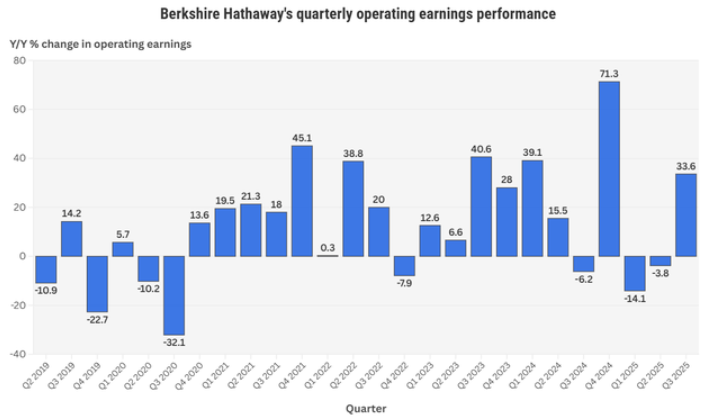
Core Viewpoint - Berkshire Hathaway's third-quarter performance exceeded expectations, driven by significant improvements in its insurance underwriting business and solid contributions from Precision Castparts [1][2] Financial Performance - Berkshire's operating profit surged by 33.6% year-on-year to $13.49 billion in Q3, marking a recovery after consecutive declines in the previous two quarters [2] - The company's cash reserves reached a record high of $381.7 billion, increasing by $48 billion since the beginning of the year, without any stock buybacks [3][4] Stock Performance and Market Position - Berkshire's A and B shares have declined approximately 11.5% since the announcement of Greg Abel's succession, contrasting sharply with the S&P 500's 20.3% gain [4] - The stock has temporarily lost its "Buffett premium" due to ongoing stock sales and the suspension of buybacks, leading to a significant underperformance compared to the broader market [4] Future Outlook - Analysts believe that Greg Abel will rebuild investor confidence over time, with potential catalysts for stock price increases if he utilizes the substantial cash flow for investments or stock buybacks [5]
“股神”巴菲特谢幕季定格传奇生涯! 伯克希尔Q3营业利润大增34% 给“阿贝尔时代”留下创纪录现金
智通财经网· 2025-11-03 00:04
Core Insights - Berkshire Hathaway, led by Warren Buffett, reported a significant year-over-year increase in operating profit of nearly 34% in Q3, primarily driven by strong performance in its insurance underwriting business [1][2] - The company continues to sell off its holdings in stocks like Apple and Bank of America without any stock buybacks, resulting in a record cash reserve of $381.7 billion [1][4][5] - This Q3 report marks the last quarterly performance under Buffett's leadership, as he will step down as CEO by the end of the year, with Greg Abel set to take over [1] Financial Performance - Operating profit for Q3 rose 33.6% to $13.49 billion, marking a recovery after significant declines in the previous two quarters [2] - Net earnings attributable to Berkshire shareholders increased by 17.3% to $30.8 billion in Q3 [4] - Cash reserves reached a historic high of $381.7 billion, surpassing the previous record of $344.1 billion [4][6] Investment Strategy - Buffett's strategy of maintaining high cash reserves is interpreted as a cautious approach amid potential market volatility, with analysts suggesting it provides flexibility for future acquisitions [5][7] - The company has not engaged in stock buybacks for five consecutive quarters, indicating a belief that current valuations are not favorable [6] - Berkshire has sold approximately $184 billion in stocks over the past three years, with $6.1 billion in stock sales occurring in Q3 alone [6] Business Segment Performance - The insurance underwriting segment saw a remarkable profit increase of over 200% to $2.37 billion in Q3 [8] - Investment income from insurance decreased by 13.2% to $3.18 billion due to declining domestic interest rates [10] - The BNSF railway segment reported a 4.8% increase in after-tax profit to $1.45 billion, driven by increased freight volume [10][11] - The energy segment experienced an unexpected decline of 8.6% in after-tax profit to $1.49 billion [11] - Manufacturing, service, and retailing sectors showed an 8.2% improvement in after-tax profit to $3.62 billion [11]
巴菲特清仓新能源巨头,股神现金为王有何启示?
Sou Hu Cai Jing· 2025-10-09 01:12
Core Viewpoint - Warren Buffett's recent liquidation of his long-held position in a Chinese electric vehicle giant signals a cautious market outlook and emphasizes the importance of cash accumulation in uncertain times [1]. Group 1: Cash Accumulation and Market Signals - Buffett's company, Berkshire Hathaway, net sold $4.5 billion in stocks in the first half of 2025, marking the 11th consecutive quarter as a net seller, while holding cash reserves of $344.1 billion, just below the record high of $347 billion from the previous quarter [1]. - This trend of cash accumulation suggests a strategic positioning for future investment opportunities, reflecting Buffett's cautious approach to the market [1]. Group 2: Economic Uncertainty and Market Valuation - The current macroeconomic environment is characterized by significant uncertainty due to geopolitical conflicts, inflation, interest rate policies, and global supply chain restructuring, making economic predictions challenging [2]. - Many quality assets are currently overvalued, with market valuations at historically high levels, prompting a defensive strategy of maintaining liquidity to capitalize on future opportunities [2]. Group 3: Investment Strategy and Asset Allocation - The concept of "cash is king" does not advocate for complete withdrawal from the market but highlights the importance of cash assets in an investment portfolio, emphasizing liquidity and safety [3]. - Investing in ETFs that track companies with strong free cash flow can help investors identify financially healthy firms, enabling better responses to market fluctuations and opportunities [3].
万科的“终局”,会如何?
3 6 Ke· 2025-09-24 01:59
Core Viewpoint - Vanke is facing a critical moment in 2025, marked by a debt peak and significant self-rescue efforts, including asset sales and negotiations with creditors [1][10]. Group 1: Asset Management - Vanke has begun selling core assets, including two properties in Guangzhou, as part of its urgent cash recovery strategy [3][5]. - The assets being sold are part of a previously acquired bad asset package worth 55.1 billion yuan, which is now being liquidated to generate funds [4][5]. - The urgency of the asset sales is highlighted by a payment requirement for full settlement by December 15, 2025, indicating Vanke's pressing need for cash [5][6]. Group 2: Debt Management - Vanke is negotiating with creditors to reduce the interest rates on its debts from at least 4.3% to 3% or lower, reflecting the company's struggle to manage its debt burden [7][10]. - The company faces a significant short-term debt pressure, with short-term interest-bearing liabilities reaching 158.28 billion yuan against cash reserves of 88.16 billion yuan, resulting in a cash-to-short-debt ratio of only 0.56 [11][12]. Group 3: Sales Strategy - Vanke has implemented aggressive price reductions in cities like Chongqing, Guangzhou, and Shenzhen to boost cash flow through sales [8][10]. - The company's sales dropped by 45.7% year-on-year in the first half of 2025, indicating a challenging sales environment [15][18]. Group 4: Organizational Restructuring - Vanke has undergone significant organizational restructuring to cut costs, reducing its management structure from three levels to two, aiming for greater efficiency [20][21]. - The company has also been actively liquidating non-core assets, with 64 projects generating approximately 57.5 billion yuan in cash flow in the first half of 2025 [20][21]. Group 5: Financial Support - Vanke has received substantial financial support from its major shareholder, Shenzhen Metro, amounting to 26 billion yuan in loans, which is seen as a temporary measure to maintain liquidity [17][25]. - The company has also been included in a financing support mechanism, allowing it to access development loans and operational property loans more easily [25]. Group 6: Future Outlook - The long-term survival of Vanke hinges on its ability to stabilize sales and manage debt effectively, as the current strategies are seen as short-term solutions [26][28]. - The ongoing challenges in the real estate market may further impact Vanke's sales and financial health, necessitating a focus on cash flow management and asset liquidation [26][27].
