生物燃料掺混配额

Search documents
三大油脂周度报告-20260116
中盛期货· 2026-01-16 11:36
Report Summary 1. Report Industry Investment Rating No relevant content provided. 2. Core Viewpoints - This week, the prices of the three major oils showed a divergent trend. Palm oil is expected to fluctuate strongly in the short - term with a possible inventory inflection point, and may rise in the medium - to - long - term due to seasonal production cuts and improved fundamentals. - Soybean oil has a loose global supply, but domestic inventory is being depleted due to pre - Spring Festival stocking. Attention should be paid to the Spring Festival stocking situation. - Rapeseed oil is restricted by a relatively loose supply - demand pattern in Canada. In the short - term, attention should be paid to the impact of Canada's Prime Minister's visit to China. In the medium - to - long - term, the Sino - Canadian trade relationship will determine the price trend [28]. 3. Summary of Different Sections 3.1 Spot Price Trends - From January 9 to January 16, 2026, the futures closing price of palm oil's main contract decreased by 0.09% from 8682 to 8674, and the spot price decreased by 0.23% from 8600 to 8580. - The futures closing price of rapeseed oil's main contract increased by 0.23% from 9042 to 9063, while the spot price decreased by 1.37% from 9942 to 9806. - The futures closing price of soybean oil's main contract increased by 0.28% from 7994 to 8016, and the spot price increased by 0.67% from 8308 to 8364 [4]. 3.2 Basis Changes - As of January 15, 2026, the basis of soybean oil, rapeseed oil, and palm oil was 426 yuan/ton (an increase of 62 yuan/ton from the previous week), 978 yuan/ton (an increase of 72 yuan/ton), and 2 yuan/ton (an increase of 14 yuan/ton) respectively. - As of January 16, 2026, the YP spread was - 658 yuan/ton (a decrease of 30 yuan/ton from the previous week) [7]. 3.3 Inventory Trends - As of January 9, 2026, the inventory of rapeseed oil in coastal areas was 0.2 million tons (a decrease of 0.1 million tons from the previous week), the commercial inventory of palm oil mills was 73.60 million tons (an increase of 0.22 million tons), the inventory of soybean oil in national oil mills was 102.51 million tons (a decrease of 5.59 million tons), and the total inventory of the three major oils was 176.31 million tons (a decrease of 5.47 million tons) [10]. 3.4 Supply - side Analysis - **Palm Oil**: As of January 16, 2026, the gross profit of 24 - degree palm oil against the market was - 191 yuan/ton (a decrease of 67 yuan/ton from the previous week). As of December 2025, Malaysian palm oil inventory was 3.05 million tons, and the production in the first half of January 2026 decreased by 18.24% [13]. - **Soybean Oil**: As of January 9, 2026, the inventory of soybeans in national ports was 8.028 billion tons (a decrease of 20.8 million tons from the previous week), the inventory of soybeans in major oil mills was 7.1312 billion tons (an increase of 2.87 million tons), and the oil mill operating rate was 53% (an increase of 3% from the previous week). As of January 16, 2026, the soybean crushing profit was - 481.40 yuan/ton (a decrease of 10.7 yuan/ton from the previous week) [16]. - **Rapeseed Oil**: As of January 9, 2026, the total inventory of rapeseeds in oil mills was 0.1 million tons (unchanged from the previous week). As of January 16, 2026, the import rapeseed crushing profit was - 2218.0 yuan/ton (a decrease of 61.0 yuan/ton from the previous week) [20]. 3.5 Demand - side Analysis - On January 15, 2026, the trading volume of palm oil in major oil mills was 1300 tons, the trading volume of first - grade soybean oil was 2500 tons, and the POGO spread was 403.99 US dollars/ton (a decrease of 1.25 US dollars/ton from the previous week). - The predicted annual total consumption of rapeseed oil is 8.05 million tons [25]. 3.6 Fundamental Analysis - **Policy**: The Trump administration plans to finalize the biofuel blending quota in early March and abandon the import penalty plan. The Sino - Canadian rapeseed trade negotiation is advancing, and the market is concerned about the progress of tariff relaxation. - **Foreign Factors**: The US Department of Agriculture's January supply - demand report shows that the US's 2025/26 soybean production forecast is 4.262 billion bushels, and the export forecast is 1.575 billion bushels. As of December, Malaysian palm oil inventory was 3.05 million tons, and the production in the first half of January decreased by 18.24%, while exports increased by 17.5% - 18.6%. - **Import and Pressing**: The oil mill operating rate increased by 3% from the previous week, and the soybean inventory decreased. The inventory of rapeseeds in oil mills remained unchanged. - **Inventory**: As of January 9, 2026, the inventory of rapeseed oil in coastal areas decreased, the commercial inventory of palm oil mills increased, and the inventory of soybean oil in national oil mills decreased. - **Spot**: This week, the spot prices of oils showed mixed trends, with palm oil and rapeseed oil prices falling and soybean oil prices rising [27].
商品日报(1月16日):基本金属全线回调 碳酸锂封跌停
Xin Hua Cai Jing· 2026-01-16 09:56
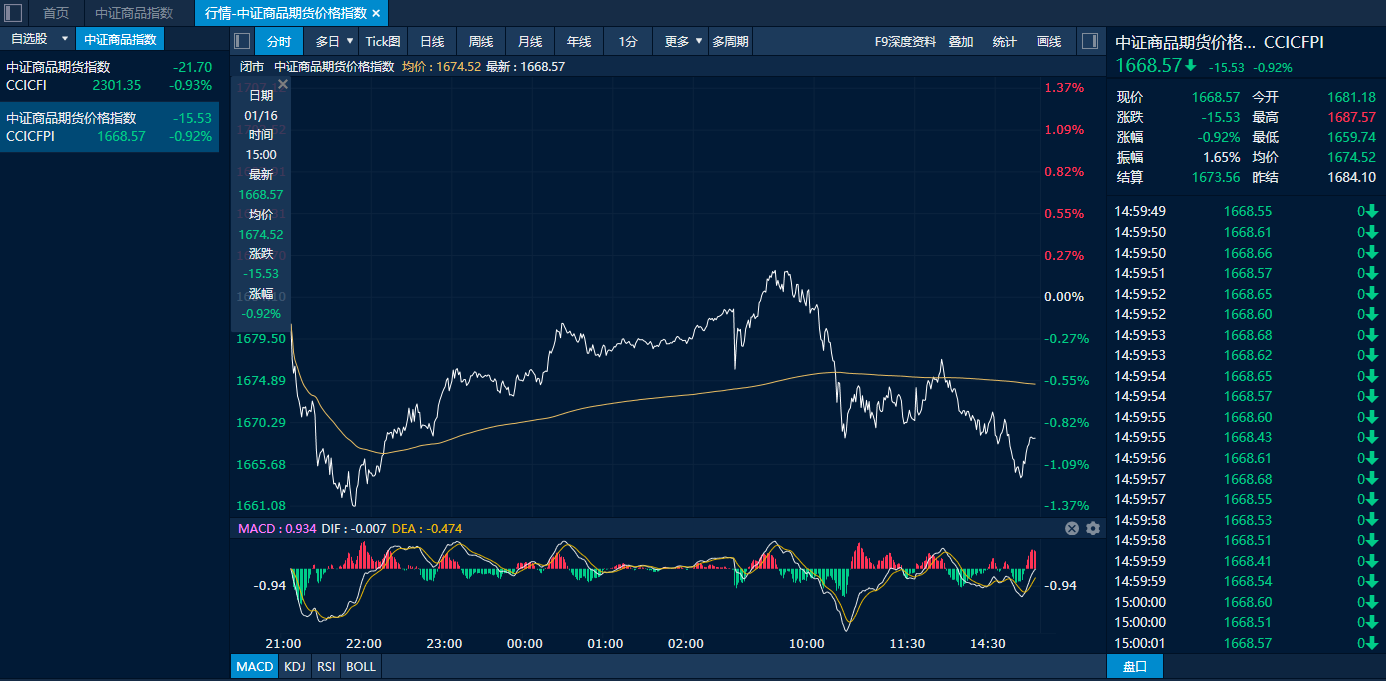
Group 1: Market Overview - The domestic commodity futures market on January 16 saw more declines than gains, with polysilicon and rapeseed oil leading the gains, both rising over 2% [1] - The carbon lithium main contract hit the daily limit down, falling by 8.99%, while other commodities like shipping, tin, and nickel also experienced significant declines [1][5] - The China Securities Commodity Futures Price Index closed at 1668.57 points, down 15.53 points or 0.92% from the previous trading day [1] Group 2: Polysilicon Market - Polysilicon showed signs of stabilization on January 16, with the main contract rising by 2.5% after a week of corrections, driven by speculation about capacity control and production adjustments [2] - Concerns about production impacts due to a major company's planned shutdown until May have increased, alongside a firm pricing stance from polysilicon producers [2] - Despite the rebound, analysts caution that high inventory levels and strict industry regulations may limit the sustainability of this upward trend [2] Group 3: Oilseed Market - The oilseed sector saw a general increase, led by rapeseed oil with a 2.07% rise, attributed to low domestic rapeseed inventory and strong reactions to rising overseas oil prices [3] - U.S. biodiesel policy developments are expected to boost soybean oil consumption, contributing to price recoveries in both domestic and international markets [3] - However, analysts note that potential policy factors and mixed market influences may hinder the formation of a clear trend in the oilseed market [3] Group 4: Other Commodities - Glass and steel prices continued to rise moderately, with glass increasing by 1.29% while rebar saw only a slight increase of 0.06% [4] - The basic metals market experienced a broad retreat, with lithium carbonate hitting the limit down and falling by 8.99%, influenced by rapid price increases and profit-taking [5][6] - The shipping sector faced downward pressure, with the main contract for the European shipping line dropping by 8.52% due to seasonal trends and reduced demand ahead of the Chinese New Year [6][8]

国信期货油脂油料周报:油强粕弱凸显,连粕持续走低-20260116
Guo Xin Qi Huo· 2026-01-16 08:28
Report Summary 1. Report Industry Investment Rating No investment rating information is provided in the report. 2. Core Viewpoints - The overall trend of oils this week was soybean oil > palm oil > rapeseed oil, with a slight recovery in the soybean - palm oil spread. The soybean - meal and rapeseed - meal oil - to - meal ratios of the main contracts slightly recovered, and the price spread between the main contracts of soybean meal and rapeseed meal continued to rise. The 5 - 9 spread of soybean meal slightly declined, the 5 - 9 spread of soybean oil slightly recovered, the 5 - 9 spread of palm oil significantly declined, and the 5 - 9 spread of rapeseed oil slightly recovered [62][97][102]. - In the short - term, the technical indicators of soybean meal and rapeseed meal are bearish; the short - and medium - term indicators of soybean oil are bullish, while the long - term indicator is entangled; the indicators of palm oil are all entangled; and the indicators of rapeseed oil are bearish. Fundamentally, for protein meals, international weather may be a factor for speculation, and domestic soybean meal spot remains firm. For oils, international geopolitics affects the market, and domestic oils may rotate [123][124]. 3. Summary by Directory 3.1 Protein Meal Market Analysis - **Market Trends**: CBOT soybeans fluctuated lower this week, first falling and then rising. Domestic soybean meal futures declined, while the spot market was relatively firm, showing a situation of strong spot and weak futures [6]. - **Export Data**: As of January 8, 2026, the weekly export inspection volume of US soybeans was 1,529,707 tons. The total export inspection volume for the 2025/26 season reached 17,934,546 tons, a year - on - year decrease of 42.8%. The export to China in that week was 901,118 tons, accounting for 58.9% of the total [10]. - **South American Market**: In Brazil, as of January 9, the soybean harvest progress was 0.53%. In Argentina, as of January 8, the cotton, corn, and soybean planting rates were 86%, 90%, and 92% respectively [20][21][29]. - **Oilseed Market**: The USDA raised the production and inventory of US soybeans in the 2025/26 season and lowered exports. The NOPA's December soybean crushing volume was the second - highest on record [32][31]. - **Inventory and Consumption**: As of the end of the second week of 2026, the domestic soybean port inventory was about 833.96 tons, and the soybean meal inventory was 99.8 tons, a week - on - week decrease of 13.7 tons [41][47]. 3.2 Oils Market Analysis - **Market Trends**: US soybean oil rose significantly this week, reaching a 7 - week high. Malaysian palm oil fluctuated at a low level and closed slightly higher. Domestic oils showed a differentiated trend, with soybean oil rising, palm oil rising and then falling, and rapeseed oil falling first and then rising [62]. - **International Data**: In December 2025, the inventory of Malaysian palm oil increased to 305 tons. In January 2026, the export volume of Malaysian palm oil increased month - on - month. In December 2025, India's palm oil imports reached an 8 - month low [66][67][68]. - **Domestic Inventory**: As of the end of the second week of 2026, the total inventory of the three major domestic edible oils was 214.17 tons, a week - on - week decrease of 10.48 tons [83]. 3.3 Market Outlook - **Seasonal Analysis**: Seasonal index data for US soybeans, soybean meal, domestic soybean meal, and various oils and meals are provided, but no specific conclusions are drawn [114][115][117]. - **Next - Week Outlook**: Technically, the indicators of soybean meal and rapeseed meal are bearish; those of soybean oil are bullish in the short and medium - term; those of palm oil are entangled; and those of rapeseed oil are bearish. Fundamentally, for protein meals, weather and South American harvests may affect the market, and domestic soybean meal spot remains firm. For oils, geopolitics and policies may impact the market, and domestic oils may rotate [123][124].
豆粕:观望,等待中加贸易磋商进展;豆一:反弹震荡
Guo Tai Jun An Qi Huo· 2026-01-16 02:31
Report Summary 1) Report Industry Investment Ratings - The rating for soybean meal is to wait and see, pending the progress of China-Canada trade consultations. The rating for soybean No.1 is a rebound and oscillation [1]. 2) Core Viewpoints - On January 15, CBOT soybean futures closed higher due to strong export sales, domestic soybean crushing demand, and a surge in Chicago soybean oil futures, which offset the pressure from the upcoming Brazilian soybean harvest. The increase in US soybean oil futures was mainly because the US government may set the 2026 biofuel blending quota in March, and US soybean oil inventories were lower than market expectations [1][3]. 3) Summary by Relevant Catalogs [Fundamental Tracking] - **Futures Prices**: DCE soybean No.1 2605 closed at 4333 yuan/ton during the day session, up 4 (+0.09%), and 4351 yuan/ton at night, up 28 (+0.65%); DCE soybean meal 2605 closed at 2740 yuan/ton during the day session, down 9 (-0.33%), and 2744 yuan/ton at night, down 4 (-0.15%); CBOT soybean 03 closed at 1052.5 cents per bushel, up 10.0 (+0.96%); CBOT soybean meal 03 closed at 289.2 dollars per short ton, down 2.8 (-0.96%) [1]. - **Spot Prices**: In Shandong, the spot price of soybean meal (43%) was in the range of 3095 - 3180 yuan/ton, with different premiums to the futures contract M2605 for different periods; in East China, prices varied among different enterprises and periods; in South China, prices also showed different premiums and discounts to futures contracts [1]. - **Industrial Data**: The trading volume of soybean meal was 52.6 million tons per day on the previous trading day, down from 87.7 million tons per day two trading days ago. The inventory of soybean meal was 101.88 million tons per week on the previous trading day, down from 105.05 million tons per week two trading days ago [1]. [Macro and Industry News] - Private exporters reported sales of 204,000 tons of US soybeans to China and 545,000 tons to unknown destinations, mostly for delivery in the 2025/26 season. The Trump administration plans to finalize the 2026 biofuel blending quota in early March, which may maintain a quota similar to the initial proposal and abandon the punitive plan for imported renewable fuels and their raw materials. Canadian Prime Minister Mark Carney will meet with Chinese national leaders on Friday, and the Canadian Foreign Minister said progress had been made in consultations with China on reducing tariffs on Canadian products [3]. [Trend Intensity] - The trend intensity of soybean meal and soybean No.1 is 0, indicating a neutral trend for the day - session main - contract futures prices on the reporting day [3].
马来西亚棕榈油早盘展望:棕榈油期货开盘上涨
Jin Rong Jie· 2026-01-16 00:30
Group 1 - The Malaysian Derivatives Exchange (BMD) crude palm oil futures are expected to open higher, reflecting the strength in the external vegetable oil market [1] - The Trump administration plans to finalize the 2026 biofuel blending quotas in early March, which has boosted Chicago soybean oil futures, positively impacting Malaysian crude palm oil futures [1] - Malaysian palm oil exports have improved, with a reported increase of 17.5% to 18.6% in export volume for the first half of January [1] Group 2 - However, international crude oil futures have declined, and Indonesia has canceled its planned B50 biodiesel program for this year, which may limit the upward momentum of Malaysian palm oil prices [1] - The increase in Malaysian palm oil inventory is also expected to constrain price growth [1]
利多来袭 美豆油期价飙升!油脂板块表现分化
Qi Huo Ri Bao· 2026-01-16 00:20
Group 1: Market Overview - The oilseed market received positive news as the Trump administration plans to finalize the 2026 biofuel blending quotas by early March, maintaining the initial proposal while dropping penalties on renewable fuel imports [1] - The U.S. Environmental Protection Agency indicated an increase in biomass diesel targets made from soybean oil and other crops, which could significantly boost biomass diesel production if adopted [1] - Soybean oil futures surged by 3.81%, while domestic futures for rapeseed oil rose by 2.57%, and palm oil and soybean oil futures saw slight increases [1] Group 2: Palm Oil Market Dynamics - The palm oil market is shifting focus, with Indonesia experiencing a production decline due to the rainy season and strong export performance [2] - Indonesia is considering raising palm oil export taxes to support its B50 plan, which could elevate global price levels and enhance the competitiveness of Malaysian palm oil [2] - Strong export data, particularly a nearly 50% year-on-year increase in exports to India, has shifted market attention from static high inventories to tightening supply-demand expectations [2] Group 3: Rapeseed Oil Market Challenges - The rapeseed oil market is primarily driven by trade policy expectations, with short-term price support from delayed arrivals and low inventories [3] - However, long-term supply pressures are anticipated due to improved trade relations following the Canadian Prime Minister's visit to China, which may lead to policy adjustments [3] - Market participants are awaiting outcomes from high-level meetings between China and Canada, as any news regarding tariffs or trade policies could cause significant market fluctuations [3] Group 4: Soybean Oil Market Insights - Domestic demand for small packaged oil is strong ahead of the Spring Festival, with a forecasted decrease in soybean arrivals in Q1, supporting soybean oil prices [4] - However, favorable weather in Brazil is raising expectations for a bumper crop, alongside domestic policy-driven stock releases, which may limit price increases [4] - The domestic soybean oil inventory has dropped to a near five-month low, creating a solid price floor amid consumption peak expectations [4] Group 5: Future Market Outlook - The potential implementation of increased export taxes by Indonesia will be crucial in determining the sustainability of the palm oil price rebound, impacting global demand distribution [4] - The soybean oil market is expected to maintain a stable fundamental outlook in Q1 due to ongoing holiday consumption support, with limited changes anticipated [4] - The market is entering a phase of expectation validation, with a focus on the speed of inventory reduction in palm oil and a range-bound trading pattern for soybean oil until South American production is fully realized [5]
利多来袭,美豆油期价飙升!油脂板块表现分化
Qi Huo Ri Bao· 2026-01-15 23:50
Group 1 - The U.S. government plans to finalize the 2026 biofuel blending quotas by early March, maintaining the initial proposal while dropping penalties on renewable fuel imports, which could lead to a significant increase in biomass diesel production [1] - Soybean oil futures surged by 3.81% following the news, while domestic vegetable oil futures also saw gains, with palm oil and soybean oil futures rising slightly [1] - The palm oil market is currently in a state of "bad news exhausted, new drivers arriving," with a focus on the potential impact of Indonesia's export tax increase on palm oil, which could enhance its competitiveness globally [2] Group 2 - Indonesia's rainy season is expected to reduce palm oil production in January and February, while strong export performance is noted, particularly with a nearly 50% year-on-year increase in exports to India [2] - The palm oil price rebound faces challenges due to higher-than-expected production in December, leading to inventory accumulation, which creates price pressure [2] - The canola oil market is primarily driven by trade policy expectations, with short-term price support from delayed imports and low inventory, but long-term supply pressures are anticipated due to improved trade relations with Canada [3] Group 3 - Domestic demand for soybean oil is strong ahead of the Spring Festival, with a forecasted decrease in soybean imports in the first quarter, supporting short-term prices [3] - The international soybean market lacks new developments, but domestic soybean oil inventories have dropped to a five-month low, providing a solid price floor [3] - Future market dynamics will focus on the speed of inventory reduction for palm oil and the balance between tight supply and policy expectations for canola oil, with potential for trend-driven movements [4]