
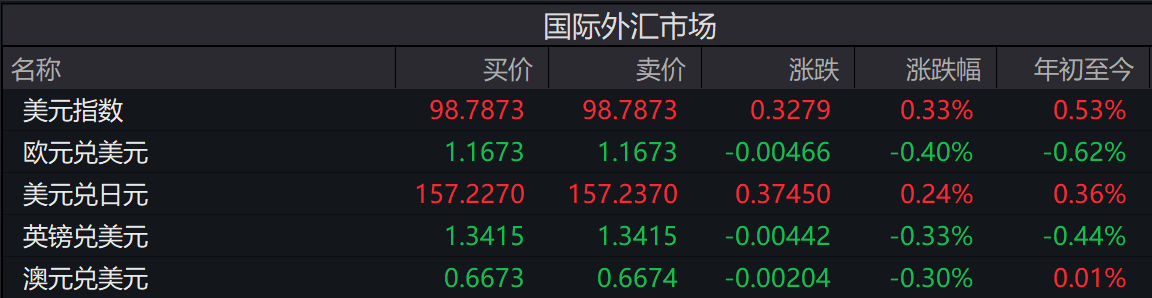
美元指数走势

Search documents
美元指数受避险情绪支撑短线微涨,中长期仍保持趋弱预期
2 1 Shi Ji Jing Ji Bao Dao· 2026-01-05 04:04
东方证券研报指出,当前全球地缘局势仍处于升温阶段,委内瑞拉事件后,不确定性预期显著上升,全球市场高波动性可能延续。该机构认为,此类事件可 能导致美元指数短期走强,但是中期下行趋势不会变化,市场风险偏好受到的影响短期非常有限。 这一判断与2025年末以来多家主流机构的看空观点一致。德意志银行、高盛、瑞银等机构此前对2026年美元走势持谨慎预期。当前,随着就业市场降温与通 胀压力缓解,美联储货币政策趋向宽松,政策重心已从抗通胀转向防衰退。尽管2025年美联储已累计降息75个基点,全球大部分投行目前仍预测,美联储将 在2026年降息两次,总计降息50个基点。与此同时,也有观点指出,若美联储继续降息,而欧洲央行等其他央行维持甚至提高利率,利差变化亦将推动美元 走弱。 2025年,美元指数全年累计下挫逾8%,年度跌幅创下近年来纪录。 21世纪经济报道记者林汉垚 见习记者冯紫彤 美国对委内瑞拉的政治行动正成为扰动全球金融市场的新变量。 据新华社消息,美国东部时间3日晚,载有委内瑞拉总统马杜罗及其夫人的飞机抵达纽约州斯图尔特空军国民警卫队基地。美国总统特朗普称,美国将"管 理"委内瑞拉直至该国实现"安全"过渡。 受此事件影 ...

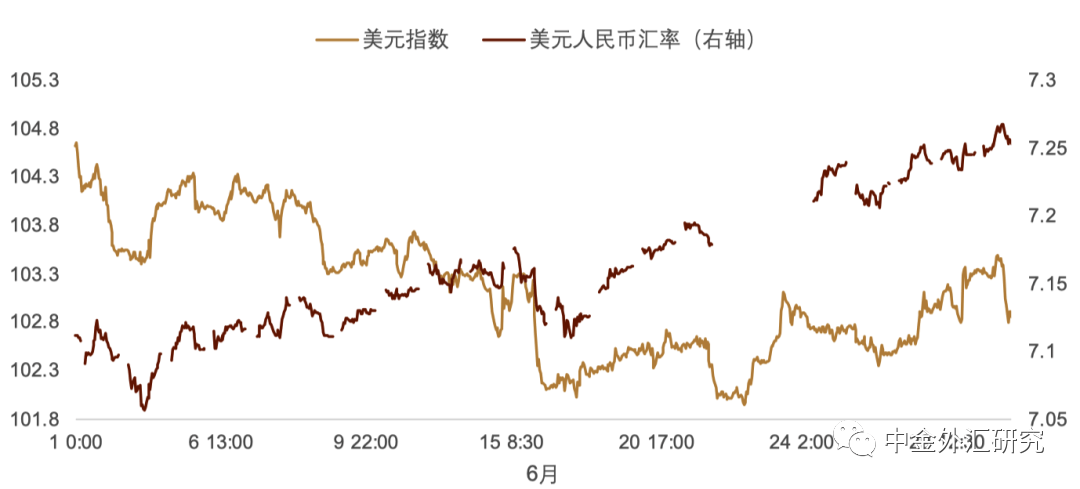
【中金外汇 · 月报】美元指数能否在年初企稳
Sou Hu Cai Jing· 2026-01-04 10:04
Group 1: US Economic Data and Federal Reserve Outlook - The US economic data released in December indicates a weakening economy, leading to market skepticism about the Federal Reserve's cautious stance potentially ending sooner than expected [1] - The upcoming Federal Reserve meeting at the end of January is expected to maintain the policy interest rate unchanged unless significant downward pressure on economic data emerges [2] - The nomination of a new Federal Reserve chair could significantly impact the US dollar, with market concerns about a potentially dovish candidate [2] Group 2: RMB Exchange Rate Trends - The RMB exchange rate is projected to break the 7.0 mark by the end of 2025, driven by a weak US dollar and seasonal settlement demands [3] - In January, the RMB is expected to maintain upward momentum, supported by seasonal factors and foreign trade enterprises' hedging needs [4][6] - The RMB's appreciation may be moderated by the central bank's policies aimed at stabilizing the exchange rate [5][12] Group 3: USD Exchange Rate Predictions - The USD is forecasted to trade within a range of 96.5 to 99.5 in January, with a central tendency around 98 [25] - The USD index has shown a downward trend, influenced by weak economic data and expectations of future interest rate cuts by the Federal Reserve [26][27] - The market anticipates limited upward movement for the USD in January, particularly if upcoming labor market data continues to reflect weakness [39] Group 4: Eurozone Economic Outlook - The Eurozone's economic data showed signs of stabilization in December, with inflation trends indicating a slowdown [40][41] - The European Central Bank (ECB) maintained its interest rates in December, reinforcing market expectations that the current rate cycle has ended [49] - The Euro is expected to maintain a high-level oscillation in January, supported by the ECB's stance and the absence of further rate cuts [53]
STARTRADER:澳元突破0.67创14个月新高,市场关注后续走向?
Sou Hu Cai Jing· 2025-12-25 05:18
Core Viewpoint - The Australian dollar (AUD) has shown a strong performance against the US dollar (USD), with a year-to-date increase of over 7% and a quarterly rise of 1.4%, driven by differences in central bank policies and economic conditions [3]. Group 1: Currency Performance - As of the latest trading session, the AUD/USD exchange rate experienced a slight decline of 0.0447%, with a trading range of 0.6698 to 0.6710, and both the opening and closing rates at 0.6705 [1]. - On December 23, the AUD/USD pair broke through the 0.67 level, reaching a 14-month high since October 2024 [3]. Group 2: Central Bank Policies - The Reserve Bank of Australia (RBA) has maintained its policy interest rate at 3.6%, with Governor Bullock indicating no need for further rate cuts and leaving open the possibility of future rate hikes, which has raised market expectations for a rate increase in the first meeting of the next year to over 30% [3]. - In contrast, the US Federal Reserve has completed three rate cuts this year, lowering the interest rate range to 3.5%-3.75%, which continues to influence the USD's performance [3]. Group 3: Economic Indicators - The RBA has noted that stronger-than-expected domestic demand could exacerbate inflationary pressures, leading to an upward bias in inflation risks, which supports the RBA's policy stance [3]. - The Australian economy's stable domestic demand, including private consumption and investment, provides a fundamental support for the AUD, countering some external pressures [3]. Group 4: Market Dynamics - The structural weakness of the USD has provided external support for the rise of the AUD, with the USD index declining over 9% year-to-date due to factors such as Fed rate cuts and economic data concerns [4]. - Technically, the AUD/USD is in an upward channel with solid bullish structure, focusing on support at 0.6620 and resistance at previous highs around 0.6707, with potential to reach the 0.6740 range [4].
2026年全球黄金价格走势展望
Sou Hu Cai Jing· 2025-12-18 08:13
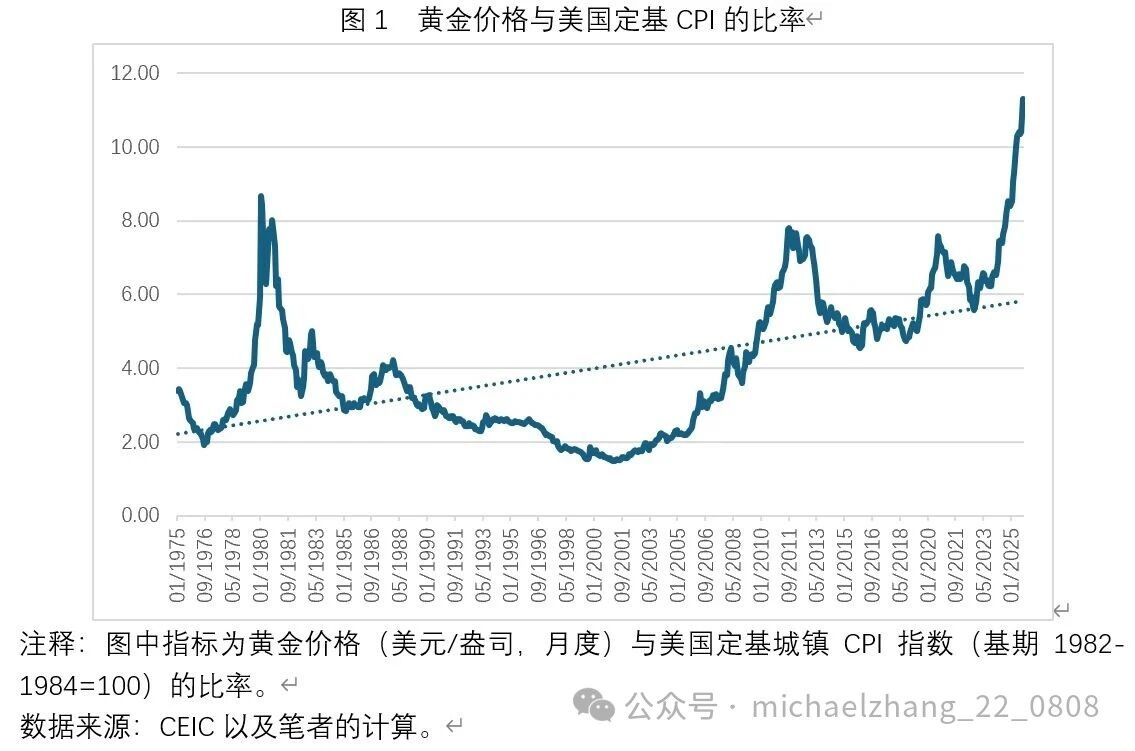
Core Viewpoint - The article analyzes the historical trends of gold prices and their future outlook, emphasizing the relationship between gold prices, inflation, economic risks, and the U.S. dollar index. Group 1: Historical Trends and Inflation - Gold prices have historically been viewed as a hedge against inflation, with a long-term average ratio of gold prices to the U.S. CPI index at 3.2 times, currently rising to around 6 times since 2022 [2] - Since 2010, the ratio of gold prices to the U.S. CPI index has remained above historical averages for 15 years, indicating a potential for price correction as the deviation from the mean is similar to the historical peak in the early 1980s [2] Group 2: Relationship with Risk Assets - Traditionally, gold prices are expected to have a negative correlation with mainstream risk assets, but both the S&P 500 index and gold prices have shown significant increases since Q4 2022, raising questions about future divergence [4] - The S&P 500 index has doubled during this period, while gold's increase has outpaced that of the S&P 500, suggesting a unique market condition where both assets rise amid heightened global economic and political risks [4] Group 3: Interest Rates and Gold Prices - Theoretically, gold prices should have a negative correlation with interest rates; however, recent years have shown a lack of significant correlation, with gold prices remaining stable despite rising long-term U.S. Treasury yields [7][8] - From late 2020 to mid-2023, despite a rise in 10-year U.S. Treasury yields from 0.5% to over 4%, gold prices exhibited a consolidating trend, indicating that long-term interest rates may not be a primary factor influencing gold prices in the near future [8] Group 4: Economic and Geopolitical Risks - Gold prices are positively correlated with global economic policy uncertainty, particularly evident after significant policy changes, such as the tariffs introduced by the Trump administration, which led to a peak in the uncertainty index [11] - Despite a decrease in the global economic policy uncertainty index and geopolitical risk index, gold prices have remained high, suggesting potential for a significant correction if these conditions stabilize further [11] Group 5: Impact of the U.S. Dollar - Gold prices are primarily traded in U.S. dollars, leading to an expected negative correlation with the dollar index; however, this correlation has varied over time [14] - In 2025, the dollar index depreciated by 10%, yet gold prices remained resilient, indicating that factors beyond the dollar's strength may be influencing gold prices [14] Group 6: Future Outlook - The future trajectory of gold prices in 2026 will largely depend on global economic policy uncertainty and the dollar index, with predictions suggesting a potential decline of 10-20% if conditions remain stable [16] - If unexpected geopolitical conflicts arise or if the U.S. government reintroduces protectionist policies, significant adjustments in gold prices may not occur as anticipated [16]

张明:2026年全球黄金价格走势展望
Di Yi Cai Jing· 2025-12-18 06:06
Core Viewpoint - There is a possibility of a significant adjustment in global gold prices in the first half of 2026, potentially declining by 10% to 20% [1] Group 1: Historical Price Trends - From December 30, 2024, to December 10, 2025, the LBMA gold price in the UK rose from $2,609.10 per ounce to $4,200.15 per ounce, marking a 61% increase, making it the best-performing asset class globally in 2025 [1] - Gold prices reached a historic high of $4,294.35 per ounce on October 20, 2025, before experiencing an 8% decline to $3,948.50 per ounce on October 28, 2025, and then fluctuating between $4,000 and $4,200 [1] Group 2: Inflation and Gold Prices - Historically, gold prices have been viewed as a hedge against inflation, with a long-term average ratio of gold prices to the U.S. CPI index at 3.2 times [2] - Currently, this ratio is close to 6 times, indicating a significant deviation from historical averages, which raises the probability of a price correction in the future [2] Group 3: Correlation with Risk Assets - Traditionally, gold prices are expected to have a negative correlation with mainstream risk assets, but both the S&P 500 index and gold prices have shown significant increases since Q4 2022 [4] - The future relationship between gold and equities remains uncertain, raising questions about which asset may adjust first if a divergence occurs [4] Group 4: Interest Rates and Gold Prices - The theoretical relationship suggests that gold prices should negatively correlate with interest rates; however, recent years have shown a lack of significant correlation [7] - For instance, despite a rise in U.S. 10-year Treasury yields from 0.5% to over 4% between late 2020 and mid-2023, gold prices remained relatively stable [7] Group 5: Economic and Geopolitical Risks - Gold prices are positively correlated with global economic policy uncertainty, particularly following significant policy changes, such as the introduction of "reciprocal tariffs" by the Trump administration [10] - Despite a decrease in the global economic policy uncertainty index and geopolitical risk index, gold prices have remained high, suggesting potential for a significant correction if conditions do not worsen [11] Group 6: Dollar Influence on Gold Prices - Gold prices are primarily traded in U.S. dollars, leading to a historical negative correlation with the dollar index; however, this relationship has varied over time [13] - In 2025, despite a 10% depreciation of the dollar index, gold prices surged by 60%, indicating that dollar fluctuations are not the primary driver of gold price changes [13] Group 7: Future Predictions - The baseline prediction suggests that the probability of significant escalation in trade tensions before the 2026 U.S. midterm elections is low, which may lead to a stable dollar index between 95 and 100 [17] - If these conditions hold, a significant adjustment in gold prices may occur in the first half of 2026, unless unexpected geopolitical conflicts arise or trade policies are reintroduced [17]
张尧浠:美11月非农助力降息前景 金价震荡仍待攀升
Xin Lang Cai Jing· 2025-12-17 05:10
影响上,日内先行受到前两个交易日的回撤看空压力表现走低,之后由于支撑买盘,以及美国10月零售 销售月率对于前值和预期以及美国11月失业率上升创下四年多来最高水平,强化了美联储未来降息的预 期,打压美元走软,提振金价反弹录得日内高点; 但由于11月非农数据明显强于前值,减弱了多头力量,再加上近期的高点阻力压制而遇阻回撤,最终震 荡收线。 展望今日周三(12月17日):国际黄金亚市早盘先行偏强运行,受到5日均线买盘支撑,以及美元指数 早盘偏弱的影响,不过,美元指数昨日收取垂线止跌看涨形态,短期偏向筑底或反弹,而会限制金价多 头; 同时,金价仍处于关键阻力下方,近日走势震荡,周四及周五美国11月CPI及周初请,和美国12月密歇 根大学消费者信心指数终值、美国12月一年期通胀率预期终值等,整体预期目前好坏参半,而会继续令 金价维持震荡走盘, 12月17日:上交易日周二(12月16日):国际黄金震荡十字收平跌,继续收取高位见顶看空形态,但整 体走势仍处于5-10日短期均线上方,布林带及走势仍保持着10月底以来的上行趋势,这使得后市前景预 期仍有在反弹高位震荡调整后再度走强攀升。那么操作上,暂还是维持震荡待反弹的行情发展 ...

央行连续13个月增持黄金,2026年会是黄金牛市的拐点吗?
Sou Hu Cai Jing· 2025-12-09 23:23
2025年即将结束,今年以来国际金价累计涨幅达到了60%,该年内涨幅跑赢市面上绝大多数的投资品种。 黄金牛市并非局限于2025年,从最近三年的走势分析,黄金价格已经连涨三年时间。如果以2023年1月1日作为计算起点,短短三年时间,黄金累计涨幅已经 超过了100%,黄金抵御通胀的能力远远超出了投资者的想象预期。 这一轮黄金牛市,可以从2016年开始算起,至今已经走过了近十年的时间。从2016年初的1100美元大涨至今年最高的4398美元,十年时间黄金累计涨幅接近 4倍,同样远远跑赢同期绝大多数的投资渠道。 从2016年开始计算,这一轮黄金牛市已经走了接近10年时间。2026年,将会是10年上涨周期的重要时间点,本轮黄金牛市会否在2026年形成重要性的拐点, 给市场带来了不少的变数。 从美元指数的走势分析,经历了2025年的大幅下跌之后,目前已有初步触底的迹象。假如2026年美元指数呈现出触底回升的走势,甚至步入新一轮的上行周 期,那么对长期与美元存在负相关关系的黄金价格来说,无疑会构成一定的冲击压力。 步入2026年,我们需要紧盯全球央行对黄金的投资态度,观察全球央行增持黄金的持续性。一旦全球多数央行开始采取暂 ...

美联储议息会议临近 美元指数陷关键博弈
Jin Tou Wang· 2025-12-09 02:32
Core Viewpoint - The USD index has shown significant downward volatility since December 2025, currently fluctuating around 99.10, down 1.2% from its late November peak, with the upcoming Federal Reserve meeting on December 9-10 being a key catalyst for its future movement [1] Group 1: Federal Reserve Influence - The Federal Reserve's monetary policy direction is a critical internal variable determining the USD index's movement, with an 89.2% probability of a 25 basis point rate cut in December, up from 71% a week prior [1] - The expectation of a more accommodative monetary policy is fueled by moderate U.S. economic data, including cooling employment momentum and weak manufacturing activity, alongside inflation levels returning to a more acceptable range for the Fed [1] - The potential appointment of Kevin Hassett as the next Fed Chair, who aligns with dovish policies, has intensified downward pressure on the USD, reflecting political influences on monetary policy [1] Group 2: Support Factors for USD - Despite the downward trend, the USD index is somewhat supported by the relative weakness of non-USD currencies, particularly the Euro, which has been affected by stagnant economic growth in Germany and political crises in France [2] - The Japanese Yen has weakened due to concerns over debt from economic stimulus plans, while the British Pound faces pressure from rising unemployment and budgetary concerns, which collectively bolster the USD's upward momentum [2] - Positive signals from recent U.S. economic data, such as an increase in the Michigan Consumer Sentiment Index from 51.0 to 53.3, may partially offset the downward pressure on the USD [2] Group 3: Future Outlook - There is significant divergence in forecasts regarding the USD index's future trajectory, with some analysts predicting a "down then up" pattern in December due to upcoming GDP data releases [3] - Structural factors such as rising U.S. debt, potential interventions in Fed independence, and global de-dollarization trends could undermine confidence in the USD in the long term [3] - Key variables influencing the USD index will include the Fed's rate decision, Chairman Powell's statements during the press conference, and the final nomination of the Fed Chair by the Trump administration, with expected increased volatility in the forex market around the meeting [3]
IC Markets:美联储重启降息预期下 美元指数(DXY)将何去何从?
Sou Hu Cai Jing· 2025-12-02 09:57
美元走软,因市场重新押注美联储降息,当前市场对12月降息的概率定价从375-400个基点降至350-375个基点,概率达89.4%。 降息预期→暂停降息→再转为降息预期的转变,叠加经济数据转冷及美元需求下降,共同削弱美元走势。 技术层面,美元指数仍处于主要日线需求区间内,难以重返99.80-100.00关口,若失守支撑位则存在下探98.80的风险。 ICMarkets解析美元走势:疲软数据与政策转向施压DXY 随着经济指标持续指向美国经济放缓,美元承压态势延续。制造业活动再度萎缩,订单疲软及多行业动能减弱,令美元承压加剧。基本面恶化加速了市场对 美联储12月会议预期的转变。 投资者正重新定价政策宽松周期启动时间,较数周前预期提前。美国国债收益率自近期高位回落,美元相对于其他主要货币的收益率优势已然削弱。受此影 响,美元指数难以维持上行动能,转而在更宽日线需求区域内进入震荡整理阶段。 美联储预期转向:从降息、暂停再到降息 美元当前疲软的核心驱动力,在于市场对美联储下次决议预期的急剧转变。 2025年第四季度初:市场预期降息 通胀放缓与就业数据降温促使市场提前定价政策宽松,美元在10月持续走弱。 11月中旬:暂停 ...

美国9月就业数据强劲 美元指数延续涨势
Jin Tou Wang· 2025-11-21 02:46
周五(11月21日)亚洲时段,美元指数小幅回撤走低,仍企稳100关口上方,今日美元指数最新报 100.153,跌幅0.07%,受美国9月就业数据强劲影响,美联储12月降息的可能性减小。 周四,由于喜忧参半的非农就业数据未打消市场对美联储12月降息的质疑,美元指数维持在100关口上 方高位震荡,盘中触及6个月高位,最终收涨0.105%,报100.23;美债收益率有所回落,基准的10年期 美债收益最终收报4.088%,对美联储政策利率敏感的2年期美债收益率收报3.545%。 美元兑多数主要货币周四延续涨势,美元指数上涨0.1%至100.18,测试11月初创下的六个月高位。市场 对美国9月就业增长强劲的迹象作出反应,这进一步削弱了美联储12月降息的可能性。 推迟发布的美国9月非农就业报告显示,就业岗位增加11.9万个,远超预期的5万个增幅,但失业率从 4.3%升至4.4%。Mesirow Currency Management高级投资策略师Uto Shinohara指出:"高于预期的就业数 据让美联储减少了降息理由,但市场仍处于数据真空状态。" 美元指数技术分析 从技术上来看,美元指数周四上涨在100.35之下遇阻 ...